Retail News CRM

Tag: delhi

  • Cos makes Indian debut in New Delhi

    Cos makes Indian debut in New Delhi

    Cos, the fashion label under the H&M brand, has unveiled its first retail outlet in India, situated in the Select Citywalk Mall, New Delhi, marking its entrance into the burgeoning South Asian marketplace.

    Store Design and Sustainability Efforts

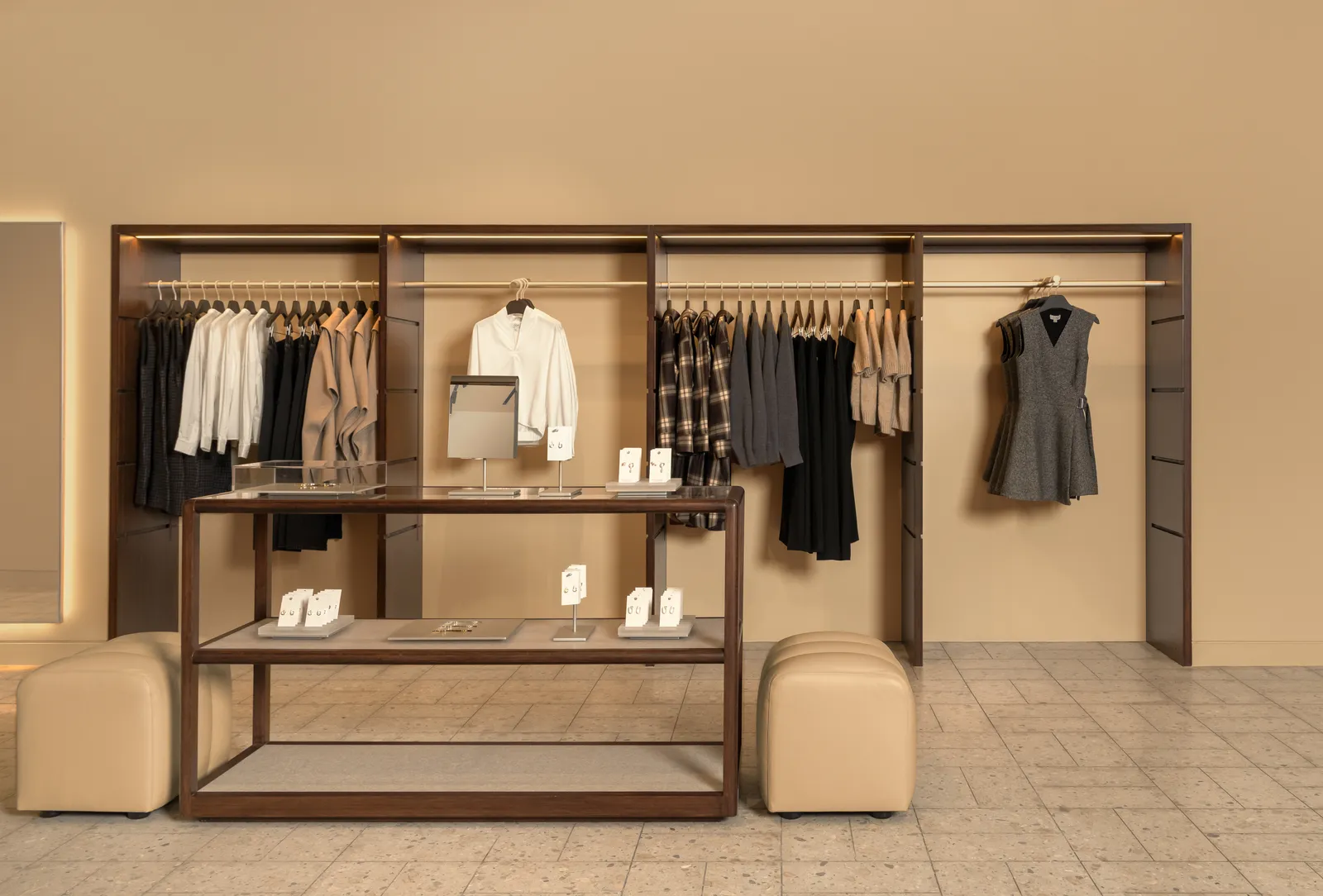
    Cos boasts a store aesthetic that was crafted completely in-house. It features a harmony of intricate architectural nuances and eco-friendly materials, resulting in a stylish, welcoming ambience. The exterior of the store is adorned with Armourcoat clay lime plaster, a material that according to the fashion brand, acquires a unique patina from its interaction with water minerals during its application.

    The store’s floors are fitted with terrazzo tiles from Grassi Pietre, which are made from 90% recycled material. These tiles are further enhanced with hand-tufted wool rugs by Kasthall.

    Interior Arrangements and Furniture

    The interior of the store presents ready-to-wear garments and accessories, showcased on aluminium railing systems and recycled shelving units from Smile Plastics. These displays are augmented by a sculptural table by Paper Factor that is constructed from recycled cellulose fibres and natural pigments.

    The store also features an array of specially curated furniture from esteemed international design houses. These pieces include the Scarpa 925 chair, crafted by Cassina and Karakter, the Offset coffee table by Resident, Bon Bon lamps designed by Helle Mardahl, and the iconic Pumpkin sofa, a creation of Pierre Paulin for Ligne Roset.

    New Collection Launch

    Coinciding with the store’s launch is the release of Cos’s Autumn/Winter 2025 collections for men and women. These collections showcase the brand’s distinctive minimalist tailoring and high-quality fabric use.

    Questions & Answers

    Where is Cos’s first store in India located?
    Cos’s first store in India is located in the Select Citywalk Mall in New Delhi.

    What materials have been used in the design of the store?
    The store design incorporates sustainable materials such as Armourcoat clay lime plaster, terrazzo tiles composed of 90% recycled material, and recycled shelving units. It also features a sculptural table made from recycled cellulose fibres and natural pigments.

    What collections has Cos launched with the store opening?
    Cos has launched its Autumn/Winter 2025 collections for men and women, featuring the brand’s signature minimalist tailoring and premium fabrics.
  • Italian Fashion Powerhouse OVS To Open First Store In India Amid Global Expansion

    Italian Fashion Powerhouse OVS To Open First Store In India Amid Global Expansion

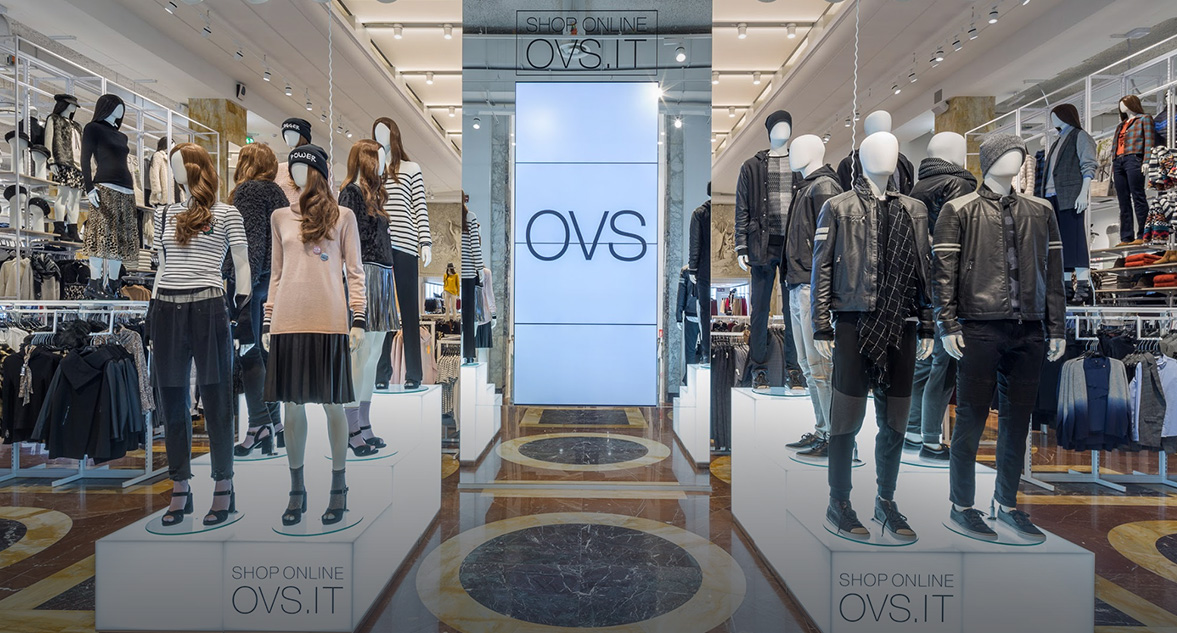
    Italian fashion retail giant, OVS, is preparing to penetrate the Indian market. The company is set to open its first store at Pacific Mall, Tagore Garden, New Delhi, next month. This move is part of the company’s larger global expansion strategy. OVS, which reported sales of €1.63 billion in 2024 and operates over 2200 stores globally, sees the Indian market as a significant growth opportunity.

    Targeting India’s Dynamic Fashion Market

    India is known for its dynamic fashion landscape, fueled by a young population with an increasing appetite for international styles. Sundeep Chugh, MD at OVS India, shared his enthusiasm about introducing OVS’s unique blend of Italian design, quality, and affordability to Indian consumers.

    Store Features and Collection Highlights

    The New Delhi OVS store will showcase the brand’s latest retail concept. Additionally, it will offer a diverse product range, from everyday essentials to premium lines. The company’s creative director, Massimo Piombo, designs collections with the goal of inspiring and encouraging customers to embrace their creativity. The essence of Italian style – a blend of art, travel, and culture – is embodied in all OVS collections. With India’s vibrant and style-conscious market, the brand anticipates a significant response to their offerings.

    Global Footprint Expansion

    OVS already serves more than 6 million customers worldwide. The company views its entry into India as a critical turning point in its growth strategy. OVS plans to bring its ‘Love People, Not Labels’ philosophy to global markets, adding another dimension to its international expansion.

    Questions & Answers

    What is the significance of OVS’s entry into the Indian market?
    The entry into the Indian market is a part of OVS’s broader international expansion strategy. It provides the company access to one of the world’s most dynamic fashion markets, characterized by a young demographic with a growing preference for global styles.

    What can customers expect from the first OVS store in New Delhi?
    Customers visiting the New Delhi store can expect to see the brand’s latest retail concept and a diverse product range, from everyday essentials to premium lines.

    What is OVS’s growth strategy?
    OVS’s growth strategy includes expanding its global footprint and bringing its ‘Love People, Not Labels’ philosophy to international markets. This involves catering to diverse customer preferences and promoting inclusivity in fashion.

  • Delhi NCR Logistics Space Set to Soar to 108.6 Million Sq Ft by End of 2025!

    Delhi NCR Logistics Space Set to Soar to 108.6 Million Sq Ft by End of 2025!

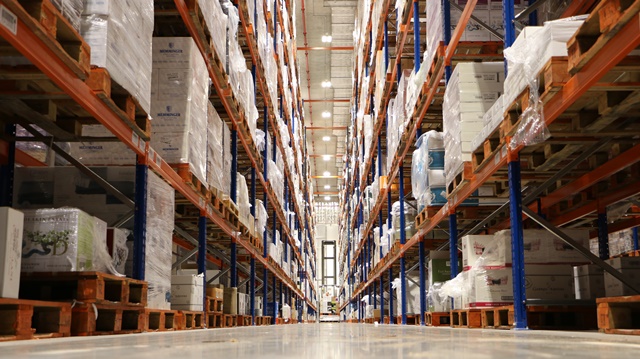
    The National Capital Region’s (NCR) warehousing market is on track to soar to 108.6 million square feet by the end of 2025. This surge is largely driven by Grade A projects, which have captured the interest of institutional investors, as detailed in a recent report by JLL. The Delhi-NH8 submarket is poised to remain at the forefront of this growth.

    “Proposed infrastructure projects, particularly along freight corridors such as DMIC, WDFC, and EDFC, are significantly enhancing warehouse demand by improving connectivity between Delhi and surrounding areas in both Western and Eastern India,” the report stated. Smart investments in these corridors are transforming transportation—and possibly saving future delivery delays that plague today’s e-commerce giants.

    Explosive Growth in Demand

    In a remarkable showing, net demand for warehousing space soared by an impressive 80% year-over-year in the first half of 2025, reaching 4.13 million square feet. Notably, 88% of this demand stemmed from Grade A facilities, highlighting a clear trend toward high-quality spaces. The Delhi-NH8 remained a powerhouse in this surge.

    The third-party logistics (3PL) and logistics sectors emerged as the primary demand drivers, closely followed by light manufacturing fields, such as auto components and engineering, which together constituted 58% of the demand during this period. Other notable contributors included fast-moving consumer goods (FMCG), e-commerce, and retail sectors.

    Institutional Developers Make Their Mark

    The market has witnessed transformative expansion in the first half of 2025, with 4.66 million square feet of new supply entering the fray. Institutional developers and investors are making a strong entrance—particularly concentrated in the lucrative Delhi-NH8 corridor.

    Despite this growth, vacancy rates rose to 21.4% in H1 2025, a reflection of the accelerating supply from large Grade A developers that outstripped demand in the market.

    Rising Rents Reflect Market Trends

    Rents in the NCR have experienced a healthy uptick, rising by 5.3% year-over-year in the first half of 2025. This increase is primarily a response to the surging demand for Grade A spaces that boast superior specifications. With institutional investors gaining a robust foothold, rents are expected to continue climbing, driven by escalating land prices, forthcoming infrastructure projects, and heightened investments.

    As the NCR warehousing market evolves, it’s clear that Grade A facilities will remain the main attraction, drawing interest and investment from across the region. In a landscape where quality is becoming king, businesses are increasingly keen to secure their place in this thriving sector.

    Questions & Answers

    What factors are driving the demand for Grade A warehouse spaces in NCR?
    The demand for Grade A warehouse spaces is primarily driven by strong interest from institutional investors and the significant growth of 3PL and logistics sectors. Additional contributors include light manufacturing fields and e-commerce, all seeking high-quality facilities.

    How have recent infrastructure projects influenced the warehousing market?
    Recent infrastructure projects, especially along freight corridors like DMIC, WDFC, and EDFC, have improved connectivity, boosting warehouse demand by facilitating smoother transport routes between Delhi and surrounding regions.

    What does the future look like for rents in the NCR warehousing market?
    Rents are projected to continue increasing as demand for Grade A spaces persists, propelled by rising land prices, ongoing infrastructure developments, and the growing presence of institutional investors in the market.

  • Cos, H&m’s High-end Fashion Brand, To Debut In India With New Delhi Store

    Cos, H&m’s High-end Fashion Brand, To Debut In India With New Delhi Store

    Cos, the fashion brand owned by H&M and renowned for its “Collection of Style,” is set to make its debut in India later this year.

    Store Location and Offerings

    The inaugural store will be situated in New Delhi, India’s capital. It will exhibit the brand’s trademark contemporary aesthetic, featuring ready-to-wear collections along with accessories. The product range will cater to women, men, and children, thereby covering all demographics.

    Cos is globally recognized for its minimalist design, with a strong emphasis on craftsmanship. The brand is eager to bring its approach of creating long-lasting, durable fashion pieces to the new Indian market.

    Company Vision

    The company expressed its excitement for the new venture stating, “We are excited to introduce Cos to the Indian market and bring our emphasis on craftsmanship and innovative materials to a new audience.”

    Established in 2007, Cos has grown into a significant global presence. The brand operates 239 stores across 48 physical markets and holds an online presence in 38 markets. Apart from running its own outlets, the brand also sells through wholesale and franchise channels, marking its omnipresence in the fashion industry.

    Questions & Answers

    Where will Cos open its first store in India?
    The first Cos store in India will be opened in New Delhi.

    What is Cos known for?
    Cos is globally recognized for its minimalist design and a strong emphasis on craftsmanship.

    How does Cos distribute its products?
    Cos operates physical stores, has an online presence, and sells through wholesale and franchise channels.

  • AirAsia X says it’s back in profit

    AirAsia X says it’s back in profit

    AirAsia X (AAX) said it posted a quarterly net profit of RM25.1 million (US$5.6 million) compared to a net loss of RM652.5 million in the preceding quarter. Revenue was slightly lower at RM100.1 million as compared to RM107.2 million during the period ending 30 June 2022 (4Q22) on the back of a reduction in revenue from the freight services segment due to normalized scheduled flight operations.

    In other segments, recovery across all key metrics has significantly improved as scheduled passenger and charter flights as well as ancillary revenues, have demonstrated a strong recovery compared to the preceding quarter. For 5Q22, the Company posted earnings before interest, taxes, depreciation, and amortization (EBITDA) of RM25.4 million, while profit before tax for the period stood at RM23.8 million.

    Operationally, the Company reported Passenger Load Factor (PLF) was recorded at 73% during the quarter – less than ten percentage points short of its pre-COVID-19 PLF of 81% in 2019. The Company carried a total of 80,385 passengers during the period under review, compared to 8,892 passengers from April – June 2022. Seat capacity grew to 110,615 during the quarter from 27,521 in the preceding quarter as additional markets and frequencies were introduced in 5Q22.

    During the period under review, the total number of sectors flown increased to 291 sectors from 226 sectors in 4Q22. Following its return to scheduled services in April 2022, the Company has made notable progress in its network recovery – adding Sydney and two new dense-short-haul routes to Kota Kinabalu and Kuching to its network in September 2022. AAX also introduced increased frequency to existing markets in Seoul and Delhi to cater to strong pent-up demand.

    In terms of balance sheet and cash flow, the Company charted a cash balance of RM79.5 million for the period ending 30 September 2022 – an increase of beyond 100% as compared to RM25.1 million in the preceding quarter. This was achieved predominantly on the back of a V-shaped air travel revival supporting the resumption of scheduled passenger flights to many of its most popular and profitable destinations, along with charter and cargo flights.

    AirAsia X Malaysia CEO Benyamin Ismail said: “AAX is now well on track in its recovery path even as the airline is compelled to operate in a challenging operational environment dictated by high fuel prices and a weakened Malaysian Ringgit against the US Dollar. While we are cautious of the strenuous operating conditions, we remain confident that the recovery of the Company is on the horizon, if not already within our reach. In the previous quarter we resumed our scheduled passenger flights to Seoul and Delhi, and are pleased to report that we have also resumed our services to Sydney and introduced additional frequencies to Seoul and Delhi in 5Q22.

    Due to high demand, AAX had also commenced operations to dense, short-haul routes during the quarter where demand has exceeded currently available aircraft capacity; namely Kota Kinabalu and Kuching. At the beginning of 5Q22, AAX was charting three flights per week and this surged to 23 flights per week by the end of the period under review.”

  • Infinet Wireless expands footprint with new regional office in Delhi

    Infinet Wireless expands footprint with new regional office in Delhi

    Infinet Wireless, the global leader in fixed wireless broadband connectivity, has opened a new regional office in India in line with the company’s growth strategy of accessing emerging markets. This new presence will be managed by Hari Shanker Pandey, a Regional Director. Mr. Pandey has considerable experience in the telecom and high-tech industry has been in charge of business development and sales growth in various companies. He will steer the strategic growth directions of Infinet Wireless by applying his knowledge and skills to work on expanding Infinet Wireless’ presence in India and nearby countries.

    Infinet Wireless’ office in this region was opened at the beginning of 2021. At the moment, the company is actively preparing the ground for testing deployment of its equipment and dealing with local partners and integrators. Infinet Wireless’ goals in the market are to reach out to local telecom segment, including connection provision to corporate and municipal clients, as well as middle-scale and large-scale operators; organizing radio links with mobile objects in the mining industry and deployment of technological lines for customers of different types.

    Infinet Wireless is planning the launch of its innovative solutions to a completely new market for the company, starting with its Quanta 5 / Quanta 6 product family aimed at organizing PtP radio links. In addition, Infinet Wireless can offer base stations and subscriber terminals of InfiMAN Evolution product family. These provide excellent throughput for PtMP radio links, and are compatible with Infinet Wireless products of previous generation, enabling operators to both deploy new infrastructures and expand coverage of existing networks in the 4.9–6.5 GHz range.

    One of the most outstanding features of Infinet Wireless devices is that it can work in the harshest weather conditions, as are typical for India, which is famous for its extremely high humidity and heavy rains, while in the highlands, low temperatures and strong winds can be a feature as well.

    Infinet Wireless products are also well-known for having one of the world’s longest mean times between failures, which is almost 10 years. It can be said that Infinet Wireless solutions represent carrier-grade products, whose quality is assured by Service Level Agreement (SLA).

    ‘India is a very prominent market for Russia, and we’re proud of the fact that Infinet Wireless, being a company of Russian origin, has an opportunity to enter this market and open a regional office there. Taking into account the close and cordial relationship between Russia and India, we count on a warm welcome for our solutions. India is a huge market with a developing infrastructure, and we’re sure that our products will be integrated perfectly into this strategically important sector for country’s economy ‘, said Roman Smirnov, Commercial Director at Infinet Wireless.

    Currently the company’s representatives are actively negotiating a certification of Infinet Wireless solutions and building the first testing zones.

    Established in 1993, Infinet Wireless is the global developer and manufacturer of reliable Broadband Wireless Access solutions used to create carrier-grade wireless backbones and access networks for service providers. The products are also a natural choice for global communication providers, corporations and municipalities who require uncompromised connectivity.

  • Tata Starbucks opens all-women stores

    Tata Starbucks opens all-women stores

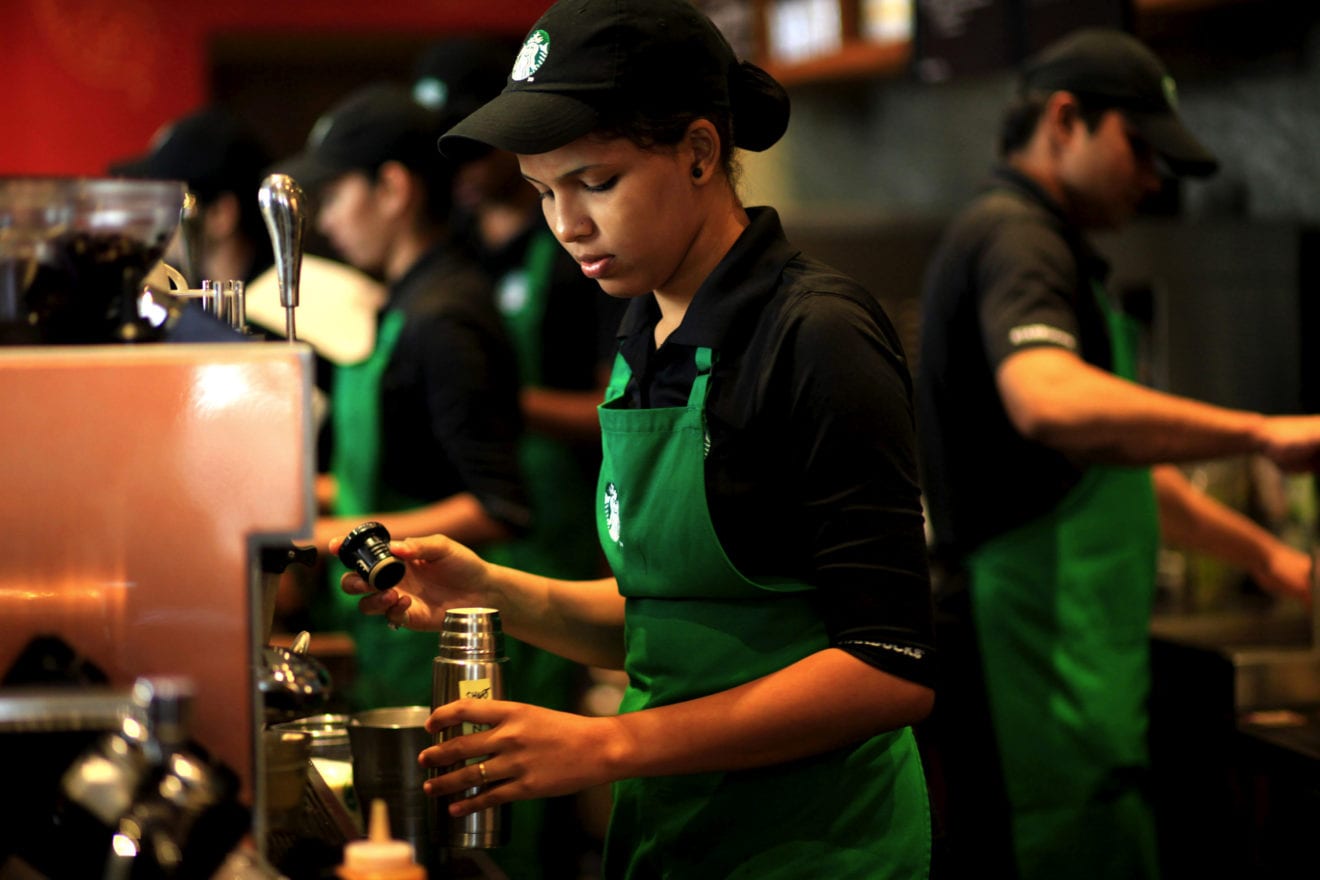
    Tata Starbucks has opened two stores in India operated entirely by women as part of the firm’s efforts to address systemic inequities in opportunities for female workers within the country.

    The two female-staff-only stores are located in Delhi and Mumbai, and constitute a step forward in Tata Starbucks’ commitment to expanding the representation of women in the workforce. The program also includes initiatives to offer opportunities to women that take into account the responsibilities of motherhood. The firm offers 100-per-cent gender pay equity and aims to ensure women make up 40 percent of its total workforce by the end of 2022.

    Tata Starbucks says it will double the number of its female-led stores by the end of this year in the interests of empowering and supporting women leaders.

    “Tata Starbucks remains focused on creating and strengthening opportunities for women and fostering diversity across our organization,” said Tata Starbucks CEO Navin Gurnaney.

    “We are proud to open these all-women stores that will increase our commitment to diversity and inclusion in India and empower our female partners in new and meaningful ways.”

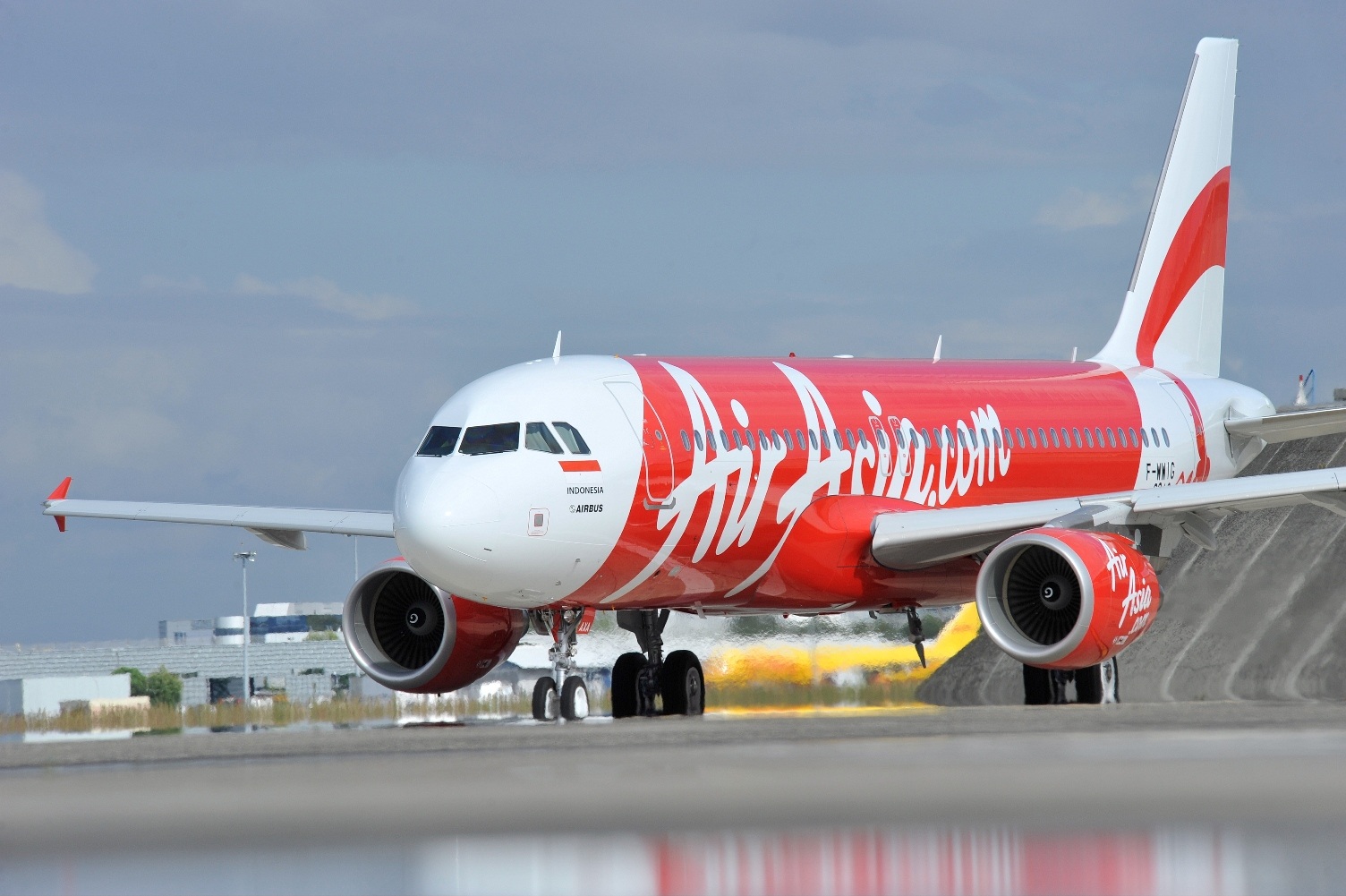
  • AirAsia India to start direct Delhi-Chennai flight from September

    AirAsia India to start direct Delhi-Chennai flight from September

    Budget carrier AirAsia announced a new direct Delhi to Chennai flight. The new flight will be introduced from September 2019. The sale of tickets will begin on 20 September. The tickets can be booked through airasia.com or the AirAsia mobile app.

    “The new daily direct flight between Chennai and New Delhi will help boost our operations in Chennai. We have also increased the frequency between Chennai and various other destinations like Bangalore, Hyderabad and Kolkata,” the airline said in a statement.

    AirAsia will also operate a third daily flight between New Delhi and Kolkata.

    The Bengaluru-headquartered airline is also set to launch additional flights on New Delhi-Kolkata route from 20 September.

    The airline has also increased the frequency and introduced a fourth service on the Delhi-Bengaluru route.

    AirAsia India currently flies to 19 destinations with a fleet of 22 aircraft.

    Air Asia India, which started operations in June 2014, is a joint venture between Tata and AirAsia Berhad. It currently operates 164 flights a day, covering 19 destinations and carrying over 25,000 passengers.

    The budget carrier has already started daily direct flight on the Delhi-Chandigarh route from 1 August onwards. The launch fare on Delhi-Chandigarh route is 1,365, the airline mentioned. The flight would leave from Delhi at 10.40 am every day and would reach Chandigarh at 11.50 am.

    The return flight would depart from Chandigarh every day at 12.50 pm and arrive at the Delhi airport at 1.55 pm, the low-cost carrier said.

  • The Beer Café’s 40th outlet at Delhi with new concept

    The Beer Café’s 40th outlet at Delhi with new concept

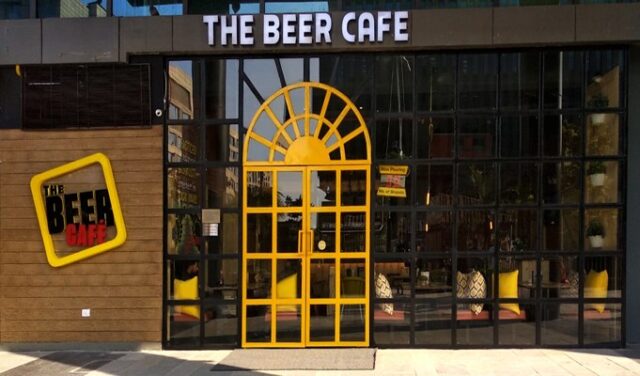
    The Beer Café, India’s largest alco-beverage chain, has opened its 40th outlet at Delhi’s Aerocity. Enhancing the beering experience for its patrons, this brand-new outlet is the only place in the city to offer a whopping 16 varieties of the fresh and delicious ale on tap. With a food menu that perfectly complements the golden brew and an energetic and lively ambience that is a hallmark of the brand, The Beer Café is definitely the new must-visit spot for beer lovers in Delhi/NCR.

    Aerocity is fast emerging as one of the most posh and upmarket locales in the Delhi-NCR region. Not only has it become the hub for some of the most vibrant F&B brands in the city, it is also a hotspot for a variety of lifestyle and cultural events. Further, its easy connectivity to the airport and other bustling locations in the city such as Gurgaon, Vasant Kunj and Dwarka made Aerocity the perfect choice for the newest The Beer Café in the capital.

    The brand has been a pioneer of casual, inviting, neighborhood hangout spaces in India. The innovations in providing superior consumer experiences have played a key role in establishing its domain leadership in India.

    With this 40th outlet that serves more beers on tap than any other bar or hangout space in the city, The Beer Café has elevated the benchmark for social drinking experiences in the city yet again.

  • The highs and lows of Indian retail real estate in 2018

    The highs and lows of Indian retail real estate in 2018

    2018 saw further liberalization of FDI policies, repositioning Indian retail on the global investment map and attracting a large number of global retailers into the country. In H1 2018, private equity investments into Indian retail swelled to over US$ 300 million, denoting a bracing growth of 54 percent over the previous year.

    Worryingly or encouragingly (depending on one’s viewpoint) online retail also witnessed exponential growth in 2018. In fact, online retailing is now expected to be at par with physical retail over the next 5 years. With India positioned to become the world’s fastest-growing e-commerce market, online retail in the country is driven by robust investments and deepening internet penetration in the country.

    As per ANAROCK data, the top cities with significant retail growth in 2018 included MMR, NCR, Bengaluru and Hyderabad
    New retail supply in 2018 was limited to 5.1 mn. sq. ft.
    Interestingly, apart from the top metros tier 2 & 3 cities played a significant role in India’s retail growth story in 2018

    Saturation of the metros due to limited space availability, mounting rental values and escalating infrastructure issues fuelled retail growth in smaller cities like Ahmedabad, Bhubaneshwar, Jaipur, Lucknow, Thiruvananthapuram, etc. New malls that became operational in the smaller cities in 2018 range from anything between 200,000 to 18,00,000 sq. ft. in size, amply vouchsafing the increasing appetite for organized retail in the hitherto underserved cities.

    In response to the huge potential in these markets, both domestic and international brands made deep forays into them via the online route, followed by more gradual offline presence. This disparity is hard to ignore and sends out a clear signal to investors and mall developers – physical retail deployment must pick up considerable pace in these smaller markets in the coming years.

    Other Sunshine Sectors

    The logistics and warehousing sector transformed rapidly in 2018 after the Government granted the coveted infrastructure status to logistics in November 2017. In fact, warehouse stock supply is expected to see substantial increase over the next two years owing to implementation of GST, the Government’s determined infrastructure push and increased interest from national and international investors. Overall, strong economic fundamentals, proactive reforms and increasing use of technology will continue to boost the sector.

  • AirAsia probe may ground Vistara international flights

    AirAsia probe may ground Vistara international flights

    Vistara, the joint venture airline of Tata Sons Ltd and Singapore Airlines Ltd (SIA), may face the cascading effect of an ongoing probe into AirAsia India’s operations. The Central Bureau of Investigation (CBI)-led probe into AirAsia India, in which Tata Sons own a 49% stake, may be forcing the government to withhold permission sought by Vistara to start international flights, two people familiar with the matter said.

    AirAsia India is being investigated by the central agency for allegedly lobbying the government for international flight permits and violating rules that prevent foreign airlines from controlling an Indian operator.

    According to the people cited above, Vistara had applied in June for rights to start international flights, after it took the delivery of its 20th aircraft, and was hoping to fly out from October. The deadline has now been moved to December, Vistara chief executive Leslie Thng said in July.

    “With the general elections coming up next year, bureaucrats may be wary of granting Vistara overseas flight permits in the backdrop of CBI investigating another airline,” one of the two people mentioned above said.

    CBI had in May raided the offices of AirAsia India and filed a complaint against Tony Fernandes, chief executive of the company’s Malaysian parent. Fernandes has rebutted the charges.

    Airlines were earlier required to fly for at least five years on domestic routes, and have a fleet of 20 aircraft before being allowed to fly international. Now, they can fly just by having 20 aircraft in its fleet or 20% of total capacity (in term of average number of seats on all departures put together), whichever is higher for domestic operations, according to the new civil aviation policy.

    Vistara became eligible to fly international in June when it added its 20th plane. The same month, it submitted a list of potential overseas destinations to the government.

    However, the civil aviation ministry is yet to clear Vistara’s proposal. “Once cleared, the Directorate General of Civil Aviation will also have to clear the airline to fly international. But, the file hasn’t moved from the ministry yet,” one of the two people mentioned above said.

    Civil aviation secretary R.N. Choubey did not respond to an email.

    A Vistara spokesperson said, “We await necessary approvals from the authorities and aim to start our international operations by end of this year. Vistara’s expansion plans are on course at present.”

    Vistara, which started operations in 2015, has a fleet of 22 Airbus A320s. The airline, which had listed out a plan to fly to destinations like Sri Lanka, Maldives, Thailand and other neighbouring countries, according to reports, may have seen rivals grab some of these routes in recent days.

    For instance, GoAir recently launched flights on Delhi-Phuket route, while Jet Airways will start flights on Pune-Singapore route from 1 December. Yet, Vistara is willing to wait it out to begin its international operations, the first person quoted in the story said.

    Vistara, in July, announced its decision to order 19 planes worth $3.1 billion from Airbus SE and Boeing Co. It plans to lease 37 new A320neo planes.

    The letter of intent with Airbus includes a firm order for 13 A320neo and A321neo jets, as well as options for seven more aircraft from the A320neo family. Another 37 new A320neo-family planes will be added from leasing companies.

    The Boeing order includes six firm-ordered 787-9 Dreamliner and purchase rights for four more from the 787 Dreamliner family.

    “The aircraft purchase will help Vistara expand both within and outside India and on all routes that this aircraft could support us on,” Vistara’s chief executive Leslie Thng said at that time.

    “For medium to long-haul destinations, we decided that Boeing 787-900 (Dreamliner) would be best for us and would allow us to start medium-haul operations from 2020,” Thng had said.

    “When India’s third FSC (full service carrier) launched, it did so with its eye on the opportunity in the international market. More than three years later Vistara remains a solely domestic carrier, thanks to Indian regulations,” said CAPA India’s Mid-Year Outlook for FY19. “Although the airline technically qualified to operate international services earlier this year when it inducted its 21st aircraft, it is experiencing delays in securing an international flying permit, which is surprising.”

  • Kale Logistics collaborates with Celebi Delhi cargo terminal

    Kale Logistics collaborates with Celebi Delhi cargo terminal

    Celebi Delhi Cargo terminal went live with Kale’s Galaxy (Domestic module) Cargo Management system as part of the phase wise implementation of the entire suite of Galaxy Air Cargo management software system comprising of EXIM operations, Warehouse Management, UD, Invoice and Accounts and Domestic Operations. The new age domestic module incorporates next generation features like Mobile App, Customer Portal, Hand-held based app and EDI with Airlines.

    Celebi Delhi Cargo Terminal Management India Pvt. Ltd., is a Joint Venture between Delhi International Airport Private Ltd (DIAL) and Celebi Ground Handling Turkey which along with domestic operations also provides cargo handling and warehousing services to approximately fifty international schedule carriers. Celebi Delhi is the largest operations in Air Cargo for Celebi worldwide. In order to keep pace with the ever-increasing domestic cargo demands, Celebi Delhi has partnered with Kale Logistics Solutions to automate their Air Cargo and terminal operations.

    Air Cargo industry has reached a crucial point where a fast-track approach to digitalization is required to keep pace with competitive modes of transport. It is undergoing a tremendous transformation – moving from legacy systems to agile technologies in order to streamline its operations, reduce costs and optimize efficiencies.

    Ramesh Mamidala, CEO of Celebi Delhi Cargo Terminal Management quoted, “Modern day freight challenges need technology to enable innovative practices to move businesses forward. With our domestic operations going live on Galaxy, we look forward to greater automation of our operational processes and getting quick and comprehensive information on consignment and cargo tracking. This significant development will help to speed up shipment times, improve efficiency and reduce costs.”

    Being the capital of the country, Delhi has maximum number of flight operations and Celebi – Delhi operates one of the largest volume of domestic cargo movement out of Delhi airport. Topographically, Delhi is surrounded by many states and with a boom in e-commerce business, there is additional domestic freight movement which makes Delhi a top e-commerce hub of India.

    Speaking more on this scenario, Mamidala added, “Celebi – Delhi’s current domestic handling system was challenged by an increased load of cargo and connectivity issues. Hence we decided to move forward with the latest technology solution to cater to this demand. Kale’s Galaxy is the perfect solution, which, with minor customizations fulfilled all our requirements. We would soon be going live on our international operations”.

    Amar More, CEO, Kale Logistics Solutions says, “We are delighted to partner with Celebi and are extremely confident that our system will address all their concerns and realize the benefits of GALAXY in near future. Galaxy is a global application that is being used by worldwide airports that incorporate global best practices and prepare the industry to manage the demands of e-commerce”.

  • Delhi Duty Free posts record daily and monthly sales

    Delhi Duty Free posts record daily and monthly sales

    Delhi Duty Free posted its highest ever sales in a single month in June, hitting US$ 15.1 million. This compares to US$ 13.9m in the corresponding month last year. June also saw the highest daily sales yet (US$625,000), over +50% growth in Shop & Collect sales, and the highest ever sales in the beauty and liquor categories. In the latter, a record than 53,000 bottles of Johnnie Walker Black Label were sold.

    Delhi Duty Free CEO Luke Gorringe said: “Overall it has been a good start to the year, particularly in light of the tough travel retail business environment and ongoing new shop fit-outs. We enjoyed strong growth in June, even though our arrivals trading area was reduced by -50%. I would like to thank our great team, our suppliers and shareholders and of course our loyal customers, who are all key to this success. We have much to look forward to in the coming months with the opening of new shops featuring exclusive brands and concepts that are going to elevate the customer experience in Delhi Duty Free.”

    The company said it was poised to continue its growth momentum, with investment in staff training and skills alongside new product offers and marketing campaigns.

    In 2016, Delhi Duty Free delivered revenues of over US$146 million, from US$140 million a year earlier.

  • Delhi leads India by internet readiness

    Delhi leads India by internet readiness

    The state of Delhi leads India in internet readiness, according to a new report from the Internet and Mobile Association of India (IAMAI) and Nielsen.

    In the report titled Index of internet readiness of Indian states, Delhi has overtaken last year’s winner Maharashtra and is followed by Karnataka, Maharashtra, Kerala and Tamil Nadu.

    According to the report, Delhi has won top spot because of its superior infrastructure and online participation.

    Releasing the report, Aruna Sundararajan, Secretary, Ministry of Electronics & Information Technology (MeiTy), Government of India said: “We are hopeful that India will leapfrog from the present 155th position to world’s top fifth in connectivity, within the next 5-6 years. India today is one of the most rapidly digitizing economies in the world with the telecom industry leading the change. Things have improved multifold with state governments of Chattisgarh, Andhra Pradesh and Telangana among others taking proactive steps to improve connectivity and internet reach.”

    “The combination of various indigenous digital platforms along with innovative and disruptive startups holds the greatest scope for digital transformation in India. Post demonetization, the country today has 3 million POS as compared to 1.5 lakhs POS earlier which is clearly a transformation and going forward, the infrastructure for digital payments will grow 3X within a span of one year,” she added.

    The North East has ranked low in terms of overall internet readiness. Much more needs to be done in the form of investment and infrastructure development in the region. Among the north eastern states, Nagaland tops the list, closely followed by Manipur and Tripura. Nagaland leads in IT environment and performs moderately well in other categories to get to the top.

    Internet readiness index is a composite benchmark of four components: e-Infrastructure index, e-Participation index, IT-Environment and government e-services index. All four components have equal weightage in this model. Separately, a fifth Index (named the Core Internet Index) has been created this year, consisting of select variables already used in constructing the above indices.

    The purpose of the index is to give a sharper perspective for digital industries looking to expand their business in India.

  • Ericsson, IIT Delhi team to launch ‘5G for India’

    Ericsson, IIT Delhi team to launch ‘5G for India’

    Ericsson and the Indian Institute of Technology Delhi (IIT Delhi) have signed a MoU to jointly roll out a ‘5G for India’ program, conceptualized to fast-track realization of Digital India initiatives and aid application development for Indian start-ups and industries.

    Under the partnership, Ericsson will set up a Center of Excellence with a 5G test bed and incubation center at IIT Delhi and use this facility to drive the development of the country’s 5G ecosystem.

    In addition to hosting the Center of Excellence, IIT Delhi will conduct research and development to explore how some of the country’s challenges can be addressed with mobile technologies.

    The first series of tests under this program are due to begin in the second half of 2017 and will place India on par with other developed countries in terms of 5G network and application deployment.

    “The 5G for India program is a major step towards understanding the power of 5G technology and how it can help aid Digital India initiatives, including the development of smart cities,” said Paolo Colella, head of region India at Ericsson.

    “The program will focus on delivering research, innovation and industrial pilots that use next-generation 5G networks as an enabler. It will help initiate cross-industry research collaborations focused on the integration of ICT in industry processes, as well as products and services,” said Colella.