Retail News CRM

Tag: denim

  • Levi Strauss ‘deliberate’ in moving production away from China

    Levi Strauss ‘deliberate’ in moving production away from China

    Levi Strauss & Co has been “deliberate and diligent” in moving production out of China because of uncertainty hanging over tariffs on goods imported from China, CEO Chip Bergh has told Reuters in an interview.

    Just 1 percent or 2 percent of Levi’s product sold in the US are manufactured in China, Bergh said, compared to 16 percent two years ago. Bergh was speaking one day before President Donald Trump said he would impose tariffs on another US$300 billion of Chinese goods, including apparel.

    Trump has used tariffs as a tool to negotiate better trade terms, saying bad deals cost millions of US jobs. Along with apparel, the new tariffs hit consumer goods such as electronics and toys and come in addition to those already imposed on $250 billion of other goods imported from China.

    The on-again, off-again nature of the US tariffs on Chinese goods had created uncertainty for many US retailers, Bergh said.

    “Every day is a new day,” he said. “Sometimes it looks like it’s definitely going to happen and then other days you think it’s off, it’s not going to happen.”

    San Francisco-based Levi’s, which returned to the public markets in March, is part of a wave of retailers that have been shifting supply chains out of China to countries such as Vietnam and Bangladesh. The trend was initially in response to higher Chinese wages but the exodus is expected to be accelerated by the new tariffs, which Trump said will go into effect September 1.

    They are expected to increase consumers’ costs and have an impact across the entire retail industry.

    Apparel retailers like Gap Inc, shoes and accessories brand Steve Madden and department store Macy’s have also acted to move production out of China.

    However, China still is a big supplier to the industry with 42 percent of apparel and 69 percent of footwear sold in the US made in China, according to the American Apparel and Footwear Association.

    Following the latest tariff news, several large retail trade groups warned the levied tariffs will hurt consumer purchases, raise prices and limit hiring.

    Levi’s has two of its own factories in Poland and South Africa but mostly uses third-party vendors or suppliers spread across 22 different countries, said Bergh, who joined the company in September 2011.

    “We’ve narrowed down our supplier base during the time that I’ve been here to really develop deeper, more strategic relationships with many of our suppliers,” he said.

    Many of Levi’s suppliers in China are publicly traded companies that have multi-country footprints, said Bergh, that have diversified risk by building factories in places like Vietnam and Cambodia.

    Levi’s also has put contingency plans in place “not just for China but also for Mexico in the event that NAFTA gets ripped up in a moment of rage or something,” Bergh said.

  • Levi Strauss Asia sales Books good Sales Numbers

    Levi Strauss Asia sales Books good Sales Numbers

    Levi Strauss Asia sales grew 12 per cent in the second quarter (on a constant-currency basis) with strong performance across both wholesale and direct-to-consumer channels.

    Globally, the denim-led lifestyle-fashion retailer achieved 9-per-cent growth on a constant-currency basis, however second-quarter income fell by US$49 million, largely due to $29 million in costs relating to the company’s IPO.

    Gross profit for the second quarter rose 4 per cent to $700 million.

    “Our second quarter and first half results reflect the continued strength of our diversified business model as we delivered broad-based growth across all brands, regions and key product categories despite a challenging retail and macroeconomic environment,” said Levi Strauss & Co president and CEO Chip Bergh.

    “For both periods, the Levi’s brand grew in all three regions across men’s, women’s, tops and bottoms and maintained its position at the centre of culture through iconic products and consumer experiences.”

    In Asia, revenue growth was broad-based across the region’s markets. The region’s operating income grew 4 per cent on a reported basis and 15 per cent on a constant-currency basis, reflecting higher revenues partially offset by a decline in gross margin and higher direct-to-consumer costs.

    Globally, sales by the company’s direct-to-consumer business grew by 9 per cent in the second quarter, primarily due to performance and expansion of the retail network and e-commerce growth. The company had 78 more company-operated stores at the end of the second quarter of this year than it did 12 months earlier. The company’s wholesale business grew reported revenues by 3 per cent, reflecting growth in all the regions.

  • Replay opens first Denim store in India

    Replay opens first Denim store in India

    Italian denim brand Replay has opened its first store in India.

    The new store has been launched in the capital in a partnership with Reliance Brands. The large retail outlet in Ambience Mall, it focuses on the brand’s core elements using signature design features in store.

    “I am confident that our constant striving to deliver qualitative and innovative products will be in line with the consumers’ appetite for the highest standards in denim,” said Fashion Box Spa CEO Matteo Sinigaglia. “Furthermore, it is a real pleasure to join forces with Reliance Brands Limited, and I truly believe we are starting a wonderful journey together.”

    Replay is planning to launch three stores in Mumbai and New Delhi as well as a flagship store in Maker Maxity, Mumbai later this year.

    The store will offer denim wear, casual wear, footwear, and accessories.

  • Levi’s to opening 100 extra stores this year

    Levi’s to opening 100 extra stores this year

    San Francisco-based retailer Levi Strauss announced plans to open 100 new company-operated stores this year.

    The apparel maker, which launched on the US stock market last month, announced its plans for the store openings alongside a well-received debut batch of earnings as a public company.

    Company chief executive Chip Bergh told that most of the store openings would be in Europe and Asia, though mainline and outlet stores would open in the US as well.

    Levi’s posted a 7 per cent jump in net revenue to US$1.43 billion for the quarter ending February 24. The company produced a net income of US$147 million compared with the losses of US$19 million a year ago, when the results were hit with a tax-related charge.

    “We delivered our sixth consecutive quarter of double-digit constant-currency revenue growth,” Bergh said.

    “Growth was broad-based across all three regions and all channels, demonstrating that our strategies are working and our investments are paying off.”

    The 166-year-old brand operates 824 standalone stores, including 74 the retailer opened last year.

  • VF Corp names Daughter Company Kontoor Brands

    VF Corp names Daughter Company Kontoor Brands

    Kontoor Brands – that’s the name chosen for the denim-led fashion business being spun off by VF Corporation next month.

    The US branded lifestyle apparel, footwear and accessories company released an update on the plan, announcing its has filed the necessary regulatory paperwork to start the process rolling.

    Kontoor Brands, to be publicly listed, will take over the Wrangler, Lee and Rock & Republic brands, along with VF’s outlet business.

    “Our teams across VF have made tremendous progress to prepare for the successful separation of Kontoor Brands from VF and this filing is a significant next step in this process,” said Steve Rendle, chairman, president and CEO of VF Corporation. “We are highly confident that the separation is the best path forward for both organisations to achieve even greater potential and enhance long-term shareholder value.”

    He said the split is on track to be completed next month, subject to final approval by VF’s board, customary regulatory approvals, and tax and legal considerations.

    “Today’s filing marks an important milestone in the process of establishing Kontoor Brands as an independent company,” said Scott Baxter, named CEO of Kontoor Brands. “As we prepare for life as a separate, publicly traded organisation, I am confident that Kontoor Brands is strongly positioned to thrive as a leader in the global apparel industry and deliver long-term value for all of our stakeholders.”

    VF’s decision to split the business in two was announced last August. Rendle said at the time that since 2017, the company had been reshaping of its brand portfolio to better position the company for long-term success. In that time, VF had bought Williamson-Dickie, and the Icebreaker and Altra brands, and sold Nautica and its Licensed Sports Group, including the Majestic brand. The brands that will remain in VF’s portfolio include Vans, The North Face, JanSport, Timberland, Smartwool and Eagle Creek.

  • China’s Trendy Group buys the Denham Group

    China’s Trendy Group buys the Denham Group

    Dutch denim company Denham Group has a new major shareholder, according to reports in the Netherlands, with China’s Trendy Group named the official buyer. The parent company of denim label Denham the Jeanmaker, Denham Group was snapped up by Trendy from Amsterdam-based investment firm Amlon Capital for an undisclosed amount.

    Denham’s current chief creative officer Jason Denham will remain in the top design spot, following the acquisition, and will remain a shareholder, Trendy said in a press release.

    However, Ludo Onnink, CEO at Denham Group, will depart the company his post, with Andre Chen, senior vice president at Trendy Group, to succeed him.

    Denham Group

    Trendy views the Denham Group acquisition as an opportunity to nurture and expand the Denham brand in current markets such as China, via the production of new items.

    Denham Group and Trendy are familiar allies. Back in March 2017, the companies announced a joint venture to further expand the European denim brand in China, resulting in the opening of 16 retail stores in key cities in Chin. Now, there are plans to further grow the business in the coming years as a result of the acquisition.

    “We see many opportunities to grow the Denham business in the existing markets but also as the most influential denim player in the future,” said Chen.

    “This will not only be achieved by extending our jeans business, but also by adding additional product categories.”

    Founded in 2008 in Amsterdam by Jason Denham, Denham retails in some 20 cities including its local Amsterdam, as well as nearby Antwerp and Hamburg. As for Asia, it is present in Tokyo, Osaka, Shanghai and Seoul.

    In wholesale terms, the label is has global partners and is available for purchase via its namesake online store. The Denham is also headquartered in Amsterdam, with sub-offices in Düsseldorf, Shanghai and Tokyo.

    Launching in 1999, China’s Trendy Group is today a global fashion and denim mecca with a stable that includes fashion brands form the Italian house Sixty Group: Miss Sixty, Killah and Energie.

  • Arvind India Q2 profit rises 16 pc to Rs 75 crore

    Arvind India Q2 profit rises 16 pc to Rs 75 crore

    Textile and apparel player Arvind Ltd on Thursday reported a 16.38 percent increase in its consolidated net profit to Rs 75.08 crore for the second quarter ended September 2018. According to a report: The company had posted a net profit of Rs 64.51 crore in the July-September period a year-ago, Arvind Ltd said in a BSE filing.

    Total income during the quarter under review stood at Rs 1,815.98 crore, up 12.85 percent, as against Rs 1,609.10 crore in the corresponding quarter of the previous fiscal.

    Total expenses stood at Rs 1,723.27 crore as against Rs 1,540.08 crore, up 11.89 percent.

    Meanwhile, the company said that as NCLT has approved the scheme of demerger for its branded apparels and engineering businesses, “the reported financial statements reflect figures for continuing businesses only”.

    “Pending receipt of order and other conditions precedent in the Scheme, the Group has considered the business of Engineering and Branded Apparel Undertaking as ‘Discontinuing Operations’,” the company said.

    Arvind’s net profit for the period from continuing operations rose to Rs 56.10 crore as against Rs 48.48 crore earlier.

    Net profit after tax from discontinuing operations was at Rs 18.98 crore as compared to Rs 16.03 crore.

    “The effective date of demerger and record date for allotment of shares is likely to be end of November,” it added.

  • Is denim coming back?

    Is denim coming back?

    It began at Paris Fashion Week two in 2015, when Vetements sent its Autumn/Winter 2015 collection down the catwalk, full of its instantly familiar oversized silhouettes: grunge ditzy-print dresses, bulky bikers and bombers, thigh-high leather rodeo boots and those re-worked vintage Levi’s, now the brand’s signature jeans.

    Certainly, the denim market has been enjoying a long-awaited rebound. Sales in the $13.5 billion US women’s and men’s jeans market grew 4 percent in 2016, according to market research company the NPD Group — the category’s best performance in years.

    Globally, following three years of declines, the jeans market, valued at $92.9 billion, is also expected to grow this year, with men’s and women’s categories forecast to rise this by 4.2 percent and 3.7 percent respectively, according to Euromonitor.

    And as the athleisure trend begins to cool — presenting challenges for gym-to-street brands like Lululemon, Sweaty Betty and others — it would seem denim is clawing sales away from the sportswear category.

    According to data from retail technology company Edited, the first half of 2017 saw the women’s jeans market grow by 79 percent compared to the first half of 2016. Athleisure leggings, by comparison, grew just 35 percent.

    High-fashion brands such as Calvin Klein, Y/Project, Off-White, Balenciaga and, of course, Vetements, have helped along denim’s comeback, says Kurazawa, by catering to Millennial tastes, offering customization and a move away from the typical five pocket.

    Denim stalwart Levi’s is in a prime position to capitalize on consumer demand for vintage styles, given its 164-year heritage, recent collaborations with hot labels including Off-White, Gosha Rubchinskiy and Supreme, and a licensing agreement with luxury label Re/Done, which “up-cycles” vintage Levi’s denim, revamping old designs appeal to a younger generation. “We’re seeing a huge revival in ’90s-style fashion and ‘near-now nostalgia’ sentiment,” confirms Karyn Hillman, chief product officer at Levi’s, who points to the popular high-rise Wedgie model — inspired by the vintage 505, but updated with a little more stretch — as an example. “I think collaborations have really added some sort of equity to the brand,” adds chief marketing officer Jen Sey.

    In response to the success of re-worked styles, the heritage denim label is ramping up investment in customization services. This includes expanding in-store “tailor shops,” where shoppers can customize purchases. (Currently, tailor shops are in 100 percent of Levi’s UK doors with a heavy presence across Europe; the brand is now looking to recreate this success in the US.) Beyond stores, it has also installed customization pop-ups at key music festivals, from Glastonbury to Coachella. Sey says the activation “brings value to the consumer,” who, more often than not, is already wearing a pair of Levi’s.

    In November 2017, the company launched Levi’s Authorised Vintage, a collection of 50,000 pairs of dead-stock denim it bought back from the secondary market. “Levi’s has had the number one share of the vintage market forever,” Sey says. “We just haven’t actively participated in it [before], so we think it’s high time that we did.”

    Other denim brands are also capitalizing on the demand for an authentic, vintage-style product. Frame, for example, launched a limited Rigid Re-Release collection that catered to the nostalgia aesthetic in February 2017. While the limited-edition range will not continue into Spring/Summer 2018 due to limited availability, stiff fabrics will still be a key focus for next season’s denim collection.

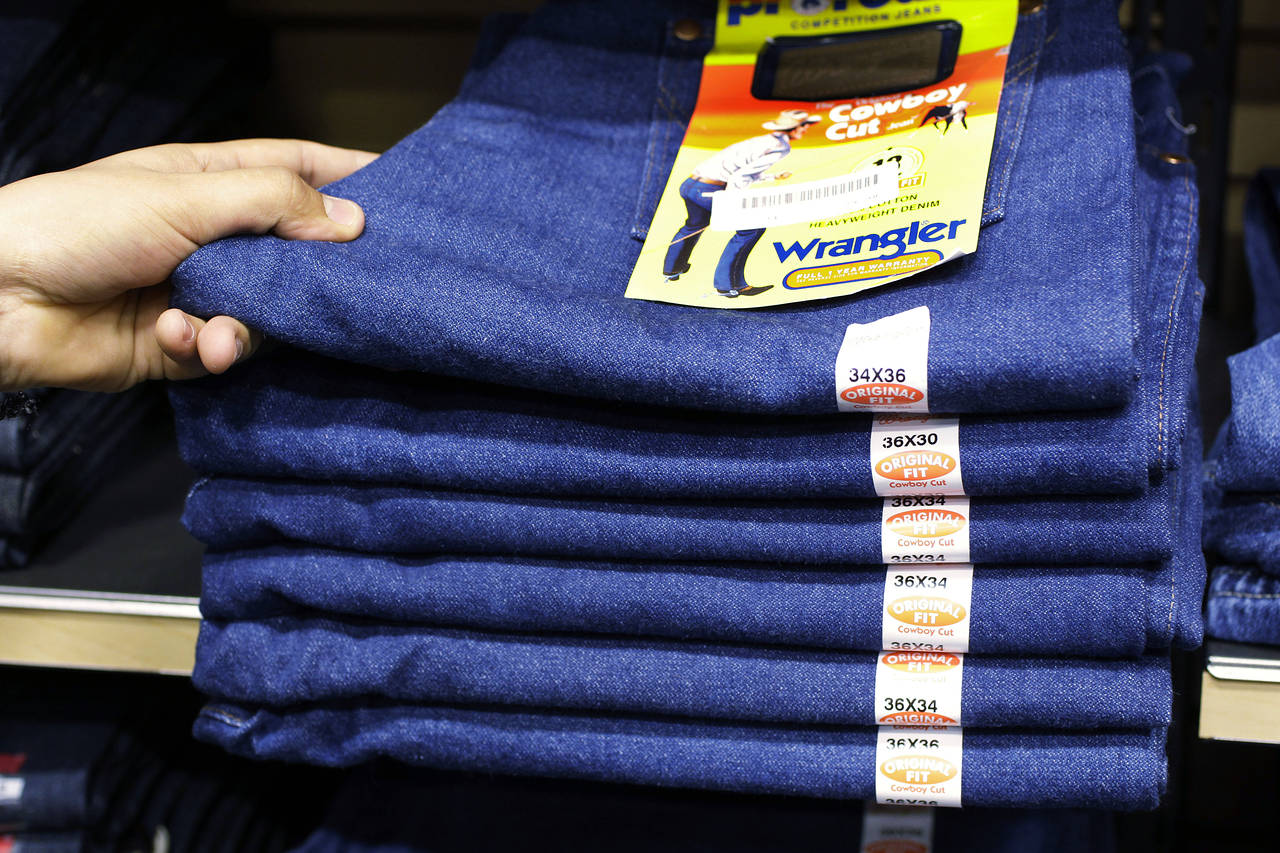
    American brands Lee and Wrangler — both of which come under the umbrella of US apparel company VF Corp. — are also banking on reissues and archive-inspired designs to capture a younger consumer’s attention. “One of the latest capsules that we’ve done with Lee is we’ve gone into the archive to reproduce a retail product from 70, 80 years ago,” explains VF Corp’s jeanswear president Massimo Ferrucci. Wrangler’s Retro Glory collection boasts a similar missive; European stockists of the line include Asos, Urban Outfitters, De Bijenkorf and La Rinascente. “The younger consumer is attracted very much by Americana, by originality and authenticity, by product that comes from the archive.”

    But while retro silhouettes and rigid fabrics are on the rise in denim, it would seem that athleisure’s influence has had lasting impacts on the category’s basics, which account for the volume of the market.

    When the athleisure craze first blew up, many denim brands responded by investing heavily in stretch denims to try and compete with the fast-growing sector, a focus that continues to pay off. “Stretch is here to stay,” asserts Sey, who notes that Levi’s has actually seen an increase in demand for stretch denim as the fabric has transitioned into men’s lines.

    “Consumer preferences have changed — comfort has become much more important than in the past,” agrees Hillman. “Women generally wear their jeans a little tighter today compared to the past, so we’ve evolved the fits and fabrics to cater to these evolving tastes.” She notes that skinny jeans are still Levi’s best-selling style. “We don’t see that changing anytime soon,” she adds.

    Consumer desire for comfort has given birth to the rise of performance denim, another innovation that has become a growth driver for the denim sector. Brands that range from 7 For All Man Kind to Joe’s Jeans are utilizing new technologies to enhance existing fabrics and styles.

    VF Corp’s Ferrucci says that growth of performance denim at Wrangler — which includes a range of technical fabrics that are water resistant, insulating, cooling, or extremely flexible — has been accelerating fast, “because it is actually used as a workwear item.” Levi’s too has ramped up investment in similar initiatives, most notably its recent Commuter Trucker jacket, created in partnership with Google. “[It’s] about creating products that meet a consumer need,” says Hillman of the line that was originally created for cyclists in the noughts. “It is about purposeful design and creative lifestyle solutions to improve people’s lives.”

    The casualization of dress codes — not just in the workplace, but also for smarter occasions (one has four-figure jeans to thank for that) — has given denim a space to become an every-day go-to in a way that athleisure leggings may never be. “She might wear [leggings] to brunch with her friends on a Sunday, but she wasn’t going to wear them out on a date on a Saturday night, and she wasn’t going to wear them to work,” notes Sey.

    “Denim has a foothold in certain occasions that leggings never will,” she concluded.
  • Uniqlo plans denim concept shop for LA

    Uniqlo plans denim concept shop for LA

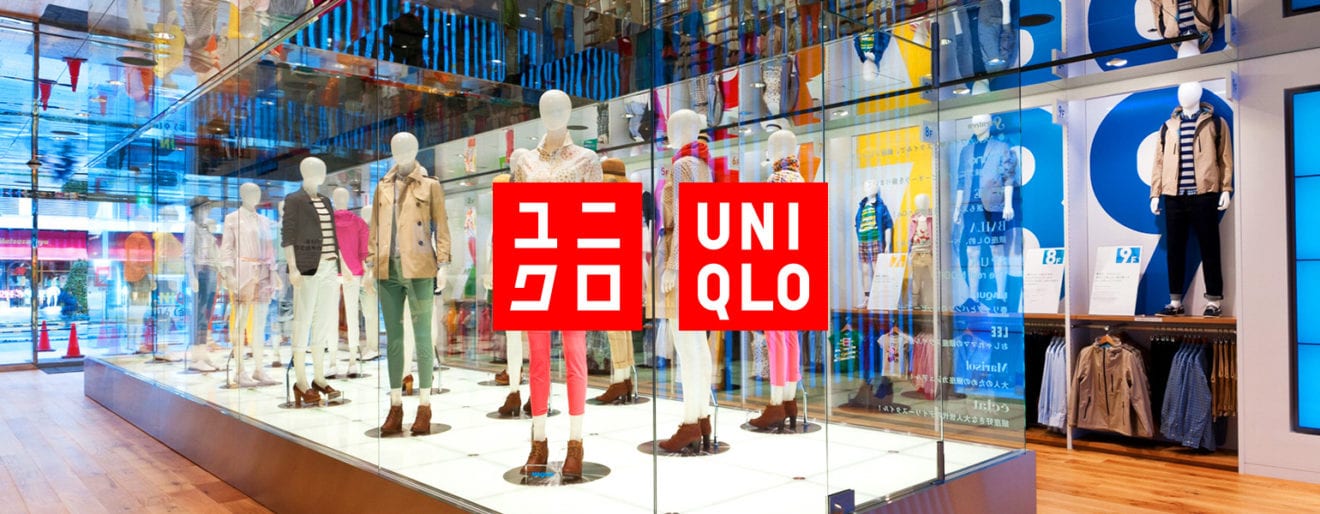
    Fast Retailing’s Uniqlo says it plans to open a “denim concept shop” in Los Angeles soon.

    “We take so much inspiration from Los Angeles,” says Uniqlo head of US marketing Marisol Tamaro.

    The brand has been increasing its commitment to LA and its latest autumn denim campaign gained its inspiration from LA style. Its Denim Innovation Center opened in the city in November last year as a hub for both Uniqlo and J Brand denim creation and manufacturing. There are also innovation centres in Paris, Shanghai, New York and Tokyo.

    Tamaro says the concept shop will mostly stock denim but also feature complementary clothes. The shop will also carry J Brand as well as collaborations from local artists and designers.

    The denim concept shop will be Uniqlo’s eighth store in Los Angeles and the 47th in the US.

  • Only 32% of Indians love denim

    Only 32% of Indians love denim

    India is one of the largest producers of denim, with manufacturing capacity of 1.2 billion metres, but only 32% of Indians love or enjoy wearing denim, which is the least among the six denim hubs of the world. This was revealed by J Berrye Worsham, president and CEO of US-based Cotton Inc at the two-day global summit on denims and jeans, ‘Denims: A Democracy in Fashion’ which began at IIM Ahmedabad on Friday.

    As many as 71% of people in Europe and Latin America love to wear denim, followed by 70% in the US, 58% in China and 57% in Japan. Worsham gave these details from the ‘Consumer and Retail Insights’ study, conducted by Cotton Inc.

    In his keynote address on ‘Markets and Trends in Denims’, Worsham said that the growth of denim in US has slowed down but China, India and Latin America are likely to see tremendous growth. He also said that close to 1.9 billion units of denim jeans were sold in the world in 2015 and by 2021 the yearly sales of jeans will cross 2 billion units.

    S N Modani of Sangam Group said that per capita consumption of denim in India is 0.3 pairs, which is much lower than that of China (2 pairs) and the US (8 pairs). CEO of Arvind Ltd, Aamir Akhtar, however cautioned denim manufacturers saying they cannot get into a comfort zone as the consumer is not going to stay with denims forever.

    Dr Pankaj Chandra, former director, IIM Bangalore said, “The textile industry structure must be disrupted by new technology and skills. The textile and apparel sector has seen the fewest startups in the last three years among the five major sectors in the country that provide the maximum employment.” Chandra further put a question to manufacturers, “Do you think the textile sector can perform without its small players experimenting?”

    Akhtar further said, “China is losing its sheen and countries including India have got the opportunity to fill that gap in exports. In India, according to present capacity utilization, over 800 million metres per annum (mmpa) of denim is produced. Out of this 550 mmpa goes into domestic consumption while 250 mmpa is exported. The denims industry is growing at a CAGR (compounded annual growth rate) of 13%-15%.”