Tag: designer brand

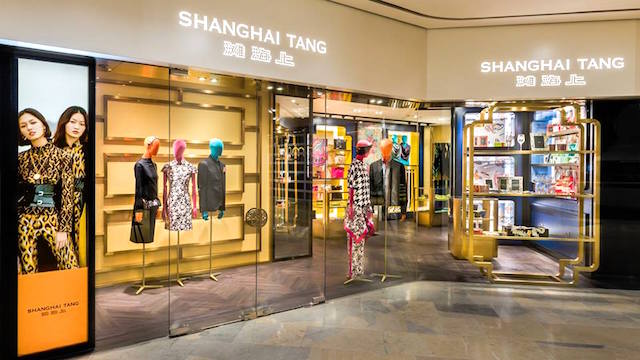
  • Shanghai Tang goes back to its roots

    Shanghai Tang goes back to its roots

    Shanghai Tang, recently acquired by Chinese entrepreneur Chen Danxia and Lunar Capital, goes back to its roots with the appointment of Victoria Tang-Owen, the daughter of the visionary founder David Tang, as Creative Director.

    Together with the appointment of Victoria to rebuild on her father’s legacy, the brand will continued to be led by the CEO Maurizio De Gasperis, former Managing Director of the brand.

    The headquarters will remain in Hong Kong, and has just welcomed a new General Manager of Global Retail, Elisabetta Bazzini, with extensive experience in Asia working with a number of luxury fashion companies including Gucci, DFS, Versace and Max Mara.

    Leveraging the heritage of the Chinese luxury brand, Victoria is set to reinterpret Shanghai Tang’s unique brand aesthetics.

    Shanghai Tang is the first Chinese authentic contemporary luxury brand founded in 1994 by Sir David Tang, and thereafter under Richemont’s ownership for almost two decades.

  • Kering’s new digital strategy revealed

    Kering’s new digital strategy revealed

    Customers draw inspiration from today’s hyperconnected world and they engage with luxury brands through the digital tools they use every day. In a fast-changing environment, the success of luxury houses depends upon their ability to offer creative propositions, and a consistent customer experience across all distribution channels and devices.

    In December 2017, Kering appointed Grégory Boutté as Chief Client and Digital Officer with the mission to carry out Kering’s digital transformation and to take the lead on e-commerce, CRM, data science and innovation for the Group. Since then, e-commerce has been the fastest growing channel for all Kering’s brands and represents 6% of the Group’s total retail sales for the first half of 2018.

    “Digital can be many different things at once – a distribution channel; a platform for offering seamless omni-channel services to clients; a driver of brand image and visibility; and a tool for engaging with customers in a personalized way. Digital technology, data science and innovation provide a way of offering our customers the best possible experience – on every touchpoint”, declared Grégory Boutté.

    Drawing upon his vision, Kering’s digital approach is based on the following objectives:

    • to provide the Group and its Houses with a real-time 360-degree view of their customers, and to deliver rich and personalized experiences;
    • to offer clients high levels of service, from initial transaction to after-sales;
    • to enable Kering’s Houses to develop close relationships with their clients and to adapt their offerings in order to meet specific needs.

    Today, Kering is announcing new milestones on its digital journey.

    The following initiatives will strengthen Kering’s focus on enhancing the Group’s omni-channel capabilities and further developing its Houses’ digital activities.

    In-store customer experience

    Kering is working on a suite of apps in partnership with Apple to be used by Houses staff in store, the first of which is a store experience app that enables sales associates in-store to access stock levels in real time to provide their customers with a fully personalized service.

    Via the app, sales associates know instantly if a specific size or color is available in-store or if it can be ordered from other stores; they can also give customized styling recommendations.

    Client service

    Kering developed a new approach to customer service with centralized teams in Europe and the US focused on addressing customers’ requests.

    Gucci, Saint Laurent and Bottega Veneta have dedicated teams, while other brands grouped their efforts under a single customer service unit, operated by Kering on their behalf.

    CRM and Communication

    Kering has launched several pilot projects using data science techniques to deliver personalized messages and experiences to customers, based on their profile and purchasing history.

    All Kering Houses have launched or are launching WeChat mini-programs in order to build as close a relationship as possible with their Chinese customers and to offer social commerce.

    E-commerce 

    Kering will leverage its in-house technology and operations team to fully internalize the e-commerce activities currently handled through the joint venture with YNAP.

    Following a highly successful and fruitful seven-year partnership with YNAP, these e-commerce activities will transition to Kering in the first half of 2020.

    Coordinated efforts and shared expertise with YNAP have enabled Kering Houses to enhance the level of service of their e-commerce websites. Most of them now offer services such as check availability, reserve in store, make store appointment, pick-up in store, return in store, exchange in store, and buy online in store.

    Kering will continue to develop partnerships with third-party e-commerce platforms when relevant.

    Digital capabilities

    A data science team has been created at Group level to improve the service provided to the clients of Kering’s Houses by making the best use of the available data.

    A China-based Client & Digital team is currently being formed. It will be responsible for adapting digital practices to the Chinese market, along with identifying and promoting innovations from China to other markets.

    Kering’s Group Innovation team has been tasked with two missions: to instill an internal culture of innovation (test-and-learn approach, quick sharing of discoveries, scouting business trends), and to work on disruptive technologies to further improve the client experience in the future in terms of business or environmental matters.

    Kering’s Chief Client & Digital Officer Grégory Boutté added: “These exciting new initiatives have been designed to meet – and exceed – the needs of our Houses’ customers and to ensure we continue to offer them an exceptional experience across all channels in a fast-changing global market. These opportunities have been made possible by the experience and know-how that Kering has gained over the years, notably through its successful joint venture with YNAPWe will continue to work with them post-transition and to enjoy a fruitful relationship.”
  • Dolce & Gabbana’s Christmas pop-up at Galaxy Macau

    Dolce & Gabbana’s Christmas pop-up at Galaxy Macau

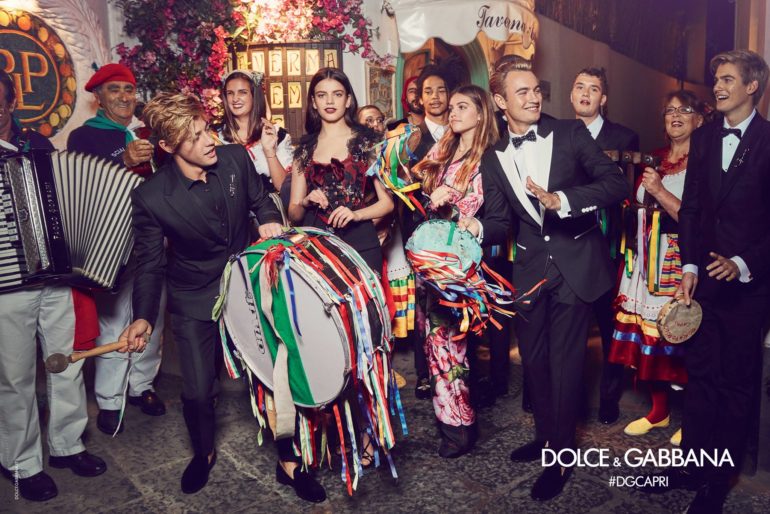
    Dolce & Gabbana is launching a new Pop Up at The Promenade Shops, Galaxy Macau, featuring its iconic colorful Christmas characters and festive decorations. Inspired by traditional Sicilian parades, the exclusive-to-Asia pop-up store features the brand’s latest collections and inventive installations.

    Shoppers will be the first to experience the pop-up at the Pearl Lobby of The Promenade Shops from 16 November 2018 through 6 January 2019.

    The italian brand will light up the Pearl Lobby with luminaria (festive lights) and ornate, hand-painted Sicilian carreto (carts).

    The craft of making carreto has been handed down from generation to generation and is often a focal point of Dolce & Gabbana’s aesthetics.

    At The Promenade Shops, they will carry the latest men’s, women’s and children’s prêt-à-porter and accessories collections, as well as an exclusive, Chinese-inspired collection featuring the beloved and playful panda.

    Shoppers purchasing at the pop-up will be entitled to various customization activities for personalized Dolce & Gabbana gifts.

    Hazel Wong, Senior Vice President of Retail for Galaxy Macau, said, “We are excited to host an unmissable, Sicilian-style Christmas celebration with delightful Chinese accents courtesy of legendary Italian fashion brand Dolce&Gabbana.”

  • Coach enters KL’s SkyAvenue Genting

    Coach enters KL’s SkyAvenue Genting

    U.S. luggage, leather goods and accessories maker Coach has unveiled a new Malaysian boutique at Kuala Lumpur’s SkyAvenue, Genting Highlands. Located inside the Malaysia capital’s innovative shopping precinct on Level 2, Coach’s SkyAvenue store spans approximately 2,002 square-feet and stocks the New York brand’s ready-to-wear collections for both women and men, as well as its iconic hand bags, small leather goods, footwear, accessories and jewellery.

    Coach Creative Director Stuart Vevers in partnership with William Sofield, designer and president of Studio Sofield, were the talent behind the store layout.

    Embellished in modern luxury, as seen in the leather and natural wood finishes that reflect the sophisticated yet playfulness of Coach, the Kuala Lumpur store boasts custom-made cabinets – made from natural and ebonised ash.

    Other texture and material plays come via the use of blackened steel, vintage bronze and wood trimmings.

    Customers will also appreciate the pinewood floor, made of custom wool carpeting, and the tasteful mid-century furniture.

    The new Kuala Lumpur store even has a ‘Craftsmanship Bar’, offering personalised monogramming in addition to leather care and cleaning.

    With more than 100 retail options, SkyAvenue is one of Kuala Lumpur’s most unique shopping experiences.

    The mall is located 6,000 feet above sea level, and is home to a huge range of retail and F&B establishments spanning across five floors. The opening comes at a time when Coach is focusing on Asia, namely China.

    Last week, the New York brand revealed it will stage its next Pre-Fall 2019 runway show in Shanghai, in celebration of the brand’s 15th anniversary.

    Titled “Coach Lights Up Shanghai,” the collection of ready-to-wear, sneakers and accessories is scheduled to show December 8, and will be the first show of its kind that Coach has done outside of New York.

    Global sales at Coach, which makes up over 70% parent company Tapestry’s sales, rose 4% in the three months ended September 29.

    For the quarter period, Tapestry net sales rose to $1.38 billion. Net income was $122.3 million, compared with a loss of $17.7 million a year earlier.

  • Furla opens largest Malaysian store

    Furla opens largest Malaysian store

    Italian luxury label Furla has launched its largest store in Malaysia. The new 1290sqft boutique in Kuala Lumpur’s Suria KLCC has been lavishly decked out in rosewood and Italian travertine marble alongside opalescent glass and champagne gold finishing on product displays. Several local celebrities were spotted in attendance at the store’s launch.

    The brand’s new range is now featured in store, including the Furla Cometa quilted camera bag and the Cometa tote. Furla is also offering its Cruise 2019 fur-free collection.

  • Jimmy Choo takes trademark action against Chu

    Jimmy Choo takes trademark action against Chu

    Jimmy Choo is taking a preemptive strike at some potential competition. Xianjie Zhu, a 19-year-old from Guangdong Province in China, goes by Jerry Chu at Central Saint Martins, where he’s a fashion student specialising in menswear.

    Last year, at the recommendation of his father, he applied to register his English name in Beijing in case he decided to use it to start a clothing line in the future. With two years left of school, Chu had not yet given starting a line any serious thought, he said.

    Last week, the footwear and accessories brand Jimmy Choo filed a request to invalidate Chu’s trademark, arguing that the similarities between the names Jimmy Choo and Jerry Chu would cause confusion in the market.

    The company cited previous trademarks it has successfully invalidated, for trademarks including Jenny Choo and Ray Choo.

    Susan Scafidi, founder and director of the Fashion Law Institute at Fordham University’s School of Law, said these disputes are common — so much so that she always urges young designers not to name their businesses after themselves.

    “Designers with common names in particular often have to engage in protracted legal disputes with companies who already own the same or similar names,” she said.

    But fashion consumers today are accustomed to distinguishing between namesake labels with similar names, such as Alexander Wang and Vera Wang, said Scafidi, and there is hope for independent designers.

    Last month, Thaddeus O’Neil, the surf-inspired menswear label, reached a settlement with surfwear brand O’Neill after more than four years of legal disputes between the two companies.

    Scafidi explained that a significant difference between those disputes and Jerry Chu’s situation is that in the US, trademarks must be used in commerce in order to be valid. Having an active business can also help demonstrate that a brand with a similar name is not producing similar products or “trademark squatting” in order to get a payout from a larger brand. Brands with global name recognition like Jimmy Choo are especially vigilant about trademark protection.

    “Jimmy Choo may well have assumed that the Jerry Chu registration was just another attempt to trade on the established Jimmy Choo name, since soundalike registrations are a particular problem in countries like China, whose primary writing system uses characters rather than letters,” said Scafidi.

    Chu and his lawyers will wait to see what the trademark committee decides, he said, hoping that the situation can be resolved quickly.

    The student posted the legal papers on Instagram this week, catching the attention of fashion’s social media watch dogs, Diet Prada, who echoed his frustration and spread the word.

    “I’m surprised so many people would care about me, an independent designer, a student,” he said.

  • Chanel’s recipe for success revealed

    Chanel’s recipe for success revealed

    Last month, Chanel reported its financials for the first time in its 108-year history, lifting the company’s traditional veil of secrecy, in part, to quash speculation that it could be acquired. The disclosure revealed that the French luxury giant generated $9.6 billion in sales last year – just a shade behind LVMH cash cow Louis Vuitton.

    What’s no secret, though, is that Chanel holds immense allure to shoppers.

    In fact, it is one of the most desirable luxury fashion brand in the world fueled by the perception that it is amongst the most exclusive brands of all.

    This is paradoxical when one considers that Chanel is also one of the most accessible luxury brands, as measured by pricing.

    In fact, it has some of the lowest entry-level price points in the business, courtesy of its beauty products. Cosmetics and fragrances allow the middle class to get a whiff of the lifestyles embodied by Chanel’s couture and prêt-à-porter offerings.

    Indeed, Chanel is a master of category segregation.

    This strategy involves confining iconic, core category products to high-end price ranges, while deftly positioning other product categories (lipsticks, for example) at lower price points to address aspirational customers.

    Such segregation has allowed the house to maintain its air of exclusivity.

    It may sound like a simple strategy, but it has helped make Chanel by far the biggest luxury goods mega-brand in retail equivalent terms, and only marginally smaller than Louis Vuittonin reported sales.

    Critical to this success has been Chanel’s leading position in beauty, a category that is heavily dependent on multi-brand wholesale distribution.

    While there are some disadvantages to wholesale distribution, from smaller margins to less control over brand experience, leveraging wholesale also means the company can have a relatively compact retail network.

    Chanel had 338 stores in 2017, or nearly 30 percent fewer than Louis Vuitton.

    As for profitability, Chanel reported an earnings before interest and taxes, or EBIT, margin of 28 percent, compared to 40 percent at Louis Vuitton.

    This suggests Chanel has much room to push its profit margins higher, especially considering its sheer scale and the economics of beauty.

    Chanel seems to be vastly outspending its peers on marketing support and communication, boosting its profile on both traditional and social media.

    All this, and a traditional focus on organic growth rather than acquisitions, means the group boasts returns on invested capital that approach those of Hermès.

    This is despite selling, general and administrative expenses equivalent to nearly half of Chanel’s sales as opposed to roughly a third at Hermès.

    Again, this suggests there is room to rise further.

    When Chanel announced its financials last month, the company said it did so to dispel the notion that it would ever be up for sale.

    While the size of the company means only very large — and ambitious — players might be able to pull off such a deal, that still leaves potential contenders should it ever decide to open its doors.

  • Hugo Boss Singapore flagship opens

    Hugo Boss Singapore flagship opens

    International fashion brand Hugo has launched a standalone flagship in Singapore. The Ion Orchard store showcases the brand’s latest Autumn/Winter 2018 collection in a 146sqm retail space. A promotional Hugo Reversed personalised t-shirt will be available in store for a limited time.

    The brand’s new expansion into the Singapore market is not expected to be aggressive, with a focus on sustainable growth and a gradual development of its casualwear line and affordable offerings.

    The firm has recently merged its labels into a core Hugo Boss branding in response to increasing competition in the industry.

  • Balmain’s comeback into the couture calendar

    Balmain’s comeback into the couture calendar

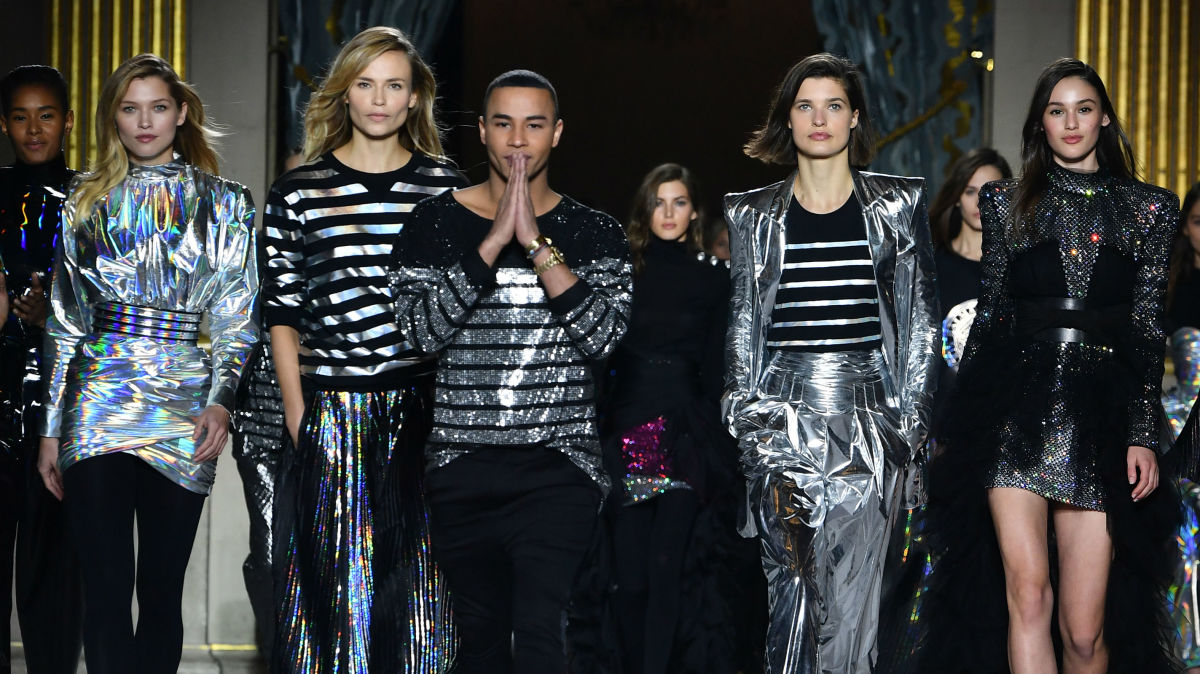
    Balmain is returning to the couture calendar for the first time in 16 years. Leading the charge is Olivier Rousteing, who has been at the creative helm of the house since 2011 and is widely credited with boosting the brand’s profile through his Balmain Army – an inner circle of internationally famous poster girls, including Kim Kardashian West and a handful of Victoria’s Secret models.

    Speaking at WWD’s Retail & Apparel CEO Summit, the French designer said that he is “looking to bring back the Parisian DNA” by reviving the couture division.

    The January haute couture shows will premiere his inaugural Balmain output as a couturier, but, he revealed, he has his sights set on accessories, fragrance and cosmetics too.

    Indeed, the Balmain expansion plan is firmly underway.

    In May 2017, Rousteing partnered with L’Oréal Paris on a collection of Balmain lipsticks that he had designed himself.

    He said the collaboration was rooted in three things: “First, the savoir faire, which means couture to me. Second, diversity, because this is a topic that is really important to me. And third, modernity.”

    As with his Victoria’s Secret collaboration the same year, and his H&M collaboration in 2015, Rousteing welcomed the chance to make his creations available to a wider audience through lower price points.

    “A lot of people love Balmain but can’t afford it, and with the lipstick they can get into the Balmain universe in an affordable way,” he said.

    “I create a world that is expensive because with Balmain it’s luxury, but if you think of my ideas and ideologies it’s more than a price on the clothes,” he explained.

    Though couture does not support the affordable aspect of the business model, it will certainly expand Balmain’s world and, crucially, underline all of Rousteing’s efforts with real craftsmanship and integrity.

  • Richemont to buy Buccellati from Chinese owner

    Richemont to buy Buccellati from Chinese owner

    Richemont group is in talks to buy Italian jewellery brand Buccellati from its new Chinese owner, according to reports from the Italian press this week. The italian press has reported the Milanese brand was being negotiated for sale with Richemont.

    The deal had apparently hit problems due to restrictions from the Chinese government regarding investments from overseas.

    Qatari investment vehicle Mayhoola was also interested.

    Bank of America Merrill Lynch was reportedly working on the sale.

    China’s Gansu Gangtai acquired Buccellati from its previous owners Clessidra in 2017, for a reported 270 million euros ($313 million), including debt.

    The news follows reports earlier in the year that Gansu Gantai planned to invest some 200 million euros to develop Buccellati.

    Richemont, which owns Cartier, among other jewellery and watch brands, was previously in talks with former Buccellati owner Clessidra, in 2016 to purchase the high-end jewellery brand.

    Both Richemont and Gansu Gangtai declined commentary on the matter.

    Founded in 1919 by the Buccellati family, the Italian jeweller was sold in 2013 to Italian investment fund Clessidra.

    In August 2017, Chinese group Gansu Gangtai Holding acquired an 85% stake.

    It has opened six stores in China alone this year, with a Beijing flagship store slated to open this month.

    Buccellati currently operates 49 namesake retail outlets between stores, retail corners and shops-in-shop, and is also distributed via 150 multi-brand retailers.

  • Karl Lagerfeld x Mood by Christofle

    Karl Lagerfeld x Mood by Christofle

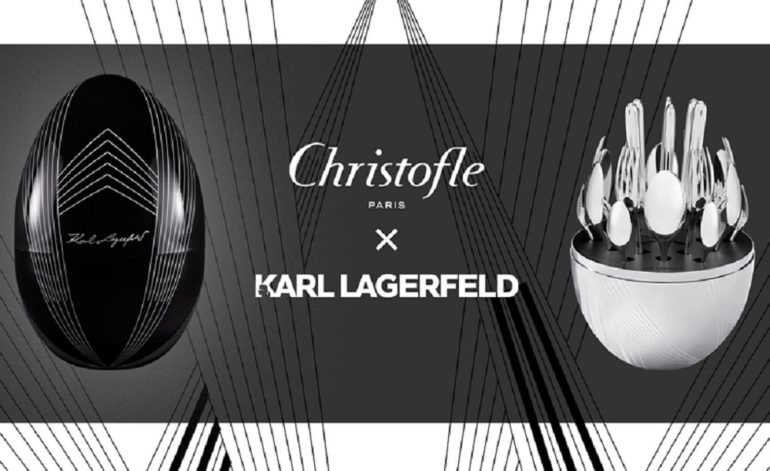
    Karl Lagerfeld has collaborated with Christofle, the luxury Parisian silversmith, on an exclusive edition of the “MOOD” flatware set and decorative case. Taking inspiration from the Art Deco movement, Karl — himself a long-time connoisseur of Christofle — designed a striking, symmetrical pattern of graphic lines to appear on the elliptical egg shape.

    There are two versions that have been created: one in polished silver and one in black, lacquered stainless steel. The sleek MOOD opens to reveal a 24-piece silver-plated cutlery set.

    Each piece is stamped with a subtle linear print, the Christofle hallmark and the iconic Karl Lagerfeld silhouette logo.

    The Mood is Christofle’s most renowned design that reimages the classic codes of table setting; it reflects the brand’s vision for relaxed but refined entertaining.

    The partnership with Karl Lagerfeld marks the first time in Christofle’s 188-year history that it has worked with a fashion brand.

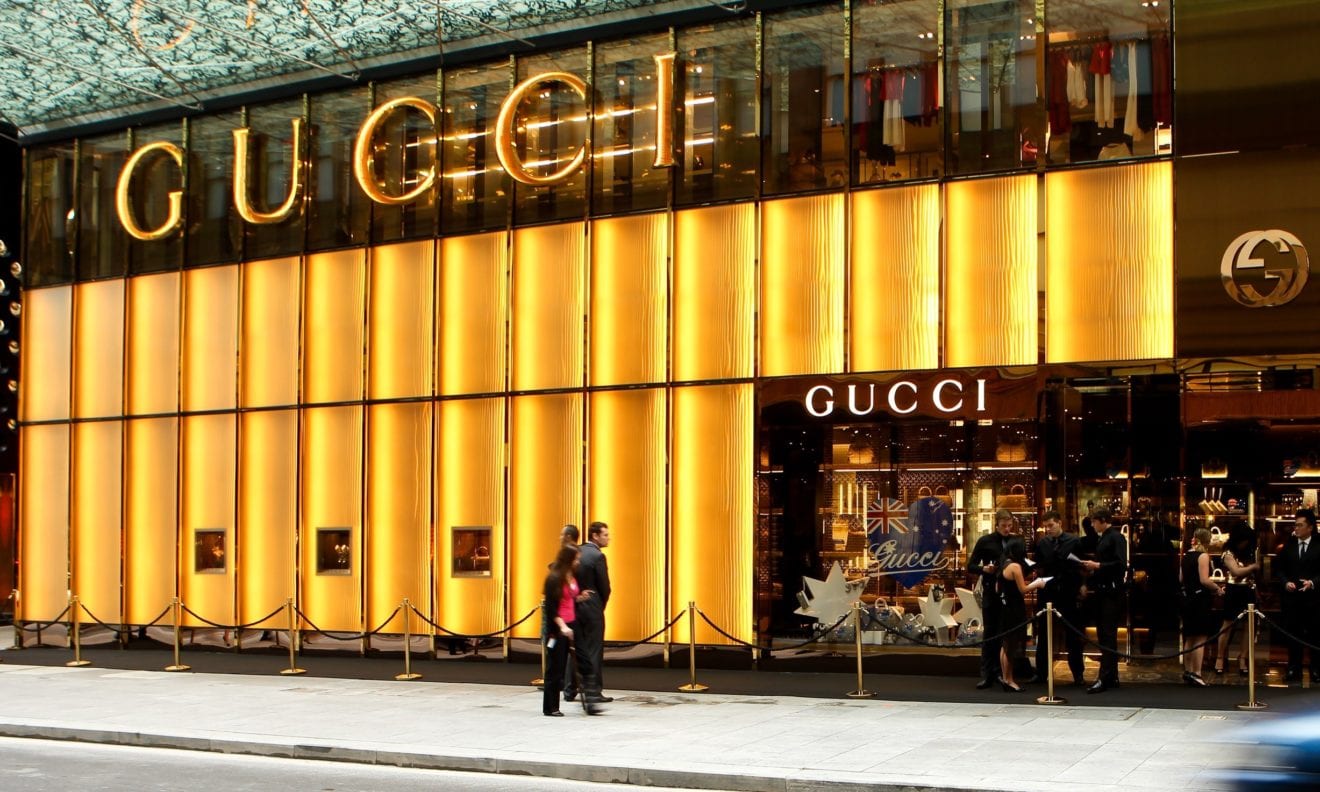
  • Gucci powers Kering third quarter sales

    Gucci powers Kering third quarter sales

    Kering sales growth significantly outpaced its rivals during the third quarter, up 27.6 per cent as reported and 27.5 per cent on a comparable basis, to €3.402 billion. In Kering-operated stores, Asia Pacific sales rose 33.3 per cent on a comparable basis, bettered only by North America’s 36.1 per cent increase. Growth in online sales exceeded 80 per cent and wholesale sales rose 27 per cent.

    “We are extraordinarily proud of the remarkable performances Kering delivers quarter after quarter,” said chairman and CEO Francois-Henri Pinault. “Our growth, whose pace is unprecedented in the luxury sector, is sound, well balanced and sustained across all regions and distribution channels.”

    Pinault said the company’s enduring success comes down to the talent of each of its brands in “creating strong emotional ties with its customers, conceiving a bold, generous creative universe, and reinventing its codes”.

    “Beyond short-term developments, we know that the secular growth of the luxury market, but particularly our solid fundamentals and the discipline with which we implement our strategy, will continue to support our operating and financial outperformance.”

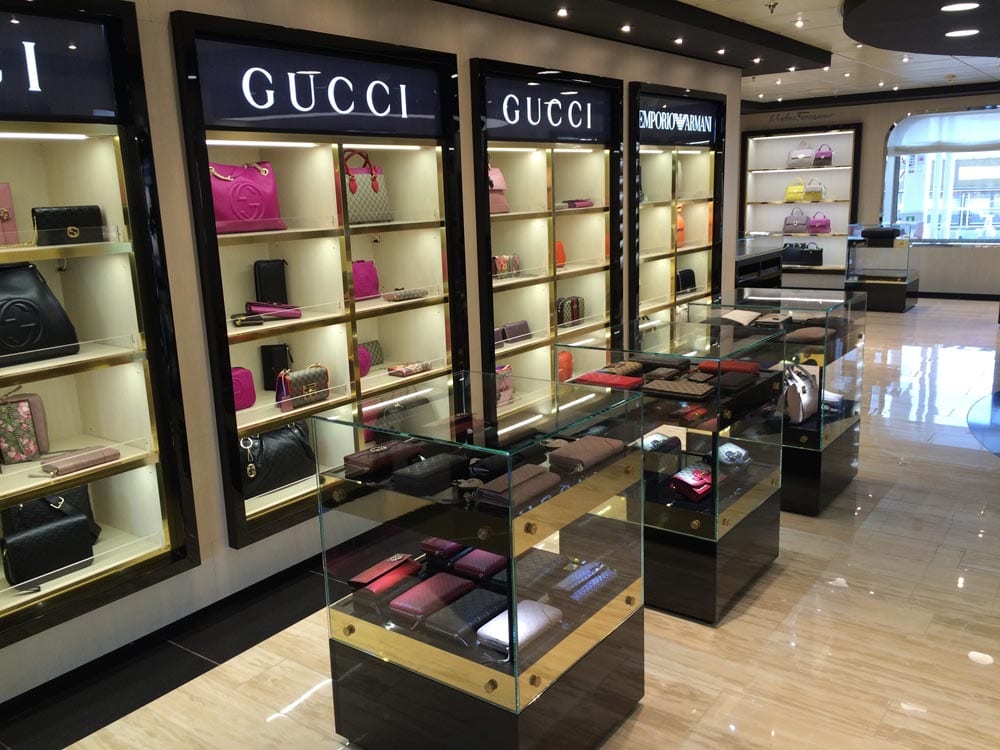
    Gucci led Kering sales growth during the quarter, with sales up 35.1 percent and strong performance across all distribution channels, regions and product categories. Gucci Asia-Pacific sales soared 41.9 per cent.

    Yves Saint Laurent sales rose 16.1 per cent, driven by the strong performance of iconic lines and the success of new collections.

    While Bottega Veneta sales were down 8.4 per cent on a comparable basis, the label is in a transitional phase led by recently appointed creative director Daniel Lee (ex Celine). His first full collection will go on sale early next year.

    Kering’s other houses (labels) achieved a 32.3 per cent increase in sales, driven by  “exceptional momentum” at Balenciaga and ongoing growth at Alexander McQueen. New collections and extended iconic lines from Boucheron, Pomellato and Qeelin were “very well received”.

    The watches and jewellery categories delivered what the company described as “solid performances”.

  • Louis Vuitton New Delhi flagship store to go bigger

    Louis Vuitton New Delhi flagship store to go bigger

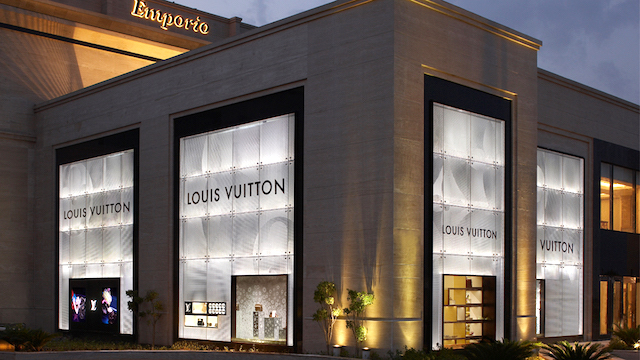
    The Louis Vuitton New Delhi flagship store is being expanded. The French luxury house, which has been present in India for 15 years, is expanding its DLF Emporio Mall outlet to another floor, and will for the first time house men’s and women’s ready-to-wear collections.

    The store’s decor uses both vintage pieces from Paris and furniture items especially created for the store, as well as Jaipur and Nepalese carpets.

    Interior designs were developed by creative teams based in France and Hong Kong. The first floor of the store is entitled “L’Appartement”, mimicking a luxury apartment with accessories and other higher-end products.

  • Tod’s is not for sale

    Tod’s is not for sale

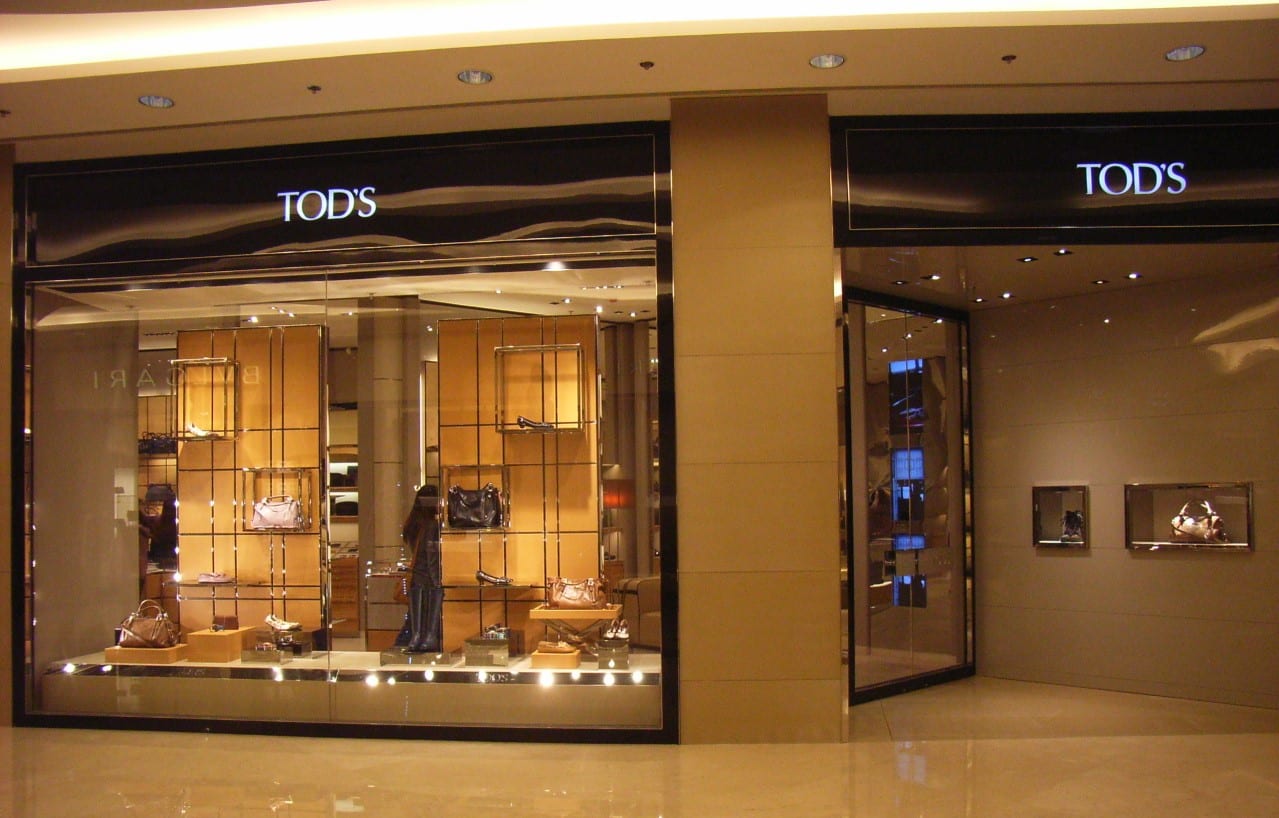
    Speaking at the 2018 Milano Fashion Global Summit, Tod’s Chairman and CEO Diego Della Valle denied rumours surrounding a possible sale of the Tod’s group, reports WWD. The report quoted Della Valle saying: “This rumor is a “recurring” one, but “if we really had to do an operation, it would be to buy, not to sell. “We are preparing the company for the next 10 years, when we will surely be attentive to new consumers, but carefully avoiding going overboard in chasing trends. We must not lose sight of who we are,” he added.

    Speculations followed after an Italian newspaper reported on Monday that Della Valle’s reorganization of the family’s holding companies may be an indication to a future sale of the group.

    The Della Valle family currently owns majority 60 percent of the Tod’s group through two separate holding companies – the Di.Vi. Finanziaria vehicle and the Diego Della Valle & C.

    For the first six months, Tod’s reported a 2.8 percent decline in its net profit to 33.7 million euros, while sales decreased 1.3 percent to 477 million euros compared to 483 million euros in the first half of the previous year but increased 1.8 percent at constant exchange.

  • Tod’s chairman denies rumours about a possible sale

    Tod’s chairman denies rumours about a possible sale

    Speaking at the 2018 Milano Fashion Global Summit, Tod’s Chairman and CEO Diego Della Valle denied rumours surrounding a possible sale of the Tod’s group, reports WWD. The report quoted Della Valle saying: “This rumor is a “recurring” one, but “if we really had to do an operation, it would be to buy, not to sell. “We are preparing the company for the next 10 years, when we will surely be attentive to new consumers, but carefully avoiding going overboard in chasing trends. We must not lose sight of who we are,” he added.

    Speculations followed after an Italian newspaper reported on Monday that Della Valle’s reorganization of the family’s holding companies may be an indication to a future sale of the group.

    The Della Valle family currently owns majority 60 percent of the Tod’s group through two separate holding companies – the Di.Vi. Finanziaria vehicle and the Diego Della Valle & C.

    For the first six months, Tod’s reported a 2.8 percent decline in its net profit to 33.7 million euros, while sales decreased 1.3 percent to 477 million euros compared to 483 million euros in the first half of the previous year but increased 1.8 percent at constant exchange.