Tag: dining

  • Big opportunities for F&B, says JLL China report

    Big opportunities for F&B, says JLL China report

    China offers “enormous room for growth” for foreign F&B brands, according to a new whitepaper from JLL China and retail data specialist LocalGravity.

    The Foreign F&B Expansion in China report explores the trends behind foreign F&B operators expanding in China and the lessons these hold for upcoming market entrants.

    With China’s middle class embracing foreign dining, Asian and Western F&B brands have expanded aggressively and become fixtures in China’s malls and shopping streets, says the report, which takes an in-depth look at the roll-out strategies of 32 international brands.

    Key insights from the report:

    ·  Overall expansion rates were high at more than 20 per cent year-on-year in 2015
    ·  Foreign brands remain active in coastal and tier-one cities, and are also expanding with increased confidence in lower-tier cities and remote regions
    ·  There is some risk in the less-wealthy provincial capitals, where many brands have over-expanded
    ·  Cafe-format shops selling coffee, tea and ice cream were the most active category, expanding 30 per cent year-on-year in 2015.

    •  Regional bias is strong among most chains, especially in the south, and there is room to catch up in wealthy east China cities.

    Closure rates

    The JLL China report has also explored closure rates by format. Analysis has revealed higher closure rates in the fast-food segment relative to other formats.

    Expansion potential has been explored to understand how store presence varies across city tiers. Of the 32 brands studied, many were found to have a strong presence in China’s top cities. However, “white spaces” across cities down to the third tier show there is an ample room for growth.

    Furthermore, many of the foreign F&B brands appear to be concentrated in south China, with other parts of the country offering untapped potential.

    “Many foreign F&B brands view the China market with understandable enthusiasm—after all, capturing even a small slice of the market translates into huge, absolute sales volumes,” says JLL head of retail research for Asia Steven McCord. “Yet the road to successfully taking advantage of the China opportunity is difficult, as some restaurant chains have discovered too late.”

    “The China F&B market is now one of the world’s largest and fastest moving, but it is still quite fragmented with enormous room for growth,” says JLL China head of retail James Hawkey.

  • Now you can book a cook on Singapore Airlines

    Now you can book a cook on Singapore Airlines

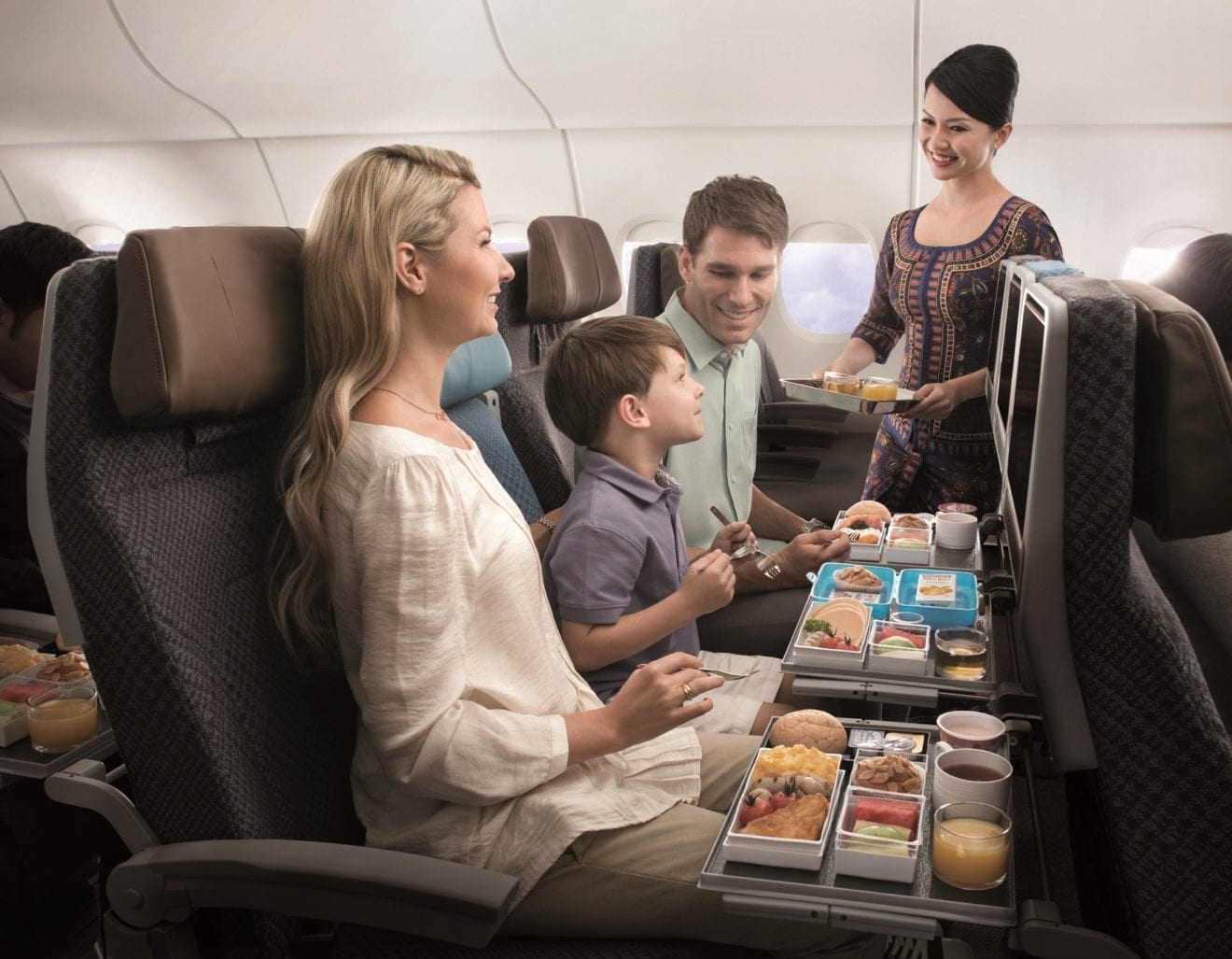
    It’s like dining a la carte 34,000 feet above sea level. That’s the “Book the Cook” experience that you get when you fly Singapore Airlines. It’s an exclusive advance inflight meal-ordering service that allows passengers in Suites, First Class, Business Class and Premium Economy Class to pre-select a gourmet dish of their choice before their flight.

    “It’s a departure from our regular meal service,” says Hermann Freidanck, food and beverage, inflight services manager. “You get to order your main course from a wide selection in a specially prepared menu up to 24 hours before your flight. Now you won’t have to settle for a dish that is not your choice.”

    At the exclusive meal presentation before local media recently at Singapore Airline’s new-concept Silver Kris Lounge in NAIA3, we got to experience firsthand what this was like. A couple of days before the event, we were sent a special menu to choose from, which included beef tenderloin steak, roasted rack of lamb, slow-cooked marinated duck leg with mushroom risotto, marinated free-range chicken, and baked herb-marinated salmon.

    The sit-down meal included an appetizer of marinated lobster with Mediterranean vegetable salad and balsamic dressing, as well as roasted pumpkin soup or snow fungus chicken soup with Chinese mushroom and quail egg. The salad was spinach and green frisée garnished with cherry tomatoes and olives with a choice of balsamic vinegar and extra-virgin olive oil or honey-mustard dressing, while dessert was a choice of  either chocolate and banana cake with vanilla ice cream and raspberry coulis or fresh mango tiramisu with verbena mango compote and biscotti by three-Michelin-starred chef Georges Blanc.

    As part of the Book the Cook service, passengers can choose from a menu of ICP dishes. “These are dishes created by Singapore Airline’s esteemed International Culinary Panel (ICP), which is a team of celebrated Michelin chefs who have restaurants or groups of restaurants in our main destinations in Europe, America and Asia,” Freidanck explains. “They work closely with our own chefs to develop unique dishes that we serve on board.” The panel includes Alfred Portale (United States), Carlo Cracco (Italy), Goerges Blanc (France), Matt Moran (Australia), Sanjeev Kapoor (India), Suzanne Goin (United States), Yoshihiro Murata (Japan), and Zhu Jun (China).

    “Our menus are planned four to five months ahead of time, on a four-month cycle. First Class and Business Class have four different main courses, while Premium Economy Class has a third choice in addition to the usual two choices,” Freidanck shares. “The way we do our menus is what we call ‘destination-specific.’ If you are going to Frankfurt, for example, you’ll have a German dish. In First Class and Business Class, you will always have  an ICP dish. Seasonal ingredients would also affect which dishes would be available.  The Japanese, as well as the Chinese dishes, go by the seasons. A bestseller is the Maine lobster, but not every country has it. It is difficult to get lamb, for instance, but because you can order in advance, you are guaranteed your main course.”

    “And then we have the Asian dishes. We look at the passenger profile, and if it’s predominantly Singaporean, for example, we try to put a Singaporean dish. We emphasize that we must represent the cuisine properly. It always has to be authentic. It must be traditional,” Freidanck adds. ‘There are also what we call the special meals which address certain conditions of the passenger, either due to religious beliefs, dietary or allergy restrictions. You can order them and we will serve you according to what you order. It’s not like other airlines where one menu fits all.”

    Singapore Airlines also launched a new “Deliciously Wholesome” program catering to the needs of an increasing number of health-conscious travelers.

    Preservation of freshness is an important consideration. Dishes are cooked with the reheating process in mind. “There is a fine line because we have to follow the hygiene regulations,” Freidanck explains. “Steak, for instance, has to be seared from the outside, so when it’s reheated on board, it’s just right. Sushi has to either be grilled or pickled or smoked. Nothing is raw. Oysters have to be cooked, following hygiene regulations.” Certain dishes can be a challenge. “Not impossible, but difficult,” Freidanck says. Dim sum, like pasta, does not reheat very well. The texture of risotto can be less appealing when overdone.

    The dishes are cooked in the kitchen, then kept in the chiller below 10 degrees so no bacteria can thrive, until it goes on board. The dishes are deconstructed and put into different containers. On board, it goes in the oven where the heat is calibrated to a certain temperature. “There is a training center in Singapore where the crew learn to do this. It’s very specific. There’s a lot of details which they have to go through,” Freidanck says. The crew gets a plating guide, which they must follow when they assemble the dishes.  First Class passengers get their meals served on real plates with fine cutlery.

    “Complementing Singapore Airline’s World Gourmet Cuisine is a selection of the finest wines from the very best vineyards, selected by some of the world’s most educated and sought-after palates. These wines are handpicked by world-renowned wine experts and blind-tasted under simulated cabin pressure, since our taste buds are affected by the cabin pressure,” notes Carol Ong, Singapore Airlines general manager for the Philippines, Guam and USTT. The Singapore Airlines Wine consultants include three Masters of Wine: Michael Hill-Smith, Jeannie Cho-Lee, and Oz Clarke.

    “So, you have just flown First Class, basically,” Freidanck says, addressing the intimate media group of happy diners at the end of the meal. The only thing missing was the altitude.
  • Does arrival of Michelin Guide reflect a more mature dining scene in Singapore?

    Does arrival of Michelin Guide reflect a more mature dining scene in Singapore?

    The Singapore Michelin Guide will be launched next year. The confirmation of a Singapore Michelin Guide as early as next year topped what has been an exciting 2015 for a nation of food lovers.

    Local fare has never been more openly celebrated, both here and abroad (what with Anthony Bourdain’s plans to bring Asian street food to New York and the supposed new chicken rice war brewing in Shanghai); and local chefs and bartenders are continuing to rake in top honours on the global stage.

    So what’s cooking for next year? The warm reception to local start-ups this year could mean that we can see more permanent brick-and-mortar outlets emulating the likes of Bird Bird House of Thai Chicken, Park Bench Deli, Paper Crane and L’eclair Patisserie. More independent restaurants are expected to woo people in the heartlands next year — even if these will be of a smaller scale, thanks to the ongoing labour crunch, said Konstantino Blokbergen, director of Singapore-based hospitality and lifestyle consulting company Gastro-Sense.

    But the arrival of the world’s most recognised dining guide is on everyone’s lips, although, whether its presence marks a coming of age for the local dining scene is up for discussion.

    “To see… Michelin penetrate the Singapore market before any other country in South-east Asia is definitely a sign of achievement in recognition and proof of our local dining scene’s maturity,” said Blokbergen.

    It will further reinforce Singapore’s standing as the regional hub for culinary excellence, added Ranita Sundramoorthy, director, Attractions, Dining and Retail, Singapore Tourism Board, who said the guide’s arrival will “encourage continuous culinary innovation and excellence among Singapore players” as well as the growth of gastro-tourism.

    While Mod-Sin cuisine pioneer Willin Low said that the Singaporean diner is far from naive when it comes to the best places to dine, other players adopted a more cautious stance.

    Said Edina Hong-Stroobant, marketing director of Emmanuel Stroobant Group: “I think it’s a budding scene. The Michelin Guide will hopefully reinforce the fact that Rome was not built in a day. One of the reasons the Japanese have a higher number of Michelin restaurants is their culture — it is all about discipline and in-depth knowledge; I think Michelin will help us achieve this maturity … but not yet.”

    Les Amis Group’s Raymond Lim predicted only four restaurants earning a coveted three-star rating. “Maturity doesn’t happen overnight, it will take at least five to 10 years. Yes, Singapore is ready (for the guide) but a market doesn’t transform so much within a year,” he said, adding that the Michelin Guide is not an award but a guidebook to the best restaurants with the best value.

    And while we’ve grown more appreciative of the value our dining scene purveys, there is clearly quite a bit of growing up left to do, before, as Low put it, “the day consumers are willing to pay the same price for a hand made soon kueh as they would for a macaron or cupcake”.

  • ‘M’ Retaurant groups up the glam factor on the Shanghai Bund

    ‘M’ Retaurant groups up the glam factor on the Shanghai Bund

    ‘M’ Restaurant Group is pleased to announce the launch of Glam, a sophisticated new Shanghai dining lounge & bar at 5 on the Bund – the same address that has been home to Shanghai institution and Bund pioneer, M on the Bund restaurant.  

    ‘M’, spearheaded by Shanghai’s legendary entrepreneur Michelle Garnaut, is famed for setting new standards of dining in Asia. Her restaurant collection began with the opening of M at the Fringe in Hong Kong (1989), from which she went on to pioneer the revival of sophistication in Shanghai with world famous M on the Bund (1999), and then further enhance Shanghai’s glamorous nightlife scene with the launch of The Glamour Bar (2006).  From here, she brought fine dining to the heart of Beijing’s Tian’anmen Square, with the opening of Capital M, (2009).

    “We look forward to bringing renewed life and energy to the heart of The Bund with an intoxicating mix of innovative and contemporary sharing plates (different from M on the Bund), fabulous cocktails, and the most extensive selection of wines by the glass offered in Shanghai.  There’s something for everyone…over 18 years of age. It’s a fun place for grownups!” says Michelle Garnaut.

    The menu, created under the watchful eye of Executive Chef Hamish Pollitt offers a delicious array of modern food designed for sharing, at prices that will have guests coming back often. With each menu, he respects the seasons, highlights local ingredients and introduces something new every month.

    Depending on the size of their appetites, guests are advised to choose one or two items from each of the sections, where favourites include the Veggie Pakoras andSweet Eggplant Pickle (RMB 36), Smoking Salmon and Salmon Caviar (RMB 48), Chili Salt-Crusted Bean Curd & Black Beans (RMB 38), Thai Tah Tah (RMB 68), 18-hour Lamb Shoulder Rogan Josh (RMB 128), and Ginger-Glazed Duck Dome Pie (RMB 108).

    The playful ‘Folly Trolley’ is stacked with a revolving selection of desserts including sweet Verrines (RMB 42) served in M’s beautiful colourful cut glasses, Alfonso’s Exploding Mango Pannacotta, Carmen Miranda’s tres fash Iles Flotante, Josephine Baker’s Chocolat Mousse, and Pavlov’s Dog … in a glass.

    A selection of madly modernistic and dramatically eclectic cocktails are on offer alongside the classics. At the vintage bar experienced mixologists are busy concocting delicious creations, many showcasing Glam Manager David’s crafted bitters, such as Saffron & Spice, Fellini Martini, Evening Thyme, Fire & Ice, or Mrs Peacock’s Folly.

    Guests enter the sensuous space through a glittering crystal waterfall, revealing low tables and dark jewel tone interiors inspired by the feathery tail of a Peacock. Designers Duncan Miller Ullmann (DMU) have ultimately created a warm and alluring interior. A comfortable mix of bespoke furniture and dark mirrored ceilings emphasize a series of works exclusively designed for Glam by famed cinematographer / artist / writer Christopher Doyle. It’s Glam on the Bund!