Tag: drink

  • Vietnam’s 2018 coffee exports at 1.88 mln tonnes, surges from last year

    Vietnam’s 2018 coffee exports at 1.88 mln tonnes, surges from last year

    Vietnam’s coffee export volumes for 2018 are expected to increase 20.1 percent from last year, while rice exports are estimated to rise 4.6 percent.

    Coffee

    Coffee exports from Vietnam will climb an estimated 20.1 percent this year to 1.88 million tonnes, equal to 31.37 million 60-kg bags, the General Statistics Office said in a report on Thursday.

    Coffee export revenue for Vietnam, the world’s biggest producer of the robusta bean, will edge up 1.2 percent to $3.54 billion in the year, the report said.

    December coffee exports were estimated at 160,000 tonnes, worth $287 million.

    Rice

    Rice exports in 2018 from Vietnam were forecast to rise 4.6 percent from last year to 6.09 million tonnes. Revenue from rice exports in the period was expected to grow 16 percent to $3.05 billion.

    December rice exports from Vietnam, the world’s third-largest shipper of the grain, were estimated at 450,000 tonnes, worth $220 million.

    Energy 

    Vietnam’s 2018 crude oil exports were seen plunging 39.5 percent from last year to an estimated 4.12 million tonnes. Crude oil export revenue in the year is expected to decline 21.2 percent to $2.27 billion.

    Oil product imports in the year were estimated at 11.35 million tonnes, falling 12.1 percent from the same period last year, while the value of product imports rose 7.8 percent to $7.61 billion.

    Vietnam’s 2018 liquefied petroleum gas imports were seen increasing 4.9 percent from last year to 1.43 million tonnes.

  • Niche market of coffee lover in Korea

    Niche market of coffee lover in Korea

    South Korea’s cafe market is notoriously crowded pushing some large players to the brink and suffering from price attacks from convenience store operators. Yet niche is still a nice place to be, judging by the experiences of a small Seoul startup.

    Two young entrepreneurs have shared their vision of launching a coffee franchise called That Coffee Roasters.

    Co-CEOs Chin Kyo-hwa and Lee Chang-hoon reported that redecorating their first coffee shop to appeal more to female customers was key to their initial success.

    According to Chin, low early revenues escalated after the change.

    “It took more than three years for our coffee shop to gain popularity,” he said. “The store’s monthly sales more than doubled in the past two months on the back of word-of-mouth online and the new interior design.

    “The store is tiny and small, but we hope to launch at least three more stores in less than five years in Seoul.”

    Chin and Lee also run a roastery factory in Guro, Seoul for direct sale to clients. While the business currently serves a small client base, the pair are already planning to expand operations as the company gains more traction.

  • The ThickShake Factory eyes 1,000 plus outlets across India

    The ThickShake Factory eyes 1,000 plus outlets across India

    The ThickShake Factory, a premium thick shake brand that recently completed a century of being operational with more than 100 outlets in India, is planning to expand its footprint in Telangana, Tamil Nadu, Andhra Pradesh, Karnataka, Gujarat, Maharashtra and many more states in the coming few months.

    According to a ANI report: The brand, which brings the concept of running a cold dessert beverage quick service business (QSB) for the first time in the country, has won a number of accolades in the recent past, including ‘The Times Nightlife – Best Beverages, 2015 & 2018’, ‘Coca-Cola Golden Spoon Awards 2018’, ‘IMAGES, Most Admired Startup of the Year’, Best Shakes Parlour Award at ‘Indian Restaurant Awards 2018’, ‘Best Business Growth in F&B’, ‘Best Beverages Swiggy Award 2018’, ‘Franchisor of the Year Award, Franchise India 2016’, and many more.

    The ThickShake Factory serves over 50 types of shakes with more than 40 topping/ mix-ins. It is famous for their ‘Shape your Shake’ feature where customers can choose what they want from the variety of toppings. The brand brings the best flavours in the form of not just ThickShakes, but a complete range of cold coffee varieties, slushies, chocolate and fruit-flavoured drinks.

    The ThickShake Factory has had an excellent journey and has only moved forward since the opening of its first outlet in 2013 with winning ‘Franchisor of the Year’ award twice, one in 2016 and the other in 2018 along with many other awards.

    The company has the vision to have over 1,000 outlets pan-India, along with a strong global presence and has created more than 300 jobs so far, mostly at the bottom of the pyramid and the lesser privileged sections of the society. Recognised as one of the fastest growing QSR chains in India, the company’s current business model is such that the outlets which are currently operational, most of them are franchise-operated and some are company operated.

    “With each day passing, we at The ThickShake Factory are only going ahead as there is no looking behind. We started with our first outlet in 2013 in Hyderabad and have come a long way from there with more than 100 outlets already. Our main focus is to provide the customers with the thickest and most delicious shakes and hence that’s the only thing in our menu. With over 50 types of shakes on the menu, we have something for everyone to suit their palate. We are excited to serve the tastiest and thickest ice cream based shakes in more cities across India,” M. Yeshwanth Nag, Founder of The ThickShake Factory said.

    The founders, M. Yeshwanth Nag and Ashwin Mocherla, were inspired by the global trend of growing appetite for sweet savouries and therefore brought the most appealing range of tastiest ‘Thick’ Shakes to India. The brand never ceases to impress with their heavenly ‘ThickShakes’ through its wide range of offerings.

  • Coffee Day India Q2 net profit plunges

    Coffee Day India Q2 net profit plunges

    Coffee Day Enterprises Ltd Wednesday reported a 59.78 percent fall in consolidated net profit at Rs 23.83 crore for the September quarter due to higher expenses. The company had reported a net profit of Rs 59.26 crore in the corresponding period of the previous fiscal.

    According to a report, Its total income grew to Rs 1,015.13 crore during the quarter under review, up 12.42 per cent, as against Rs 902.9 crore in the corresponding quarter of the year-ago period, Coffee Day Enterprises said in a BSE filing.

    Expenses during the quarter stood at Rs 1,014.99 crore, up 13.83 per cent, as against Rs 891.6 crore a year ago.

    The company said board of directors, at its meeting held on 14 November 2018, discussed the potential restructuring of the company’s business to segregate its coffee business and its subsidiaries from their non-coffee businesses (including integrated multi-nodal logistics, financial services, development and management of commercial space, hospitality services and investment operation).

    “No decision to undertake any restructuring has been taken by the board at this stage,” it added.
  • Profits down at Vietnam’s largest brewer

    Profits down at Vietnam’s largest brewer

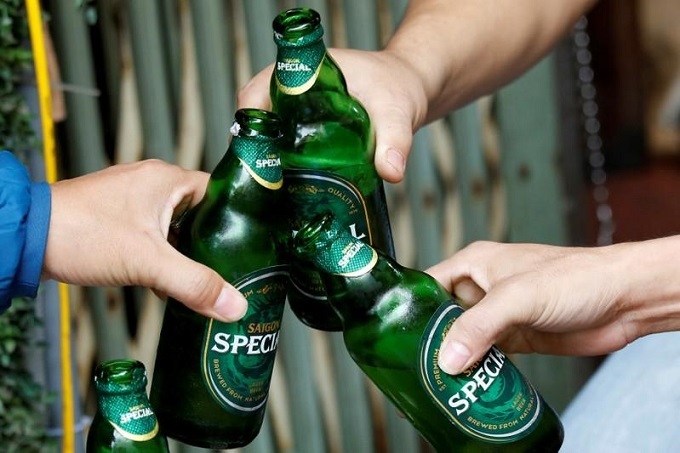
    Beer maker Sabeco has reported after tax profits of $149 million in Jan-Sept 2018, down 6 percent year-on-year. The company’s total revenue in the first nine months of the year was VND25.5 trillion ($1.1 billion), 70 percent of its annual target.

    According to the company’s third quarter financial report Sabeco, formally known as Saigon Beer Alcohol Beverage Corp, beer continued to dominate its revenue structure, netting over 85 percent of total income. The remaining revenue came from packaging, other beverages and spirits.

    Sabeco recently unveiled a restructuring plan to improve profit margins by 3-4 percentage points over the next few years.

    The company plans to adjust its business operations in five key segments: manufacturing, distribution, marketing, supply chain and storage. This plan involves the leading beer maker in Vietnam considering acquiring minority stakes in beer factories and distribution units.

    The company’s management board has also announced that one of its top priorities is to develop a better distribution system in major cities, especially in HCM City. Through this, Sabeco hopes to regain market share in urban areas currently dominated by Heineken.

    According to the Ho Chi Minh City Securities Corporation, Sabeco occupies approximately 42.8 percent of the domestic beer market. Due to increasing competition from multinational companies, this figure is down slightly from 43.6 percent in the previous year. As a result, consumption growth of Sabeco’s beer was less than the industry average, totalling 1.85 billion litres.

    The corporation estimates that by the end of 2019, Sabeco’s beer market share will increase slightly to 43 percent thanks to its marketing efforts and the launch of new products. Consumption of Sabeco-made beer is also expected to increase to 1.95 billion liters.

    Thai Beverage PCL (ThaiBev) is currently the dominant shareholder in Sabeco, which sells popular beer brands kike Saigon Beer and 333.

  • Heytea Singapore now opens in Ion Orchard

    Heytea Singapore now opens in Ion Orchard

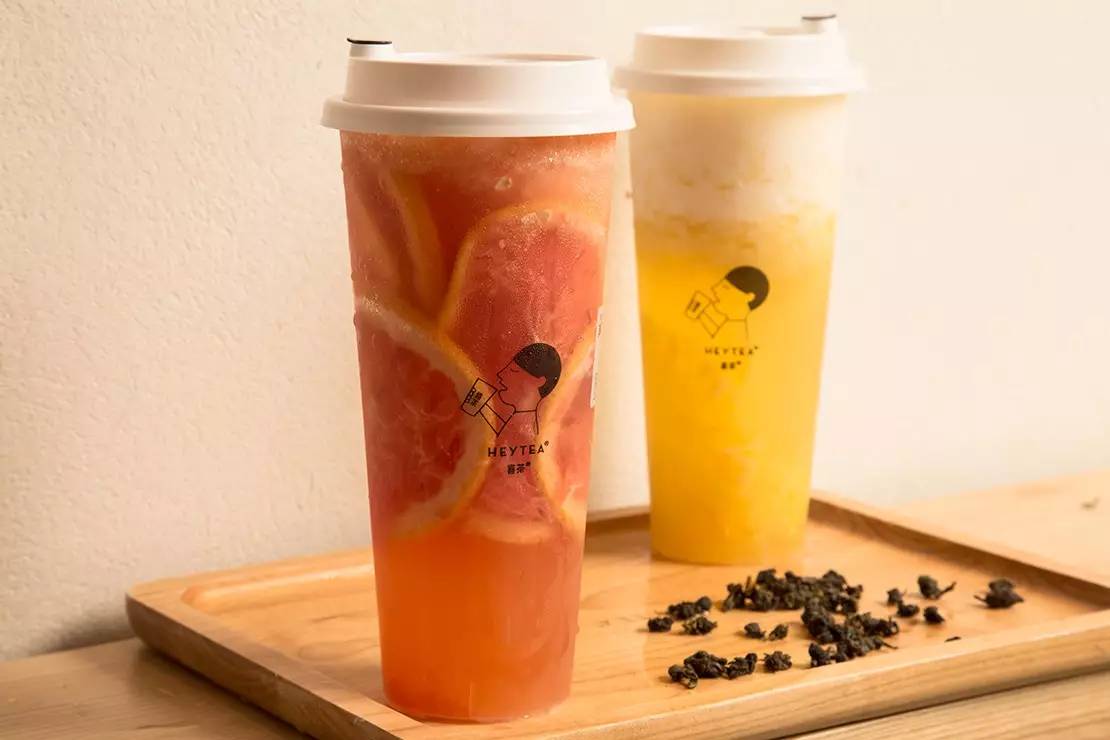
    Chinese tea franchise Heytea is launching its first overseas store in Singapore. The six-year-old chain is one of China’s most popular in its category, with each outlet selling 2000-3000 cups per day. It claims to be the franchise responsible for inventing cheese tea, serving drinks with New Zealand cheese.

    The Heytea Singapore store will feature a uniform minimalist white interior design with wooden accents, with some outlets featuring themed retail spaces.

    The new Singapore location is launching at Ion Orchard.

  • Red Bull apologises to Indonesia over offensive ad

    Red Bull apologises to Indonesia over offensive ad

    Red Bull has publicly apologised for shooting a commercial in which an athlete performed acrobatic stunts across one of Indonesia’s ancient holy temples, an official said Thursday.

    Red Bull has issued an apology in Indonesia’s national newspapers admitting it shot an advert at the 9th-century Borobudur temple “without permission from the appropriate authorities”

    The energy drink manufacturer issued an apology in national newspapers admitting it shot the video at the 9th-century Borobudur temple “without permission from the appropriate authorities”.

    The video — in which a famous “free running” athlete is shown jumping between the temple’s stone stupas — triggered outrage in Indonesia, where Borobudur is a revered Buddhist site and national icon.

    In one scene, the athlete is seen walking past a sign clearly stating “No Climbing” in both English and Indonesian before performing acrobatics throughout the UNESCO-listed heritage site.

    The video was shot secretly despite the crew having been issued a warning by temple guards, Borobudur Conservation Agency head Marsis Sutopo told AFP.

    “They must have shot again while our guards were not looking,” he said.

    The video, uploaded online on March 18, sparked outrage within Indonesia and prompted the government to threaten a legal suit against Red Bull.

    Authorities later issued a warning to the drink company after determining no physical damage had been incurred.

    Red Bull met with government officials in early June and agreed to place formal apologies in national newspapers.

    “We want to set an example because we painstakingly try to conserve this historical site,” education ministry official Hilmar Farid told AFP.

    “It was obvious as there was a “No Climbing” sign there too.”

    Red Bull have also been asked to shoot a new video explaining the importance of protecting holy sites, Farid added.