Retail News CRM

Tag: driving

  • Leading taxi firm posts first ever annual loss

    Leading taxi firm posts first ever annual loss

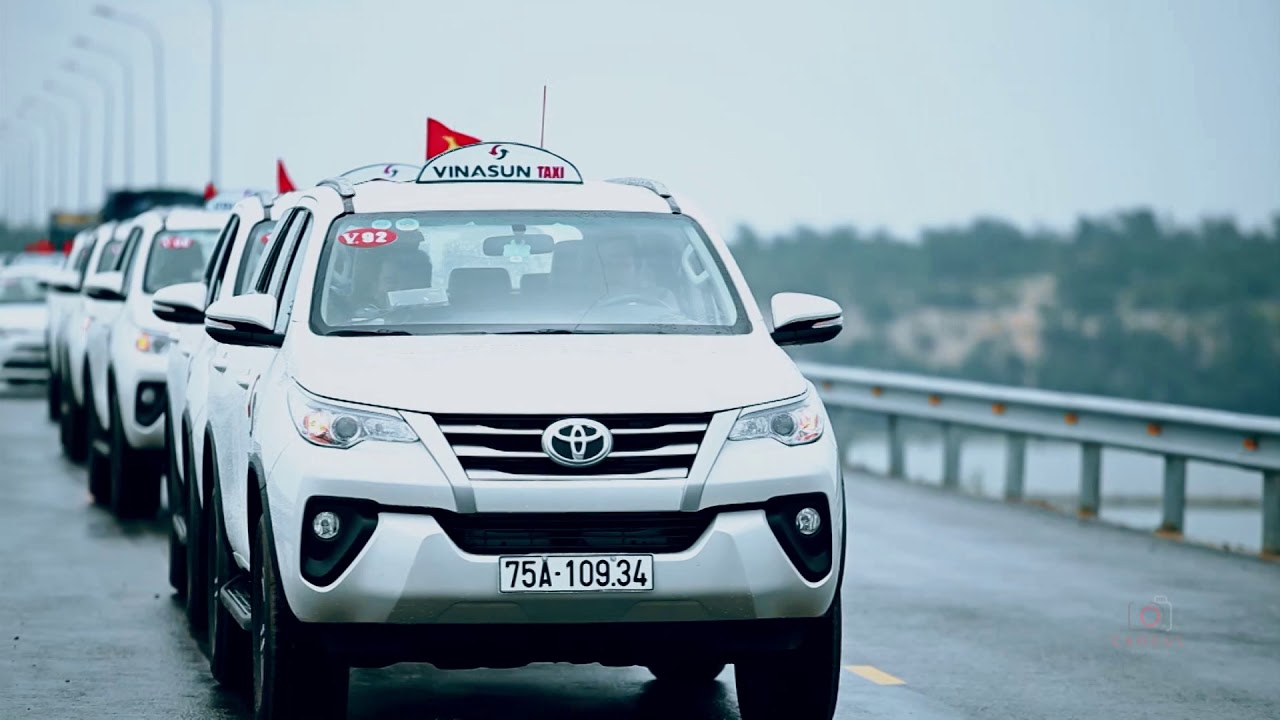
    Vinasun, Vietnam’s second-largest taxi firm, reported its first-ever accumulated loss of VND211 billion ($9.15 million) last year.

    The figure far exceeded the firm’s earlier loss forecast for 2020 at VND115 billion. Vinasun leaders have blamed the loss on the long-lasting impacts of the Covid-19 pandemic.

    The company has already laid off over 1,300 employees and taken other earlier measures to reduce operating costs.

    Vietnam’s second-largest taxi firm after the Mai Linh Group, Vinasun reported that its revenues plunged 49 percent year-on-year to VND1 trillion last year.

    The company leadership had said at an annual general meeting in June that 2020 was the most challenging year for the company since its establishment.

    The company shut down most of its operations in April last year when the country began a social distancing campaign to curb the spread of the novel coronavirus.

    As of December 31, it had total assets of over VND2.05 trillion.

  • International Driving Permits Can Now Be Renewed While Abroad

    International Driving Permits Can Now Be Renewed While Abroad

    The Ministry of Road Transport and Highway (MoRTH) issued a notification about a week ago to the effect that Indian citizens can now renew their International Driving Permit (IDP) while they are abroad, in case their IDP expires. The new amendment allows Indian citizens to apply for renewal of their IDP through Indian embassies and Missions abroad. The said applications will then be moved to the VAHAN portal in India and will be considered for renewal by respective RTOs. After renewal, the IDPs will be couriered by the RTOs to Indian citizens at their respective addresses abroad.

    The amendment also removes the requirement of providing a medical certificate and a valid visa at the time of applying for IDP in India. MoRTH believes that a citizen who has a valid driving license should not have a requirement for another medical certificate. Plus, there are countries that offer a visa on arrival or cases where visas have been issued at the very last moment. Keeping these conditions in mind, the government will now allow IDP applications without a visa.

    The Ministry of Road Transport and Highways (MoRTH) has extended the validity of vehicular documents till March 31, 2021. The Ministry decided to take this step to prevent the spread of COVID-19. MoRTH has also issued a directory to the States and Union Territory administrations regarding the extension for the validity of documents. As per the notification, vehicular documents like fitness certificates, permits, driving license, registration certificates, and others will remain valid till the end of March 2021.

  • Harley-Davidson Files For Cafe Racer

    Harley-Davidson Files For Cafe Racer

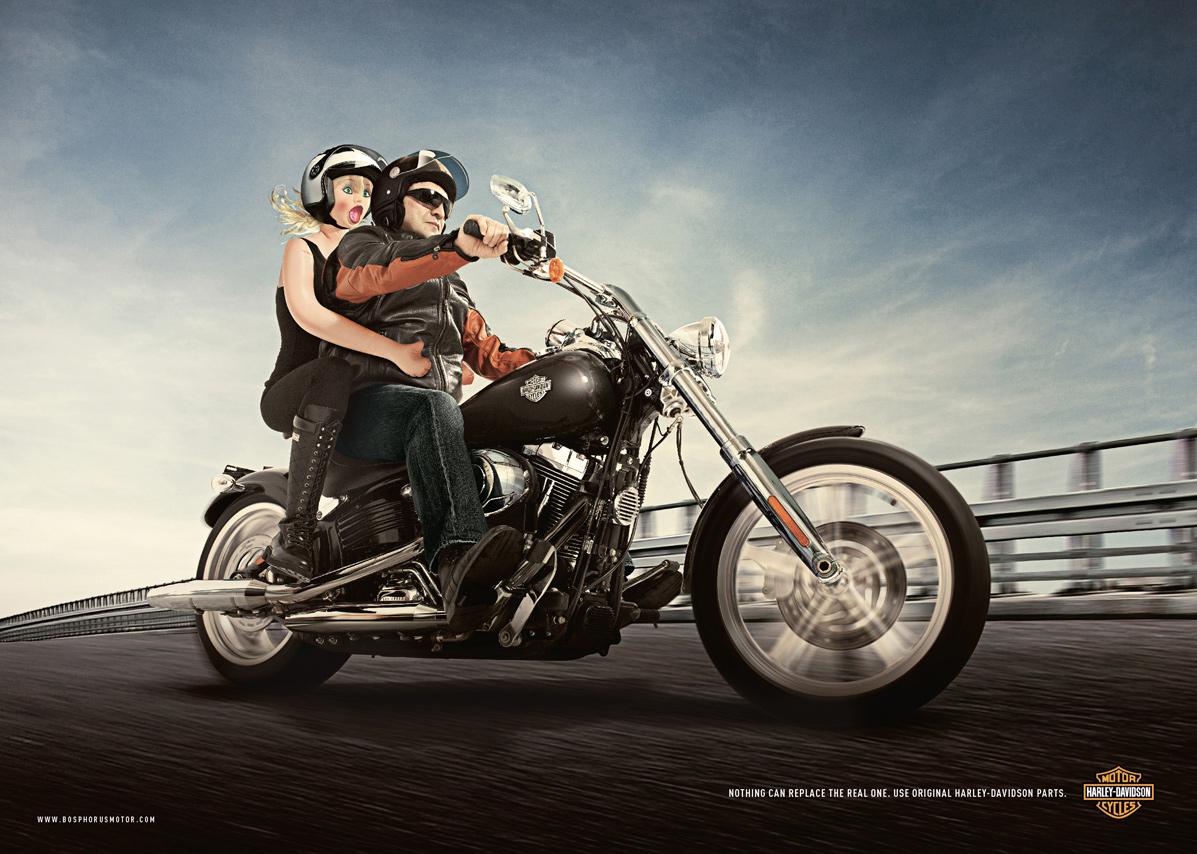
    Harley-Davidson has filed two new designs with the European Union Intellectual Property Office, using the same liquid-cooled Revolution Max engine powering the upcoming Harley-Davidson Pan America and Harley-Davidson Bronx models. The two new designs will be built on the same Revolution Max platform, and one of them will be a cafe racer styled model, and the other a flat track-inspired model. While the design drawings clearly indicate that the engine to be used on both models will be the Revolution Max v-twin, there’s still no indication of what the engine displacement will be.

    Harley-Davidson’s first adventure tourer, the Pan America uses a 1,250 cc version of the Revolution Max v-twin, while the Bronx streetfighter uses a 975 cc version. The Revolution Max v-twin is expected to get four different engine displacements, ranging from 500 cc to 1,250 cc. Prototype photos of both these new designs also surfaced, apparently from a Harley-Davidson dealer conference from September 2019.

    The photos of the prototypes look quite similar to the design drawings, but final production models may be slightly different. From earlier experience, Harley-Davidson design drawings, like the one of the Pan America and Bronx streetfighter, have gone on to be finalized for production. So, we won’t be surprised if the latest drawings also make it to the future model line-up, as Harley-Davidson looks to shake off the “heavyweight cruiser” tag and explore different segments of motorcycles.

    Designs of the flat track-inspired model show a design similar to something that could rival the Indian FTR 1200, with a similar tubular swingarm, as well as flat-track inspired high-mounted twin exhausts. The bike has a similar headlight like the Harley-Davidson Fat Bob, and like the FTR 1200, has a similar-looking rear tire-hugging number plate bracket attached to the swingarm. The bike looks like a single-seater, but Harley-Davidson could offer an aftermarket pillion-friendly seat as well once the bike gets closer to production.

    The second design is a cafe racer styled model, with a short windscreen and cafe racer-styled headlight. The exhaust is a two-into-one design, with the end can coming out on the right side of the bike, The design of the cafe racer shares the dual disc brakes and inverted fork with the flat track design, but the rear has a more traditional swingarm, and twin shock suspension set-up. The H-D Pan America, and the Bronx are yet to go into production, followed by the Custom 1250 cruiser, possibly sometime in 2021. But from these latest designs, it’s apparent that Harley-Davidson, despite the problems the brand is facing, is looking ahead to the future with several new models in the pipeline.

  • BMW India Shuts Down Chennai Plant

    BMW India Shuts Down Chennai Plant

    BMW Group India has announced a number of measures to restrict employee movement during the novel coronavirus pandemic that’s swept the globe. The automaker has announced that it will be closing the Chennai-based manufacturing facility with immediate effect until March 31, 2020, while employees at The National Sales Company and BMW India Financial Services will work from home during this period. Meanwhile, essential services including security, facility management and healthcare will continue to operate. Furthermore, the German auto giant said that it will keep all its showrooms pan India closed during this period, while aftersales and breakdown services will remain functional albeit with limitations.

    A statement from the BMW Group read, “For the well-being of employees in the midst of the COVID-19 pandemic, work from home has been implemented across BMW Group offices in India with immediate effect. Business continuity is to be ensured across all functions while adhering to all government directives and necessary safety measures. Across the BMW, MINI and BMW Motorrad dealerships in India, staff will work from home to offer services to customers. Aftersales and breakdown services staff will operate as per the local government directives and will be functional with limitations. All showrooms are presently closed and will reopen as per local government advisory.”

    Almost all major automakers including Tata Motors, Mahindra, Maruti Suzuki, FCA India and more have announced plant closures amidst the outbreak. In the luxury space as well, Volvo India had already announced that it has asked its employees to work from home, while Audi India has also shut operations with the closure of the Skoda Auto-Volkswagen facilities across India, while Mercedes-Benz too has closed the Chakan facility, near Pune. The auto industry is estimated to bear a loss of ₹ 15,000 crore every day during this phase, which further adds to the sector’s woes since the past year.

  • Qualcomm Launches Autonomous Driving Computer, Aiming To Hit Roads By 2023

    Qualcomm Launches Autonomous Driving Computer, Aiming To Hit Roads By 2023

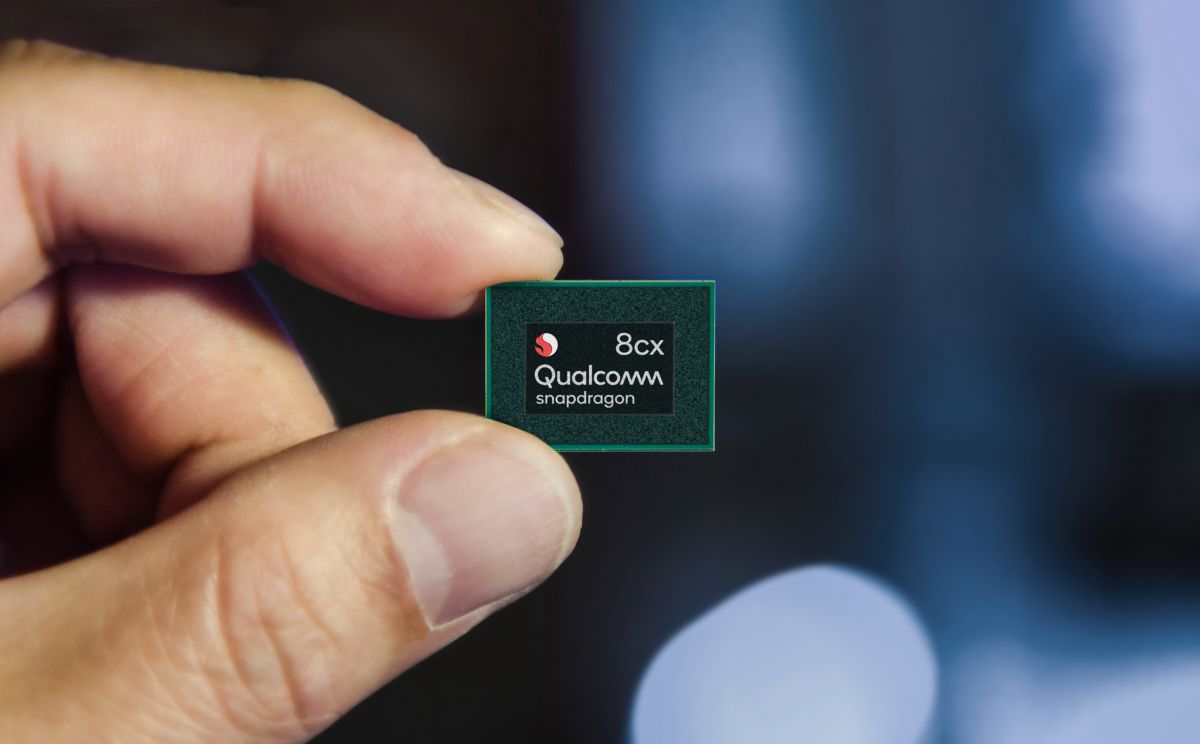
    Qualcomm Inc on Monday announced a computing system for autonomous vehicles designed to handle everything from lane controls to full self-driving that it aims to have on the road by 2023. The system, dubbed Snapdragon Ride, is the company’s first foray into a full system to power self-driving cars. San Diego-based Qualcomm, known best as the world’s biggest mobile phone chip supplier, has been a major automotive supplier for more than a decade, but primarily for the modem chips that connect vehicles to the internet and chips for the infotainment systems that power screens inside vehicles.

    Qualcomm has spent years developing self-driving technology near its headquarters in virtual silence while rivals such as Intel Corp and Nvidia Corp jumped into the market, spending billions on acquisitions supplying major automakers for autonomous driving.

    Patrick Little, the senior vice president and general manager of Qualcomm’s automotive business, said the company is using the expertise it built in the mobile phone processor business developing powerful processors that consume little electricity and generate little heat.

    Qualcomm’s new computers can fit in one hand and do not need fans or liquid cooling systems to prevent them from overheating. Lower power consumption will become important in electric vehicles, in which computers will have to compete with the drive train for battery power.

    “Many of these cars have a supercomputer in the back. It looks like your kid’s gaming PC,” Little told Reuters in an interview. “Now imagine you’re putting that in the trunk of an electric vehicle. Now your range anxiety is just doubled.”

    Qualcomm has also broken the system into pieces of hardware and software that can be scaled up or down for various needs from automakers. A smaller version of the computer can be used for simpler tasks like lane-control, or the computers can be chained together for full self-driving. Little said Qualcomm has used test vehicles in San Diego to develop its own set of self-driving software algorithms if automakers want to use them, but that it will be up to each one.

    “If they came to us with their own software stack, or even somebody else’s software stack, we’re happy to say we’ll help you” adapt it to Qualcomm’s hardware, he said.

    Qualcomm and General Motors Co on Monday also said that the automaker has expanded its existing partnership with the chip suppler into “high performance compute platforms.” Qualcomm previously provided chips for the company’s dashboard electronics, location tracking and driver-assistance systems.

  • Audi Introduces 25 Years Anniversary Package For RS Models In Europe

    Audi Introduces 25 Years Anniversary Package For RS Models In Europe

    Audi is celebrating 25 years of its RS models and has announced an exclusive package for its performance models. Audi has released an exclusive equipment package for the Audi TT RS Coupe, RS 4 Avant, RS 5 Coupe, RS 5 Sportback, RS 6 Avant and the RS 7 Sportback models. It was the RS 2 Avant that kicked off things for Audi in the hot performance segment back in 1994 and every RS model gets some elements both on the outside and inside which are inspired by the RS 2 Avant.

    The anniversary package includes a matt aluminum look with gloss black for the exterior of all models, a front blade for models like the RS 4, RS 5, RS 6, and RS 7*, as well as the inlays in the side sills. The horizontal web of the rear diffuser also features a matt aluminum look. Moreover, the four rings, RS logos and wing mirrors along with the rear wing of the TT RS Coupe are finished in gloss black. An exclusive RS anniversary logo showing the number “25” is projected onto the ground when the doors are opened and is also featured on the hub cap. The wheels itself are designed in a two-color look featuring silver and gloss anthracite.

    The interior is also inspired by the iconic RS 2. The cabin is finished in all black an there are cobalt blue accents in Alcantara on the piping of the floor mats and the 12 o’clock marking on the steering wheel rim. The RS sport seats with a honeycomb pattern in the TT RS, RS 4, and RS 5 are draped in Nappa leather with seat center panels in Alcantara, just like the very first RS 2 Avant had back in the day. The seat upholstery of the RS sport seats in the RS 6 and RS 7 is finished in perforated Valcona leather. A special touch on the inside is the ’25 years’ logo on the shoulder area of the seats, floor mats, and the door trim panels. The anniversary package has only given cosmetic updates to the RS models and mechanically they remain unchanged.

  • Tesla Raises Prices For Some Vehicles In China

    Tesla Raises Prices For Some Vehicles In China

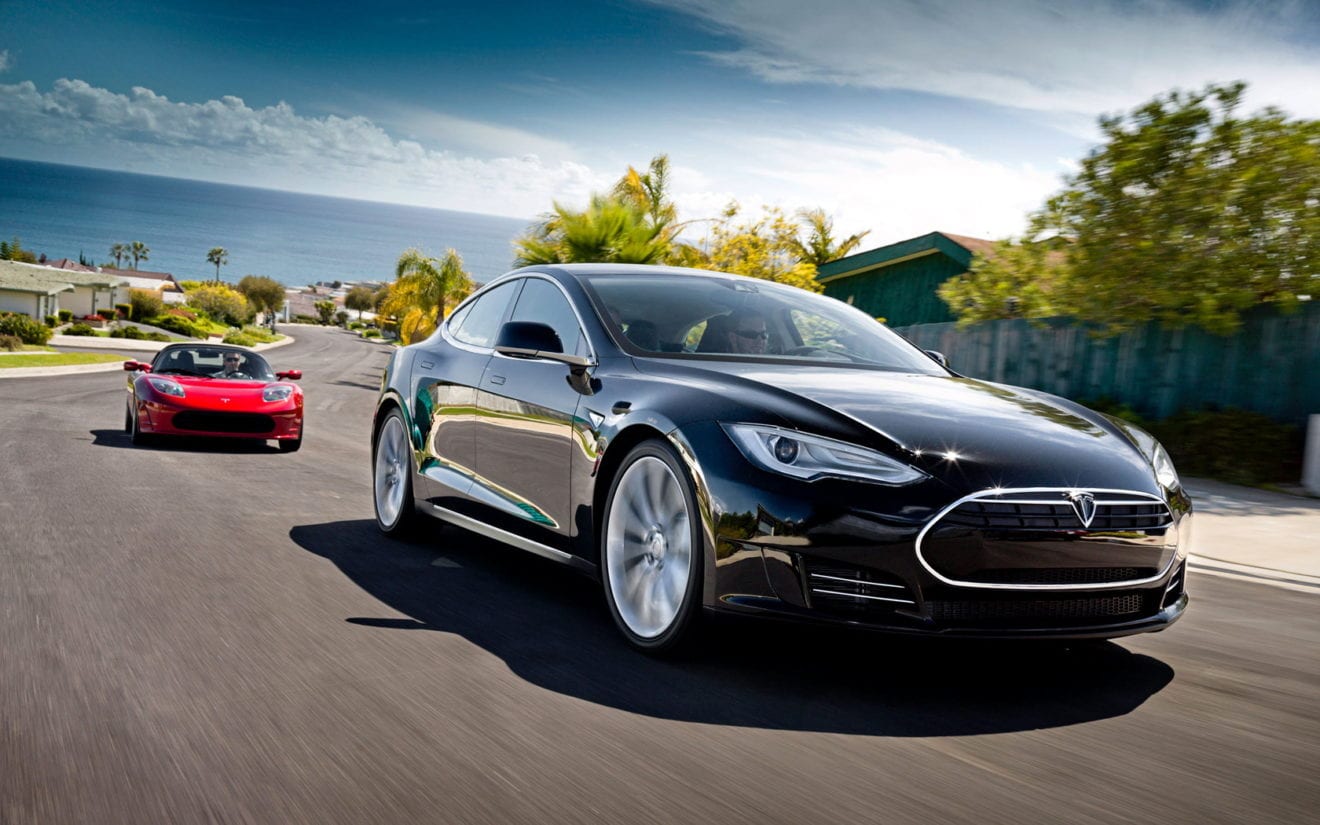
    U.S. electric vehicles maker Tesla Inc said on Friday it had raised prices for some vehicles in China, a decision that comes as the Chinese yuan trades at its weakest levels in more than 10 years.

    The starting price for the Model X sport utility vehicle (SUV) was now 809,900 yuan ($114,186) compared with 790,900 yuan previously, Tesla said on its China website. Its long-range dual-motor variants of mass-market Model 3 vehicles were now priced at 439,900 yuan, up from 429,900 yuan previously.

    People familiar with the matter told Reuters earlier this week that Tesla would hike prices on Friday and could do so again in December should Chinese tariffs on U.S.-made cars take effect.

  • Volkswagen T-Roc Cabriolet Revealed

    Volkswagen T-Roc Cabriolet Revealed

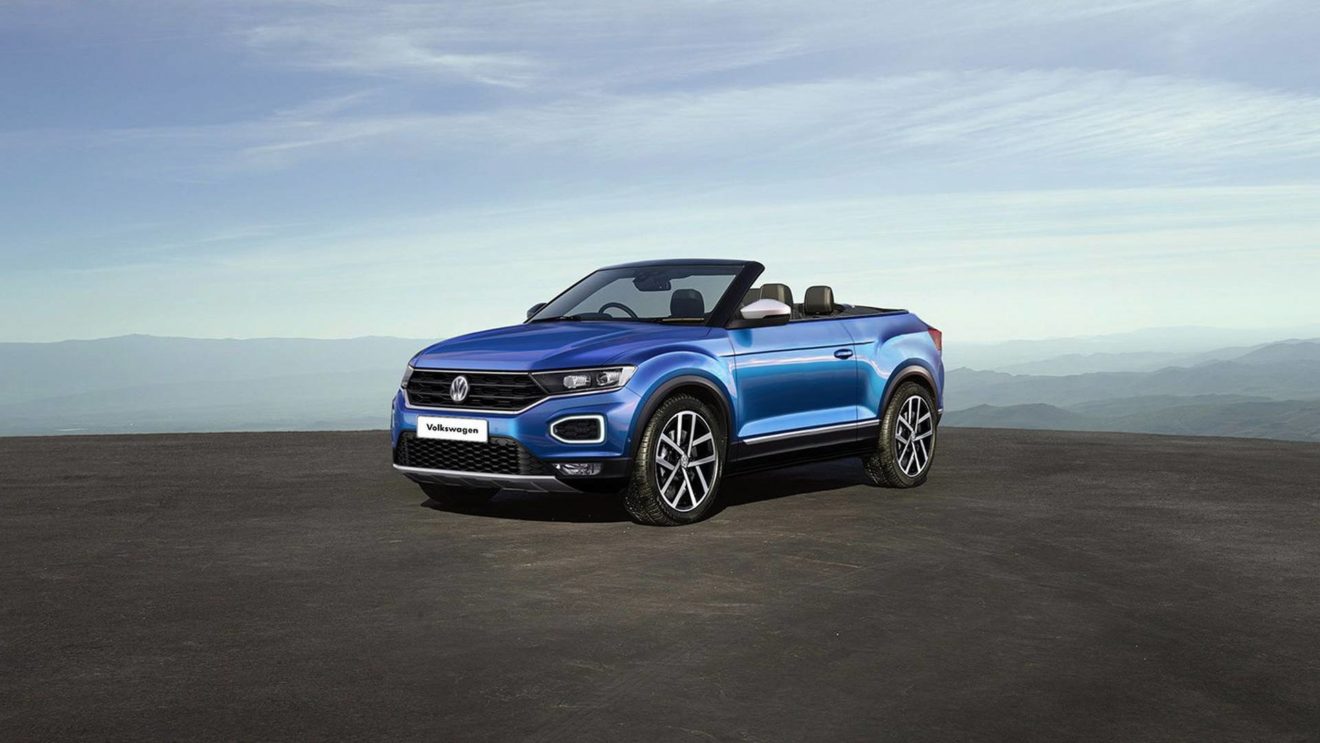
    Volkswagen is all set to bring in the first crossover convertible in the compact SUV class and it’s the T-Roc that’s going to get this treatment. The T-Roc cabriolet will add to the diversity of the booming SUV segment across the world and of course breathe in some fresh air in that segment. The T-Roc is a popular car and ever since its launch globally, Volkswagen has sold 3.60 lakh units of the car. The Cabriolet is based on the T-Roc Crossover and gets a high-quality soft top which opens in nine seconds, even when driving at speeds of up to 30 kmph. What’s more, the crossover utility vehicle boasts all of the familiar strengths of Volkswagen SUVs: elevated seating along with numerous customization options. The crossover convertible will be showcased at the 2019 Frankfurt Motor Show and will launch subsequently in global markets.

    The T-Roc Cabriolet stands out with its distinctive body style. The strikingly wide front end, prominent lines and tight proportions bring out the SUV looks. The team under Head of Design Klaus Bischoff gave the crossover Cabriolet a powerful yet refreshing appearance. “The T-Roc Cabriolet carries the freedom of design into the driving experience itself. We have redefined the CUV as an emotive lifestyle product that combines power and style in a unique way”, says Bischoff.

    Positioned within the segment under the Tiguan, the T-Roc and the T-Roc Cabriolet both share its design basis: the modular transverse matrix (MQB). The T-Roc Cabriolet is 4,268 mm long, with a wheelbase of 2,630 mm. The vehicle is 1,811 mm wide (without exterior mirrors) and 1,522 mm high. The driver and front passenger are seated at a comfortable 599 mm over the tarmac.

    Inside, the two-door model, the drivers, and passengers can expect a high degree of flexibility and generous open spaces. The same goes for the 284-liter luggage compartment, which is something to be proud of in the compact crossover segment. The versatility of this vehicle concept is also underscored by an optional towing bracket. The soft top itself consists of the linkage, the headliner, an all-over cushioned mat and the outer cover. A total of four cross braces and the front cross strut (the first large cross-member behind the windscreen frame) are mounted between the longitudinal frame of the soft top linkage. The soft top is attached to the cross struts by bolted-on fabric holding rails. This ensures that the soft top does not inflate, even when driving at high speeds. Not only does this have a positive impact on the aerodynamics, but also on the noise levels in the vehicle interior. The interior is quiet thanks to both the sophisticated design of the soft top, as well as to the specially developed window and door seals.

    Passengers in the T-Roc Cabriolet are well-protected thanks to the roll-over protection, which is located behind the rear seats and is extendable and reversible. The system used in the T-Roc springs upwards in the area of the rear headrests within fractions of a second, in response to exceeding a defined lateral acceleration or vehicle tilt.

    The T-Roc Cabriolet gets an option of the next-generation Infotainment system (MIB3), thanks to which it is permanently online – enabling it to offer completely new services and functions. The new system has an online connectivity unit, including an integrated eSIM. This means the Cabriolet can, if desired, be permanently online as soon as the driver has registered it in the Volkswagen system. Information is displayed on the Infotainment system screen, which measures up to 8 inches. When this is used in combination with the optionally available Active Info Display, with its 11.7-inch screen, a completely digital cockpit landscape can be created – what we call the Digital Cockpit. There is also the option to round off the functional equipment with a 12-channel sound system from US-based manufacturer BeatsAudio, with a system output of 400 watts, enhancing the driving experience when the soft top is open.

    Customers can choose between two efficient turbocharged petrol engines with 113 bhp and 147 bhp. The manual six-speed gearbox comes as standard with the 1-liter 3 cylinder unit while the more powerful 1.5-liter gets a 7-speed dual-clutch transmission. The open-top T-Roc is produced at Volkswagen’s Osnabruck location, a plant with a long history of making convertibles. Indeed, the convertible variants of the Beetle and the Golf were also built here.

  • Harley-Davidson LiveWire Electric Bike To Be Unveiled This Month In India

    Harley-Davidson LiveWire Electric Bike To Be Unveiled This Month In India

    Harley-Davidson will be unveiling its first-ever electric motorcycle, the Harley-Davidson LiveWire, in India on August 27. In addition to that, Harley-Davidson India will also showcase another all-new motorcycle on the same day. It was in January this year that the American motorcycle manufacturer announced the US pricing for the LiveWire, and now the bike is all set to reach our shores as well. While Harley-Davidson India is likely to reveal the official launch details at the unveiling event, we expect the new electric superbike to go on sale sometime in later 2019 or early 2020. In fact, the upcoming Harley-Davidson LiveWire is already listed on the company India’s website.

    The production version of the Harley-Davidson LiveWire made its debut at the 2018 EICMA Motorcycle Show, and it has been in the making for more than five years now. The new Harley-Davidson LiveWire comes with a new electric powertrain, called the H-D Revelation, featuring a permanent magnet electric motor that is powered by a 15.5 kWh battery. The motor offers a power output of 78 kW or 104.6 bhp, along with a peak torque of 116 Nm, and this being an electric vehicle, all of that torque is available right from the word go.

    Harley’s electric motorcycle is capable of doing a 0-100 kmph sprint is done in 3.5 seconds and more specifically, from 100 kmph to 128 kmph in less than 2 seconds. Thanks to the powerful 15.5 kWh battery, the LiveWire also offers a generous range of up to 235 kilometers, on a single charge. The LiveWire motorcycle is also equipped with a 12-volt lithium-ion accessory battery that provides power for start-up and key fob recognition.

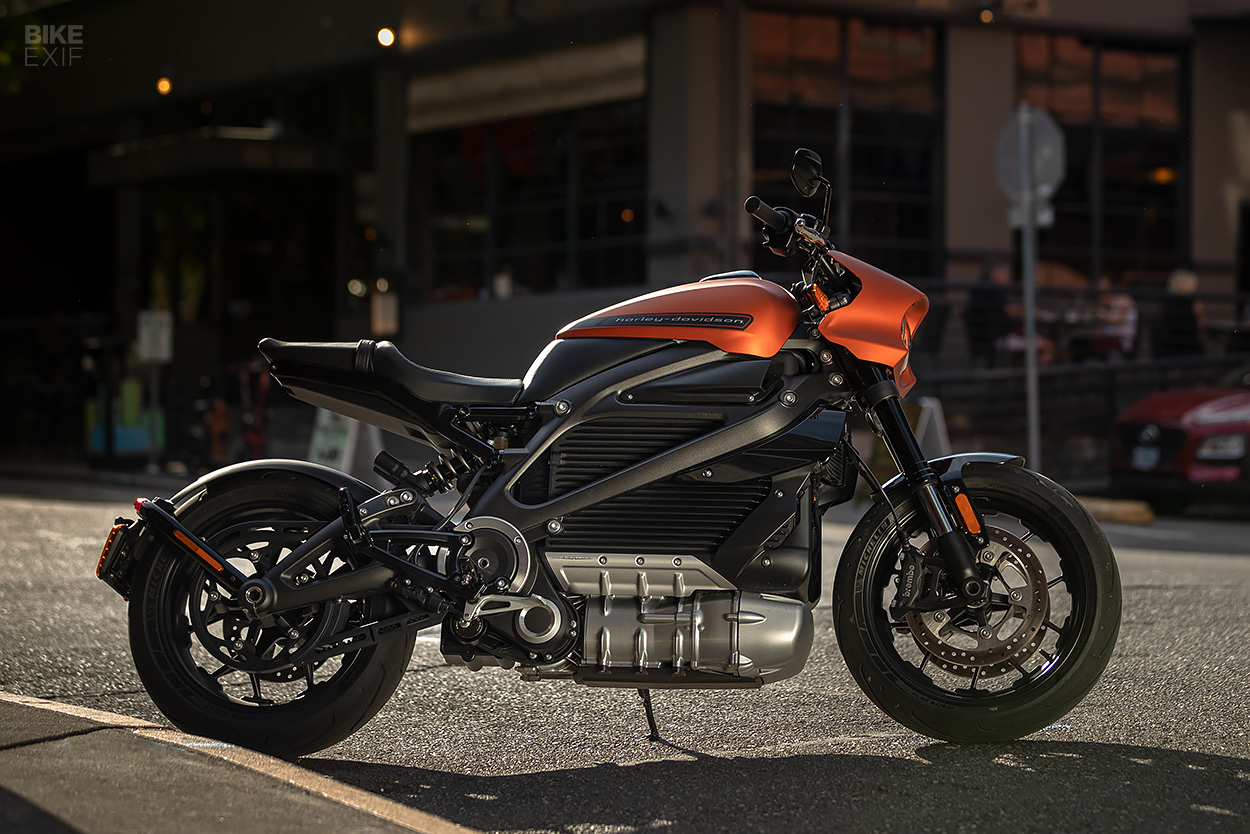
    Visually, the LiveWire does have that muscular stance associated with the brand, thanks to the massive battery pack and electric motor, trying to mimic an exposed engine. Also, the motorcycle is built around a cast aluminum frame which is lightweight and it gets Showa big-piston forks upfront along with a Showa monoshock at the rear, which is fully adjustable. For connectivity and instrumentation, the bike comes with a 4.3-inch TFT touchscreen infotainment display that is tilt-adjustable. The LiveWire has Bluetooth connectivity for use with a smartphone and a wireless headset through the touchscreen. The rider can listen to music, take calls, and hear turn-by-turn navigation instructions provided by the H-D app.

    The bike also comes with a whole bunch of electronics under Harley’s Reflex Defensive Rider System or RDRS, such as ABS, cornering ABS, traction control, cornering traction control; front-wheel lift mitigation and drag-torque slip control system. Apart from the rider assistance systems, the LiveWire also gets 5 riding modes, which are Road, Rain, Range and Sport.

  • Honda Deauville Touring Motorcycle May Be Re-Introduced

    Honda Deauville Touring Motorcycle May Be Re-Introduced

    Reports from France suggest that Honda may be working on a new version of its once-popular touring motorcycle with the Deauville name. According to French motorcycle website Motostation.com, the new Honda Deauville will be based on the current Honda CRF1000L Africa Twin. So, according to the report, the new bike will feature the same 998 cc, liquid-cooled engine which puts out under 100 bhp of power and 97 Nm of peak torque and will also feature the automatic dual-clutch transmission (DCT) as well.

    The mid-range touring motorcycle with the Honda Deauville name was in production from 1998 till 2013, and was named after the popular French seaside resort. The old Deauville had a liquid-cooled v-twin engine and featured a shaft drive, with the first generation model featuring a 650 cc v-twin engine. The second-generation model (2002-2005) featured updated bodywork, enlarged panniers and some technical modifications. The third-generation model (2006-2013) got an engine displacement bump to 680 cc, and was eventually discontinued in 2013.

    So far, Honda doesn’t have a pure road-going touring model, apart from the Africa Twin adventure touring model and the Honda Gold Wing at the luxury end of touring. The Deauville could well meet a niche segment which doesn’t seem to have too many models in the touring category from many manufacturers at this stage. So, will Honda go the dedicated touring way and introduce a new model with hard panniers and mini Gold Wing looks? Time will tell. But for now, it’s interesting news to see that Honda is at least looking at possible demand, at least in Europe for now, for such a model, if at all it is introduced.

  • Harley-Davidson LiveWire Electric Motorcycle Unveiled

    Harley-Davidson LiveWire Electric Motorcycle Unveiled

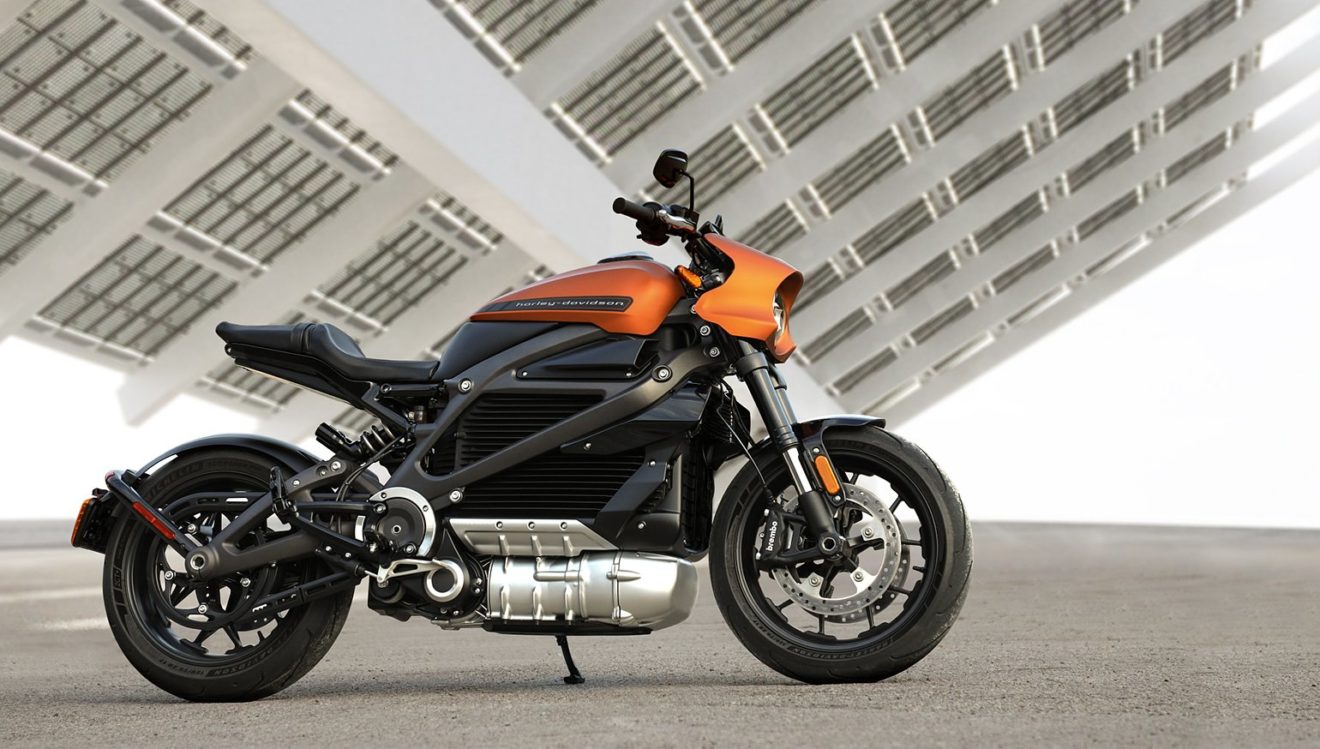
    Harley-Davidson has unveiled the production version of its first electric cruiser and it is expected to go on sale in 2020. The Harley-Davidson LiveWire made its debut as a concept at the EICMA 2018 motorcycle show and at the Consumer Electronic Show (CES) 2019, the American motorcycle maker had announced that it will take pre-orders for its first electric model. Harley-Davidson intends to work on a complete range of electric motorcycles and the LiveWire will kick things off for the company in the electric mobility space. The bike maker has also revealed the pricing on the Livewire that costs $30,000 in the US (around ₹ 20.56 lakh).

    The LiveWire is powered by a new electric motor which Harley-Davidson calls the “Revelation” drivetrain. The new drivetrain uses a belt drive to power the motorcycle forward. The electric bike also comes with a number of advanced features like a telematics system called H-D Connect which gives data about the motorcycle’s battery charge and service reminders to the owner via Harley’s connected app. Harley-Davidson aims to make LiveWire the first cellular-connected electric motorcycle.

    The company has already revealed the specifications and details about the performance of the LiveWire and claims that it can clock triple digit speed in just 3.5 seconds along with a top speed of 177 km on a single charge. The manufacturer claims a range of 235 km on a single charge. Ride assist features on the LiveWire include traction control and anti-lock braking system (ABS) which will be assisted by an inertial measurement unit (IMU). Moreover, it also features a signature Harley-Davidson sound as it accelerates.’ Additionally, the LiveWire gets rear-set pegs, Brembo calipers and a steel trellis frame with inverted Showa forks and a monoshock at the rear. It is also packed with equipment like multiple rider modes, Bluetooth connectivity and a full-colour TFT instrument console.

  • BMW X6 Revealed; Global Launch In November

    BMW X6 Revealed; Global Launch In November

    BMW took the wraps off the new-generation X6 sports activity coupe. It is the third generation model and has been updated completely. Beginning with the looks, the X6 gets a bigger kidney grille up front and the headlamps are more angular than rounded. Plus, the grille itself has a lighting function should you choose to switch it on. The X6 is now more chiseled and wears a sculpted look as compared to the more rounded look that the outgoing model had. The new X6 also grows in size with the length growing by 26 mm to 4,935 mm and the width growing by 15 mm to 2,004 mm. The wheelbase too increases by 42 mm to 2,975 mm, although the height is now reduced by 6 mm at 1,696 mm.

    The interior has been updated as well. It has a minimalist, sporty look thanks to Vernasca leather upholstery and new dashboard design which is driver focussed. Like any other BMW SUV, the new X6 too gets a bunch of standard and optional features which include multifunction seats with massage function for the driver and front passenger, four-zone automatic climate control, thermoelectric cup holders, Panoramic roof, interior fragrance package and a Bowers & Wilkins 3D Surround Sound System.

    BMW will offer four engines on the new-generation X6 including two petrol and two diesel engines. There will be V8 petrol and straight six petrol engines making 530 and 340 bhp respectively. And there is an in-line 6-cylinder diesel engine in two states of tune, making 400 bhp and 265 bhp. All new BMW X6 models come as standard with an eight-speed Steptronic transmission, while intelligent all-wheel drive maximises traction, agility and directional stability.

    Other features on the new BMW X6 include air suspension wherein one can alter the ride height of the SUV through 80 mm, and there is an off-road package on offer as well but not on the BMW X6 M50i and the BMW X6 M50d.

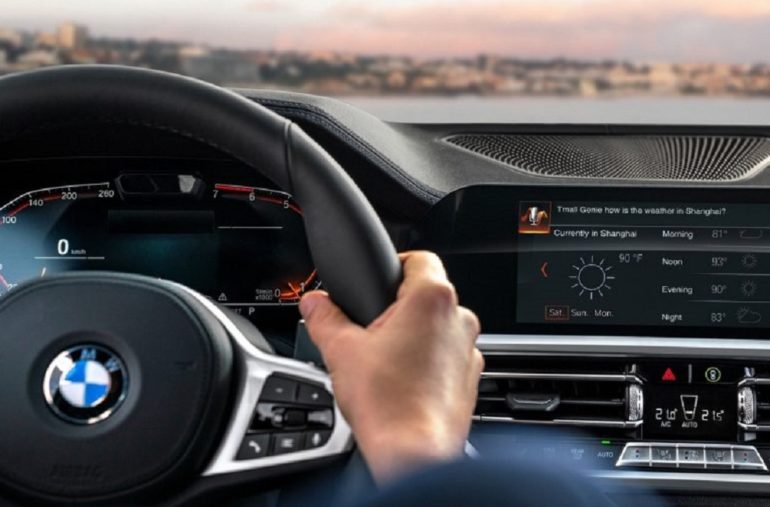
    The other interesting feature is the BMW Intelligent Personal Assistant, which responds to the command of ‘Hey BMW’ and users can choose the name for the digital assistant as well. The assistant will be able to explain all sorts of different functions provide up-to-date information and assist the driver. The range of functions and skills available will be constantly expanded as part of regular updates, which can be carried out seamlessly on a smartphone and in car via remote software upgrade.

  • Nvidia Boosts Self-Driving AI Business With Volvo Trucks Deal

    Nvidia Boosts Self-Driving AI Business With Volvo Trucks Deal

    Sweden’s AB Volvo is joining forces with Nvidia to develop artificial intelligence used in self-driving trucks, in a boost for the U.S. chipmaker that was ditched by Tesla last year. The agreement announced on Tuesday by Nvidia and Volvo, the world’s second-biggest truckmaker after Daimler, is a long-term partnership spanning several years. Work will begin immediately in Gothenburg, Sweden and Santa Clara, California. Volvo, which demonstrated its first autonomous truck last year, said the partnership would develop a flexible, scalable self-driving system, which is planned to be used first in pilot schemes before commercial deployment.

    “The resulting system is designed to safely handle fully autonomous driving on public roads and highways,” Volvo said in a statement. Nvidia, known for its powerful gaming graphics chips, has been aggressively expanding into the automotive sphere, where trucks – with their regular routes that are easier to automate than cars navigating traffic – may lead the way in self-driving.

    Potential demand is strong in the United States in particular, where a shortage of truck drivers has been pushing up freight costs. Together with Intel, Nvidia dominates the fast-growing AI chip market.Nvidia, which has previously announced technology partnerships with automakers including Volkswagen, Mercedez-Benz and Toyota, said it was thrilled to team up with Volvo.

    “The latest breakthroughs in AI and robotics bring a new level of intelligence and automation to address the transportation challenges we face,” said Nvidia Chief Executive Jensen Huang.

    Volvo said last week its self-driving truck, “Vera”, would begin transporting goods from a logistics center to a port terminal in Gothenburg in collaboration with logistics firm DFDS, in a first step toward operations on public roads here.Nvidia’s so-called Drive Constellation chips often power the machine learning used to refine self-driving car software algorithms inside data centers, and the company has also been working to build its Drive chips into cars. Automotive chips accounted for $641 million of Nvidia’s $11.7 billion in revenue in its most recent fiscal year.

  • Cheaper Sensors Could Speed More Self-Driving Cars To Market By 2022

    Cheaper Sensors Could Speed More Self-Driving Cars To Market By 2022

    The first heavily automated mass-market vehicles for consumers could go on sale as soon as 2022, if one or more vehicle manufacturers adopt a new sub-$500 lidar sensing package being developed by Silicon Valley startup Luminar.The tremendous cost of lidar – prices for individual sensors currently range from about $6,000 to more than $100,000 – is one of the big stumbling blocks to the wide rollout of self-driving vehicles, whether in commercial delivery and robo-taxi fleets such as those being developed by Ford Motor Co and General Motors Co, or in passenger vehicles aimed at consumers.

    Luminar has developed a low-cost lidar platform that bundles hardware and software and is being tested by several automakers, according to Austin Russell, Luminar chief executive officer and founder.

    The company’s new Iris system will be offered in two versions, one that will enable hands-free “freeway autonomy” and a less expensive version that will enable some automated functions, such as automatic emergency steering and braking. The first is designed to sell for under $1,000 at higher production volumes, while the second, which is intended to plug into manufacturers’ advanced driver assistance systems (ADAS), is expected to sell for under $500, Russell told Reuters.

    Manufacturers and suppliers are increasingly skeptical about the speed of adoption of fully automated self-driving systems, because of both their high cost and complexity. In the meantime, they have begun focusing on deploying more ADAS features, which share components, but cost much less and can generate much-needed revenue to help defray the cost of developing full self-driving systems.

    Lidar-driven ADAS “can be more easily monetized by the manufacturers (and) more easily implemented today” than fully automated systems, said Steve Lambright, vice president of marketing for lidar startup AEye, which is developing components for both types of systems.

    In the meantime, a long-predicted shakeout in the lidar sector has yet to materialize, judging from a recent flurry of investments and acquisitions, even though the industry has yet to embrace a single lidar technology.

    Israeli startup Innoviz, backed by suppliers Aptiv Plc and Magna International Inc , just closed a Series C round of funding and has raised a total of $252 million – more than any of its rivals – with new money from SoftBank Ventures Asia and several large Chinese investors.

    A new player, North Carolina-based Sense Photonics, this week closed a Series A round and has raised more than $43 million, with backing from corporate investors Samsung Ventures and Shell Ventures.

    Aurora, a Silicon Valley self-driving startup backed by e-commerce giant Amazon.com Inc and automaker Hyundai Motor Co , recently acquired Montana-based lidar startup Blackmore.
  • New Piaggio Ape City Plus 3-Wheeler Launch Date Announced

    New Piaggio Ape City Plus 3-Wheeler Launch Date Announced

    Piaggio India has officially announced the launch date for its upcoming new three-wheeler, the Ape City Plus. Slated to be launched on June 14, 2019, the new Piaggio Ape City+ auto rickshaw will be the newest addition to the mid-body segment three-wheelers. Piaggio claims that with the new Ape City+, the company will address its customers’ needs perfectly in the last mile segment, suitable for both cities as well as the rural markets.

    Currently, in the people carrier space, Piaggio India offers three models – the Ape City, the Ape Auto+, and the Ape City HT. The existing Ape City comes in two engine choices – petrol and diesel, and the former comes with three fuel options – petrol, CNG and LPG. The petrol version is powered by a 197 cc that is tuned to churn out about 10 bhp and 17.6 Nm of peak torque, along with a fuel efficiency of 29.43 km.

    The same motor in the CNG version makes 9.6 bhp and 15.3 Nm of peak torque, with a mileage of 27.36 km/g, and in the LPG version, it makes 10.46 bhp and 16.7 Nm torque with a fuel efficiency of 22.7 km/g. The diesel model comes powered by a 435 cc oil burner that is tuned to churn out around 8 bhp and develops 21 Nm of peak torque. The motor offers a fuel efficiency of 32.32 km. We expect the new Ape City+ to come with the same engine options.

    In the invite sent by Piaggio, the company has also confirmed that at the launch, it will talk about upcoming technology in Piaggio products and its future plans for the Indian market. So, we expect the automaker to reveal its plans for the Bharat Stage VI / BS6 transitions and maybe even electrification.