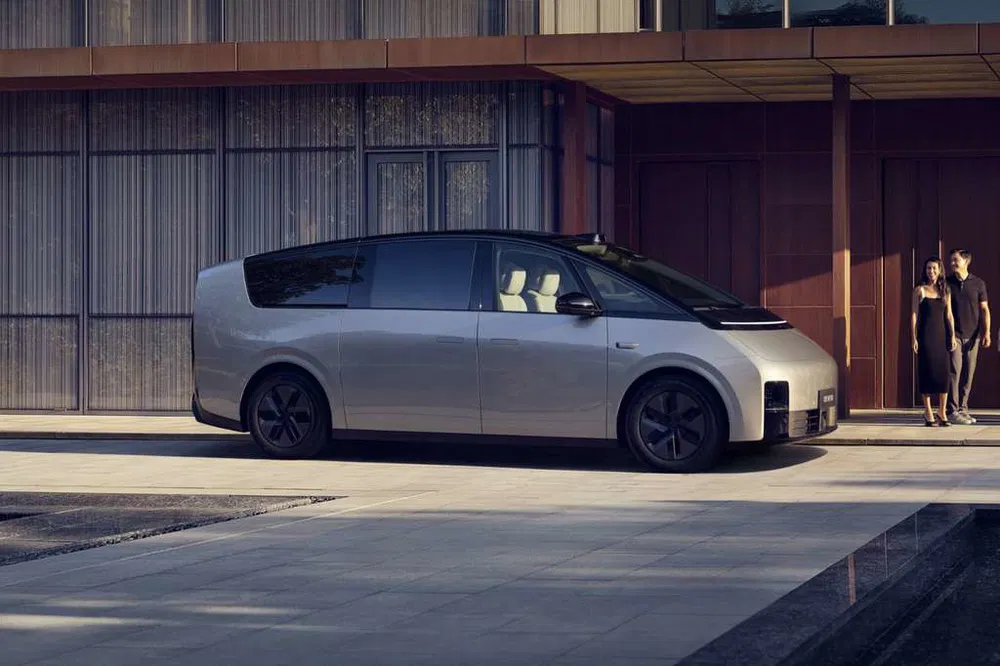
Li Auto introduced its flagship L9 sport utility vehicle in the United Arab Emirates on Thursday, pricing the extended-range model from AED 319,900 ($87,100).
The rollout gives the Chinese electric vehicle maker its first commercial sales operation in the Gulf, where it sells the SUV at a 28 percent premium over domestic retail prices.
Local buyers can choose between two trims: the base Ultra and the AED 359,900 Livis edition. Both variants use a third-generation extended-range powertrain pairing a battery pack with a petrol generator, delivering 420 kilometres of battery-only range and 1,650 kilometres combined under China Light-Duty Test Cycle standards. The vehicles feature Qualcomm Snapdragon 8797 cockpit processors, steer-by-wire systems, and rear-wheel steering. On the higher-spec Livis, Li Auto includes an 800-volt active suspension alongside electromechanical brake-by-wire hardware.
Dealership network and regional adaptation
Engineers modified cabin thermal management and dust sealing to handle Gulf summer temperatures and desert driving. Digital interfaces include Arabic text support and localized navigation, with Arabic voice control scheduled for release by December. English voice interaction functions from launch.
Sales run exclusively through Abu Dhabi-based conglomerate Al Fahim Group under an agreement signed in April. The partnership plans more than two showrooms and service centers across the country, starting with a downtown Dubai retail location opening in September. Buyers receive factory warranty coverage, certified servicing, and over-the-air software updates.
Middle East expansion and production targets
Chinese electric carmakers are pushing into the Middle East to broaden export revenue outside domestic price wars. Li Auto previously entered Kazakhstan and Uzbekistan, securing a local assembly contract with Kazakh group Allur. The company also signed a distribution agreement with Mohamed Yousuf Naghi Motors in Saudi Arabia in April, though sales dates for that market remain unannounced.
Deliveries in China recovered in August to 37,679 units, up 32.07 percent year-on-year, but total volume for the first eight months fell 0.6 percent to 261,619 vehicles. The Beijing-based carmaker posted a second-quarter net loss of 1.7 billion yuan ($250.8 million) as revenue declined 15.1 percent to 25.7 billion yuan.
Next on the company’s overseas calendar is an appearance at the 2026 Paris Motor Show, where it plans to display vehicles to European buyers for the first time.