Retail News CRM

Tag: durian

  • Durian prices plunge by half

    Durian prices plunge by half

    Durian prices have plunged by half in nearly two months as harvest season approaches and supply is abundant.

    Farmers in the southern provinces of Tien Giang, Long An, Binh Phuoc, and Dong Thap sell their Ri6 durian for VND75,000-VND85,000 per kilogram ($3.19-$3.62), down from VND190,000 in earlier February.

    Lanh, a farmer in Tien Giang, said he sold seven tons of durian for VND75,000.

    “I sold quickly due to a fear of a steeper plunge,” Lanh said.

    In Can Tho City, Hanh is selling the lower quality durian for VND45,000 per kilogram, down by half from last month.

    Prices are set to fall further as harvest season in Binh Phuoc and Dong Nai provinces approaches, she added.

    Van Hoa Investment and Development, which buys durian from farmers for export, is offering VND95,000 per kilogram for the highest quality and VND75,000 for the medium segment. The company buys 20-30 tons a day from suppliers.

    Traders say that the increase in supply as the harvest season approaches has pulled down durian prices. Furthermore, other fruits, such as rambutan and plums, will be harvested soon, which will make durian less attractive.

    Prices could fall even further in May when durian farms in the central highlands begin to harvest.

    Vietnamese durian will also have to face competition in the summer with durian from Thailand and the Philippines.

    Vietnam’s durian farming area reached 110,000 hectares by the end of last year after the country was allowed to export the fruit officially to China. This exceeded the government’s plan by nearly 47%.

    In the first two months this year some farmers in the southern and central highlands regions even chopped down coffee, pepper and rice to grow durian as prices surged.

    China is also growing its own durian to meet domestic needs. The country has 93.3 hectares of the fruit on Hainan Island.

    The Laos government has agreed to set aside 30,000 hectares of agriculture land to grow durian specifically for the Chinese market. This is equivalent to around 27% of Vietnam’s durian farming area.

    The Philippines, which earlier this year received permits from China for fresh durian exports, plans to send 54,000 tons of the fruit to the market of 1.4 billion people this year.

    The Vietnamese Ministry of Agriculture and Rural Development has advised farmers to stop switching en masse to durian farming to prevent an oversupply.

  • Oversupply fears as Mekong Delta farmers switch en masse to durian

    Oversupply fears as Mekong Delta farmers switch en masse to durian

    Rice farmers in the Mekong Delta have been switching to durian on thousands of hectares of lands despite warnings the soil is unsuitable and there will be oversupply.

    Tran Dang Khoa in Long An Province in the delta is busy preparing to harvest his durian crop he has sold to a trader at VND150,000 ($6.32) per kilogram.

    The 32-year-old man borrowed from banks five years ago to plant the fruit trees on a part of his 3.5-hectare rice farm. He invested VND1 billion to plant over 150 durian trees, which are now nearly ready for harvest.

    “One hectare can produce 15 tons of fruits, and I can earn an income of over VND1 billion,” he said, pointing out that was 10 times the income he would get by growing rice on his whole farm.

    In the neighboring province of Tien Giang, Nguyen Van Dong gets up early every day to fertilize his four-year-old durian trees that will be ready for harvest next year.

    He too used to farm rice, but it fetched him VND20 million a year. When jackfruit prices rose, he switched to it, but prices plunged due to oversupply and he suffered losses.

    He switched to the fruit with durian prices rising relentlessly in recent years.

    “I have 200 trees and invested VND800 million in the farm, part of it borrowed from banks.”

    In the last three years the area under durian in Tien Giang has expanded by 21% to 17,600 ha. Neighboring localities such as Can Tho City and Hau Giang Province have been witnessing a similar trend with thousands of hectares of durian added in recent years.

    The Ministry of Agriculture and Rural Development planned to have 75,000 ha of durian by 2030, but the figure has already exceeded 80,000 ha and is increasing.

    Nguyen Bao Ve, former head of agriculture studies at Can Tho University, said warned about unsuitable soil and low yields.

    Tan Phuoc District in Tien Giang has for instance acid sulphate in the soil, and it would cost farmers a lot of money to make the soil suitable for growing durian, he said.

    Tien Giang, Long An and Dong Thap provinces frequently suffer flooding and growing durian there without building dikes could lead to losses, he warned.

    Vo Huu Thoai, head of the Southern Horticultural Research Institute, said farmers used to replace rice with jackfruit when the latter’s prices rose and chop them down when prices dropped. The same thing happened with orange and is now happening with durian, he said.

    “Of the 80,000 hectares of durian in Vietnam, only 5% are approved for imports by China, and this poses a great risk to farmers.”

    In the long run the government needs to impo

  • Thai durian farmers feel threatened as Vietnam makes China debut

    Thai durian farmers feel threatened as Vietnam makes China debut

    Thai farmers who’ve enjoyed a virtual monopoly in exporting fresh durian to China are worried about Vietnam entering the fray because the latter’s proximity to the importer generates several advantages.

    When Vietnam’s first batch of fresh durian was exported to China under official quota in September, Thai farmer Busaba Nakpipat said she was concerned about heightened competition in a market that Thailand has dominated for decades.

    “Thailand used to be the only country allowed to export fresh durians to China, while Vietnam used to export processed durian,” she said. “But now Vietnam is our competitor and it worries me.”

    During a trip to Vietnam in September, Busaba saw an increasing number of durian orchards and found there was large potential in the country to further expand cultivation of the special fruit.

    Vietnam has been exporting processed durian to China for years, but now that the export of fresh durian to the world’s largest consumer market has been approved, local farmers see a great opportunity to make bigger profits.

    China has approved exports of fresh durian from nearly 3,000 hectares in Vietnam. It took Vietnam four years to negotiate the approval as China has become a difficult market with high quality standards.

    “Our exports need to meet Chinese consumers’ standards and we need to respect their desires and regulations. That is how we can ensure a sustainable export channel to this market,” said To Ngoc Son, deputy head of the Asia and Africa division under the Ministry of Industry and Trade.

    Industry insiders in Thailand view this development with some trepidation because its market dominance is threatened now.

    Thailand was the first country to export fresh durian to China. In 2021, Thai durian exports to China grew at a record 68% year-on-year to more than 875,000 tons.

    However, Vietnamese farmers have an advantage over their Thai counterparts because they can afford to pick durians for export later than in Thailand. Shipments from Vietnam take less time to reach China, said Thai academic and agriculture specialist Sakda Sinives.

    “Even without any clear difference in terms of taste … the riper fruit from Vietnam will slowly attain higher prices from buyers, while the price of durians from Thailand will fall. This quality control issue is why Thai [durian production] will fall as farmers can no longer shoulder the costs,” Sakda said.

    Sakda said that many traders operating in Thailand – more than a few acting on behalf of buyers from mainland China – have moved to Vietnam, lured by higher profit margins though very few Vietnamese farms have received export approval from China, he added.

    Long way to go

    However, Vietnamese officials say farmers in the country have a long way to go in improving their standards and practices to ensure export of high quality fruit.

    The nearly 3,000 hectares of durian orchards approved for exports to China only account for 3.5% of total area dedicated to cultivating the fruit.

    In the Central Highlands province of Dak Lak, where many durian orchards are located, only 16 out of 25 applications were approved by Chinese officials.

    “Some farmers are not aware of the benefits of being approved. Of those who have been approved, some do not keep a careful record of their farming activities,” said Vo Thanh Toan, an agriculture expert in Krong Pak District.

    Other officials have said that Chinese buyers have warned Vietnamese farmers about the failure to follow their standards by growing durian in the same area with other fruits, which increases the risks of pests and diseases. Some farmers have been warned about low hygiene and weak anti-Covid-19 measures.

    Nguyen Thi Thu Huong, deputy head of the Plant Protection Department, expressed concern at a recent forum that some Vietnamese durian farmers who have not been approved by Chinese officials are looking for ways to export to the neighboring country illegally.

    Farmers have registered to export 1.3 million tons of durian to China a year, which is double the approved amount by Chinese officials, suggesting that unapproved farmers are trying to add their fruit to the inventory of approved ones, she said.

    “If Chinese officials find out, all our negotiations and efforts of the last four years will be thrown away.”

  • ‘Durian & Fruit Fest’ scheduled for Bangkok, Chiang Mai, Phuket

    ‘Durian & Fruit Fest’ scheduled for Bangkok, Chiang Mai, Phuket

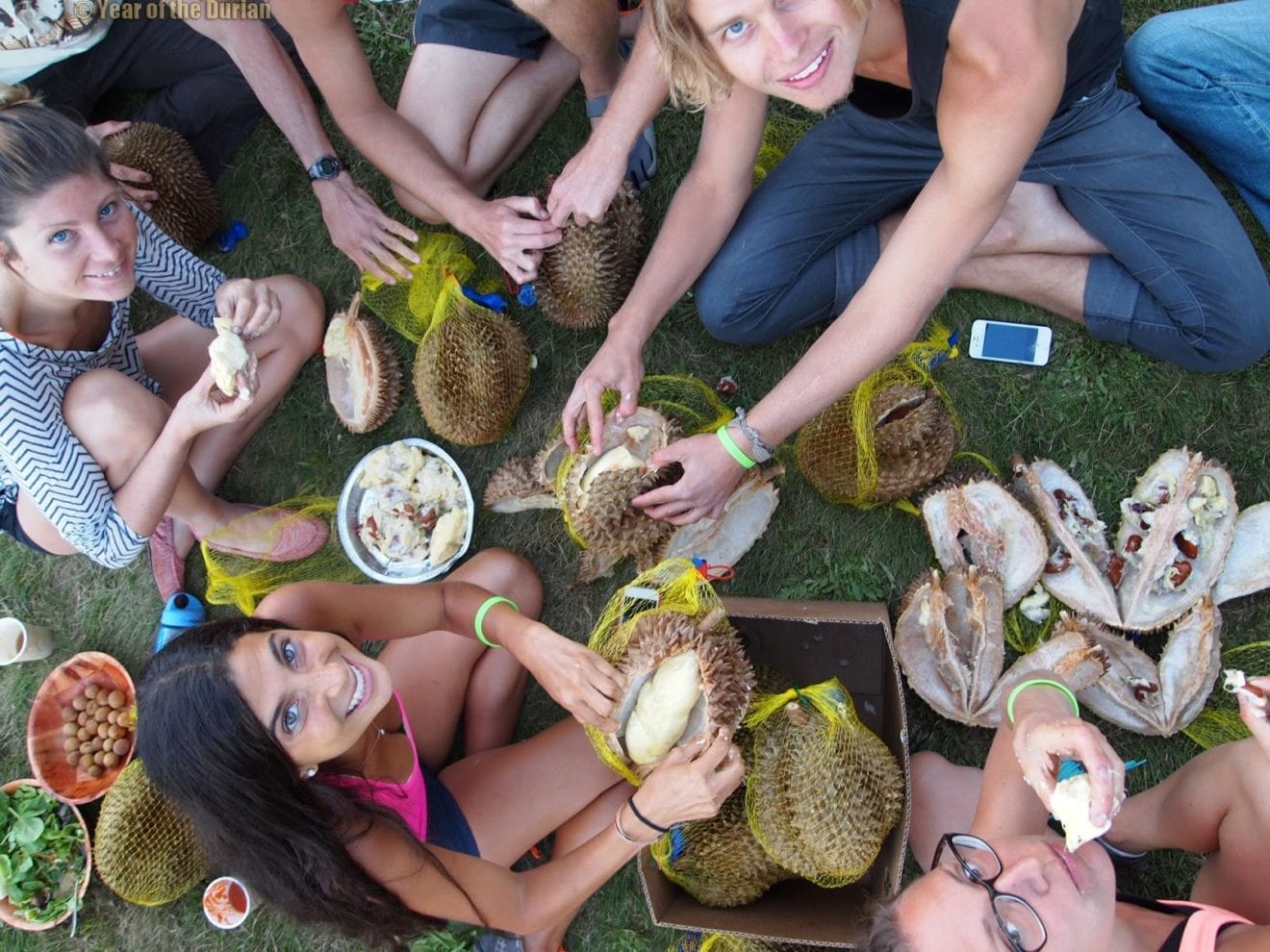
    By focusing on the “King of Fruits”, the durian, the company says it hopes to encourage fruit consumption on an international level.  Together with the Tourism Authority of Thailand, the Commerce Ministry and Central Pattana, Central Food Retail is organising the “Thailand Amazing Durian & Fruit Fest”. More than 300 Thai fruits and fruit-based processed foods will be served in buffet lines taking place in three popular tourist destinations, Bangkok, Chiang Mai and Phuket.

    Phattaraporn Phenpraphat, executive vice president for marketing and public relations at Central Food Retail, said Thailand’s excellent geographic location and pleasant climate created its potential to cultivate tasty fruits of fine quality, which are much appreciated by both Thais and foreigners.

    Fruit exports generate major income for the country. In March last year, the Office of Agricultural Economics forecasts that production of durian, rambutan, mangosteen, longan, langsat and lychee would total more than 2.3 million tonnes.

    As the operator of a supermarket business, Central Food Retail is an expert in selecting fresh, delicious and quality fruits from all over the country to provide to consumers. Last year, about 7,000 tonnes of 66 domestic fruits from 62 provinces were sold, the top 10 being banana, watermelon, other melons, durian, orange, mango, pineapple, papaya, longan and rambutan.

    This year, the company targets overall sales of 10,000 tonnes in 232 branches (as of May).

    The company hopes durian will be a selling point to promote this year’s Fruit Fest, boost Thai fruit consumption and attract more tourists.

    Last August, a durian buffet was held for the first time in Thailand – that month was in the late season for durian in the Eastern region and the harvest season in the South. Feedback from the event was excellent, the company says.

    Of the participants, 70 per cent were Thais and 30 per cent foreign tourists, mostly Chinese. According to a survey, the tourists were very pleased with the durian buffet. They said the price was reasonable and they wanted to come back if the buffet were to be organised again.

    “The company was really satisfied with the event last year,” Phattaraporn said. “It created a signature and an image of Thailand as the world’s destination for tropical fruit. Therefore, we are making the durian buffet one of our main events this year.

    “With the intention of encouraging fruit consumption and attracting tourists, we are cooperating with the Tourism Authority of Thailand, the Ministry of Commerce and Central Pattana to promote the event and create awareness among target markets, using two main strengths: the 17 types of durians and the locations of the buffets, namely Bangkok, Chiang Mai and Phuket.”

    At the event, there will be two zones, a buffet zone and a farmer’s market. In the buffet zone, there will be various kinds of Thai fruits, led by Monthong durian, the “Queen of Fruits” or mangosteen, rambutan, lychee, watermelon, banana, and papaya, along with more than 11 fruit products such as coconut water, Thai sticky rice with mango, and coconut-milk ice cream.

    In the farmer’s market, the highlights of the event will be gathered, for example, E-nak durian from Rayong province, which is quite rare, Koh Chang Chanee durian, durian Tteokbokki, durian Bingsu, crispy mangosteen, durian macaron, and durian Chinese pastry. Overall, there will be about 300 products in both zones.

    The Thailand Amazing Durian & Fruit Fest will be held in as follows:

    • Bangkok from May 24-31 at the Square A area in front of CentralWorld;

    • Chiang Mai from June 7-13 at the courtyard in front of CentralFestival Chiang Mai

    • Phuket from June 28 to July 4 at the courtyard in front of CentralFestival Phuket.