Tag: E-Commerce

  • PayMaya Philippines, JCB team up to widen JCB cards acceptance in the Philippines

    PayMaya Philippines, JCB team up to widen JCB cards acceptance in the Philippines

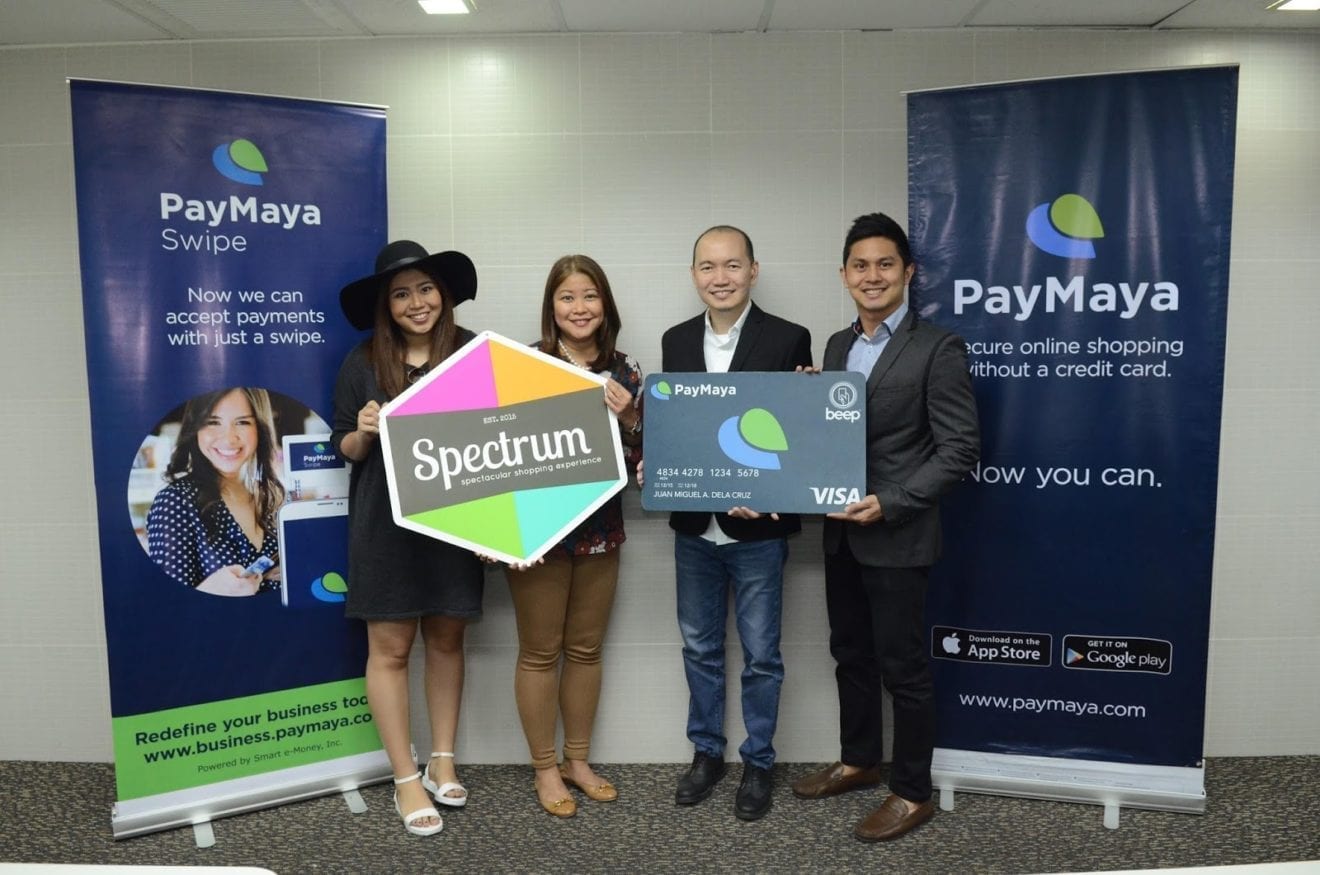
    PayMaya, the Philippines’ pioneering financial services provider, and JCB International Co., Ltd. (JCBI), the international operations subsidiary of JCB Co., Ltd., have forged a new partnership for JCB Merchant Acquiring and Card Issuing business in the Philippines. The partnership deals with the acceptance of JCB cards at online merchants that use PayMaya Checkout as the payment gateway. PayMaya and JCBI also plan to issue co-branded cards in the future.

    PayMaya Business is focused on delivering solutions that power businesses of all types and sizes to accept all kinds of payments. The services PayMaya Business provides are PayMaya Checkout, a system that enables online shops to accept card payments, PayMaya Swipe, a mobile point-of-sale device that can simply be attached to any mobile device so merchants can accept card payments, and PayMaya Touch, a payment solution which allows businesses to accept swipe, dip, and contactless card payments.

    The partnership will benefit all JCB cardmembers in the Philippines and overseas. JCB is a pioneer in the Japanese payment card industry with over 70M cardmembers and 95M in total worldwide. JCB cardmembers will be able to use their JCB cards at online merchants that use PayMaya Checkout as their payment gateway.

    In 2017, JCB cardmembers will also be able to transact in big retail outlets in the Philippines but also in micro- and small-medium enterprises including local boutiques, food carts, and community stores which offer a unique shopping experience through PayMaya Swipe and Touch. These outlets prefer more affordable and easier payment acceptance solution like PayMaya Swipe, Checkout, and Touch.

    Kimihisa Imada, Deputy President of JCBI, said, “The Philippines is one of the most important markets for JCB’s global business expansion and we are pleased to welcome our new partner to the JCB network. I am certain that this partnership with PayMaya will bring more benefits and convenience to all JCB card members, especially in the e-commerce space. We are also looking forward to exploring further business opportunities such as ‘PayMaya-JCB Card’ issuance soon.”

    “At PayMaya, we strive to shape the future of commerce and drive local business growth through digital payment innovations. We are strengthening this commitment by collaborating with strategic partners such as JCBI, which help us enable merchants to accept payments from more consumers here and abroad. We are thrilled to see the progression of our alliance with JCBI as we continue our mission in redefining the payment landscape in the Philippines,” said Orlando Vea, President and CEO of Voyager Innovations and PayMaya Philippines.

    The JCB “Uniquely Yours” Experience

    JCB is a major global payment brand and a leading payment card issuer and acquirer in Japan. JCB launched its card business in Japan in 1961 and began expanding worldwide in 1981. Its acceptance network includes about 31 million merchants and over a million cash advance locations in 190 countries and territories. JCB cards are now issued in 21 countries and territories, with more than 95 million card members. As part of its international growth strategy, JCB has formed alliances with hundreds of leading banks and financial institutions globally to increase merchant coverage and cardmember base. As a comprehensive payment solution provider, JCB commits to provide responsive and high-quality service and products to all customers worldwide.

    The unique benefits of PayMaya Business

    PayMaya handles the requirements of merchants in enabling their online and card payment acceptance–no need to talk to banks, expert programmers, or payment aggregators separately.

    For online payment, PayMaya Checkout API is easy to integrate in websites or apps. The process involves three simple steps: integration to sandbox environment, testing, and production.

    PayMaya provides simple pricing and fast settlements. Merchants are not required to settle monthly fees or present bank statements. They will only pay for the transactions they make. The package comes with access to a dashboard of transaction reports for sales performance tracking.

    The Philippine Airline’s mobile website and its recently launched online boutique, and the online gadget store Kimstore are powered by PayMaya Checkout.

  • Indonesian government taking steps to tackle growth of e-commerce industry

    Indonesian government taking steps to tackle growth of e-commerce industry

    The volume of e-commerce transactions in Indonesia is still relatively small but the government is taking anticipatory steps in the face of e-commerce industry growth as it is developing as a global trade model.

    Indonesias e-commerce transactions still account for about one to two percent of retailer transactions or much lower than the global average of eight percent. However, it is predicted that e-commerce transactions in Indonesia will increase drastically from US$12 billion in 2014 to about US$24.6 billion this year.

    Therefore, the government sees that the e-commerce industry is one of the business sectors that has good prospects in the future, and for this it is issuing an e-commerce development roadmap through an economic policy package.

    The roadmap is appearing in the 14th economic policy package announced by the government on Thursday, November 10, 2016.

    “The policy package is aimed at encouraging people all over Indonesia to expand their economic activities efficiently and to connect them to the rest of the world. With this roadmap, they will be able to enhance their business in a better way,” Coordinating Minister for Economic Affairs Darmin Nasution said while announcing the package at the Presidential Office along with Communication and Information Minister Rudiantara and Cabinet Secretary Pramono Anung.

    Therefore, the next economic policy package is expected to sufficiently address the issue.

    “E-commerce should not be treated as a general form of trading. The tariff should be lower as it is a fledgling industry, an early adopter,” Industry Minister Airlangga Hartarto underlined while speaking on the sidelines of the launch of a book on “Developing Populist Economy and Winning ASEAN Economic Community” recently.

    Indonesian businesses hope that the tax tariff for e-commerce business will be lower than that of the non-e-commerce industry.

    The Indonesian Employers Association (Apindo) hailed the issuance of the package. Businesses badly need the governments support, particularly on the fiscal system with regard to the issuance of the economic policy package on e-commerce, Fredy Ongko Saputro, chairman of Apindo for East Nusa Tenggara, said.

    “The tax tariff should be lower than non-e-commerce because this is a new industry. We hope the tax traffic is set at a modest rate,” the Apindo chairman for East Nusa Tanggara, said.

    The regulation to be issued would determine the success of e-commerce in Indonesia as it has the potential to guarantee the survival of fledgling businesses using e-commerce, economic observer Agustinus Prasetyantoko said, elaborating the point.

    Agustinus is also of the opinion that tax exemption would help boost e-commerce in the country.

    “In certain cases, tax could even be abolished during the start-up phase,” he underscored.

    Singapore could be used as the reference country to study ways to develop and expedite the expansion of e-commerce. It provides tax facilities and a low tax for start-ups in addition to assistance in the form of access to cheap capital.

    The e-commerce market has begun to grow in Indonesia. In 2014, transactions were valued at $12 billion. E-commerce spending in Indonesia was only 1 to 2 percent of the total retail sales as against 16 percent in South Korea, 12 percent in the United States and the world average of 8 percent.

    However, it is worth noting that the performance in 2014 represented a significant increase from $8 billion in 2013. In 2016, the value of transactions is predicted to rise to $24.6 billion.

    Therefore, it is being predicted that Indonesia would be among the top ranked countries in e-commerce in the future after China and India in Asia, which is why the government drew up a roadmap.

    Chief Economic Minister Darmin Nasution expressed the hope that the roadmap for the development of e-commerce industry will encourage younger generations to come up with new and innovative products and services.

    The roadmap is also expected to induce certainty in business besides facilitating the e-commerce industry. Therefore, with strategic direction and guidance, the electronic-based national trade system can be put in place during the 2016-2019 period, he noted.

    The roadmap is also expected to accord priority to and protect the national interests, particularly the interest of small and medium entrepreneurs and startups, he commented.

    “It will also help the human resources and e-commerce agents to improve their knowhow. Also, it will provide terms of reference to the government and all stakeholders for determining or adjusting sector-based policies as part of the effort to develop the e-commerce industry,” he explained.

    Darmin pointed out that the policy package deals with at least eight issues, including funding, taxation, consumer protection, human resource development and education besides cyber security.

    Meanwhile, Communication and Information Minister Rudiantara underlined that digital economy has a huge potential in Indonesia.

    “The Indonesian digital economy is so huge that all transaction services using digital technology will continue to develop,” he observed.

    He reminded that the package also covers several provisions to address seven key issues, including human resources and education, access to capital, tax incentives, consumer protection, cyber security, logistics and communication infrastructure.

  • Alibaba’s Singles Day sales reach $17.8b

    Alibaba’s Singles Day sales reach $17.8b

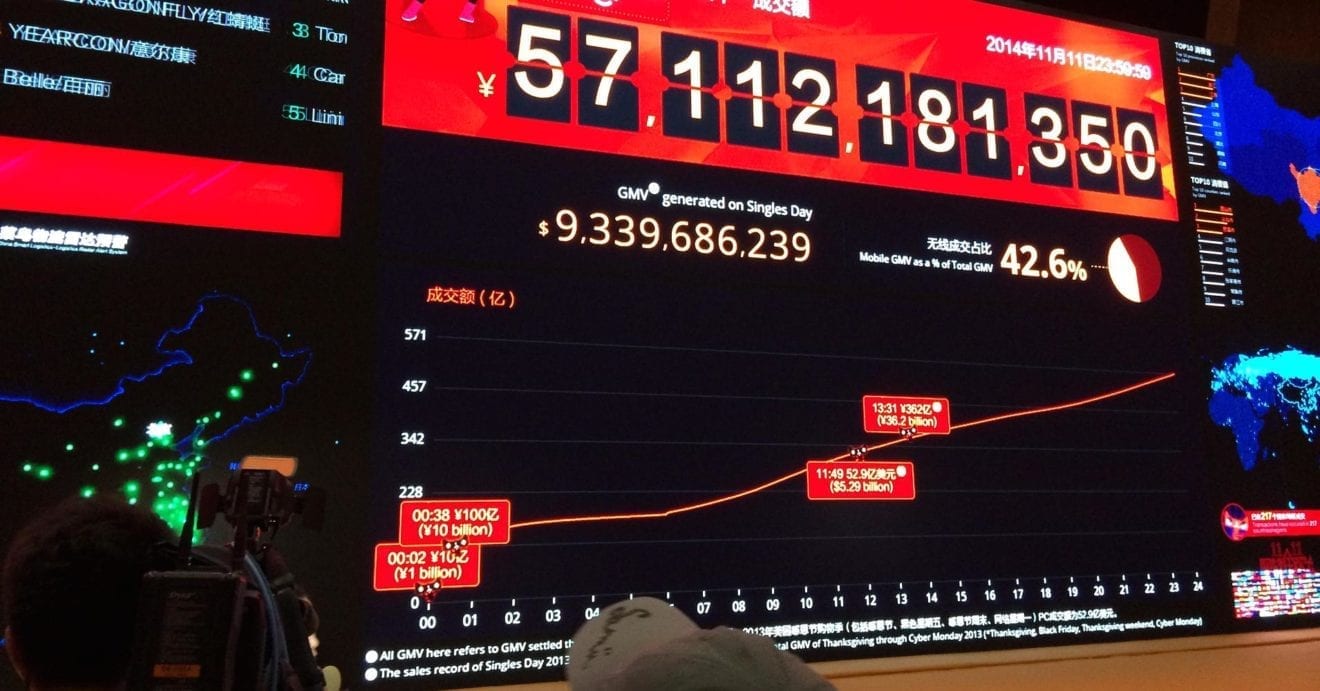
    Alibaba Group Holding Ltd.’s Singles’ Day shopping festival (now known as the 11.11 Global Shopping Festival) broke sales record this year with a reported 120.7 billion yuan ($17.79 billion) in gross merchandise volume in just 24 hours.

    The figure represents a 32% jump over last year’s 91.2 billion yuan ($14.3 billion) in transactions over Alibaba’s e-commerce platforms – B2C site Tmall.com and C2C site Taobao Marketplace.

    Alizila, the news portal of the Chinese e-commerce giant, also reported that the festival saw a number of other new records set, including 98.97 billion yuan ($14.6 billion) in GMV generated on mobile devices and 657 million delivery orders, compared with $9.8 billion and 467 million, respectively, in 2015.

    “There were also 1.04 billion payment transactions processed compared with 710 million last year,” the report noted.

    Daniel Zhang, chief executive officer of Alibaba Group, was quoted as saying that this year’s 11.11 shopping festival is a preview of the future of retail.

    “11.11 showcased how online and offline retail will be reinvented to offer brand new shopping experiences to our hundreds of millions of mobile, digitally savvy active users,” he said.

    The shopping marathon started on November 11 at midnight China Standard Time (CST).

    An IMAX-sized data screen at the media center at the Shenzhen Universiade Sports Center in Shenzhen, China continuously flashed updates all throughout the day, complemented by live blogging reports from Alizila.

    The first report at 12:017 showed that total GMV blew up to 10 billion yuan ($14.6 billion) just six minutes and 58 seconds after the sale began. Total GMV exceeded $100 million in just 40 seconds.

    During the first hour of the sale, order volume also reached a record-breaking peak of 175,000 orders in one second, while 120,000 payments were settled per second at the peak.

  • Privacy is paramount to online consumers

    Privacy is paramount to online consumers

    More than half (55%) of consumers globally have decided against buying something online due to privacy concerns, a recent KPMG International survey indicates.

    The survey also revealed that less than 10% of consumers feel they have control over the way organizations handle and use their personal data. Respondents in most countries say privacy controls are more important than the potential convenience gained from sharing personal data.

    “An executive would be at risk of being fired if half their customer base disappeared after they made a crucial business decision,” said Mark Thompson, Global Privacy Lead at KPMG.

    “Failure to embed privacy into the DNA of their business strategy could ultimately lead to the extinction of a business given how closely consumers and regulators alike are paying attention to how organizations collect, store and use personal data.”

    The survey further revealed that 82% are not comfortable with the sale of their data to third-parties in exchange for the speed, convenience, product range, home delivery and price comparison that online shopping offers.

    Over two-thirds of people are not comfortable with smartphone and tablet apps using their personal data. In all markets but one, at least 75% of respondents said they were uneasy with their online shopping data being sold to third-parties.

    About 55% said a free fitness tracking device that monitors the well-being of users and produces a monthly report for them and their employer is also crossing the line.

  • Indonesia wants to lead the region in e-commerce

    Indonesia wants to lead the region in e-commerce

    With other Southeast Asian countries already having prepared the ground for the digital economy to prosper, the Indonesian government has finally taken the initiative to spur the growth of e-commerce within its own boarders.

    Announced on Thursday evening, the 14th economic policy package will tackle eight issues that could determine the success of President Joko “Jokowi” Widodo’s goal of turning Indonesia into the biggest digital economy of the region by 2020 with a targeted value of US$130 billion. The eight issues are funding, taxation, consumer protection, human resources, logistics, communication infrastructure, cyber security and the establishment of a project management office.

    The government expects the new policy package, dubbed the e-commerce road map, to create 1,000 “techno-preneurs” with businesses that have a total value of $10 billion by 2020.

    Coordinating Economic Minister Darmin Nasution said the e-commerce road map, which will be translated into a presidential decree, was essential to boost connectivity and efficiency in the industry.

    The government also expects the road map to better protect national interests and give priority to small and medium-sized enterprises and start-ups.

    “We also want to boost creative innovation and invention of new economic activities, especially for youths who enjoy playing around with new things,” he said during a press conference to unveil the package on Thursday.

    Indonesia’s e-commerce market is estimated to be worth Rp 18 trillion ($1.4 billion) as of 2015, with 37 million consumers from a total population of 255 million, according to World Economic Outlook data compiled by the Internet Service Providers Association. The association expects the e-commerce market will be worth Rp 25 trillion by 2016, with 49 million consumers.

    Meanwhile, Communications and Information Minister Rudiantara presented some details of the road map, which includes grants or subsidies to help start-ups boost their chances of surviving in the tough e-commerce industry.

    The government also aims to reduce taxes for locals investing in start-ups and simplify taxation procedures for e-commerce start-ups with a turnover of less than Rp 4.8 billion a year, so that the final income tax will only come to 1 percent.

    “In terms of logistics, this is interesting, because we have already decided to reposition state-owned postal company Pos Indonesia as a logistical platform for Indonesian e-commerce,” Rudiantara said.

    Since taking office in 2014, Jokowi has issued 13 stimulus packages aimed at eliminating business hurdles.

    A recent report from management consulting firm McKinsey & Company suggested that by going digital, Indonesia would be able to unleash its next level of economic growth to the tune of $150 billion in terms of impact by the year 2025 if it were able to address the most pressing issues adequately.

    The report suggested that while Indonesia was admirable in terms of the number of internet and smartphone users, it still did not adequately embrace modern technology. Internet penetration in Indonesia has only reached 39 percent of the population, despite smartphone penetration standing at 43 percent.

    The report partly places the blame for the low penetration on Indonesia’s relatively weak information and communication technology infrastructure. Indonesia’s internet bandwidth, for instance, is still at a relatively low average rate of 6.2 kbps per user, far below Malaysia’s 27.2 kbps and the Philippines’ 27.7 kbps.

    Bank Central Asia (BCA) economist David Sumual was optimistic about the latest economic policy package, saying Indonesia’s market was large and investors had already begun to show interest in the business.

    David, however, warned the government’s digital economy dream could end if the country failed to improve infrastructure and logistics.

    “It will not reach its maximum potential if our logistics remain the same. It may be alright in the bigger cities, but how will it work in the remote areas? Weak infrastructure remains our biggest task.”

  • BI Revises Regulation on E-Money

    BI Revises Regulation on E-Money

    Bank Indonesia (BI) will make another revision to regulation on electronic money and introduce electronic wallet in the Bank Indonesia Regulation. The new regulation on the payment transaction processing is expected to be finalized in November 2016.

    Bank Indonesia deputy governor Ronald Waas said that one of the revision points is related to the expansion of electronic money basis. Currently, Ronald revealed, there are two types of electronic money, namely server-based and card-based electronic money. BI is considering adding gadget-based money as a new category.

    “Currently we have Samsung Pay and Apple Pay. They don’t use cards,” Ronald said in Jakarta on Wednesday, November 9, 2016.

    Ronald explained that there are two categories of e money, namely Know Your Customer (KYC) and non-Know Your Customer (nKYC).

    In the new regulation, BI has planned to require electronic money issuer with total active members of no less than 300,000 to register the electronic money.

    “[Electronic money issuer] with below 300,000 users doesn’t need to obtain a permit, but they need to report. In addition, they have to establish a legal entity,” Ronald said.

    In terms of minimum balance, Ronald clarified that there would be no revision regarding the matter. The minimum balance for non-registered electronic money is Rp 1 million (US$77), while that for registered one is Rp 10 million (US$770).

  • E-commerce roadmap will boost Indonesian young entrepreneurs` growth

    E-commerce roadmap will boost Indonesian young entrepreneurs` growth

    The Indonesian Young Entrepreneurs Association (Hipmi) of Yogyakarta supports the governments plan to formulate an e-commerce roadmap by early 2017.

    “The e-commerce roadmap to be launched by the government is a step in the right direction as it will encourage Indonesian young entrepreneurs and help them in expanding their business,” a Yogyakarta Hipmi member, Gunarta Adibrata, said here on Wednesday.

    Also, such a roadmap will help those starting their businesses in accessing the e-commerce system.

    “Young entrepreneurs will find the e-commerce business roadmap very beneficial,” Gunarta noted.

    According to him, young entrepreneurs need such assistance in order to grow their businesses.

    In addition, the governments timely interventions and support will increase the markets confidence in the ability of the young entrepreneurs.

    “Such an e-commerce roadmap must have clarity about taxation and consumer protection. These two things will add a positive value and enhance business certainty for those using the e-commerce system,” Gunarta noted.

    Earlier, the government had stated that the e-commerce roadmap, aimed at regulating and stimulating e-commerce transactions in Indonesia, will be released in early 2017.

  • 2C2P’s Online-To-Offline E-commerce Service Now Available At Over 320,000 Locations

    2C2P’s Online-To-Offline E-commerce Service Now Available At Over 320,000 Locations

    2C2P, the leading Southeast Asian payments company which processes billions of dollars in transactions each year, has announced 320,000 offline payment locations for its ‘123’ payment solution. ‘123’ is an alternative payment service. Through it, consumers of 2C2P’s merchants across Southeast Asia (SEA) can pay for their online purchases with cash or alternate means at these 320,000 offline payment locations. 2C2P’s merchant partners include some of the largest online retailers across Southeast Asia, spanning the travel and tourism, retail, food and beverage and hospitality industries, among others.  123 enables these online retailers to bring online commerce to the region’s unbanked population which, according to KPMG, spanned 73 per cent of the region’s population, or 438 million people.  

    At online check-out, their consumers will have the option to pay for purchases using 123. They will be provided a bar code which can be printed out or scanned from their mobile devices, enabling them to then pay with cash or alternate means 2C2P’s extensive network of offline payment locations – available through 2C2P’s channel partners. Payment channels include cash over-the-counter at retail chains and agents, ATMs and electronic kiosks (such as AXS, SAM, SingPost), as well as internet banking and mobile banking. These locations are available across Southeast Asia, including Indonesia, Malaysia, Myanmar, the Philippines, Singapore and Thailand.

    Bringing e-commerce capabilities to rural Myanmar

    123 has increased its payment locations across the SEA region, with 12,000 new locations added in Myanmar in 2016, near ten times the network of the country’s largest bank. It has achieved this by establishing partnerships with Myanma Post Offices, Myanmar Awba Group and ABC convenience store chain. Retailers and merchants including Myanmar National Airlines (MNA) and Oway are among the first in Myanmar to actively offer 123 to their customer base.

    MNA is the largest airline carrier, and one of only two international carriers in Myanmar. It has the most extensive route network within the country. With 123, its customers can book their tickets online and then pay at over 12,000 physical locations across Myanmar, or pay through AYA Mobile Banking and branches. Customers of Oway, Myanmar’s largest online travel agent, can use 123 to make travel bookings more convenient and accessible – all without a debit or a credit card.

    Aung Kyaw Moe, CEO and Founder of 2C2P said, “2C2P has made extensive efforts to open up Myanmar’s unbanked population to e-commerce. As the country continues to see increased mobile penetration, rising urbanization and improved consumer spending, there is an urgent need to modernise its e-commerce and payments infrastructure. 2C2P’s vision is to bring e-commerce to every single person in Myanmar, and more broadly, in Southeast Asia. In so doing, we look to build the region’s e-commerce future.

    “2C2P, through 123, looks to bring convenience to Myanmar’s citizens, particularly those that remain underserved by banking and financial institutions – lacking banks accounts, credit and debit cards or access to a bank branch. They can now, for the first time, tap into the fast-growth of national, regional and global e-commerce by paying for their online purchase at a convenient offline location via 2C2P’s extensive network of physical channel partner locations,” added Aung.

    Myanmar’s Ministry of Hotels and Tourism estimates 6 million annual inbound tourists for 2016, a 25 per cent increase from 2015 (4.68 million). This number is predicted to cross 7.5 million by 2019. The Asian Development Bank (ADB) is optimistic that tourism will drive the country’s overall economic growth. It forecasts tourism revenues to have increased by 19 per cent from 2014 to 2015 to US$2.1 billion – representing over 4 per cent of Myanmar’s GDP.  Asia-Pacific will overtake North America to become the largest digital travel market globally in 2019, according to eMarketer.

  • SingPost opens regional ecommerce logistics hub in Singapore

    SingPost opens regional ecommerce logistics hub in Singapore

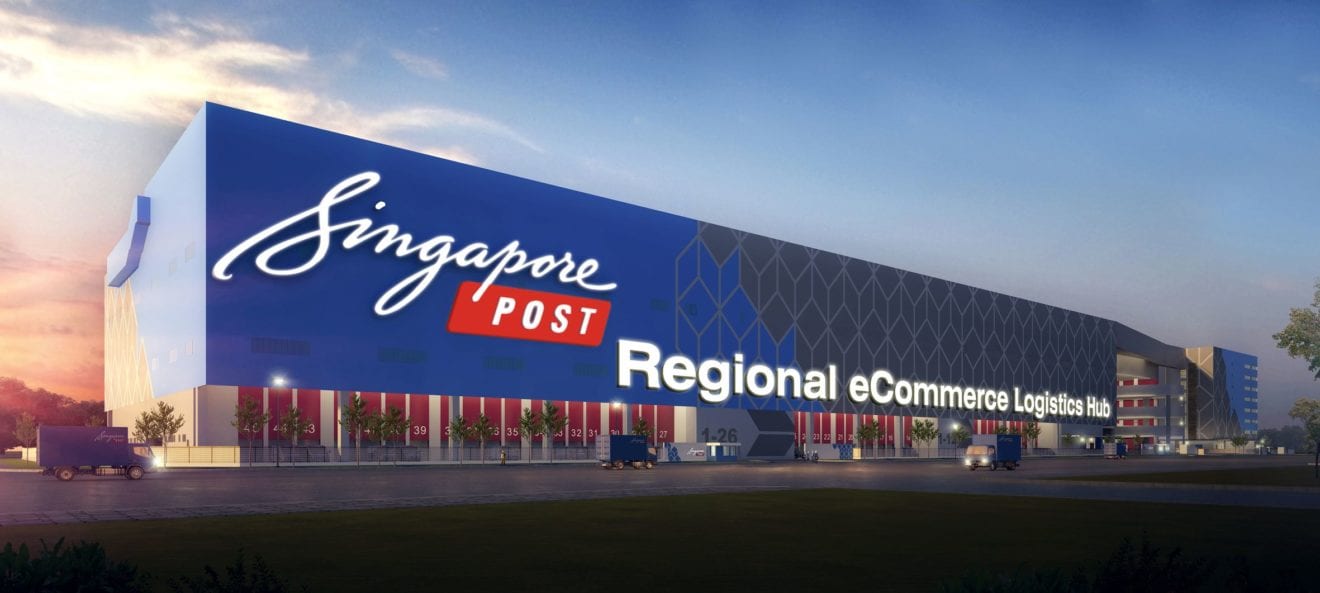
    Singapore Post Limited (“SingPost”) announced the launch of its Regional eCommerce Logistics Hub (“eComm Log Hub”) located at the Tampines Logistics Park. The S$182 million facility is SingPost’s largest eCommerce logistics investment in Singapore to date.

    The eComm Log Hub is officially opened by Singapore’s Deputy Prime Minister and Coordinating Minister for Economic and Social Policies, Mr Tharman Shanmugaratnam.

    SingPost’s eComm Log Hub is a three-storey facility housing two warehousing floors, 150 simultaneous loading bays as well as an office block. The ground floor of the building houses a fully automated parcel sorting facility with a capacity of up to 100,000 parcels a day, and end-to-end sorting, shipping and returns management capabilities that enable quicker order fulfilment. The total built-up area is 553,000 square feet.

    Automation plays a big part in the eComm Log Hub – beyond the fully automated parcel sorting system on the first floor of the facility, the second floor warehouse is also automated, resulting in the entire eComm Log Hub being integrated end-to-end from the eCommerce front-end platform to delivery. The eComm Log Hub will process parcels for delivery within Singapore and those to be shipped to destinations worldwide.

    Said Mr Chua Taik Him, Deputy Chief Executive Officer of IE Singapore, “IE Singapore has been working closely with SingPost on strategies to scale its business in the region, facilitating its projects and partnerships with both brand owners and last mile fulfilment players. Given the strong growth of eCommerce in Southeast Asia, the launch of SingPost’s facility will further support its local and overseas growth. This will also enhance Singapore’s capabilities in fulfilment and facilitate more regional eCommerce trade flows.”

    The Management Team of Sephora Asia said, “This October, SingPost has begun providing us with warehousing services in Australia to handle our beauty and fragrance products. At Sephora, we believe in giving our customers a great end-to-end experience from the time they log in to the moment they receive their purchases. SingPost’s support is critical to delivering that flawless customer experience. With their new eCommerce Log Hub and great solutions like POPStations, we recognise that SingPost is propelling the eCommerce industry forward. We have found SingPost’s professionals to be very conscious of accuracy, cost and service quality.”

    Mr Simon Israel, SingPost’s Chairman, said, “The opening of our Regional eCommerce Logistics Hub is another milestone in the expansion of SingPost’s eCommerce logistics network, which now spans 19 markets across Asia Pacific, Europe and the US. Singapore’s regional connectivity makes it ideally positioned to be a centre for eCommerce. Our Regional eCommerce Logistics Hub leverages on this geographic and infrastructural advantage. Everything in this building is scalable, which means we can keep upgrading it to meet the needs of the future.”

    He added, “With the Regional eCommerce Logistics Hub, our POPStation network and our investments into technologies for new postal and logistics solutions, we are prepared for a sustainable future of car-lite cities and the sharing economy. SingPost is therefore able to shape and play a broader role in how urban logistics is done in Singapore.”

    SingPost’s Centre of Innovation

    At the opening ceremony, SingPost also launched its Centre of Innovation (“COI”).

    The COI was set up in August 2015, with support from the Economic Development Board, to carry out research into new logistics and postal services and products, in collaboration with research institutions and institutions of higher learning.

    Emphasis will be placed on new technologies such as robotics and automation to meet the needs of future customers and markets as well as becoming the tools for SingPost’s next generation of employees.

    Some initiatives now being carried out by the SingPost COI are:

     Deliver significant enhancements to the eCommerce logistics platform which will help support the smart logistics and smart nation initiative;

     Roll out a new version of the Self-service Automated Machine (SAM) platform to enhance customer experience and provide a seamless omni-channel experience encompassing the kiosk and the digital postal office;

     Bring the online and offline world of retail shopping to the SingPost mall, which will provide exciting merchant offerings and delivery options to the customer. Retail merchants will be able to experiment with unique ways of interacting with customers to boost revenue and increase loyalty;

     A digital transformation of the post office to provide customers options to transact with greater ease and pace; and

     Innovate last mile delivery options through building the next generation of POPStations and experimenting with drone delivery across the island.

  • Industry risks startup bubble

    Industry risks startup bubble

    Kaskus co-founder Ken Dean Lawadinata has broken his silence after marching out of one of Indonesia’s most prominent technology platforms, citing higher “risk” in the industry and even “a little bit of a bubble”.

    “I think right now the IT market is in a bit of a bubble in Indonesia, with everyone asking ridiculous valuations without any signs of profit in the near future,” local media quoted the 30-year-old, who brought Kaskus to fame in 2008 with his cousin Andrew Darwis.

    This — just days after Go-Jek co-founder Michaelangelo Moran also announced he had quit his popular company — has generated concerns over the state of Indonesia’s young and thriving startups, companies that have seen many investments flow in with little details and no guarantees about their revenues and profitability.

    “There is a marginal bubble forming because of the involvement of foreign investors, hence the global nature of the industry’s fears,” says Naveen Menon, head of communications, media and technology practice at A.T. Kearney.

    Foreign investors are flocking into startups operating in the country, with the biggest funding ever for a local startup rounded up by Go-Jek in August worth US$550 million from American private equity firms KKR and Warburg Pincus.

    “Indonesia’s startup scene is starting to look crowded, but compared to other markets such as India or the USA, it’s relatively small and still generating huge interest among investors,” he added.

    There are over 2,000 startups in Indonesia, most of which are valued at less than $10 million, according to a Google-Temasek report. The middle-income segment of the country is flourishing and internet users are expected to double by 2020 from over 100 million users at present, the world’s fifth largest figure.

    Even if startup investors are running higher risks, Naveen explained that it was very common for them to invest in unprofitable companies due to a scale effect, or a network effect.

    “Basically, investors in the startup system are giving up short-term gains for massive long-term gains. They just need one of their invested startups to become successful in order for them to say that they have succeeded,” he said.

    Startups and venture capitalists (VCs) have told that they see no bubble bursting in the near future as they are banking on the growth potential of the young industry.

    “I would see it not as a bubble, but more of a challenge of market and price adjustment,” said Sebastian Togelang, founding partner of Kejora, a local VC firm that focuses on building companies.

    The technology industry is well prepared to prevent bubbles from bursting because of lessons learned from the 2000 dotcom bubble burst, when tech firms in developed countries crashed and burned after going public based on unrealistic valuations, he said.

    “Everyone is being cautious and that’s a good thing for both parties,” Sebastian added.

    These days, fewer tech companies are going for initial public offerings (IPOs) and when they do, it takes more time and more maturity to do so, according to data from McKinsey Indonesia.

    Over 50 companies in the US are targeting IPOs in 2014, versus 371 in 1999, while median years to IPO stood at 11 years in 2014 from four years in 1999. In terms of networks, there are now 14 billion connected devices worldwide from half a billion in 1999.

    Metra Digital Innovation (MDI) Ventures CEO Nicko Widjaja said Indonesia was far from a bubble because many startups were funded by corporate ventures with big scales that had yet to reach their optimum levels.

    Local corporate ventures into the digital startup sector include those operated by Bank Mandiri and Bank Sinarmas, along with Telkom Indonesia’s Indigo Accelerator program, which Nicko and MDI are aligned with.

    The concerns over a bubble burst in the tech scene may have emerged in the first place because of a perceived “winter” for venture capital in Indonesia. For almost a year, fundraising has been more difficult due to a more cautious approach taken by both investors and startups in seeking profitability, VCs said.

    Startups admit that their focus is indeed on growth and eventual profitability, but the main aspect of their operations revolves around the effects of their business in changing the way people shop, travel, transact and use a wide range of services online.

    “From the start, one of our main focuses has always been on growth,” Go-Jek’s chief marketing officer Piotr Jakubowski said, admitting that satisfying investor returns on investment remained a “process”.

    “Our best takeaway is the fact that we continue to inspire new businesses and we are also innovating and growing in a way that’s beneficial for consumers.”

    E-commerce firm Blibli.com is of the view that the startup scene will continue to grow so long as enterprises serve to benefit the public.

    “In the end, it’s about educating the market, especially in e-commerce, which is something relatively new. It’s teaching people to try online shopping,” Blibli.com senior marketing manager Deny Agsana said.

  • Local e-commerce not fazed by Alibaba expansion plan

    Local e-commerce not fazed by Alibaba expansion plan

    Local e-commerce company Bukalapak is not worried about Chinese giant Alibaba’s plan to expand into Indonesia as local players can still compete with foreign ones, the company’s co-founder said.

    Bukalapak co-founder and chief financial officer Muhammad Fajrin Rasyid said that unlike social media, which adopted a general model for their users worldwide, e-commerce business models needed a so-called “local touch”. This was because customers’ preferences for goods, methods of payment and logistic systems were different in each country, he went on.

    “Our customers mainly buy ‘local goods’ such as sambal [traditional hot relish] and they prefer to use cash on delivery as a method of payment. We must understand things like this,” Fajrin said at a Centre for Strategic and International Studies (CSIS) seminar on the digital economy in Jakarta on Monday.

    He further said that some foreign e-commerce companies had fallen victim to their own poor understanding of local customs. Japanese online market Rakuten Belanja Online closed in March while German-backed online delivery service Foodpanda Indonesia was shuttered on Oct. 3.

    “We are sure our customer to customer [C2C] model is still suitable for Indonesia. We have 1 million sellers and our mobile apps have the highest rate by users compared to other e-commerce companies,” Fajrin said.

    During the event, Investment Coordinating Board (BKPM) deputy of investment planning Tamba Parulian Hutapea confirmed that Chinese tech giant Alibaba would enter the Indonesian market soon. The company has bought German e-commerce company Lazada and plans to use the latter’s resources in Indonesia to make entry into its market.

  • Trade ministry encourages small, medium industries to utilize e-commerce

    Trade ministry encourages small, medium industries to utilize e-commerce

    Indoensias Ministry of Trade has said it has been encouraging small and medium industries (SMIs) to take benefit of online trade (e-commerce) to market their products.

    “We are pushing the small and medium industries to take their products to various e-commerce platforms. Websites like Tokopedia, Bukalapak, Blibli and Lazada are all local e-commerce platforms and we encourage the SMIs to use them,” the Minister of Trade, Airlangga Hartarto, stated in Jakarta on Tuesday.

    He hoped that once the SMIs start fully utilizing the e-commerce platforms, the industry will start expanding.

    The fourth industrial revolution era hinges on embracing the internet and integrating it with products and services, he added.

    The minister further explained that internet usage is now part of people’s daily lifestyle and it has now become integral to the industrial world also.

    “Germany began doing it in 2013. If we start this year, we will make sure that we are not left behind,” he remarked.

    Additionally, the Ministry of Trade also encourages professional vocational training to enhance the quality of human resources.

    The minister mentioned the importance of undertaking research and forging collaborations with universities in the industrial sector.

    Minister Hartarto also pointed to the progress made in basic materials, and highlighted the fact that natural energy resources cannot last forever.

  • South Korea is world’s top online FMCG market

    South Korea is world’s top online FMCG market

    South Korea was the world’s top market for online grocery sales for the 12 months preceding June 2016.

    This was the conclusion from the third annual Future of e-Commerce in FMCG (Fast Moving Consumer Goods) study by Kantor WorldPanel, a firm that tracks consumer buying behavior worldwide.

    The report noted that sales of groceries through e-commerce platforms reached $48 billion in the 12 months to June 2016.

    E-commerce now accounts for 4.4% of all FMCG sales. However, despite the growth of e-commerce, the growth of the entire FMCG market was flat performance during the same period, increasing just 1.6%.

    “FMCG growth is slowing, but our data shows that people are looking for more convenience, which can be met by shopping online. Grocery e-commerce, although currently small, with only one in four people shopping online, is growing fast,” said Stéphane Roger, the global shopper and retail director at Kantar Worldpanel.

    “We forecast it will grow to 9% of the market and be worth $150 billion by 2025. With new entrants such as Amazon expanding rapidly, the industry is facing a shake-up,” he said.

    E-commerce growth is also unequal, differing from country to country. Although connectivity plays a part, it is not clear whether it is the primary reason for the growth.

    For example, while South Korea is the world’s largest online FMCG market by value share (16.6%), US consumers only bought 1.4% of groceries online.

    Meanwhile, China’s netizens are catching up. The report noted that the country saw the biggest growth in the last 12 months, 47% – to a value share of 4.2%.

    Meanwhile, Europeans have a relatively low adoption of e-commerce in all countries except the UK with 6.9% of the market and France which has 5.3%.

    According to Kantar WorldPanel, France is a relatively unique e-commerce market with their success with the Drive model, where online purchases are collected from the store.

    Other conclusions:

    • Online buyers tend to continue to keep buying online after their first purchase.
    • Online buyers are less impulsive, based on comparative research across UK, France and China.
    • 50% of FMCG purchases in China is on beauty.
    • Online buyers splurge more on a single visit online.
    • 55% of online shoppers tend to use the same shopping list for the next purchase.
  • DHL eCommerce Singapore has launched a hybrid shipping product to help e-tailers

    DHL eCommerce Singapore has launched a hybrid shipping product to help e-tailers

    DHL eCommerce Singapore has launched a hybrid shipping product to help e-tailers in Singapore tap into the cross-border e-commerce market in Australia.

    According to DHL, the new product, called Parcel International Direct Australia, delivers shipments of up to 20kg to major Australian cities in four to six business days.

    “Consumers worldwide are increasingly expecting greater choice and convenience in their delivery options, and demanding greater visibility and reliability during the process,” said Malcolm Monteiro, CEO of Asia Pacific at DHL eCommerce. “In a recent DHL study, we found that over 59% of customers consider shipping costs, delivery time and choice of the delivery partner before making an online purchase. As a result, e-tailing businesses and online sellers require more cost-effective and varied means to ship their products to remain competitive. Parcel International Direct Australia is a versatile shipping product that will help merchants expand their footprint in the online cross-border market.”

    Deliveries can be made to conventional addresses, P.O. boxes or parcel lockers. No additional charges will be imposed for delivery to remote addresses, according to DHL.

  • Global e-commerce grocery market has grown 15% to $48bn North Asia

    Global e-commerce grocery market has grown 15% to $48bn North Asia

    Sales of groceries through e-commerce platforms reached $48 billion in the 12 months to June 2016, according to a new report by Kantar Worldpanel, published today.

    The third annual Future of E-commerce in FMCG study shows that e-commerce now accounts for 4.4% of all FMCG sales. Whilst the e-commerce channel is growing, the FMCG market as a whole is flat, increasing just 1.6% during the same period.

    Stéphane Roger, Global Shopper and Retail Director at Kantar Worldpanel, comments: 

    “FMCG growth is slowing, but our data shows that people are looking for more convenience, which can be met by shopping online. Grocery e-commerce, although currently small, with only one in four people shopping online, is growing fast. We forecast it will grow to 9% of the market and be worth $150bn by 2025. With new entrants such as Amazon expanding rapidly, the industry is facing a shake-up.”


    “Although online sales have the potential to cannibalise in-store sales, it is vital that retailers act quickly to develop a strong e-commerce presence.  The retailer that goes online first in each market can enjoy a far higher market share – this can be a difference of at least 40% in France and up to three times more in the UK. In this report we’ve looked at how retailers and brands are finding ways to work across all channels.” 

    Rank

    Country

    E-commerce share of market 2016 (value)

    1

    South Korea

    16.6%

    2

    Japan

    7.2%

    3

    UK

    6.9%

    4

    France

    5.3%

    5

    Taiwan

    5.2%

    6

    China

    4.2%

    7

    Czech Republic

    2.1%

    8

    Spain

    1.7%

    9

    The Netherlands

    1.7%

    10

    USA

    1.4%

    Key findings from the report include:

    Global hotspots: a puzzle of performance

    E-commerce growth is not equal around the world and is not explained by connectivity.  It might not be surprising that digitally developed South Korea is the world’s largest online FMCG market by value share (16.6%). In the USA however, only 1.4% of groceries are bought online. China is the market which saw the biggest growth in the last 12 months, 47% – to a value share of 4.2%.  Europe has a relatively low adoption of e-commerce in all countries except the UK with 6.9% of the market and France which has 5.3%. France is a relatively unique e-commerce market as their success is with the Drive model whereby the online shop is collected from the store. Adoption across Latin America is currently very low with the exception of Argentina at 1%.

    Online generates more loyalty

    Once shoppers have begun shopping online they are more likely to continue doing so. Among this group in the UK, almost a quarter (23.3%) of all spend is through e-commerce, resulting in fewer trips to physical stores. 

    Impulse needs encouraging

    Comparative research across the UK, France and China has shown that one year after starting to shop online, shoppers in the UK and France spent less overall (-2.4% and -1.4% respectively), this is because there is less impulse shopping.  Brands need to work on driving impulse purchase online – for example by making suggestions for complementary products. In China, 50% of FMCG’s online sales is beauty, it is seen as a prestige occasion and they actually had an increase in sales after one year (+8.1%).

    Online shopping baskets are usually bigger

    Shoppers generally spend more per trip online than they do offline, so potentially this could be a lucrative group to win.  In the UK for example, the average shop online is $59 compared to $15 in-store.

    Brands that make it onto online shopping lists are more likely to stay there

    Kantar Worldpanel data shows that 55% of online shoppers use the same shopping list from one purchase to the next.  Brands need to focus their efforts on getting onto that list.