Tag: E-Commerce

  • Indonesia Revises E-Commerce Regulation

    Indonesia Revises E-Commerce Regulation

    Indonesia has one of the biggest economies in the Asia-Pacific region and its rate of internet adoption is one of the fastest in the world. So naturally, e-commerce in the region is starting to boom.

    According to Alibaba Group Executive Vice Chairman Joseph Tsai, Indonesia’s per capita GDP is about the same as China’s was in 2009, when Alibaba’s marketplaces really began to take off. Alibaba has taken steps to get a stake in the region, investing US$1 billion in Southeast Asia e-commerce platform Lazada, a Singapore-based company with extensive operations in Indonesia.

    To help help drive e-commerce growth in Indonesia, the government has made moves to open the country up to foreign e-commerce investment and expertise.

    Indonesia’s Investment Coordinating Board (BKPM) is finalising guidelines for foreign e-commerce investment. The new BKPM regulations will allow 100 percent foreign ownership for e-commerce businesses with a minimum investment of Rp100 billion (about AU$10.3 million) or businesses that create 1,000 jobs.

    The guidelines, however, limit foreign ownership to 49 percent for businesses investing below the Rp100 billion mark. The moves are designed to encourage big e-commerce investment from major players, while offering some protection to Indonesia’s local SMB e-commerce players.

    The removal of e-commerce businesses from Indonesia’s ‘negative investment list’ (which outlines business activities that are either entirely closed or conditionally open to foreign investment) provides a significant opportunity for foreign investment into one of South-East Asia’s fastest growing e-commerce markets.

    “I think this is the right time for Indonesia to aim to become the largest digital nation in Asia,” said Rosan Roeslani, Chairman of Indonesian Chamber of Commerce and Industry.

    “What this country needs is not only money but also know-how, which is why we invited incubators to come to Indonesia,” he said.

    “We have also talked about how we can get more start-ups to go through seed stage. One of the possibilities is to encourage big e-commerce players to spin their people off their company… We have not come out with the conclusion yet, but the government is very open for solutions,” he said.

    Indonesian President Joko Widodo is looking to make the country South-East Asia’s largest digital economy by 2020. The lifting of foreign ownership restrictions has been praised by those in the industry who welcome the injection of foreign capital and expertise.

    The removal of e-commerce from the negative list is part of Indonesia’s e-commerce roadmap, which was released earlier this year. The roadmap includes a list or proposals aimed at making it easier for e-commerce firms to operate in the country. Key elements of the roadmap include:

    • Government financied developments of logistics facilities and improvements to communication infrastructure
    • Government financing for start-ups in the form of grants and funds, as well as regulation for crowdfunding
    • Streamlining business licensing processesand increasing consumer protection regulationE-Commerce Regulation
    • Tax breaks for tech start-ups
    • Increased cyber security
  • Alfamart to launch click and collect

    Alfamart to launch click and collect

    Alfamart is going to utilize its 10,000 store network as pickup points for its new online shopping platform Alfacart. Alfacart, the new e-commerce platform will carry one million products from sellers, and is expected to generation IDR1tn (US$70m) transaction. The existing shopping website Alfaonline will be replaced. The advantage of Alfacart over the other e-commerce players lies with its large store network of more than 10,000 throughout Indonesia. The retailer is also expected to be opening another 1,200 stores this year.

    “We understand there are some players in the market but the high cost of last mile is still a concern,” said Sumber Alfaria president Hans Prawira, “We have presence in the market very close to shoppers.”

    E-commerce is due to boom in Indonesia

    With the growth in investment and acceptance of internet and mobile shopping, Indonesia is seen as the next frontier after China and India in Asia. The government wants e-commerce to become the backbone of its growing digital economy and leading players like Alibaba are also accelerating their expansion into Indonesia.

    Even though logistics is still a challenge due to underdeveloped infrastructure and the sheer size of the country, it is only a matter of time before we see the boom of e-commerce.

  • KinerjaPay Enters Partnership With Bitcoin Indonesia

    KinerjaPay Enters Partnership With Bitcoin Indonesia

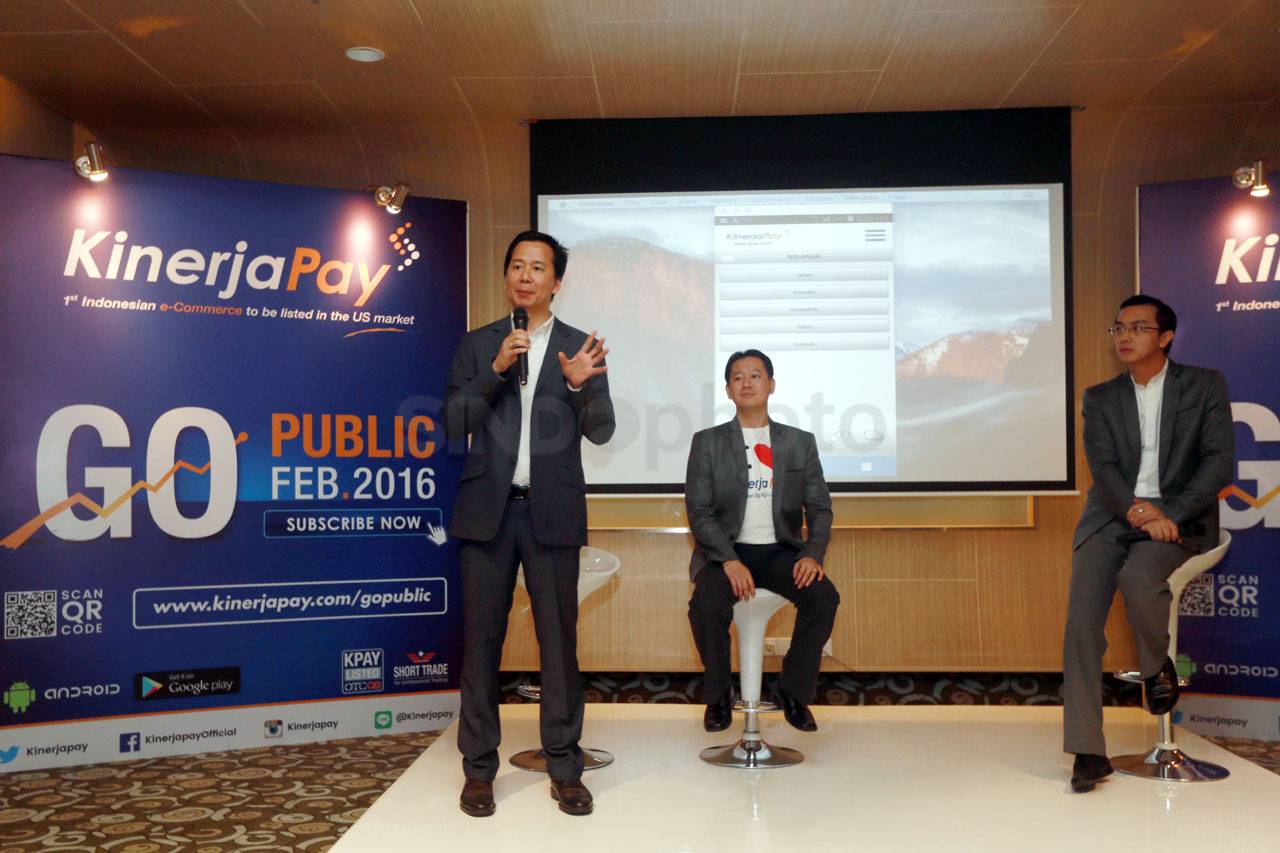
    Customers in Indonesia can now pay online with bitcoin as the country’s leading payment solutions provider KinerjaPay has added the digital currency as one of the payment options on its platform. KinerjaPay, in a recent press release, has announced its partnership with Bitcoin Indonesia to facilitate the Bitcoin option for its merchant partners.

    Apart from offering payment gateway solutions to online merchants, KinerjaPay also operates its own e-commerce portal where people can directly buy goods from the platform itself. By including Bitcoin payments, KinerjaPay has now become the first e-commerce platform in Indonesia to do so. Now customers can convert their bitcoin to Indonesian rupiah on the fly while making a transaction over the payment gateway to pay their bills, transfer money and purchase goods on the internet.

    KinerjaPay and the growth of e-payments in Indonesia

    KinerjaPay is currently one of the fastest growing digital payments platforms in Indonesia. In the past two months, the company has grown by over 300 percent as its user base has increased from around 12000 customers to 50,000. According to the company’s report, this has also led to an increase in the average number of transactions processed per day.

    With over 1500 transactions per day, compared to previous 300 transactions, the company can expect the numbers to grow further with the integration of bitcoin payments. Currently, there are not many online merchants who accept digital currency payments in Indonesia and now the partnership with Bitcoin Indonesia means that the company’s partner merchants will be able to accept bitcoin payments from their customers soon. This will open up a lot of options for bitcoin users in the country.

    In order to make bitcoin payments more popular, KinerjaPay has announced that it will be providing special offers to customers of Bitcoin Indonesia. With these special offers, the company intends to convert at least some of the 150,000 Bitcoin Indonesia customers into theirs as well. In a country where a majority of the population is hesitant to use online payment solutions due to concerns about credit/debit card fraud, KinerjaPay is working hard to build their trust by offering great deals and addressing their concerns. A currency like bitcoin where the user doesn’t have to share his/her bank account or card details will present an attractive option to the masses.

    As a part of its incentives galore, the company is also working on its own branded mining setup, where people can mine digital currency. While speaking about the new developments, the CEO and Chairman of KinerjaPay, Edwin Ng is quoted saying –

    “This partnership enables us to establish relationships with Bitcoin Indonesia’s membership, currently in excess of 150,000 accounts, which we expect will boost the volume of transactions on our platform going forward… We are also working to create a unique bitcoin mining element on our platform, something we believe will be very appealing to our users and will provide KinerjaPay with a real competitive advantage in the e-commerce sector.”

    KinerjaPay is constantly innovating to push the growth of online payments in Indonesia. Partnering with Bitcoin Indonesia is just one among the many which the company intends to follow in order to gain customer confidence and make them change their mind about online payments and digital currency. More developments in the sector can be expected soon.

  • Singapore e-commerce market to exceed S$7b in 2025

    Singapore e-commerce market to exceed S$7b in 2025

    The e-commerce market in Singapore is expected to be worth US$5.4 billion (S$7.46 billion) by 2025, according to a report by Temasek and Google released on Tuesday (May 24).

    This is larger than the casino industry in 2015, which was valued at about US$4 billion.

    The report found that Singapore’s e-commerce market was valued at US$1 billion in 2015, with online shopping making up 2.1 per cent of retail sales – the highest proportion of all Southeast Asian countries surveyed.

    Come 2025, Singapore’s e-commerce market is expected to make up 6.7 per cent of all retail sales, behind Indonesia’s 8 per cent, the report stated.

    Southeast Asian e-commerce markets in 2015 and projected figures for 2025. (Chart: Google, Temasek)

    Countries covered in the report included Indonesia, Vietnam, the Philippines, Thailand, Malaysia and Singapore.

    The report also highlighted the growth of ride-sharing services such as Grab and Uber. It noted that in 2015, the Singapore market was valued at US$800 million, tying with Indonesia. Overall, the region’s ride-sharing market was worth US$2.5 billion in 2015, with the figure expected to exceed US$13 billion by 2025.

    Ride-sharing market in 2015 and projected figures for 2025. (Chart: Google, Temasek)

    It added that Singapore will continue to record the highest fare per trip, three times that of the average fare in Southeast Asia.

    The report, which also looked at the venture capital and startup landscape in Southeast Asia, also found that as of 2015, Singapore is the most active country with 37 per cent of deal quantity and 72 per cent of deal value. Activity was mainly driven by two startups – Grab and Property Guru, which recorded investments of about US$350 million and US$130 million, respectively.

    It found that Southeast Asia is the world’s fastest growing Internet region, with an existing Internet user base of 260 million. This is expected to grow to 480 million users by 2020. Consequently, the Internet economy in Southeast Asia is expected to exceed US$200 billion by 2025, driven mostly by the growth of the e-commerce market, followed by online media and online travel, the report said.

    Driving growth are three factors unique to the region: A young population, with 70 per cent under the age of 40, a lack of big-box retail, as well as a rapidly growing middle-class, the report said.

  • Lazada opens m-commerce tech hub in Thailand

    Lazada opens m-commerce tech hub in Thailand

    Southeast Asian e-commerce company Lazada Group has opened a tech hub in Bangkok, Thailand to drive strategic mobile development initiatives.

    The Lazada Tech Hub in Thailand will focus on advancing the design and engineering of Lazada’s mobile shopping and selling sites and apps for Southeast Asia.

    With almost 30 million app downloads and more than 60% of its GMV represented by mobile sales by the end of December 2015, Lazada Group has been investing in m-commerce through new app and mobile site initiatives.

    In the next few months, Lazada Tech Hub aims to hire more than 50 staff, including iOS and Android developers, Go Programming Language developers, and Quality Assurance automation engineers. The tech hub team will operate from EmQuartier in Central Business District Bangkok.

    Lazada Group opened its first tech hub in Ho Chi Minh, Vietnam in November 2012. A second tech hub was opened in Moscow, Russia in February 2015. Together, the three tech hubs are dedicated to driving product engineering and technology infrastructure.

    “Mobile innovation is a discipline any serious online player must build, and having the best talent is critical to designing products and solutions that are not only intuitive but improve the quality of experience and life for our consumers and sellers,” Lazada CTO for operations Ifor Evans said.

    “We believe that Thailand attracts a highly-skilled talent pool. And, as the leading shopping and selling destination, Lazada is both enviably-positioned and committed to raising the bar for mobile and tech development in the region.”

  • Shopee Holds Young Entrepreneur Program

    Shopee Holds Young Entrepreneur Program

    Singapore-based marketplace company, Shopee, has been holding Young Entrepreneur Program. The program–which has been started from March 2016–is carried out to find Indonesia’s new young business talents.

    “Some 230 students have been participating in the program,” said Chris Feng Shopee’s CEO on Wednesday in Indonesia Convention Exhibition, BSD, Tangerang.

    The student only event has been participated by 89 universities from 19 cities in Indonesia. It has been held by Shopee to encourage more youth to get involved in business or to become entrepreneurs.

    According to Chris, when starting a business young entrepreneurs are faced with three challenges, namely business knowledge, technology and capital. To face the challenges, Shopee is determined to help them by establishing Campus Competition and Shopee University.

    Shopee provides photography and digital marketing classes to enhance business knowledge. Whereas to tackle capital issue, Shopee is holding a competition with a commitment value of Rp100 billion.

    The Rp100 billion fund is used for investment of trainings and capital aid. It will also be used to help young entrepreneurs to develop online businesses.

    “We have selected three candidates to win a prize of capital aid,” Chirs said. The three candidates will be judged and the winner will be announced end of April.

  • Trade Minister Warns about E-Commerce Funding Crisis

    Trade Minister Warns about E-Commerce Funding Crisis

    Trade Minister Thomas Lembong asked Indonesia e-commerce companies to be careful in assessing risks posed by the e-commerce business.

    “What would happen if the funding stopped? In the United States, tech business boom has started to decline,” Thomas said at the Indonesia E-commerce Summit & Expo in BSD, South Tangerang, on Wednesday, April 27, 2016. “I’m always paranoid. As a risk manager, I always ask ‘what if’.”

    Thomas added the natural selection in online business would determine which companies would continue exist. According to him, a business with a fast downturn will have a short cycle. Therefore, Thomas suggested business owners to prepare for “rainy days”.

    The Trade Minister revealed that other ministers in President Joko “Jokowi” Widodo’s Working Cabinet were proud with Indonesia’s e-commerce rapid growth. Thomas said that he wanted his ministry to learn from former US President Bill Clinton’s administration that supported the development of the Internet. Thomas explained Clinton improved the Internet with ‘light touch’ and refused the temptation to regulate everything on the Internet.“Innovation can thrive without restrictions. There has to be a space to develop. Innovators are usually rebellious,” Thomas added.

  • Alipay extends partnership with Uber

    Alipay extends partnership with Uber

    Uber has teamed up with Alipay to allow passengers from China to pay for international Uber rides in Chinese yuan using their Alipay accounts.

    Alipay has been available as a payment option for Uber in China since 2014. However, Chinese travelers who wish to use the Uber service outside of mainland China require dual currency credit cards or currency conversions.

    The new deal aims to make the Uber service more accessible to Chinese travelers by doing away with this requirement.

    Uber’s head of business for Asia Pacific Eric Alexander told Economic Times that the partnership with Alipay will enable Uber to cater to the growing number of Chinese travelers who use Uber internationally. Alexander expects the integration to grow the number of rides taken by 9 to 10 times globally. Alipay’s userbase numbers 450 million.

    Alipay’s parent company, Alibaba, is an investor in Didi Kuaidi, Uber’s competitor in China.

    The partnership is also expected to affect Uber users from India due to Alipay’s partnership with Paytm, a mobile wallet and e-commerce operator in India.

    The latter is expected to integrate the Uber app into its own mobile app in the coming month.

    With the Paytm integration, riders in India will be able to use the Paytm app to hail Uber rides globally and pay for the service in their domestic currency.

    The integration is targeted at enabling passengers with no credit cards to use the Uber service internationally.

  • Indonesian online retailer Bhinneka plans IPO to fund expansion

    Indonesian online retailer Bhinneka plans IPO to fund expansion

    Indonesian online retailer PT Bhinneka Mentari Dimensi is planning an initial public offering (IPO) in 2018 to widen its reach, one of its directors said on Thursday, as the e-commerce battleground heats up in Southeast Asia’s biggest economy.

    The e-commerce market in the country of 250 million people is ripe with potential but it is fragmented and comes with complex regulatory and logistical barriers.

    “Our objective to go public is for scaling,” director Andi Boediman said, adding that the company plans to expand its store network and strengthen its supply chain while investing in technology and marketing.

    The company operates online through Bhinneka.com, with customers able to have purchases delivered to their homes or its physical stores, which also serve as retail outlets for the electronic goods specialist.

    Bhinneka is in a good position to attract investors, Boediman told reporters on the sidelines of a conference in Jakarta.

    “We are an online retailer that is focused and reasonably sizeable,” Boediman said, adding that revenue “at least doubled” last year and that he expects a strong performance in 2016.

    Bhinneka decided to pursue an IPO in Indonesia because it can be a dominant player on its home ground, Boediman added. He declined to disclose how much the IPO is expected to raise or the company’s financial figures.

    The company’s domestic rivals include SoftBank-backed Tokopedia, Blibli and Indonesian conglomerate Lippo Group’s MatahariMall.com. Lippo is also considering an IPO for its e-commerce business, a director said in February

    The Indonesian market is still growing while being supported by a large consumer base, said David Rimbo, managing partner for transaction advisory services at Ernst & Young in Indonesia.

    “I think the timing is right for Indonesian players to actually realize basically decent valuations,” he said.

  • E-Commerce to Take Up 20% of the Indonesian Retail Market

    E-Commerce to Take Up 20% of the Indonesian Retail Market

    The Trade Ministry said that the e-commerce business has a chance of capturing 20 percent of the conventional retail market. The scouring of conventional retail markets is likely to happen given the fact that customers are now more familiar and accustomed with online shopping, due to its time and budget efficiencies.

    “This phenomenon must be supported by adequate policies and infrastructure,” Srie Agustina, the ministry’s acting director general of domestic trading, said during the Indonesian E-Commerce Summit and Exhibition in Serpong, Banten, yesterday.

    Srie estimated that the e-commerce industry will take over 20 percent of the conventional retail market share in the next four years. Right now, e-commerce’s share in the conventional retail market is five percent.

    At the E-Commerce Summit opening yesterday, President Joko Widodo warned local e-commerce businesses about the “attack” of foreign players. According to the President, the acquisition of Southeast Asia’s popular online shopping site Lazada by China’s e-commerce giant Alibaba two weeks ago is something that industry players must keep an eye on. “It’s a warning for everyone.”

    Alibaba announced that it has acquired Rocket Internet’s stake in Lazada worth US$1 billion (Rp13 trillion). The takeover strengthens Alibaba’s position in the e-commerce markets of Asia and the world. The acquisition allows Alibaba to reach 560 million online consumers in Southeast Asia, including Indonesia.

    To boost the quality the domestic e-commerce industry, the Trade Ministry will mandate online trade sites to register with the ministry.

    The Indonesia E-Commerce Association (IDEA) is planning for an accreditation of e-commerce sites, in a bid to improve the quality and credibility of local e-commerce players. The accreditation assessment will begin in June carried out on 200 sites online sales-and purchase businesses. The assessment categories include operational sites, clarity payment, and customer service aspects.

    Earlier, Minister of Communications and Informatics Rudiantara expressed his optimism that the retail e-commerce business this year can record a transactions deals total of US$20 billion or around Rp260 trillion.

  • Singapore ponders Paym-style payments platform

    Singapore ponders Paym-style payments platform

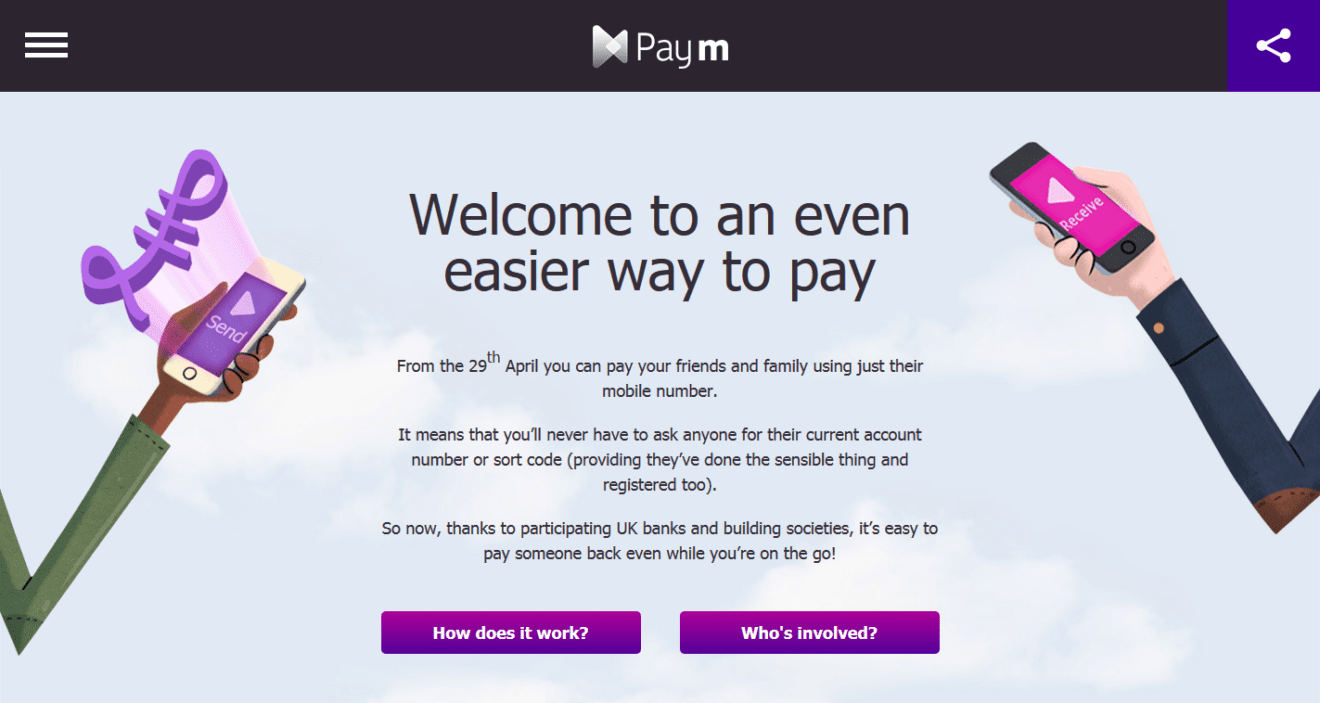
    Singapore is looking into the creation of a payments system similar to the UK’s Paym that would let someone send money using only the recipient’s mobile number, email address or social network account.

    The all-in-one addressing system – which would mean senders would not need a recipient’s bank account details – is being explored by banks and the Monetary Authority of Singapore (MAS), the organisation’s managing director, Ravi Menon, revealed during a panel discussion.Menon says that the move would fit in with MAS’s desire to boost interoperability within the industry as a way to promote innovation, arguing that common standards for payments systems would result in seamless transactions across a range of platforms.

    With this in mind, the country is also working towards a unified POS terminal that can read all kinds of cards at retail and hospitality outlets.

    Menon’s remarks came during a discussion on how Singapore can harness the power, and manage the risks, of fintech. The island has been aggressively pushing itself as a major global hub for the fast growing industry – last week it opened a dedicated office designed to help startups set up in the country as a part of a S$225 million, five year plan to build a vibrant ecosystem for innovation.

    Menon says that fintech is fundamentally changing the financial industry, and may well be its best hope for the future. He told the audience that MAS’s job as the country’s regulator is to adopt a risk-based approach to fintech innovation, not front-running but running alongside.

    The watchdog does this by actively engaging with fintech firms and allowing them to experiment with new technologies in a safe environment. This will be boosted soon by the introduction of a “regulatory sandbox” where firms can experiment and launch products or services within controlled boundaries.

    The all-in-one P2P payments platform and unified POS system are also part of MAS’s plan to promote innovation, this time by enabling interoperability. Another aspect of this strategy will see the publication of open APIs, with MAS working with FIs on sharing aggregated data to improve market and risk analyses, forecasts and projections.

  • Removing online commercial curbs can hurt consumers

    Removing online commercial curbs can hurt consumers

    Hong Kong manufacturers and retailers that increasingly use e-commerce may know that their contracts with EU companies may contain vertical restraints on online distribution. Competition authorities across Europe are currently discussing the appropriate treatment of such restraints under competition law.

    This is being done with a view to preventing distributors from imposing more restrictions on online retailers than on their rivals in traditional brick-and-mortar shops, Hong Kong Trade Development Council Research (HKTDC Research) has said in a report.

    The UK’s Competition and Markets Authority (CMA) commissioned a report from independent consultants in order to know why businesses use these restrictions and how these may affect consumers, both positively and negatively. The report surveyed 33 mostly small and medium-sized UK-based manufacturers and retailers. It was released on 30 March 2016 and will prove to be of interest to e-commerce users, HKTDC Research said.

    The businesses interviewed use a wide range of restraints in their contracts, with the most common being selective and exclusive distribution agreements (often excluding online retailers) and recommended retail prices (RRP) for retailers. The participants explained such restrictions by the need “to prevent free-riding” and to “protect brand image”.

    Free-riding may occur when customers visit ‘service retailers’ (e.g. providing free advice on products), but purchase the product from a cheaper retailer that does not provide any service support.

    Participants who mentioned maintenance of brand image said restrictions “helped signal the high quality of the product and maintain the image of the product (particularly for luxury brands)”.

    However, the report further shows that the restrictions are also “attractive because they limit the direct competition faced by the relevant manufacturers or retailers, particularly from online channels”, without any consumer benefit.

    Hong Kong companies may be interested in the conclusions of this report. In the long term, forbidding these restrictions “could bring about lower retail service standards and a poorer quality experience of the underlying product”. This is likely to hurt consumers, especially for high-tech products. On the other hand, especially in the short run, the absence of such restrictions could cut prices and widen product availability.

    The European Commission is also conducting an inquiry into the e-commerce sector. The inquiry was launched on 6 May 2015 and a Preliminary Report is due to be published in mid-2016.

    A sector inquiry is an investigation that is carried out by the European Commission into sectors of the economy and into types of agreements across various sectors, when it believes that a market is not working as well as it should, and that breaches of the competition law rules might contribute to the malfunctioning of that market.

  • IKEA Will Open First PUP Store In China

    IKEA Will Open First PUP Store In China

    Ikea’s first pick-up and order point in China is currently being built in Wenzhou and is expected to officially open at the beginning of this summer.

    Ikea PUP store is a new model established by the company in 2015. With an area of about 1,800 square meters, the Ikea Wenzhou PUP store will display about 2,500 kinds of products. Meanwhile, local consumers can order most of Ikea’s products at the order point. It is reportedly a small-sized Ikea and the extension of the Ikea Ningbo store.

    Consumers can first experience Ikea products in the display zones and choose to buy the products directly from Wenzhou PUP store or place an order to the Ikea Ningbo store in eastern China. The ordered products will then be delivered to the Wenzhou order point or to consumers’ homes. In addition, the Wenzhou PUP store will have professional staff to provide home solution planning and purchase services. However, no food and beverage area is available at the PUP store.

    A representative from Ikea China said that the establishment of the Wenzhou order point will make consumers’ shopping experience more convenient. Meanwhile, it will lay a foundation for the future expansion of Ikea’s online businesses. Ikea started the operation of this new PUP model from 2015. So far, it has launched such stores in London, Toronto, and Phuket.

    Ikea’s financial report for 2015 revealed that the company’s total sales for 2015 were EUR31.9 billion, a year-on-year increase of 11.2%. Its sales increase was mainly contributed by store sales, especially new stores integrating e-commerce functions.

  • Mobile money service launched in Bangladesh

    Mobile money service launched in Bangladesh

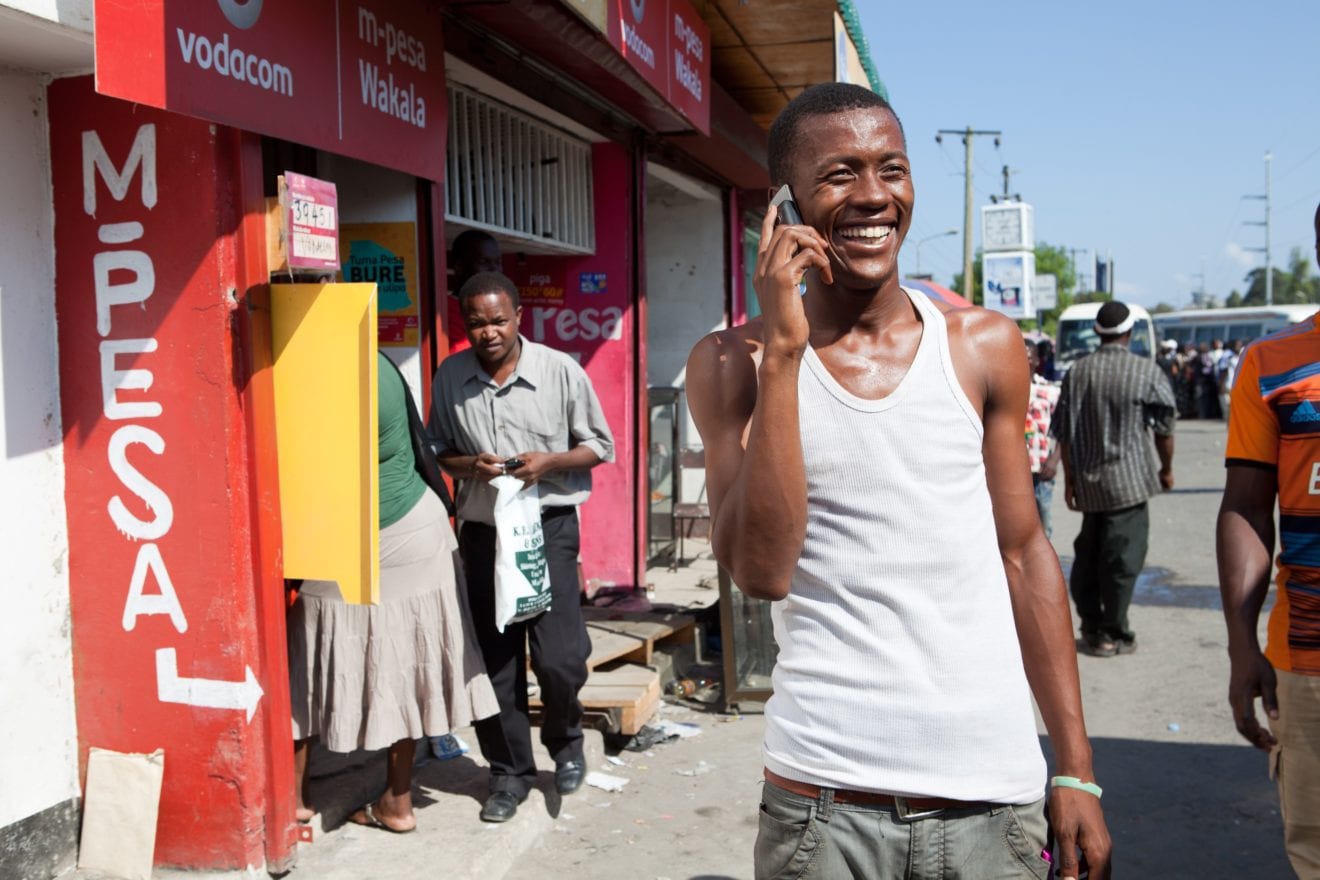
    Financial inclusion in Bangladesh just took a stride closer to reality with the launch of a new international remittance receiving service via a partnership between MasterCard, Western Union, bKash and BRAC Bank.

    The new service enables bKash’s registered customers to use their mobile phones to receive remittances from abroad directly into their bKash accounts.

    A subsidiary of BRAC Bank and a joint venture between BRAC Bank and Money in Motion LLC of USA, bkash serves the low income masses of Bangladesh to achieve broader financial inclusion by providing services that are convenient, affordable and reliable.

    With 70% of the population living in rural Bangladesh many of whom have no access to formal financial services, it is also the eight largest receiver of international remittances in the world. Under 15% of Bangladeshis are connected to the prescribed banking system whereas over 68% have mobile phones.

    World Bank South Asia Financial Inclusion Index 2014These phones are not only devices for talking, but can be used for more useful and difficult processing tasks. bKash was conceived primarily to use these mobile devices and the universal telecom networks to extend financial services in a protected manner to the under-served distant population of Bangladesh.

    By using the new service, bKash’s registered customers can receive remittances from every Western Union send market and channel directly into their bKash account, 24 hours a day.

    MasterCard’s Matthew Driver said: “This relationship is another step towards achieving our global commitment to make the financial system accessible to 500 million more people by 2020. Working with companies such as bKash and Western Union is crucial to taking advantage of the latest technology; digitizing money transfers and supporting financial inclusion efforts in the South Asia region and worldwide. The choice, flexibility and convenience of this new bKash service will help to expand financial inclusion to some of the most remote parts of this thriving nation.”

    Western Union’s Jean Claude Farah said international money transfers over mobile phones will accelerate financial inclusion in Bangladesh where there are currently more mobile phones than there are customers with bank accounts.

    In 2011, the Bangladesh Bank, the country’s central bank, issued the Mobile Financial Services (MFS) Guidelines and mandated that the model where MFS must be bank-led but also clearly indicated that partnerships with mobile operators must be forged to reach customers. The first two MFS providers to emerged as leaders early on were BRAC/bKash and Dutch Bangla-Bank/DBBL.

    Like many parts of developing Asia, financial inclusion is part of the government via the central bank’s strategic plan, aimed at ensuring these products meet the needs of the traditionally underserved segments of society. Among the services on priority list include expanding access to financial services to women, poor and rural populations; and formalizing financial services by promoting registered transactions.

  • Online booking platform Chope enters Indonesia with acquisition of MakanLuar

    Online booking platform Chope enters Indonesia with acquisition of MakanLuar

    Singapore-headquartered restaurant reservation startup Chope has acquired Indonesian counterpart MakanLuar, the company announced today. The value of the deal is undisclosed. The acquisition was made with a mix of cash and shares, although Chope co-founder and CEO Arrif Ziaudeen does not reveal the percentage of each.

    Through the deal, Chope adds Jakarta, Bandung, and Bali to its portfolio, bringing the cities it’s active in to eight. It’s been operating in Singapore, Bangkok, Hong Kong, Shanghai, and Beijing.

    Chope expanded in those territories organically, and every time it found it had to educate early adopters and find a product-market fit, Arrif says. “Jumping in at the stage MakanLuar is at, they’ve already crossed that threshold and are now in a position to hit the accelerator on sales and marketing, so we save valuable time,” he enthuses.

    MakanLuar’s founding team of Kunal Narang and Hiro Mohinani was also a major factor for Chope. “We were inspired by Kunal and Hiro’s drive, and with a proven track record we really feel confident in these safe pairs of hands,” Arrif explains.

    “Oddly enough, before we started MakanLuar, we spoke to Chope to seek ways to work together but we were too new at the time,” Kunal tells Tech in Asia. Once the team had some good traction in Indonesia, it made sense to get back in touch with Chope and become part of a bigger regional play, he adds