Tag: E-Commerce

  • Uber starts motorbike taxi service in Indonesian capital

    Uber starts motorbike taxi service in Indonesian capital

    Ride-hailing app Uber on Wednesday launched a motorbike taxi service in the Indonesian capital where Southeast Asian rivals Go-Jek and Grab are already battling for dominance.

    Jakarta is one of the world’s most congested cities and motorbike taxis ordered from a smartphone app have exploded in popularity in the past 18 months as a way to beat snarled traffic.Uber said that its “UberMotor” service would provide cheap and reliable transportation for hundreds of thousands of people.The company used a local social media and YouTube star Arief Muhammad to launch its service, saying he was the first person in Jakarta to use an Uber motorcycle taxi.

    Both Go-Jek, an Indonesian startup, and Grab, which operates in several Southeast Asian countries, claim to be the biggest provider of motorbike taxi rides in Indonesia.The popularity of motorbikes and regular taxis ordered from a smartphone has provoked a backlash in the taxi industry.Thousands of taxi drivers caused traffic chaos in Jakarta last month in a violent protest against what they believe is unfair competition.

    Drivers say the apps, which are using funding from venture capitalists to offer heavily discounted fares, have severely reduced their income. The app companies say the transport industry should adapt to new technology.The Indonesian government is drawing up new regulations to govern transport apps but has so far resisted calls to ban Uber and similar services.Officials estimate Jakarta’s traffic jams cause economic losses of about $3 billion a year.

  • Singapore Post Ramps Up China E-commerce Push

    Singapore Post Ramps Up China E-commerce Push

    Despite signs of a slowdown of imports into China, Singapore Post (SingPost) remains bullish on the prospects for e-commerce flows into Asia’s largest economy. The postal agency has upped its stake in Shenzhen-based e-commerce provider 4PX Information Technology.

    SingPost forked out US$25.6 million to acquire an additional 17.91% position in 4PX, one of China’s top e-commerce cross-border players, whose scope of services ranges from forwarding, express delivery and warehousing to software and consulting services for e-commerce vendors. The postal operator now holds a 36% stake in the Chinese firm.

    4PX runs warehouses in China, Australia, UK, Germany and the US, employing north of 2,600 staff. The company has over 20,000 customers in more than 50 locations in China and globally.

    “The additional investment in 4PX, with its extensive logistics capabilities in warehousing, express delivery and freight forwarding, is a key part of SingPost’s strategy to strengthen our integrated end-to-end e-commerce logistics solutions and to leverage on the rapid growth in China’s e-commerce activities,” said Goh Hui Ling, deputy CEO (international mail) of SingPost.

    With general cargo growth in the doldrums, logistics providers are keen on developing a footprint in e-commerce, which promises rich pickings and robust growth momentum. According to one estimate, global B2C volume is expected to reach US$2.26 trillion a year by 2020, with an annual growth rate of 15 to 20%.

    International carriers are particularly gung-ho on China, citing Chinese consumers’ rising cravings for international brands. Anselm Eggert, head of e-commerce at Lufthansa Cargo, stated that they are showing strong interest in European brands, especially health and beauty products.

    Freighter leasing firm Airborne Global Solutions invested US$16 million last September for a 25% stake in the nascent United Star Express, a new Chinese freighter operator that is expected to take to the skies halfway through this year. Its partners in the venture are Chinese Boeing 737 operator Okay Airways, a developer and an investment company, and Vipshop, the third-largest e-tailer in China, according to AGS president Rich Corrado.

    Postal agencies are pushing aggressively into this arena, their eagerness intensified by a need to make up for the ongoing shrinkage of their traditional letter mail business. With their delivery networks they have a strong advantage over competitors in the critical final-mile segment in their home markets, but they are also increasingly targeting international flows to other markets.

    Japan Post established its own website in China last autumn to offer Japanese merchandise to Chinese consumers. Orders are consolidated and moved by ocean vessel to Shanghai for overland distribution.

    China Post has been in hot pursuit of e-commerce business, which is reflected in the rapid growth of China Postal Airlines. According to one source, China Southern Airlines’ decision last year to bring two parked 747-400 freighters back into service was prompted by the Chinese postal agency.

    To develop its traffic from the postal agencies of Hong Kong and China, Cathay Pacific has implemented barcode scanning of mail at its stations in China and in Hong Kong. This enables the electronic transmission of departure, transit and arrival information. In a second phase, the airline is looking to integrate various IT interfaces – from booking to space management and mail warehouse transit management – to establish real-time data flow, said Mark Sutch, the airline’s general manager of cargo sales and marketing.

    For now many airlines view postal business as the biggest inroad into B2C e-commerce, but this will likely change. Eggert envisages greater involvement from carriers down the road. At this point Lufthansa is studying the market in order to be able to develop more targeted options later on.

    “I think in the future we will go beyond mail. I think the industry needs to think how to work together with partners,” Eggert said. This will require closer alignment, including some degree of IT integration. In light of the fact that the air cargo industry does not have a stellar track record in developing joint solutions, this will be a challenging avenue for operators to pursue, he added.

  • Huawei moves further into mobile payments

    Huawei moves further into mobile payments

    Apple and Samsung recognize that revenue from the sale of mobile devices, alone, cannot keep shareholders happy.

    With the vendors venturing into what is arguably one of the most exciting spaces in the financial services space – payments – it begs the questions of who will follow suit and whether the market can afford multiple payment providers.

    Not to be left behind, Chinese mobile phone device manufacturer, Huawei, is accelerating its payments ambition in 2016 with two significant announcements in the first quarter of 2016.

    The first is an agreement with Bank of China to jointly co-develop what the two organizations are claiming to be the next mobile based payment system under the Huawei Pay label. This was followed by a separate announcement with China UnionPay, the country’s state-run bank-card processor.

    This is not Huawei’s first foray into payment. Unofficially, Huawei Pay debuted in China with the launch of the company’s latest flagship smartphone – the Mate S in December 2015 following a test run of the payment service in September 2015. Using NFC technology, placing the Mate S in close proximity to a China UnionPay POS terminal with Quick Pass function will launch the Huawei Pay service.

    Users can complete the transaction via fingerprint authentication. The partnership with UnionPay holds the promise of extending Huawei Pay across China to a broader spectrum of Huawei handset users – mostly smartphones equipped with fingerprint sensors and an NFC chip simply by downloading the Huawei Pay app.

    China UnionPay, which holds a monopoly on bank-card payments in the country, also works with Apple Pay, which was launched in China last month.

    Local market research firm iResearch estimate that third party mobile payment transactions reached 2.42 trillion yuan in the third quarter of 2015, a 64% jump from Q2 2015. The China Internet Network Information Center estimated mobile payments to have risen to 357 million, up 60% from the previous year.

    The Chinese mobile payment market is expected to get very crowded rapidly with other mobile device manufacturers, including Xiaomi, ZTE and Lenovo, rumored to be developing their own mobile payment service. Xiaomi is doing so following its acquisition of a local payment company – Jiefu Ruitong in early 2016.

    According to iResearch China’s mobile payment is dominated by Alipay (70%) and WeChat Wallet (19%). To compete in this market Huawei plans to secure the assistance of more banks as part of its smartphone launch strategy. Without releasing details the company said it is designing more payment scenarios for its smartphone users.

  • Alibaba taps VR to enhance shopping experience

    Alibaba taps VR to enhance shopping experience

    The global virtual reality market to grow at a rate of 96% by 2019, according to a new report made available by Research and Markets.

    VR is being adopted in a wide variety of applications ranging from healthcare, gaming devices, public entertainment, prototype creation to military exercises.

    Chinese e-commerce giant Alibaba has now set up a research lab as it looks to use VR to enhance the shopping experience for its 400 million users.

    The company is also exploring how VR technology can be applied to its other services, including online games and video streaming, according to reports.

    Head-mounted displays have created opportunities for VR in a number of applications. A head-mounted display consists of an image source, collimating optics, and a mechanism to mount the device on the head.

    The device is wearable, and projects images and information relative to the user’s line of sight in front of the user. A report on the HMD market predicts growth of 49% over the next five years.

    Virtual reality devices, which are compatible with smartphones, can help users by providing specific information about their requirement on-the-go, without pulling out their portable devices. This technology is expected to commercialize in 2016 and could be worth $2.30 million in 2016.

    Alibaba has already created three-dimensional visuals for hundreds of products and will issue standards for merchants to create VR-enabled shopping options. It is also said to be working on creating music and videos.

  • Central Market and 11street Take 19th Century Malaysian Handicrafts Online

    Central Market and 11street Take 19th Century Malaysian Handicrafts Online

    Online marketplace 11street (www.11street.my) and Central Market, one of Kuala Lumpur’s oldest and most famous centres for Malaysian culture and handicrafts products, have signed a Memorandum of Understanding (MoU) to make the historic venue’s offerings available to customers online.

    Customers throughout the country can now browse and buy a huge variety of products from Central Market’s diverse mix of retailers, ranging from home & living, fashion, sports & leisure, electronics and even groceries. 

    “This strategic collaboration will enable a business, which began life in the 19th century to make its products available to consumers across the country through a state-of-the-art 21st century medium,” said Hoseok Kim, Chief Executive Officer of 11street during the signing ceremony.

    Central Market has a rich history that dates back nearly 130 years to 1888. It currently hosts a total of 300 tenants and has become a landmark for souvenir shopping as well as an iconic opportunity to sample some of the finest aspects of Malaysian culture.

    “Collaborating with 11street has been a fantastic development for us. One of the secrets of Central Market’s unbroken track record of success has been its location within the heart of Kuala Lumpur. Being close to a public transportation hub has also played a role in making it a major attraction for both tourists and Malaysians alike,” Cheong Wai Mun, Complex Manager of Central Market.

    “Now, with the brand new presence on 11street, Central Market has broken its reliance on geography. Retailers can focus on doing what they do best – offering an incredible range of artistic and exciting products as well as services at attractive prices – to a wider group of audience,” Cheong said.

    The move has been warmly welcomed by Central Market’s tenants. One of them is Gadis Manis Malaysia, a brand that promotes Malaysian’s cultural diversity, with products such as bags, t-shirts, tableware, stationary and aromatic oils inspired by Malaysia’s nature, architecture and cultures.

    “I founded Gadis Manis in 2008 after moving to Malaysia and falling in love with the cultures diversity. I’m confident that partnering with 11street will add a new dimension to the business. I look forward to introducing my unique creations to a hugely expanded online customer base,” said founder, Florence Lambert Lee.

    Staying under the same roof, Wau Tradisi, a traditional handicraft shop that sells homemade Wau, congkak, gasing, wayang kulit and many more takes part on welcoming the collaboration. Wau, a uniquely designed Malaysian kite is a tradition inherent to the culture of Eastern States of Malayan Peninsula residents, such as Kelantan and Terengganu. Whereas congkak, gasing and wayang kulit are the traditional Malay games that have a century of history. 

    Expressing the happiness, Sarimah, founder of Wau Tradisi said, “E-commerce is universal nowadays, I’m glad that both Central Market and 11street make the effort to promote Malaysia culture by having our traditional items sold at 11street. With the combination between traditional products and modern online marketplace, I believe we can continue to carry on and bring our culture to more people, and even the future generation.”

    Other than Gadis Manis and Wau Tradisi, the list of enthusiastic tenants also includes Borneo Pearl, which sells hand assembled jewellery pieces using pearls cultured in Sabah, and the Coconut Shop, which offers a wide range of products crafted from coconuts.

    “All of Central Market’s tenants will benefit from the solid marketing support that 11street offers to its customers in order to make their online businesses a success. That includes education and training programs which covering effective product listing, digital content strategy, integrated online marketing, and photography,” Kim added.

    In conjunction with the new launch, a series of Central Market’s promotional offers and discounts that are close to 40% will be available on 11street until 24 February 2017.

  • All eyes on Indonesia’s e-commerce pie

    All eyes on Indonesia’s e-commerce pie

    Squinting at the electronic tablet screen, shopkeeper Maihar tapped the colourful icons to top up her customer’s mobile phone credit.

    “Today I sell phone credits. Tomorrow I will run an online grocery store from my bed,” the 59- year-old told The Sunday Times from her small provision shop in Jakarta, which she has been running for the past 20 years.

    “I used to be ‘gaptek’. I knew only how to switch the computer on and off,” she said, using the Indonesian slang “gagap teknologi”, which refers to people who are technologically backward. “But the Internet is changing the way we do business so I am learning to use it.”

    Madam Maihar made the plunge into cyberspace four months ago when she was introduced to Kudo, a local tech start-up which allows “agents” like her to sell clothes and concert tickets from its 10-odd merchant partners through a shopping application installed on its tablets.

    So far, she has used it to pay utilities and phone bills for her customers. In return, she gets shopping discounts from Kudo.

    GETTING ON THE DIGITAL BANDWAGON

    I used to be ‘gaptek’. I knew only how to switch the computer on and off. But the Internet is changing the way we do business so I am learning to use it.

    MADAM MAIHAR, an Indonesian shopkeeper, using the Indonesian slang “gagap teknologi” to refer to people who are technologically backward.

    Small-time entrepreneurs like Madam Maihar as well as big capital owners and tech start-ups like Kudo and others, including from Singapore, are all eager for a piece of Indonesia’s e-commerce pie, valued at US$12 billion (S$16 billion) in 2014 and US$18 billion last year.

    Billed as the next frontier in e-commerce after China and India, Indonesia’s market is expected to swell to US$130 billion in 2020, with an annual growth of 50 per cent, Information and Communications Technology Ministry spokesman Ismail Cawidu told The Sunday Times.

    The government wants e-commerce to become “Indonesia’s backbone in digital economy so we can become the biggest in Southeast Asia in 2020”, he said. It will soon roll out a road map for the industry that will provide clear guidelines on logistics services, financing for start-ups, consumer protection, taxes and cyber security.

    Recognising Indonesia’s digital potential, Singapore’s Foreign Minister Vivian Balakrishnan during a visit to Jakarta in January proposed a new partnership between the two neighbours.

    “We believe Indonesian universities and technical institutes will produce many graduates with digital skills and we are thinking of launching a scheme in which Singapore companies which are looking for talent will be able to recruit talent here, deploy them here and provide services for the rest of the world,” Dr Balakrishnan said.

    With nearly a third of its 250 million population able to access the Internet, seven in 10 of whom do so on their smartphones, Indonesia has a ready captive market.

    This, coupled with low labour costs and growing affluence, is a big draw for budding tech firms.

    Mr Ivan Tan, IE Singapore’s group director of South-east Asia Group, which has helped 50 Singapore firms to collaborate with Indonesian players, said: “The increased spending power of the middle class and the rapid adoption of new technology will drive e-commerce growth in this country.”

    While traditional on-demand transport, food and shopping services such as Go-Jek motorcycle-hailing service and Tokopedia online marketplace continue to dominate the industry, new ventures such as UangTeman, which provides short-term micro loans online, and HaloDiana, a private virtual assistant, have sprung up.

    Low Internet penetration rates and service gaps such as poor infrastructure which drive up logistical costs, patchy mobile connectivity and limited banking facilities have spawned a new breed of innovative businesses.

    For instance, Kudo, whose investors include two from Singapore, targets the “have-nots” by recruiting agents in rural locations to shop on behalf of their less technologically savvy communities.

    Bareksa, an investment portal start-up, allows people to start mutual funds online with only $10 without stepping into a bank.

    Singapore firms also are jumping on the bandwagon, despite challenges such as language barrier, few business connections, foreign investment restrictions, bureaucracy and online payment problems.

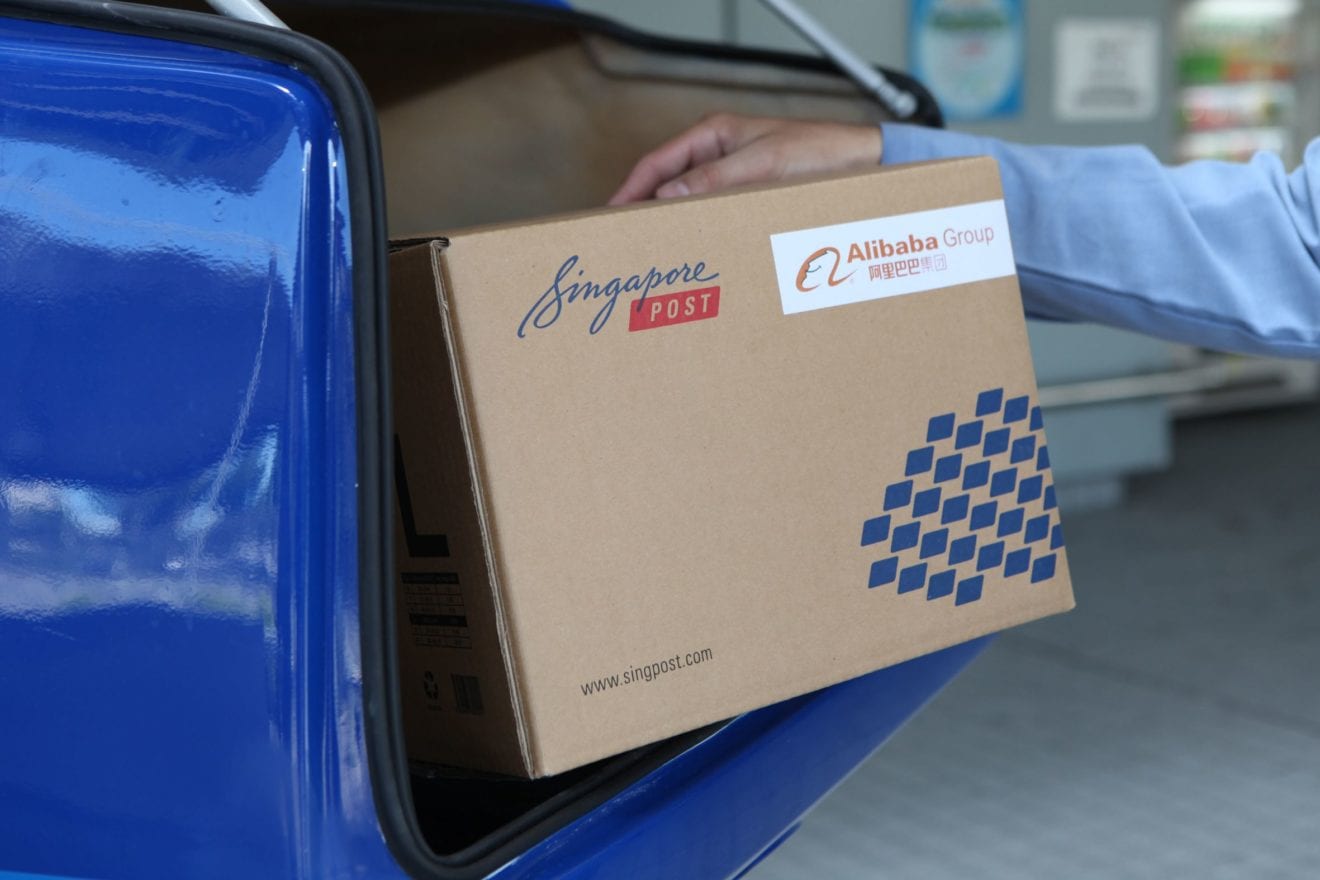
    SingPost said it has “a special arrangement with Pos Indonesia” with full online tracking and work sharing at a discounted price that helps to lower logistic costs and cut delivery times for Chinese e-commerce giant Alibaba merchants selling to the Indonesian market.

    Mr Henry Chan, business development head at ShopBack, which returns a portion of cash to shoppers who buy through the website, said while China has high demand, its “competitiveness is also very, very high”.

    “Indonesia is closer to home and something we can relate to a lot more on a cultural basis,” he said.

    Despite an “imperfect ecosystem”, from unclear government regulations to Indonesians’ love for haggling, it is only a matter of time before the country completely embraces the idea of e-commerce, technology experts say.

    Said Indonesian Internet Service Providers Association chairman Jamalul Izza: “There’s no way but up. When we are lazy to go out or get stuck in a traffic jam, what else is there to do but shop or buy food online?”

  • Ecommerce Turns into Mcommerce in China

    Ecommerce Turns into Mcommerce in China

    The shift of ecommerce sales from the desktop to mobile devices has been under way in China for a couple of years. And according to data from the end of 2015, the tilt toward mobile is clear.

    Analysys International Enfodesk reported that nearly two-thirds of retail and consumer-to-consumer (C2C) ecommerce sales in China in Q4 2015 occurred via mobile. That was up from 55.5% the previous quarter—the first time mobile accounted for a majority of ecommerce sales in the country.

    2015 may have been a turning point, but the rise of mobile has been ongoing since early 2013, when 9.0% of retail and C2C ecommerce sales occurred via mobile devices.

    eMarketer estimates that mcommerce sales were just shy of the 50% mark as a share of ecommerce sales for the full year last year.

    This year, eMarketer forecasts retail mcommerce sales in China will grow by 51.4%, to reach 55.5% of retail ecommerce sales in the country this year. That will still amount to just 10.9% of total retail sales, however.

    By 2019, the end of our forecast period, mobile users in China will spend nearly $1.5 trillion on mobile commerce, which will amount to nearly a quarter of the country’s retail market.

  • Everything you need to know about payments, ecommerce, and venture capital in Indonesia

    Everything you need to know about payments, ecommerce, and venture capital in Indonesia

    Macquarie’s annual conference in Jakarta on telecoms, technology, and ecommerce is one you shouldn’t miss. Last week, it brought together top decision makers in Indonesia’s digital economy.

    Macquarie Group’s corporate advisory branch Macquarie Capital gained relevance in Asia’s tech industry through advising startups and tech companies on capital raising, IPOs, as well as mergers and acquisitions. It’s, for example, responsible for advising aCommerce and PropertyGuru on their recent fundraises.

    Speakers at the event included Indonesia’s tech minister Rudiantara; executives of the three major telcos Telkom, Indosat, and XL; CEOs of retail giants; venture capitalists; and founders and CFOs of Indonesia’ most talked-about startups.

    Here are two days of back-to-back panels, distilled into digestible insights.

    1. A new ‘light touch’ approach to internet regulations

    Indonesia produced its share of confusing headlines about internet policies. Suddenly it wants to regulate everything: ecommerce, transportation, foreign investments.

    The new mantra is a “light touch approach” – allow change to happen and regulate where necessary.

    While opaque announcements caused concern, it’s obvious the current administration sees the digital economy as a key factor defining Indonesia’s future. It’s willing to go great lengths to support its growth.

    If you listen to tech minister Rudiantara or trade minister Thomas Lembong speak on the subject, you’ll hear their new mantra is a “light touch approach” – allow change to happen and regulate where necessary.

    It may still take some time for the administration to adopt the new mantra, but Rudiantara demonstrated he walks the talk when he refused transportation minister Jonan’s request to block access to app-based transportation services Grab and Uber. The Macquarie event coincided with a day of massive street protests organized by the taxi industry.

    Indonesia’s information and communications technology minister Rudiantara.

    Indonesia’s information and communications technology minister Rudiantara at a Tech in Asia event.

    2. Retail’s inevitable shift to ecommerce is on the way

    Similar to the changes in the transportation industry, a shift to ecommerce from offline retail is inevitable, Lippo Group director John Riady said. Consumers would eventually demand the higher convenience and product variety made possible by ecommerce.

    Lippo Group was an early mover last year when it launched its ecommerce endeavor Matahari Mall. This year, most of the big traditional retailers in the archipelago are getting on board with ecommerce plans of their own. Luxury brand retailer Mitra Adiperkasa is one of them, launching Map Emall in February.

    Lippo and Mitra Adiperkasa have taken different paths to achieving this shift to digital. Lippo’s strategy was to assemble a team of ecommerce professionals to start Matahari Mall from scratch as a separate corporation. Mitra Adiperkasa prefers to keep things close to home and manages its ecommerce site from within.

    Both John Riady and Ravi Kumar, COO at Mitra Adiperkasa, agreed that logistics and payments are still challenges to overcome. Indonesian shoppers lack trust in online payments.

    Facebook’s Head of ASEAN Kenneth Bishop offered advice on how to encourage customers to build trust: ecommerce applications should consider adding social features that let buyers ask questions before making a purchase.

    vp-sharma-map-emall-

    Mitra Adiperkasa’s VP Sharma launches Map Emall.

    3. A mobile world means engaging with customers around the clock

    The challenges of creating online services for a mobile-first market cropped up often in the discussions. Large parts of Indonesia’s young generation are coming online for the first time with smartphones, and don’t have access to desktop computers.

    Anthony Fung, the CEO of Zalora, and Fajrin Rasyid, CFO at Bukalapak, both observed that visits and transactions from mobile devices had overtaken those from desktop computers.

    Along with the shift to mobile comes a shift to new shopping behaviours. Whereas most online shopping used to occur during work hours, that pattern is starting to fade. Potential customers can now be engaged throughout the day, and even late in the evening.

    This requires brands to build even stronger emotional bonds with their customers. Zalora for example does this by focusing not only on selling products, but having a sense of fashion of its own. “If we want to be a fashion player, we need to be fashionable, know the trends, or even create them” said Anthony.

    4. More Youtube stars and on-demand video portals

    A more robust mobile infrastructure and Indonesia’s shift to 4G means streaming video on mobile devices is easier than ever.

    mobile-messaging-indonesia-BBM

    Mobile phones are part of everyone’s lives.

    This will likely lead to a digital video explosion this year. On one side that’s going to be user-generated content created by Indonesian millennials on platforms like YouTube, where social media stars like comedian Raditya Dika are already raking in millions of views on popular videos.

    There will be an explosion of digital video content this year.

    On the other are video streaming portals like iFlix, that offer quality international and regional video content for a subscription fee. iFlix will come to Indonesia in a tie-up with one of the local telcos, iFlix special advisor David Goldstein said at the Macquarie event.

    It must have learned from US-based competitor Netflix’ mistakes. Netflix got blocked by Indonesia’s state telco Telkom and its mobile operator subsidiary Telkomsel after it launched here last month.

    Video streaming is a sensitive issue in Indonesia for two reasons – first, content provided by on-demand portals will have to undergo the scrutiny of the local censorship body, and second, it eats up a lot of bandwidth, which is a challenge for the telcos.

    Regional players who understand Indonesia’s cultural sensitivities and partner with telcos could have the upper hand in the archipelago – that’s clearly the path Malaysia’s iFlix intends to take.

    5. Southeast Asia grows closer through startup mergers and acquisitions

    Tech startups growing into regional enterprises in Southeast Asia is an ongoing trend.

    Adrian Vanzyl, co-founder and CEO of Thailand-based Ardent Capital just went through a major merger with one of Ardent’s portfolio companies, Moxy. The women-focused ecommerce portal merged with Indonesia’s Bilna, forming Orami.

    “Mergers and acquisitions are a really good way to expand into markets with speed and efficiency,” Adrian said.

    After an initial phase of bringing together the teams and creating a new company culture, an effective merger or acquisition can be cost saving compared with trying to conquer a new market alone. “You’re in a new league of traction numbers and you can talk to a new league of investors,” Adrian explained, which is why he’s confident that we’ll see more merger and acquisitions in Southeast Asia’s tech sector this year.

    Orami-launch-event-team

    Moxy and Bilna rebrand as Orami after a completing one of the biggest ecommerce mergers Southeast Asia has seen so far.

    6. Profitability can wait

    The potential in Indonesia’s digital economy is so good that startups should focus on growth and brand building, not immediate profitability.

    Startups should focus on growth and brand building, not immediate profitability.

    Most of the players in Indonesia’s startup ecosystem, whether big ecommerce companies like Matahari Mall or on-demand services like Go-Jek, are not profitable yet.

    But that’s not the issue, John Riady said. “Focus on long-term value, not immediate profitability, make sure you can withstand trends and fluctuations,” he suggested.

    What’s necessary is a clear path toward profitability. Bukalapak’s Fajrin Rasyid said ideally, a startup should be able to switch between a profitability mode and growth mode at will. However, the panel agreed, there are also market forces at play which may force a startup to spend more to stay in the race.

    7. Waiting for a breakthrough in online payments

    What’s needed to catapult Indonesia’s digital economy to the next level is an online payments system that is widely accepted, works smoothly on mobile devices, and makes it easy and safe for customers to pay for things online.

    So far, there’s no such solution. Online payments are fragmented and complicated, which leads to many customers abandoning transactions.

    “Ecommerce payment methods have changed little in the past year,” said Chris Eyles from Fusion Payments who moderated the fintech panel at the Macquarie Event. “Over 50 percent of ecommerce transactions are still paid for via asynchronous offline payments such as cash on delivery and bank transfers which is limiting ecommerce growth and costing online retailers a lot of lost orders,” he added.

    startups-lending-money-poor-indonesia

    Payments are best done offline in Indonesia.

    One problem is that banks are still on the fence about their strategy in dealing with online transactions, which is holding back the entire ecosystem.

    Indonesian banks, for now, seem to prefer mobile wallet systems, but it has led to a situation where each bank offers its own ewallet version.

    Telcos also each have their own ewallets, but are planning closer collaboration in the future, which could possibly lead to the merger of the wallets of the three major telcos – a silver lining in Indonesia’s siloed payments landscape.

    Chris also observed that Indonesia’s fintech ecosystem lacks funding. “Why has Indonesia yet to see any major investments in the fintech space despite hundreds of millions being invested in the local ecommerce industry?” he asked.

    It could be due to unclear regulations, the dominance of banks, economic uncertainty, or a lack of suitable companies to invest in – most likely a mixture of all four factors.

    What became obvious is that Indonesia needs a breakthrough in online payments for its digital economy to make a leap. If there’s no local solution, it could fall into the hands of a global player to fill that gap.

    8. Investors continue to find value in Indonesia’s tech sector but are getting pickier

    Indonesia-landscape

    Anupam Garg, who leads Macquarie Capital’s telcos, media, and technology investments advisory in Asia, observed that the investing community still shows a great deal of optimism on the Indonesian technology space, despite there now being a higher focus on unit economics when assessing the value of individual businesses.

    “We expect tech fundraising to continue to thrive in Indonesia with some potential pickup in M&A activities,” he said.

    The general outlook was optimistic on a panel with VCs from some of the most active funds in Southeast Asia. The advice was to pick investments wisely, and to avoid certain verticals..

    Steven Venada form CyberAgent Ventures said that there already are three big winners in the ecommerce space: classified, retailers, marketplace. He doesn’t see many more opportunities for startups in this space, “unless you can outgrow them by 10x,” he warned.

    Better chances, according to him, are now in different verticals and niche markets.

    Stefan Jung from Venturra Capital explained his own caution about investing in fintech. “Should I wait until the regulation in this space becomes more clear?” he asked. “But then maybe I’m too late. Fintech is one of the most outstanding opportunities on a global level.”

  • Rakuten launches mobile e-commerce app in Taiwan

    Rakuten launches mobile e-commerce app in Taiwan

    Japanese e-commerce giant Rakuten has launched  consumer-to-consumer mobile e-commerce app Rakuma in Taiwan.

    The app, first launched in late 2014 in Japan, enables the sale of goods between individual consumers via smart devices. It allows quick product listing and direct communication among users.

    Rakuten said the app will target Taiwanese consumers interested in easy mobile access to e-commerce and is available for free download on Google Play and the iTunes Store.

    “We are excited about Rakuma making the leap from Japan to Taiwan with this popular mobile app and providing Taiwanese users with the opportunity to ‘sell and buy’ their personal, home and fashion goods seamlessly on their smart devices,” said Rakuma Business Manager, Takafumi Inoue.

    Taiwan is a priority market for Rakuten’s global growth strategy as Taiwan Rakuten Ichiba is already a leading e-commerce company in Taiwan and other newer Rakuten services, such as the Rakuten Card credit card and Rakuten Travel, continue to experience rapid growth.

    Rakuten is building its ecosystem of services that offers Taiwan users valuable membership benefits.

  • Retailers undeterred by e-commerce

    Retailers undeterred by e-commerce

    The rise of e-commerce will not deter global retailers from expanding their physical presence in Asia, according to a new study of more than 150 major international brands.

    Despite much-publicised concerns about economic slowdown in China, real estate firm CBRE found that the country remains the top retail market in Asia-Pacific and the fourth most popular in the world.

    More than a quarter of global retailers (27%) reported that they are looking to expand in China while a similar proportion (24%) intend to expand in Hong Kong, which is ranked as the sixth most popular market worldwide.

    Other countries in the region are also highly valued with 22% of global retailers expecting to expand in Japan, the seventh top retail destination in the world, and another 21% in Singapore, the ninth top retail location.

    Although European countries dominate for retail expansion – Germany is top with (35%), followed by France (33%) and the UK (29%) – CBRE said that interest across Southeast Asia surged by more than double that of the previous year.

    Retail brands continue to harbour concerns about rising real estate costs (56%) and uncertain economic prospects (42%), but the report emphasised that Hong Kong remains a desirable market despite the recent slowdown.

    “We’re seeing more of a challenging economic environment, and concerns such as high operating costs and a lack of quality space means retailers are somewhat more wary this year,” said Dr Henry Chin, head of research at CBRE Asia Pacific.

    “However, even as markets such Hong Kong and China are seeing a slowdown, we see increasing numbers of opportunistic retailers looking to enter markets like Hong Kong, supported by strong underlying consumer demand.

    “Japan and Australia remain attractive, while Southeast Asia showed strong growth due to opportunities for retailers around an expanding middle class and stronger economic growth.”

    The study went on to reveal that a full 83% of retail brands believe their physical store expansion plans for 2016 will not be affected by the growth of e-commerce.

    Indeed, almost one-in-five (17%) have ambitions to open more than 40 stores, while two-thirds (67%) are looking to open up to 20.

    “A physical store presence in key locations is still critical to the strength of a brand’s image,” said Joel Stephen, a senior director at CBRE Asia Pacific.

    “Stores still need to create an emotional affinity with shoppers, and customers still feel a need to go into stores, to physically touch a product and enjoy the feel-good factor associated with a particular brand experience,” he added.

  • E-Commerce Latecomer Chow Tai Fook to Chase Online Giant Alibaba

    E-Commerce Latecomer Chow Tai Fook to Chase Online Giant Alibaba

    The Chow Tai Fook brand took almost 90 years to become a family empire spanning Hong Kong shopping centers, the world’s largest jewelry chain and casinos to give patriarch Cheng Yu-tung a $10 billion net worth. Alibaba Group Holding Ltd.’s founder Jack Ma needed less than five years to amass an e-commerce fortune almost triple that.

    Now, the Cheng family’s holding company is making a move to chase Alibaba and other Internet retailers by expanding its online presence. It invested 350 million yuan ($54 million) in shopping platform CTFHOKO.com in December and a mall to showcase products sold online. Its website offers genuine imports such as infant formula, diapers and cosmetics at prices at least 10 percent cheaper than shops in mainland China and is aimed at consumers wary of counterfeit goods online.

    The company is banking on its decades-old reputation. While Hong Kong-based Chow Tai Fook has little e-commerce experience compared with JD.com Inc. and Alibaba’s Tmall, it “can offer confidence in product quality while some existing websites may have fake products,” said Chan Sai-cheong, executive director of Chow Tai Fook’s jewelry unit in charge of the venture.

    Cheng family’s flagship Chow Tai Fook Jewellery Group Ltd. joins other retailers in stepping up its online business that has long been dominated by Alibaba and other e-commerce companies. It’s also seen its traditional business suffer its worst year since 2011 as China’s slowing economy and anti-graft campaigns curb demand for luxury goods.

    The prize is a $100 billion-a-year online Chinese market for imports such as cookies and diapers, according to a report by Mintel Group Ltd., as consumers remain concerned about local products after a series of scandals over fake goods. China’s e-commerce industry is dominated by Alibaba and JD.com, with market shares of 52 percent and 20 percent respectively, according to the report.

    “It’s unlikely for newcomers to compete for website visitation” because China’s most popular online platforms such as Alibaba attracts the most traffic, said Ray Zhao, an analyst at Guotai Junan Securities Co. “It has to cooperate with China’s Internet companies to let Chinese consumers know there is a new website.”

    The hurdle for Chow Tai Fook is not just homegrown. Amazon.com Inc., the world’s largest e-commerce company, is also putting together a plan to take on Alibaba as it vies to capture China’s growing cross-border e-commerce market, which by 2020 is expected to swell into a $1 trillion industry serving 900 million shoppers, according to a June report from Accenture and AliResearch, Alibaba’s research arm.

    No Partnership

    While other brick-and-mortar companies have paired up with established platforms to break into China’s online market, such as the partnership between LVMH-owned cosmetics retailer Sephora and JD.com as well as department store chain Intime Retail Group Co.’s venture with Alibaba, Chow Tai Fook is prepared to go at it alone.

    “We don’t need to have any partnership in expanding the business — we are strong enough to do it by ourselves,” Chan said in an interview in his Hong Kong office. “What we care is that the business model has potential to grow.”

    Cosmetics, Cakes

    To complement its online offerings, Chow Tai Fook built a companion shopping mall in the Qianhai free trade zone in the southern city of Shenzhen to exhibit products sold online, while some are also for sale at the stores.

    Since the first phase of the three-story mall opened in December, Chow Tai Fook has invited 21 Hong Kong retail brands such as cosmetics retailer Sa Sa International Holdings Ltd. and Maxim’s Cakes to display their wares there and sell on its website. At least another 50 retailers will open outlets at the mall when its next phase is ready in May, said Chan.

    All products in the CTF HOKO mall and sold on its sister website are shipped from Hong Kong or other countries outside China, and prices for products such as cosmetics, milk powder and diapers are cheaper than at shops. That’s because the government has adopted lower taxes for online retailers that import through specific ports, under a program labeled “cross border e-commerce.”

    Chow Tai Fook isn’t the only traditional retailer to try and benefit from the program. China Resources Holdings Co. started ewj.com last July and opened a companion showroom in Shenzhen, while Wal-Mart Stores Inc. also plans to introduce a cross-border e-commerce service this year.

    Imported products for infants have been the most popular category since Chow Tai Fook opened its platform, as “Chinese parents don’t stint on baby products,” said Chan. “They want to give their children everything that’s good quality, and they don’t trust domestic brands after some scandals.”

    Showroom Expansion

    The company plans to open other showrooms across China to market its online offerings. It could draw more traffic with low-value goods before switching back to the luxury products for which Chow Tai Fook is known, said Bloomberg Intelligence analyst Catherine Lim.

    “New players can only succeed in surviving by focusing on some niche segments that existing players don’t focus on,” she said.

  • Overseas E-Retailers Represent 25% of China’s 500 Top Web Merchants

    Overseas E-Retailers Represent 25% of China’s 500 Top Web Merchants

    The 500 largest e-retailers in China ranked by annual web sales grew their combined online sales by 59.6% in 2015 to $198.30 billion from $124.22 billion a year prior, according to Internet Retailer’s newly published 2016 China 500. Now in its third edition, the e-commerce research ranks the 500 leading e-retailers in China based on their annual web sales. Of them, 398 are based in China while 102 hail from overseas; this latter group, which includes 52 U.S.-based web merchants, grew web sales by 124.0% to $21.31 billion in 2015. By comparison, U.S. online retail sales grew roughly 15% per year from 2011 to 2014, according to the U.S. Commerce Department.

    The fastest-growing U.S.-based e-retailer in China, according to the data in the 2016 China 500, is no. 11-ranked Apple Inc., which increased its web sales in the country by nearly 150% in 2015 to $2.2 billion, up from $897.6 million a year earlier. Computers/electronics as a merchandise category among the 2016 China 500 e-retailers grew by 49.8% in web sales in China last year.

    More analysis of the fastest-growing e-retailers by merchant type and merchandising category can be found in the 2016 China 500. The database version provides 139 metrics for each retailer, including web sales, web traffic, conversion rates and other key metrics. A 45-page downloadable PDF executive report provides rankings, summary market data and in-depth analysis of competitive trends in China’s e-commerce market.


  • Zizan Razak and Elizabeth Tan are the new faces of 11street!

    Zizan Razak and Elizabeth Tan are the new faces of 11street!

    Underlining its intent to localise and grow its business in Malaysia, 11street (www.11street.my), Malaysia’s most exciting e-mall, today announced Zizan Razak, prominent local actor-cum-entertainer and Elizabeth Tan, Malaysia’s YouTube sweetheart-turned-singer as its new Brand Ambassadors for 2016.

    “As we turn one in April, we felt it was necessary to have two youthful, engaging, and exciting Malaysians to better connect with our customers and community moving forward. Both Zizan and Elizabeth share these qualities and we are delighted to have them represent our brand in 2016,” said Hoseok Kim, CEO of 11street.

    They will both be officially unveiled and make their first appearance at 11street’s 1st Anniversary celebration, themed ‘11street’s Shocking Deals Come to Life’! The online marketplace invites all Malaysians to join the party – a fun-filled carnival with games, goodies and coupons to be given away.

    It will take place on April 11(Monday) from 11:00am to 7:30pm at NU Sentral Shopping Centre, Kuala Lumpur. Well-known celebrity influencers, such as Intan Ladyana and Atikah Suhaime will present to the jubilant birthday celebration. During the event, 11street will also be announcing its collaboration with Xpax, the main prepaid brand for youth under Celcom Axiata Berhad, to help people to save more in 2016.

    On the other hand, leading up to the anniversary, 11street is running various onsite promotions from 1st to 11th April 2016, where unlimited discount coupons will be given out to its loyal consumers.

    As a treat to both customers and fans, 11street is also announcing its “Fly High LIKE A STAR with 11street” contest. By just spending a minimum of RM11 on 11street mobile app and answering a simple question, participants will stand to win a breath-taking helicopter ride followed-by an intimate dinner session with Zizan and Elizabeth. For those who are interested, do participate the contest from 23rd March until 3rd April on 11street.

    11street will definitely ‘WOW’ you at it’s full of shock 1st year anniversary!

  • WearYouWant presents a five-step guide to safe online shopping

    WearYouWant presents a five-step guide to safe online shopping

    WearYouWant, Thailand’s leading online fashion and beauty marketplace has created a five-step guide to smart shopping online for Thai consumers, with useful information on how to shop safely through reputable e-commerce sites.

    WearYouWant Co-Founder and CEO, Julien Chalté acknowledges that e-commerce in Thailand is still in its infancy and would like to guide Thai consumers into making smarter decisions when shopping online.

    “We are very aware that we are a part of a fairly new industry in the midst of enormous growth which does not enjoy the same immediate trust as our offline peers. Therefore, it is important for WearYouWant, as one of the leading players in the vertical markets, to take responsibility and provide our customers with a seamless and genuinely safe shopping experience all the way.  We offer a simple five-step guide to shopping safely online in the hope that more Thai consumers will enjoy online shopping – hopefully little by little spurring the e-commerce industry in Thailand to become the regional frontrunner.”

    Agreeing with Chalté, Pawoot Pongvitayapanu, President of the Thai e-Commerce Association highlights how the WearYouWant’s anti-cybercrime checklist is an invaluable guide. “There has been a huge rise in e-commerce in Thailand and this is positive news for online retailers attracting Thai consumers, as well creating more choice for customers.  However, the Thai e-commerce industry is still new and presently constitutes a fairly small part of retail as a whole. Alongside this expansion, we need greater education towards consumers to expand consumer knowledge about e-commerce and shopping online in general. The five-step guide from WearYouWant can help us all and we see it as incredibly useful.”

    The five-step guide:

    Step 1: Check for clear contact information:  Whilst a web shop may not have a physical retail outlet, credible e-commerce sites do have easily visible contact information. If contacts are difficult to find or simply not shown then proceed with caution. Look for a local Thai contact with a phone number or an email address and other company details for an international business.

    Step 2: Check for spelling mistakes and language problems:  E-commerce sites that are not legitimate are often full of glaring errors. This may not be an issue with a tourist site, but for an online shopping site, bad spelling and weird sentence construction should be a red flag. If a site is not an authentic e-commerce site, then it may be created quickly, using a simple translation tool. Check out the pages which list the conditions of purchases too, as well as the ‘about us’ page. Information about employees and photos can be a good indication of authenticity.

    Step 3: Check payment certifications:  E-commerce sites always display logos showing secure payment methods, such as PCI and Norton. The logos should be crisp, clear and recognizable. If there are blurred edges or if a certification has never been heard of before, it is advisable to be cautious. The rule is, if in doubt do not enter your payment details. Quite often a quick search online will reveal methods used by cyber criminals, such as company names regularly used and methods.

    Step 4: Check the company out on Google: Search engines are a shopper’s ally when it comes to investigating companies online. Simply typing in the business name into Google or any search engine should reveal some details which validate the business. This could range from the site and products being reviewed, advertised in various locations through sponsored links and mentioned in press releases and articles. Forums and social media sites can be great platforms to discover any negative experiences associated with a company and/or its founders.

    Step 5: Check common sense warnings: Instinct, logic and experience of online browsing are good indicators of whether an e-commerce site is the real deal and the products on sale are authentic. The golden rule is that while there are some amazing offers online, if a deal seems too good to be true, and then it probably is. Shoppers need to be realistic about offers in relation to the expected price of certain brand names and quality products. 

  • Thailand’s Robinson makes online push

    Thailand’s Robinson makes online push

    Major department store operator Robinson said it was turning its focus to online sales and enhancing in-store services — offering anything from ear-piercing to eye tests — rather than opening new stores this year as the economy remained sluggish.

    President Alan George Thomson said that sales from its online platform will contribute 5-7% of overall sales by 2020, from the current 1%. In that time, its online business will become Robinson’s largest segment in terms of sales, exceeding its flagship Rama 9 store in Bangkok.

    Adding to the conventional online shopping service, special kiosks will be set up in stores where customers can make orders online. Items will be delivered to the shop as soon as the next day. Customers in rural areas can thus buy items that would otherwise only be found in the cities.

    “We are transforming Robinson from a department store to a retail company,” Thomson told reporters on Wednesday. By 2017, the company will have spent 2.5 billion baht to renovate 20 of its major department stores.

    Robinson will introduce services such as ear-piercing, eye tests, smartphone-charging stations, coffee stands and even fitness centers. “We want to make retail more than just shopping,” Thomson said.

    But sluggish domestic consumption has meant that the company will open just two stores this year, down from the four or five in the past few years.

    “The economy is definitely much slower now,” Thomson said. Sales in 2015 increased a mere 5% on the year to 2.15 billion baht, underperforming its initial target of a 15% growth. “Getting sales in Thailand is not easy,” Thomson said. “We will slow down our expansion but get better profits from existing shops.”

    To improve efficiency, it will introduce centralized cashiers in its stores.

    Robinson is a part of retail giant Central Group. While Central’s flagship Central department stores target the mid- to high-income customer, Robinson’s focus is on the mass market and a younger customer base. Many of the Robinson department stores are in the Central Plaza shopping malls operated by the group’s development arm Central Pattana.