Tag: employees

  • Ford Says To Cut 12,000 Jobs In All Across Europe

    Ford Says To Cut 12,000 Jobs In All Across Europe

    US carmaker Ford said Thursday that it plans to slash a total of 12,000 jobs across Europe as part of a previously-announced restructuring, as it closes or sells six plants in Britain, France, Russia and Slovakia in 2019 and 2020.

    “Ford’s manufacturing footprint in Europe will be reduced to a proposed 17 facilities by the end of 2020, from 24 at the beginning of 2019,” the group said, adding that the job cuts — including 5,400 already announced in Germany and 1,700 in Wales — would come “primarily through voluntarily separation programmes”.

  • Mitre 10 workers win living wage case

    Mitre 10 workers win living wage case

    Two Mitre 10 stores were told to pay their employees a living wage in a decision by the Employment Relations Authority (ERA).

    Called a landmark case, the decision was the first collective agreement in New Zealand that was determined by the ERA with a living wage being imposed on the employer, according to a statement by the First Union said.

    Members of the First Union who work at Mitre 10 Mega in Dunedin and Mitre 10 Mosgiel, which are both owned and operated by local Otago business Jack’s Hardware and Timber, will be given their first collective agreement which affords a living wage.

    Jack’s Hardware and Timber is just one of the many locally owned and operated businesses across New Zealand that make up the Mitre 10 NZ Ltd co-operative.

    According to First Union, the ERA determination has set a precedent for retail staff and has widespread implications for other retail sites in the country.

    The determination states that an employee who has some industry experience or skill that they utilise in their role should be paid no less than $21.00 per hour. For a worker with a trade qualification that increases to $23.00 per hour and the start rate is $19 per hour.

    Neil Finn-House, Jack’s Hardware and Timber Limited CEO, said he is pleased to have concluded collective agreement negotiations with First Union following the ERA hearing that has settled two final outstanding matters: minimum wage rates and duration of the contract.

    “Most kiwis will agree that it is important that local New Zealand owned and operated businesses are able to pay their employees rates that are locally comparable,” Finn-House said.

    “Our objective at the Hearing was to reach a fair outcome, consistent with market rates of comparable businesses in the South Island, which maintains our ability to reward and recognize our staff above and beyond the minimum pay rates that the collective will contain,” Finn-House said.

    Greg Hartford, CEO of Retail NZ, noted, however, that the new rate will see entry-level staff receive $1.30 an hour more than the legal minimum wage, and $1 more than the median wage paid in heartland South Island regions.

    “While both the Union and the employer are hailing today’s decision as a fair compromise, the rates set are higher than those being paid by comparable companies in the regional South Island market,” Hartford said in a statement.

    “When setting rates, all parties need to make sure that they are taking individual circumstances into account and that any comparisons made between businesses are comparing like for like. It is hard, for example, to compare wage rates paid by a small local store to those paid a large regional business, and it’s hard to compare a large regional business to a national or multinational chain.”

  • Farmers staff go on Strike

    Farmers staff go on Strike

    Employees of local department store chain Farmers have walked off the job in the first of a series of planned actions to combat the retailer’s reliance on an “unfair performance pay system”, according to First Union.

    Workers gave Farmers an ‘F’ for payment issues, including the performance pay system that keeps wages down, as well as Farmers’ refusal to pay a living wage.

    Staff will be wearing an “F for Farmers: Farmers Workers Deserve a Living Wage” sticker on their shirt at 40 of the retail chain’s 56 stores, according to NZ Herald.

    “Eighty per cent of Farmers workers are on less than the Living Wage,” First Union retail, finance and commerce divisional secretary Tali Williams said, calling the business’s pay rates an embarrassment.

    “Minimum wages are not enough to live on. Farmers is well behind other major retailers with its pay rates.

    “What’s worse is that Farmers is one of the only major retailers with a performance pay system that actively keeps wages down.”

    Farmers workers typically start on around the minimum wage ($16.50 an hour), but the retailer’s pay scale tends to end at around $17.50 with any further pay increases tied to staff performance.

    This is not the first strike the retailer has faced in recent memory, with similar actions taken by staff last year.

    First Union’s ‘Worth It’ campaign, started in April 2018, aims to encourage business to pay a living wage of $20.55 per hour to employees to assist the almost 20 per cent of New Zealand workers who are at risk in insecure or low-paid jobs.

    “Farmers needs to listen to their own family values and return to the bargaining table with a Living Wage for workers and their families,” Williams said.

  • Cebu Pacific is Recruiting New Cabin Crew

    Cebu Pacific is Recruiting New Cabin Crew

    One of the Philippines fastest growing airlines, Cebu Pacific is currently recruiting new cabin crew in c, Bacolod, Pampanga and Davao.  Cebu Pacific is aiming to fly more than 200 million passengers by 2020 and currently serves 36 domestic and 26 international destinations across Asia, Australia, the Middle East, and the USA.

    The airline says 2019 will be a year of major expansion as it plans to take delivery of 12 brand new aircraft including Airbus A321neo, five A320s and a regional ATR 72-600.  “2019 is the year we accelerate growth. On average, we will be receiving one brand-new aircraft per month which we can use to increase capacity in key markets or even launch new routes,” explained Lance Gokongwei, the airline’s chief executive.

    Interested candidates will already need to have the right to live and work in the Philippines, as well as the ability to speak and write in both English and Filipino.  Female candidates must be at least 5’3″ tall, while male candidates must a minimum of 5’7″ tall.

    Candidates in Bacolod, Pampanga and Davao can apply via the official Cebu Pacific careers website, while those in Manila can either submit an online application or attend an Open Day.

    Walk-in screenings are taking place every day between Monday and Friday from 9:00am to 11:00am Cebu Pacific Building, along Domestic Road, Pasay City.  Candidates must attend in full business attire and have a copy of their updated resume/CV.

    Cebu Pacific has also made headlines recently after it offered the opportunity for 16 lucky candidates to undergo a “study now, pay later, zero-interest” pilot training program to become fully fledged commercial pilots with guaranteed employment with the airline.

    Here’s how Cebu Pacific describes the opportunity:

    “The Cebu Pacific Cadet Pilot Program is open to all Filipino citizens who are college graduates who are proficient in English. There are no preferred college degrees, and applicants need only have an average grade of at least 70% or its equivalent in subjects related to Math, Physics and English.”

    “The program entails 52 weeks of week integrated flight training, theory and education at Flight Training Adelaide (FTA) in Australia. They will undergo learning modules, train in a flight simulator and then on to an actual aircraft. Successful candidates will receive Diplomas of Aviation for Commercial Pilot License – Aeroplane, Instrument Rating, and for Pilot in Command. They will also undergo an additional four weeks of training to obtain a Pilot’s License under the Civil Aviation Authority of the Philippines.”

    “CEB cadet-pilots need not worry about expenses related to the flight training, as the airline will shoulder the costs first—including a stipend, and amortize the payment for the course while they are employed. The entire program will be financed by Cebu Pacific, and successful cadet-pilots who enter the CEB corps of pilots will reimburse the cost of the program through salary deduction over a maximum of ten years at zero-interest.”

  • Beaurepaires identifies nine years of payment issues

    Beaurepaires identifies nine years of payment issues

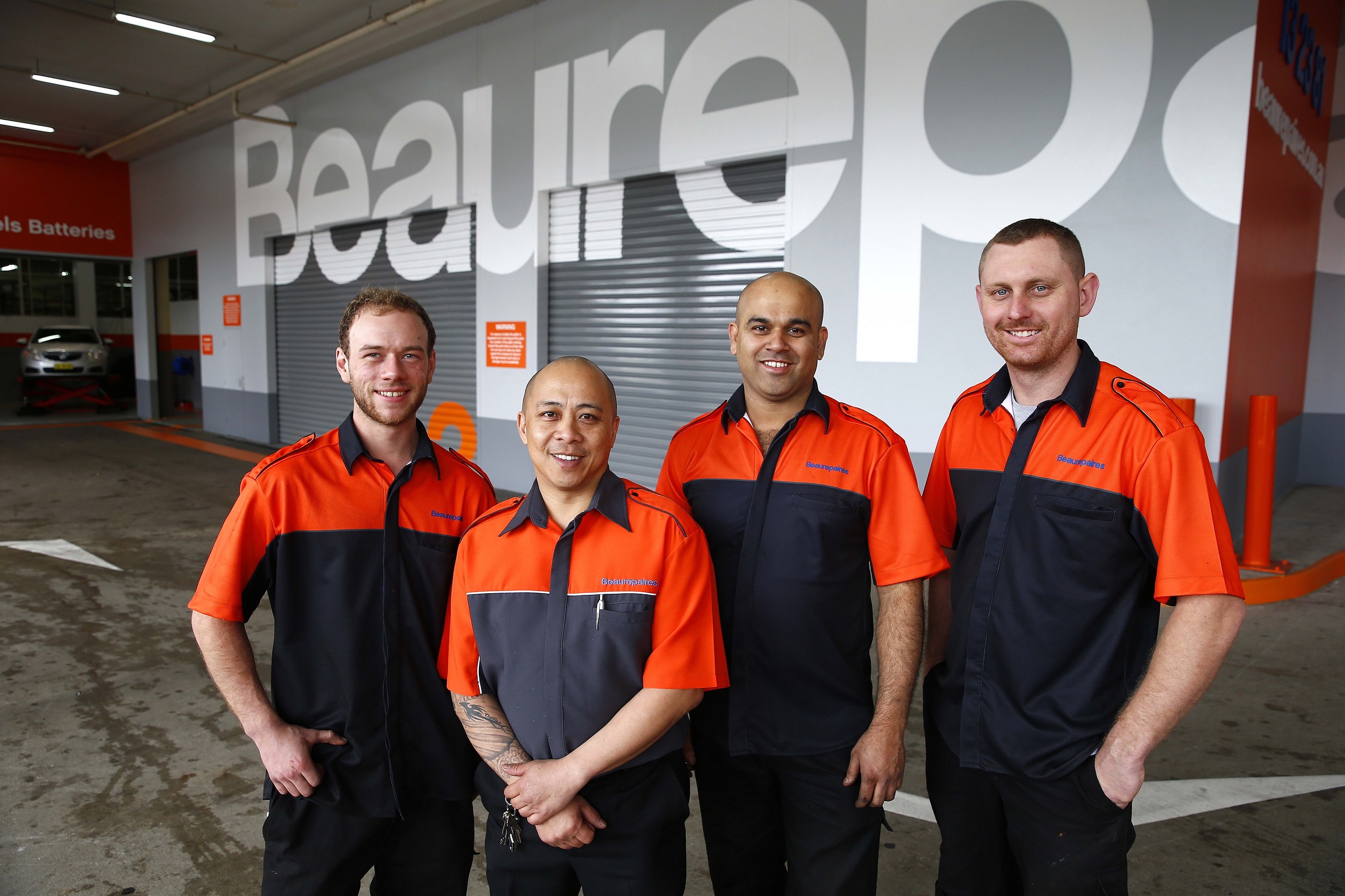
    Beaurepaires Australia revealed this week that around 3700 current and former employees were underpaid or overpaid due to a payroll error stretching back to 2010.

    Back payments to the affected staff are expected to cost the business approximately $1.8 million.

    Beaurepaires identified the payroll error during a review of its system conducted with the assistance of independent experts to ensure it was consistent with the Vehicle, Manufacturing, Repair, Services and Retail Award 2010.

    The error specifically relates to overtime and annual loading for shift workers, and was caused by a failure to update the payment system following changes to the award.

    “Paying our associates accurately is one of the most fundamental responsibilities of our business,” Scott Bennett, Beaurepaires director of retail operations, said.

    “We know it is of critical importance to our people, and also to the integrity and trust that Beaurepaires stands for. We want to be very clear in stating that this failure is completely unacceptable, and we take full responsibility for addressing the issue as quickly and transparently as possible.”

    Bennett added that as soon as the team realised what had happened, its priority became understanding how the mistake occurred and what was owed, and ensuring that affected associates are correctly compensated.

    The service network is working with external experts so that staff can have confidence in the outcome, and to ensure the analysis is completed as quickly and accurately as possible.

    Beaurepaires is the latest in a string of retailers to identify payment issues in the last year, with Lush and Super Retail Group having set aside $2 million and $7.9 million respectively to repay employees.

    The onus of these issues has largely been put on the complicated nature of the Modern Awards.

    “The industrial relations system in Australia is incredibly complicated, and small-medium size and large size businesses actively deal with it every day,” Dominique Lamb, CEO of the National Retail Association, said.

    “It’s absolutely likely if a business has grown quite rapidly over a period of time and has not maintained and continued to review those systems and look at how they’re paying and how they’re processing pay, this could absolutely happen to them.

    “If you aren’t checking your payroll systems, this is definitely the time to make sure you’re definitely getting it right.”

  • Ikea leasing program targets students and employees

    Ikea leasing program targets students and employees

    Swedish furniture and homewares retailer Ikea plans to launch furniture rental services in all of its main markets.

    The Ikea leasing strategy is twofold: firstly it addresses the budgetary constraints of customers who move frequently and cannot afford to replace furniture to suit their new space, and secondly to deliver on its sustainability promise by reducing waste and expanding the lifespan of furniture products.

    “You should be able to have a lovely home, and a good conscience, and you should be able to afford it,” said Ingka Group CEO Jesper Brodin in an interview with Reuters.

    Details of the plan, framed as a subscription-based leasing offer, were revealed during the launch of the company’s first ‘sustainable’ store in Kaarst, Germany, this week. Students in the Netherlands can already use the program, paying €30 a month to lease a table, chairs, a bed and a desk. In Switzerland and Sweden, Ikea is developing a similar plan for office furniture.

    Brodin said many Ikea customers are moving home more often than in the past and buying new furniture to fit new spaces can be a financial burden. Using the new Ikea leasing service, they can simply swap out furniture each time the move without having to worry about how they sell or dispose of their existing items.

    The Ikea leasing concept also taps into the pervasive sharing culture in which younger generation consumers embrace renting items rather than owning – including music, fashion and motor vehicles.

    The program is also in line with Ikea’s mission to be affordable, convenient and look after the planet.

    Ikea says it will test the rental concept in all 30 of its markets by 2020. Furniture items will be repaired or refurbished between leases and when too old to be leased out, recycled.

    Pia Heidenmark, Ikea’s head of sustainability, added another advantage of the program: by taking furniture back, the company will be able to assess the durability of its products and feed that information back to its design team.

  • Hyundai Korea’s employees to be more casual at office

    Hyundai Korea’s employees to be more casual at office

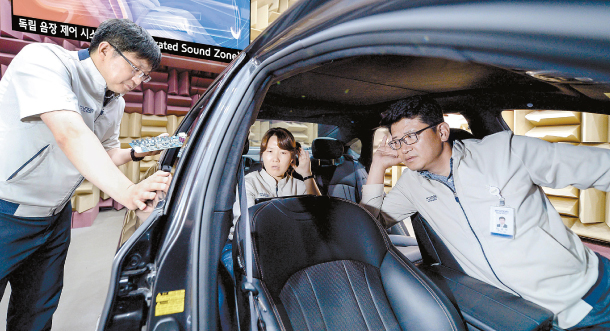
    Jeans and T-shirts will be allowed at Hyundai Motor offices from March 4 as the auto group’s heir apparent Chung Eui-sun looks for new ways to give the automaker a younger, trendier feel. On Monday morning, Hyundai Motor employees at its headquarters in southern Seoul were told that they are free to dress however they want from next month. Unlike a no-tie day, Hyundai’s new dress code didn’t include any special rules or guidelines.

    The free dress code applies to all Hyundai office workers, according to the company spokesperson, but not for workers at production facilities due to safety issues.

    While some time will be needed for Hyundai employees, who are much more familiar with formal suits, to get used to their new fashion freedom, industry sources say the move is likely to spread to Hyundai affiliates soon.

    Hyundai has long been considered one of most conservative Korean companies, as with most other companies in the traditional manufacturing sector like shipbuilding and steel. However, the automaker has been trying to rebrand itself as a mobility technology company given the growing importance of digital technology in the auto industry.

    Hyundai Motor Group Executive Vice Chairman Chung Eui-sun stressed in his New Year’s message that he will ramp up investment in the sharing economy, artificial intelligence and smart mobility to keep up with the radical paradigm shift.

    LG also started to shift its dress culture earlier last year. LG Electronics and LG Corp. adopted free dress codes from September.

  • Samsung promises to employ more local talent

    Samsung promises to employ more local talent

    Korean technology giant Samsung has promised to develop and nurture local talent in Indonesia through its Samsung Research and Development Institute (SRIN), a platform for innovation.

    The SRIN is currently carrying out a roadshow at several academic institutions in Indonesia to help young developers put their ideas into practice where previously it “would be hard for them to do so”, as the company claims. The platform could become a gateway for Indonesian talent to contribute to the development of new technologies for Samsung or other companies.

    Aside from developing its devices, Samsung’s other goal is to drive innovation in the internet of things (IoT) segment, which the company says is starting to take off in Indonesia.

    Samsung Indonesia’s marketing director for IT and mobile technology, Vebbyna Kaunang, said the use of Samsung’s IoT technologies in Indonesia was currently limited to business-to-business application, such as equipping offices with smartphone-controlled lights and other utilities. It is still unclear when these features will be made available to the general public.

    Because the company is pushing this segment further in the hope of preparing it for the Indonesian market, the development of local talent seems more important than ever, as qualified Indonesians could contribute to future Samsung technologies.

    Earlier this year, the company laid out plans to seek more Indonesian developers to help create local content for its burgeoning virtual reality (VR) service.

    “What we plan to do is to get our digital ecosystem in gear and hopefully fulfill all device segments with the latest technology every time. Through programs held by the SRIN, we are able to do that using unnurtured talent,” she said at the launch of Samsung’s new Galaxy Note 7 on Tuesday.

    The Galaxy Note 7 is described by Samsung as its pinnacle of innovation. Assembled in the company’s factory in Cikarang, West Java, the smartphone is equipped with features such as an iris scanner for more secure access, an improved stylus called the S Pen, and the ability to function for 30 minutes under water at a depth of 1.5 meters.

    The device itself is not yet available in retail stores in Indonesia, but pre-orders for the country sold out within three days earlier this month at a price of Rp 10.7 million (US$813).

    Vebby added that the components of the Galaxy Note 7 were 100 percent compliant with the upcoming regulation, which requires all 4G smartphones sold in the country to be made of at least 30 percent local components.

    At present, the government applies a mandatory rule of having 20 percent local content in 4G smartphones sold in the country, but the rule applies mostly to hardware, while the upcoming regulation will also encapsulate software requirements.

    The regulation is slated to be implemented at the beginning of next year.

    Samsung released its Galaxy S7 smartphone in March.