Tag: equities

  • Foreign Funds Withdraw $50 Billion from Asian Equities in October

    Foreign Funds Withdraw $50 Billion from Asian Equities in October

    Foreign investors dumped a net $49.77 billion from Asian equities in October, marking the steepest monthly retreat from the region in four months. The selloff hammered technology-heavy markets as institutional funds balked at cloud providers’ soaring capital expenditures and weighed regulatory headwinds following United States midterm elections.

    Taiwanese equities absorbed the heaviest blow, logging $30.68 billion in net foreign selling, the largest monthly liquidation since at least January 2008. South Korea recorded $14.59 billion in net exits over the same period, data from LSEG showed.

    Taiwan and South Korea Bear Tech Selloff

    The regional exodus extended into this month, with cross-border funds cutting another $22.6 billion across seven tracked Asian equity markets. Taiwan recorded a further $19.76 billion in net foreign sales so far this month, while South Korea surrendered another $8.32 billion.

    Much of that pressure stemmed directly from hardware supply chains tied to data centres and advanced computing components. Investors pulled back on fears that tighter power, land and environmental regulations in the US could stall facility construction, curbing purchase orders for regional foundries and memory makers.

    The outflows reflect a retreat from AI-linked positions amid increased doubts about AI infrastructure spending and profitability.

    Exness lead financial market strategist Wael Makarem noted that tighter environmental reviews and regulations ahead of the US midterms were viewed as obstacles to data centre construction and chip demand.

    Yield Pressures and Global Reallocations

    Widening yield differentials accelerated the regional drawdown. The MSCI Asia Pacific ex-Japan index slid 6.91% in October, underperforming the broader MSCI All Country World Index, which slipped 1.69%.

    US debt markets offered higher risk-free returns during the month, drawing institutional capital away from emerging Asian paper. Yields on benchmark 10-year US Treasuries climbed to 5.3% in early October, dampening investor appetite for emerging equity risk.

    For hardware vendors and electronics groups listed across Taipei and Seoul, the capital flight tightens domestic liquidity and elevates corporate borrowing costs. Equipment makers and contract assemblers banking on relentless capacity expansions face a sharper funding climate if institutional sponsors stay cautious.

    Divergence Across Southeast Asia and India

    Southeast Asian bourses posted mixed performances through the October rout. Indonesian equities logged net foreign selling of $938 million, while Thailand recorded $199 million in net exits. Vietnam and the Philippines bucked the broader trend, drawing modest net foreign inflows of $122 million and $109 million, respectively.

    India experienced a second straight month of foreign outflows in October, losing $3.6 billion. Fund managers reversed that stance quickly once prices corrected, injecting a net $5.68 billion into Indian shares so far this month.

    HSBC equity strategy head for Asia Pacific Herald van der Linde lifted India to overweight on Monday, pointing to resilient corporate earnings and improved entry valuations.

    Capital Spending Scrutiny Ahead

    October’s $49.77 billion withdrawal represents the sharpest regional liquidation since foreign investors pulled capital in June. The rapid unwinding highlights how exposed regional bourses remain to changes in Western tech procurement budgets.

    Regional equity sentiment now rests on whether commercial returns from artificial intelligence software justify current hardware investments. Portfolio managers are watching upcoming corporate earnings reports and order volumes from US hyperscalers to see if institutional selling stabilises before year-end.
  • Korean Brokerages Offer 24-Hour US Stock Trading from Dec. 6

    Korean Brokerages Offer 24-Hour US Stock Trading from Dec. 6

    South Korean brokerages will launch round-the-clock trading in US equities on Dec. 6, pairing Nasdaq’s expanded 23-hour schedule with alternative trading venues to provide uninterrupted retail access.

    The collective rollout across every domestic securities house follows a four-day buying spree in early November where Korean investors poured $2.20 billion into American equities.

    Under the structure assembled by domestic brokerages and the Korea Securities Depository, firms will run Nasdaq’s 23-hour official session and route the remaining hour through alternative trading system Blue Ocean. Trading begins at 9 p.m. Eastern Time on Sunday, Dec. 6, which translates to 11 a.m. In Seoul on Monday, Dec. 7. The setup also captures exchange-traded funds listed on NYSE Arca, which expands its own operations to 23 hours a day on the same date.

    How Custody and Data Flow Work

    Settlement pipes require coordination across time zones. The Korea Securities Depository instructed Citibank, its local custodian, to increase transaction monitoring and prevent trade breaks, while projecting that longer operating shifts will not lift domestic administrative overheads.

    Bringing daytime execution into official exchange tapes alters market depth. Korean retail traders previously accessed US shares during daylight hours through off-exchange alternative systems, primarily Blue Ocean, Bruce, and Moon. Under the overhaul, individual brokerages will pull real-time order books directly from the New York Stock Exchange and Nasdaq under bilateral commercial agreements, narrowing execution spreads.

    Retail demand justifies the engineering expense. Net buying between Nov. 2 and Nov. 6 reached $2.20 billion, outstripping the entire monthly tally for August of $1.96 billion and more than doubling September’s $1 billion total. October finished at $5.42 billion, leaving brokerages little choice but to automate overnight desks.

    Asia Diverges on Extended Hours

    Seoul’s universal adoption contrasts sharply with caution across rival Asian financial hubs. Japanese and Taiwanese brokerages are limiting 23-hour access to selected foreign-equity desks, while activity in China remains largely institutional. Retail brokers in Australia, New Zealand, and Europe have ceded the rollout to fintech platforms, pointing to low overnight liquidity and thin night-shift staffing.

    Southeast Asian brokerages have stopped work on retail extensions altogether, leaving access mainly to high-net-worth clients through global trading desks. Korea’s retail punters, long accustomed to non-stop trading on local cryptocurrency exchanges, pressured domestic platforms to match that availability.

    Kospi Faces Direct Daylight Competition

    The immediate operational risk shifts to domestic equity liquidity. With Wall Street open during Asian working hours, Korean capital faces a daily choice between domestic corporate shares and large-cap US technology stocks.

    Shinhan Securities senior researcher Park Woo-yeol pointed out the friction: “Nasdaq’s move to 23-hour trading will challenge the assumption that the domestic stock market is the only market open during Korean daytime hours. With cryptocurrency exchanges already operating around the clock, Nasdaq’s regular session will become a direct competitor to the Kospi.”

    Local capital outflow represents a structural headache for domestic market operators. When domestic savers can trade Apple and Nvidia during their morning commute with full market-maker support, domestic listings lose their geographical monopoly on day trading.

    Korea Exchange Prepares Defensive Response

    The regulatory foundation was set in April, when the US Securities and Exchange Commission approved Nasdaq’s plan to stretch its operating envelope to 23 hours across five business days. Wall Street platforms moved quickly to lock in retail volumes generated outside American time zones.

    Faced with persistent capital flight into US equities, the Korea Exchange is drafting counter-measures. Exchange executives outlined a phased roadmap toward continuous domestic trading at the Korea Premium Week conference in September.

    Work centers on upgrading local market pipes. The Korea Exchange expects to complete technical architecture for a unified trading board by the end of 2027, with an initial 12-hour operational window launching through an extended morning premarket session.

  • IDX Overhauls Listing Rules with IDR100 Trillion Pathway

    IDX Overhauls Listing Rules with IDR100 Trillion Pathway

    The Indonesia Stock Exchange has rewritten its primary listing rules, establishing a 10,000-investor post-listing requirement for Main Board applicants alongside an IDR100 trillion market capitalisation route.

    Board of Directors Decree No. Kep-00152/BEI/10-2026 took effect on 9 October 2026, replacing the earlier framework under Decree No. Kep-00045/BEI/03-2026 to govern public offerings across the IDX.

    The revision eliminates standalone net tangible asset qualification for prospective issuers. Companies pursuing Main Board entry must now pair at least IDR250 billion in net tangible assets across their last two audited financial years and latest interim accounts with an established market capitalisation and an additional operating metric: pre-tax earnings averaging IDR100 billion over three years, revenue of IDR800 billion, total assets of IDR2 trillion, or operating cash flow of IDR100 billion. Alternatively, applicants can bypass asset tests entirely if they reach a market capitalisation of IDR100 trillion and equity of at least IDR10 trillion.

    Stricter Hurdle for Small Floats

    Development Board standards also faced upward revisions. Minimum commercial operating histories now span 24 consecutive months instead of 12, requiring full revenue records across that two-year period.

    Financial thresholds for the secondary tier require IDR50 billion in net tangible assets alongside market valuations between IDR300 billion and IDR500 billion, depending on whether applicants qualify via profits, revenue, assets, or cash generation. A standalone route on the Development Board requires an IDR10 trillion market capitalisation alongside IDR1 trillion in equity. Applicants must also distribute allocations across at least 5,000 single investor identification holders after the offering closes, up from earlier distribution practices.

    Shareholder Dispersion and Floats

    Capital markets in Southeast Asia have wrestled with tightly held listings that leave thin public floats after debut trading. Indonesia’s exchange is tackling that structural issue by enforcing absolute investor counts rather than relying strictly on percentage-based public floats.

    For regional consumer conglomerates, retail chains, and fast-growing technology platforms eyeing Jakarta, the rules cut off quiet, insider-dominated public exits. Companies can no longer slip onto the Main Board through balance-sheet asset valuations alone without proving wide retail or institutional buy-in across 10,000 separate accounts. Existing listed issuers also face a higher bar, requiring more than 1,000 active investor accounts to maintain their Main Board tenure compared with the earlier 750-holder floor.

    Five-Year Projections Replace Shorter Targets

    Underwriting teams now absorb deeper accountability under the disclosure terms. Lead managers must submit equity research reports at the time of application, at the end of the sixth month following admission, and at the close of the twelfth month.

    Filing documentation must feature integrated financial projections spanning at least five years, stretching past the historical three-year standard. Underwriters must execute and document formal due diligence on these five-year operating estimates, restricting aggressive growth claims often used to price retail and e-commerce listings.

    Scrapping the Share Price Floor

    Regulators removed the mandatory IDR100 minimum offering share price, handing dealmakers pricing room for fractional or high-volume issuances. Prospective applicants can also seek exchange clearance to count shares held by investment vehicles toward their official free float when underlying beneficiaries qualify as public investors.

    Companies that lodged listing applications before 9 October 2026 remain subject to review under the previous regulations during the transitional window. The exchange has yet to release the operational timetable and verification steps for approving beneficiary-level free-float exemptions.

  • SGX Starts Succession Planning Ahead of CEO Loh Boon Chye Contract End in 2027

    SGX Starts Succession Planning Ahead of CEO Loh Boon Chye Contract End in 2027

    Singapore Exchange began planning for a chief executive transition on Friday (Oct 23), after CEO Loh Boon Chye informed the chairman that preparations for an eventual handover should get underway.

    The announcement followed record financial results for the financial year ended June 2026, when adjusted net profit climbed 24.6 per cent to S$759.5 million on net revenue of S$1.48 billion.

    Speaking at SGX’s annual general meeting, Loh, 62, noted that no departure date has been set, and his contract runs through mid-July 2027 while he continues serving as an executive and non-independent director.

    A Decade Leading the Bourse

    Loh took charge of SGX in July 2015 after serving on its board from 2003 to 2012. His financial career started at the Monetary Authority of Singapore in 1989 as an investment officer, following an engineering degree from the National University of Singapore.

    He spent 17 years at Deutsche Bank, rising to head corporate and investment banking for Asia-Pacific. From 2012 to 2015, he ran Asia-Pacific global markets at Bank of America Merrill Lynch as deputy president.

    Beyond the exchange floor, Loh chairs the World Federation of Exchanges and holds a board seat at sovereign wealth fund GIC. That network anchored his tenure as SGX shifted emphasis toward foreign exchange and multi-asset derivatives.

    Capital Market Headwinds in Equities

    The transition arrives while Singapore works to lift liquidity across its stock market and draw corporate listings. While derivatives and fixed income expanded, primary stock offerings faced persistent regional competition from private capital and alternative exchanges.

    Regional equity platforms have struggled with sluggish initial public offering volumes over recent years. Southeast Asian growth companies frequently deferred public debuts or explored dual listings abroad rather than depending solely on local trading desks.

    Retail and consumer issuers in particular watch the bourse closely for valuation depth. A thin domestic trading float raises the cost of capital for regional operators seeking public funds to build out logistics networks or physical store footprints.

    Regulatory Steps and Listing Frameworks

    Last year, Singapore introduced a 20 per cent tax rebate for primary listings to revive interest among regional enterprises. Officials also instituted a dual-listing mechanism with Nasdaq to keep fast-growing tech and consumer firms tethered to the local exchange.

    Net revenue climbed 13.9 per cent in the 2026 financial year, showing that fee income from foreign exchange desks and multi-asset clearing insulated the exchange against softer stock-trading volumes.

    The outgoing chief’s mandate until mid-July 2027 leaves SGX time to identify a successor, test candidates, and hand over control without disrupting trading infrastructure operations.

  • Bursa Malaysia Edges up to 1,596 Points on Bank Gains

    Bursa Malaysia Edges up to 1,596 Points on Bank Gains

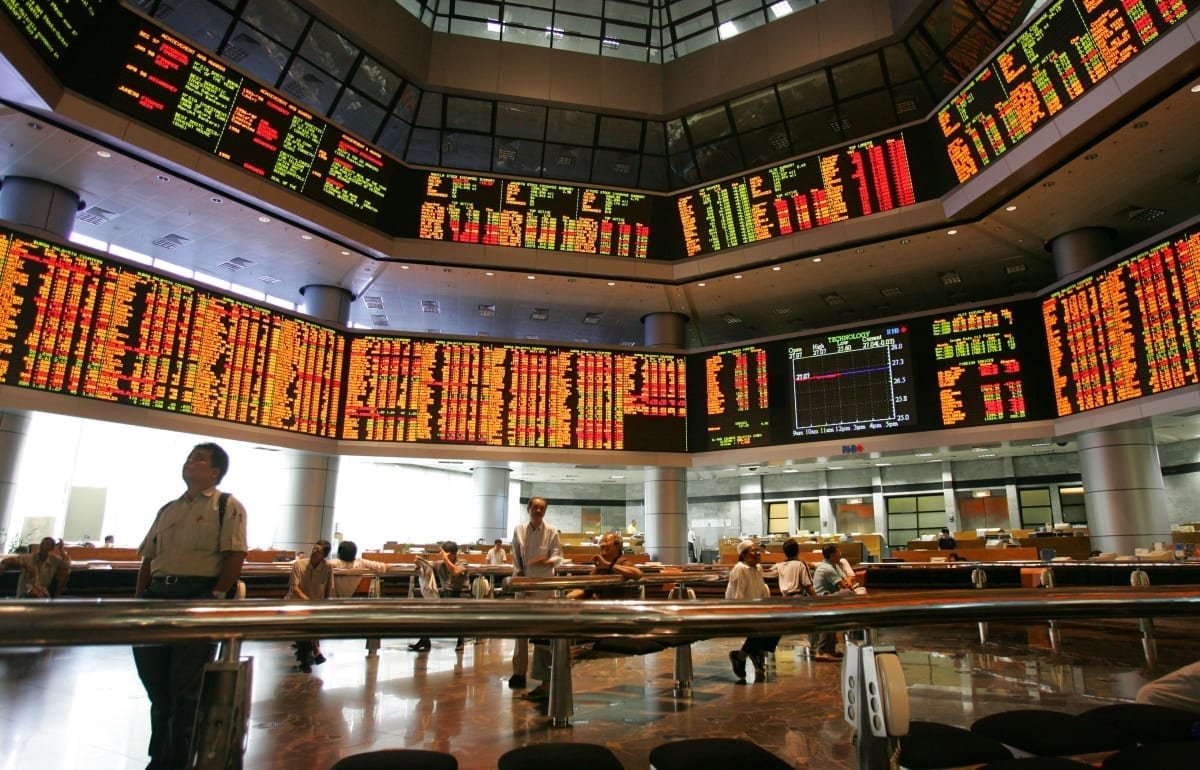
    Bursa Malaysia’s benchmark index edged up 0.36 points to 1,596.11 in early Tuesday trade as gains in heavyweight commercial lenders offset broad weakness across secondary counters.

    The marginal 0.02 per cent advance recovered an opening drop of 3.18 points to 1,592.57, though decliners outpaced advancers 201 to 156 across the broader exchange. Morning volume reached 180.64 million units worth RM90.02 million.

    Trading remained divided between domestic financial counters and export-oriented industrial names. Investors tracking Wall Street overnight gains looked for traction following a 1.11 per cent rise in the Nasdaq Composite and a 0.41 per cent lift in the S&P 500, where buyers returned to artificial intelligence semiconductor and memory hardware producers. That overseas bounce failed to spark a broad rally in Kuala Lumpur, where 302 counters traded unchanged and ten remained suspended.

    Lenders and Consumer Stocks Hold the Line

    Large commercial banks provided the primary support for the headline index during early exchanges. Malayan Banking added four sen to trade at RM9.94, Public Bank picked up one sen to RM4.72, and CIMB Group rose two sen to RM7.17. Hong Leong Bank held steady at RM21.10. Those advances lifted the Financial Services Index by 55.25 points to 18,546.22.

    Consumer and industrial heavyweights also found buyers. Food manufacturing major Nestle climbed 40 sen to RM90.30 to lead the top gainers list. Energy shipper MISC advanced 14 sen to RM9.49, refiner Petron Malaysia added 11 sen to RM3.45, and aluminum producer Press Metal gained five sen to RM6.73.

    Selling pressure hit utilities and infrastructure names, capping the index’s upward room. Tenaga Nasional dropped six sen to RM12.92, while YTL Power slipped five sen to RM5.21.

    Yield Pressure Weighs on Tech and Construction

    Elevated fixed-income yields in the United States continued to cast a shadow over rate-sensitive regional assets. The US 10-year Treasury yield held near 5.15 per cent while the 30-year yield stood around 5.48 per cent, keeping capital cautious toward emerging market equities.

    Technology equipment and assembly counters saw selective selling despite the overnight recovery in US chip stocks. Automated test equipment supplier KESM dropped 15 sen to RM4.54, and engineering solutions group UWC gave up nine sen to RM7.21. In building materials and construction, Kerjaya Prospek shed 10 sen to RM3.22, while ceramic tile manufacturer Kim Hin lost 8.5 sen to 80.5 sen.

    Apex Securities noted the split in investor sentiment as global interest rate pressures collided with domestic capital allocations.

    “the FBM KLCI is likely to trade within a range, with investors remaining selective and favouring domestically driven and defensive counters,”

    the brokerage said.

    Sector Divergence Deepens Across Secondary Boards

    Broader market gauges drifted lower as mid-cap and Shariah-compliant equities failed to mirror the banking index. The FBM Emas Index dipped 1.31 points to 11,908.38, while the FBM Top 100 Index fell 1.18 points to 11,704.04. The mid-cap FBM Mid 70 Index declined 17.71 points to 17,116.03, and the FBM ACE Index eased 1.58 points to 5,391.71.

    Shariah counters faced heavier selling, pulling the FBM Emas Shariah Index down 13.83 points to 11,860.36. The Plantation Index dropped 62.97 points to 8,590.4. In contrast, the Energy Index added 1.67 points to 825.23, supported by global crude prices trading near US$100 per barrel, while the Industrial Products and Services Index crept up 0.40 points to 174.5.

    Speculative retail counters dominated trading volume without driving major index shifts. GIIB rose 1.5 sen to 70.5 sen, and Ni Hsin picked up one sen to 45.5 sen. Zetrix AI and OCR stayed flat at five sen and 4.5 sen, respectively. Medical glove producer Top Glove eased half a sen to 88.5 sen, and healthcare firm LYC fell one sen to half a sen.

    Domestic Defensives Face Real Estate Headwinds

    The morning session shows institutional funds directing liquidity into large-cap balance sheets while avoiding debt-funded expansion plays. In retail, commercial development, and logistics, property developers and real estate investment trusts face higher borrowing costs because US long-term yields remain elevated above 5 per cent.

    Construction contractors linked to hyperscale data center infrastructure maintain a separate stream of domestic order book momentum. Yet the broader real estate ecosystem is operating with tighter capitalization spreads, leaving consumer staples and cash-generative banking operations as the primary defensive refuge for local asset managers.

    Market participants are now watching whether benchmark crude can maintain the US$100 per barrel threshold to support domestic energy counters, while keeping a close eye on the 1,600 psychological barrier for the FBM KLCI.

  • Asian Tech Shares Plunge After Chinese Chipmaker Reports Key Advance

    Asian Tech Shares Plunge After Chinese Chipmaker Reports Key Advance

    Technology shares across Asian bourses dropped sharply this week after one Chinese semiconductor manufacturer reported a major technical advance in chip production, Nikkei Asia reported. The announcement triggered immediate selling pressure across regional equity markets as investors reassessed competitive positions across the hardware supply chain.

    Regional equity trading reflected swift portfolio adjustments among institutional funds. Hardware manufacturers and component suppliers saw selling pressure spread across trading desks during early Asian hours.

    Market Reaction Across Regional Exchanges

    Trading desks responded immediately to the manufacturing report. Institutional investors trimmed positions in established semiconductor supply chain equities, reallocating capital as competitive risks altered previous earnings projections.

    The sell-off extended beyond pure semiconductor firms into related technology segments. Equipment suppliers and peripheral tech components faced lower bids as market participants weighed how domestic semiconductor capabilities in China could alter export demand.

    Supply Chain Realignment

    Advancements in domestic fabrication challenge the established procurement patterns of global device manufacturers. Electronics makers operating in Asia maintain intricate supply networks that rely on cross-border component sourcing.

    Localised semiconductor advances shift use in contract negotiations. Device brands and component assemblers face new cost structures as alternative domestic sourcing channels mature across regional manufacturing hubs.

    Capital Shifts in Asian Hardware

    Hardware investors now price in tighter margin compression for incumbent chip suppliers. Capital allocators had previously factored in longer production timelines before advanced domestic alternatives reached commercial benchmarks.

    Portfolio rebalancing indicates that technology valuations in Asia remain sensitive to fabrication breakthroughs. Fund managers are recalibrating exposure between regional equipment exporters and domestic producers.

    Tracking Next Production Benchmarks

    Market attention now shifts toward yield rates and commercial deployment timelines for the new technology. Tech equity indices in Asia continue to track trading volume and capital flows across regional semiconductor manufacturing hubs.

  • Singapore Needs Capital Injections Beyond $6.5 Billion EQDP, SGX Chairman Says

    Singapore Needs Capital Injections Beyond $6.5 Billion EQDP, SGX Chairman Says

    Singapore Exchange chairman Koh Boon Hwee said the domestic stock market lacks flow and liquidity, leaving local investors unwilling to take risks on home-grown shares.

    Speaking on the sidelines of the Forbes Global CEO Conference on Oct 8, Koh noted that further capital injections will be needed to sustain demand, even as the government allocates $6.5 billion through the Equity Market Development Programme. However, he warned that state injections are not a natural, lasting flow like pension-backed markets in the US.

    Koh pointed out that younger Singapore investors have an appetite for risk when buying volatile overseas stocks like Tesla and loss-making SpaceX, but local initial public offerings struggle for traction after listing.

    The Exit Route Problem For Growth Firms

    Early-stage venture funding finds solid support in Singapore. Even so, early backers need domestic public markets to absorb later-stage equity. Thin local trading volume forces founders abroad to provide exits for their investors.

    Regional technology leaders repeatedly bypass the local exchange. Shopee parent Sea listed on the New York Stock Exchange in 2017. Ride-hailing group Grab completed a Nasdaq debut in 2021 through a blank-check combination. In October, Singapore-headquartered data centre developer DayOne filed for a Nasdaq initial public offering, continuing the flow of domestic tech assets to the United States.

    Pension Flow Versus Injections

    State-backed interventions do not generate the structural momentum of institutional retirement pools. Equities in the United States draw on multiple independent pension systems. These funds constantly deploy fresh capital across public listings, private equity, and venture funds.

    The 6.5 billion Singapore dollar injection under the EQDP commits capital without creating an automatic mechanism for ongoing demand. Koh noted that the state fund is invested rather than spent. Standalone allocations leave unresolved questions about long-term reinvestment.

    “Our challenge right now is to create something that is circular and sustainable,” said Koh.

    Supply Chain Concentration Risks

    Capital concentration in Singapore tilts heavily toward established lenders, industrial landlords, and real estate investment trusts. These blue-chip counters trade steadily. Their sheer scale makes rapid compound expansion difficult to maintain over decades.

    Backing younger firms offers a route to build consumer-facing companies with proprietary brand equity rather than component suppliers. Tiered supply chains leave component makers vulnerable to sharp order swings. A 5 per cent order cut from a consumer brand can trigger a 15 per cent revenue decline down the manufacturing chain.

    Domestic Valuation Gaps

    A wide gap between private seed financing and public market liquidity leaves founders with few domestic exit options. If the local exchange cannot provide secondary buyers for high-growth enterprises, early venture capital remains locked abroad once portfolio companies exit in New York or Hong Kong.

    The Monetary Authority of Singapore and SGX have reviewed measures to encourage regional listings, while market participants watch DayOne’s pending Nasdaq filing for final pricing terms.

  • Vietnamese Banks Plan Nearly $7 Billion in Share Sales

    Vietnamese Banks Plan Nearly $7 Billion in Share Sales

    Vietnamese banks are planning nearly US$7 billion in share sales as the country’s fast-growing economy fuels demand for capital in October 2026.

    The planned offerings open a window for foreign investors to expand in the financial sector after Vietnam reported economic growth of nearly 10 per cent in the last quarter.

    Access to the industry remains tightly controlled by state regulations, which cap cumulative foreign ownership in domestic lenders at 30 per cent and limit individual offshore stakes to 20 per cent.

    Foreign Ownership Limits Face Fresh Scrutiny

    The capital drive arrives as international asset managers reassess their allocations to Southeast Asian financial assets. FTSE Russell reclassified Vietnam as a secondary emerging market, a technical transition estimated to channel between $3 billion and $5 billion in portfolio inflows into local equities. For global funds, commercial banking counters offer the most liquid gateway to consumer spending, industrial real estate financing and retail supply chains.

    Foreign investors still face operational friction despite high domestic credit demand. Offshore funds often pay steep over-the-counter premiums to acquire shares from existing foreign holders when a lender hits its 30 per cent ceiling. Easing or selectively lifting these limits gives local banks direct access to long-term institutional capital, but state authorities remain cautious about ceding governance control in core financial intermediaries.

    Reforms Target Capital Market Modernization

    Hanoi has accelerated regulatory overhauls to modernize its broader corporate landscape. The government enacted more than 86 laws and 300 decrees since 2025, overhauling customs, commercial tax codes, digital banking operations and judiciary procedures under an economic program led by General Secretary To Lam. The administrative updates aim to transition the economy away from basic low-cost manufacturing toward higher-value tech assembly, modern logistics and formal retail distribution networks.

    These policy shifts follow long-term structural changes that elevated Vietnam to upper middle-income status in July 2026, according to World Bank classifications. National gross domestic product per capita passed $5,000 in 2025, up from under $700 when initial market-oriented Doi Moi reforms began in 1986. Annual economic expansion averaged more than 7 per cent following pandemic reopenings in 2022, reaching 8 per cent in 2025 on high export volumes and resilient domestic retail trade.

    Credit Growth Targets and Trade Pressures

    Maintaining high balance-sheet expansion carries operational risks for commercial lenders. Vietnam runs an export-heavy trading model where total trade turnover equals roughly 170 per cent of gross domestic product, leaving corporate borrowers exposed to overseas tariff shocks, geopolitical shipping disruptions and currency volatility. The World Bank projects national economic growth of 6.8 per cent for 2026 before accelerating to 7.1 per cent in 2027, citing corporate debt use and foreign-exchange pressures as key vulnerabilities.

    Bank executives now look to upcoming legislative sessions where lawmakers will review potential adjustments to foreign investment limits across strategic commercial sectors. Lenders must balance their new equity issues against state economic targets that aim for average annual GDP growth of at least 10 per cent through 2030.

  • Bursa Malaysia Climbs to 1,635 as Financial Counters Lead Early Trade

    Bursa Malaysia Climbs to 1,635 as Financial Counters Lead Early Trade

    Bursa Malaysia opened higher on Monday as the benchmark FTSE Bursa Malaysia KLCI gained 5.01 points to reach 1,635.88 within the first ten minutes of trade.

    The 0.31 per cent advance built on the previous Friday’s close of 1,630.87, aided by softer United States payroll figures that dampened expectations of immediate monetary tightening by the Federal Reserve.

    Trading across the Kuala Lumpur exchange showed broad participation in the opening hour. Advancing stocks outnumbered decliners 224 to 158, while 337 counters remained unchanged, 2,054 went untraded and 24 faced suspension.

    Banking and energy counters advance

    Lenders provided the primary push for the index. Malayan Banking, Public Bank, and CIMB each climbed four sen to RM10.06, RM4.70, and RM7.69 respectively, driving the Financial Services Index up 97.59 points to 19,138.10.

    Utility giant Tenaga Nasional also added four sen to trade at RM13.00. Energy stocks followed suit, pushing the sector index up 2.57 points to 835.60, while the Plantation Index gained 2.23 points to 9,058.78.

    Healthcare provider IHH Healthcare moved against the upward trend, shedding six sen to RM7.74.

    Trading volume and market breadth

    Total market turnover reached 206.30 million shares valued at RM98.78 million during early exchanges. Technology and manufacturing counters saw heavy volumes among retail and institutional accounts.

    VS Industry gained three sen to 32 sen, while Notion VTec added four sen to 74.5 sen. GB Bond rose half a sen to 23.5 sen, SFP Tech picked up one sen to 28.5 sen, and Dagang NeXchange traded unchanged at 51.5 sen.

    Renewable energy and industrial engineering names led percentage gains. Samaiden climbed 19 sen to RM3.03, UWC gained 16 sen to RM7.73, Critical Holdings rose 15 sen to RM2.61, Mi Technovation added nine sen to RM5.30, and Solarvest advanced eight sen to RM4.25.

    Regional pressures and bond yields

    External macroeconomic indicators continue to dictate capital flows across Southeast Asian bourses. Rakuten Trade equity research head Thong Pak Leng noted that elevated benchmark borrowing costs and commodities keep local sentiment selective.

    Brent crude traded at US$102.25 per barrel while the US 10-year Treasury yield held at 5.28 per cent, maintaining pressure on emerging market valuations. In Hong Kong, the Hang Seng Index slipped below the 24,000 threshold as selling hit technology and financial listings.

    For consumer brands and industrial suppliers across Malaysia, higher bond yields and fuel costs present direct friction against corporate margins and transport overheads. Investors are filtering allocations toward cash-generative banking and energy plays while trimming positions in high-multiple consumer staples.

    Consumer decliners and index levels

    Consumer bellwether Nestle recorded the sharpest decline of the morning, dropping 32 sen to RM89.20. Industrial and tech decliners included Vitrox, down 14 sen to RM10.32, Kobay Technology, losing 12 sen to RM2.18, and Kelington, shedding five sen to RM8.58.

    Secondary indices tracked the main board higher. The FBM Mid 70 Index rose 28.14 points to 17,510.07, the FBM Emas Index added 33.81 points to 12,204.38, and the FBM ACE Index climbed 31.41 points to 5,560.87.

    Rakuten Trade projects the FBM KLCI to fluctuate between 1,625 and 1,635 points through the remainder of the session as bargain hunters test resistance levels.

  • Fewer Than 1% of People in Bangladesh Invest in Stocks

    Fewer Than 1% of People in Bangladesh Invest in Stocks

    Fewer than 1.7 million beneficiary owner accounts remain active in Bangladesh out of a population nearing 180 million, keeping stock market participation below 1 per cent. Industry insiders estimate that actual individual investors number no more than 200,000, representing less than 0.1 per cent of the population.

    In October 2026, the low tally contrasted sharply with more than 190 million bank accounts nationwide. Stock market appetite has struggled to recover since 2010, when beneficiary owner accounts surged past 3.3 million before a severe market crash prompted a sustained exodus.

    Regional Gap Widens Across South Asia

    Neighbouring equity markets show a wide gap, with India registering roughly 6 per cent of its population in equities and Nepal reaching 26 per cent. In Bangladesh, investor confidence has also been undermined by weak protections from the Bangladesh Securities and Exchange Commission and irregularities across listed firms.

    This shallow investor pool limits initial public offerings to modest sizes for consumer enterprises and regional retail conglomerates looking to raise capital in Dhaka. Institutional liquidity also stays tight. Retail secondary volume cannot absorb sizable exits, leaving listing pipelines narrow.

    Structural Faults and Corporate Returns

    Corporate payout policies have discouraged retail capital. Only 10 to 15 listed entities deliver dependable cash returns to shareholders. Larger companies frequently hold cash in bank accounts rather than distributing dividends. Consequently, speculative turnover has concentrated in low-paid-up capital firms and junk equities.

    Lax oversight in previous years deepened the structural imbalance. The Bangladesh Securities and Exchange Commission previously extended the maturity terms of closed-end mutual funds by 10 years, freezing retail redemption rights. Questionable listings also slipped through. Sikder Insurance allocated roughly 72 per cent of its life fund into junk shares before completing its initial public offering.

    Regulatory Overhaul Following Political Transition

    Market participation reached an all-time peak in 2010, when active beneficiary owner accounts climbed past 3.3 million ahead of a major crash. Account numbers dropped steadily over the next decade. Fraud across brokerage houses went uncompensated, and market manipulators faced minimal sanctions.

    Following the fall of the Awami League government in 2024, the interim administration reconstituted the securities regulator. BSEC Chairman Masud Khan has committed to overhauling listing criteria, digitising trade surveillance, and policing brokerage compliance. Meanwhile, the Dhaka Stock Exchange has started payouts to reimburse investors hit by past brokerage insolvencies.

    Reforms Face Operational Test

    Rebuilding retail confidence requires expanding the product suite beyond volatile equities into a functional bond market. The immediate test for the commission lies ahead. Regulators must process pending corporate listing applications under tighter financial disclosure rules and enforce dividend compliance before year-end financial reporting deadlines arrive.

  • Tokyo Stocks Breach 70,000 as Tech Gains Drive Nikkei Rally

    Tokyo Stocks Breach 70,000 as Tech Gains Drive Nikkei Rally

    Japanese equities jumped on Monday morning as the benchmark Nikkei Stock Average crossed the 70,000 threshold during intraday trading for the first time in three months.

    Technology shares led the surge in Tokyo after renewed optimism surrounding artificial intelligence boosted investor demand across the sector.

    Macroeconomic Data Eases Rate Pressure

    Cooling economic data from the United States provided immediate support for equity valuations. The September U.S. Jobs report showed slower-than-expected employment growth, prompting market participants to scale back expectations for a Federal Reserve interest rate increase this month.

    Lower rate expectations in the United States relieve valuation pressure on high-multiple technology counters across Asia, giving institutional buyers room to rebuild equity positions.

    Technology Sector Leads Market Rebound

    Capital flows into hardware, semiconductor, and artificial intelligence-related names provided the bulk of the index momentum during the morning session. Tokyo equity markets had spent the past three months trading beneath the 70,000 mark following earlier volatility.

    For portfolio managers and corporate treasuries in the region, the recovery above 70,000 sets a firmer valuation floor for Japanese listed corporations. Technology suppliers and capital equipment manufacturers benefit directly when broader risk sentiment stabilizes.

    What to Watch Next

    Trading desks now turn their focus to upcoming central bank meetings and subsequent corporate earnings reports across the Asian tech hardware supply chain to gauge whether intraday index levels hold through the close.

  • GCash Prices Record Philippine IPO at 6.60 Pesos per Share

    GCash Prices Record Philippine IPO at 6.60 Pesos per Share

    GCash priced its initial public offering at 6.60 Philippine pesos per share on October 2. The deal is the largest stock market listing in Philippine history.

    The price fixes terms for institutional and retail investors after months of preparation by the country’s dominant digital payments operator. Trading schedules and final share allocations follow.

    Setting the valuation benchmark

    Setting the final price concludes the bookbuilding phase with domestic and foreign institutional funds. The 6.60-peso level anchors the platform’s public debut on the local bourse.

    Market participants watched the offering as a key test of equity appetite in Manila. It establishes the platform as the benchmark technology asset on the Philippine Stock Exchange.

    Fintech expansion across consumer channels

    Proceeds will fund financial service distribution, digital lending, and transaction processing infrastructure across the archipelago. The platform has expanded beyond peer-to-peer transfers into credit lines, micro-insurance, wealth management, and merchant payments.

    Competition across Southeast Asian digital payments has shifted from user acquisition toward merchant monetisation and lending margins. Philippine consumers rely on digital wallets for utility settlements, offline retail payments, and e-commerce transactions. That gives large ecosystem operators steady transaction volumes.

    Implications for Philippine capital markets

    Liquidity from the record transaction flows into a domestic exchange that recorded muted listing volumes over recent quarters. A successful listing by a marquee technology firm reopens the domestic market to large private equity exits and institutional portfolio reallocations.

    Regional equity investors will track post-listing liquidity closely. Sustained trading activity could encourage other venture-backed technology operators in Southeast Asia to explore primary domestic listings rather than dual-class foreign debuts in the United States.

    Next steps for trading and allocations

    Retail offering periods and institutional book settlements begin after the formal price confirmation. Bourse officials and underwriters will monitor opening-day price stability and institutional secondary market participation once shares begin unrestricted trading.

  • Asian Stocks Dip 0.2% as US 10-Year Treasury Yield Hits 5.306%

    Asian Stocks Dip 0.2% as US 10-Year Treasury Yield Hits 5.306%

    Asian stocks were subdued on Oct 1 as global bonds remained under pressure, with MSCI’s broadest index of Asia-Pacific shares outside Japan falling 0.2 per cent following a brutal September.

    Blockbuster earnings from AI chipmaker Micron failed to lift market sentiment, while stalling US-Iran peace talks kept oil prices elevated and benchmark US 10-year Treasury yields touched 5.306 per cent.

    Regional equity performance was mixed as South Korea’s KOSPI slipped 0.14 per cent, Japan’s Nikkei gained over 1 per cent on chip shares, and European stock futures fell 0.75 per cent.

    Treasury Yields Test Multi-Decade Highs

    Bond markets ended September with heavy losses after rising energy prices revived inflation concerns across major economies. The United States 30-year Treasury yield traded at 5.634 per cent after touching 5.6517 per cent, a level unseen since June 2002.

    Sustained yields above 5 per cent have weighed on equity valuations and corporate balance sheets. United States federal debt has now crossed the $40 trillion mark, leaving investors focused on debt sustainability and rate velocity. Darren Shames, global head of rates sales at Nomura, noted that the speed of the yield move has drawn intense scrutiny from institutional allocators.

    Currency markets reflected the bond pressure. The United States dollar traded near a two-month peak, while the euro held at $1.1334 after sliding 2.5 per cent through September. In Tokyo, the Japanese yen weakened 0.3 per cent to 157.95 per dollar, even after Bank of Japan summary documents showed several board members favored accelerating the pace of domestic interest rate hikes.

    Chip Earnings and Hardware Valuation Pressure

    Strong quarterly figures from memory maker Micron failed to sustain broader technology gains across Asian exchanges. Hardware and consumer electronics supply chains remain caught between record artificial intelligence infrastructure demand and broader macroeconomic drag.

    Official trade figures from Seoul showed South Korea’s total exports jumped 83.5 per cent year-on-year in September to a record $120.94 billion, led by a 262 per cent surge in semiconductor shipments to $60.3 billion. Computer product shipments surged 435.3 per cent to $7 billion as suppliers fulfilled high-bandwidth memory orders for global computing platforms, including multi-billion supply agreements involving Samsung Electronics, SK hynix, and Nvidia.

    “Micron’s numbers are another strong validation of AI and memory demand, but markets may increasingly be asking whether we are closer to peak memory shortage, even if demand continues to exceed supply,” said Charu Chanana, chief investment strategist at Saxo.

    Energy Pressures and Policy Shifts

    Elevated commodity prices continue to complicate central bank calculations across Asia-Pacific import hubs. Brent crude futures hovered at $98.15 per barrel on October 1, after climbing more than 14 per cent in September to register a third straight month of price gains.

    Diplomatic friction and stalled peace negotiations between the United States and Iran regarding the seven-month conflict in the Middle East have kept shipping risks elevated across crucial energy corridors. Higher bunker and fuel costs are feeding directly into freight rates, hitting import-reliant consumer goods distributors and retailers across Southeast Asia.

    Data released on September 30 showed United States consumer price inflation rose less than expected in August, offering brief relief to equity trading desks. Pricing data from CME FedWatch showed traders assigned a 38 per cent probability to a Federal Reserve rate increase on October 28, down from a 50 per cent probability priced a day earlier.

    What Operators and Investors Face Next

    For retail conglomerates, electronics manufacturers, and commercial property owners across Asia, persistent capital costs are forcing tighter inventory control and reduced reliance on floating-rate debt. Higher discount rates limit speculative store rollouts, prompting operators to favor proven high-density retail corridors over aggressive regional expansion.

    The current market tension follows the Federal Reserve’s September decision to raise borrowing costs for the first time in three years. While New York Fed President John Williams indicated on September 29 that there was no immediate urgency for another policy move, energy market volatility keeps headline inflation risks open.

    All eyes now turn to the Federal Reserve’s rate-setting meeting on October 28, alongside third-quarter earnings releases from Asia’s leading consumer hardware and semiconductor manufacturers as South Korea aims for $1 trillion in annual exports.

  • National Stock Exchange of India Gains 5.2% on Debut Following Record IPO

    National Stock Exchange of India Gains 5.2% on Debut Following Record IPO

    Shares in the National Stock Exchange of India rose as much as 5.2 per cent from their initial public offering price of 1,785 rupees ($19) during Thursday trading in Mumbai. The listing completed the country’s biggest public share sale of the year and the second-largest initial public offering in Indian history.

    Investor orders came in heavy across institutional and retail books, pushing the offering past five times total subscription. That sustained appetite carried directly into the secondary market as trading opened on Thursday.

    Valuation and Market Standing

    Trading activity across Mumbai has consolidated around the exchange over the past decade. The platform operates as the world’s largest options exchange by contracts traded and handles the vast majority of cash equity and derivatives turnover in India.

    Strong initial pricing reflects investor confidence in exchange revenues tied to surging domestic trading volumes. Market participants placed bids across the full price band, absorbing the entire secondary share sale without price concessions.

    Rivalry with the Bombay Stock Exchange

    The successful listing puts the platform in direct competition for public equity capital against its older domestic rival, the Bombay Stock Exchange. The National Stock Exchange has overtaken the older venue in listing venue selection, hosting the majority of India’s largest corporate public debuts.

    Listing on its own and rival platforms creates a dual dynamic where both domestic bourses now trade publicly. Operating margins and fee generation from high-frequency derivatives trading provide the primary operational moat separating the two exchanges.

    Implications for Capital Markets and Issuers

    Public listing subjects the exchange to heightened quarterly reporting standards and public scrutiny regarding market infrastructure stability. Capital market operators in the region have watched the transaction closely as a bellwether for institutional liquidity in South Asia.

    Large consumer businesses and technology firms preparing domestic listings benefit from the deeper liquidity base proven by this transaction. Institutional allocation patterns during the bookbuild show foreign and domestic funds remain ready to commit large capital blocks to proven market infrastructure assets.

    Trading Volume and Regulatory Path

    Preparation for the public share sale spanned several regulatory review cycles before clearing the final approvals needed for pricing. The transaction cleared after exchange administrators addressed legacy governance questions and updated internal compliance frameworks.

    Market attention now shifts to upcoming quarterly volume reports and derivatives transaction data, which will set the baseline for earnings expectations in the exchange’s first full quarter as a listed company.

  • HSBC Plans India Equity Broking Return After 13 Years

    HSBC Plans India Equity Broking Return After 13 Years

    HSBC is re-entering India’s equity broking business after a 13-year absence, seeking to capitalise on a robust pipeline of share sales and rising demand from wealthy clients.

    The move marks a reversal of the London-headquartered bank’s decision to exit the domestic retail brokerage and depository business in 2013.

    Rebuilding the Equities Platform

    HSBC has begun rebuilding its equities platform and is hiring senior executives for cash equities and institutional broking roles in Mumbai, using the licence held through HSBC InvestDirect Securities (India) to launch retail services over the next few months.

    Trading will focus on digital order execution for high-net-worth retail accounts. It will also handle cross-border trades routed through the Gujarat International Finance Tec-City financial free zone. HSBC walked away from its Indian retail brokerage and depository network in 2013 during a global retreat from non-core operations.

    Diverging from Foreign Peer Strategies

    This strategy sets HSBC apart from international rivals that spent the past decade shedding consumer banking in South Asia. Competitors including Citigroup, Standard Chartered and Deutsche Bank shrank their consumer footprints. They chose to concentrate capital on corporate advisory and transaction banking instead.

    By contrast, the bank retained its local consumer arm and expanded its physical reach. The Reserve Bank of India approved 20 new branch locations for the lender in January, taking its domestic network to 46 locations.

    Capturing Fee Revenue from Public Listings

    Robust public offerings and retail participation have created steady fee income for capital market intermediaries in Mumbai. Re-establishing equity distribution gives the bank direct placement power for primary offerings. It also captures secondary brokerage commissions from affluent private banking clients.

    Rival foreign institutions are attempting similar returns. London-based Barclays began preparations earlier this year to restart its Indian equity capital markets franchise, a decade after shutting the unit down during a restructuring drive.

    Branch Expansion and Earnings Trajectory

    Earnings in the group’s domestic franchise back the brokerage launch. HSBC India generated a 4 per cent year-on-year increase in net profit during the first half of 2026, lifted by higher fee volumes in corporate and institutional accounts.

    Group chief executive Georges Elhedery stated in recent broadcast remarks that the bank intends to deploy more capital across India. It will prioritise wealth management products designed for high-income domestic savers.

    What to Watch

    Next, the bank will finalise its senior equity trading hires before rolling out digital retail execution tools to wealth clients across its 46-branch Indian network.