Tag: equities

  • Korea Exchange Extended Session Triggers 5,354 Trading Halts in First Week

    Korea Exchange Extended Session Triggers 5,354 Trading Halts in First Week

    South Korea’s new evening equity session triggered 5,354 volatility interruptions during its first week. Retail traders dominated thin trading books.

    Daily turnover across the extended four-hour window averaged 1.1 trillion won ($811 million) between Sept. 14 and Friday. That represented 4.6 percent of total equity trading value across the Korea Exchange.

    Trading runs from 4 p.m. To 8 p.m. To help domestic investors trade outside office hours, the exchange created the window. Instead, speculative retail flow concentrated into illiquid listings. The evening block generated 77.17 percent of all circuit-breaker style volatility interruptions recorded across the entire exchange over the five-day stretch.

    Retail Concentration Drives Market Friction

    Individual accounts generated more than 90 percent of all executed trades during the inaugural evening sessions. Foreign investors accounted for 6.7 percent of volume. Domestic institutions and pension funds contributed just 2.6 percent.

    Institutional market makers stayed away, leaving order books vulnerable to sharp imbalances. An average of 54.85 million shares changed hands daily across the late session. Volume was spread across hundreds of main-board Kospi and junior Kosdaq listings without offsetting bids to absorb retail momentum.

    Kosdaq Small Caps Suffer Wild Swings

    Distortions hit smaller counters on the tech-heavy Kosdaq board fastest. Thin order books let minimal volume drive outsized price jumps. These gains evaporated by the next morning’s regular open.

    Pony Link illustrated the structural gap on Sept. 14. After finishing daytime trading at 2,400 won, the Kosdaq-listed stock hit its daily upper price limit of 3,150 won in after-hours trading. That jump took just 1,417 shares, roughly one-tenth of its daytime volume of 15,641 shares. The gain vanished the next morning, and the stock closed regular hours down at 2,365 won.

    Exchange Defends Auction Mechanics

    Bourse officials rejected claims that the high number of volatility interruptions pointed to structural failure. The mechanisms pause continuous trading for short single-price auctions. This prevents transactions at distorted levels and restores orderly pricing.

    Halts cooled over the week. The market recorded 1,112 volatility interruptions on Sept. 14, dropping by half to 553 events by Friday.

    The number of volatility interruptions should not necessarily be interpreted as an indicator of market volatility, as the measures help curb excessive price movements by preventing trades at abnormal prices and facilitating price discovery through single-price auctions.

    Surveillance Team Deployed Through December

    Regulators at the Korea Exchange have assigned a dedicated task force to monitor the evening session through the end of the year. The unit will track order patterns for spoofing, price manipulation, and artificial momentum in thinly traded counters.

    Brokerages in Seoul will watch whether institutional desks deploy automated liquidity before year-end, or if the evening window stays an exclusive arena for retail day traders.

  • Bursa Malaysia Opens Higher Before Trimming Gains to 1,666.81

    Bursa Malaysia Opens Higher Before Trimming Gains to 1,666.81

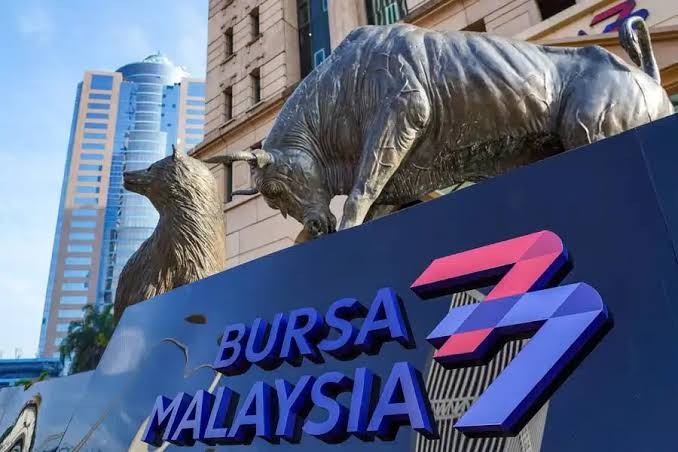
    Bursa Malaysia opened higher on Tuesday morning before trimming its advance, with the benchmark index easing 0.13 of a point to 1,666.81 at 9.10am.

    Trading volume reached 314.78 million shares valued at RM148.07 million, supported by selective bargain hunting across consumer, plantation, and financial counters.

    Market breadth stayed positive across the wider exchange in early trade. Advancers led decliners 265 to 150, while 294 counters were unchanged, 2,164 remained untraded, and 11 stayed suspended.

    Consumer and Energy Heavyweights Drive Divergent Moves

    Consumer goods companies posted sharp split movements during the morning session. Food and beverage manufacturer Fraser & Neave led the gainers board, rising 50 sen to RM23.10.

    Packaged food giant Nestle Malaysia moved in the opposite direction, dropping 48 sen to RM89.22. That drop positioned the food manufacturer among the session’s steepest decliners alongside insurer Allianz Malaysia, which fell 20 sen to RM21.10.

    Downstream fuel retailer Petron Malaysia advanced 21 sen to RM4.00, buoyed by shifting sentiment as easing tensions in West Asia pushed Brent crude oil prices lower. Semiconductor and technology equipment makers also found support, with Malaysian Pacific Industries adding 18 sen to RM42.98, while Pentamaster and MI Technovation each rose 16 sen to RM5.56 and RM5.82.

    Banking Stocks Draw Morning Capital

    Lenders provided steady support to the benchmark index as capital rotated into dividend-yielding financial counters. Malayan Banking added two sen to RM10.40, and CIMB Group rose four sen to RM7.69. Public Bank moved lower by one sen to RM4.78.

    Utility provider Tenaga Nasional shed 10 sen to RM12.94, while private hospital operator IHH Healthcare traded unchanged at RM7.62.

    Aviation and penny stocks dominated early trading activity. AirAsia rose two sen to 55 sen, building active retail turnover. Building materials firm BMS gained 1.5 sen to 15 sen, and Kinergy Advancement added half a sen to 40.5 sen. Artificial intelligence plays AIMAX and Zetrix AI traded flat at one sen and 20 sen, respectively.

    Valuations and Sector Rotations

    Rakuten Trade Sdn Bhd vice-president of equity research Thong Pak Leng noted that the domestic equity market presented attractive entry levels following softer trading last week. “Market valuation remains decent, currently at below the 16.5 times price-to-earnings average,” Thong said.

    Institutional and retail flows have increasingly concentrated on domestic-facing cash generators. For retail operators and consumer goods suppliers, pricing discipline and raw ingredient costs continue to dictate corporate margins on the ground, creating clear performance gaps between diversified beverage producers and legacy packaged food manufacturers.

    Plantation operators saw mixed pricing in morning trade. United Plantations fell 12 sen to RM33.30 despite modest underlying gains across the broader agricultural sector. Sunway Healthcare retreated nine sen to RM2.20.

    Mid-Cap and Shariah Gauge Gains

    Broader market indices traded in positive territory despite the slight retreat on the headline composite gauge. The FBM Mid 70 Index climbed 51.93 points to 17,741.07, and the FBM ACE Index rose 19.87 points to 5,336.30.

    The FBM Emas Index gained 12.17 points to 12,410.78, while the FBM Top 100 Index added 8.48 points to 12,198.93. The FBM Emas Shariah Index advanced 8.07 points to 12,244.83.

    Sector-specific indices tracked upward across the board. The Financial Services Index gained 25.65 points to 19,517.12, the Energy Index picked up 2.14 points to 847.57, the Plantation Index added 1.10 points to 9,411.59, and the Industrial Products and Services Index rose 0.69 of a point to 184.19.

    Market participants are tracking whether the benchmark composite index holds within its expected range between 1,665 and 1,680 points as institutional volume builds through the trading week.

  • Foreign Funds Buy $4.7 Billion in Asian Equities Ending Nine-Month Selloff

    Foreign Funds Buy $4.7 Billion in Asian Equities Ending Nine-Month Selloff

    Foreign investors poured a net $4.72 billion into Asian equities in August. The buying ended a nine-month selling streak across seven regional markets. Strong hardware demand and better-than-expected corporate earnings drew international funds back to North Asian technology exporters after heavy selling in July.

    Capital flowed heavily into Taiwan, which took in $11.15 billion in net purchases during August. Fresh allocations continued into early September. Global funds added another $1.52 billion across regional bourses through Tuesday.

    Tech Earnings Power North Asian Rebound

    Quarterly profits from regional technology suppliers accelerated sharply, shifting market sentiment. Across Asia, 2,108 large and mid-cap companies tracked by LSEG beat analyst projections by an average of 10.2 per cent, posting 44.7 per cent overall profit growth. Technology exporters led the charge. Their profits surged 88.3 per cent.

    Suppliers in Taiwan benefited directly from higher revenue guidance issued by US hyperscalers including Amazon, Microsoft, and Nvidia. Broader markets gained ground as well. The MSCI Asia-Pacific ex-Japan index climbed 3.01 per cent in August, rebounding from a July low of 797.6.

    The latest foreign inflows appear to reflect a renewed AI allocation rather than a broad-based return to Asia.

    Divergent Flows Across Seoul and Southeast Asia

    Rallies bypassed parts of the region during August. South Korea recorded foreign outflows of $8.65 billion, extending net foreign selling in Seoul to a fourth straight month. Sentiment turned only in the first week of September. Overseas buyers then picked up $1.1 billion of South Korean shares alongside $1.45 billion in Taiwanese equities.

    India maintained steady foreign interest. The market pulled in $3.1 billion in August for its second consecutive month of net foreign purchases. Southeast Asian bourses presented a more fragmented picture. Indonesia and Vietnam recorded modest foreign inflows of $68 million and $11 million. Meanwhile, foreign funds withdrew $749 million from Thailand and $216 million from the Philippines.

    Earnings Visibility Counters Macro Risks

    Asset managers are targeting compute infrastructure rather than broad consumer recovery plays. For corporate treasurers and regional operators, these selective flows deepen the divide between high-margin tech supply chains and local consumer sectors.

    Market volatility persists as investors weigh high US bond yields against fluctuating energy costs. Attention now turns to third-quarter order books for regional semiconductor and component manufacturers to see if they match the optimistic guidance set by North American cloud buyers.

  • Tokyo Stock Exchange Delistings Set for Record High in 2026

    Tokyo Stock Exchange Delistings Set for Record High in 2026

    A record number of companies will delist from the Tokyo Stock Exchange in 2026, marking the third consecutive year of peak departures from Japan’s main equity market.

    Departures stem from corporate buyouts alongside investment funds seeking to take firms private, combined with companies failing to satisfy stricter listing criteria across exchange segments.

    Tougher Criteria Squeeze Growth Names

    Stricter compliance thresholds have forced underperforming issuers to evaluate their public status. On the Tokyo Growth market, a majority of listed equities sit below required market capitalisation cutoffs as regulatory deadlines approach. Companies unable to reverse their valuations or generate sufficient trading liquidity face mandatory removal.

    At the same time, maintaining a listing carries heavier burdens. Rising domestic interest rates have increased the cost of capital for corporate borrowers, while Japan now ranks second globally in shareholder activism campaigns. Management teams face direct pressure from institutional investors to improve capital efficiency, leading smaller operators to conclude that public market scrutiny outweighs the benefits of an equity quote.

    Private Capital and Shifting Exits

    Private equity sponsors have moved quickly to absorb listed targets. Founders and management teams are teaming up with domestic and global buyout funds to execute management buyouts, taking operating businesses private to restructure away from quarterly earnings demands.

    For consumer, retail, and technology operators across Asia, this turnover alters how expansion capital is secured. Public equity is no longer an automatic default for mid-tier Japanese businesses. Instead, unlisted status gives boards latitude to cut unprofitable units, absorb logistics cost increases, and realign supply chains without continuous market valuation hits.

    New Channels for Unlisted Shares

    Japanese regulators have adjusted market infrastructure to accommodate this shift away from traditional public listings. Authorities greenlit a dedicated trading platform for unlisted shares, providing secondary liquidity for private companies and venture-backed entities that choose to bypass or exit the main exchange.

    The current delisting volume builds on two prior years of record departures following the Tokyo Stock Exchange’s comprehensive market restructuring in 2022. That overhaul replaced legacy trading sections with Prime, Standard, and Growth boards, setting concrete governance and liquidity minimums.

    Attention now turns to upcoming compliance deadlines for Growth market issuers sitting below capitalisation cutoffs, which will dictate the final delisting count before year-end.

  • Vingroup Deputy Chair Pham Thu Huong Enters Global Top 1,000 Wealthiest at $4.5B

    Vingroup Deputy Chair Pham Thu Huong Enters Global Top 1,000 Wealthiest at $4.5B

    Vingroup deputy chairwoman Pham Thu Huong entered the world’s 1,000 wealthiest people on Friday as her net worth climbed to US$4.5 billion. Shares in the Vietnamese conglomerate reached a record VND256,000 (US$9.82), adding nearly US$200 million to her personal fortune in a single trading day.

    The 57-year-old executive ranked 963rd on the Forbes real-time billionaire index after gaining 4.67 per cent in valuation during the session. She has climbed 443 positions since February, when she first joined the global ranking in 1,406th place. Huong now ranks as the second-richest woman in Southeast Asia, trailing only Indonesian data center operator DCI Indonesia co-founder Marina Budiman, who controls an estimated US$6 billion fortune.

    Record Conglomerate Rally

    Vingroup shares have advanced 51 per cent since the start of the year, expanding wealth across the group’s founding family. Pham Nhat Vuong, Huong’s husband and the chairman of Vingroup, expanded his net worth by 36 per cent over the same period to US$39.3 billion.

    Vuong reached 54th place on the global wealth table on Friday. His personal fortune increased by US$1.6 billion in 24 hours, making him one of the five biggest single-day wealth gainers worldwide.

    Southeast Asian Wealth Shifts

    Regional market trends tracked across Southeast Asia show Vietnam’s large diversified groups capturing substantial equity gains this year, outpacing broader regional indices. Other Vietnamese business figures on the global list include Vietjet Air chairwoman Nguyen Thi Phuong Thao, who ranked 1,099th with US$3.9 billion, alongside Vingroup leader Pham Thuy Hang.

    Trading desks in Hanoi will monitor whether Vingroup can defend its record share price above VND256,000 as third-quarter earnings disclosures approach.

  • Indian Companies Raise 22,400 Crore Rupees as Listing Risks Mount

    Indian Companies Raise 22,400 Crore Rupees as Listing Risks Mount

    Indian companies raised about 22,400 crore rupees through initial public offerings in August as issuers accelerated listings across Mumbai exchanges.

    The rush comes before September 30, when one-year approvals granted by the Securities and Exchange Board of India lapse for a large batch of listing candidates.

    Trading performance has weakened as issue volumes expanded. The share of initial public offerings closing below their issue price on debut day climbed to 37 per cent in 2026 through August 26, up from 33 per cent across 2025. About 40 per cent of all companies listed on Indian bourses since 2022 traded below their offer prices as of late August.

    Valuation Spikes and Pre-IPO Trimming

    Market analysts point to aggressive pricing and short-term cost cuts in draft prospectuses. Issuers frequently compress advertising budgets and headcount spending in the final quarters before filing, lowering visible losses before public scrutiny begins.

    Pre-IPO share transactions also show sharp price differences over short periods. Stock changing hands six months before an issue at half the public offer price raises immediate questions about whether underlying business performance changed enough to justify the markup.

    If existing investors are simply using the IPO to exit, that may not augur well, because the basic premise is that the company should make productive use of the capital.

    Governance risks documented in offer filings include heavy related-party transactions, frequent promoter business pivots, and contingent liabilities that sit off the balance sheet until tax or legal disputes resolve. Recurring negative operating cash flows alongside stated book profits remain a primary warning sign for retail portfolios.

    Loss-Making Consumer Tech Issuers Face Scrutiny

    Across regional equity markets from Seoul to Mumbai, high-multiple listings without clear profit pathways face stricter institutional discounting once trading opens. RetailNews Asia has tracked a similar reassessment across Southeast Asian consumer tech listings, where public investors demand positive unit economics rather than gross merchandise volume growth.

    For loss-making consumer tech businesses now entering Indian exchanges, assessing valuation relies heavily on private venture benchmarks rather than stable price-to-earnings metrics. Comparing prospective valuations against established listed peers in the same sector exposes whether promoters priced the issue for market sentiment rather than underlying returns on capital.

    Attention now turns to the final batch of filings facing the September 30 regulatory deadline, which will test whether institutional books clear remaining supply before clearances expire.

  • South Korea Retail Investor Deposits Drop Below 100 Trillion Won

    South Korea Retail Investor Deposits Drop Below 100 Trillion Won

    South Korean retail investor deposits fell below 100 trillion won ($72.4 billion) as individual stock traders increasingly turned to borrowed money to finance equity purchases in Seoul.

    Deposits held by individual investors reached 98.92 trillion won on Wednesday, shedding 3.62 trillion won in a single session, according to data from the Korea Financial Investment Association. The contraction marks the first drop below the 100 trillion won threshold since Aug. 12, reversing a brief rebound that peaked at 106.58 trillion won on Aug. 19.

    Margin Debt Climbs for Seven Sessions

    While cash balances shrank, margin debt climbed to 33.1 trillion won, adding 254 billion won on the day. The figure crossed the 33 trillion won mark for the first time in nearly a month, following an upward run across seven consecutive trading sessions that started Aug. 18. Outstanding margin balances had dropped to 27.4 trillion won on Aug. 4 before reversing course.

    Retail market participants offloaded a net 2.25 trillion won worth of shares on the benchmark Kospi on Aug. 26. The combination of falling cash deposits and persistent net equity sales indicates that individuals are pulling direct liquidity out of their trading accounts even as debt-financed exposure expands.

    Credit Stress and Index Resistance

    Short-term credit transactions climbed to 1.15 trillion won, an increase of 146.9 billion won from the previous trading day. Forced liquidations triggered by unpaid credit, known as margin selling, reached 12.7 billion won, representing 1.3 per cent of total short-term credit balances outstanding.

    Across regional equity desks, high domestic retail use often amplifies market swings when local indices stall at major technical barriers. Individual retail flows in Seoul remain heavily sensitive to market momentum, and rapid debt accumulation during rangebound periods leaves trading portfolios exposed to sharp forced selling if share prices drop.

    Trading desks in Seoul are now tracking whether the Kospi can break past the 7,000-point level or if margin liquidations will expand beyond the current 12.7 billion won daily threshold.

  • UBS Asset Management Bolsters China Equities Team with Former Invesco Pro, Raymond Ma

    UBS Asset Management Bolsters China Equities Team with Former Invesco Pro, Raymond Ma

    UBS Asset Management has recently augmented its China equities team with the addition of Raymond Ma, a veteran portfolio manager formerly linked to Invesco. Ma will be serving as deputy to Bin Shi, the head of China equities, and will be stationed in Hong Kong.

    Ma most recently held the position of Chief Investment Officer for mainland China and Hong Kong at Invesco. He was responsible for the management of several of the company’s China and Greater China funds during his tenure. Even before his stint at Invesco, Ma had a significant 15-year run at Fidelity in Hong Kong, where he made a substantial impact as a principal China portfolio manager.

    A Long-standing Professional Bond

    Bin Shi and Raymond Ma have shared more than just their professional pursuits. They have known each other for over two decades, serving as important figures in the industry. Additionally, they share a fundamental approach towards investing, which will likely foster a strong partnership in their roles at UBS.

    Questions & Answers

    Who has recently joined UBS Asset Management’s China equities team?
    Raymond Ma, a former portfolio manager from Invesco has recently joined UBS Asset Management’s China equities team.

    Who will Raymond Ma serve as deputy to at UBS?
    Raymond Ma will serve as deputy to Bin Shi, the head of China equities at UBS.

    What was Raymond Ma’s role at Invesco?
    At Invesco, Raymond Ma held the position of Chief Investment Officer for Mainland China and Hong Kong and managed several of the firm’s China and Greater China funds.

  • Singapore and Nasdaq Unite to Establish Groundbreaking Dual Listing Link: A New Era for Asian Equities

    Singapore and Nasdaq Unite to Establish Groundbreaking Dual Listing Link: A New Era for Asian Equities

    Singapore is extending and enriching its equities market through a new collaboration with Nasdaq for dual listings. The Monetary Authority of Singapore (MAS) has developed a dual listing conduit that links the Singapore Exchange (SGX) and Nasdaq in the United States, thereby creating a novel board, as per the latest announcement.

    The New Board

    The new board is anticipated to commence operations around mid-2026 and will have a focus on “top-tier Asian growth firms” that have a market capitalisation of S$2 billion ($1.5 billion) or higher. The primary objective is to facilitate firms that have “an Asian connection and worldwide objectives” to raise funds from investors in both markets.

    The two exchanges have suggested a number of measures, all of which are subject to regulatory procedures. These include the use of a single set of offering documents to minimize regulatory hurdles and costs. According to MAS, the new system will “offer a direct and harmonized route for businesses to simultaneously access capital and liquidity across North America and Asia.”

    Equities Market Review

    As part of a broader initiative being undertaken by the Equities Market Review Group, the new bridge has been established. The group has recently concluded its examination of the stock market and released a final report.

    Additional initiatives announced include the introduction of a S$30 million package designed to assist listed companies in unlocking shareholder value and deepening engagement. There will be appointments for a second batch of asset managers as part of the S$5 billion Equity Market Development Program (EQDP). The program will also see several enhancements, such as strengthening market making, modernizing post-trade custody, and reducing board lot size.

    The second batch of asset managers will be allocated S$2.85 billion. The group includes Amova Asset Management (previously known as Nikko Asset Management), AR Capital, BlackRock, Eastspring Investments (Singapore), Lion Global Investors, and Manulife Investment Management (Singapore).

    Questions & Answers

    What is the objective of the new board?
    The new board aims to facilitate “top-tier Asian growth firms” with a market capitalization of S$2 billion ($1.5 billion) or more to raise funds from investors in both the Singapore and US markets.

    What measures have been proposed by the two exchanges for the new board?
    The two exchanges have suggested a number of measures including the use of a single set of offering documents to help reduce regulatory hurdles and associated costs.

    What are some of the initiatives announced by the Equities Market Review Group?
    The Group has announced several initiatives including a S$30 million package to assist listed companies, appointment of a second batch of asset managers under the Equity Market Development Program (EQDP), and various enhancements to strengthen market making, modernize post-trade custody, and reduce board lot size.