Tag: esprit

  • Esprit Makes a Fashionable Comeback: Unveils Revamped Collection in New Hong Kong Flagship Store

    Esprit Makes a Fashionable Comeback: Unveils Revamped Collection in New Hong Kong Flagship Store

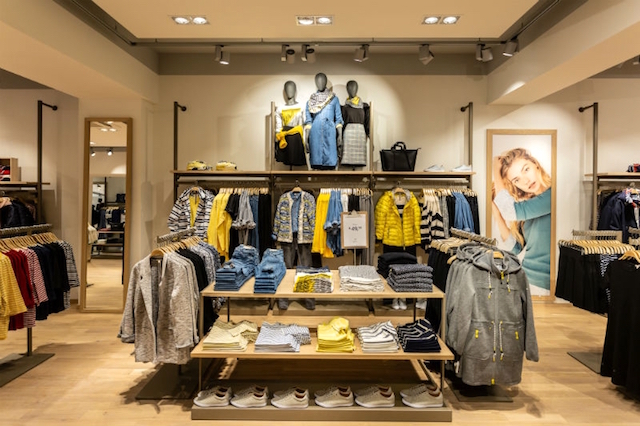
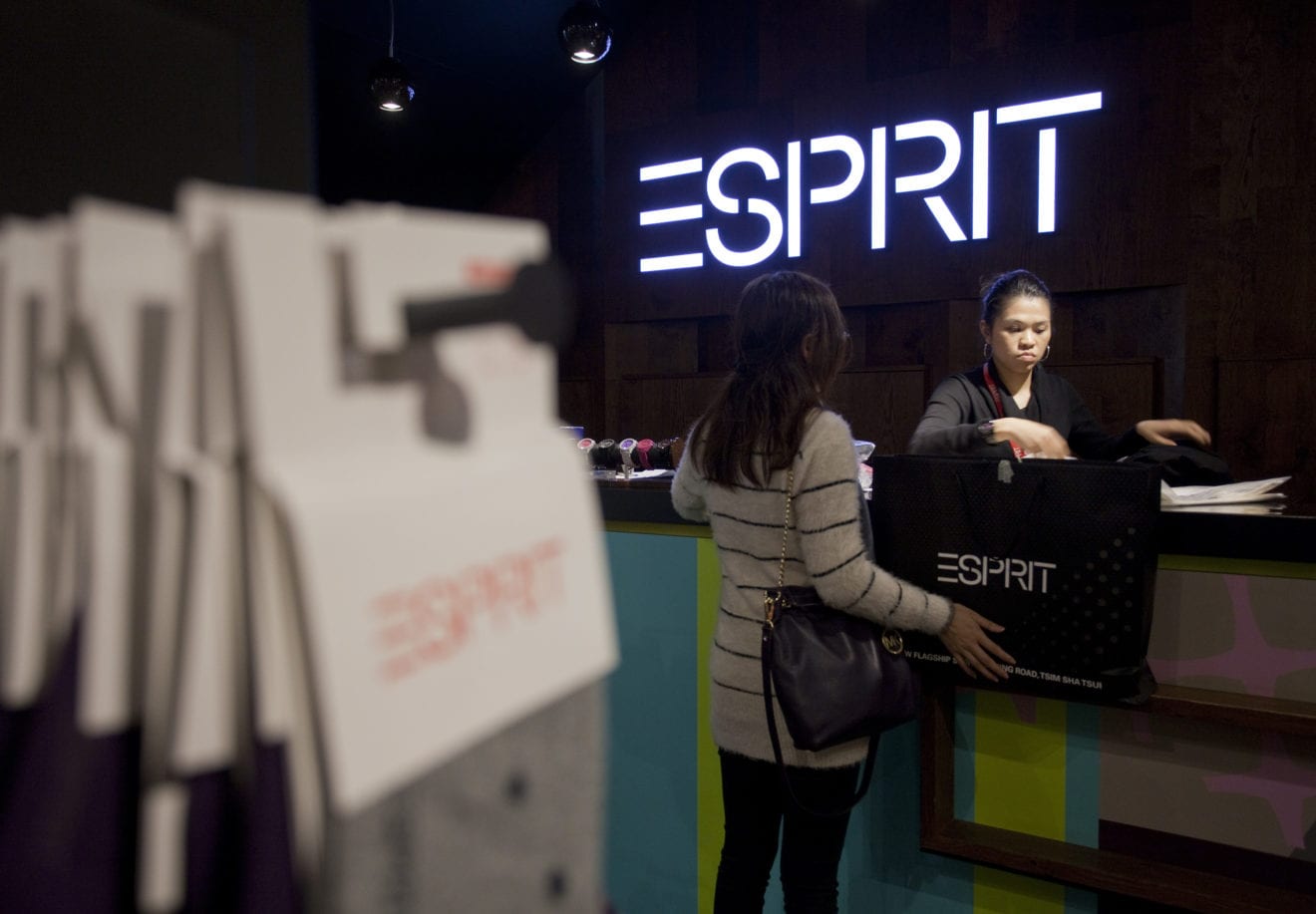
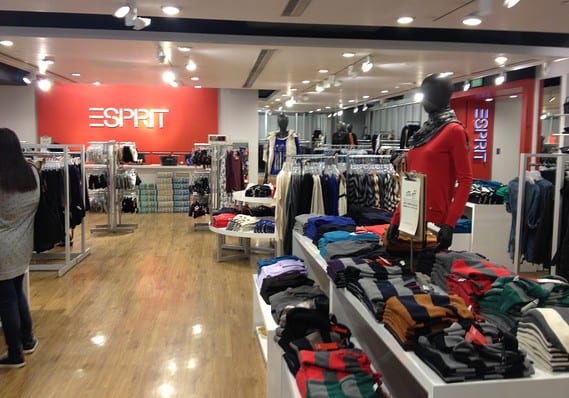
    Esprit, a popular fashion brand listed in Hong Kong, has made a comeback in the city by opening a flagship store in Causeway Bay. This comes after the brand’s departure from its headquarters in 2020.

    New Beginnings in Causeway Bay

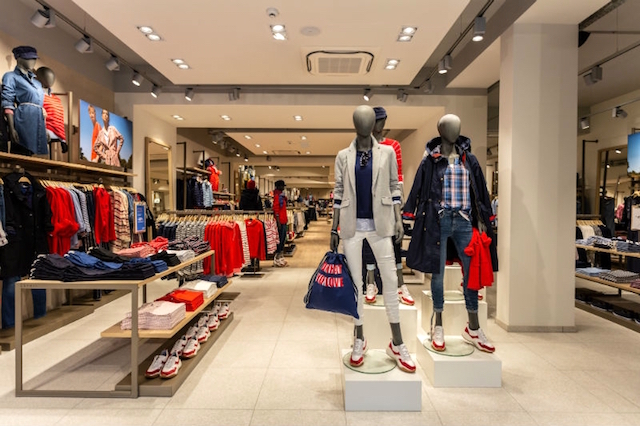
    Since November 1, Esprit’s new flagship store has been in operation at Fashion Walk in Causeway Bay. Covering 4400 square feet over two floors, the store signifies a new dawn for the brand. As it re-establishes its presence in Hong Kong, Esprit is focusing on bringing back its classic styles to its loyal customer base.

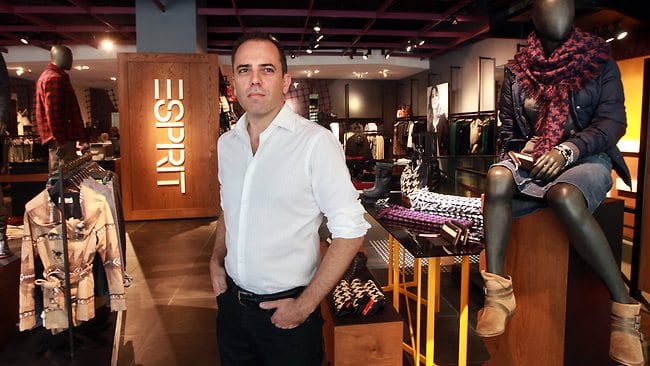
    The store’s opening has been enabled by WIP International, led by Esprit HK CEO Herbert Chan Wai-ming. WIP International has secured exclusive rights for the brand’s operations in the region. Chan has outlined a five-year plan to regain the brand’s momentum.

    Esprit’s Revival Strategy

    As the brand re-enters the somewhat sluggish retail scene in Hong Kong, Chan is driven by his goal to “create miracles for Hong Kong.”

    Esprit, which was founded by Susie and Doug Tompkins in 1968, got listed on the Hong Kong Stock Exchange in 1993. The brand then experienced rapid expansion into over 40 countries. However, sales began to drop sharply and underwent massive restructuring. This, coupled with the Covid-19 crisis, led to the closure of its retail stores across Asian markets.

    The listed Esprit is now solely a brand owner, licensing its name to third parties. It has moved away from its initial business model, which included significant capital expenditures associated with sourcing, distribution, and retail operations.

    Chan’s current strategy involves “rebuilding Esprit as a Hong Kong brand” by bringing the brand’s own heritage back to the city streets. In addition, he has ambitions for a global relaunch, potentially in Taiwan, Japan, South Korea, and Mainland China. However, he is committed to taking this expansion slowly, prioritizing success in the home market first.

    Flagship Store and Revamped Collection

    The new flagship store also serves as the platform to introduce Esprit’s revamped collection. With an array of new fabrics and designs, 70 percent of the items have been personally designed by Chan. This revamp has resulted in a 30 percent price increase on some products.

    In his bid to reposition the brand, Chan has been willing to try new strategies that Esprit has not experimented with before.

    After closing its store five years ago, Esprit made a preliminary return to Causeway Bay in 2022 with a three-story pop-up store, marking the initial stage of its revival.

    Questions & Answers

    What is Esprit’s new strategy for its return to Hong Kong?
    Esprit aims to rebuild itself as a Hong Kong brand by reintroducing its classic styles and revamping its collection with new fabrics and designs.

    Who is leading the revival of Esprit in Hong Kong?
    Herbert Chan Wai-ming, Esprit HK’s CEO, is leading the brand’s revival in Hong Kong.

    What are the future expansion plans of Esprit?
    Esprit’s CEO has plans for a global relaunch, potentially in Taiwan, Japan, South Korea, and Mainland China, prioritizing success in the home market first.

  • Esprit opens innovation hubs in New York and London

    Esprit opens innovation hubs in New York and London

    Esprit has announced London and New York as two new locations for its Futura innovation hubs. Futura is part of its digital strategy to “reinvent customer engagement experiences by turning data into insights, fuelling the brand’s global expansion matched to the fast-growing scale of digital change in today’s fashion retail landscape”.

    As part of its wider strategy, the brand has been moving key functions to strategic locations, “creating a truly global presence”. It said the two metropolises are global cities “with strong cultural influences and 24-hour connectivity. They will be heavily integrated and connected to the brand’s commitment to digital and creative innovation”.

    New York will be the global creative and design hub “to inspire forward thinking and bring contemporary concepts and talent to its new branding strategy”. This is intended to “solidify the ambition to rebrand one of the world’s most iconic companies. [It] will take the lead in Esprit’s rebranding venture”.

    Futura London will be the firm’s global customer experience innovation hub “to provide unique customer experiences for an avant-garde omnichannel connection to the Esprit universe”.

    They join the existing Amsterdam hub that combines e-commerce and technological advancement. As the first physical hub, “it will lead in driving portfolio management innovation, creation of new ideas and pilots, enhancing and renewing the existing omnichannel business, and digital execution”.

    The company said the steps it’s taking are an important part of “turning the iconic brand into an omnichannel technology and data-driven fashion powerhouse”.

    The new hubs “aim to create transformative change in culture, mindset, and business process, discover new growth opportunities for Esprit, and improve innovation performance through a technology-driven approach that focuses on customer experience and embraces circularity”. This new structure “will also provide opportunities to enable staff to have more flexibility with increased international exposure”.

    CEO William Pak said: “Esprit is in the process of transforming into a truly global company with the creative minds and processes in key cities enabling consumers to be connected to the brand on a multi-dimensional level. This enables [it] to adapt to major challenges in fashion and the macro environment in order to propel into the future. Creating an exciting customer experience with smart design and a connection to the brand is an exciting path forward.”

  • Esprit set to achieve five-year profit milestone

    Esprit set to achieve five-year profit milestone

    The Hong Kong-listed fashion retailer says it estimates its profit attributable to shareholders for the year to Dec. 31 to reach approximately $47 million. This would mark the company’s first full-year net profit since 2017.

    Esprit has changed its financial year, so comparisons are not directly comparable. But for the six months to Dec. 31, 2020, the company posted a loss of $53 million, and for the 12 months to Jun. 30, 2020, it lost $503.2 million.

    In a stock-exchange filing, Chairman Christin Chiu attributed the profit turnaround to increased sales – especially online – together with a higher gross profit margin, and improved cost controls and inventory management.

  • Gross margin growth helps Esprit produce first profit in five years

    Gross margin growth helps Esprit produce first profit in five years

    After flagging an expected return to profitability for the full year earlier this month, Esprit on Wednesday announced its final results and said that revenues rose to HK$8.3 billion (€953m/£808m/US$1bn) in 2021.

    It didn’t give a comparable revenue figure but said that net profit surged “significantly” to $381 million. The company had made a $414 million loss in the final six months of 2020, the closest comparable period after it changed its financial year-end date.

    Revenue in the year was affected by lockdowns in the company’s major European markets in Q1 and further restrictions in Q4, but the group still generated strong revenue across all three of its channels combined (e-commerce, wholesale, and owned retail stores).

    Of course, a big chunk of sales came online — both its own and third-party sites — during lockdowns, helping it to make up for some of the negative impacts as far as physical stores were concerned. Another driver of growth came from selling fewer discounted products from the company’s retail business compared to 2020.

    Looking ahead, it expects to be negatively affected by the “lingering effects of the pandemic and the conflict in Ukraine”. The “already unstable logistics industry and disrupted supply chain” will also likely be further issues that will result in higher costs.

    But it believes it’s “on track to ongoing profit growth” nonetheless.

    CEO and COO Pal William Eui Won said: “The remarkable results are definitely a testament to the company’s collective efforts by devoted staff at Esprit, including the successful migration of selected strategic functions from Germany back to Hong Kong, Esprit’s new global headquarters.

    “Combining expertise from the two offices has created a stronger organizational balance and workplace synergy. It is also evident that the current management team has crafted the correct infrastructure to re-establish Esprit to become a market leader. We will continue to strengthen it by becoming a truly omnipresent brand and enhancing our product portfolio that fits with the company’s mission of making our customers ‘feel good to look good’.”

  • Esprit chief exits after less than a year

    Esprit chief exits after less than a year

    Esprit CEO, president, and executive director Mark Daley has exited the company after less than a year at its helm due to personal family matters.

    “Mr Daley has confirmed that he has no disagreement with the board and there are no matters in relation to his resignation that need to be brought to the attention of the shareholders of the company,” the retailer announced on Thursday.

    Daley, who was previously CEO of Billy Reid and group president of Ralph Lauren’s Asia-Pacific region, was appointed to the top job at Esprit at the beginning of 2021 as part of a major restructuring at the business which had suffered from years of revenue decline.

    Daley joined as part of a shake-up that saw the departure of then-CEO Anders Kristiansen, who had been at the helm since 2018, as well as then-chief financial officer Johannes Schmidt-Schultes.

    “The board would like to take this opportunity to express its sincere gratitude to Mr Daley for his contribution to the company during his tenure of office,” Esprit said.

    William Eui Won Pak, who joined the company in September as executive director and chief operating officer, will take on the CEO position on an interim basis.

    He is a New York attorney with over a decade of experience in leading companies in the financial services and fund management industry, and also has expertise in technology, alternative energy, mining, and real estate.

    Pak is also the spouse of Esprit’s executive director and chair, Christin Su Yi Chiu.

  • Esprit names new COO

    Esprit names new COO

    Hong Kong-listed apparel brand Esprit has appointed an experienced lawyer as its new COO to help continue to drive the brand’s renaissance.

    After four years of rolling losses exceeding US$1 billion, Esprit issued a shock profit warning last month projecting its first half year in the black since 2017. It lost US$503 million in the year to June 2000.

    This week William Pak assumed the role of executive director and COO. Biographable details provided by the company via a stock-exchange filing describe Pak, 42, as an attorney licensed by the New York state bar and the spouse of Christin Chiu, Esprit’s chairwoman and an executive director.

    “Mr Pak is a seasoned executive with extensive operating and management experience. He has over a decade of a successful career in leading companies in the financial services and fund management industry,” said the filing. “His industry expertise also includes technology, alternative energy, mining and real estate. He is experienced in identifying and revitalising underperforming areas and driving favourable results while ensuring sustainable growth.”

    Prior to his career in finance, Pak was a lawyer in the investment funds practise at White & Case’s New York and Hong Kong offices.

    He will be paid US$231,000 annually (HKD1.8 million) and report to CEO Mark Daley who was appointed in January.

    Chiu was appointed to Esprit’s board after Hong Kong company North Point Talent Ltd, became the company’s single largest shareholder mid last year. North Point is the investment vehicle of Karen Lo, a descendent of the Vitasoy founding family.

  • Esprit issues shock profit warning

    Esprit issues shock profit warning

    Apparel retailer Esprit says it is on track to record its first profitable half year since the second part of 2017.

    In a positive profit alert filed with the Hong Kong stock exchange the embattled retailer – which lost US$463 million in the six months to June last year, mainly through writedowns – says it expects a profit of “not less than HKD 110 million” (US$14 million) for the six months to June this year. However, HKD 85 million ($10.9 million) of is due to currency-exchange gains.

    Sales for the half-year were down 6 per cent to HKD 3.8 billion (US$488 million).

    During the past three years, the company has slashed its store network, quit all Asian markets, culled staff and restructured its European operations under a form of bankruptcy protection to try to stem years of losses.

    Esprit’s acting executive chairman Christin Chiu said the reduction in sales was due to Covid-related lockdowns in key markets, and the closure of its Asia-Pacific retail operations.

    She said the group overcame the adverse effects of a significant decrease in consumer traffic and continued to implement its cost-control policy and development strategies, resulting in positive improvement in the overall operating conditions.

    “This performance reflects accelerated growth in the e-commerce channel in the first half of 2021, with a 17-per-cent year-on-year increase in the segment revenue.”

    She said the turnaround from loss to profit was due to the significant reduction in writedowns, cost control measures, higher sales and gross profit through its e-commerce channel, and the exchange gain.

    Esprit plans to release its interim results on August 24.

  • Covid-19 Fashion impact may threaten Esprit’s future

    Covid-19 Fashion impact may threaten Esprit’s future

    As the world faces this pandemic in unified isolation, we at Fashion Revolution are focusing on how the unfolding situation is affecting the people who make our clothes. Retailers are shutting their doors around the world, encouraging their customers to shop online instead. Yet the reality is that as we are forced to stay in our homes many of us are financially burdened by layoffs or new childcare responsibilities, and the desire to buy new clothes feels like a distant dream.

    For Fashion Revolutionaries, this unique set of circumstances can hopefully bring about the #LovedClothesLast movement that we have been pushing for many years. Given the level of clothing overproduction that preceded this crisis, we hope that our days indoors can bring about revolutions in caring for our clothes better, mending and making clothing, and adopting a mindset of longevity when it comes to our wardrobes.

    While we have been encouraging an end to overconsumption for many years, we also know that in the face of this unexpected halt in manufacturing, it is the most vulnerable, lowest paid people in the fashion supply chain that feel the worst effects. IndustriALL, the global trade union which works to give workers around the world a voice, says that millions of garment makers have already lost their jobs as a result of the virus and have no access to social or financial safety nets to help them weather this storm. Bangladeshi garment manufacturer Mostafiz Uddin reminds us, “Poverty is a killer too, and many more people die from poverty than from COVID-19”.

    In the global fashion industry, brands typically pay their suppliers weeks or even months after delivery, rather than upon order. This means that suppliers usually pay upfront for the materials or fibres used to make the brand of the product buy from them. In response to the pandemic, many major fashion brands and retailers are canceling orders and stopping payments for orders already placed, even when the work has already been done, taking no responsibility for the impact this has on the people working in their supply chains. Factories are left with little choice but to destroy or keep hold of unwanted goods already made and lay off their workers in droves.

    About 1,089 garment factories in Bangladesh have had orders canceled worth roughly $1.5 billion due to the coronavirus outbreak. The AWAJ Foundation says that many factories in Bangladesh have been shut down indefinitely. Some workers were given less than a month’s salary as severance and many others have received nothing at all. Nazma Akter the executive director of AWAJ explains, “These workers now don’t know how they will take care of their families in the coming days – how they will manage costs for food, rent and other necessities. They can’t even imagine what they’ll do if they or a family member needs medical treatment for COVID-19. The meager income these workers earned was barely enough to cover their living costs, and as a result, they have little to no savings set aside to deal with a crisis such as this.” Meanwhile, Labour Behind the Label estimates that 10% of factories in Yangon, Myanmar are now closed.

    On the other side of the world a similar situation is unfolding. The Garment Worker Center describes how garment makers in Los Angeles are often not eligible for unemployment benefits. This is partly because the underground nature of the industry, such as “off the books” work, makes applying for paid family leave or disability insurance uniquely challenging in the face of the pandemic.IndustriALL reports that while many fashion brands are offering compensation packages for retail and office workers who face layoffs due to this crisis, they are failing to protect the workers in their supply chains who are also suffering from the loss of income. Furthermore, the Solidarity Center believes that the inability to meet together in-person will inhibit workers’ abilities to unionise and collectively bargain for their rights.

    Of course, fashion isn’t just created in factories. Fashion is craft, artisanship and things that are often made by hand in informal environments. According to the Artisan Alliance, artisanal craft is the second largest source of employment across the so-called developing world. WIEGO estimates there are around two billion informal workers around the world that lack basic labour, social and health protections. As a result of COVID-19 threatening global trade flows, workers cooperatives, artisan groups, local crafts-based communities, home-based workers, agricultural workers and farmers face desperate economic circumstances.
    At Fashion Revolution, we have always tried to be honest with our community about the  problems that persist within the global fashion industry. Having formed in response to major human catastrophe – the Rana Plaza collapse in 2013 – we are no strangers to exploitation or disparity within the industry. But we have been, and will continue to be, focussed on solutions and dedicated to finding ways for citizens around the world to make a positive difference. We’ve already seen several visionaries within the fashion industry pose the question: what kind of world do we want to see emerge after this crisis is over? For us, the answer lies in our Manifesto for a Fashion Revolution, and we’ll be spending the next months (and years) mobilising our community to take action to build this future of fashion.

    Meanwhile, in this current crisis, we believe that our capacity for empathy is strengthened by our shared global experience. While we may be stuck indoors, using social media our voices can still be amplified, especially when we speak up together. That’s why we’re asking our global community to be louder than ever. To ask #WhoMadeMyClothes? and demand that fashion brands protect the workers in their supply chain just as they would their own employees, especially during this unprecedented global health and economic crisis.

    If we do nothing, the fashion industry will simply return to business as usual when this is all over. Instead, let’s come together as a revolution and build a new system that values the wellbeing of people and planet over profit. This means that right now we should stand together to protect and support the people who make our clothes.

    As Wangari Maathai said in her famous 2004 Nobel Peace Prize acceptance speech,
  • Esprit appoints new leadership in latest attempt to resuscitate the brand

    Esprit appoints new leadership in latest attempt to resuscitate the brand

    Esprit has unveiled a new management team in its latest attempt to resuscitate the brand, with Mark David Daley now installed as chief executive officer.

    Daley, 56, is described by Esprit as a 30-year retail industry veteran and was most recently the ceo at the fashion brand, Billy Reid. He has held the ceo position at a number of premium companies including skin-care label Augustinus Bader, stationery goods maker Symthson of Bond Street, upscale grocer Dean & Deluca, and served as Asia Pacific president of Ralph Lauren.

    Daley cut his teeth at DFS Group where he worked for more than two decades, rising to global president of operations and business development. Daley holds bachelor’s degrees in economics and sociology from Stanford University. Daley’s installment is effective beginning Dec. 24 and he replaces Anders Kristiansen, who had been in the role since mid-2018.

    The brand also announced Wan Yung Ting as chief product development officer. Wan, 40, comes from academia, jumping from her former role as an assistant professor for the college of art and design at Beijing University of Technology. Wan previously worked at Taiwanese Far Eastern Textile Ltd., focusing on the application of functional fabrics and sports brands. Wan obtained a Ph.D. in art theory from Peking University, a master of arts in arts and cultural management from Peking University, and a Bachelor of Engineering in fiber and composite Materials from Feng Chia University. Wan’s official start date was also Dec. 24.

    Over the last decade, Esprit has quickly cycled through a number of ceo’s — including Ronald Van der Vis, Jose Manuel Gutierrez and Kristian Andersen — with each restructuring effort seeing only muted effect.

    For the year to June, the company recorded a loss of 3.9 billion Hong Kong dollars, or $515 million, widening from the 2.1 billion Hong Kong dollars the year before. Germany, its most important market, was put into bankruptcy protection this past summer, and its venture with Mulsanne Group to relaunch Mainland China was abruptly called off.

  • Esprit loses CEO, CFO as board moves head office function back to Hong Kong

    Esprit loses CEO, CFO as board moves head office function back to Hong Kong

    Esprit Group has announced that its CEO Anders Kristiansen and chief financial officer (CFO) Johannes Schmidt-Schultes are both exiting the company next year.

    Kristiansen, who was formerly managing director of New Look, has been at the helm of Esprit since June 2018 and has led the group’s restructuring process during what the company describes as an “extremely difficult” period. He has resigned with immediate effect as an executive director and will remain group CEO until 28 February.

    Similarly, Schmidt-Schultes, who joined in October 2019, has stepped down with immediate effect as an executive director and will also stay on as CFO until 28 February.

    It comes after Esprit’s major shareholder, North Point Talent Limited, in July called for Kristiansen and Johannes Schmidt-Schultes to step down.

    Esprit said Friday that both Kristiansen and Schmidt-Schultes were exiting the company to pursue other business commitments and that they left having “no disagreement with the board”.

    Additionally, Christin Su Yi Chiu has been appointed as a member of the Risk Management Committee of the board, with immediate effect.

    “The board would like to take this opportunity to express its sincere gratitude to Mr. Kristiansen and Dr. Schmidt-Schultes for their valuable contribution to the company during their tenure of office,” Esprit said.

    Esprit Group, which is listed on the Hong Kong stock exchange, said it now plans to relocate its management to Hong Kong.

    Esprit applied for Protective Shield Proceedings for its German subsidiaries back in March after taking a hit from Covid-19 and temporary store closures in Europe and Asia.

    Fast forward to July, and the company announced it would cut 1,100 jobs in Germany as it looked to close around half of its stores in the country.

  • Esprit reports US$503 million loss as Covid-19 interrupts reform plan

    Esprit reports US$503 million loss as Covid-19 interrupts reform plan

    Esprit has been facing difficult times much before the pandemic started owing to enfeebled sales and has now warned shareholders that it will be posting a loss of US $ 503.2 million in its annual report slated to release late next month.

    The European entities of the retailer are already under statutory administration and its shares were trading for as low as 12 cents in Hong Kong.

    Many analysts and investors believe the company has no reason left to continue trading.

    COVID-19 has had a significant impact on sales resulting in a 24 percent decline in revenue to US $ 1.277 billion from US $ 1.66 billion last year.

    The company also reported expenditure of US $ 310 million on trademarks, provisions for store closures, severance payments, property and plant and equipment.

    Apart from this, the management has also been seeing tough times with Karen Lo, part of the founder’s family, calling for the removal of CEO Anders Christian Kristansen and CFO Dr. Johannes Georg Schmidt-Schultes from the board in a special meeting of the shareholder in July.

    Earlier in July, Esprit said it would let go of 1,100 employees, mo

  • Esprit set to post US$503 million loss

    Esprit set to post US$503 million loss

    Enfeebled clothing retailer Esprit has just advised shareholders it expects to post a loss of US$503.2 million when it releases its annual results late next month.

    With its European subsidiaries operating under a form of statutory administration and its shares trading for 12 cents each in Hong Kong today, many investors must by now be wondering if the chain has any reason to continue trading.

    The company said the loss was primarily attributable to the impact of Covid-19 which it blamed for a 24-per-cent decline in revenue from $1.66 billion last financial year to about $1.277 billion this year and another $310 million in impairments on trademarks, property, plant and equipment, provisions for store closures and severance payments.

    Falling sales and massive losses are not the company’s only worries right now. On July 8, Karen Lo of the family that founded Vitasoy called a special meeting of shareholders to vote on the immediate removal of Esprit’s CEO Anders Christian Kristiansen along with CFO and director, Dr Johannes Georg Schmidt-Schultes from the board.

    Lo’s investment vehicle North Point Talent Ltd had spent $17 million boosting its stake in the company from 4.93 percent to just under 13 percent, making it the single largest shareholder before it lodged the requisition. That was withdrawn on July 21 by which time North Point had built its stake to 20.1 percent.

    In an apparent compromise, the board appointed North Point nominees Marc Andreas Tschirner, Christin Chiu Su Yi and Wong Hung Wai as additional executive directors of the company and subsequently declared it had “strong confidence in the Group CEO and Group CFO as well as their management team”

    Earlier in July, Esprit said it would axe 1100 jobs, mostly in Europe, and close another 50 German stores under its court-protected administration process. The company had closed all its Asian by the end of June in an earlier round of cuts as it attempted to reverse years of losses driven by a long-standing inability to design clothes that appeal to its core customer base.

  • Vitasoy family behind bid to oust Esprit management

    Vitasoy family behind bid to oust Esprit management

    Hong Kong-listed apparel retailer Esprit is facing a boardroom stoush seeking the immediate removal of CEO Anders Christian Kristiansen who is leading a restructuring of the long-ailing business.

    Trading in Esprit shares was suspended yesterday and this morning the company revealed that North Point Talent Ltd, now its largest shareholder with a nearly 13-per-cent stake, has sought an urgent extraordinary shareholder meeting to vote on the exit of Kristiansen and another director, Dr Johannes Georg Schmidt-Schultes.

    North Point is an investment vehicle of Karen Lo, a descendent of the family which founded the Vitasoy business.

    The move comes as North Point has boosted its holding in Esprit from 4.93 percent at a cost of US$17 million. After exceeding the 10-per-cent threshold, the investor has the right to call an extraordinary general meeting.

    The move reflects North Point’s lack of confidence in the current management team and a move to replace it with new leadership – and could signal a takeover bid is in the wind, despite Esprit’s European business effectively-being in bankruptcy protection.

    Last week Esprit revealed plans to axe 1200 jobs and close 50 stores in Germany under the court-protected administration process. The company had closed all of its stores in Asia by the end of last month in an earlier round of cuts as it attempts to reverse years of losses driven by a long-standing inability to design clothes that appeal to its core customer base.

    North Point is also seeking the appointment of Marc Andreas Tschirner, Christian Chiu, and Wai Wong as executive directors of the company with immediate effect.

    The precise reasoning behind the removals and appointments are detailed in a statement filed along with the meeting request, but these have not been made public as yet.

    “The board is looking into the allegations made by the requisitionist and will seek legal advice if necessary,” Esprit company secretary Ophelia Lo said in a stock-exchange filing.

    The trading halt was lifted this morning.

  • Struggling Esprit axes more stores, 1200 staff

    Struggling Esprit axes more stores, 1200 staff

    Apparel chain Esprit will axe 1200 employees globally, including 100 in its Hong Kong office and 800 store employees in Germany as part of its ongoing restructuring program.

    A permanent reduction in salaries and benefits will be imposed on all remaining staff, except for those working in stores.

    Esprit has received court approval to open insolvency proceedings for its German subsidiaries allowing it to continue with the self-administration process under which it will streamline its business in Europe.

    In a filing with the Hong Kong stock exchange, Esprit said Dusseldorf District Court-appointed custodian Dr Biner Baahr, who has worked with Esprit executives since March to complete a restructuring plan, will continue in his role overseeing the plan’s implementation in a process similar to the US’ Chapter 11 restructuring process, called Protective Shield Proceedings.

    A creditors’ meeting will be held on August 19 to assess claims made before and during the Protective Shield Proceedings before a vote is held on the percentage of the creditors’ claims which will be paid out.

    The job cuts announced this week following the closure of all 56 Esprit stores across Asia, outside Mainland China, this week. Another 50 will now be axed in Germany – stores which accounted for 17.2 percent of the group’s total revenue in the year to June 30.

    Another part of the restructuring plan will see contracts with service providers renegotiated to obtain more favorable terms.

    Esprit calculates the combined savings from these initiatives will amount to US$116 million, but one-off costs of the restructuring will add up to about $64.5 million in the June 2021 year.

    Meanwhile, Esprit says its management team is currently working to strengthen the brand’s purpose, create a “consistent customer experience across all touchpoints,” improving production quality and sustainability credentials and focusing on “full-price sales”.

    A further update will be released along with the company’s annual results by the end of September.

    Esprit shares are currently trading in Hong Kong at around US 11 cents each.

  • Esprit closing all of its Asian stores before June 30

    Esprit closing all of its Asian stores before June 30

    Crippled apparel group Esprit is to close all its stores in Asia, except those in Mainland China, by the end of June.

    The decision follows an appalling slump in sales during the last nine months, which worsened during the March quarter when the Covid-19 crisis hit, forcing retail stores to close or reduce trading across many markets.

    All 56 company-run stores located in Singapore, Malaysia, Taiwan, Hong Kong and Macau will close, but the company says the sales through those shops represented less than 4 percent of group turnover during the nine months to March.

    However, the company will continue to operate wholesale and licensing businesses in those markets, suggesting the brand will endure, most likely through department stores and multi-brand stores.

    In the March quarter, Esprit sales in Asia were down by 52.2 percent – 61.3 percent in its stores and 54.9 percent at the wholesale level. Online sales, however, rose by 13.9 per cent. In contrast, sales across Europe fell by 22.2 percent, 36.2 per cent at retail level and 22.5 percent at wholesale. Online sales fell 7.1 percent while licensing and ‘other’ sales were down 16.7 percent.

    Globally, revenue fell 25 percent for the quarter and by 18.1 percent for the nine months to March.

    In the nine months to March, retail sales in Asia fell 44.2 percent, by 48.7 percent at the store level, 45.3 percent wholesale and 8.1 percent online.

    The company estimates closing its Asian stores will result in one-off costs for severance pay and to exit leases of between HK$150 million and $200 million (US$19 million to $26 million) which will be incurred in the current June quarter.

    On the mainland, Esprit reduced its China investment last December. Through a subsidiary called Million Success, it retained a 40-per-cent stake in the Esprit China business, with Hong Kong-based Mulsanne Group holding the balance.

    The Asia store decision comes just a month after Esprit placed its six German companies into a form of protective administration to allow restructuring and cull staff numbers under protection from creditors. Once it emerges from that process, and with its Asian business essentially all but gone, the company will focus on Europe with less staff and fewer stores, although whether the crippled, lackluster brand can survive at all up against the regional powerhouses of H&M and Zara parent Inditex is debatable.

    In a stock-exchange filing overnight, Esprit described the Asian store closures as part of a restructuring initiative “to focus resources and recalibrate operations in order to cope with the challenges posed by the pandemic most effectively and efficiently”. However, as the nine-month figures above clearly show, Esprit’s sales were in freefall in the region long before Covid-19 made its appearance.

    A key indicator of how dire the company’s position came in January when its most high-profile recent hire, chief product and brand officer Mia Ouakim, quit after just a year in the role. Ouakim, who had previously worked with high-end brands Burberry and Tommy Hilfiger, left to take up an opportunity outside the company.