Tag: etail

  • Coupang launches luxury beauty shopping service Rocket Luxury

    Coupang launches luxury beauty shopping service Rocket Luxury

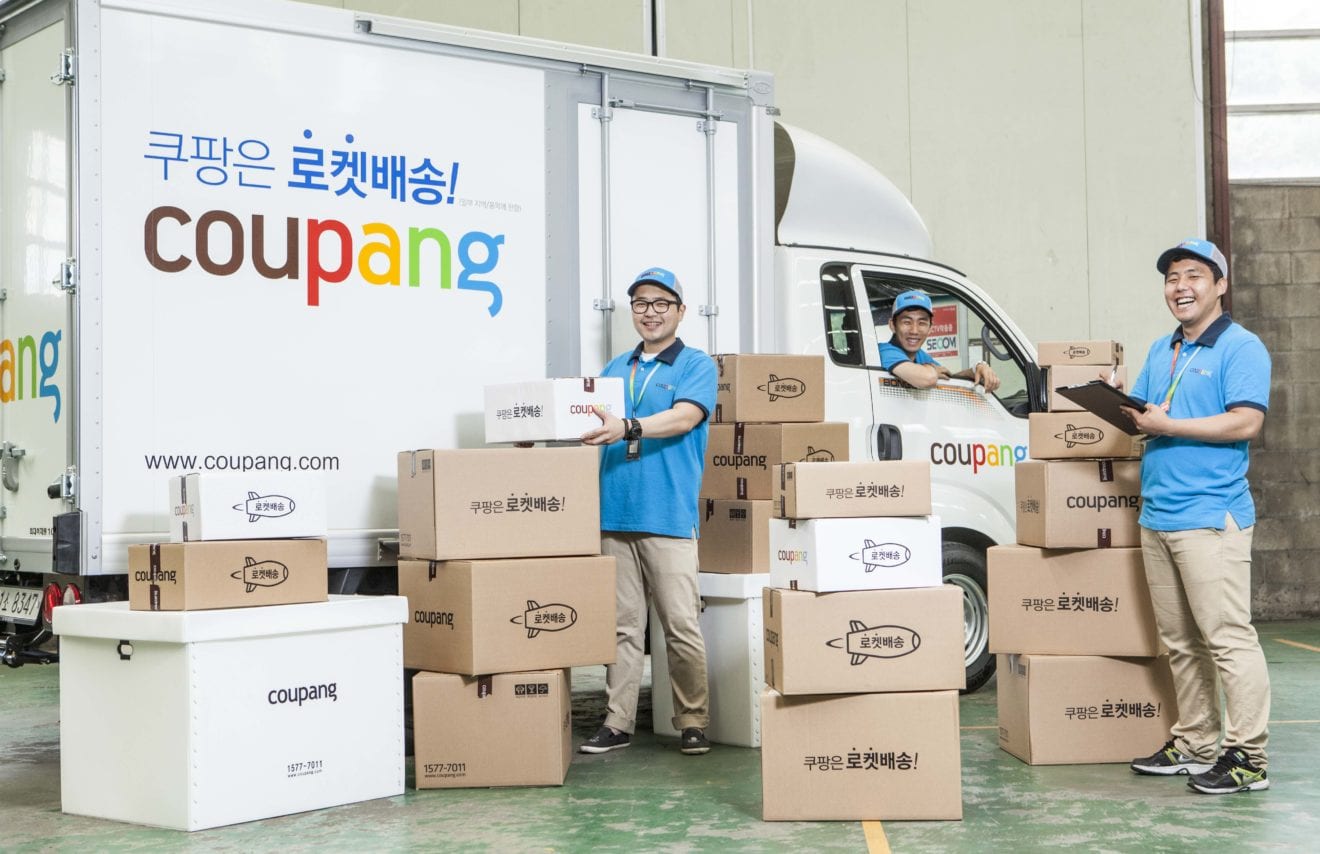
    South Korea’s top e-commerce retailer Coupang said Monday it has launched a new service allowing customers to buy luxury beauty brands’ products at its platform.

    At Rocket Luxury, customers will be able to purchase products of 16 high-end beauty brands from home and abroad, including Estee Lauder, MAC, Bobby Brown, and Hera, directly bought by Coupang.

    The products will be delivered through the “rocket delivery” service, which offers delivery service within 24 hours upon order.

    For members of Coupang’s paid subscription service, Wow, the company will provide free delivery and free return service.

    “Customers who use luxury beauty brands will be able to buy at Rocket Luxury with trust as it only provides genuine products certified by Coupang,” Lee Byeong-hee, the head of Coupang’s retail division, said.

  • Daniel Zhang steps down from top Alibaba Group

    Daniel Zhang steps down from top Alibaba Group

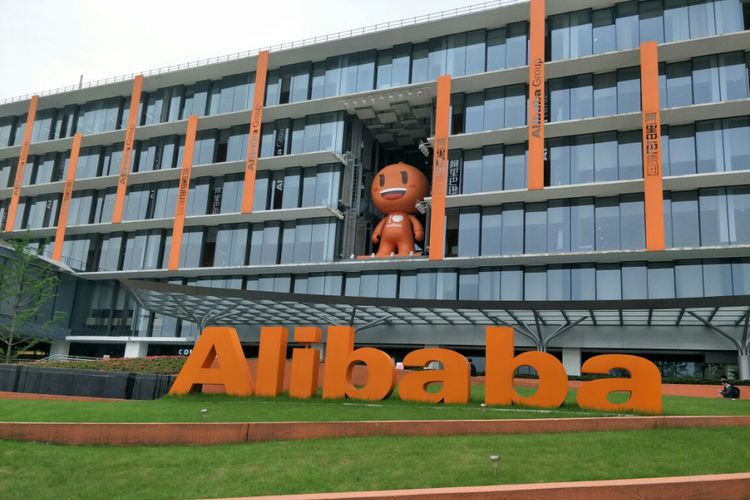
    Alibaba Group has appointed Joseph C Tsai and Eddie Yongming Wu as the company’s new chairman and CEO respectively, marking the group’s one of the most significant organisational changes.

    The appointments will take effect on September 10. Tsai and Wu will succeed Daniel Zhang, who will continue to lead Alibaba Cloud Intelligence Group as chairman and CEO.

    “This is the right time for me to make a transition, given the importance of Alibaba Cloud Intelligence Group as it progresses towards a full spin-off,” said Daniel Zhang, chairman and CEO of Alibaba Group. “The emergence of generative AI has also opened up exciting new opportunities that Alibaba Cloud Intelligence Group is well-positioned to capture.”

    “Daniel has made exceptional contributions to the development of Alibaba Group since joining the company in 2007,” said Tsai, executive vice chairman of Alibaba Group. “He demonstrated extraordinary leadership in navigating unprecedented uncertainties affecting our business over the past few years.”

    Alibaba Group’s newly appointed CEO Yongming Wu, one of the group’s co-founders aside from Jack Ma and Tsai, will continue to concurrently serve as chairman of Taobao and Tmall Group. Wu was the technology director of Alibaba at the company’s inception in 1999. He founded Vision Plus Capital, a venture capital firm focused on investing in advanced technologies, enterprise services and digital healthcare in 2015.

    “Eddie was instrumental in architecting our technology platforms and guiding our strategic direction,” Tsai said. “He led the creation of our proprietary monetization platform on Taobao and Tmall, and drove the launch of the Mobile Taobao App to propel our company to the mobile-first era.”

    The group said last Thursday it is shifting its focus to building local businesses and online platforms outside of China with Europe as the top priority.

  • Alibaba aims to expand local business in Europe

    Alibaba aims to expand local business in Europe

    Alibaba Group will make Europe top priority as it focuses on building local businesses and online platforms outside China, the president of the e-commerce giant said on Thursday.

    “What we will focus more for the future is to build local businesses, so you will see something called TMall which we have in China become TMall in Europe, which means we will serve local brands and local customers in local markets,” J. Michael Evans told a technology conference in Paris.

    “We have started with a pilot project in Spain which we will expand across Europe,” he said.

    Alibaba announced in March it would split into six units and explore fundraising or listings for most of them, following a two-year regulatory crackdown on China’s tech sector.

    Its e-commerce business is to be split, with one side covering Alibaba’s domestic-facing e-commerce marketplaces and the other its overseas e-commerce marketplaces such as Lazada, which serves Southeast Asia, and AliExpress.

    Taobao and TMall are China’s dominant e-commerce marketplaces in China.

    Asked about Alibaba founder Jack Ma, China’s best known entrepreneur who withdrew from public view in late 2020 after giving a speech criticising China’s regulatory system, he said Ma remained Alibaba’s biggest shareholder and still cared very much about the company.

    Ma left mainland China in late 2021 for stints in Japan, Spain, Australia and Thailand, according to photographs, but returned in March a day before Alibaba announced its restructuring. He has not made any public comments during that period.

    “Jack is alive, he is well, he is happy. He is teaching at a university in Tokyo and spending more time in China,” Evans said.

    “He is the largest shareholder at Alibaba. This is his company, he cares as much about this company today as he did when he started it and I expect this to continue for as long as Alibaba and Jack Ma are here.”

  • Online exports expected to be economic growth driver

    Online exports expected to be economic growth driver

    Online exports are seen as a “launchpad” that helps businesses maintain sustainable revenue and increase exports in the context of rising inflation and consumers tightening their spending, according to insiders.

    Tran Thi Yen Phi, CEO of DSW Services and Trading Company Ltd, said the operation of online stores on cross-border e-commerce platforms has helped the firm improve its revenue.

    Vice Director of Proline Vietnam Production and Trading Co., Ltd Nguyen Xuan Hai Yen said online export is the most efficient and cost-effective way for small- and medium-sized enterprises (SMEs) to quickly reach customers.

    Meanwhile, Roger Lou, National Director of Alibaba.com in Vietnam, said despite significant challenges and obstacles, a number of sectors of Vietnam such as agriculture and food and beverage have achieved record-breaking export figures.

    The official expressed the belief that global e-commerce can help Vietnamese SMEs increase their production scale, and effectively exploit international markets towards further expanding their exports.

    Amazon Global Selling’s report in 2022 showed that Vietnam’s retail revenue from cross-border goods reached VND80 trillion ($3.4 billion) in 2022, and can hit VND250 trillion by 2026.

    Amazon Head of Global Selling Vietnam Gijae Seong said Vietnam boasts advantages to promote exports through online platforms.

    Last year, nearly 10 million Vietnamese items were offered on this e-commerce platform, up 35% compared to the same period of 2021.

    In its latest survey, Access Partnership stated that Vietnam’s export revenue through e-commerce platforms is likely to reach nearly VND300 trillion by 2027 if domestic firms are supported to promote online exports.

    Addressing a recent workshop, Lai Viet Anh, Vietnam e-Commerce and Digital Economy Agency under the Ministry of Industry and Trade, said with an annual retail e-commerce growth rate of over 20%, Vietnam is being classified among the countries with the sharpest e-commerce growth rate in the world.

    This is a potential industry and coming in line with the Government’s digital economic policy, she stressed, adding that the MoIT has been deploying programs to support SMEs in enhancing cross-border selling skills, and exploiting features of global e-commerce platforms.

    According to a report on the Vietnam E-Business Index (EBI) 2023 conducted by the Vietnam E-commerce Association (Vecom), Vietnam’s e-commerce market is expected to grow by 25% by the end of 2023.

    The booming e-commerce sector in 2023 and development in the subsequent years is aided by a series of growth drivers such as the wave of digital transformation, consumers’ trust, technological infrastructure, and favorable mechanisms and policies issued by the Vietnamese Government, the report said.

  • Walmart refuses to admit it might be better off accepting Apple Pay

    Walmart refuses to admit it might be better off accepting Apple Pay

    If you use Apple Pay or Google Pay when you checkout at the supermarket. the pharmacy, or other retail stores, you see how convenient the whole thing is even if you have to use your fingerprint or face to verify your identity. Apple and Google take such a small slice of your purchase that the big money is made on volume. For example, Apple is believed to earn .15% (not 15% but .15%) of the value of a transaction paid for with Apple Pay. So a $10 purchase gives a penny and a half to Apple while a $100 purchase puts 15 cents in its pocket.
    When you think about how many times a day an iPhone is whipped out to cover a purchase, you can see that even while getting crumbs from your transaction cake, it adds up to plenty of money for the company over a single 24-hour day. Apple would probably be collecting more money from Apple Pay if the nation’s largest retailer was onboard. Yes, that’s right. You cannot use Apple Pay at Walmart.
    Considering that every day the discount retailer brings in almost $1.6 billion in revenue, certainly a small percentage of that money would have ended up in Apple’s coffers thanks to Apple Pay. Walmart does have its own Walmart Pay system that works with QR codes. We first told you about Walmart Pay when the retailer was expanding it back in 2016 and it just has not caught on the way Walmart thought it would.
    Walmart’s former Senior VP Daniel Eckert told Bloomberg in 2017 that Walmart Pay would soon surpass Apple Pay in the number of shoppers who use the service in eligible stores. At the time, Eckert said, “If daily enrollments don’t slow down, I think that’s pretty well in the cards shortly. I would have to imagine we are getting pretty close.” Those words go right up there with former Microsoft CEO Steve Ballmer’s initial response to the iPhone when he said about Windows Mobile, “I like our strategy. I like it a lot…right now we’re selling millions and millions and millions of phones a year. Apple is selling zero phones a year.”
    Looking at Walmart, it’s hard to believe that giving up .15% of the value of a transaction is going to do damage to the company’s profit margin dramatically. And it could more than make up the difference by getting back some of the business that has gone to Target and other retailers that support Apple Pay. Perhaps the company is too invested in Walmart Pay to admit it has made a mistake.
    With that in mind, kudos to Kroger for realizing that not allowing the use of Apple Pay at the cash register was not a good strategy. Now we’ll see whether Walmart can make its own admission. We should also point out that Walmart does not accept Google Pay or any other mobile or digital wallet.
  • Startup e-commerce platform Temu expands to Europe

    Startup e-commerce platform Temu expands to Europe

    Ultra low-cost e-commerce platform Temu, owned by PDD Holdings has started selling to European markets including France, Germany, Italy, The Netherlands, Spain and the United Kingdom.

    The Temu.com website now shows all of these markets on its location drop down menu in addition to the United States, Canada, Australia and New Zealand, where it had previously already been available.

    PDD Holdings did not immediately respond to Reuters request for comment on the expansion.

    Temu, the sister site of Chinese discount e-commerce platform Pinduoduo, has made a big splash since launching in the United States last September, selling shoes, jewelry, beauty accessories and home goods directly from Chinese merchants for very low prices.

    It’s a similar cross-border model to the one that has propelled Shein, which ships to more than 150 countries, to become the world’s biggest fast-fashion brand with annual sales of more than $58.5 billion.

    Temu, which is headquarted in Boston, saw 19 million US downloads in the first quarter of this year, according to mobile intelligence firm Sensor Tower, which also ranks Temu as the most downloaded app on Apple and Google Play stores in the United States.

    The platform’s gross merchandise value – total sales before expenses – grew from $3 million in September to $192 million in January, according to data firm YipitData.

  • Amazon launches program to identify and track counterfeiters

    Amazon launches program to identify and track counterfeiters

    The company announced that Amazon launched its Anti-Counterfeiting Exchange (ACX), an initiative to help retail stores label and track marketplace counterfeits as part of the e-commerce giant’s efforts to crack down on organized crime on its platform on Thursday.

    Online marketplaces in the United States, including Amazon face hurdles in keeping counterfeiters off their platforms and fake merchandise from entering their warehouses. The new program mimics data exchange programs by the credit card industry to find scammers and identify their tactics.

    Stores and Amazon marketplace sellers can anonymously contribute information and records flagging counterfeiters to a third-party database or use the database to avoid doing business with the bad actors.

    “We think it is critical to share information about confirmed counterfeiters to help the entire industry stop these criminals earlier,” Dharmesh Mehta, Amazon’s vice president of selling partner services, said in a statement.

    The Seattle-based retail giant piloted the anti-counterfeiting initiative in 2021 with an undisclosed number of apparel, home goods and cosmetics stores, where counterfeiting is most common.

    As part of other anti-counterfeiting efforts, Amazon is also working with the U.S. Customs and Border Protection on a data pilot that helps the company identify and target low-value e-commerce shipments that may be counterfeit goods or break other regulations.

  • Amazon launches program to identify and track counterfeiters

    Amazon launches program to identify and track counterfeiters

    The company announced that Amazon launched its Anti-Counterfeiting Exchange (ACX), an initiative to help retail stores label and track marketplace counterfeits as part of the e-commerce giant’s efforts to crack down on organized crime on its platform on Thursday.

    Online marketplaces in the United States including Amazon face hurdles in keeping counterfeiters off their platforms and fake merchandise from entering their warehouses. The new program mimics data exchange programs by the credit card industry to find scammers and identify their tactics.

    Stores and Amazon marketplace sellers can anonymously contribute information and records flagging counterfeiters to a third-party database or use the database to avoid doing business with the bad actors.

    “We think it is critical to share information about confirmed counterfeiters to help the entire industry stop these criminals earlier,” Dharmesh Mehta, Amazon’s vice president of selling partner services, said in a statement.

    The Seattle-based retail giant piloted the anti-counterfeiting initiative in 2021 with an undisclosed number of apparel, home goods and cosmetics stores, where counterfeiting is most common.

    As part of other anti-counterfeiting efforts, Amazon is also working with the U.S. Customs and Border Protection on a data pilot that helps the company identify and target low-value e-commerce shipments that may be counterfeit goods or break other regulations.

  • Buy2Sell Vietnam opens two new showrooms in Hanoi, HCMC

    Buy2Sell Vietnam opens two new showrooms in Hanoi, HCMC

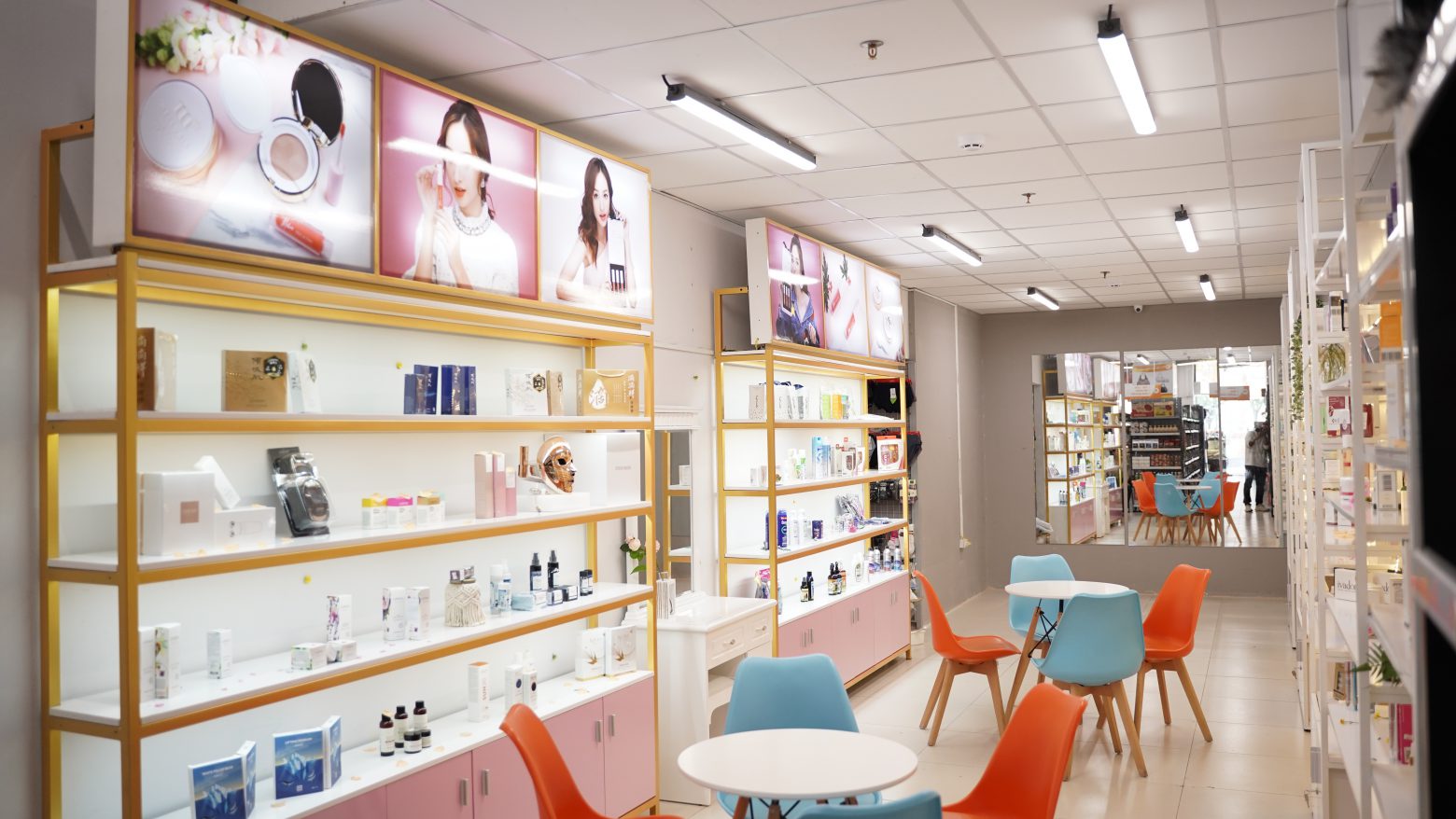
    Buy2Sell Vietnam established two new showrooms in Vincom Mega Mall in Hanoi and SC Vivo City in Ho Chi Minh City last month.

    The Hanoi showroom is on the 1st floor of Vincom Mega Mall Times City and the HCMC showroom on the 3rd floor of SC VivoCity.

    Buy2Sell Vietnam plans to expand its new showroom chain to more than 100 stores in shopping centers in Southeast Asia during 2024-2030.

    Thousands of cosmetics, F&B, houseware, and appliances products… are exclusively distributed and displayed at these stores.

    All products are directly imported from over 60 countries, including the U.K., France, the U.S., Italy, Switzerland, Australia, Korea, and Japan.

    Vang Online is a high-end imported beverage distribution brand under Buy2Sell, specializing in wine and spirits, introducing numerous international premium beverage brands to the Vietnam market.

    In Vietnam, Buy2Sell is renowned as one of the first B2B e-commerce platforms focused on distributing imported goods since 2015, especially from brands yet to enter the market.

    Besides Vincom Mega Mall and SC ViVo City, Buy2Sell has invested in establishing its store chains at other top-tier shopping centers, including Lotte Mart (part of Lotte Korea Group).

    Buy2Sell has also invested in its online e-commerce platform, playing its role as a bridge for international brands to access the Vietnamese market more easily.

    Vincom Mega Mall Times City covers more than 230,000 m2 of various spaces including retail, food courts, supermarket and other entertainment venues, which is developed by Vingroup.

    SC VivoCity covering an area of around 62,000 m2 is developed by Mapletree, a major real estate investment, development, and fund management company in Asia.

  • Etsy, other e-commerce companies feel squeeze of SVB collapse

    Etsy, other e-commerce companies feel squeeze of SVB collapse

    Etsy on Monday resumed payments to merchants with Silicon Valley Bank accounts after the e-commerce platform paused their payouts over the weekend following the U.S. government shutdown of the bank last week.

    Approximately 0.5% of Etsy’s active sellers -or around 2,700 merchants- had their payments delayed on Friday related to SVB’s collapse, according to Etsy.

    “We are working to pay these sellers today, and we’ve already started processing payments via another payment partner this morning,” an Etsy spokesperson told Reuters on Monday.

    The payments Etsy sellers received is unrelated to the Federal Reserve’s Sunday announcement, which ensured that SVB’s customers would have access to their funds on Monday.

    Shopify SHOP.TO, which provides websites and apps to stores, also halted payments to online sellers with Silicon Valley Bank accounts, telling merchants they must switch accounts to receive funds, according to the company’s website.

    Etsy and Shopify each work with 5.4 million and 1.75 million online merchants respectively worldwide, mostly small-to-medium size businesses.

    Some Etsy sellers decided to put their stores on vacation mode, pausing customer purchases in an effort to minimize their financial losses while others say they have received their payments on schedule.

    Moshe Steinberg, 31, said that he received a payment from Etsy on Monday morning, but is still waiting for it to clear with his bank.

    “It was a nail biting situation until I checked my bank account this morning,” the 3D-printed seller from Central Ohio said, adding that Etsy is currently his only source of income.

    Etsy merchant Elizabeth Thompson, 57, said she has received little guidance from the company on what transpired.

    “I just don’t understand why they can’t be a little more transparent about what’s going on. It’s not like it’s their fault,” she added.

    Etsy said it communicated with any seller who was impacted on Friday directly via email and posted an update in their forums on Saturday.
  • E-commerce leverage in-app games to drive consumer spending

    E-commerce leverage in-app games to drive consumer spending

    Three in 10 people visited e-commerce platforms even if they had nothing to buy.

    Digital commerce platforms like Shopee used in-app games to allow users to win coins that increase their time on the app, which will ultimately raise consumer spending, a recent Euromonitor International study said.

    The study showed that 33% of consumers liked to look in stores even if they had nothing to purchase whilst more than half of consumers said they played mobile video games weekly.

    “Gamifying commerce experiences can improve loyalty schemes and enrich long-term engagement,” said Euromonitor.

    Aside from gaming programs, Gucci is also tapping metaverse to connect with the younger audience.

  • Alibaba group net income soars over 130% in December quarter

    Alibaba group net income soars over 130% in December quarter

    This is despite softer demand as well as supply chain and logistics disruptions.

    Alibaba Group Holdings reported its net income attributable to ordinary shareholders grew by 138% to US$6.78b in the quarter ending in December 2022.

    The company attributed this to the decrease in impairment of goodwill linked to Digital media and entertainment segment.

    “During the past quarter, we continued to improve operating efficiency and cost optimization that resulted in robust profit growth,” Toby Xu, Chief Financial Officer of Alibaba Group, said. “Our net cash position remains strong and we continue to generate healthy cash flow. During the quarter ended December 31, 2022, we repurchased 45.4 million ADSs for approximately US$3.3b under our share repurchase program as part of our ongoing commitment to improve our shareholder return.”

    Over the same period, Alibaba noted its revenue rose by 2% year-on-year to US$35.92b.

    “We delivered a solid quarter despite softer demand, supply chain and logistics disruptions due to impact of changes in COVID-19 measures,” Daniel Zhang, Chairman and Chief Executive Officer of Alibaba Group, said.

    “Looking ahead, we expect continued recovery in consumer sentiment and economic activity. We are focused on driving growth for our customers amid the competitive landscape, and creating sustainable, longterm value for our shareholders.”

  • Tmall launches perfume advising services

    Tmall launches perfume advising services

    Alibaba’s online business-to-consumer retail platform Tmall has launched a perfume advising service, seeking to help consumers with perfume selection and use, the e-commerce giant said in a news release.

    Yves Saint Laurent, Valentino and Prada have piloted the service on their Tmall flagship stores, allowing its customers to chat with “certified perfume consultants,” receive advice on picking a daily scent or receive gifting tips.

    Close to 200 consumers tried out the service on its launch, including many male consumers buying perfumes for Valentine’s Day, the company said.per

    More brands plan to roll out the service in the coming months, said Alibaba

  • Alibaba tests ChatGPT-style tool as AI buzz intensifies

    Alibaba tests ChatGPT-style tool as AI buzz intensifies

    Alibaba Group on Wednesday said it is developing a ChatGPT-style tool that is currently in internal testing, joining a race by tech companies globally to show they are up to speed on generative artificial intelligence (AI) developments.

    The Chinese e-commerce group’s statement came after the 21st Century Herald newspaper reported that Alibaba is developing a ChatGPT-like dialogue robot which is currently open to employees for testing.

    When asked about the newspaper report, which also said that Alibaba might combine the technology with the group’s communication app DingTalk, Alibaba declined to comment.

    The company said it had been focused on large language models and generative AI for a number of years. Large language models are natural language processing systems which are trained on massive volumes of text, and are capable of answering and comprehending questions as well as generating new text.

    Alibaba’s US-listed shares rose 3.2 per cent premarket after the news.

    Shares in a number of other Chinese AI technology companies have soared in the past few days due to investor excitement over Open.Ai’s ChatGPT, which can generate articles, essays and jokes in response to prompts and has been rated the fastest-growing consumer app in history.

    Shares in Chinese search engine giant Baidu jumped by 15 per cent on Tuesday after it said it planned to complete testing of its “Ernie bot” in March. Google owner Alphabet Inc is also planning its own chatbot service and said it will use more artificial intelligence for its search engine.

    Microsoft, which owns Open.AI, plans to tie ChatGPT in with its search engine Bing.

    On Wednesday, another Chinese tech group JD.com said it was looking to integrate some methods and technology similar to ChatGPT’s into some of its products, such as its e-commerce platform’s customer service.

    A source familiar with NetEase told Reuters that the Chinese gaming company plans to deploy similar large language models technology to serve its education business.

  • JD Sports to quit South Korean after five years

    JD Sports to quit South Korean after five years

    UK activewear label JD Sports is set to withdraw from South Korea after five years of operation, according to Edaily.

    The retailer was reported to have experienced a deepening deficit since the Covid-19 pandemic, which led to the decision. The source said JD Sports Korea had notified all employees of the exit plan.

    JD Sports entered South Korea in 2017 through a joint venture deal with South Korean footwear company Shoemarker. The first JD Sports store was opened in April 2018. Currently, the company operates 14 directly managed stores nationwide, including at Lotte World Tower in Jamsil, Seoul and Starfield Goyang.

    Meanwhile, the UK retailer has recently been the target of a cyber attack that resulted in unauthorised access to a system containing customer data relating to online orders between November 2018 and October 2020. The affected JD Sports group brands are JD, Size?, Millets, Blacks, Scotts and MilletSport.

    Earlier this year, British retailer Frasers Group bought shares in JD Sports for about US$57.7 million, as the Mike Ashley-owned company continues its drive into a more premium market.