Tag: etailers

  • Amazon and the pros of getting personal

    Amazon and the pros of getting personal

    if you want people to use your application and give you their money and information, you must provide them with speed, efficiency or time savings in exchange. The average user looks at his phone 150 times a day (and rising), but each of those interactions is growing shorter. Users perceive value when their technology interfaces enable them to get done what THEY need to do more efficiently.  Lingering on a screen, scrolling through options…these are not things most users like. But every user is different. You can model behavior, and you can create 80/20 rules to hit a majority of users, but there is nothing like an application or an experience that just gets you. For users, feeling known is no longer a nice-to-have feature: it is an expectation.

    My own experience with personalization pre-dates the modern mobile phone era.  I was wrapping up my college career just as the first Internet boom was winding down.  At the time, Amazon was not nearly the behemoth it is today, and clouds were still puffy collections of moisture in the sky. Personalization of content on the still nascent internet was limited, to put it nicely. In order to graduate college, I had to complete my senior project. I drew inspiration from my own career history as a restaurant manager, and decided to create a Restaurant Food Delivery service website, which allowed a user to order food from any number of area restaurants, and arrange for that delivery through a third party. The project was narrowly focused on the creation of the website, and the rest of the necessary workflow was completely fake, so no I did not create an early, cave-man version of DoorDash. But, the user experience screamed the need for some kind of personalization, some way to make reasonable recommendations to users about meals they may enjoy.

    Enter Amazon.com.  

    As a student and technologist, the access to the knowledge provided to me by Amazon, through purchasing and delivery of books, was astounding. And as I bought books, Amazon would recommend other books, and these recommendations would get better and better, and this became the inspiration for the recommendation engine I would implement in my senior project.  In my attempts to reverse engineer the algorithm that Amazon uses, I implemented a basic engine that looked across the items a person ordered and matched other food orders with similar items, and then selected an item not on the current user’s list as a recommendation. It was basic, but it did the trick…I was allowed to graduate.

    Years later, well into my career, I learned this method of recommendation is called Collaborative Filtering, and was in fact the approach used by the nascent Amazon.com shopping system to make recommendations. As an early pioneer in the online shopping space, Amazon had the data to sign up the game in personalized recommendations. The eCommerce space has been using recommendation engines for many years now. Shopping platforms like Magento have plugins and extensions to enable recommendations, and while these tools are great and perform a similar function to Amazon.com’s engine, they are domain and platform-specific.

    “The Cloud” expands the pure volume of data available for making recommendations. This expansion, with no other technology changes, brings an opportunity for better recommendations. But that is not where the Cloud stops. By expanding access to high-performance computation, high-speed data storage, and high volumes of data, The Cloud has enabled an explosion in machine learning and artificial intelligence. And this has brought the concept of personalization to a whole new level.

    With Personalize, Amazon takes advantage of all that has gone into building the largest Cloud on the planet, and all that was learned through Amazon.com and what started as a Collaborative Filtering approach, and expanded, matured, and brought it to the technology community as a general-purpose platform for personalization.

    Amazon Personalize sets out to empower us, as technologists, to meet the expectation with which our CCO has challenged us. It brings an easy-to-use, highly scalable platform to power recommendations, and more, across nearly any domain. By allowing you to define a schema + additional metadata, and apply an HRNN based Machine Learning algorithm to that data, Personalize is able to surface recommendations about clothing, news articles, doctors, and even food. The model that is used for training is your data, and can be updated as frequently as you choose. This allows you to create a feedback loop to regularly enhance your recommendations. It also provides for preferential ranking of content. Enabling you to surface the most likely needs for your users when performing searches.

    Typically, the barrier to entry for this kind of machine learning technology has always been the complexity of establishing the machine learning data pipeline and processing model, which would typically include these activities:

    • Build a machine learning engine
    • Train one or more models
    • Test those models and then retrain as needed
    • Design and implement a method of generating inferences from those models
    • Create the data pipeline to serve the model
    • Deploy the model with an integrated data pipeline
    • Etc…

    By building on their other technologies, AWS reduces this barrier significantly by providing the machine learning engine that trains the model from your curated data and an easily accessible RESTful API for generating inferences across this trained model by user or by item. This also allows for sorting a list of items in a way that is most useful to the individual. It does this all on top of the core AWS services, like SageMaker and IaaS capabilities, which allows this engine to run at scale servicing all of your consumer personalization needs.

    Amazon Personalize does not solve everything, however. It does not eliminate the need to know and understand your data. It does not replace your data science or development teams. Extracting, transforming, and loading data into Personalize is still something that needs to be done. Testing the validity of the trained model, and the accuracy of the recommendations is an absolutely necessary step you need to take, and Personalize does not change that.

    In addition to the concept of “fair exchange of value,”  another thing our CCO likes to talk about is the anxiety and fear users have when interacting with technology, and the importance of frictionless experiences to reduce that anxiety and eliminate that fear. The barrier to entry for many in the machine learning space is also anxiety and fear. It is anxiety about whether they can really build a machine learning pipeline, fear about both how long it will take and whether they will be finished just in time to miss this train of AI and machine learning-driven experiences. Amazon Personalize’s biggest accomplishment for technologists like us is the reduction of that anxiety and the elimination of that fear. It doesn’t solve all problems related to personalization, but it leaves space for data manipulation and reduces the problem space to something consumable and solvable.

    In a world where a user’s attention span is approximately 12 seconds, Personalize allows us to meet them where they want to be: in a precisely aligned window of time, with an interaction that is a fair exchange of value.
  • Shinsegae, Naver win bidding battle for EBay South Korea

    Shinsegae, Naver win bidding battle for EBay South Korea

    South Korean retail giants Lotte Shopping and Shinsegae Group have submitted separate letters of intent for online marketplace eBay Korea, the retailers’ spokesmen confirmed on Monday.

    It is a deal that will almost certainly shake up the country’s e-commerce retail segment, potentially propelling one of the country’s largest retailers into becoming the leading omnichannel operator in South Korea.

    SK Telecom, South Korea’s biggest mobile carrier, and private equity firm MBK Partners, the largest shareholder of discount store chain Homeplus, reportedly dropped out of the race to acquire eBay Korea, which has been up for sale since last year.

    This week’s formal bidding marks the second attempt to divest its interests by eBay Korea – which represents about 11% of global sales within the U.S.-based eBay corporation – and it wants at least $4.43 billion, a price that is looking increasingly attainable.

    South Korea’s total e-commerce transactions jumped 25% last year according to Trade Ministry estimates and eBay Korea represents about 12.8% of South Korea’s e-commerce market, just trailing Coupang at 13% and market leader Naver with 18%. Its revenue is estimated at $1.17 billion, with an operating income of $76 million.

    Coupang listed on the New York Stock Exchange in March, becoming the largest Asian company since Alibaba to go public in New York and raising $4.6 billion. Founded by billionaire Bom Kim, a Harvard business school dropout, Coupang is now the country’s most valuable start-up with a market capitalization of more than $60 billion, backed by Softbank’s Vision Fund.

    By contrast, Lotte and Shinsegae’s market shares in the country’s e-commerce sector are estimated at just 5% and 3% respectively and the takeover of eBay Korea by either could reshape the country’s online retail segment and fast-track the winning bidder into a market-leading position. Both have struggled to catch up with the major online competitors, especially after the impact of the Covid-19 pandemic.

    However, the picture is complicated. Naver could be one of the biggest beneficiaries if Shinsegae is successful as it is believed to be offering support in financing any acquisition. The retailer and portal established a strategic alliance in March and Shinsegae could switch to Naver Pay as the payment platform for three e-commerce websites operated by eBay Korea: Gmarket, Auction and G9. At present, eBay Korea uses its own online payment system called Smile Pay.

    Top South Korean cellphone carrier SK Telecom and retail group E-Mart were still among the remaining suitors as the preliminary round of bids sought by the U.S. parent closed 16 March.

    Indeed, SK Telecom had been the leading candidate. The group also operates the online platform 11Street through a subsidiary, making SK Telecom the fourth-biggest e-commerce provider. But 11Street has struggled to grow, leading SK Telecom to partner with Amazon AMZN 0.0% in November in a collaboration initially limited to 11Street hosting Amazon products, but likely to expand in scope.

    Meanwhile, Lotte will no doubt view the purchase of eBay Korea as a springboard for rebuilding the group’s online business. In April 2020, the group merged the e-commerce sites of its department stores, supermarkets, electronics shops and other physical retail affiliates under one shopping platform called LotteON but it has failed to make much headway.

    While all the potential suitors have refused to give much away, Kang Hee-tae, CEO of Lotte Shopping, admitted during a spring shareholder meeting: “We’re certainly interested.”

    Launching in 2000, eBay Korea quickly grew and last year earned around $75 million in operating profit. But eBay Korea has been squeezed by rivals in recent years, while activist investors like Elliott Management have urged eBay to shed assets with poor growth prospects.

    The U.S. parent’s hope of securing a lucrative deal initially looked ambitious but then Coupang went public successfully, boosting its hopes.

    Whoever wins the battle for eBay Korea, the fact that the rivals are both major retail players should heat up the market and could lead to an array of collaborations and partnerships to fight scale with scale. South Korea is on the brink of the biggest online shake-up since eBay announced its arrival over two decades ago.

  • Fighting Amazon over retail deal, India’s Future says staring at insolvency, hit to bank loans

    Fighting Amazon over retail deal, India’s Future says staring at insolvency, hit to bank loans

    If India’s Future Group cannot sell assets, $4 billion in bank loans and debentures will be at risk, pushing its retail unit into insolvency, the company said in a court filing on Wednesday against Amazon.com Inc, which wants to block the sale.

    A court in New Delhi blocked Future Group’s sale of retail assets to Reliance Industries on Tuesday after Amazon raised objections to the deal.

    The corporate battle has embroiled sprawling businesses led by two of the world’s richest men: Amazon’s Jeff Bezos and Reliance’s Mukesh Ambani.

    Amazon had argued that Future breached contracts by selling retail assets to Reliance. The court sided with the U.S. firm, saying an earlier order from an arbitrator that put the Future-Reliance deal on hold was valid.

    Future – which had argued the arbitrator’s order was not binding – on Wednesday filed a challenge against the court’s ruling, saying the company’s creditors would be at “significant risk” if the Reliance deal fails.

    Other than an estimated 300 billion rupees ($4.1 billion) hit to bank loans and debentures, the deal’s failure would also impact livelihoods of 50,000 employees and 6,000 small- and medium-sized vendors, it said.

    “It is inevitable that FRL (Future Retail) will go into liquidation … The magnitude of damage that may be caused to the public at large is unimaginable,” Future said the court filing, seen by Reuters.

    The appeal is set to be heard on Thursday before a bigger two-judge bench in New Delhi.

    Future, India’s second-largest retailer with more than 1,700 stores, and Amazon did not respond to a request for comment.

    Shares of Future Retail dropped 5% in early trading on Wednesday. Reliance Industries fell as much as 1.2%, but recovered later.

    The Delhi court on Tuesday asked Indian authorities to maintain status quo on the transaction, effectively putting the Future-Reliance deal on hold.

    Indian stock exchanges and the country’s antitrust watchdog had already cleared the deal, though it was awaiting approval from a law tribunal.

    Future in its appeal said Tuesday’s Delhi court order “rendered stillborn” the approvals.

    “The sole and sheer intent” of Amazon was to prevent Reliance – which is also venturing into e-commerce – from acquiring Future’s assets, the Indian firm argued in the filing.

    Amazon, which had its sights set on ultimately owning part of Future’s retail assets itself, has argued a 2019 deal it had with a unit of Future contained clauses prohibiting the Indian group from selling them to anyone on a “restricted persons” list, including Reliance.

  • Bukalapak Establishes Strategic Partnership with Microsoft to Enhance Indonesian E-commerce

    Bukalapak Establishes Strategic Partnership with Microsoft to Enhance Indonesian E-commerce

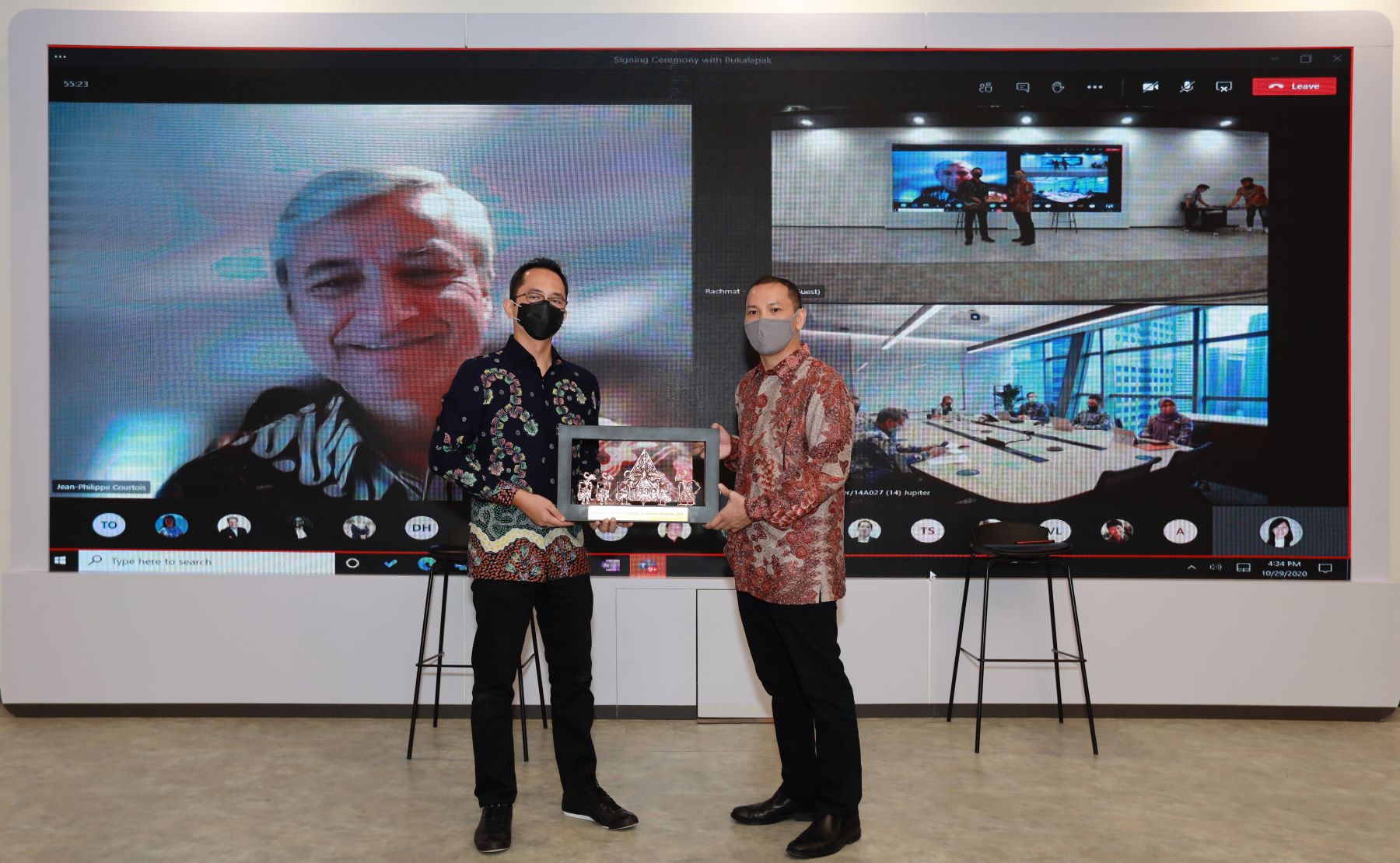
    Microsoft and Bukalapak, one of Indonesia’s leading e-commerce platforms, have formed a strategic partnership to reshape how e-commerce is conducted in the country. Kicking off the collaboration between the two companies, Bukalapak will adopt Microsoft Azure as its preferred cloud platform and Microsoft will make a strategic investment in Bukalapak.

    The partnership will leverage Microsoft’s expertise in building a resilient cloud infrastructure to support Bukalapak services for more than 12 million micro, small and medium enterprises, and 100 million customers.

    “This partnership signals a deep collaboration with Microsoft on an array of technology projects that will transform the technology-driven commerce solutions and operations solution and operations in Indonesia,” said Rachmat Kaimuddin, CEO of Bukalapak. “As a global technology leader, Microsoft’s confidence with Bukalapak highlights our position as the leading homegrown technology player in Indonesia and our continued objective to create a positive impact on our country and customers.”

    Through this partnership, Bukalapak and Microsoft will collaborate on key initiatives including:

    • Building resilient infrastructure – Bukalapak will adopt Microsoft Azure as its preferred cloud platform to support its more than 6 million online merchants, 6 million offline merchants and 100 million customers.
    • Bridging the digital gap – The companies will explore opportunities to help make the digital world relevant for every individual daily.
    • Skilling – Providing digital skills training for Bukalapak employees and their merchants.

    “Bukalapak and their services have had real and enduring impact on Indonesian society, and their innovation mindset in a rapidly changing market will create new opportunities for merchants, businesses and consumers,” said Haris Izmee, President Director of Microsoft Indonesia. “We are excited to empower Bukalapak with a trusted cloud, that allows them to scale their customer experience on Microsoft Azure. Through this partnership, merchants and consumers will have a more efficient and reliable buying and selling experiences, which in turn, creates business resilience and helps in accelerate growth in the Indonesian digital economy.”

    As a leading e-commerce platform in Indonesia, Bukalapak was founded with the singular mission of empowering Indonesia through digital technology. The company also offers financial services and payment options for its users, including but not limited to, gold and mutual funds’ investments, bill payments and credit services. They aim to transform the economy beyond e-commerce, by digitalizing traditional warungs (mom and pop kiosks) so every business in Indonesia has access to the online economy.

  • Flipkart loses bid to sell food online

    Flipkart loses bid to sell food online

    Amazon-owned Flipkart has been blocked from entering the food-retail business by Indian regulators who had deliberated for almost a year on an application.

    Subsidiary Flipkart FarmerMart had applied to sell foodstuffs grown or manufactured in India online via its marketplace and on apps. However the company was told by the Department for Promotion of Industry and Internal Trade (DPIIT) marketplace, it cannot add food to its platform as a foreign-owned retailer.

    Foreign direct investment in retail has long been a controversial issue in India and only in the last several years have multinational retail giants been allowed to enter the market, usually with strict requirements for a proportion of goods they sell to have been manufactured in India.

    The government has recently tried to tighten laws to ensure companies like Amazon only act as third-party marketplaces, allowing local companies to sell on its platforms, rather than develop their own inventories and become retailers in their own right.

    Flipkart had, however, been hoping to form supplier alliances with farmers and growers to create its own brands – rather than import all of the products it would sell.

    Establishing such strong supply agreements would also potentially have helped Flipkart expand into the brick-and-mortar retail market.

  • JD offers a helping hand to boost bookstore sales in China

    JD offers a helping hand to boost bookstore sales in China

    E-commerce platform JD has helped boost bookstore sales in China during the coronavirus outbreak.

    Last month, sales of two children’s bookstores – Caldecott Bookstore and Zhongshang Children’s Books – increased by 221.6 percent and 282 percent respectively, year on year.

    According to JD, the increased bookstore sales in China are attributed to consumers staying home during the epidemic and turning to books for inspiration and encouragement.

    JD Logistics continued to deliver products to Chinese consumers as usual during the outbreak while implementing a series of disinfectant measures to ensure consumers received their books safely.

    The coronavirus outbreak has led to the temporary shutdown of offline bookstores, a shortage of employees due to the epidemic, a sharp drop in operating revenues, and a surge in pressure on store rents and staff spending. During the period, JD has been assisting partnering bookstores in putting out live broadcasts to drive traffic and promote brand awareness, thus boosting bookstore sales in China.

    “Supporting offline bookstores to do live broadcast is a good example of how JD.com has been using its resources to help offline bookstores to transform their businesses to better cater to the needs of Chinese consumers,” said JD’s offline book team operations manager Jiao Zhang, “especially when there is limited traffic in offline bookstores during the epidemic period”.

    According to the 2019–2020 China Offline Bookstore Industry Report, there are more than 70,000 bookstores in China. Last year, more than 4000 new bookstores opened in the territory. China currently has 135 book malls that are more than 5000sqm each, of which 35 are more than 10,000sqm in size.

  • E-commerce battleground turns to ‘easy returns’

    E-commerce battleground turns to ‘easy returns’

    South Korea’s e-commerce industry, which has long emphasized “fast delivery,” is expanding its services, with competition now turning to offerZ “easy returns”.

    South Korea’s major shopping portal 11st said Monday that it has introduced a service to offset return costs caused by customers exchanging products, in which an insurance company pays for shipping when consumers return a product.

    When customers wish to return products with return insurance with 11st designated delivery service, they will not have to pay the delivery charge.

    However, if a customer returns a free-delivery item, the purchaser must pay for the initial shipping costs incurred by the seller.

    11st introduced services to flagship product lines such as fashion and accessory goods, which are often difficult to purchase online due to the cost of return shipping resulting from color and size exchanges.

    Shipping costs not only contribute to consumer hesitation about making a purchase but also make them hesitate as they might want to exchange a product for another size or color.

    However, with the delivery charges covered, one can shop worry-free.

    According to a report released last year by market-research firm Consumer Insight and Hanyang University’s Retail Research Center, “exchange/return/refund convenience” topped the list with 35.1 percent according to a survey of six aspects of delivery satisfaction.

    Rapid/accuracy, with 16.4 percent, was second.

    The result can be interpreted that consumers consider being able to return goods more important than the speed at which they are originally delivered.

    Coupang Corp, South Korea’s No 1 e-commerce company, is also offering free delivery and free return services to Rocket Wow members.

    In the case of size-sensitive fashion products, the company offers exchanges free of charge for 30 days for rocket delivery products that are purchased directly even if the purchaser is not a member.

    Prior to e-commerce channels, the home shopping industry focused on growth based on “free returns” as its sales strategy.

    “On the part of consumers, fewer hassles or costs caused by returning products are eliminated, and on the part of sellers, more sales can be expected if more frequent purchases occur,” said a source in the retail industry.

  • Leverage Etail in Singapore

    Leverage Etail in Singapore

    In Singapore, more and more people are connected to the Internet and the number of online shoppers follows the same trend. Back in 2014, Visa stated that approximately 26% of Singaporeans used to shop online on weekly basis and recent surveys from Hootsuite and We Are Social show that 89% are searching online for a product or service, while 73% purchased, during Q2 and Q3 2018. The market is growing it is expected that the number of Singaporeans shopping online exceed 4.1 million, by 2021 according to Statista, which makes the market as one of the most active in Asia Pacific.

    This expanding market represents a fantastic potential for e-commerce store owners and Singapore offers numerous advantages to people that are getting started in business.

    Why establishing your business in Singapore?

    Singapore is known globally as a great place to do business. Investors from around the globe are attracted by this place thanks to the benefits it offers. This includes people that want to get involved with the e-commerce sector, and those that do will find that Singapore is a great place to get established, especially when it comes to conquer the Asian market.

    Competitive Economy

    According to the World Economic Forum, Singapore is ranked 2nd in the list of the world’s most competitive countries, making it an ideal place for entrepreneurs. This makes it the most competitive economy in Asia, with it’s next closest Asian rival, Japan, in 5th place. Hong Kong is also in the top 10 in 7th place.

    Singapore’s impressive performance does not stop there as it also ranks very highly for other metrics, including:

    • Ranked as number one for its infrastructure.
    • Ranked as number one for its product market.
    • Ranked in third place for its labour market.

    A Key Regional Player

    Singapore’s impressive reputation globally puts it centre stage in the APAC economy.  According to Singapore’s International Development Board22, approximately 2,600 international firms used Singapore as the location for their APAC headquarters in 2016.

    At the same time, Hong Kong was home to 1,389 international headquarters, while even Shanghai only boasted 470.

    Favourable Taxation and Incorporation

    Another factor that makes Singapore such an attractive place to do business is that starting up is made to be as easy as possible. According to World Atlas, Singapore ranks in 2nd place globally for ease of doing business. Not only are the processes streamlined as much as possible, but Singapore also ranks highly when it comes to supporting businesses.

    For example, it has the fastest court system in the world for resolving business disputes and its business-friendly reputation is helped even more by its reasonable corporate tax rate, which stands at only 17% at the most.

    Building your e-shop

    When you have something to sell, you need a shop in which to sell it. In the past, this would mean building a team to code the platform and while having experts around you for such project still stands, the process is way much easier nowadays, especially with website builders like Shopify that allow you to sell online quite quickly.

    Customise your online store

    These platforms come with numerous features that will help you build a successful store:

    • Themes: Pre-built themes are like skeletons that you can then modify as you wish. This means that much of the work is done for you already, with a few clicks needed to get it just as you like.
    • Extensions: While many features are already included in the packages, website builders propose extensions in case you need something specific, which makes it easy to add features to your store.
    • Shopping Cart: If used properly, the shopping cart can be used to help enhance your marketing, and generate more revenue. People will usually abandon their shopping cart without buying anything, but in placing items in there, they are letting you know what they are interested in. You can take full advantage of this with retargeting and other tools that will help you to make more sales.

    Market your online store

    If Singapore is one of the main location entrepreneurs will choose to launch their companies and to open an online store, it is also a competitive market and the online industry require efforts to make your first sales. While platforms like Shopify are designed to convert, they also provide ranges of features to help you improving your marketing campaigns.

    However, most successful stores also spend time defining and implementing powerful marketing campaigns to develop their brand awareness on the local market.

    As such, Shopify includes functionnalities that will help you to get more customers:

    • SEO: Singapore is a challenging market when it comes to appear first in Google when people search for your products. Website builders include features to customize Title Tags, to submit sitemap, to launch a blog, that should help your pages to rank higher.
    • Social Media: Social media can be such a powerful tool if used right. In addition to being used to market your products, it can also be used to help you develop loyalty to your brand. Get people involved, share related information that will appeal to them and you will develop your very own audience that will be eagerly waiting for your next instalment. Such platforms are fully integrated with the social media world.
    • Email Marketing: As mentioned, with platforms like Shopify you can track users that abandoned their shopping cart and you can easily retarget them or use email marketing to chase them. Newsletters is also a great solution to engage with your audience and website builders come with such features.

    Singapore is a great location to take full advantage of e-commerce and if the market will grow, there are still few spots left. As with any other businesses, however, it needs to be done properly if the venture is to be a success and Singapore offers the right environment for that. Skilful labour, tax-friendly country, developed infrastructure, strategic location in Asia Pacific are among the main advantages you can get by starting your business in Singapore.

  • Tmall designers line up for New York Fashion Week

    Tmall designers line up for New York Fashion Week

    Alibaba Group’s B2C platform Tmall has announced its lineup of designers that will hit the runway at New York Fashion Week this September.

    In addition to the runway shows, Tmall will host a pop-up exhibition featuring cross-over collaborations riding the “China Cool” trend. Featured brand collaborations will include Chinese confectionery company Hsu Fu Chi and clothing brand Tyakasha; Chinese snack brand Qinqin and fashion brand Mukzin; Dove Chocolate and Hefang Jewelry; and home furniture brand Ziinlife and Chow Tai Seng jewellery.

    “The concept behind our ‘Tmall China Cool’ pop-up exhibition is a celebration of the design and creative powerhouse that China is becoming today. ‘China Cool’ is a trend we are seeing that blends the cutting-edge of fashion and innovation with a respect for authenticity and heritage,” said Tmall and Taobao marketing GM Bo Liu. “We have worked with both Chinese and international brands to pioneer new experiences and cross-over collaborations that are at the forefront of this trend and will be showcased in this New York Fashion Week exhibition.”

    The “Tmall China Cool” showcase will take place Wednesday, September 4 – the first day of NYFW: The Shows – and will feature a slate of Chinese designers including Peacebird, Threegun, RiZhuo and emerging designers Songta and I-am-chen.

    Tmall’s partnership with NYFW: The Shows aims to cultivate and showcase fashion talent and creative culture in China.

    “We are thrilled to be back at New York Fashion Week with another exciting line-up of Chinese design talent this year,” said Tmall Fashion GM Jessica Liu. “Tmall has always been a gateway to renowned international brands and retailers that are looking to access China. At the same time, we have empowered homegrown talent from China to grow their brands and develop their creativity and originality.

    “This year, we are also working with brands to leverage our new trend forecasting capabilities so they are able to strengthen their position as innovative brands and capture consumer interest. Today, the fashion scene in China is more vibrant than ever and we look forward to showcasing the spirit of innovation as well as the creative talent of our ‘Tmall China Cool’ designers at New York Fashion Week.”

  • Alibaba targets 30 million US SMEs

    Alibaba targets 30 million US SMEs

    Alibaba has opened its platform to enable US businesses to sell their products to millions of Alibaba.com buyers in the US and around the globe.

    The nearly 30 million small and medium-sized businesses in the US – especially manufacturers, wholesalers, and distributors – can now better access the US$23.9 trillion global B2B e-commerce market, an opportunity that is six times larger than the global B2C e-commerce market.

    Alibaba is also co-producing a series of “Build Up” workshops and webinars with local chambers of commerce and B2B organizations across the country – including Score, one of the nation’s largest non-profit networks of volunteer, expert business mentors.

    “Alibaba aims to empower entrepreneurs and help them succeed on their own terms,” said Alibaba Group’s head of North America B2B John Caplan. “With 10 million active business buyers in over 190 countries and regions, we are reshaping B2B commerce by providing the tools and services needed for US SMB companies to compete and succeed in today’s global marketplace.”

    “Alibaba’s announcement to welcome US sellers onto its B2B marketplace shows the Chinese retail giant’s desire to diversify its product offering,” said Emarketer principal analyst Jillian Ryan.

    “Currently, about 90 percent of the goods sold on the marketplace are from factories in China that are often manufacturing custom goods-to-order for buyers across the globe. Buyers on the platform are from developed nations like the US, Canada, India, Australia, Brazil, and the UK, and these buyers want to be able to source goods from the US.”

    As part of its extended services, Alibaba has streamlined the ability to build and manage a single digital store on the global Alibaba.com platform; added valuable transaction capabilities, including online payment; built CRM and communications tools to facilitate the direct ownership of customer relationships; enhanced digital marketing tools to target any appropriate B2B demand; and provided an option to work with Alibaba.com’s US-based Seller Success team.

  • Zalora Philippines targets 50-per-cent annual sales growth

    Zalora Philippines targets 50-per-cent annual sales growth

    Fashion e-tailer Zalora Philippines is targeting 50 percent annual growth in sales over the next five-year period.

    The firm’s confidence in its target is based on the number of Filipinos embracing online shopping.

    “We will end the year with more than 50 percent growth year on year,” said Zalora Group CEO Gunjan Soni, “and we expect that trajectory to continue”.

    “We actually see that trend continuing in terms of very high double-digit growth for at least the next five years,” said ZPH president and CEO Paolo L. Campos III. “We don’t see growth tapering, we see it sustaining at the very high double-digit level.”

    Zalora also operates in Singapore, Malaysia, Thailand, Vietnam, Taiwan, and Hong Kong.

  • Amazon expands anti-counterfeit program

    Amazon expands anti-counterfeit program

    Amazon is expanding its successful anti-counterfeiting program to more countries.

    Transparency is now available to sellers and customers in France, Germany, Italy, Spain, the UK, India and Canada, the e-commerce giant announced on Wednesday. Previously it only operated within the US.

    Online marketplaces are rife with counterfeit products sold cheaper than the genuine product, though often at a much lower quality.

    Fellow online marketplace Alibaba revealed its ‘Anti-Counterfeiting Alliance’, launched in early 2017, has resulted in the arrests of 1277 suspects, the shutdown of 524 manufacturing and distribution locations, and product seizures totalling US$536.2 million.

    EBay, as well, launched a program known as ‘eBay Authenticate’ which allows sellers to have items examined by a third-party to ensure the consumers can be confident they’re getting the real thing.

    Amazon’s Transparency program enables marketplace sellers to apply unique codes to their products when they are manufactured. These codes are scanned before orders are shipped to ensure the products are authentic. Online shoppers can also check the unique codes to verify the products they buy.

    “Counterfeiting is an industry-wide concern – both online and offline,” said Amazon customer trust and partner support vice president Dharmesh Mehta.

    “We created Transparency to provide brands with a simple, scalable solution that empowers brands an dAmazon to authenticate products within the supply chain, stopping counterfeit before it reaches a customer.”

    According to Amazon, more than 4000 brands are enrolled in the initiative in the US, and have generated more than 300 million unique codes, stopping over 250,000 counterfeits from reaching customers.

    The program also allows customers to scan products using a Transparency app, and see unit-level information about a product – though currently the app is only available in the US.

    Inside Retail has reached out to Amazon to see if this initiative will be expanded to Australia.

  • E-commerce giants report record results for 6.18 shopping festival

    E-commerce giants report record results for 6.18 shopping festival

    China’s e-commerce giants JD and Alibaba turned in record-breaking results for the 6.18 shopping festival on June 18.

    Total sales transaction volume during JD’s 6.18 trading reached a new high this year of US$29.2 billion. Key drivers leading to the breakthrough results were new products as well as Chinese consumers’ continued interest in and pursuit of higher quality.

    Alibaba Group’s Taobao and Tmall shattered multiple records during the Mid-Year Shopping Festival, stating a rising demand from consumers in less-developed cities for quality products. More than 200,000 brands took part, using campaigns and tools provided by Alibaba’s core platforms to help more than 110 brands each generate gross merchandise volume in excess of RMB100 million ($14.5 million).

    New products were a strong focus of JD’s retail strategy overall this year. JD has launched an exclusive channel within its platform to socialise and promote these products as well as bring them to market, making them easier for consumers to find, and helping brands to strategically reach new consumers. Consumers from lower-tier cities are also “trading up” showing greater interest in brands traditionally more coveted by consumers in higher-tier cities.

    Transaction volume growth was twice as high in lower-tier cities than the overall growth on JD. The percentage of new users from lower-tier cities was also much higher than the percentage of new users overall. Two campaigns involved participation from more than 100 million users. One was an innovative “birthday red envelope” campaign, which encouraged and rewarded consumers for sharing on social platforms. Another campaign engaged users to share, vote for and win shared rewards for their cities.

    The firm’s recent C2M initiative employs big data and consumer insights, providing insights to brands to adjust their manufacturing and marketing approaches with the goal of providing consumers with products they want before they even know they want them. Transaction volume of new products and C2M products during 6.18 increased 289 per cent compared with the same period last year. One out of every three monitors sold during this year’s 6.18 campaign were C2M products. HP saw a 100 per cent increase in sales of its Zhan 66 laptop, a C2M product, during 6.18.

    Several new brands also launched on JD during 6.18. Most recently, Italian designer brand Prada, as well as Miu Miu and Car Shoe – two sister brands under the Prada Group – launched authorised flagship stores on JD. Farfetch also launched a flagship store on JD during the period, enabling JD consumers to access more than 3000 brands through Farfetch’s network of more than 1000 brand and boutique partners.

    JD also worked with the world’s top hotel brands to empower subscribers of its premium membership program, JD Plus, with exclusive privileges at 15,000 high-end hotels around the world, marking the first time JD Plus benefits can be enjoyed outside of China. During this 6.18, shopping festival JD sold more than 2.8 million JD Plus memberships.

    Technology continues to be key to improving the consumer experience and exceeding expectations during the sales festival. 91 per cent of orders coming from JD fulfillment centers were delivered same-or next-day. During this year’s 6.18, JD’s smart customer service robot fielded more than 32 million inquiries, of which it solved 90 per cent of those independently, freeing up human customer service for more complicated inquiries.

    Flash sales crash records

    Alibaba’s flash sales channel, Juhuasuan, which aids brands in attracting new customers via discounts, added over 300 million new consumers. During the festival. More than 180 products topped RMB10 million ($1.45 million) in sales, and 4700 products achieved sales of more than RMB1 million ($145,000). This was a record-breaking number for brand participation in Juhuasuan.

    The firm’s Taobao live-streaming platform helped generate GMV of more than RMB13 billion ($1.88 billion).

    “The results of the ‘6.18 Mid-Year Shopping Festival’ are encouraging,” said president of Taobao and Tmall Jiang Fan. It has proven to be a celebration that can match the enthusiasm and scale of the ‘11.11 Global Shopping Festival.’ More than 100 brands achieved a new sales record that surpassed the result from last year’s 11.11.

    “We are very pleased to see that our strategy to help brands penetrate the less-developed markets has paid off. Customers in the emerging cities are very receptive to innovative products and promotion campaigns such as programs on the Juhuasuan platform. The number of customers and GMV from third- to fifth-tier cities both hit 100 per cent growth. We believe this group of customers will continue to grow into a strong and sustainable force for brands who are looking at further developing the Chinese market,” he added.

    With an increase in discretionary income, consumers in China’s less-developed areas are quickly becoming a crucial driver of China’s solid consumption. These consumers were a main engine powering this year’s 6.18 Shopping Festival. According to Tmall, 48 per cent of the newly launched products on the platform during the event were purchased by customers outside first- and second-tier cities.

    Demands and preferences from lower-tier cities consumer were diverse, ranging from high-end electric products from Apple to imported fruit, such as durian from Malaysia, and daily necessities, including socks and toothbrushes.

    Tmall’s Luxury Pavilion sales more than doubled from last year, boosted by customers in emerging cities and shoppers born after 1995. Premier brands hit better-than-expected results. Sales of Versace jumped 20 times compared with last year.

    This year, Taobao’s Daily Deals, a channel which allows consumers to order customised products straight from the manufacturers, generated more than 420 million orders. With Alibaba’s big data and IoT technology, the Daily Deals service has effectively digitised the manufacturing industry by initiating a direct manufacturer-to-consumer model.

    Sales generated from consumers in third- and forth-tiers cities on cross-border trade platform

    Tmall Global increased by 153 per cent from a year before. The top five countries on Tmall Global were Japan, the US, South Korea, Australia and Germany.

  • Online retail sales slows down last Month

    Online retail sales slows down last Month

    Online retail sales fell 3.8 per cent month on month in April, after a less than stellar March, according to the National Australia Bank’s monthly Online Retail Sales Index.

    The result is consistent with a general slowdown in retail observed by NAB, while the result itself is up 1.7 per cent on a year on year basis.

    “This month, both online retail and broader cashless retail series indicated very weak retail conditions,” NAB chief economist Alan Oster said.

    “While year-on-year growth in online sales has also slowed considerably in recent months, these comparisons are made to a period of elevated sales in 2018, with major new merchants to Australia, and also pre-GST exemption effects.”

    While all categories suffered a contraction in sales during April, games and toys suffered least with only a 0.2 per cent reduction in sales, while takeaway food fell 8.6 per cent – the steepest drop.

    International retailers outperformed domestic retailers on a monthly basis, with international retail enjoying a 0.7 per cent increase in sales, compared to the 4.4 per cent fall in domestic trading.

    However, NAB identifies a considerable weakness in international online sales on a year-on-year basis, most likely owing to the change in how GST is calculated and charged.

    “Tasmania, with about 2 per cent of online sales, was weakest in April after leading growth in March,” Oster said.

    “New South Wales, Victoria and Queensland represent over three quarters of the online market in Australia by sales value. Of these larger sales states, Queensland was strongest over the year.”

  • Online fashion retailer Mogu reports Steep Growth Numbers

    Online fashion retailer Mogu reports Steep Growth Numbers

    Chinese online fashion and lifestyle retailer Mogu has reported an 18.7 per cent increase in gross merchandise value (GMV) for the year to March 31, to RMB17.408 billion (US$2.594 billion).

    The company’s revenue for the year reached RMB1.074 billion (US$160.1 million), an increase of 10.4 per cent year on year.

    However the number of active buyers in the year to March remained the same as the previous year, at 32.8 million.

    The company said it live-video broadcast business continued to grow strongly with associated GMV increasing 138.1 per cent year on year.

    “We delivered another quarter of solid growth,” said Qi Chen, Mogu’s chairman and CEO. “During the past quarter, we continued to expand, optimise and elevate the supply chain for our fashion ecosystem by enriching content, increasing user engagement on our live-video broadcasts, and facilitating more repeat repurchases,” he said.

    “Looking ahead, we will continue to strengthen our unique three-way fashion ecosystem by further growing our content creation community of fashion key opinion leaders and live-video broadcast hosts, elevating the fashion-product supply chain and supporting deeper collaboration between merchants and KOLs, and ultimately facilitating greater user and community engagement through rich and high-quality interactive fashion content and products.”