Tag: eyes

  • Expanding Horizons: Seven & I Eyes Multi-Billion Dollar Investment in Polish Retail Giant Zabka

    Expanding Horizons: Seven & I Eyes Multi-Billion Dollar Investment in Polish Retail Giant Zabka

    Japanese retail giant Seven & I, proprietor of the international 7-Eleven chain, saw its share price increase by 3% on the Tokyo stock market this past Friday. This rise comes amidst discussions of the corporation’s potential acquisition of a share in Zabka Group, a prominent convenience store conglomerate in Poland.

    According to reports, the prospective investment could amount to several hundred billion yen, equivalent to several billion US dollars. The deal would mark a significant expansion of the company’s operations into Eastern Europe, extending its current strongholds in Japan and North America. This move is part of the strategic growth plan implemented by Seven & I’s CEO, Stephen Dacus, who started his tenure last year.

    Beyond Domestic Markets

    Seven & I’s share price increase was a standout performance in a market experiencing turbulence due to falling semiconductor shares. Analyst Naoshi Matsumoto explains: “Defensive sectors centered on domestic demand are being bought.” Other Japanese retail stocks, such as Aeon, experienced a similar rise in share value. Meanwhile, Warsaw-listed Zabka Group, which operates over 13,000 stores in Poland and Romania, saw its share value surge by 11% following the news.

    In 2021, Seven & I expanded its US presence by acquiring Speedway petrol stations. The company already operates outlets in three Nordic countries and has identified Europe as a significant area for future growth. However, the corporation has faced challenges in improving its performance following a standoff with Canadian rival, Alimentation Couche-Tard, which previously attempted a takeover.

    A Strategic Approach

    Seven & I has faced pressure from investors due to underwhelming returns and calls to focus on its core convenience store operations. In response, the company agreed to sell its supermarket business to Bain Capital last year. Further developments include discussions with SoftBank Corp and mobile payment operator PayPay about making significant investments in Seven & I. Bernstein analysts suggest this potential partnership could serve as a protective measure against future takeover attempts.

    Questions & Answers

    What prompted Seven & I’s recent share price increase?
    The share price rose following news that the company is in talks to acquire a stake in the Polish convenience store operator, Zabka Group.

    What plans does Seven & I have for future growth?
    In addition to its potential acquisition of a stake in Zabka Group, Seven & I is reportedly viewing Europe as a significant growth area. The company is also considering investments from SoftBank Corp and mobile payment operator PayPay.

    What challenges has Seven & I faced recently?
    The company has been under pressure from investors due to lackluster returns. It has also faced calls to concentrate on its core convenience store business, leading to its decision to sell its supermarket business to Bain Capital last year.

  • Beijing Liyuan Shakes Up Beauty Industry: Eyes Exit from Shiseido China Venture

    Beijing Liyuan Shakes Up Beauty Industry: Eyes Exit from Shiseido China Venture

    Beijing Liyuan is said to be planning a sale of its 35% stake in its longstanding cosmetics joint venture with Japanese beauty firm Shiseido. This decision would conclude a partnership that has spanned more than thirty years.

    According to information available on the China Beijing Equity Exchange, Beijing Liyuan is looking for a minimum of RMB199.5 million (US$29.3 million) for its stake in Shiseido Liyuan Cosmetics.

    Details of the Proposed Sale

    Shiseido China Investment, which owns the remaining 65% of the joint venture, has confirmed the planned sale. However, they haven’t specified if they plan on acquiring the stake.

    Shiseido Liyuan Cosmetics was established in 1991 with a focus on developing products specifically for Chinese customers.

    Their leading brand, Aupres, was exclusively designed for the Chinese market. Over the years, this brand became a significant part of Shiseido’s local strategy as the company expanded its operations throughout the country.

    The proposed sale is still in progress and remains subject to completion. Both Beijing Liyuan and Shiseido have refrained from disclosing any additional details about the transaction.

    Questions & Answers

    What is the proposed sale price for Beijing Liyuan’s 35% stake in Shiseido Liyuan Cosmetics?
    Beijing Liyuan is seeking at least RMB199.5 million (US$29.3 million) for its stake in Shiseido Liyuan Cosmetics.

    Who owns the majority stake in Shiseido Liyuan Cosmetics?
    Shiseido China Investment owns the majority stake, holding 65% of the joint venture.

    What is the significance of the Aupres brand in Shiseido’s strategy?
    The Aupres brand, which was exclusively created for the Chinese market, became a cornerstone of Shiseido’s local business strategy as the company expanded its presence across China.

  • Allianz GI Sets Eyes on Asias Potential: The Future of Asset Management in Rising Eastern Economies

    Allianz GI Sets Eyes on Asias Potential: The Future of Asset Management in Rising Eastern Economies

    The Asia-Pacific region is becoming a major focus for Allianz Global Investors (Allianz GI) as global growth trends shift eastward. The firm’s CEO, Tobias C. Pross, asserts that Asia remains one of the few regions where structural growth opportunities are still present despite geopolitical challenges and the slowing growth of Western economies.

    Allianz GI’s Growing Presence in Asia

    Allianz GI has been continually expanding its footprint across the Asia-Pacific region, as the firm sees the area’s growth dynamics moving away from conventional Western markets. Pross highlights that whenever growth is discussed in an inflationary context, the Asia-Pacific region stands out prominently.

    The firm has seen a promising start to 2026, reporting approximately €8 billion in net inflows during the first quarter, which has pushed the assets under its management above €600 billion for the first time.

    The company’s recent initiatives include investments in China, Indonesia, and Taiwan, launching new active ETF capabilities, and inaugurating a new office in South Korea. Julie Koo, former Citi executive, has been brought onboard as the Head of Asia Pacific to further strengthen Allianz’s leadership team in the region.

    Investment Opportunities and Market Expansion

    Allianz GI perceives Asia as a long-term source of investment opportunities and client growth, rather than just a distribution market. While some global investors have started to tread cautiously in the China market, Pross affirms that Allianz GI is still dedicated to China, seeing periods of geopolitical uncertainty as opportunities for active managers.

    Allianz GI is also expanding its private markets platform to offer access to infrastructure, private credit, and private equity strategies to a broader range of investors. Pross noted that demand is growing across Asia, as private banks, insurers, and wealthy individuals explore alternative income sources and diversification.

    Furthermore, Allianz GI views artificial intelligence as a significant investment area. The company is developing a global data platform and proprietary large language models to enhance investment research and portfolio management.

    Questions & Answers

    What is Allianz GI’s growth strategy for the Asia-Pacific region?
    Allianz GI aims to expand its presence by investing in key markets such as China, Taiwan, and Indonesia, and by launching new active ETF capabilities. The firm also plans to strengthen its leadership team in the region.

    How does Allianz GI view the China market?
    Despite some investors’ growing caution, Allianz GI remains committed to the China market. The firm believes that periods of geopolitical uncertainty often create opportunities for active managers.

    What role does artificial intelligence play in Allianz GI’s strategy?
    Allianz GI is significantly investing in artificial intelligence. The firm is developing a global data platform and proprietary large language models to enhance its investment research and portfolio management.

  • Chinese E-commerce Titan JD Eyes £2 Billion Acquisition of UKs The Very Group

    Chinese E-commerce Titan JD Eyes £2 Billion Acquisition of UKs The Very Group

    JD, the Chinese e-commerce titan, is reportedly considering a significant expansion within the UK market, with a potential £2 billion ($2.69 billion) acquisition bid for the British online retail platform, The Very Group.

    JD’s Expansive Strategy in the UK

    This move is the latest in a series of attempts by JD to strengthen its foothold in the UK market. Previously, the company had made a failed attempt to acquire the electricals group Currys and, in 2020, had withdrawn from negotiations aimed at acquiring Argos from Sainsbury’s. These activities indicate JD’s strong interest in expanding its operations in the UK, despite previous setbacks.

    Representatives from JD and The Very Group have refrained from commenting on these market speculations.

    The Very Group’s Recent Ownership Changes

    The owner of The Very Group, Carlyle, was reported earlier this year to be planning a £2 billion sale of the enterprise. This news came just a few months after Carlyle assumed ownership from the Barclay family, who had been long-time stakeholders in the business.

    Questions & Answers

    What is the estimated value of the deal between JD and The Very Group?
    The value of the potential deal is speculated to be around £2 billion ($2.69 billion).

    What other UK ventures has JD been involved in?
    In the past, JD has attempted to buy the electricals group Currys and also entered negotiations to acquire Argos from Sainsbury’s.

    Who is the current owner of The Very Group?
    The Very Group is currently owned by Carlyle, which took over from the Barclay family last year.

  • Yum China’s Kpro Surpasses 300 Locations: Eyes 600 Stores by Year-End Amid Soaring Health Food Demand

    Yum China’s Kpro Surpasses 300 Locations: Eyes 600 Stores by Year-End Amid Soaring Health Food Demand

    Yum China has announced plans to expedite the expansion of its light-meal brand, Kpro, following its current establishment of over 300 locations across the country. The company’s stated ambitions to double its stores by year’s end, from around 200 last year to 600, indicates the rising demand for healthier and cost-effective dining options within the Chinese market.

    Kpro operates in tandem with KFC restaurants, offering a menu that centers around balanced nutrition. This includes items such as multigrain energy bowls, yogurt smoothies, and whole-wheat sandwiches.

    The company explains that the operational symbiosis between Kpro and KFC allows them to capitalize on the pre-established network, customer base, and supply chain of KFC. This strategy also helps keep investment and operating expenses lower than what would be incurred with independent outlets.

    The expansion plan for Kpro is concentrated on tier-one, tier-two, and selected tier-three cities, specifically in the eastern and southern regions of China. These areas are known for having a high demand for light-meal options.

    Recently, Yum China announced a record-breaking first quarter for FY26 with over 600 new store openings.

    Questions & Answers

    What is the growth strategy for Kpro in China?
    Kpro plans to expand its presence in China, aiming to reach 600 stores by year’s end. The company is targeting tier-one, tier-two, and selected tier-three cities, particularly in the eastern and southern parts of China, where light meals are in high demand.

    What is unique about Kpro’s operating model?
    Kpro operates alongside KFC restaurants, allowing the brand to leverage KFC’s existing store network, customer base, and supply chain. This model helps Kpro maintain lower investment and operating costs than standalone formats.

    How does Kpro’s menu contribute to its popularity?
    Kpro’s menu, focused on balanced nutrition, aligns with the rising demand for healthier and affordable dining options in China. Offerings such as multigrain energy bowls, yogurt smoothies, and whole-wheat sandwiches cater to this growing consumer preference.

  • Thai Fragrance Powerhouse PanPuri Unleashes Bold Expansion across Asia, Eyes Luxury Retail Hubs in Nine Countries

    Thai Fragrance Powerhouse PanPuri Unleashes Bold Expansion across Asia, Eyes Luxury Retail Hubs in Nine Countries

    Panpuri, a prominent fragrance brand from Thailand, has recently announced an aggressive expansion plan that aims to establish 16 new retail outlets across Asia within the year.

    This initiative marks a significant step in the company’s comprehensive growth blueprint, which envisions over 80 retail locations spread across nine countries by the end of the decade. The new establishments will primarily be located in high-end shopping centers and bustling business districts.

    Since 2024, Panpuri has successfully penetrated markets in Hong Kong, Singapore, and Macau. In line with their expansion plans this year, the company intends to make substantial inroads into the Japanese market, launching first in Tokyo before branching out into other major cities. The fourth quarter will see the brand’s debut in China, with initial focus areas being Shanghai and Beijing.

    Vorravit Siripark, the founder and CEO of Puri Company Limited, stated, “Japan and China are crucial markets for us.” He added, “Consumers in these markets have a keen eye for craftsmanship, detailing, ambiance, and emotional values – qualities that align closely with Panpuri’s brand essence.”

    Siripark emphasized the role of localization in the company’s growth strategy. Every store will be designed to resonate with the culture and pace of the city it is located in, while ensuring the brand’s unique atmosphere is maintained.

    The upcoming Panpuri stores will prioritize immersive sensory experiences, marrying fragrance narratives with aspects of wellness, hospitality, and emotive design.

    North Asia’s contribution to Panpuri’s total revenue is projected to reach 30 per cent by 2029, with the brand aiming for a total revenue of THB 3 billion (approximately US$92 million). While North Asia holds prominence in the company’s plans, Siripark stressed that Southeast Asia will continue to be a cornerstone of their long-term vision.

    In Siripark’s words, “Thailand will always be our home, the hub of our creativity, and the source of our emotional grounding.” He further stated, “We persist in making considerable investments here, especially in wellness experiences and next-gen retail concepts. We also see immense potential in cities like Singapore, where there is a growing fondness for fragrance, ritualistic experiences, and more emotive forms of luxury living.”

    Questions & Answers

    What is Panpuri’s expansion plan for this year?
    Panpuri intends to open 16 new stores across Asia as part of its expansion plan for the year.

    What is the key focus of the next generation of Panpuri stores?
    The next generation of Panpuri stores will prioritize immersive sensorial experiences, marrying fragrance narratives with aspects of wellness, hospitality, and emotive design.

    What is the company’s revenue target by 2029?
    Panpuri aims to generate a total revenue of THB 3 billion (approximately US$92 million) by 2029.

  • Pickup Coffee Eyes Explosive Growth with Anticipated $8M Funding Boost from Convertible Notes

    Pickup Coffee Eyes Explosive Growth with Anticipated $8M Funding Boost from Convertible Notes

    Pickup Coffee, a budget coffee chain based in the Philippines, is reportedly seeking additional funding. This endeavor includes issuing up to $8 million in convertible notes to Venturi Partners and new investor Antler.

    The Equity Fundraising

    It is believed that this equity fundraising could potentially bring in an extra $20 to $40 million. Reports suggest that this process was successfully finalized a few months earlier.

    The Birth of Pickup Coffee

    Pickup Coffee was founded in 2022 by Diego Lorenzo and Jamie Fernandez. Initially, it operated as a delivery-only coffee brand. However, the business eventually transitioned to a hybrid model, launching food-truck-style stalls. This innovative format allowed Pickup Coffee to sell its beverages at prices lower than those usually seen in traditional coffee chains.

    Menu Offerings

    Pickup Coffee’s menu offers a range of traditional coffee drinks, iced teas, hot chocolates, and unique specialty mixes. The latter includes the Ube Latte, Iced Pistachio Milk, and Avocado Latte.

    Company Growth

    Since its launch, Pickup Coffee has seen significant growth. The company has opened approximately 500 stores in the Philippines and has broadened its reach on an international scale, establishing 50 outlets in Mexico.

    The new capital injection is predicted to help support Pickup Coffee’s expansion plans. The company is concentrating on fortifying its operations in existing markets.

    Questions & Answers

    Who are the founders of Pickup Coffee?
    Diego Lorenzo and Jamie Fernandez founded Pickup Coffee.

    What is Pickup Coffee’s business model?
    Initially, Pickup Coffee operated as a delivery-only coffee brand. However, the business eventually transitioned to a hybrid model, launching food-truck-style stalls, which allows them to offer drinks at lower prices than traditional coffee chains.

    What is the purpose of the additional funding that Pickup Coffee is seeking?
    The new capital injection is predicted to help support Pickup Coffee’s expansion plans, particularly focusing on strengthening its operations in existing markets.

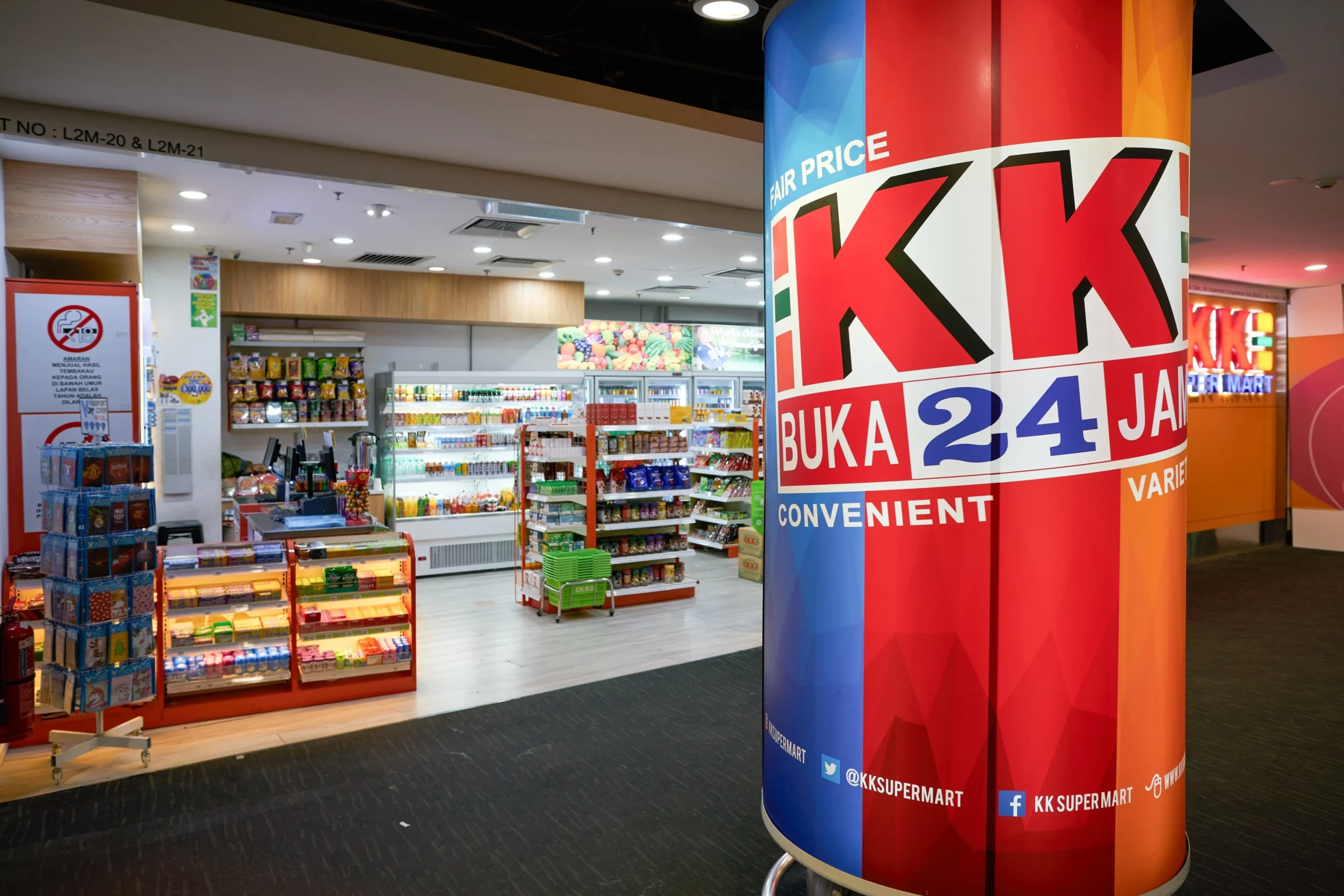
  • KK Super Mart Eyes $750M IPO Boost: A New Milestone in Malaysia’s Thriving Equity Markets

    KK Super Mart Eyes $750M IPO Boost: A New Milestone in Malaysia’s Thriving Equity Markets

    KK Super Mart, a prominent convenience-store chain in Malaysia, is purportedly preparing for an initial public offering (IPO) that could potentially reach a staggering US$750 million in the latter half of this year.

    Company Ownership and Valuation

    The anticipated IPO is estimated to encompass over 25 percent of the company’s total valuation. A significant 95 percent stake in the business is held by the Chairman, KK Chai. The remaining 5 percent is owned by his spouse and fellow director, Loh Siew Mui. This proposed IPO is predicted to play a significant role in shaping the company’s financial future and market standing.

    KK Super Mart’s Presence and Operations

    Known to many as KK Mart, the company operates an impressive network of more than 900 stores across Malaysia, India, and Nepal. Their broad geographical presence has established them as a significant player in the retail sector in these regions.

    Malaysia’s Equity Market Resurgence

    This revelation emerges amidst a resurgence in Malaysia’s equity markets. The Kuala Lumpur Composite Index has reached its highest trading levels since 2018. Moreover, the country listed a record 60 companies in the previous year, marking the highest number in over two decades.

    Market Position and Competition

    As Malaysia’s second-largest minimarket chain, KK Super Mart holds a substantial presence in the retail industry. A successful listing could place it in direct competition with other publicly traded counterparts like 99 Speedmart, boasting over 3000 stores, and Eco-Shop Marketing with upwards of 400 outlets.

    Questions & Answers

    What is the projected value of KK Super Mart’s IPO?
    The company’s IPO is rumored to be worth up to US$750 million.

    Who holds the majority stake in KK Super Mart?
    KK Chai, the Chairman of the company, holds a commanding 95 percent stake.

    Where does KK Super Mart operate?
    KK Super Mart has a network of over 900 stores spread across Malaysia, India, and Nepal.

  • Hapas Eyes $15M Boost to Amplify Omnichannel Presence and Southeast Asia Expansion

    Hapas Eyes $15M Boost to Amplify Omnichannel Presence and Southeast Asia Expansion

    Hapas, a fashion accessories retailer based in Vietnam, is reportedly setting its sights on raising a minimum of $15 million in a forthcoming funding round. The objective of this fundraising effort is to bolster its omnichannel footprint and facilitate expansion across the Southeast Asia region.

    The Role of Index Partners

    Reports suggest that Index Partners is taking on the role of sell-side advisor for the transaction. This role typically involves providing guidance on the selling strategy, facilitating negotiations, and working to ensure a favorable outcome for Hapas.

    An Impact-Linked Investment

    In 2022, Hapas received an impact-linked investment from Beacon Fund, which is the SME lending branch of Patamar Capital. This investment was reportedly influenced by the fact that 80% of Hapas’ management personnel are women entrepreneurs. Beacon Fund, however, has since withdrawn its investment.

    Specialization and Expansion Strategy

    Hapas was originally established as a provider of affordable luxury products, specializing in bags and accessories. Presently, Hapas manages 16 brick-and-mortar stores in Vietnam, and places emphasis on e-commerce platforms such as the TikTok Shop and Shopee.

    Furthermore, the company is making conscious efforts to fortify its direct-to-consumer channels to help diminish its dependence on third-party marketplaces. As part of this initiative, Hapas has commenced online sales in Thailand and is formulating plans to extend its physical retail presence to other regional markets. These include Thailand and Indonesia, and the expansion is slated to occur within the next few years.

    Questions & Answers

    What is Hapas planning to do with the new funding?
    Hapas aims to use the funds raised to enhance its omnichannel presence and to facilitate its expansion across the Southeast Asian region.

    Who is acting as a sell-side advisor for the transaction?
    Index Partners is reported to be serving as the sell-side advisor for this transaction.

    What is Hapas’ expansion strategy?
    Hapas has recently begun selling online in Thailand and aims to expand its physical retail presence to regional markets like Thailand and Indonesia in the next few years.

  • Chinese Giant Anta Sports Eyes Takeover Bid for Struggling German Brand Puma

    Chinese Giant Anta Sports Eyes Takeover Bid for Struggling German Brand Puma

    Anta Sports Products, a prominent Chinese sportswear manufacturer, is reportedly considering the acquisition of German sportswear brand, Puma. It’s understood that Anta, listed on the Hong Kong stock exchange, is currently working with an adviser to examine the feasibility of a bid for Puma. If the proposition proves profitable, Anta may collaborate with a private equity firm to proceed with an offer.

    Potential Competitors in the Bid

    Alongside Anta, other possible contenders for the acquisition include the Chinese sportswear group Li Ning and the Japanese sportswear company Asics. Li Ning has reportedly been engaging with banks to discuss financing for a potential bid, giving an early indication of the company’s interest in Puma. As for Asics, there’s speculation that it could also show interest in the German sportswear brand.

    When approached for comments on the acquisition, Anta Sports, Puma, and Asics didn’t offer immediate responses. On the other hand, Li-Ning provided a statement indicating that the company had not yet participated in any significant discussions or assessments relating to the transaction mentioned. The company further stated that its main focus remains on the expansion and evolution of its brand.

    Shareholder’s Stand

    Artemis, the private holding firm that has the biggest share in Puma and also controls Kering, the owner of Gucci, has stated that it’s exploring all options for its 29% stake. Information from a source previously revealed that Artemis had no intentions of selling their shares at the market value as of September.

    Puma’s current market valuation stands at 2.52 billion euros, equivalent to $2.92 billion. The Pinault family that manages Artemis obtained its stake in Puma in 2018 from Kering when the luxury conglomerate transitioned into a pure luxury player focusing on brands like Gucci and Saint Laurent.

    Strategy Shift

    In October, Puma’s new CEO, Arthur Hoeld, announced that the brand would decrease discounts, enhance marketing, and trim its product range. This strategy change was part of Puma’s turnaround plan following a dip in demand for its products and the impact of US tariffs on imports. The plan also included cutting 900 corporate jobs.

    The competitive sportswear market has seen Puma’s share price fall by half since the beginning of this year, losing ground to its competitors.

    Questions & Answers

    Who are the potential bidders for the acquisition of Puma?
    Anta Sports Products, Li Ning, and Asics are the potential contenders for the acquisition of Puma.

    What is Puma’s current market valuation?
    Puma’s current market valuation is approximately 2.52 billion euros or $2.92 billion.

    What is Puma’s new strategy under CEO Arthur Hoeld?
    Puma’s new strategy involves decreasing discounts, enhancing marketing, reducing its product range, and eliminating 900 corporate jobs as part of its turnaround plan.

  • UBS Eyes Nationwide Expansion in US: A Game-Changer in Wealth Management Services

    UBS Eyes Nationwide Expansion in US: A Game-Changer in Wealth Management Services

    UBS, a Swiss multinational investment bank and financial services company, has signaled its plans to significantly expand its footprint in the United States’ financial market. This move demonstrates UBS’s dedication to deepening its presence across the American financial landscape.

    Existing Limitations and Expansion Plans

    With its current state-level charter, UBS has been able to offer its wealth management clients in the US a variety of banking services, including cash management, credit cards, and securities-based lending. However, the state-level charter also imposes certain limitations on the range of services the bank can offer.

    To expand its wealth management arsenal, UBS Bank USA, a subsidiary of UBS, has applied to the Office of the Comptroller of the Currency (OCC). The approval of this application would allow UBS to provide a more comprehensive portfolio of banking and lending services, including traditional checking and savings accounts.

    In essence, UBS is striving to deliver a full suite of banking services to its wealth management clients in the United States. This will make it easier for these clients to manage their finances in one location. The license is expected to facilitate a gradual expansion of the bank’s current range of services.

    A Testament to Long-Term Commitment

    UBS anticipates gaining regulatory approval in 2026, a process which is subject to review by the US authorities. This strategic move comes at a time when UBS is strengthening its status as the world’s largest wealth manager. This followed its acquisition of Credit Suisse and reflects its effort to balance its global scale with a deeper penetration in key markets, including the United States.

    Questions & Answers

    What does UBS’s application to the OCC imply?
    It signifies the bank’s intent to offer a broader range of banking and lending services, including traditional checking and savings accounts, to its wealth management clients in the US.

    What factors have provoked UBS’s decision to expand its services in the US?
    The decision is a reflection of UBS’s strategy to strengthen its position as the world’s largest wealth manager, following its acquisition of Credit Suisse, and to deepen its roots in key markets such as the US.

    When does UBS anticipate gaining regulatory approval for the expansion?
    UBS expects to gain regulatory approval by 2026, a process that is subject to a review by the US authorities.

  • Say Goodbye to Regret: Google Messages Eyes Feature for Retrieving Deleted Texts

    Say Goodbye to Regret: Google Messages Eyes Feature for Retrieving Deleted Texts

    The popular messaging platform Google Messages is reportedly working on a new feature that may allow users to retrieve deleted messages. Unlike the majority of email services where deleted messages are moved to a trash folder for temporary storage before permanent deletion, Google Messages currently does not have a similar feature.

    Retrieving Deleted Messages

    Most email services, including Gmail, shift deleted emails to a bin before they are permanently removed. These emails can be retrieved within a certain period of time, typically around 30 days for Gmail. Google Messages, however, does not currently have this feature. Once a message is deleted, it is gone forever. This could be set to change in the near future.

    Evidence of a possible “trash folder” has been found in the latest beta version of the Google Messages app. These “trashed conversations” would allow for a recovery period similar to that of email services, though the feature does not appear to be fully functional yet.

    Benefits of a Trash Folder

    The ability to restore deleted messages offers several benefits to users. Whether a message is deleted in anger and later regretted, or accidentally removed during a mass cleanup, a temporary storage bin provides the opportunity to recover these messages. While it is unclear how long messages might be stored in this potential trash folder, a 30-day timeframe would align with Gmail’s current setup.

    While Google Messages does currently offer an archive feature that allows users to hide conversations without deleting them, this is not an equivalent substitute for the ability to restore deleted messages.

    Continuous Improvements

    Google Messages has continually strived to optimize user experience. Recent updates have included streamlined access to photos and new expressive features. The app also introduced a feature warning users about inappropriate videos.

    The development of a trash folder for deleted messages signals Google Messages’ commitment to user-friendly features. Taking cues from email services, the messaging app is continually evolving to offer the best possible experience to its users.

    Questions & Answers

    What new feature is Google Messages potentially introducing?
    Google Messages is reportedly working on a feature that would allow users to retrieve deleted messages.

    What is the current setup for deleted messages on Google Messages?
    Currently, once a message is deleted on Google Messages, it cannot be retrieved.

    What recent improvements has Google Messages made?
    Recent updates have streamlined access to photos, introduced new expressive features, and added a warning system for inappropriate videos.

  • Fintech Giant Icapital Plans Major Expansion In Asia-pacific Amid Growing Wealth Management Opportunities

    Fintech Giant Icapital Plans Major Expansion In Asia-pacific Amid Growing Wealth Management Opportunities

    Fintech platform, iCapital, is reportedly planning to expand its presence in the Asia-Pacific region, including in cities such as Hong Kong, Singapore, and Australia.

    Expansion in Singapore

    iCapital is currently relocating to a larger office in Singapore, fueled by an expanding team and increased client activity. The firm’s Head of International, Marco Bizzozero, reported that around 30 staff members are employed in the city-state, which constitutes half of the total headcount in Asia.

    Moving to Larger Spaces

    The fintech platform is also seeking a larger office in Hong Kong as part of its expansion strategy. The goal is to acquire more sales staff in both markets to support its growing operations. In addition to this, the firm is planning to open its first Australian office.

    The Wealth Management Market

    Marco Bizzozero pointed out that the wealth management sector is still in its early stages when it comes to integrating private markets into client portfolios. He noted that current allocations to private markets by the wealth management sector are low, averaging at around three percent. However, most wealth managers are now aiming for allocations between 10 and 20 percent. This trend presents significant opportunities for firms like iCapital.

    Questions & Answers

    What is iCapital’s expansion strategy in Asia-Pacific?
    iCapital plans to expand its presence by relocating to larger offices in Singapore and Hong Kong. It is also looking to hire more sales staff in these markets and open an office in Australia.

    How many staff members does iCapital currently employ in Singapore?
    The fintech platform currently employs around 30 staff members in Singapore, which makes up half of its total headcount in Asia.

    What trends in the wealth management sector present opportunities for firms like iCapital?
    The wealth management sector is still in its infancy in terms of integrating private markets into client portfolios. However, with most wealth managers now targeting allocations between 10 and 20 percent to private markets, firms like iCapital stand to benefit significantly.

  • Saizeriya Sets Sights On Doubling China Presence With Local Production Strategy By 2035

    Saizeriya Sets Sights On Doubling China Presence With Local Production Strategy By 2035

    Saizeriya, a Japanese-owned Italian restaurant chain, has unveiled an ambitious plan to double its presence in China from its current footprint to approximately 1,000 outlets by the year 2035.

    Expansion Strategies and Local Production

    In order to facilitate its expansion, Saizeriya established a subsidiary in Wuhan in July. Furthermore, they have plans to inaugurate a $30 million plant in Guangzhou next year. This new plant will produce local ingredients, including sauces, pasta, and pizza.

    The restaurant chain aims to attract “cost-conscious” consumers with its pricing strategy. As an illustration, at its Shanghai branches, Milan-style rice is priced at 15 yuan (roughly $2), and squid-ink pasta is available for 16 yuan.

    Noboru Nagaoka, the General Manager for overseas business, provided insight into the company’s performance. According to Nagaoka, the company currently generates an annual operating income of $40 million, a figure that is triple the amount earned from its operations in Japan.

    “We initially wanted to challenge the notion that Western food had to be expensive. Our goal was to demonstrate that genuine Italian meals could also be affordable,” he explained.

    Established Presence and Future Growth

    Saizeriya launched its first branch in Guangzhou in 2007, followed by a branch in Beijing in 2008. Recently, in July, the restaurant chain established a head office in Guangdong Province. This office is responsible for managing its operations in China and standardizing menu development.

    Nagaoka stated, “The Chinese market is of utmost importance to us. Our profits from this market have already surpassed those from Japan. Moreover, the potential for future growth in China is much larger.”

    To continue expanding its presence in the Chinese market, Saizeriya plans to open a minimum of 50 new stores per year. This would align its presence in China with the approximately 1050 restaurants it currently operates in Japan.

    Questions & Answers

    What is Saizeriya’s expansion plan for China?
    Saizeriya aims to double its presence in China to about 1,000 outlets by 2035.

    How does Saizeriya plan to support its expansion in China?
    The company plans to open a $30 million plant in Guangzhou to produce local ingredients. Additionally, a subsidiary has been established in Wuhan, and a head office has been set up in Guangdong Province to manage operations and standardize menu development.

    What is Saizeriya’s pricing strategy?
    Saizeriya targets “cost-conscious” diners by offering affordable prices for its dishes. For instance, at its Shanghai branches, Milan-style rice is priced at 15 yuan, and squid-ink pasta is available for 16 yuan.

  • Nike’s Strategic Pivot To Outdoor Recreation: Revitalizing Acg Amid Rising Competition

    Nike’s Strategic Pivot To Outdoor Recreation: Revitalizing Acg Amid Rising Competition

    Nike, the sportswear behemoth, is making a strategic move into the expanding outdoor recreation industry. Starting with the launch of a new trail running shoe, Nike aims to invigorate its lesser-known sub-brand, ACG, and turn it into a vital source of growth.

    Nike’s Outdoor Recreation Strategy

    Beginning with the Ultra-Trail du Mont-Blanc event, an ultramarathon in France, Nike plans to release its Ultrafly trail running shoe, which is a part of the ACG (All Conditions Gear) outdoor sub-brand. This move is an attempt by Nike to reestablish ACG as a credible contender in the realm of performance-focused trail running shoes.

    Commenting on the broader strategy, Nike’s CEO, Elliot Hill, explained that the company is refocusing on core sports such as running in response to the growing competition from smaller brands. Nike is striving to catch up in the outdoor recreation industry, which has seen substantial growth during the pandemic, and in China, where outdoor activities have gained considerable popularity. The company’s struggle in these two markets has been a factor in its diminished share of the global sportswear industry.

    ACG Ultrafly and Future Plans

    Nike-sponsored athletes, including Anthony Costales, will wear the ACG Ultrafly during races. The shoe is scheduled to be available to consumers in spring 2026. In addition, a rejuvenated version of the Zegama trail runner, also under the ACG brand, will be released later in 2026.

    However, revitalizing the ACG brand, initially launched in 1989 with an emphasis on hiking and biking, will not be without its challenges. The brand is currently associated with “gorpcore”, a fashion trend that blends functional gear with style. Despite these challenges, Nike is looking towards the long-term benefits of this strategy, especially in the Chinese market.

    The Chinese Market

    Nike established its ACG team as a sub-brand in October and appointed Angela Dong, VP for all of Greater China, to lead the unit. Sales of outdoor apparel in China nearly doubled between 2019 and 2025, and outdoor footwear sales increased by 65% in the same period. Despite this, Nike has reported double-digit sales declines in China over the past three quarters.

    The Chinese market has posed significant challenges for Nike as it faces stiff competition from other retailers. Economic instability and high youth unemployment have also impacted spending.

    Nike’s global sportswear market share fell to 26% from 29% in 2021. Other brands such as Hoka have used trail running to bolster growth, underscoring the potential that Nike sees in this segment.

    Launching at a Hoka-sponsored event could be viewed as Nike’s attempt to overshadow its rival, demonstrating Nike’s ability to leverage its financial strength against smaller brands.

    Questions & Answers

    What is Nike’s new strategy in the sportswear market?
    Nike is focusing on outdoor recreation, reviving its ACG sub-brand with the launch of a trail running shoe.

    What challenges does Nike face in revitalizing the ACG brand?
    ACG, launched with a focus on hiking and biking, has become associated with the “gorpcore” fashion trend, which may make it difficult for the brand to reposition itself as a serious contender in the outdoor recreation space.

    What is the current state of Nike in the Chinese market?
    Despite the growth in outdoor apparel and footwear sales in China, Nike has experienced double-digit sales declines in this market over the past three quarters due to tough competition and economic factors.