Tag: factory

  • On Pioneers Rapid Shoe Production with Robot-Powered Factory Launch in South Korea

    On Pioneers Rapid Shoe Production with Robot-Powered Factory Launch in South Korea

    On Running, a sportswear brand, has recently launched an automated factory in Busan, South Korea where robots are used to manufacture running shoes. The company expresses its intent to establish more such factories in the United States and Europe to accelerate its production and delivery timelines.

    Embracing Nearshoring

    Due to rising tariffs, supply chain disruptions, and geopolitical risks, several retailers and brands are considering ‘nearshoring’. This involves shifting the manufacturing process closer to the final consumer. On Running aims to expedite shoe production, decrease its environmental footprint, and bring manufacturing closer to its main markets by embracing automation. This approach contrasts with the traditional footwear manufacturing model, which typically involves shipping finished products from factories in Southeast Asia and China to customers in the US and Europe.

    Caspar Coppetti, co-founder of On, believes that automation and nearshoring are the way forward. He cites the increasing speed to market, sustainability efforts, and the growing scarcity of regions with cheap labor as reasons to pursue this direction. At present, On sources 90% of its shoes from third-party manufacturers in Vietnam and the remaining 10% from Indonesia, as per their most recent annual report.

    Automated Manufacturing Expansion

    On Running first revealed its LightSpray marathon running shoe at the 2024 Paris Olympics. This innovative shoe is created by robot arms spraying material onto a mold to generate a sock-like upper. The company’s factory in Busan, equipped with 32 robots, marks a significant expansion from its initial automated factory in Zurich, which only has four robots and commenced production in July of the previous year.

    This new factory can manufacture approximately 1,000 pairs of shoes daily. The spray-on method simplifies the traditional upper manufacturing process, reducing a complex 200-step procedure across multiple factories to a single automated operation.

    On Running, established in Switzerland in 2010, plans to develop robot factories in the US in a bid to mitigate its tariff expenses. Steep tariffs introduced by the US on sportswear manufacturing hubs such as Vietnam and China have escalated costs and affected the industry significantly over the past year. The recent Supreme Court ruling against tariffs has added further uncertainty for retailers and importers.

    Competing with Industry Giants

    In the intense competition to produce the fastest marathon shoe, not just for elite athletes but also for amateur runners eager to beat their personal bests, On Running has promoted the LightSpray as a game-changer due to its light weight. Hellen Obiri, an On-sponsored athlete, wore the LightSpray when she triumphed in the New York Marathon last November.

    Questions & Answers

    What is the importance of ‘nearshoring’ for On Running?
    Nearshoring allows the company to speed up its manufacturing process, reduce its environmental impact, and bring production closer to its main markets.

    What is the LightSpray marathon running shoe?
    The LightSpray is an innovative shoe made with a robot arm spraying material onto a mold to create a sock-like upper. It is lauded for its light weight.

    Where are On Running’s automated factories located?
    On Running currently has automated factories in Busan, South Korea and Zurich, Switzerland. They plan to establish more such factories in the United States and Europe.
  • Marcus Raward: Steering Noosa Chocolate Factory Towards New Commercial Heights Amid Market Challenges

    Marcus Raward: Steering Noosa Chocolate Factory Towards New Commercial Heights Amid Market Challenges

    Marcus Raward has been appointed as the new Chief Executive Officer of Noosa Chocolate Factory, marking a new era in the company’s top leadership.

    Delivering Growth Through Strategic Leadership

    Known for his commercial strategy and business growth expertise, Raward is set to steer the company through its current operational phase. His responsibilities include honoring the company’s rich heritage while readily adapting to the prevailing economic landscape.

    Raward expressed his vision for the company, stating, “The goal is to honor the roots of our brand, highlight the unique qualities that set our products apart from other chocolate and confectionery brands, while propelling the business into a stronger commercial position.”

    Addressing Market Challenges and Opportunities

    The chocolate industry is currently undergoing a transition as it rebounds from significant price volatility in the global cocoa market. Raward pointed out that the market is beginning to stabilize, a shift that has been felt by manufacturers worldwide.

    Addressing this issue, Raward commented, “Cocoa prices have posed a tough challenge for the entire sector, but now we’re seeing signs of a plateau. Simultaneously, the demand for quality chocolate continues to be robust, which opens up a real opportunity for a brand like Noosa Chocolate Factory.”

    Expansion Plans

    As part of its growth strategy, Noosa Chocolate Factory has inaugurated a new outlet at Westfield Chermside and refurbished its store at Sunshine Plaza, which is anticipated to reopen early this month.

    Questions & Answers

    What is Marcus Raward’s vision for Noosa Chocolate Factory as its new CEO?
    Raward’s vision is to honor the brand’s roots, highlight its unique product qualities, and propel the company into a stronger commercial position.

    How is the global cocoa market impacting the chocolate industry?
    Significant price volatility in the global cocoa market has posed challenges for the chocolate industry. However, signs of a stabilizing market present new opportunities for brands like Noosa Chocolate Factory.

    What are some of Noosa Chocolate Factory’s recent expansion efforts?
    As part of its growth strategy, Noosa Chocolate Factory has opened a new store at Westfield Chermside and renovated its Sunshine Plaza store.

  • China’s Economic Troubles Deepen: Factory Output, Retail Sales Experience Record Lows

    China’s Economic Troubles Deepen: Factory Output, Retail Sales Experience Record Lows

    In October, China’s factory output and retail sales experienced their slowest growth in over a year, which is placing increasing pressure on policy makers to overhaul the $19 trillion export-driven economy. This comes as the country faces growing supply and demand challenges that threaten to further hamper growth.

    China’s Economy Dilemma

    For several decades, the officials responsible for maintaining China’s bustling economy, the world’s second largest, have had the option to stimulate its extensive industrial sector to increase exports if domestic consumer spending slackens. Alternatively, they could dip into public funds to finance infrastructure projects to boost the country’s GDP.

    However, the ongoing tariff war initiated by former U.S President Donald Trump has underscored China’s dependence on the world’s largest consumer market. It emphasizes that even an economy as large as China’s can only derive limited growth from developing more industrial parks, power substations, and dams.

    Recent economic indicators offer little promise of a swift recovery. The more the economic data deteriorates month by month, the more urgent the need for reform becomes.

    Slowing Industrial Output and Retail Sales

    According to data from the National Bureau of Statistics (NBS), industrial output in October grew by only 4.9% year-on-year, marking the slowest annual pace since August 2024. This is lower than the 6.5% growth seen in September and falls short of the 5.5% increase forecasted by economists.

    Retail sales, an indicator of consumption, rose by a mere 2.9% last month, also marking their slowest pace since August of the previous year. This is a decrease from the 3.0% growth in September, although it surpassed the forecasted growth of 2.8%.

    Challenges and Potential Reforms

    Policy makers are acknowledging the need for changes to rectify historical supply-demand imbalances, enhance household consumption and address the massive local government debt. This debt is preventing provinces, many of which have economies as large as those of nations, from becoming self-sufficient.

    However, they also understand that structural reform will be painful and politically risky, particularly at a time when trade tensions have increased pressure on the economy.

    Another surprise was China’s auto sales, which despite expectations of a surge ahead of the phase-out of various tax breaks and government incentives, ended an eight-month growth streak.

    Economy Undermined by Structural Issues

    Fixed asset investment contracted by 1.7% in the first 10 months of the year compared to the same period in the previous year. This decrease was far more significant than the anticipated 0.8% drop.

    Furthermore, a prolonged downturn in the country’s vital property sector, a significant repository of household wealth, showed no signs of letting up, with new home prices falling at their most rapid monthly rate in a year.

    Despite these challenges, the ruling Communist Party of China has pledged to considerably increase household consumption’s share of GDP, while also emphasizing the need to strengthen its vast industrial base.

    Questions & Answers

    What is the status of China’s factory output and retail sales?
    In October, China experienced the slowest growth in factory output and retail sales in more than a year, which is placing increased pressure on the economy.

    Has China’s dependence on the world’s largest consumer market been highlighted recently?
    Yes, the ongoing tariff war initiated by former U.S. President Donald Trump has underscored China’s dependence on the world’s largest consumer market.

    What challenges is China’s economy currently facing?
    China’s economy is facing numerous challenges, including a slowdown in industrial output and retail sales, a prolonged downturn in the property sector, and the need for structural reform to rectify historical supply-demand imbalances.

  • Pandora Jewelry’s Strategic Expansion: New Regional HQ and Factory to Accelerate Asian Market Growth

    Pandora Jewelry’s Strategic Expansion: New Regional HQ and Factory to Accelerate Asian Market Growth

    Pandora, recognized as the world’s leading jewelry brand in terms of sales volume, has announced its plan to establish a fresh regional headquarters in Singapore. The move forms part of a broader growth strategy designed to strengthen the company’s footprint across Asia.

    Why Singapore?

    Massimo Basei, Pandora’s Chief Commercial Officer, highlighted several reasons for choosing Singapore for this strategic move. He pointed out that the city-state’s robust business environment, dynamic economy, and strategic positioning within Asia were crucial in making this decision.

    Basei explained, “Singapore’s location, right at the heart of Asia, allows us to extend the right levels of support to markets ranging from Japan and South Korea to India and Southeast Asia.”

    A New Home for Pandora

    The Danish jewelry giant has inked a lease agreement for its new 8,600-square-foot office situated at Asia Square Tower 1 in Marina Bay. The new office is expected to become operational in the near future.

    Pandora has plans to expand its team by recruiting approximately 50 employees across various fields such as branding, marketing, and operations. The hiring process is anticipated to commence soon.

    Basei acknowledged that while Asia is home to some of the world’s largest jewelry markets, it remains relatively under-represented within Pandora’s global business landscape. He stated, “While we have had a presence in Asia, we now aim to intensify our focus on this region.”

    Current Market Position

    At present, the United States stands as Pandora’s most significant market, contributing to 32% of its revenue in the initial nine months of 2025. Other crucial markets are the U.K. (11%), Italy (7%), and Germany (7%).

    However, Pandora has been steadily reducing its operations in China due to flagging sales. Over the course of this year, the company has shut down 59 concept stores in China.

    Production Expansion

    In order to meet the expected increase in demand resulting from its Asian expansion, Pandora has launched a new production facility in Vietnam. The company commenced the construction of a US$150 million manufacturing site in Binh Duong, now a part of Ho Chi Minh City, in May last year. Production at this site is slated to start next year.

    Until now, all of Pandora’s jewelry has been produced at its three facilities in Bangkok and Lamphun, Thailand. The new Vietnam facility is projected to augment Pandora’s production capacity by approximately 50%, enabling the company to manufacture up to 60 million pieces annually. For context, Pandora produced a total of 113 million pieces in 2024.

    Questions & Answers

    Why did Pandora choose Singapore for its new regional headquarters?
    Singapore was selected due to its vibrant business environment, dynamic economy and strategic location in the heart of Asia.

    What is the main aim of Pandora’s expansion in Asia?
    While Pandora has had a presence in Asia, it aims to intensify its focus on the region, which is home to some of the world’s largest jewelry markets.

    How is Pandora planning to meet the increased production demand due to its Asian expansion?
    Pandora has set up a new factory in Vietnam, which will aid in increasing the production capacity by about 50%, enabling the manufacture of up to 60 million pieces annually.

  • Fuyao Glass Amplifies Asia’s Retail Horizon With $600m Vietnam Factory Expansion

    Fuyao Glass Amplifies Asia’s Retail Horizon With $600m Vietnam Factory Expansion

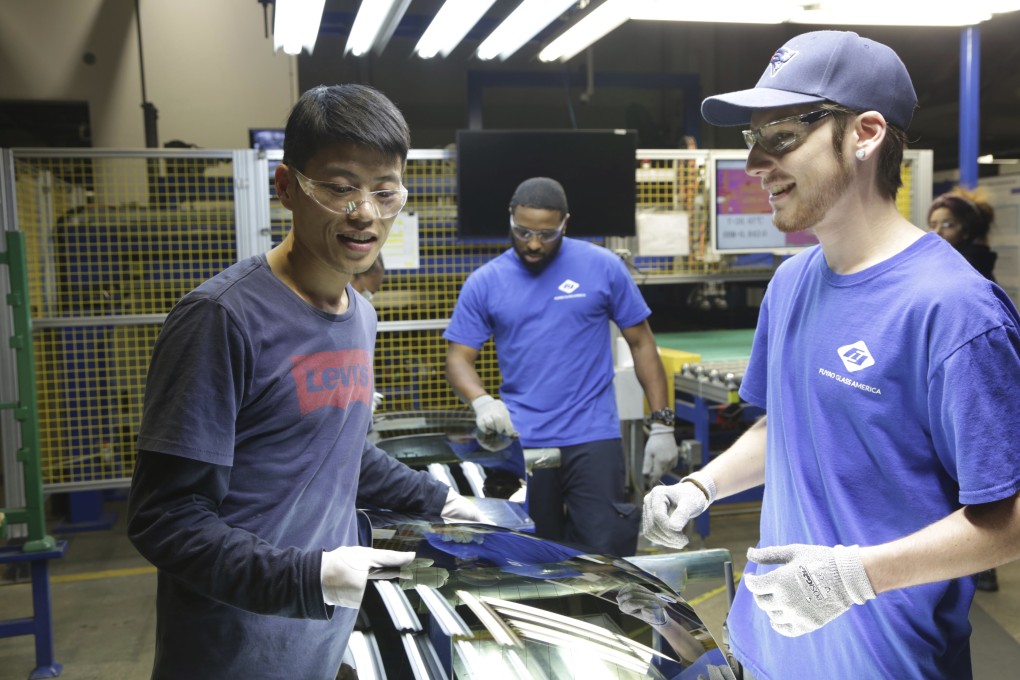
    In a significant move reflecting the evolving landscape of Asia’s retail sector, Fuyao Glass Industry Group is set to expand its footprint by opening a second glass factory in Vietnam. This new facility, which represents a monumental investment of approximately $600 million, is poised to enhance the company’s capacity to serve the growing demand for automotive glass in the region.

    Shifting the Gears of Growth

    Currently operating a factory in the north of Vietnam, Fuyao’s new location in the south is strategically aimed at tapping into the bustling automotive manufacturing hub centered around Ho Chi Minh City. With a target commencement date set for 2025, this expansion is expected to create around 2,700 new jobs, cementing Fuyao’s role as a key player in both the local economy and the broader automotive supply chain.

    A Competitive Edge in Automotive Glass

    Established in 1987 and boasting a market capitalization exceeding $16 billion, Fuyao Glass has worked tirelessly to innovate and elevate industry standards. The company has amassed a diverse clientele, supplying glass to renowned automakers such as Volkswagen and BMW. With its new facility, Fuyao aims to not only amplify production capabilities but also enhance its competitive edge in a market that’s increasingly leaning toward sustainability and innovation.

    Building a Sustainable Future

    The factory’s design and operational plans underscore a commitment to sustainability, integrating energy-efficient technologies and practices. It’s a sign that in today’s retail environment, making green choices isn’t just commendable; it’s becoming essential. As Fuyao steps into this new chapter, it couples economic growth with its pledge to lower environmental impact — a narrative increasingly resonant among modern consumers.

    The Local Impact: A Win-Win Situation

    The benefits of this investment won’t be limited to Fuyao alone. This expansion is anticipated to stimulate the local economy, attracting supporting industries and boosting ancillary services in logistics and supply chains. Quite frankly, for a country like Vietnam, which is quickly becoming a regional manufacturing hub, projects like these could be the proverbial cherry on top of an already thriving cake!

    Paving the Way for Future Innovations

    As Fuyao Glass sets its sights on this ambitious project, the company positions itself at the forefront of an exciting period for the automotive glass industry in Asia. With technology and consumer preferences constantly shifting, Fuyao is proving that strong investments in innovation and infrastructure can lead to transformative impacts — both within its corporate walls and across the communities it touches.

    Questions & Answers

    What prompted Fuyao Glass to expand its operations in Vietnam?
    Fuyao Glass is responding to the increasing demand for automotive glass in the region, capitalizing on Vietnam’s growth as an automotive manufacturing hub.

    How many jobs will the new factory create?
    The new facility in southern Vietnam is expected to create approximately 2,700 jobs, significantly contributing to local employment.

    What is Fuyao’s stance on sustainability regarding its new factory?
    The company is committed to sustainability, integrating energy-efficient technologies and practices into the factory’s design and operations to minimize environmental impact.

  • Real Pet Food Pledges $1.3m For Safety Upgrades After Epa Directive Following Acid Spill Incident

    Real Pet Food Pledges $1.3m For Safety Upgrades After Epa Directive Following Acid Spill Incident

    Real Pet Food, also recognised as Australian Pet Brands, is set to expend over $1.3 million on safety improvements and equipment upgrades. This decision comes following a directive from the NSW Environment Protection Authority (EPA) after a phosphoric acid leakage incident at the company’s Dubbo location.

    Details of the Incident

    A defective valve is reportedly to blame for the spillage of around 300 litres of phosphoric acid within the production tower of the facility. The acid, a chemical agent used to extend the shelf-life of pet food, spread across several levels of the building. Emergency Hazmat crews were deployed to manage the clean-up operation.

    Company’s Response and Legal Obligations

    In response to the incident, the EPA accepted a legally binding Enforceable Undertaking (EU) from the company. As per this agreement, Real Pet Food is required to disburse over $1.38 million to implement preventive measures against such incidents in the future. Jason Gordon, EPA’s executive director of regulatory operations, emphasised the gravity of the incident, stating that while no environmental harm transpired, the risk potential was significant.

    Enforced Changes

    The impending changes, according to Gordon, will not only enhance safety for the site’s workers but also augment environmental protection by improving how chemicals are stored, monitored, and managed. The company is expected to move its acid dosing system from the top to the ground floor and automate previously manual systems, such as dosing products’ valve controls and holding tanks. Furthermore, it is required to bolster spill containment measures and enhance its training and inspection procedures.

    In addition, as part of its agreement with the EPA, the company will donate $75,000 to the Wambangalang Environmental Education Centre. The funds will be used to carry out repairs and improvements to the centre’s model wetland teaching space.

    Questions & Answers

    What are the changes that Real Pet Food needs to implement as per the agreement?
    The company is required to relocate its acid dosing system from the top to the ground floor, automate manual systems, strengthen spill containment measures and improve training and inspection procedures.

    What was the reason behind the phosphoric acid spill at the facility?
    A faulty valve was identified as the cause of the leakage of approximately 300 litres of phosphoric acid within the facility’s production tower.

    What will be the use of the $75,000 that the company will pay to the Wambangalang Environmental Education Centre?
    The funds will be utilised for repairs and enhancements to the centre’s model wetland teaching space.

  • CJ Foods Expands Global Footprint with New Mandu Factory in Japan

    CJ Foods Expands Global Footprint with New Mandu Factory in Japan

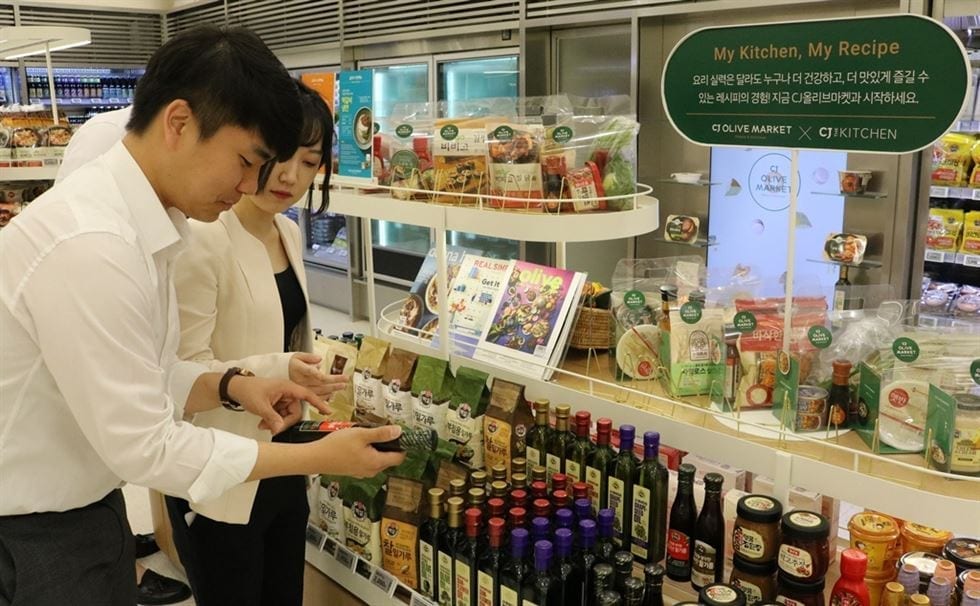
    In an ambitious move to expand its culinary footprint, South Korea’s CJ Foods has announced a significant investment of approximately $73 million (KRW 100 billion) to establish a new mandu (Korean dumpling) factory in Chiba Prefecture, Japan. This state-of-the-art facility will cover 42,000 square meters and is equipped with cutting-edge production lines. Construction is on track to wrap up by July, with production slated to kick off in September.

    Strengthening Its Presence in Japan

    This initiative is designed to enhance CJ Foods’ presence in Japan’s lucrative frozen dumpling market, which boasts an impressive annual value of around $800 million (JPY 114 billion). The factory will be churning out popular items such as bibigo mandu, alongside innovative convenience products aimed at nationwide distribution.

    A Blossoming Market for Korean Cuisine

    Japan is a crucial market for CJ Foods, where beloved offerings like bibigo mandu and gimbap are already available at major retailers such as AEON, Costco, Amazon, and Rakuten. Notably, in 2023, bibigo gimbap sold 2.5 million units in Japan, showcasing the growing appetite for Korean cuisine.

    Global Expansion Plans

    But the excitement doesn’t stop in Japan. CJ Foods is also pushing the envelope with plans for a new factory in Hungary by late 2026 and a grand Asian food complex in South Dakota, USA, set to debut in 2027. Currently, the company operates 20 plants across the United States, four mandu factories in Japan, and production bases in Germany, Vietnam, and Australia.

    This expansion strategy underscores CJ Foods’ mission to elevate its global K-food business by boosting local production capacity and satisfying the surging demand for its delectable offerings. And with this rapid growth, one can’t help but wonder what tasty delights CJ Foods will dream up next!

    Questions & Answers

    • What type of products will the new factory in Japan produce? The factory will produce popular items like bibigo mandu and other convenience products for nationwide distribution.
    • When will production at the new factory begin? Production is expected to start in September, following the completion of construction in July.
    • Where else is CJ Foods expanding aside from Japan? CJ Foods is planning to open a new factory in Hungary by late 2026 and is developing a large Asian food complex in South Dakota, USA, projected to open in 2027.
  • H&M Subsidiary Plans $1B Recycling Factory to Boost Sustainable Fashion in Vietnam

    H&M Subsidiary Plans $1B Recycling Factory to Boost Sustainable Fashion in Vietnam

    Syre Group Unveils Ambitious Recycling Complex Plan in Vietnam

    In a significant move towards sustainable fashion practices, Susanna Campbell, chairwoman of Syre Group, announced plans for new major recycling complexes during a meeting with Prime Minister Pham Minh Chinh on Wednesday. The joint venture, backed by H&M and technology investment firm Vargas, aims to revolutionize the textile waste recycling landscape.

    A Commitment to Sustainability

    Syre Group’s innovative approach leverages advanced technology and renewable energy to recycle textile waste. The Binh Dinh factory is expected to commence operations by the end of 2028, with an impressive annual capacity of 250,000 tons. Prime Minister Chinh commended the initiative’s focus on green production methods, highlighting its potential contribution to environmental protection in Vietnam.

    Strategic Advantages of Binh Dinh

    Prime Minister Chinh articulated Binh Dinh’s strategic appeal, noting its robust investment environment. “Binh Dinh is emerging as a hub for clean energy,” he stated, emphasizing the region’s well-developed infrastructure, which includes highways, international airports, and deep-water ports. He urged local authorities and relevant ministries to collaborate closely with Syre to ensure the project’s success.

    Prioritizing Local Resources

    In line with Vietnam’s environmental goals, the Prime Minister advised Syre to prioritize the use of locally sourced green materials, including lotus and jute fibers, as well as recycled fabric scraps and old clothing generated within the country. This aligns with Syre’s commitment to enhancing local supply chains and maximizing resource efficiency.

    A Vision for a Circular Economy

    Expressing her confidence in Vietnam’s strategic position, Campbell remarked, “We believe Vietnam has the potential to become a global leader in developing a circular economy.” With a focus on local partnerships, Syre aims to integrate sustainable practices into its operations while reinforcing the strength of Vietnam’s textile industry.

    Continued International Cooperation

    Swedish Ambassador to Vietnam, Johan Ndisi, who attended the meeting, echoed the sentiment of long-term commitment among Swedish businesses to enhance collaboration in green transformation. He proposed that establishing a comprehensive partnership in science, technology, innovation, and digital transformation could further bolster Vietnam’s sustainability efforts.

    Impact on the Retail Sector

    As consumer demand for sustainable products continues to surge, Syre Group’s initiatives highlight a pivotal shift in the retail sector towards environmentally friendly practices. This project not only promises to transform the recycling landscape in Vietnam but also sets a precedence for other brands to follow suit. By prioritizing green solutions, companies can cater to increasingly eco-conscious consumers while contributing to global sustainability goals.

  • Nestle’s Smithtown factory gets a $32 million overhaul

    Nestle’s Smithtown factory gets a $32 million overhaul

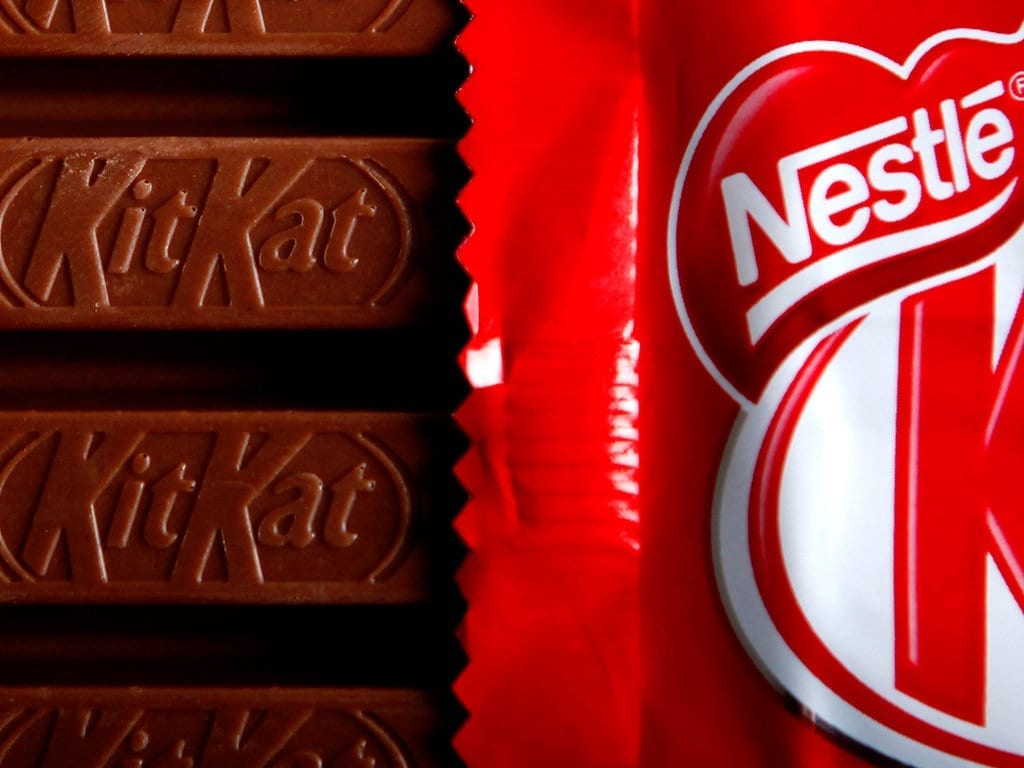
    Food and beverage giant Nestle has invested $32 million in its Smithtown factory, aiming to boost the site’s manufacturing line.

    The funding will also introduce state-of-the-art technology and support an increased production capacity.

    James Garley, the site’s factory manager, said the investment reflects Nestlé’s commitment to support local manufacturing.

    “Over the next 12 months, the project will inject an estimated $20 million into the local economy and support almost 200 jobs as we construct a new building to house Milo production,” explained Garley.

    The Smithtown factory – which has been operating for over 100 years – manufactures Milo, Nesquik, Malted milk, and Nescafe mixes.

    “It’s a complex project, but the team will work to ensure the facilities continue to deliver the choc-malt crunch of Milo Australians have loved for generations,” Garley concluded.

    The upgrade is due to be completed by the end of this year.

  • Foxconn workers earn more building the Mate 60 Pro than the iPhone 15 line

    Foxconn workers earn more building the Mate 60 Pro than the iPhone 15 line

    The Huawei Mate 60 Pro is getting a serious look from U.S. government officials who are trying to figure out how Huawei and SMIC (China’s largest foundry) created 7nm Kirin 9000S 5G chipsets in the face of U.S. sanctions. Huawei is not allowed to be shipped any cutting-edge chips made by any chip foundry that uses American technology to produce chips.

    As a result, Huawei’s flagship Mate 50 series and P60 series used Qualcomm’s Snapdragon 8+ Gen 1 application processor after the company obtained a license to import the components. However, Qualcomm was forced to tweak these chips so that they would not work with 5G networks. But out of nowhere, the Mate 60 Pro uses chips produced by SMIC using its second-gen 7nm process node and these chips support 5G.

    The other phone under intense scrutiny, but for a different reason, is the iPhone 15. Apple just unveiled the four new models in the series and worldwide phone buyers are taking a hard look at the new handsets to see which models they want to buy. They also want to see the new USB-C port on the devices.

    Interestingly, in China, both the Mate 60 Pro and iPhone are assembled by the same contract manufacturer, Foxconn. And the Foxconn unit that assembles Huawei phones is paying its workers more than the unit that assembles the iPhone.

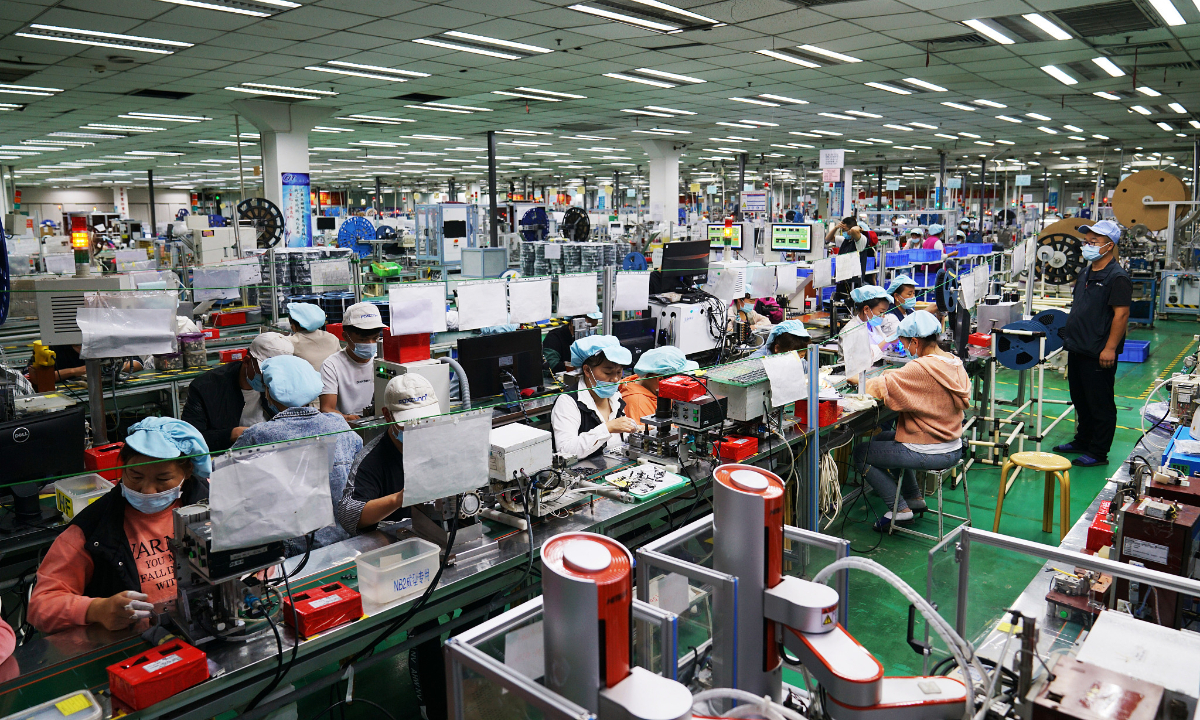
    Two recruitment agents told SCMP that Foxconn’s FIH division, a subsidiary that used to be known as Foxconn International Holdings, was offering new workers last week 26 yuan an hour ($3.60) to help assemble the Mate 60 Pro at the Foxconn factory in Shenzhen’s Longhua district. Meanwhile, workers helping to assemble the iPhone at Foxconn’s integrated Digital Product Business Group (iDPBG) are making 21 yuan an hour ($2.88), or 19.2% less than those building the Mate 60 Pro.

    A recruitment agent with the surname Xu in Shenzhen said, “The new hires will know what phone they are making after the factory allocates them to different teams based on current demand, but these days they have a higher chance of making handsets for Huawei.” The agent went on to say that those making the iPhone make less than those working for Foxconn’s FIH unit because the iPhone production unit offers more welfare benefits for workers.

    In Zhengzhou, home to the largest iPhone factory in the world, Foxconn is offering workers a peak signing bonus of 6,480 yuan ($888.35). Meanwhile, this year could be one of the toughest launches for the iPhone in China. Not only did the introduction of the Huawei Mate 60 Pro unleash a wave of nationalistic pride in the country, but the CCP banned the iPhone from being used in government offices citing security issues with the phone.

    Just the other day, reliable analyst Ming-Chi Kuo pointed out that Apple doesn’t market the iPhone to those working in government offices and stated that people in China who buy Huawei phones do not buy the iPhone. As a result, he didn’t change his estimate of iPhone shipments for the rest of this year.

  • Apple looking to further diversify chip suppliers, reportedly finding new partner for the iPhone 14 Pro

    Apple looking to further diversify chip suppliers, reportedly finding new partner for the iPhone 14 Pro

    Apple is gearing up for the launch of the iPhone 14 series (which is inching ever so closely as we approach the fall), and it now seems Cupertino is set on not allowing any supply chain shortages to create issues. Reputable industry insider Ming-Chi Kuo now reports that Apple is looking to further expand its suppliers for the iPhone 14 series and has now added a new partner.

    According to Kuo, SG Micro (headquartered in China) has now passed quality certification for chips for the higher-end iPhone 14 models (meaning the iPhone 14 Pro and Pro Max). The company is likely to take orders for PMICs (power management integrated circuitry – basically a chip to manage power) in the second half of this year for the upcoming iPhones.

    This is the first time that said company would supply components for higher-end iPhones. According to the industry insider, this partnership will continue in the future, so that Apple can avoid future supply chain risks.
    Recently, Kuo said that some iPhone 14 display panel suppliers, as well as memory suppliers, have had supply issues; however, he doesn’t believe this will make a big impact on mass production. It seems that, at least according to Kuo, Apple is on track with the iPhone 14 production.
    As a quick recap, this year we expect there to be a more significant gap between the non-Pro iPhone models and the Pro versions. The iPhone 14 Pro and the iPhone 14 Pro Max are expected to be the only models to come with Apple’s latest processor (the A16), while the non-Pro variants are said to come with this year’s iPhone 13 chip.

    On top of that, the Pro iPhone 14 models will come with a new design for the Face ID sensors and the selfie camera, getting rid of the notch which will remain for the non-Pro iPhone 14 and iPhone 14 Max. We also expect the Pros to come equipped with an always-on display.

    The four phones are to be unveiled sometime in the fall, probably September.

  • Barry Callebaut expands NSW chocolate plant

    Barry Callebaut expands NSW chocolate plant

    Barry Callebaut has completed the expansion of its Campbellfield factory in Melbourne, after the 11,000 m2 site was acquired in 2020.

    The expansion will cater for local industrial food manufacturers with new production lines to increase the total operating capacity and its range of chocolate offerings. The range will now include liquid chocolate, compound, buttons and chips, in addition to the products already produced at the site such as coatings and fillings.

    “This factory expansion underlines Barry Callebaut’s ongoing commitment to Australia. The facility further strengthens our regional footprint in Asia–Pacific, producing safe and high-quality products. The move is in line with our ambition to locate production close to our customers,” said Jo Thys, President of the Asia Pacific region for Barry Callebaut.

    The factory will be equipped with chocolate refining and conching lines, which will enable the company to serve the Australian food industry from artisans to global manufacturers.

    “I am proud that our Gourmet chocolates have been brought into the country for many years now. Today, I am even prouder that our high quality ‘Made in Australia’ products are available in higher volumes, creating more chocolate happiness for our local consumers,” said Denis Convert, Managing Director Australia at Barry Callebaut.

    “With the expansion of our Campbellfield factory, we are well-positioned to become the leading chocolate manufacturer in Australia.”

  • Ducati Resumes Factory Tours At Borgo Panigale

    Ducati Resumes Factory Tours At Borgo Panigale

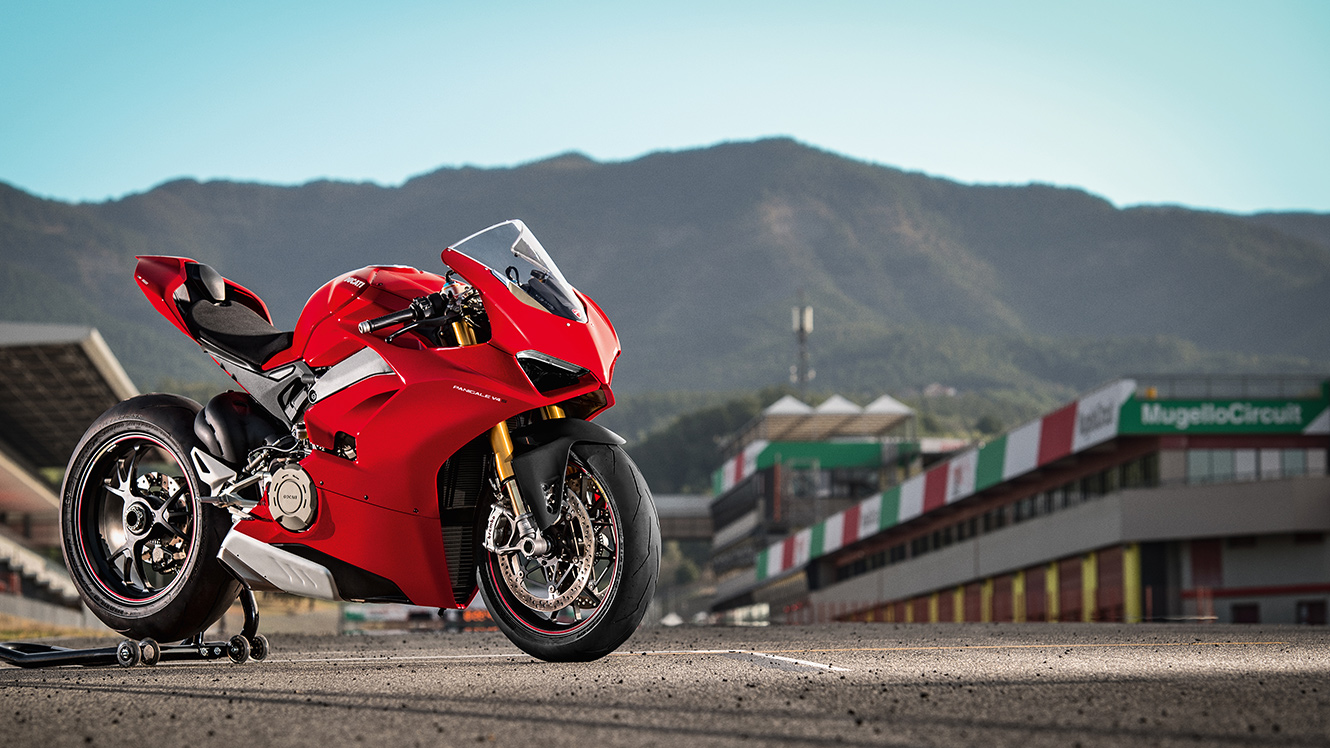
    Guided tours inside the Ducati Factory have resumed from October 2021, after having been discontinued due to the coronavirus pandemic. The Ducati Museum re-opened with pandemic safety regulations in place in May 2021, but the factory had not been open for tours, until now. Visitors during the factory tour will have the opportunity to walk through the production lines, observing what goes inside the factory where Ducati motorcycles are created. The tours are guided and can be booked on Mondays and Fridays of each week.

    Three separate morning tour slots are open, as well as three-afternoon slots. Online booking is on the dedicated platform for both factory tours and Museum visits. In order to ensure the safety and health protection of visitors and workers, access to the facility will be possible by reservation only during the hours indicated with a limited number of entries. The presentation of a valid EU Digital COVID Certificate is mandatory, with the exception of children under 12 years and people unfit for a vaccination with a medical certificate, Ducati announced in a press statement.

    The ticket for the Ducati Museum tour is 17 Euros (around ₹ 1,840), while a combined Museum and Factory tour ticket is for 32 Euros (approximately ₹ 2,785), and will be a day-long tour. For high school students, Ducati is also opening its interactive Physics in Motion laboratory (Fisica in Moto) ba

  • Adidas hit by China boycott, Vietnam factory closures

    Adidas hit by China boycott, Vietnam factory closures

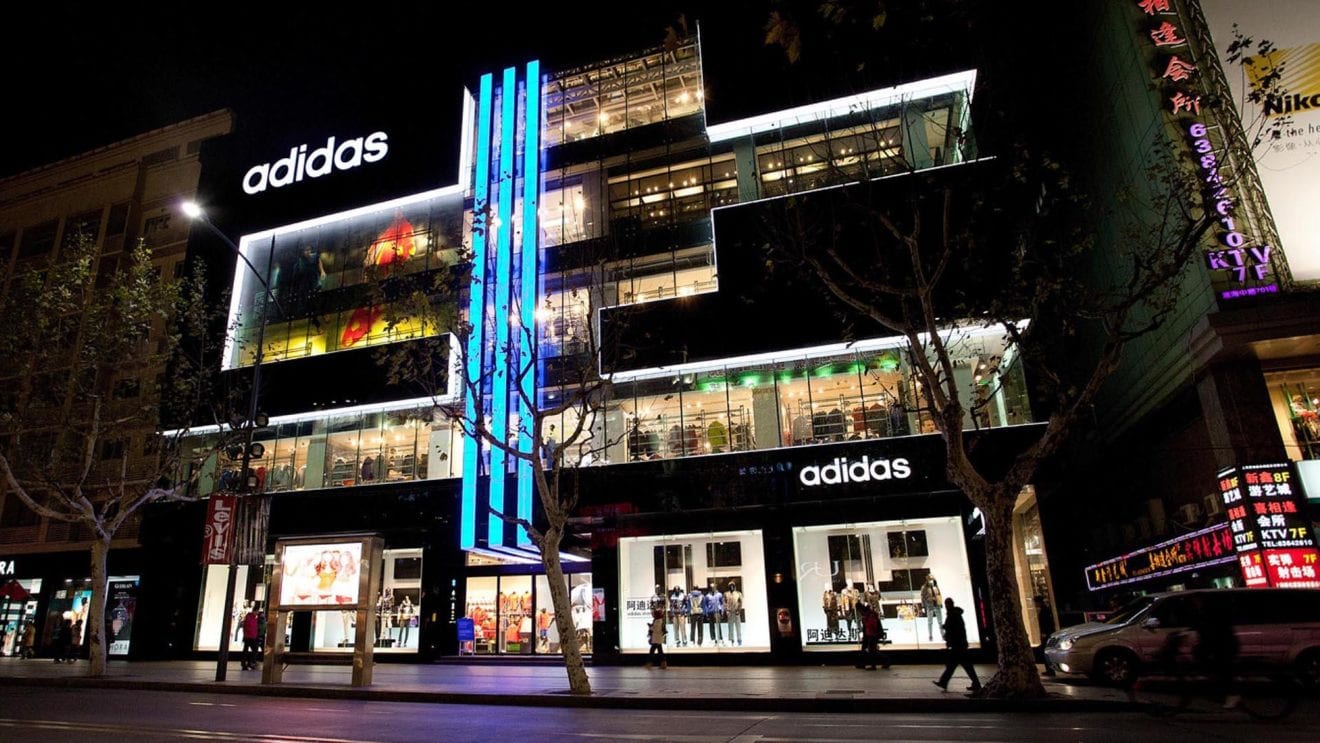
    Adidas felt the impact of a Chinese boycott of Western brands on its second-quarter results and is also suffering from the closure of factories in Vietnam due to Covid-19 infections.

    The German sportswear company still raised its outlook for full-year sales and profitability as it said it has seen demand recover in China since calls for a boycott in late March, and said it hopes to restore production in Vietnam soon.

    But Adidas shares were down 4.1 percent by 9:50 GMT as analysts noted that its growth was lagging rivals Nike and Puma, which both reported that sales nearly doubled in recent earnings releases.

    Second-quarter sales at Adidas rose 52 percent to 5.077 billion euros ($6 billion), while operating profit came in at 543 million euros, ahead of analysts’ average forecasts.

    Adidas raised its 2021 outlook to predict sales will grow up to 20 percent, and net income from continuing operations will reach 1.4-1.5 billion euros. That compared to Puma’s forecast for sales to rise at least 20 percent for 2021.

    Adidas already saw online sales return to growth in China in June, Chief Executive Kasper Rorsted told journalists, adding he expects the country to record strong growth for the full year and he welcomed a government drive to promote youth sport.

    The company hopes to be able to restart production in Vietnam after the scheduled end of a coronavirus lockdown on Aug. 15 and is working on reallocating production to other centres in the meantime.

    Vietnam usually accounts for 28 percent of Adidas sourcing and its factories mostly make shoes for the company, with a lag of three to four months before products hit the shelves.

    The combined impact of supply chain problems, new Covid-19 lockdowns in Asia and tensions with China could amount to more than 500 million euros in lost sales in the second half, said finance chief Harm Ohlmeyer.

    Ohlmeyer added he expects Adidas to seal a deal to divest the underperforming Reebok brand by the end of the summer.

  • Volkswagen Takes Aim At Tesla With Own European Gigafactories

    Volkswagen Takes Aim At Tesla With Own European Gigafactories

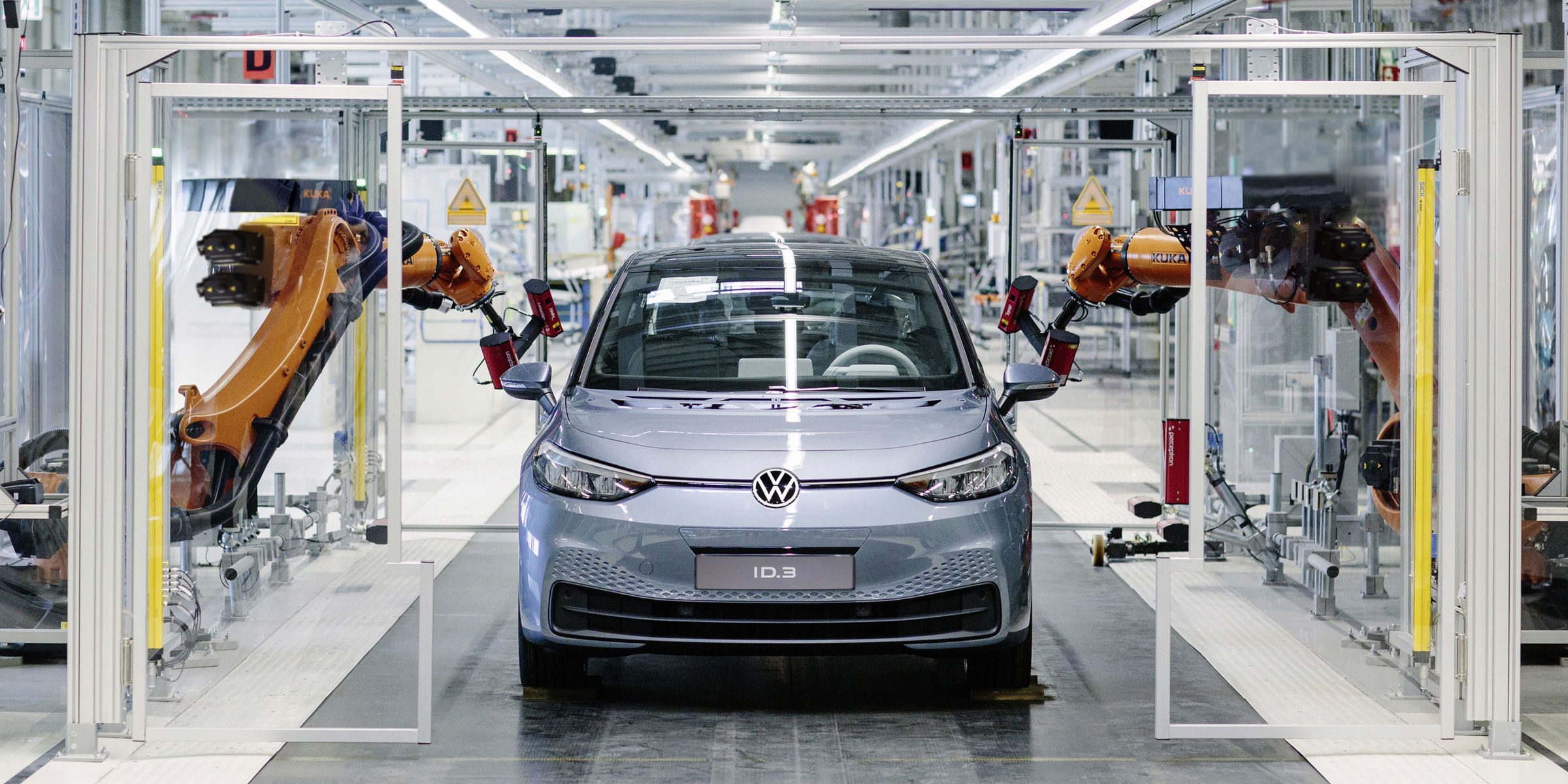
    Volkswagen plans to build half a dozen battery cell plants in Europe and expand infrastructure for charging electric vehicles globally, accelerating efforts to overtake Tesla and speed up mass adoption of battery-powered cars. The world’s No. 2 carmaker, which is in the midst of a major shift towards battery-powered cars, said on Monday it wants to have six battery cell factories operating in Europe by 2030, which it will build alone or with partners.

    “Our transformation will be fast, it will be unprecedented,” Chief Executive Herbert Diess told Volkswagen’s Power Day, which also featured the CEOs of BP, Enel and Iberdrola in an effort to match some of the buzz of Tesla’s Battery Day last September.

    “E-mobility has become core business for us,” he added.

    Volkswagen, whose shares rose as much as 3.8%, did not specifically say how much the plan will cost. It said in December that it planned to spend 35 billion euros ($41.7 billion) on e-mobility as a whole by 2025.

    The group had been laggard on electrification until it admitted in 2015 to cheating on U.S. diesel emissions tests and had to deal with new Chinese quotas for electric vehicles. It now has one of the most ambitious programs in the industry.

    Volkswagen said the European factories will have a joint production capacity of up to 240 gigawatt hours (GWh) a year, adding the first 40 GWh would come from Sweden’s Northvolt, with production starting in 2023.

    As part of the deal, Volkswagen will raise its 20% stake in Northvolt and also take over the Swedish firm’s stake in a planned battery cell venture in the German city of Salzgitter, which will form the second factory from 2025.

    This will be followed by a factory in Spain, France or Portugal in 2026 and a site in Poland, Slovakia or the Czech Republic by 2027. Two more plants will be set up by 2030.

    While the first two factories are already reflected in Volkswagen’s financial planning, the group is currently in “deep discussions” about how the subsequent plants fitted with financial targets, board member Thomas Schmall said.

    Volkswagen is also working on a major expansion of charging infrastructure, a lack of which is still seen as a big barrier to the mass adoption of battery-powered cars. Via existing efforts and partnerships with oil major BP as well as top European utilities Enel and Iberdrola, Volkswagen aims to operate about 18,000 public fast-charging points in Europe by 2025.

    This represents a five-fold expansion of the existing fast-charging network, Volkswagen said, adding it would invest 400 million euros in the initiative.

    In North America, Volkswagen targets 3,500 fast-charging points by the end of 2021 via its Electrify America unit, while in China, the world’s largest car market, the group aims for 17,000 by 2025.

    In China, where Volkswagen last year acquired 26.5 percent of battery maker Guoxuan High-tech Co Ltd, the carmaker now aims to sell more than 2 million electric vehicles a year by the end of the decade.

    Shifting to design, Volkswagen unveiled plans to have a new unified prismatic battery cell from 2023, which will support cost cuts generated by the higher level of in-house cell production and could impact its current suppliers.

    South Korean battery makers’ shares, including in LG Chem, whose unit LG Energy Solution makes batteries for Volkswagen, and SK Innovation, fell as much as 5.8% and 5.3% respectively on Tuesday after the news.

    Electric vehicle makers, including Tesla, are using cylindrical battery cells, which resemble flashlight batteries and are relatively inexpensive and easy to manufacture.

    Prismatic cells, which resemble a thin hardcover book, are housed in a rectangular metal case and are more expensive. Pouch cells, another alternative, are thinner and lighter, and resemble a flexible metal mailing envelope.

    “On average, we will drive down the cost of battery systems to significantly below 100 euros ($119) per kilowatt hour,” Schmall said. “This will finally make e-mobility affordable and the dominant drive technology.”