Retail News CRM

Tag: factory

  • Volkswagen Plans Six European Battery Cell Plants By 2030

    Volkswagen Plans Six European Battery Cell Plants By 2030

    Volkswagen plans to have six battery cell production plants operating in Europe by 2030 to secure supply for the world’s No.2 carmaker’s electric vehicle ambitions. The plants, to be built in partnerships, will have a production capacity of 240-gigawatt hours a year, VW said.

    “E-mobility has become core business for us. We are now systematically integrating additional stages in the value chain,” Chief Executive Herbert Diess told VW’s Power Day.

    “We secure a long-term pole position in the race for the best battery and best customer experience in the age of zero-emission mobility,” Diess added on Monday.

    The group also said it would enter partnerships with oil major BP and top European utilities Enel and Iberdrola to expand electric vehicle charging infrastructure, still seen as a major hurdle to the mass adoption of battery-powered cars.

  • The Layout Of Tesla’s Nevada Gigafactory

    The Layout Of Tesla’s Nevada Gigafactory

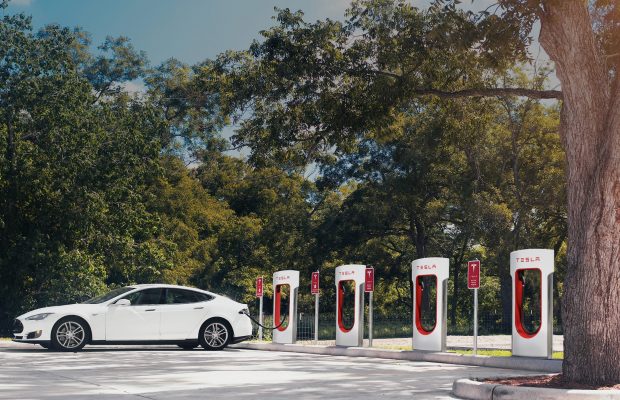
    Tesla’s famous Nevada Gigafactory has been under construction for three years but it has only been completed 30 percent. It is one of the key strategic assets for Tesla to secure battery cell supply. In fact, some of the space in the Gigafactory was reserved for Panasonic as the leading electric car maker had partnered with the Japanese company. Panasonic is said to deploy a new battery cell production capacity at the facility which Tesla will use to build battery packs for its vehicles and Powerwall products.

    Originally, the plant was to produce 105GWh battery cells per year and 150GWh of battery packs per year. This would’ve made this Gigafactory the largest building in the world. But this hasn’t happened as both Tesla and Panasonic have just used up 30 percent of the space and focussed its energies on optimizing the current production facility. Panasonic’s Celina Mikolajczak, its Vice President for battery technology in North America has revealed what the future expansions are in-store for the Gigafactory. Mikolajczak was actually formerly at Tesla where she was an expert in batteries and technical leaders in the development and validation of lithium-ion batteries.

    Mikolajczak has released a slide that shows the plan for the future sections of the Gigafactory. Panasonic currently occupies the majority of the factory, but future expansions are meant to give Tesla more manufacturing space, more battery manufacturing space for Panasonic and additional space for raw materials.Now this factory has 13 battery cell assembly lines 24 hours per day 7 days a week producing 35GWh of battery cells per year. With the extra space, the factory could top beyond the 105GWh battery cell capacity.

  • Geely’s New EV Plant Will Build Premium Polestar Cars

    Geely’s New EV Plant Will Build Premium Polestar Cars

    An electric vehicle (EV) factory planned by the Chinese automaking group Geely will produce cars under the premium Polestar marque, two people with direct knowledge of the matter told Reuters on Monday. Zhejiang Geely Holding Group Co Ltd plans to build a plant with an annual manufacturing capacity of 30,000 premium EVs in the western city of Chongqing, run by a wholly-owned, newly registered company, showed documents on its website.

    Geely and Polestar declined to comment on the marque. The plan comes as foreign automakers including BMW AG and Tesla Inc expand EV production in the world’s biggest market, sourcing major EV components such as batteries locally and often exporting the end product.

    Hangzhou-based Geely is China’s most internationally known automaker. It owns Volvo Cars and Lotus, almost half of Proton and 9.7% of Daimler AG. Its Hong Kong-listed Geely Automobile Holdings Ltd is planning a Shanghai float.

    Through wholly-owned company Polestar, it builds low-volume Polestar 1 hybrid performance cars in the western city of Chengdu and Polestar 2 volume sedans in Taizhou in the east.

    It also plans to begin production of the Precept sedan, displayed at this year’s China auto show.

    Polestar aims to eventually offer bigger, more sporty vehicles at its showrooms, which currently span nine countries and whose number it plans to raise to 45 from 23 by year-end.

    Polestar Chief Executive Thomas Ingenlath told Reuters the firm is scouting markets in Asia-Pacific and the Middle East.

    Geely is also building a factory in China to make sport-utility vehicles under the Lotus marque, Reuters reported.

  • Samsung temporary closing its smartphone and home appliance factory in Brazil

    Samsung temporary closing its smartphone and home appliance factory in Brazil

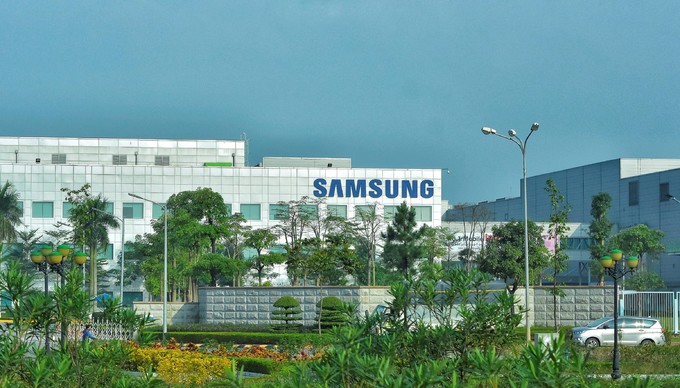
    Another factory falls victim to a global pandemic. As the coronavirus begins spreading rapidly in Latin America, Samsung has decided to shut down its factory in Manaus, Brazil. The measure is temporary and comes after the Brazilian government called out for help in containing the spread of the virus.

    Manaus is situated in the northern part of the country, and the Samsung facility near the city is producing smartphones and home appliances for the local market. The factory will remain closed until Sunday, while the other facility in Campinas, Sao Paulo state, will remain operational, at least for the moment

    There are 1960 confirmed cases of COVID-19 infections in Brazil with 24 deaths. Europe is now at the peak of the pandemic with hundreds of people dying in Italy each day. Researchers think that in countries with warmer climates the virus will slow its spread, but that won’t halt the pandemic.

    The situation in India and Latin America shows some correlation to that prediction. However, governments use the welcomed delay to apply preventive measures. Samsung already closed its biggest smartphone factory in India and it will remain closed until May 25 in response to a request from the Indian government. COVID-19 cases in the country are still under 1000, but officials expect numbers to ramp up fast in the following weeks.

  • Coronavirus case confirmed in Samsung factory in South Korea

    Coronavirus case confirmed in Samsung factory in South Korea

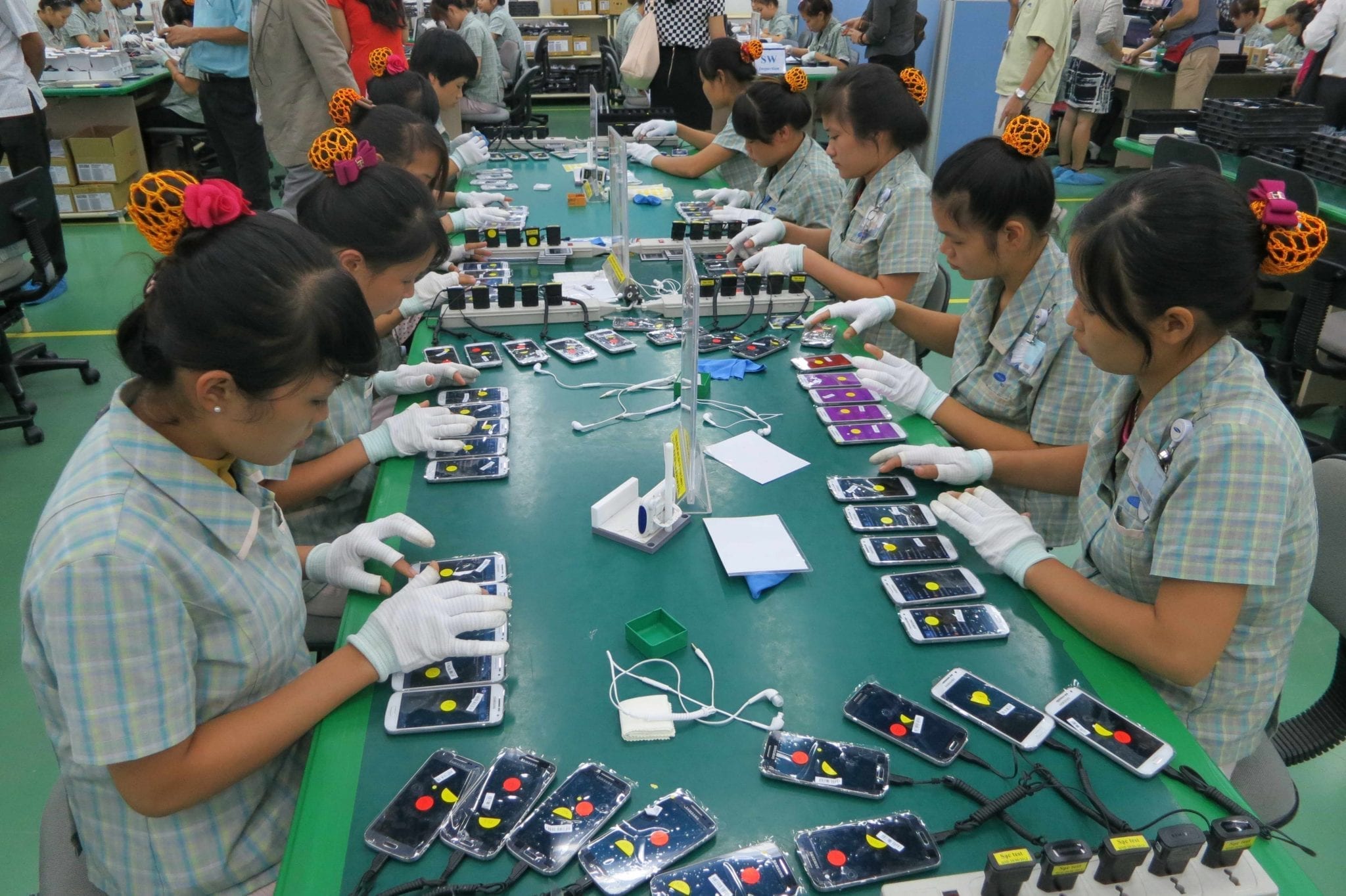
    We have been hearing news about different factories’ production struggles over the coronavirus outbreak for almost two months now. Unfortunately, on Saturday, Samsung temporarily closed one factory in South Korea over a confirmed case of the coronavirus, reports Reuters. Until now, Samsung has remained fairly unaffected by the public health crisis.

    The aforementioned factory complex is situated in the South Korean city of Gumi, close to the center of South Korea’s largest coronavirus outbreak (in the city of Daegu), where, reportedly, the cases of infected with the illness amount to around 433. However, the factory is responsible only for the production of a small portion of high-end phones, in particular the Galaxy Z Flip and the Galaxy Fold, primarily for the domestic market.

    The facility is to remain closed until Monday morning, while the floor where the infected employee worked will be shut down until February 25, Tuesday. Workers that came into contact with the employee in question are now in self-quarantine and will be tested for possible infection with the virus.

    Samsung states that production in other factories in South Korea will remain unaffected for now.

  • Tesla Could Make Electric Dirt Bikes In The Future

    Tesla Could Make Electric Dirt Bikes In The Future

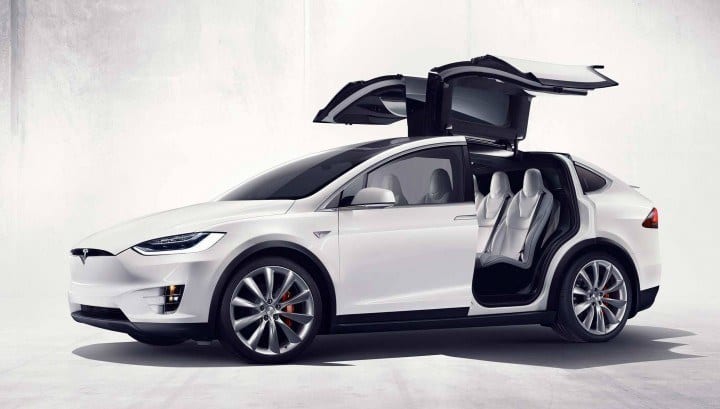
    Tesla is known to make outrageous electric vehicles and we mean outrageous in a good way. The US-based electric vehicle manufacturer recently showcased the Cybertruck which is a piece of work and has divided opinions about its design, though no doubt, it is a radical, futuristic model that will be available for purchase in a couple of years’ time. But our ears pricked up when we heard about Musk responding to a tweet on the electric ATV. A twitter user asked about the availability of Tesla Electric ATV, which was showcased along with the Tesla Cybertruck. Elon Musk responded by tweeting that the electric ATV will be ready along with the truck, which is about two years from now.

    We’ll aim to have it come out at the same time as a truck. Two-seater electric ATV designed to work with Cybertruck will be fun! Electric dirt bikes would be cool too. We won’t do road bikes, as too dangerous. I was hit by a truck & almost died on one when I was 17.

    But he also mentioned that it would be cool to make electric dirt bikes. Although Tesla will never venture into making road bikes as they are too dangerous. Musk had a close brush with death when he was 17, riding a motorcycle and a truck hit him.

    Dirt bikes are fun and electric dirt bikes! Well, knowing Tesla, its electric dirt bikes could definitely have a significant impact on the global two-wheeler industry. Tesla has always been a car manufacturer but diversification is the name of the game and it wouldn’t be a bad idea for Tesla to venture out into the two-wheeler industry.

    Electric dirt bikes are not a new thing though and one of the most popular electric dirt bikes is the KTM Freeride E-XC which is probably as competent as its petrol-powered rivals and most importantly, it looks like a proper dirt bike too. Other electric dirt bike makers include Alta, Cake and so on. We would love to see a radically designed electric dirt bike from Tesla with Elon Musk doing a few wheelies and jumps on it, soon!

  • Tesla To Build New Plant And Design Centre In Germany

    Tesla To Build New Plant And Design Centre In Germany

    Tesla will build its first European factory and design center near Berlin, giving the U.S. electric car pioneer the coveted “Made in Germany” label just as local rivals Audi, BMW and Mercedes prepare to launch competing cars.

    Tesla Chief Executive Elon Musk announced the move at a prestigious German car awards ceremony late on Tuesday and said the new plant would make batteries, powertrains and cars – starting with the Model Y sports utility vehicle.

    “Everyone knows German engineering is outstanding for sure. You know that is part of the reason why we are locating Gigafactory Europe in Germany,” Musk said at the ceremony in Berlin.

    The plan is a big boost for Germany as a centre for manufacturing after BMW and Mercedes in recent years chose to build new factories in Hungary, and after its auto industry was hit hard by Volkswagen’s admission in 2015 that it cheated U.S. diesel emissions tests.

    Germany’s powerful manufacturing industry has been slowing, with data on Thursday set to show whether Europe’s biggest economy has slipped into recession for the first time since 2013.

    Tesla is struggling to ramp up production and has yet to prove it can be consistently profitable as rivals including Audi-owner Volkswagen retool plants to mass-produce electric cars.

    Musk said the factory would be near Berlin’s new Brandenburg international airport, diversifying the Silicon Valley firm’s production beyond the United States at a time when global trade tariffs make exports more difficult. Besides Europe, Tesla is opening a factory in Shanghai.

    Tesla’s proposed factory will be within commuting distance of Poland, where labor costs are cheaper, a rival manufacturer – who also looked at the site – told Reuters.

    “Tesla’s decision to build an ultra-modern factory for electric cars in Germany is further proof of the appeal of Germany as an automotive hub,” Economy Minister Peter Altmaier said on Wednesday.

    “We think we now have the chance, in the coming years, to become an important international center in this future-oriented sector,” he said.

    The German government has earmarked financial support for making electric car battery cells locally as a way to secure manufacturing jobs as tougher emissions rules threaten demand for older technologies, like diesel engines.

    Dietmar Woidke, the premier of the Brandenburg state that surrounds Berlin, said any official support given to Tesla would be in accordance with European Union rulesAltmaier said there had been no discussion so far about any subsidies for Tesla’s plans, adding the company would be treated like all other carmakers.

    In a high-profile example of the impact of Brexit, Musk said he picked Germany for his new factory over Britain because of uncertainty over the nation’s exit from the European Union.

    “Brexit made it too risky to put a gigafactory in the UK,” he said in an interview with industry website Auto Express.

    Germany’s biggest labor union, the influential IG Metall, was quick to welcome Tesla’s plan. “This strengthens Berlin as an industrial location and creates jobs. We hope this sets an example,” said Birgit Dietze, IG Metall’s regional head.

    Even Germany’s auto industry association, VDA, welcomed the arrival of a U.S. competitor.

    “Elon Musk’s announcement shows how important Germany is as a location for producing electric vehicles in Europe,” VDA said. “We don’t shy away from competition, quite the opposite.”

    German carmakers and suppliers are preparing to build more than 150 electrified vehicles by 2023, VDA said.

    While Germany’s renowned car industry is mainly based in the south of the country, the capital has become a hub for start-ups and has attracted many creative and technology firms since the fall of the Berlin Wall three decades ago.

    “Tesla is coming to Brandenburg with a big investment,” said state premier Woidke, without giving details “We lobbied for this for a long time in intensive talks and with good arguments.”

    Berlin’s minister in charge of economic affairs, Ramona Pop, told public broadcaster RBB there had been talks about creating 6,000 to 7,000 jobs in production alone, with hundreds or even thousands more in areas such as design, software and research.

    Musk’s appearance at the awards ceremony is another example of Tesla’s efforts to give its cars the German stamp of quality.

    It already has an engineering firm in Pruem that specializes in automated manufacturing systems for battery factories and has tested its cars on the Nordschleife, the notorious

  • VW Ramps Up China Electric Car Factories

    VW Ramps Up China Electric Car Factories

    Volkswagen AG is ramping up production of electric cars to around 1 million vehicles by end of 2022, according to manufacturing plans seen by Reuters, enabling the German carmaker to leapfrog Tesla Inc and making China the key battleground.

    Volkswagen is readying two Chinese factories to build electric cars next year. The Chinese plants will have a production capacity of 600,000 vehicles, according to Volkswagen’s plans, which have not been previously reported – revealing VW’s ability to industrialize production faster than other pioneers in the electric vehicle market.

    Tesla is still trying to reach its goal of making more than 500,000 cars a year by building a new factory in Shanghai, China, while VW can rely on an established workforce in two of its plants in Anting and Foshun to build zero-emission cars.

    The scale and speed of VW’s electrification push marks a shift in favour of established manufacturers that can use existing factories and profit from combustion-engined sport utility vehicles (SUVs) to scale up faster than startups.

    “The truth is barriers to entry in autos remain high,” said Max Warburton, an analyst at Bernstein Research. “Making cars is hard. The move to electric vehicles will be expensive, but will probably be led by traditional manufacturers.”

    VW is leveraging its large infrastructure of suppliers, factories and workers, long a handicap to its profitability, more aggressively than rivals BMW, Renault SA, General Motors Co and Tesla, which were all quicker to sell a custom-designed electric car.

    Rather than adjusting production gradually, and using multi-powertrain platforms, Volkswagen is making a massive bet on a dedicated electric vehicle architecture, known as MEB, in the hope of increasing economies of scale sufficiently to push down the price of electric cars to around 20,000 euros ($22,262). The Wolfsburg, Germany-based carmaker is retooling eight plants across the globe by 2022 to specialise in manufacturing electric cars, and license its electric MEB platform to rivals, senior VW executives told Reuters, putting it on track to become the world’s largest maker of zero-emission vehicles.

    Tesla has emerged as a serious competitor with a credible car, its Model 3, Volkswagen Chief Executive Herbert Diess told Reuters last week. But startups have a hard time entering mass production without sufficient production facilities, he said.

    “The question is, can you expand your production quickly enough? The capital intensity is increasing,” Diess said.

    To fund its own electrification shift, the German carmaker aims to increase sales of VW SUVs, with combustion engines, to 40% of overall sales by 2020 from 23% in 2018.

    The power station that supplies energy for VW’s flagship e-vehicle factory in Zwickau, Germany, marked by two tall chimneys, was built to power production of the combustion-engined Volkswagen Golf.

    Now Zwickau can piggyback off this infrastructure to ramp up production to 330,000 VW ID electric cars by 2021.

    Volkswagen Group will increase economies of scale by rolling out electric vehicle platforms to its Audi, Skoda and Seat and Porsche brands.

    Volkswagen Group will be in a position to build 22 million electric cars by 2028, of which 11.6 million could come out of Chinese factories, VW said.

    PRODUCTION PAIN

    VW’s expansion push comes at a time when investors have started to question businesses delivering growth without real profit, a change in sentiment that is crippling the ability of several electric car pioneers to raise more cash.

    Back in 2016, Tesla said it wanted to build more than 500,000 Model 3 cars by 2018, a goal it has failed to meet. This year it expects to deliver 360,000 to 400,000 cars, a target that includes selling all models.

    Tesla’s struggles have dampened optimism about how easy it is to enter the car business, making it harder for China’s NIO, backed by internet company Tencent Holdings Ltd, as well as others like Faraday Future and Byton Ltd, to fund the next stage of growth: capital-intensive volume production and sales.

    “So much respect for those doing high volume manufacturing, Tesla CEO Elon Musk tweeted earlier this month. “It’s insanely hard, but you make a real thing that people value. My hat is off to you.”

    After starting trial production runs at its factory in Shanghai, Tesla now hopes to reach its 500,000-vehicle target in the 12-month period ending June 30, 2020. Tesla is also looking for a site to start production in Europe.

    Volkswagen is converting two German plants, Hanover and Zwickau, to build electric vehicles and will retool other factories including plants in China: Foshan which VW runs together with its joint-venture partner FAW-Volkswagen, and another in Anting, which VW runs together with SAIC.

    It will retool plants in Emden and Dresden in Germany, Mlada Boleslav in the Czech Republic, and Chattanooga, Tennessee, in United States, as part of a 30 billion-euro ($33.24 billion)investment push into e-mobility by 2023.

    As a result, Volkswagen Group will be the No. 1 electric vehicle producer globally by 2025, while Tesla is likely to remain a niche player, according to UBS autos analyst Patrick Hummel.

    TECHNOLOGY INTERLOPERS

    The cutthroat rivalry between automakers and software companies started when Alphabet Inc’s Google presented a prototype autonomous vehicle in 2012, leading analysts and industry executives to fear a so-called Nokia moment. This occurs when a new player from the tech sector unveils a superior design, in the way that Apple Inc presented the iPhone in 2007, ending Nokia’s dominance of the mobile handset business.

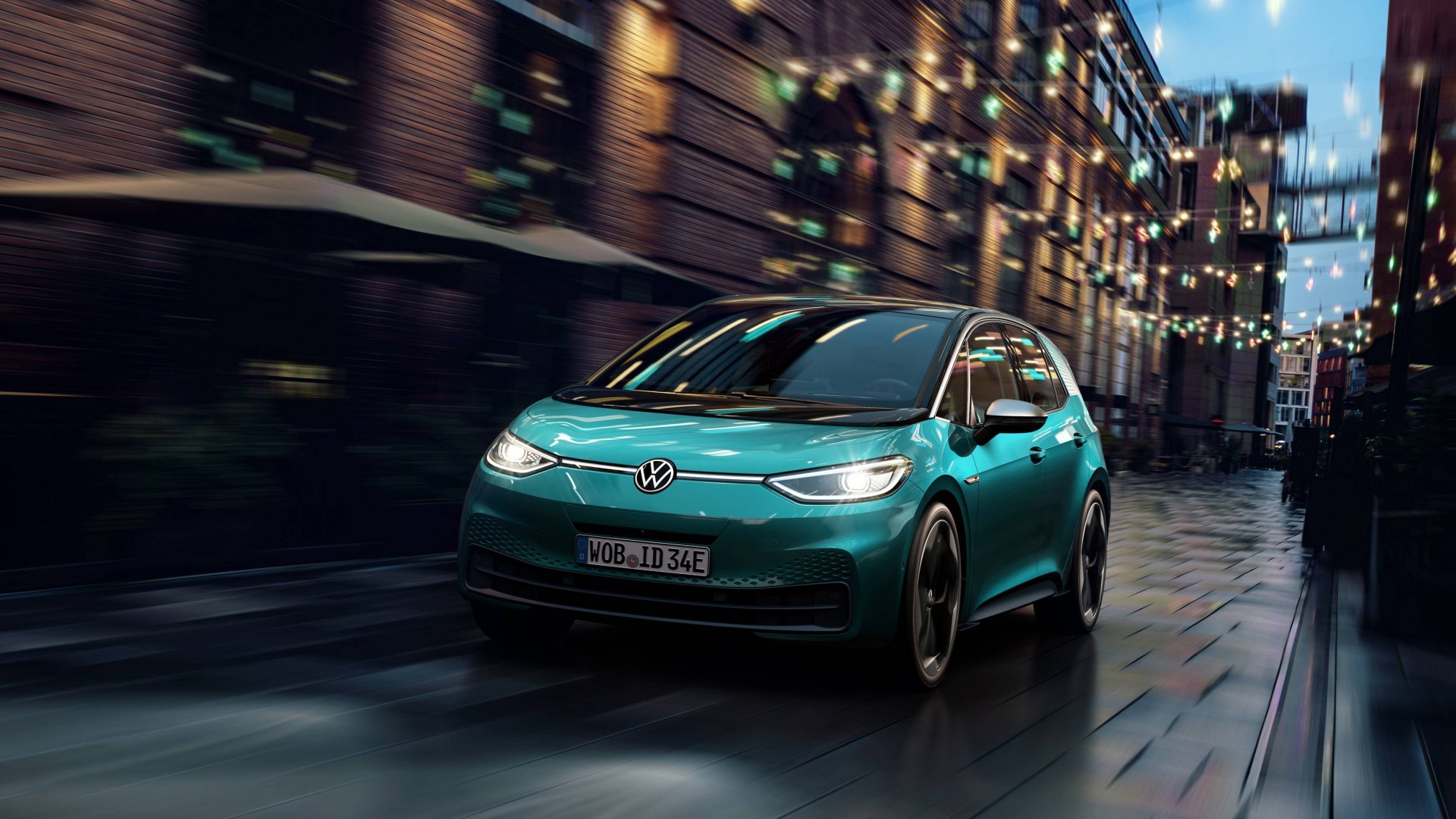
    Today, Tesla’s cars are generally perceived as cutting-edge and potentially more sophisticated than VW’s. Volkswagen’s ID.3, which starts production this year, has an operating range of between 330 and 550 kilometers (205 to 341 miles), below the 560 km long-range Model 3 version offered by Tesla.

    That is because Tesla has a sophisticated software algorithm to control how much electricity goes to the electric motor, air conditioning, seat heaters, in-car infotainment, and cooling system.

    Volkswagen’s edge is more blunt: price and massive economies of scale.

    The ID.3 has a starting price of under 30,000 euros ($33,363) in Germany. By contrast, Tesla’s Model 3 had an average selling price of $50,000 in the second quarter. The long-range version retails for 52,390 euros in Germany.

    The VW vehicle’s lower price comes from the carmaker’s ability to place large orders which, by nature of their size, help drive down the price. Volkswagen is investing 50 billion euros ($55.5 billion) to buy battery cells and will also license its MEB electric car platform to rival carmakers to further increase economies of scale.

    That is, Volkswagen will make that huge investment if suppliers can keep up.

    “There is a lot of investment,” Stefan Sommer, Volkswagen Group’s board member responsible for procurement, told Reuters last month. “But even the big companies like Samsung, CATL, LG Chem, the big guys, SK, they hesitate to take so much money and invest because they are not seeing the market on the other side.”

    “We are now seeing the first battery plants, LG in Poland, CATL in Germany, they don’t have the skilled workforce. That will be the bottleneck,” Sommer said. “It’s a learning curve everybody has to work through. This will cause some lags in supply. We have no other choice.”

    VW plans to license its electric MEB vehicle platform to rival Ford Motor Co, which will give VW $10 billion in revenue over the next six years.

    Thomas Ulbrich, Volkswagen’s member of the board who oversees production of electric vehicles, told Reuters, “Ford and Volkswagen’s agreement will be a blueprint for further licensing deals.”

    In the short term, Volkswagen and its Chinese joint venture partners will invest 15 billion euros to produce 15 different electric cars for China alone by 2025.

    “The first MEB-based vehicle is an SUV model,” Volkswagen said about its China push.
  • Tesla Gets Approval To Start Manufacturing In China

    Tesla Gets Approval To Start Manufacturing In China

    Tesla Inc was added to a government list of approved automotive manufacturers, China’s industry ministry said on Thursday, as it granted the electric-vehicle maker a certificate it needs to start production in the country. The list was published by the Ministry of Industry and Information Technology. This means “the green light is fully given to Tesla for production in China,” said Yale Zhang, head of the Shanghai-based consultancy Automotive Foresight. Tesla can start production any time, he said. Tesla did not immediately respond to an e-mailed request for comment. The $2 billion factories it is building in the eastern Chinese city of Shanghai is its first car manufacturing site overseas.

    Reuters reported earlier this month that Tesla plans to start production at its China factory this month. It is unclear when it will meet year-end production targets because of uncertainties around orders, labor and suppliers.

    Tesla intends to produce at least 1,000 Model 3s a week from the Shanghai factory by the end of this year, as it tries to boost sales in the world’s biggest auto market and avoid higher import tariffs imposed on U.S. cars.

    The factory, China’s first fully foreign-owned car plant, also reflects Beijing’s broader shift to open up its car market.

    Shanghai authorities have offered Tesla assistance to speed up construction, and China excluded Tesla models from a 10 percent car purchase tax on August 30, 2019.

  • Trump says Apple will soon announce plans to build a new apple factory in Texas

    Trump says Apple will soon announce plans to build a new apple factory in Texas

    Stop us if you’ve heard this before. President Donald Trump said that Apple will follow his wishes by opening a U.S. factory in Texas. The president’s comments were made the same day that he disseminated a tweet saying that he would not grant the tech giant a waiver that would prevent it from having to pay import taxes on parts for the Mac Pro imported from China. Trump also pointed out that if Apple made the parts in the states, it wouldn’t face tariffs on them. While Apple designs its products in the U.S., many of them are actually manufactured in China. Even though there is a “truce” in the trade war between the U.S. and China, the already announced tariffs remain in place.

    You might remember that in July 2017, Trump said that he was told by Apple CEO Tim Cook that the company was building “three big plants, beautiful plants.” The only problem with that comment was that it was not true. Apple later denied that any such conversation took place and said that it certainly did not have plans to build any factories in the U.S.

    Trump has had a love-hate relationship with Apple, calling for a boycott of the company back in February 2016. Apple had refused a court order to unlock the iPhone 5c that belonged to San Bernardino shooter Syed Farook. Apple refused to do so because it would have required that the company develop a special operating system for the government; Apple was afraid that the software could get into the wrong hands making all iPhones vulnerable to getting hacked. Trump threatened to stop using his iPhone and said that he would use a Samsung handset until Apple gave the FBI what it wanted. An unnamed Apple executive responded by saying, “Trump’s call for (an) Apple boycott puts the company in standing with other good people he has criticized.”

    In June of 2018, The New York Times reported that Trump had promised Cook that the iPhone would not be subject to any tariffs. Economist and Trump advisor Peter Navarro denied that this promise was made. And while Apple’s most important product has not yet been hit with tariffs, if the current truce doesn’t hold up, the next tier of products from China to receive an import tax is said to include smartphones like the iPhone. According to Morgan Stanley analyst Katy Huberty, tariffs could add $160 to the price of the iPhone XR. That would raise the retail price of the 64GB model from $749 to $909. Last month, Apple tried to warn the president that tariffs on the iPhone could damage the U.S. economy.

    Some of you might be surprised to learn that the tariffs are actually an import tax paid by consumers. In May, President Trump incorrectly tweeted that “tariffs are NOW being paid to the United States by China of 25% on Billions of Dollars worth of goods and services. These massive payments go directly to the Treasury of the U.S.” Either Trump doesn’t know how tariffs work, or the president purposely tried to mislead the country. China does not pay one cent of the tariffs. They are taxes paid by U.S. corporations that can eat them, or pass them along to U.S. consumers by raising prices. Apple, to its credit, has eaten the tariffs imposed on certain iPhone and iPad cases in order to keep the cost to consumers the same. This lowers Apple’s profit margin on those products. So if a tariff is imposed on the iPhone, either Apple will be negatively impacted, or U.S. consumers will be in the form of higher prices for the device.

    Meanwhile, we wouldn’t be holding our breath waiting for Apple to announce a new plant in Texas. It is likely to be found next to the three non-existent factories that Trump said Apple was going to build two years ago.

  • Nokia unveils Factory in a Box 2.0

    Nokia unveils Factory in a Box 2.0

    Nokia is showcasing the second generation of the vendor’s Factory in a Box container solution at the 5G Arena during Hannover Messe 2019 in Germany.

    Factory in a Box 2.0 is designed to demonstrate how industry 4.0 solutions for manufacturers can be packed, transported and brought online within hours.

    The solution combines additive manufacturing technologies with augmented and virtual reality and robotics solutions, as well as connectivity using Nokia’s private 4G/5G equipment.

    Meanwhile a semi-automated production workflow has been integrated with Nokia’s Worldwide IoT Network Grid, which is designed to help mobile operators deliver a better global IoT experience to enterprise customers.

    Finally, the solution is designed with a Nokia Digital Automation Cloud, which is targeted at industrial environments large and small.

    “We could tell from the positive feedback we received on the Factory in a Box last year that there is a lot of potential for this concept in the manufacturing industry,” Nokia VP of supply network and engineering Grant Marshall aid.

    “This year, we have raised the bar again, and Factory in a Box 2.0 is now connected to Nokia WING and has Nokia DAC on board, making it even more flexible, secure and efficient.”

  • U.S. agency submits auto tariff probe report to White House

    U.S. agency submits auto tariff probe report to White House

    The U.S. Commerce Department sent a report on Sunday to U.S. President Donald Trump that could unleash steep tariffs on imported cars and auto parts, provoking a sharp backlash from the industry even before it is unveiled, the agency confirmed. Late on Sunday, a department spokeswoman said it would not disclose any details of the “Section 232” national security report submitted to Trump by Commerce Secretary Wilbur Ross. The disclosure of the submission came less than two hours before the end of a 270-day deadline.

    Trump has 90 days to decide whether to act upon the recommendations, which auto industry officials expect to include at least some tariffs on fully assembled vehicles or on technologies and components related to electric, automated, connected and shared vehicles.

    As the White House received the report, the industry unleashed what is expected to be a massive lobbying campaign against it.

    The industry has warned that feared tariffs of up to 25 percent on millions of imported cars and parts would add thousands of dollars to vehicle costs and potentially lead to hundreds of thousands of job losses throughout the U.S. economy.

    The Motor and Equipment Manufacturers Association, which represents auto parts suppliers, warned that tariffs will shrink investment in the United States at a time when the auto industry is already reeling from declining sales, Trump’s tariffs on steel and aluminum, and tariffs on auto parts from China.

    “These tariffs, if applied, could move the development and implementation of new automotive technologies offshore, leaving America behind,” it said in a statement. “Not a single company in the domestic auto industry requested this investigation.”

    The Commerce Department started its investigation in May 2018 at Trump’s request. Known as a Section 232 investigation, its purpose was to determine the effects of imports on national security and it had to be completed by Sunday.

    Automakers and parts suppliers are anticipating its recommendation options will include broad tariffs of up to 20 percent to 25 percent on assembled cars and parts, or narrower tariffs targeting components and technologies related to new energy cars, autonomous, internet-connected and shared vehicles.

    The Commerce Department alluded to a focus on emerging vehicle technologies when it opened the investigation.

    Administration officials have said tariff threats on autos are a way to win concessions from Japan and the EU. Last year, Trump agreed not to impose tariffs as long as talks with the two trading partners were proceeding in a productive manner.

    Trump said on Friday that tariffs protect industry and also help win trade agreements.

    “I love tariffs, but I also love them to negotiate,” he said.

    A report from the Center for Automotive Research in Ann Arbor, Michigan, published on Friday showed its worst-case scenario of a tariff of 25 percent would cost 366,900 U.S. jobs in the auto and related industries.

    U.S. light duty vehicle prices would increase by $2,750 on average, including U.S.-built vehicles, reducing annual U.S. sales by 1.3 million units and forcing many consumers to the used car market, the think tank’s report said.

    Major automaker groups said last year the cumulative effect for the United States would be an $83 billion annual price increase and argued there was no evidence auto imports posed a national security risk.

    Canada and Mexico each won duty-free access to 2.6 million vehicles as part of a new North American free trade deal even if the administration moves ahead with the tariffs.

  • Renault Korea still at odds with union

    Renault Korea still at odds with union

    Renault Samsung Motors and its labor union once again failed to reach a consensus on 2018 wages after negotiations fell through for a 14th time on Tuesday. Renault Samsung is the only domestic automaker that has still not clinched a wage deal for last year. A source from the automaker said the Tuesday talks lasted for about an hour and a half after the meeting began at 2 p.m. at Renault Samsung’s Busan factory, but ended in vain.

    The major issue of disagreement is over whether to raise the base pay.

    The labor union has been requesting a 100,667 won ($89.51) raise in base pay. The company has refused, citing bad timing, and offered incentives if the base pay is maintained instead.

    The wage deal is very important for both the company and the labor union, as it comes at a crucial time.

    While Renault Samsung’s Busan factory has been producing Nissan’s Rogue compact crossover on consignment, the contract ends in September.

    The Korean unit of Renault needs to negotiate with the French headquarters to win follow-up models to produce in Busan. As Rogue production accounts for nearly half the workload at the Busan factory, it could be seriously harmed if the deal falls through and may even end up following in the footsteps of GM Korea’s Gunsan factory in North Jeolla, which closed last year.

    The company claims raising the base pay at this time would negatively affect negotiations with the headquarters.

    The labor union, however, responded to the company with partial strikes. From October last year through last month, the labor union has gone on strike 28 times at the Busan factory. The labor union claims it deserves a base pay raise considering its wage is about 85 percent that of workers at Hyundai Motor factories and its productivity has been high.

    In response to the strikes, Jose Vicente de Los Mozos Obispo, Deputy Alliance Executive Vice President, Manufacturing & Supply Chain at Renault, sent a video message to employees at the Korean unit earlier this month, warning the Renault-Nissan-Mitsubishi Alliance cannot assign new models to the factory if the strikes continue. Renault considers labor cost, production cost and supply stability when allocating new models to factories.

    The two parties have yet to hammer out their differences in the negotiations that began in June last year.

    The company and the labor union will have another round of negotiations soon, though the exact date was not released Tuesday.

    Renault Samsung is in a hurry to finalize the deal as it is running out of time to win new models for the Busan factory before September. The factory needs several months of preparation to adjust production lines to produce a new model.

  • Vietnamese car maker plans private share issue

    Vietnamese car maker plans private share issue

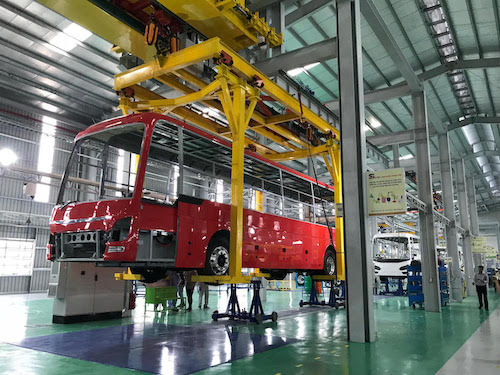
    Truong Hai Auto Corporation (THACO) is planning to issue more than 30.3 million shares to a strategic shareholder. The company is currently collecting shareholders’ opinions on a draft resolution to authorize a private placement worth an estimated total of VND3.89 trillion ($167.19 million) to Jardine Cycle & Carriage, a Singaporean diversified conglomerate that specializes in investment in car manufacturing.

    The share issue aims to raise additional capital to finance THACO’s investment and business plans this year, the company said in a circular issued to shareholders last week.

    The 30.3 million shares proposed in this placement make up 1.82 percent of THACO’s current chartered capital, and will raise the Singaporean shareholder’s stake in the car manufacturer to 26.57 percent.

    The share ownership of remaining shareholders will remain unchanged. Currently, 6.8 percent of THACO is owned by billionaire Tran Ba Duong, founder and chairman of the company, and another 60.6 percent by Tran Oanh JSC, a holding company owned by Duong and his family.

    The shares are expected to be issued soon after the State Securities Commission has confirmed the receipt of all documentation regarding the private placement.

    Dong Nai-based THACO was established as an auto and commercial vehicle maker in 1997. It has a plant in central province of Quang Nam and 89 showrooms and 53 dealerships.

    It makes trucks and buses and assembles cars for brands like Kia (South Korea), Mazda (Japan), and Peugeot (France).

    Jardine Cycle & Carriage Ltd, which is part of the Jardine Group of companies, has a diverse business portfolio. They have long term shareholdings in major manufacturers such as Jakarta based Astra International, as well as other interests in the refrigeration, cement and milk business.

    In Singapore, Jardine C&C is best known as the retailer of Mercedes Benz, Mitsubishi, Kia, Citroen, DS, and Maxus motor vehicles. The company has a current market capitalisation of S$14.55 billion (US$10.71 billion).

  • Mercedes back in No. 4 spot on E-class sales in Korea

    Mercedes back in No. 4 spot on E-class sales in Korea

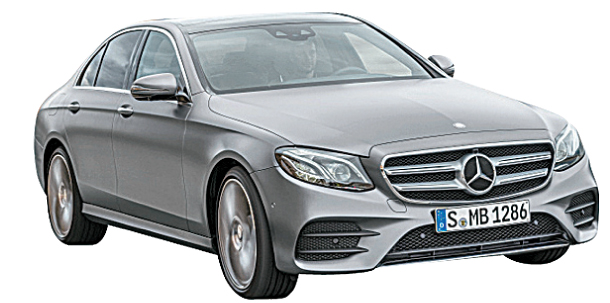
    Mercedes-Benz outsold local carmakers in Korea to finish fourth in domestic sales in January, industry data showed Monday. The Korean unit of the German automaker sold 5,796 vehicles last month, equal to 4 percent of the total 114,632 vehicles. The sum places it fourth after Hyundai Motor (31.2 percent), Kia Motors (22.8 percent) and SsangYong Motor (6.1 percent).

    January sales for Mercedes-Benz Korea shrank 22.8 percent compared with the month before, but they were still higher than the monthly sales by Renault Samsung Motors (3.5 percent) and GM Korea (3.1 percent).

    The last time that the German brand reached No. 4 in monthly sales was back in April last year, a ranking that followed the closure of a local assembly plant by GM Korea two months earlier. Mercedes-Benz defended the ranking for three months before slipping to No. 6 in May last year.

    In yearly sales, Mercedes-Benz Korea sold 70,798 units for a market share of 4.5 percent last year, behind Renault Samsung (5.7 percent) and GM Korea (5.5 percent).

    Industry watchers attribute the sales increase to the success of the E-Class. January sales of the lineup were the 12th highest at 3,392 units, a number meaning that one E-Class vehicle was sold for every three Grandeur autos from Hyundai Motor purchased.

    The E-Class cars outsold Genesis, an independent brand launched by Hyundai that is pitted as its domestic rival, last year.

    The “diesel-gate” scandal that pounded German brands also helped promote the E-Class, which are mostly gasoline cars,

    “This year, BMW and Audi are scheduled to release new sedans, and a full-change Genesis G80 is also due soon,” one source noted. “This will likely affect the sales of the E-Class.”