Tag: fake

  • Google Messages to Unveil AI-Edit Detector, Aims to Curb Fake Photos Spread

    Google Messages to Unveil AI-Edit Detector, Aims to Curb Fake Photos Spread

    Google Messages, the popular messaging app, is in the process of developing a tool that can identify whether an image shared in a conversation has been created or modified by artificial intelligence (AI). Evidence of this feature was uncovered in the app’s source code, indicating that it will take advantage of C2PA content credentials – integral data that can verify the creation and manipulation history of an image file. Regardless of the device used, this feature is expected to be a standard element in the Google Messages application, which is pre-installed on most top-level Android phones.

    Distinguishing the Authentic from the Artificial

    The discovery of this development was made by AssembleDebug, a skilled code investigator who has a history of revealing Google’s yet-to-be-released features. The initial groundwork for this tool has been detected in various recent releases of the app, although it isn’t operational at this time. It should be seen as a significant signal of what’s to come, rather than an available feature.

    The Coalition for Content Provenance and Authenticity (C2PA) is the organization behind the standard that records the creation and editing history of an image. Essentially, this would mean your phone could inform you whether a photo you received was taken with a camera or generated via AI.

    This aligns with Google’s broader strategy of integrating SynthID watermark detection into Google Photos and Gemini, and now extending this into Google Messages. The tool is expected to have around 18 labels, distinguishing between photos taken with cameras, those modified by partial AI edits, and fully AI-generated media, demonstrating Google’s emphasis on nuanced detection.

    Addressing Growing Concerns

    This development comes amidst growing apprehension around the increasing sophistication of AI-generated images. Some fear that even those with technical know-how are starting to fall for these hyper-realistic images, underlining the critical need for such detection tools.

    However, execution is not without potential pitfalls. Meta Platforms, the company behind Facebook, Instagram, and WhatsApp, implemented a similar feature, which encountered issues due to false positives. For instance, genuine photos were incorrectly flagged as AI-generated due to metadata left behind by standard Photoshop edits. Google Messages’ adoption of the C2PA standard might face similar issues.

    The primary beneficiaries of this tool would be users who often receive forwarded images, group-chat memes, and screenshots. A simple tap to verify the image’s provenance would be more efficient than manually scrutinizing the image.

    In terms of accessibility, users would be able to reach this feature by clicking on an image, opening the overflow menu, and selecting “View details”. It’s also worth noting that this feature isn’t live yet, so there’s nothing to test currently.

    Interestingly, Google, which has developed impressive image-generating models like Nano Banana, is now building a tool to detect the products of such models. Despite the seeming contradiction, it’s a necessary step towards ensuring authenticity and transparency in digital communication. If Google’s tool proves more reliable than Meta’s version, it will be a game-changer.

    Questions & Answers

    What is the purpose of the new tool being developed for Google Messages?
    The tool aims to identify whether an image shared in a chat has been created or manipulated by AI, helping users distinguish real photos from AI-generated ones.

    What is the C2PA standard?
    The C2PA (Coalition for Content Provenance and Authenticity) standard records the creation and editing history of an image, allowing verification of whether a photo was captured with a camera or generated by AI.

    What potential issues might arise with this tool?
    Similar to Meta’s implementation, Google’s tool may encounter issues with false positives, where genuine photos are incorrectly flagged as AI-generated due to the metadata left behind by standard editing tools such as Photoshop.

  • Decade-Long Scam Uncovered: $68.5M Fake Dietary Supplements Ring Busted in Hanoi

    Decade-Long Scam Uncovered: $68.5M Fake Dietary Supplements Ring Busted in Hanoi

    A vast counterfeit dietary supplement production operation has been exposed by authorities in a Hanoi industrial park, potentially impacting millions of consumers.

    The operation, allegedly run by Medistar Vietnam Company, is believed to have produced and distributed hundreds of tons of fraudulent supplements throughout the country for over a decade. The enterprise has reportedly generated an estimated VND1.8 trillion (US$68.5 million) in revenue through these activities.

    Key Players Arrested

    On January 18th, Lao Cai provincial police arrested Doan Trung Duc, the 46-year-old general director of Medistar Vietnam, along with five other individuals. The charges against them include producing and trading counterfeit food products, food additives, and seriously violating accounting regulations.

    The police have described the operation as “exceptionally large scale,” spanning across Vietnam. A coordinated effort by Lao Cai police, the Ministry of Public Security’s Investigation Police Department for Corruption, Economic Crimes and Smuggling, and Hanoi police led to an inspection of the operation on January 5th.

    Factory Raid Uncovers Counterfeit Products

    Upon inspecting a Medistar factory within Quang Minh Industrial Park in Hanoi, investigators discovered thousands of counterfeit and substandard dietary supplement products being manufactured for distribution. Among the counterfeit items were collagen supplements, vitamins, joint health products, and digestive aids.

    Preliminary findings suggest that from 2012 to 2025, this group has been distributing hundreds of tons of fraudulent supplements in the market. This illegal activity poses grave risks to consumer health and significantly damages consumer trust. The authorities further allege that hundreds of billions of dong were concealed for illicit profit, which has led to substantial tax deficits for the state.

    The investigation by Lao Cai provincial police is ongoing, and there is a possibility for its scope to be expanded in the future.

    Questions & Answers

    What is the estimated revenue generated by this counterfeit operation?
    The enterprise is believed to have generated nearly VND1.8 trillion (US$68.5 million) in revenue.

    What kind of counterfeit products were being produced?
    The factory was producing a range of fake dietary supplements, including collagen supplements, vitamins, joint health products, and digestive aids.

    What are the implications of these activities?
    The illegal activities pose serious risks to consumer health, significantly damage consumer trust, and have resulted in substantial tax deficits for the state.

  • Vietnam Authorities Crackdown on Counterfeit Luxury Goods: Over 1,800 Fake Gucci, Hermes Items Seized

    Vietnam Authorities Crackdown on Counterfeit Luxury Goods: Over 1,800 Fake Gucci, Hermes Items Seized

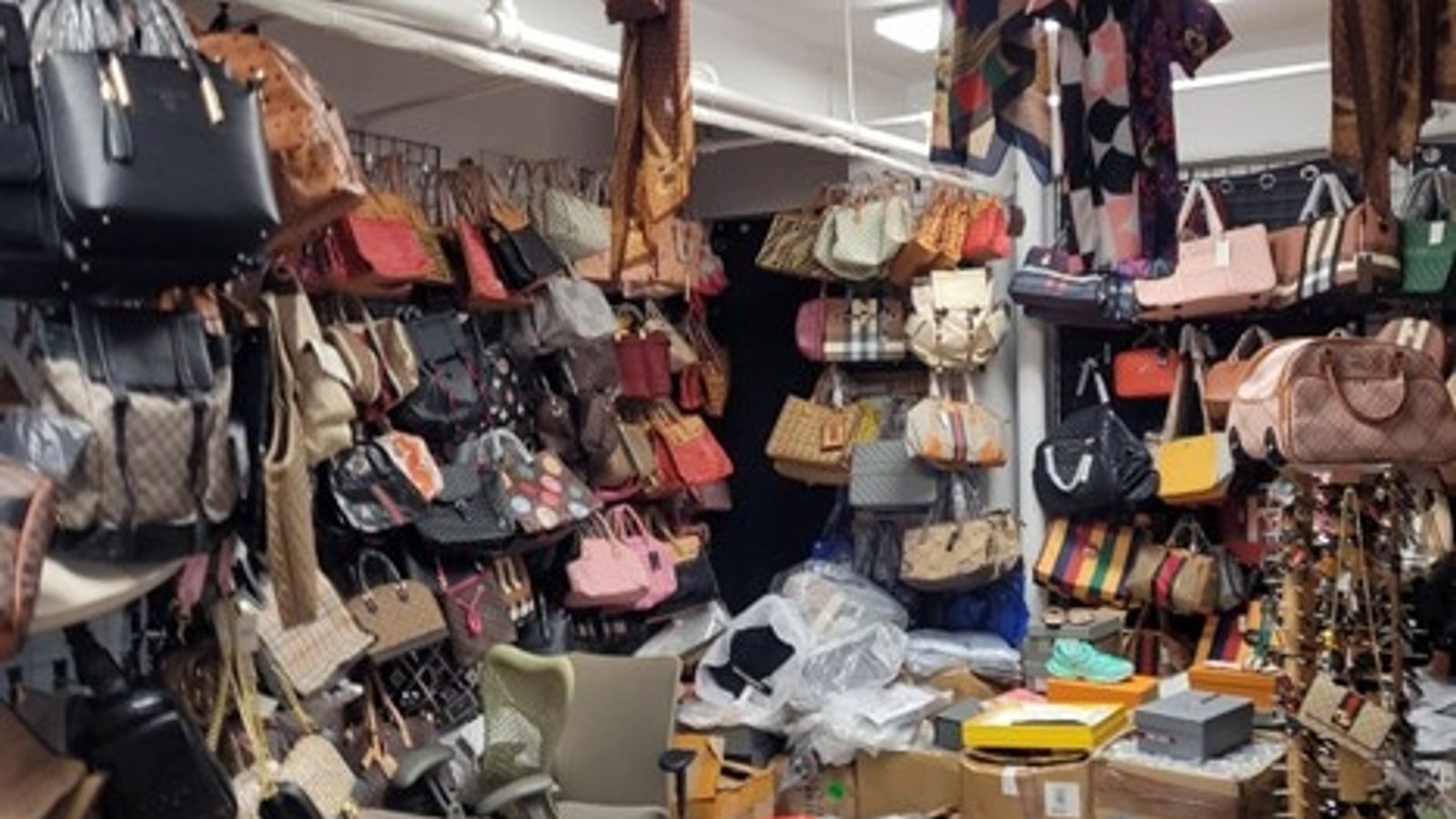
    A significant crackdown operation in Vietnam resulted in the seizure of over 1,800 counterfeit luxury items, including fake Gucci glasses and Hermes watches. The operation targeted a store specializing in the sale of counterfeit branded merchandise.

    Vendor Fined for Counterfeit Goods

    The Market Surveillance Department in Quang Ngai Province revealed that a 35-year-old vendor in Tinh Khe Commune faced a hefty fine of VND102.5 million (US$4,200) for showcasing and selling 1,000 counterfeit Gucci glasses and 800 counterfeit Hermes watches. All seized items were confiscated and are slated for destruction.

    The authorities stated that the trademarks in question enjoy legal protection in Vietnam. The imposed penalties form part of a wider initiative to clamp down on the circulation of counterfeit, imitation, and substandard goods in local markets.

    Effects of Counterfeit Goods on the Market

    Market surveillance officials stressed that selling counterfeit branded items not only breaches intellectual property laws but also poses the risk of misguiding consumers and damaging the reputation and operations of genuine businesses.

    Additional Enforcement Operations

    In a separate enforcement initiative, a market surveillance team, in conjunction with the police, discovered a substantial amount of goods that lacked the necessary documentation. In one instance, a distributor was found in possession of 675 water filter cartridges branded as “A Qua” and “OCB” without any invoices or evidence of legal origin.

    Another business, engaged in the trading of electric bicycles and electric motorbikes, was flagged for violating labeling regulations, including the omission of compulsory details like manufacturing dates. The total value of the improperly labeled goods amounted to an estimated VND34.5 million.

    Strict Penalties for Commercial Fraud

    Market surveillance officers and local police appealed to businesses to sell only merchandise with verifiable origins and comprehensive documentation. They warned that commercial fraud for profit would be subjected to stringent penalties, and enforcement actions would only escalate.

    Questions & Answers

    What were the counterfeit items discovered in the operation?
    The operation uncovered over 1,800 counterfeit items, including 1,000 fake Gucci glasses and 800 counterfeit Hermes watches.

    What is the impact of selling counterfeit goods on the market?
    Selling counterfeit branded goods not only infringes on intellectual property laws but also risks misleading consumers and undermining the operations of legitimate businesses.

    What measures are being suggested to businesses to avoid legal issues?
    Market surveillance officers and local police encourage businesses to sell only goods with clear origins and complete documentation. Businesses are also urged to comply with labeling regulations.

  • Ho Chi Minh City Ceo Arrested: Accused Of $570,200 Counterfeit Perfume Operation

    Ho Chi Minh City Ceo Arrested: Accused Of $570,200 Counterfeit Perfume Operation

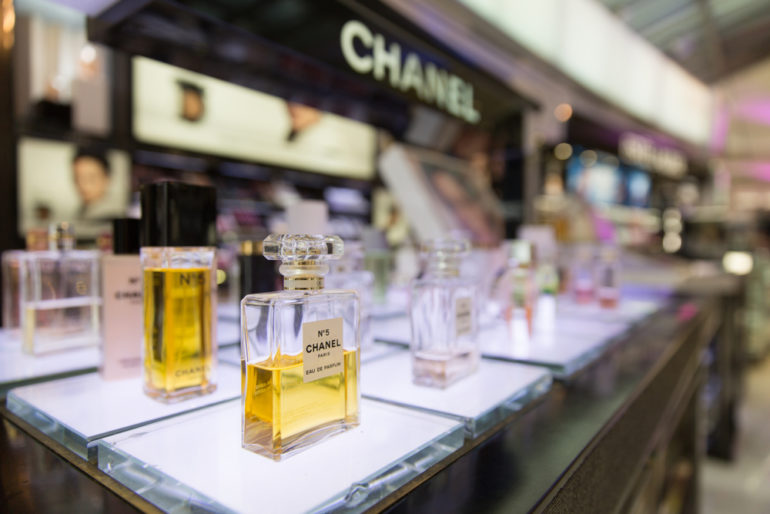
    In a recent turn of events, a CEO and his spouse based in Ho Chi Minh City (HCMC) have been apprehended by the police on the grounds of allegedly manufacturing and marketing tens of thousands of fraudulent perfume bottles. These counterfeit products bore the labels of well-known luxury brands such as Chanel, Gucci, and Dior, among others. The illicit profits gathered from this illegal enterprise are estimated to be around VND15 billion (US$570,200).

    The Masterminds and Their Accomplices

    The individuals caught in this scandal are Nguyen Ngoc Tho, the CEO of Nguyen Huong, and his wife, Truong Thi Mai Hien. Along with them, nine other people were also taken into custody by the HCMC police on charges related to the production and sale of fraudulent goods.

    The couple has been identified by the authorities as the key instigators behind this significant counterfeit perfume production ring.

    The Raid and Confiscation

    During a recent operation at the company’s production site within the city, the law enforcement officers seized 20,000 imitation perfume bottles carrying the tags of elite luxury brands. The authorities also confiscated various perfume-making equipment and tools used in the fraudulent operations.

    The Counterfeit Scheme

    The authorities have accused the couple of initiating this scheme since the beginning of last year. Apparently, Tho observed a surge in perfume demand and started researching and creating formulas for counterfeit perfumes online.

    Together with his wife, Tho procured machinery, raw materials, and perfume bottles. They rented a production facility and mainly hired family members to blend, fill, label, and package the fake perfumes.

    They promoted these spurious products on social media platforms and distributed them in vast quantities across numerous provinces.

    Questions & Answers

    What are the legal implications of the case?
    Given the scope of the fraudulent operation and the brand value of the companies affected, significant legal implications can be anticipated. This includes potential jail time, hefty fines, and possible lawsuits from the affected brands.

    What was the primary market for these counterfeit products?
    The couple leveraged the internet and social media platforms to market these counterfeit products, targeting customers in several provinces.

    Who were involved in the production process of these counterfeit perfumes?
    The CEO and his wife led the operation, hiring mainly family members in their production facility to create the counterfeit perfumes.

  • Fake Louis Vuitton, Gucci shoes seized in $1.3M Hong Kong counterfeit bust

    Fake Louis Vuitton, Gucci shoes seized in $1.3M Hong Kong counterfeit bust

    In a recent operation, Hong Kong officials intercepted an estimated HK$10 million worth of suspected counterfeit clothing and footwear, featuring labels from major brands such as Louis Vuitton, Gucci, and Nike. The operation, held between October 6 and 17, resulted in the confiscation of approximately 18,000 items and the arrest of two individuals, according to an announcement from the Hong Kong Customs and Excise Department.

    Details of the Seized Goods

    The confiscated merchandise included items bearing the branding of Nike, Adidas, Louis Vuitton, and Gucci. Officials believe these products were headed for foreign markets, specifically in Europe and America, to capitalize on the demand generated by large-scale global events.

    “Large events, such as sports shoe exhibitions, often see collectors and enthusiasts trading items on-site, which escalates the demand for high-quality counterfeit sports shoes,” explained Inspector Yeung Tit-fung from the department.

    Investigation and Legal Consequences

    The investigation into these cases is currently ongoing. The arrested individuals have been released on bail, pending further investigation. The Hong Kong legislation stipulates that importing or exporting products carrying a counterfeit trademark could lead to a maximum of five years imprisonment and fines reaching up to HK$500,000.

    The Customs Department revealed plans to intensify inspections and execute intelligence-driven operations to combat counterfeiting and trademark infringement activities.

    Previous Operations

    The department had previously conducted a week-long operation in late September, which focused on the city’s major shopping districts ahead of the Golden Week holiday. This operation resulted in the seizure of around 2,000 suspected counterfeit handbags, leather goods, and fashion accessories, with an estimated market value of HK$1.3 million.

    Questions & Answers

    What brands were predominantly featured among the seized goods?
    The seized items predominantly featured branding from major labels such as Louis Vuitton, Gucci, Nike, and Adidas.

    What are the legal consequences for importing or exporting counterfeit products in Hong Kong?
    In Hong Kong, the import or export of goods bearing a counterfeit trademark can result in up to five years of imprisonment and fines of up to HK$500,000.

    What measures are the Hong Kong Customs Department taking to combat counterfeiting?
    The Hong Kong Customs Department plans to enhance inspections and implement intelligence-led operations to prevent counterfeit and trademark infringement activities.

  • Vietnamese Jewelry Store Fined For Selling Counterfeit Chanel Items Amidst Gold Price Surge

    Vietnamese Jewelry Store Fined For Selling Counterfeit Chanel Items Amidst Gold Price Surge

    In central Vietnam, a gold and jewelry store has been hit with a substantial fine of VND55 million (US$2,088.08) and has been instructed to obliterate its existing stock for engaging in the sale of falsified Chanel brand jewelry.

    Counterfeit Jewelry Seized

    The Market Management Department of Gia Lai Province reported that they recently discovered bracelets with the logo of Chanel, a renowned French fashion brand that has registered for protection in Vietnam, in the store. The provincial authority refrained from revealing the name of the establishment.

    The estimated total value of the seized goods is around VND35.7 million. The authority highlighted that all the seized jewelry items were counterfeit and lacked the requisite documentation to verify the origin.

    Surprise Raid and Future Plans

    These surprising findings resulted from an unexpected raid. In the aftermath of this event, the department has announced plans to maintain strict vigilance and continue inspecting other gold enterprises to prevent any further violations of intellectual property rights.

    Gold Prices Reach Record High

    In a related development, the prices of Vietnamese gold have witnessed a significant surge of 76% this year, reaching an all-time high of VND148 million per tael (equivalent to 37.5 grams or 1.2 ounces).

    Questions & Answers

    What was the penalty imposed on the jewelry store for selling counterfeit Chanel brand jewelry?
    The jewelry store in central Vietnam was fined VND55 million (US$2,088.08) and was ordered to destroy its existing stock.

    What did the Market Management Department of Gia Lai Province discover during their raid?
    During their surprise raid, the Market Management Department of Gia Lai Province discovered counterfeit Chanel brand bracelets being sold in the store.

    What are the future plans of the Market Management Department of Gia Lai Province?
    Following the discovery of counterfeit jewelry, the department plans to continue monitoring gold businesses to prevent any violations of intellectual property rights.

  • Ferrari Unveils Unique Sound Strategy For First Electric Vehicle: Authenticity Over Simulation

    Ferrari Unveils Unique Sound Strategy For First Electric Vehicle: Authenticity Over Simulation

    Ferrari is on the brink of releasing its debut electric vehicle, causing mixed feelings amongst fans of the brand. Despite some concerns surrounding the introduction of an electric offering, the Maranello-based automaker is making concerted efforts to ensure that all aspects of the vehicle are perfected. Among these, significant attention is being given to the vehicle’s sound, which had been rumored to mimic that of a traditional internal combustion engine. Ferrari, however, has been transparent about its approach to the sound of their forthcoming electric model.

    Ferrari’s Authentic Sound Approach

    In a clear stance, Ferrari has dismissed the concept of simulating engine noises for their electric vehicle. Instead, the luxury car maker aims to embrace what it refers to as the ‘authentic’ sound of the motor. The company further expressed its intention to enhance the auditory output of the power units.

    If Ferrari can realize this goal, it could mark a significant moment within the automotive industry. Other traditional car manufacturers have grappled with the challenge of creating a satisfactory sound experience for electric vehicles. This comes in light of the absence of the familiar rumble found in performance vehicles powered by gasoline engines.

    Automakers have made numerous attempts at curating suitable sounds for electric vehicles to date. Notable examples include Dodge’s efforts using what was termed a “Fratzonic Chambered Exhaust”. In contrast, other manufacturers have opted to leave the natural sound of the electric motors untouched. Ferrari, however, is pursuing a unique strategy.

    Finding Inspiration in Unexpected Places

    The solution to Ferrari’s acoustic challenge was found in the unlikely form of an electric guitar. Inspired by the instrument’s engineering, Ferrari plans to capture and then enhance the vibrations generated by the drivetrain components. This optimal balance will be attained through a highly sensitive sensor positioned on the rear axle. This sensor will pick up the frequencies of the powertrain and amplify them, projecting the sound into the vehicle’s environment.

    The design approach specifically employs an accelerometer to capture vibrations from the drive unit, which are subsequently amplified to match the sound of the electric motor. Ferrari asserts that the resulting sound will provide practical utility, offering valuable feedback to the driver.

    Ferrari further clarified that the latency between the vibrations and sound is imperceptible to the human ear. During high-speed driving, the driver will be able to hear the motor accelerate, regenerate, or even disengage. This is due to the front motors of the forthcoming Elettrica model, which are designed with a disconnect feature, enabling the vehicle to switch to rear-wheel drive.

    Questions & Answers

    What approach to sound is Ferrari taking for its electric vehicles?
    Ferrari is aiming to capture and enhance the ‘authentic’ sound of the electric motor, rejecting the idea of simulating traditional engine noises.

    What technology is Ferrari using to capture the sound of its electric vehicles?
    Ferrari is using a high-precision sensor, similar to an accelerometer, positioned on the rear axle to capture the frequencies of the powertrain, which are then amplified and projected into the surroundings.

    What will the sound offer to the driver of the Ferrari electric vehicle?
    Ferrari claims that the resulting sound will be functionally useful, providing real-time feedback to the driver about the speed, regeneration, and engagement status of the motor.

  • Over Half Of South Korean Consumers Foret Refunds For Counterfeit Online Purchases, Cites Complex Procedures

    Over Half Of South Korean Consumers Foret Refunds For Counterfeit Online Purchases, Cites Complex Procedures

    Over half of South Korean consumers who inadvertently buy counterfeit products online do not pursue refunds, according to a recent survey by the Korea Consumer Agency. The respondents pointed to complex refund procedures and nominal sums involved as the main reasons for not seeking recompense.

    Consumer Responses and Counterfeit Products

    The survey, which included 1,000 consumers using eight leading online platforms, revealed that 58.6% of those who unintentionally bought counterfeit goods did not request a refund. Reasons given were that the refund process was too intricate or time-consuming (60.4%), or that the purchased items were of low value or indistinguishable from genuine products.

    The most frequently bought counterfeit items were bags, with 38.8% of consumers knowingly purchasing them. Shoes, however, were the most common accidental purchase, with 43.8% of consumers having inadvertently bought counterfeit footwear.

    Interestingly, many of the consumers who intentionally bought counterfeit products showed a lack of awareness about intellectual property rights. Almost half of them stated that they were unaware of, or unconcerned about, any possible issues.

    Responsibility and Complaints

    When asked who should bear the responsibility for counterfeit goods, 45.4% of the respondents blamed the sellers. Online platforms came second at 37.3%, while 17.3% of consumers held themselves accountable.

    The Korea Consumer Agency also examined 1,572 consumer complaints lodged between 2022 and February 2025. Handbags were the most frequently reported counterfeit items (21%), followed by shoes, cosmetics, audio devices, and clothing. The majority of complaints involved luxury brands, along with specific products such as Dyson hair dryers and Apple earphones.

    Price Comparisons and Seller Practices

    An analysis of price comparisons revealed further risks. On platforms like AliExpress and Temu, 72.5% of examined products were listed for less than 20% of their official market prices. Instagram and Naver Band also displayed similar steep discounts for over half of their items, with descriptors such as “mirror-grade leather” or “authentic-level” being used. Many sellers used private or external channels, which complicates monitoring efforts.

    Several platforms, including Naver Band, AliExpress, Coupang, and Temu, were criticised by the agency for their lack of clear instructions on how to report counterfeit items. Instead, they necessitated individual inquiries for each case.

    Call to Action

    The agency recommended that authorities and businesses augment their efforts to curb the sale of counterfeit goods. This includes limiting the use of misleading language on social media and enhancing transparency in reporting procedures.

    Questions & Answers

    What is the most common counterfeit item purchased intentionally in South Korea?
    Bags were the most common counterfeit items purchased on purpose, according to the survey.

    Who do consumers believe is most responsible for the sale of counterfeit goods?
    45.4% of respondents believe that sellers are the most responsible for counterfeit items.

    What measures has the Korea Consumer Agency suggested to combat counterfeit sales?
    The agency has suggested strengthening actions against counterfeit sales, restricting the use of deceptive terms on social media, and enhancing the transparency of reporting procedures.

  • Feeling Out of Place: My Experience Wearing a $230 Replica Rolex to a Wedding

    Feeling Out of Place: My Experience Wearing a $230 Replica Rolex to a Wedding

    A few years ago, I made the mistake of purchasing a fake Rolex for VND6 million (US$230) online, which led to a rather embarrassing predicament.

    The seller touted it as a first-rate “authentic” replica, claiming it looked so convincing that no one would suspect it wasn’t the real deal. Back then, I was young and impressionable, and I thought wearing a flashy watch would elevate my status and boost my confidence. In reality, I simply liked the design, but the thought of splurging on a genuine model was daunting. It was a paradox—trying to save money while blowing VND6 million on a counterfeit—but my impulsive side prevailed.

    The true test of my purchase came during a wedding where I was accompanying my girlfriend. In a moment of casual conversation, an older gentleman asked for the time. I glanced at my wrist only to discover that the watch hands had fallen off. Mortified, I had to produce my phone to check the time instead. It was a cringeworthy moment—I wished I could vanish right there.

    The lesson was clear: the fake watch did nothing to enhance my image or self-assurance. My attempt to project sophistication was as phony as the watch itself.

    Many people find themselves in this dilemma, desiring luxury without the budget to back it up. They turn to knockoff watches, handbags, shoes, and sunglasses—often influenced by what they see others doing or lured by how good these replicas appear for the price. However, once a fake is recognized, the embarrassment can be crushing.

    Today, I’ve learned my lesson. If I’m in the market for a watch but can’t splurge on something lavish, I opt for a lesser-known, authentic brand. People’s choices often reflect their realities. Wearing something that doesn’t align with one’s circumstances tends to be noticeable, sometimes without uttering a single word.

    Questions & Answers

    What led the author to buy the fake Rolex?
    The author, wanting to enhance his social status and confidence, was drawn to the flashy design of the fake Rolex, despite not being able to afford the real thing.

    What happened at the wedding?
    During a wedding, when asked for the time, the author discovered the watch hands had fallen off, forcing him to check his phone instead, which caused him great embarrassment.

    What is the author’s current perspective on buying watches?
    Now, the author prefers to buy authentic timepieces from lesser-known brands rather than opting for fakes, recognizing that authenticity aligns better with one’s circumstances.

  • Apple takes a long time to remove fake app posing as a popular password manager

    Apple takes a long time to remove fake app posing as a popular password manager

    Imposter app LassPass posing as the popular password manager LastPass has been removed from the App Store one day after the creators of the original app issued a warning against it.

    Apple prides itself on keeping the App Store safe by performing numerous safety checks before approving an app. It does seem to have a higher bar for security than its immediate competitor. That doesn’t mean it’s doing a perfect job of keeping the App Store safe, as the latest incident shows.

    What makes the oversight feel particularly worrisome, though, is that LastPass is a service people use to store logins and passwords for various platforms. A fake copycat app designed to trick people into revealing their master password could give the bad actors behind it access to every or most apps a person uses.

    The app in question, LassPass, had a name resembling the original app and copied LastPass’s branding and interface.

    There were some telltale signs that it was a fake that many users quickly noticed, such as misspellings and a different publisher. It also had only one rating, whereas the legitimate app has more than 52 thousand. All of the reviews for it also noted that it was a deceptive app.

    LastPass created a blog post on February 7 to warn its users against the app, which was removed from the App Store on February 8. According to the analytics platform Appfigures, the app has been on the platform since January 21. TechCrunch reports.

    It’s not known how many people fell for the app, but it can be assumed that it failed to attract many downloads, as it never made it to any of Apple’s Top Charts.

    If you have LassPass on your iPhone, not only should you delete it, but also change your LastPass password.

  • Meta took down more than 7,000 fake accounts related to pro-China propaganda

    Meta took down more than 7,000 fake accounts related to pro-China propaganda

    Fake accounts on social media aren’t something new. Most likely, many of us have come across at least one fake account during our time on social media. Facebook reportedly holds the largest number of fake accounts compared to any other social network in the world. However, it appears that Meta has managed to eliminate at least some of them.

    Meta shared details about a network of fake accounts that had spread pro-China propaganda on Facebook. The company mentions that the takedowns were tied to “individuals associated with Chinese law enforcement” who also ran similar fake accounts on other platforms.

    The company often shares updates about taking down fake accounts that are up to no good, but what Meta’s security researchers found this time is pretty big. Meta got rid of 7,704 Facebook accounts, 954 Pages, 15 Groups, and 15 Instagram accounts, making it one of the largest networks of fake accounts ever discovered by the company.

    Meta found several groups of fake accounts from various parts of China. The way the groups acted, made it seem like they might have been working together from a shared place, maybe an office. Each group had a specific schedule, being most active in the morning and afternoon. They took breaks for lunch and dinner and then had another burst of activity in the evening, so basically, they had a full-time job.

    Ben Nimmo, who’s in charge of global threat intelligence at Meta, calls this move “the most prolific covert influence operation that we know of in the world today.” He also points out that the people running these accounts were also busy on X, Reddit, YouTube, TikTok, and Pinterest.

    As per Meta, the fake accounts aimed to share pro-China messages, including positive commentary about China, criticisms of the US, and Western foreign policies. The company did verify that it discovered proof connecting these fake accounts to an earlier pro-China operation cleverly called Spamouflage that showed up in 2019.

    In addition, the company also shared that it stopped numerous malicious domains and efforts to create fake accounts and Pages linked to the Russian Doppelganger operation, which aims to mimic official news and government websites to spread false articles undermining support for Ukraine. This operation has broadened its scope from France, Germany, and Ukraine to the US and Israel.

  • Fake Chanel perfume seller fined

    Fake Chanel perfume seller fined

    A shop in the Central Highlands has been fined VND50.5 million (US$2,100) for selling counterfeit Chanel and Lancome perfumes and sunscreen through Facebook livestream.

    The shop in Pleiku, Gia Lai Province, was busted during a livestream session, the local police said.

    They had been monitoring the shop for some time, and during the raid found 300 bottles of perfumes labeled Chanel and 118 purporting to be Lancome besides 204 sunscreen tubes with the latter’s label.

    The police checked all the documents the shop provided and established that the products were fake.

    They also found 440 breath refresher bottles without invoices.

    The shop was fined VND50.5 million for selling fake goods, violating intellectual property rights and trading cosmetics of unknown origin.

    All the fakes were confiscated and will be destroyed.

  • Australia and Singapore to Jointly Fight Against Scam Calls and Messages

    Australia and Singapore to Jointly Fight Against Scam Calls and Messages

    Australia and Singapore will unite in the fight against unsolicited telemarketing, spam and scams, following an agreement between the Australian Communications and Media Authority (ACMA) and the Info-communications Media Development Authority of Singapore (IMDA).

    The new strategic agreement will promote further engagement and information-sharing between the two agencies and assist with both investigations and compliance with telecommunications laws in both countries.

    This memorandum of understanding (MOU) complements the 2020 Australia-Singapore Digital Economy Agreement to expand trade and economic ties in our region. It follows similar agreements the ACMA has made with its regulatory counterparts in the USA, Canada and New Zealand.

    Research conducted by the ACMA in 2021 found that 98% of Australians received some form of unsolicited communication. Scam calls were the most prevalent type of unwanted communication, with 4 in 10 Australians receiving them at least weekly.

    ACMA Chair Nerida O’Loughlin said she was pleased to further strengthen the ACMA’s strong working relationship with the IMDA.

    “Almost every Australian is impacted by unwanted calls, SMS and emails, and we know that many of our international colleagues are dealing with the same issues,” O’Loughlin said. “This agreement will see us building stronger ties with our Singaporean counterparts to crack down on unsolicited calls and messages, particularly when cross-border issues are involved.”

    Lew Chuen Hong, Chief Executive of IMDA said, “Scams is [sic] a global issue that do not respect geographical boundaries. This MOU is an important step for the international community to join forces and tackle this issue decisively. I am happy to join in this partnership with our Australian counterparts and together, the MOU will benefit the citizens of our both countries and increase trust in our telecommunication systems.”

  • Facebook fights misinformation with new set of group tools

    Facebook fights misinformation with new set of group tools

    Meta’s Facebook announced that it has taken another step in trying to prevent misinformation from spreading by launching a new set of tools for group admins. These new features are not only meant to identify false information, but they will also help reduce admin workload and, ultimately, make them more efficient while they manage their groups.

    The first and most important new feature introduced this week is the ability through Admin Assist to automatically decline incoming posts that contain false information. Secondly, the “mute” functionality has been further improved and renamed to “suspend,” so admins and moderators can now temporarily suspend group members from posting, commenting, reacting, participating in a group chat, and creating or entering a Room in a group, not just mute them.

    To help admins manage their groups much easier, Facebook added a new feature that enables them to automatically approve or decline member requests, based on specific criteria. Also, the Admin Home design has been updated with a new overview page on desktop, a new layout, and an insights summary on mobile.

    Furthermore, Facebook announced it has added QR codes support, which will allow admins to download or copy/paste from the Share menu and advertise their groups. When scanned, people will be directed to the group’s About game where they can join or request to join. Also, a new option for admins to send invites via email to invite people to join their groups has been added too.

  • Police investigate Saigon Beer copycat

    Police investigate Saigon Beer copycat

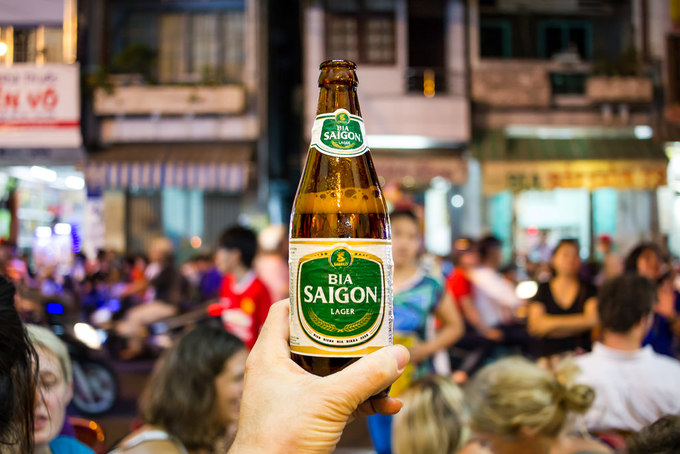
    Police in Ba Ria-Vung Tau Province are investigating a copyright infringement involving Saigon Beer by a former employee of its brewer, Sabeco. They found over 9,000 boxes of the Saigon Vietnam Beer with the brand name and packaging similar to that of the 43-year old Saigon Beer brand produced by Sabeco, the largest brewer in Vietnam.

    The beer is distributed by the Saigon Vietnam Beer Group Jsc., not a subsidiary of Sabeco. Its CEO, Le Dinh Trung, held several positions in Sabeco for years, including assistant to the deputy CEO and head of its legal department.

    Another person involved in the copyright infringement is Tran Thi Ai Loan, a distributor of Sabeco beer for the last four years.

    The original headquarter address of Saigon Vietnam Beer Group Jsc was registered at Floor 9, Vincom Building, 72 Le Thanh Ton, District 1, Ho Chi Minh City, the same as Sabeco. Although the Saigon Vietnam Beer Group Jsc. later changed its headquarters to a different location in Binh Thanh District, its beer packaging carried the old address, confusing customers.

    Authorities said Loan, as a legal representative, had signed a contract with BiVa Beer Brewer in southern Ba Ria–Vung Tau Province to produce the Saigon Vietnam Beer and started distributing the product in May.

    The same month, Sabeco requested the Vietnam Intellectual Property Research Institute to inspect the similarities between the packaging and brand name of the two beers. The institute concluded in June that there were signs of copyright infringement, following which Sabeco requested market authorities to intervene.

    Authorities later found thousands of Saigon Vietnam Beer boxes in the southern localities of Ba Ria-Vung Tau, Binh Phuoc, Soc Trang and Can Tho as well as the Central Highlands province of Dak Lak. Each box was being sold at VND159,300 ($6.91), nearly 12 percent lower than that of Sabeco’s Saigon Beer.

    Vu Tuan Chau, owner of BiVa Beer Brewer, told authorities that they had distributed a total of 4,400 boxes so far. Chau said they only produced the beer to the requirements of Saigon Beer Vietnam and was not aware of any copyright infringement. A lawyer representing Sabeco said that the infringement has damaged their brand’s reputation and misled customers into purchasing the wrong product. Sabeco is working with authorities to continue the investigation, the lawyer said.

    No comments were available from the representatives of Saigon Beer Vietnam at the time of going to print.