Retail News CRM

Tag: Farfetch

  • Farfetch Expands Into Korean Market Through Alliance With E-commerce Giant Coupang

    Farfetch Expands Into Korean Market Through Alliance With E-commerce Giant Coupang

    The premier luxury e-commerce platform, Farfetch, is set to broaden its business operations into the Korean market. This move is made possible through an alliance with Coupang, which is Korea’s principal e-commerce company.

    Facilitating International Fulfilment

    As part of the collaboration, Coupang will be managing all overseas fulfilment for Farfetch. On the domestic front, RLux, a high-end shopping application owned and operated by Coupang, will provide free delivery service for all items purchased within Korea.

    Enhancing Customer Convenience

    In a move aimed at improving customer convenience, Farfetch will integrate all customs duties and additional fees into the product prices. This means that customers will see the total cost upfront, making it easier for them to make informed buying decisions.

    Stephen Eggleston, Farfetch’s Chief Commercial Officer (CCO), expressed his enthusiasm for the expansion. He highlighted this as a special chance for brands in partnership with Farfetch to reach out to Korean luxury customers directly.

    Rescue from Financial Uncertainty

    In 2023, Farfetch found itself on the brink of bankruptcy. This financial calamity was averted when the company was acquired by Coupang.

    Diverse Brand Portfolio

    Now, Farfetch boasts a diverse portfolio of 1400 brands, boutiques and department stores. The company caters to customers in no less than 190 countries around the globe.

    Questions & Answers

    What new markets is Farfetch expanding into?
    Farfetch is broadening its business operations into the Korean market.

    Who will manage Farfetch’s overseas fulfilment in Korea?
    Coupang, Korea’s principal e-commerce company, will handle all overseas fulfilment for Farfetch.

    What measures is Farfetch taking to improve customer convenience in Korea?
    To enhance customer convenience in Korea, Farfetch will include all customs duties and additional fees in the product prices.

  • Pandora has no plans to join platforms like Amazon or Farfetch

    Pandora has no plans to join platforms like Amazon or Farfetch

    Jewelry maker Pandora would prefer to invest in physical stores or its own online sales platform rather than join large e-commerce marketplaces like Amazon or Farfetch, its chief executive said on Wednesday.

    “If you’re a small and unknown brand, marketplaces offer a great opportunity, because they provide you with an audience. I already have an audience,” CEO Alexander Lacik said during an interview.

    Pandora, the world’s largest jewelry maker by production capacity, has found a niche between cheaper accessories sold by the likes of H&M and more expensive jewelry like that of Tiffany & Co .

    “Eight out of ten women globally are aware of our brand, so I don’t need to make you aware of me. What I need to do is to show you what I’ve got, and I can to this much better if I have a direct relationship with my customer,” he said.

    The $12.3 billion company, headquartered in Copenhagen, has increased investment in e-commerce during the pandemic. It is present on China’s T-mall platform but not on large global platforms like Amazon or Farfetch.

    “Marketplaces always have to make a compromise for all the clients they are serving. I don’t have to compromise,” he said.

    Pandora’s more than 2,600 physical stores remain the core of its business and accounted for 62% of global sales between July and September.

    “Nearly two-thirds of my customers are men buying jewelry for their girlfriends, wives, grandmothers, or children. And we know that men buying jewelry need help,” he said.

  • Farfetch launches flagship on Tmall Luxury Pavilion

    Farfetch launches flagship on Tmall Luxury Pavilion

    Farfetch is launching a Tmall Luxury Pavilion flagship store to enable thousands of luxury brands to reach Chinese consumers as part of its localization strategy in the region.

    The integration of Farfetch on Tmall means that Alibaba Group’s 779 million consumers will have access to products from more than 3,500 luxury brands, 90 percent of which did not previously have a presence on Tmall.

    Judy Liu, managing director of Farfetch Greater China, said in a statement: “This is an important and exciting milestone in our partnership with Alibaba and creates an incredible opportunity for luxury brands to expand into the China market at a time when international travel has been curtailed and luxury customers are unable to travel to their most loved brands’ boutiques in Europe.

    “This launch is just the beginning in our partnership as we work together to help brands and retailers fully digitize their businesses online and offline through our Luxury New Retail strategy, both in China and globally.”

    The new storefront occupies a premier position on the Tmall Luxury Pavilion’s homepage with one of the five main navigation buttons and a premium permanent banner, explained Alibaba.

    To celebrate the launch, Farfetch has partnered with well-known celebrities and influencers in China to promote the storefront. There will also be social engagement campaigns and an advertising campaign across key social media platforms.

    Janet Wang, general manager of Tmall Luxury, added: “The launch of the Farfetch Tmall flagship is a very exciting moment for China’s booming online luxury market. Underpinned by Alibaba’s digital ecosystem, the Farfetch flagship store is greatly expanding the luxury product offerings to more than 779 million Chinese consumers on our platform.

    “In partnership with Farfetch, we will continually enhance our product selection, marketing strategies, and membership services for our consumers. We aim to set the standard in the industry and lead the digitization of luxury shopping.”

    The launch follows the strategic partnership between Alibaba Group, Farfetch, and Richemont announced in November 2020 to accelerate the digitization of the luxury fashion industry. The Luxury New Retail initiative aims to leverage Farfetch’s and Alibaba’s state-of-the-art omnichannel retail technologies, including a full suite of enterprise solutions powered by the two companies, to serve the needs of luxury businesses.

    These solutions will serve both mono-brand and multi-brand distribution strategies for luxury brands, including fully-connected e-commerce websites and apps, omnichannel retail technology, and access to the Farfetch and Tmall Luxury Pavilion marketplaces via a single integration.

  • Alibaba eyes to invest in online fashion retailer Farfetch

    Alibaba eyes to invest in online fashion retailer Farfetch

    Alibaba Group Holding Ltd 9988.HK is in advanced talks to invest nearly $300 million in online luxury fashion retailer Farfetch Ltd FTCH.N, the Information reported on Monday, citing people familiar with the matter.

    Shares of London-based Farfetch jumped about 16% to $32.59 following the news.

    The two companies are also in talks to create a Chinese joint venture, the report said here, adding that Cartier-owner Richemont, which has teamed up with Alibaba to create mobile applications, is also considering investing in Farfetch alongside the Chinese e-commerce giant.

    Both Farfetch and Alibaba were not immediately available for comment.

    Farfetch, which counts Alibaba’s competitors JD.com 9618.HK and Tencent Holdings Ltd 0700.HK among its investors has been betting on China’s burgeoning online luxury goods world. Chinese consumers make up a third of luxury goods purchases worldwide.

    Terms of the current and past deals with Tencent and JD would not prevent Alibaba from investing in Farfetch, the Information said, citing a source.

  • SMCP launched Sandro on Farfetch

    SMCP launched Sandro on Farfetch

    Fashion group SMCP is to launch its Sandro brand on Farfetch. The Chinese-controlled, French-based affordable luxury retailer says the 13 million-plus clients per month around the world that Farfetch attracts will be an ideal partner to enable Sandro to address a wider, premium customer base.

    “We are delighted with this new partnership with one of the major digital players of the luxury sector,” said Sandro CEO Isabelle Allouch.  “We are convinced that having our products on Farfetch will contribute to Sandro’s digital expansion across the globe, positioning it as a high-end luxury brand and enhancing its worldwide visibility and awareness.”

    She said the partnership marks a key milestone in the global roll-out of SMCP’s digital strategy, bringing together online and offline shopping.

    “It perfectly complements the group’s growing digital presence alongside the successful global deployment of our own websites, and further diversifies its digital sales channels, enabling the group to reach more than 190 countries across the world.”

    The partnership comes just three months after the announcement of a landmark partnership with JD.

  • SMCP launches Sandro on Farfetch

    SMCP launches Sandro on Farfetch

    Fashion group SMCP is to launch its Sandro brand on Farfetch.

    The Chinese-controlled, French-based affordable luxury retailer says the 13 million-plus clients per month around the world that Farfetch attracts will be an ideal partner to enable Sandro to address a wider, premium customer base.

    “We are delighted with this new partnership with one of the major digital players of the luxury sector,” said Sandro CEO Isabelle Allouch.  “We are convinced that having our products on Farfetch will contribute to Sandro’s digital expansion across the globe, positioning it as a high-end luxury brand and enhancing its worldwide visibility and awareness.”

    She said the partnership marks a key milestone in the global roll-out of SMCP’s digital strategy, bringing together online and offline shopping.

    “It perfectly complements the group’s growing digital presence alongside the successful global deployment of our own websites, and further diversifies its digital sales channels, enabling the group to reach more than 190 countries across the world.”

    The partnership comes just three months after the announcement of a landmark partnership with JD.

  • Farfetch opens flagship on JD.com China

    Farfetch opens flagship on JD.com China

    Farfetch China has opened a flagship store on JD, one of its strategic investors.

    The move follows Farfetch China’s purchase of Toplife announced in February and gives the global luxury-fashion technology platform access to more than 300 million customers in Mainland China.

    According to a statement, Farfetch now has a ‘Level 1’ entry point on the JD app, providing customers with instant access to more than 3000 brands via Farfetch’s network of more than 1000 luxury brand and boutique partners.

    “The partnership builds on the existing successful relationship between Farfetch and JD, started in July 2017,” said Farfetch China MD Judy Liu.

    Since then, the fashion platform has built its China presence by sharing JD’s logistics capabilities and its insights into the behaviour of Chinese luxury consumers.

    “Brands crave ever-better access to the Chinese market, and we are thrilled to deliver this for them,” said Liu.

    “This is an important expansion of our strategic partnership with JD, which strengthens the Farfetch China business as part of our truly global offering. Being able to offer the full suite of Farfetch’s technology and logistics platform to brands wanting to reach high-end Chinese consumers is a major competitive advantage as we seek to continue to grow market share in the rapidly expanding online luxury market.”

  • Hypebeast Japan to launch with on-boarding of Akihiro Wajima, former Director of Farfetch Japan

    Hypebeast Japan to launch with on-boarding of Akihiro Wajima, former Director of Farfetch Japan

    Hypebeast Ltd. is pleased to announce the official launch of Hypebeast Japan Ltd., grounding its cultural influence in the region and marking another step in furthering expansion in Asia. The Company is also pleased to announce the appointment of Mr. Akihiro Wajima, former director of Farfetch Japan, as the new Managing Director of Hypebeast Japan Ltd., who will play an instrumental role in leading the Hypebeast Japan team to success and continue to push forward its market share. Japan is known for its impressive lens and unique take on expressing local and global culture. Hypebeast Japan, being one of Hypebeast’s flagship language sites, has been steadily building a distinctive editorial voice for its streetwear, music and lifestyle space in the country.

    “Japan is one of my favorite places in the world – it’s one of the top places globally for cultural opportunities, and possesses an inquisitive, progressive and ready audience to the types of activations, content curation, e-commerce services, and creative production which are indigenous to Hypebeast,” said Kevin Ma, CEO of Hypebeast Ltd. “We are ready to take our business in Japan to the next level. As a first step, we will focus on expanding local editorial coverage and content in Japan, which will help to connect its unique cultural voice to the rest of the world through our Hypebeast platform.”

    “I am pleased to lead Hypebeast Japan Ltd. and help the team to achieve a new level. Along with Kevin Ma and the team, I am sure we will achieve something exciting together and build a strong presence in Japan,” said Akihiro Wajima.

  • Millionaires are showing off their money in a new way

    Millionaires are showing off their money in a new way

    The definition of luxury is evolving, and the change applies to not only what people are spending money on, but how they’re doing it. “In the last few years, we have seen the crystallization of two luxury worlds: one which focuses on an encyclopedic choice of luxury products available at a click; another which is doubling down on the experience mantra,” the global ultra-high-net-worth intelligence firm Wealth-X said in its 2019 handbook, which examines the spending habits and preferences of people whose net worth is between $1 million and $30 million.

    That shift coincides with an era in which people are choosing to display their wealth differently than previous generations did.

    This is an era where brands like Goyard— a two-century-old Parisian company that eschews any type of advertising but represents the pinnacle of luxury for the world’s elite — and investments like education, security, and privacy are the chosen trappings of the world’s wealthiest people.

    Still, luxury fashion is booming, and it partially has to do with how it is consumed.

    Technology has left nearly no industry unchanged, and luxury is no exception.

    “Mass-market principles have worked their way into luxury and are disrupting the market,” Mike Phillips, Wealth-X’s vice president of marketing and communications said. “Now you can be selling something — and there might be only one made — but it’s on an app.”

    Whereas previously the ultimate luxury shopping experience might have included shutting down an entire store for a top spender, that person now has access to the same goods with the increased convenience of an app.

    Phillips said apps and sites like Net-a-Porter, Farfetch, and Moda Operandi that sell designer clothes, shoes, and accessories had capitalized on this trend as a new generation of wealthy shoppers emerges.

    “When it comes to wealthy millennials or Gen Xers, there are still instances where they are seeking an immersive brand experience at a brick-and-mortar store,” Phillips said, “but at other times they may want to avoid that more traditional pomp and circumstance and opt for the ‘Seamless’ option.”

    “Younger generations are less likely to be staunch loyalists to a single brand when compared to their parents and grandparents,” Phillips said. “They’re more likely to try something new if it speaks to their personal values and passions.”

    In this way, experiences may not be outright replacing the role of brands in wealthy people’s lives, but they are augmenting the significance of and consideration that goes into buying a particular brand.

    “More and more,” Phillips said, “the wealthy are evaluating a brand in terms of: What mission does this brand represent? How does it contribute to the greater good … If I choose to purchase this product, what does that say about me and my values?”

    And entire industries are developing or adjusting services to cater to this customer interest too. Wellness is increasingly regarded as a modern embodiment of luxury, and accordingly, an array of spas and studios offering treatments like cryofacials, weeklong retreats, and vitamin IV drips are delivering those experiences.

    Exclusivity and personalization also play important roles in the way luxury experiences are marketed. Customers do not want just any experience — they want a unique one tailored to them.

    Both of those preferences can clearly be seen in the hospitality industry, where high-end hotels are remembering their guests and tweaking their experiences with personalized touches. Other hotels, meanwhile, are fulfilling guests’ appetites for exclusivity by making their most luxurious or expensive rooms “invisible” and available only to well-connected clients who heard about the room by word of mouth.

  • Farfetch announces the first chief fashion officer

    Farfetch announces the first chief fashion officer

    The close relationship between luxury e-tailer Farfetch and Browns, the physical store that it acquired back in 2015, has become even closer with Browns’ CEO Holli Rogers having taken up a new role at the parent company. Rogers will stay on as the senior manager at Browns but has also become chief fashion officer at Farfetch, which will see her working closely with the e-tailer’s marketing, styling and VM teams “to ensure the company’s fashion approach is incorporated into the DNA of the overall customer experience of the brand”.

    Rogers, who was formerly Net-a-Porter fashion director, has had an impressive career at the cutting edge of both luxury physical retail and high-end e-tail. She has also worked at Neiman Marcus and Chanel.

    Farfetch CEO and founder José Neves said she “could bring her unique experience to the broader Farfetch business at an executive level. [Her] reputation, high regard among fashion CEOs, influencers and the wider industry, her relationships and her incredible aesthetic will be a huge benefit to Farfetch.”

    It is clear that she’s highly regarded at the company after having overseen a number of success for Browns from the opening of the Browns East location to the revamped visual image, launching collaborations at home and abroad and continuing to nurture new names.

  • Tech startup Blinq to focus on Southeast Asia

    Tech startup Blinq to focus on Southeast Asia

    Tech startup Blinq is targeting Southeast Asia with software which allows users to virtually try on and purchase designer apparel and accessories from online luxury and contemporary fashion retailers globally. “Blinq uses AR and algorithmic patterns to provide users with the latest trends and personalised fittings from their digital devices,” explains entrepreneur and Blinq founder Bob Chua.

    “It also allows users to choose how they would like to consume fashion, which may not necessarily be to buy, but to also rent, subscribe, or pay later for latest luxury designs from major and upcoming brands across Southeast Asia.”

    A rental-subscription model provides users the option of renting designer apparel and accessories, while the back-end automated warehousing operation enables brands to fulfil their products throughout the Asia-Pacific region.

    Citing McKinsey’s global fashion report, Chua says the personal luxury market is predicted to grow to US$500 billion by next year, with close to 44 per cent coming from Asia.

    “There is clear retail disruption happening everywhere, and e-commerce adoption in the luxury space is growing at a staggering rate here in Asia. We see a major opportunity.

    “In a way we are fusing the successful models of Asos, Farfetch, Rent-the-Runway and The Real Real into a single platform, while targeting affluent Asians.”

    Chua says the company plans to monetise its platform by white-labelling its virtual changing room AR features to other e-commerce sites, which will ultimately reduce returns and increase purchasing propensity for retailers.

    He says Blinq has secured significant seed funding and is currently en route to a next fundraising round.

  • Why is Farfetch betting on sneakers?

    Why is Farfetch betting on sneakers?

    In its first major move since going public in September, Farfetch announced Wednesday that it is acquiring sneaker and streetwear marketplace Stadium Goods in a deal that values the business at $250 million. The London-based fashion e-commerce platform is aiming to extend its reach in the growing luxury sneakers and streetwear market, as millennials account for a growing percentage of luxury sales and competitors are engaged in a digital land grab.

    Farfetch first partnered with Stadium Goods, a consignment reseller of rare and limited edition products, on a distribution deal in April of 2018, bringing a small selection of products sold on Stadium Goods to the Farfetch platform.

    After the deal closes, Stadium Goods’s full inventory  will be available to Farfetch users. Stadium Goods will continue to operate independently while tapping into Farfetch’s logistics and delivery capabilities.

    The world’s largest fashion e-commerce players, including Farfetch, MatchesFashion and Richemont’s Yoox Net-a-Porter, are locked in a race to add new services and technologies through investments, acquisitions and internal research and development in order to stay ahead of the pack, generate higher margins and become the go-to platform for consumers and brands.

    They’re all chasing a rapidly expanding online luxury market, which Bain & Co. sees growing from an estimated €26 billion ($30 billion) in 2018 to between €80 billion and €91 billion ($90.9 billion to $103 billion) in 2025.

    Sneakers are a key driver of the boom, outpacing overall luxury sales growth to reach $4 billion last year.

    Farfetch founder chief executive Jose Neves said that while his marketplace has built a following around high-end streetwear, “we did not have access to the rare sneakers, to the premium limited editions in the secondary market” that Stadium Goods Offers. The partnership has so far generated “phenomenal, immediate traction” from all of Farfetch’s markets, especially China, Japan, Russia and the Middle East.

    “[Sneakers] are growing faster than other categories and we see the same on Farfetch,” added Neves. “We now have the strongest secondary market brand, in our view.” Stadium Goods competes directly with other streetwear-focused platforms StockX, Grailed and GOAT.

    Stadium Goods co-founder and chief executive John McPheters said Farfetch’s international reach would be a major boost to the business.

    Most of Stadium Goods’ sales happen online, and the marketplace has partnered with larger digital retailers including Amazon, eBay, Zalando and Alibaba to scale its access to sneakerheads. Last year, it turned over $100 million in gross merchandise volume.

    Both Farfetch and Stadium Goods are focused on capitalising on China’s growing luxury market, but they have taken different approaches.

    JD.com, China’s second-largest e-commerce company, has a stake in Farfetch. Meanwhile, Stadium Goods started selling products on JD.com rival Alibaba’s Tmall in 2016, and the company has said the channel now accounts for 15 percent to 20 percent of total sales.

    McPheters said Stadium Goods’s relationships with its existing e-commerce partners will remain “business as usual,” batting away the suggestion of a potential conflict between the two company’s respective alliances with JD.com and Tmall.

    Neves said any re-evaluation of the partnership between Stadium Goods and Tmall would be up to Stadium Goods management.

    Farfetch, which went public on the New York Stock Exchange in September 2018, has aspirations to be the “Amazon for luxury,” adopting the e-commerce giant’s marketplace model. Third-party sellers, from tiny boutiques to global brands and retailers, list products on the site, with Farfetch processing sales and sometimes handling the logistics, but not taking inventory.

    Since going public, Farfetch has made clear its aggressive focus on new markets, pursuing more business in emerging economies such as China and the Middle East, as well as signing on additional retailers and brands. Neves told analysts in November that he wants Farfetch to take the “lion’s share” of new luxury spending online over the next decade.

    The company reported $310 million in sales on its platform in the third quarter, a 53 percent jump from the same time last year, and putting Farfetch on track to handle transactions worth well over $1 billion for the full year.

    Farfetch’s cut of each sale is around 30 percent. Losses are also growing, as it invests heavily in technology, hitting $77 million in the third quarter of 2018, up from $28 million during the same period the previous year.

    On Wednesday, Farfetch shares were up 5.9 percent at $23.90.

    Stadium Goods is Farfetch’s first acquisition since picking up Chinese digital marketing agency CuriosityChina in July. In 2015, it also acquired London boutique Browns.

    “We will continue to look only at world-class absolute leaders in specific markets or technologies or categories, and nothing else,” said Neves, describing his strategy around potential future acquisitions as case-by-case. “I believe first in deals that are win-wins.”

    Stadium Goods opened in New York’s Soho in 2015, reselling limited edition sneakers to a growing market of fans ready and eager to pay thousands of dollars for rare pairs. Founded by McPheters and Stiller, the business raised $4.6 million in January 2017 in a Series A funding round led by Forerunner Ventures. In February 2018, LVMH bought an undisclosed minority stake in the business.
  • Farfetch poised to top $1 Billion in gross merchandise value

    Farfetch poised to top $1 Billion in gross merchandise value

    Online luxury group Farfetch said gross merchandise value through its site surged 53% in the third quarter to $310 million, resulting in revenues for the British company to total $132.32 million. The London-based marketplace upgraded its outlook for future growth saying it expects value merchandise revenues to be higher than the company’s previous estimates in the fourth quarter.

    For the three months to September 30, adjusted earnings before income, taxes, depreciation and amortisation registered a $32.3 million loss, meaning the company is yet to hit profitability.

    At the same time, the company reported 1.2 million active customers in the third quarter, up 42 percent.

    Average spending per order fell to $585, from $605 a year earlier, said the company, on the back of a stronger dollar and a free-shipping promotion.

    The results follow Farfetch’s IPO in September, which saw shares soar above $30 in the days after its debut, a more than 50% gain on the initial offer price.

    Farfetch has proven a popular choice for global luxury brands and retailers, as more and more houses continue to sign on to sell through the site.

    Most recently, new additions include Moschino, Victoria Beckham and Tory Burch, as well as streetwear offerings such as Stadium Goods, which sits inside the hub devoted to sneakers.

    Farfetch has also started selling jewellery and added its first department store to its portfolio, Harvey Nichols.

    Looking ahead, Farfetch raised its outlook for fourth-quarter sales on its marketplace, to be between $435 million and $445 million.

    Currently, Farfetch’s marketplace offers luxury products from over 1,000 vendors across 48 countries.

  • Farfetch’s CEO calls for an industry-wide halt on discounts

    Farfetch’s CEO calls for an industry-wide halt on discounts

    Fashion brands need to put their foot down and take action to prevent “a race to the bottom” in terms of discounts as they threaten the survival of the whole fashion retail eco-system, Farfetch Chief Executive and Founder José Neves said.

    Online and offline retailers are resorting so much to promotions there are only two months in the year during which there aren’t any: September and February.

    “So, the system is really crumbling,” Neves said. “The industry needs to think very strategically about how they are going to avoid a race to the bottom in terms of promotions and discounts.”

    He recommended that fashion brands turn into concessions those wholesale accounts, both online and offline, that do the most visible and damaging discounts.

    He suggested brands follow the example of Chanel, which last week, announced it was going to turn into concessions its wholesale distribution accounts in the United States with department stores such as Bergdorf Goodman, Neiman Marcus, Bloomingdale’s, Saks Fifth Avenue and Nordstrom.

    Chanel said the move was intended to better control interaction with its customers.

    “The cycle of discounts is getting earlier and earlier,” Neves remarked. “If you speak to the CEO of any brand they will all say the same thing: we don’t let them do that, we shout at them, if you do it next time, we will stop working with you. And guess what, next season it is the same thing again and again, so their threats are useless. This is a preoccupation for the whole industry. People know what is happening. People talk about it and no-one does anything.”

    Heavy discounts at department stores started with the 2008-2009 financial crisis and have never really stopped since.

    Retailers have a herd mentality: if one discounts, the others follow. And no big department store will stop doing discounts by its own initiative for fear of losing business to rivals.

    Neves foresaw that the only way for the industry to get out of this conundrum was for brands to step in and take concrete action.

    However, on a brighter note, Neves foresaw solid growth in demand for fashion in the medium to longer term, in part because consumers increasingly feel they need to invest in fashion to differentiate themselves and look good on their social media accounts.

    He also predicted consumers would have more disposable income due to changing spending patterns.

    “People are not buying cars anymore because they have Uber, they are not buying houses because they were priced out of the property market in most big cities because they need a 40 percent deposit and they will never be able to save that much. They do not buy holiday houses because they have Airbnb, so there is more disposable income to buy fashion,” Neves said.

    In September, Farfetch completed an initial public offering in New York that raised its profile and gave it a cash pile of more than $1 billion. Neves said its funds would be used to finance growth, win market share and make acquisitions “on an opportunistic” basis.

    Neves said Farfetch would only make acquisitions in areas in which it did not have expertise. In July, Farfetch acquired CuriosityChina, a marketing firm specialized in WeChat, the popular Chinese social media.

    In terms of geographic spread, Neves said India and South East Asia were among those regions Farfetch wished to expand into, but for now, the company needed to consolidate its recent expansion efforts which stretch from China, Japan and South Korea to Mexico, Russia, Brazil and the Middle East.

    “At the moment, it is a pause in oxygen for strategy,” Neves said. “But eventually, we will be in every major luxury market in the world.”

  • Farfetch prepares for IPO

    Farfetch prepares for IPO

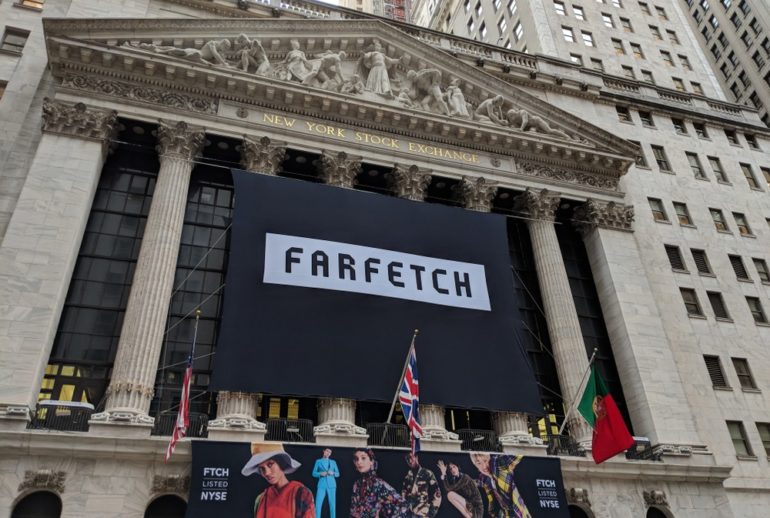
    Fashion marketplace Farfetch has filed an F-1 form with the US Securities and Exchange Commission with the intention of proceeding with a public flotation of its Class A ordinary shares on the New York Stock Exchange under the ticker symbol “FTCH.”

    The number of shares to be offered and the price range for the proposed offering have not yet been determined.

    Goldman Sachs & Co., J.P. Morgan, Allen & Company and UBS Securities are acting as joint lead book-running managers for the proposed offering. Credit Suisse Securities (USA), Deutsche Bank Securities Inc. and Wells Fargo Securities are acting as joint bookrunners. Cowen and Co. and BNP Paribas Securities Corp are acting as co-managers.

    Reports of the company’s plans to IPO first surfaced in June 2017. Farfetch founder and chief executive Jose Neves had been reticent to lay out a timetable for an IPO, but he acknowledged that it was the logical next step for the company.

    The listing could value the company at up to $5 billion.

    The fashion e-commerce platform, which connects consumers with a curated global network of boutiques and brands, cleared $800 million in gross merchandise value in 2016, generating an estimated $150 million in revenue (Farfetch takes 20 to 25 percent commission from partners).

    So far this year, the platform has acquired a Chinese digital marketing agency in a bid to boost its presence in the world’s second-largest luxury market; inked a strategic partnership with Chanel to enhance the French luxury house’s boutique experience; entered into a joint venture with Chalhoub Group, one of the biggest distributors of fashion and luxury goods in the Middle East; and struck a deal with Burberry to expand its global e-commerce distribution and launch a “show to door” London delivery service in a drumroll of announcements designed, in part, to prime the market in advance of its IPO.