Retail News CRM

Tag: Farfetch

  • Farfetch acquires Curiosity China

    Farfetch acquires Curiosity China

    Fashion “unicorn” Farfetch has acquired digital marketing agency CuriosityChina in a bid to boost its presence in the world’s second-largest luxury market.

    CuriosityChina will enable the fashion e-commerce platform to offer additional services to luxury brand partners operating in the country’s fast-moving and unfamiliar digital marketing environment. The terms of the transaction were undisclosed.

    “With this partnership, Farfetch can now provide plug-and-play access for luxury brands to expand rapidly in China via an integrated platform servicing Chinese consumers via web, app, WeChat store and mini-programs,” explained Farfetch founder José Neves.

    CuriosityChina’s employees will join Farfetch, including co-founders Judy Liu, Alexis Bonhomme and Arthur Shui, who will take on the titles of managing director, China; vice president of commercial, China; and head of technology innovation, China, respectively.

    The move follows a 2017 deal between Farfetch and JD.com, China’s second largest e-commerce player, which invested $397 million into the platform. Farfetch launched in China three years ago but the market currently accounts for only 10 percent of the company’s revenue, according to Cowen & Co, a financial services firm.

    In 2016, Farfetch — a technology platform which connects consumers with a curated network of fashion boutiques and, increasingly, brands — cleared $800 million in gross merchandise value, generating an estimated $150 million in revenue (Farfetch takes 20 to 25 percent commission from partners).

    The acquisition of CuriosityChina is the latest in a series of strategic moves by the Farfetch, which has raised over $700 million in funding and is seeking scale as it gears up for an IPO. Neves has been reluctant to lay out a specific timetable for the flotation, but according to a source close to the deal, the company is planning to IPO in New York in September 2018 at a valuation greater than $5 billion.

    So far this year, the platform has inked a strategic partnership with Chanel to enhance the French luxury house’s boutique experience; entered into a joint venture with Chalhoub Group, one of the biggest distributors of fashion and luxury goods in the Middle East; and struck a deal with Burberry to expand its global e-commerce distribution and launch a “show to door” London delivery service.

  • Dickson Concepts opens up Harvey Nichols to HK online shoppers

    Dickson Concepts opens up Harvey Nichols to HK online shoppers

    Dickson Concepts has entered a strategic partnership with UK department store Harvey Nichols to combine physical retail stores and e-commerce.

    “Dickson Concepts will gain complete access to Harvey Nichols’ digital expertise, and allow Harvey Nichols to accelerate its global e-commerce strategy by combining its highly curated fashion edits from two iconic international locations online,” the Hong Kong-listed company said in a statement.

    Dickson Concepts operates Harvey Nichols, Beauty Bazaar and Beauty Avenue stores and controls the UK-incorporated Harvey Nichols Group.

    Leading international brands and emerging designer talent from both Harvey Nichols UK and Harvey Nichols Hong Kong will be available online, with local customers now able to shop the global Harvey Nichols range.

    As part of the partnership, Dickson Concepts will also launch multiple omnichannel initiatives, such as introducing “Endless Aisles” at its stores that will allow in-store customers to enjoy the full offer of Harvey Nichols’ in-store and online offering simultaneously.

    E-commerce styling lounges with stylists offering personalised service will be introduced to assist customers to coordinate their personal looks.

    “Dickson Concepts will also work with Harvey Nichols to introduce augmented reality solutions in-store, which will allow Hong Kong customers to virtually try selected beauty products only available at Harvey Nichols UK, before proceeding to make purchases online. Furthermore, Dickson Concepts will work with Harvey Nichols to allow Hong Kong’s online customers to shop live with Harvey Nichols’ in-store stylists in the UK, via a solution powered by the global retail technology company Hero, with which Harvey Nichols has an exclusive arrangement.”

    Hong Kong online shoppers will be able to connect and interact with associates from Harvey Nichols’ UK stores via instant messaging, photo sharing, and live video streaming, allowing customers to shop the group’s eight stores in the UK in the comfort of their own homes.

    Since launching harveynichols.com in 2011, Harvey Nichols has invested over HK$500 million in its e-commerce business, allowing the company to become the first luxury department store in the UK to integrate a marketplace solution in its e-commerce platform, along with being the first department store in the UK to link its online customers with in-store product experts in real-time, to enable live shopping via instant messaging, photo sharing, and live video streaming.

    Harvey Nichols also recently signed a multi-year, global partnership deal to become the first department store in the world to join the Farfetch platform. Farfetch customers will be able to buy from Harvey Nichols from anywhere in the world.

    Embracing digital

    Dickson Concepts says the partnership with Harvey Nichols demonstrates the former’s commitment to embracing digital technologies and developing its e-commerce business to “define a completely new retail format for Hong Kong,” re-enforcing its belief that e-commerce will become a dominant part of retail internationally.

    “As such, the group is prepared to invest up to HK$200 million on its digital marketing and e-commerce initiatives to grow its e-commerce business, and with its healthy cash balance in excess of HK$1 billion, will also make additional appropriate strategic investments to accelerate its growth in e-commerce.”

  • Chanel invests in Farfetch for digital retail push

    Chanel invests in Farfetch for digital retail push

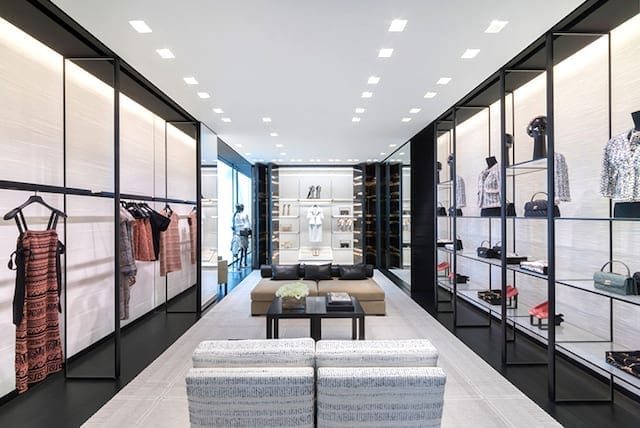
    In an effort to become more digitalized, Chanel has tapped e-commerce firm Farfetch, consolidating the partnership with a minority stake purchase in the UK retailer.

    The French couture house looks to develop digital communication such as chats to connect Chanel clients with store assistants.

    Privately owned, Chanel is known for its reluctance to digitize or stock itself in multi-brand retailers, adding to the allure and rarity of the brand.

    With the Farfetch deal, the label will still not sell its luxury fashion and apparel online, but will solely work with the platform on digital innovations linked to customer services in the coming years, said Bruno Pavlovsky, Chanel’s fashion president.

    Smartphone applications — allowing people to select their preferences and sizes on their phones before visiting a store, are in works and will let shop assistants better cater to individual needs, Pavlovsky said.

    Meanwhile, in store, shoppers will be able to preselect items as they browse, rather than wait for a sales associate to help them.

    The deal is the first of its kind for Farfetch. In 2015, Farfetch launched the Store of the Future division, and acquired London boutique Browns, serving as a playground for innovations in omni-channel retail technology and ‘augmented retail’.

    It’s the latest move from a luxury brand to tap Farfetch and other digital savants like it, in a bid to lure younger or more teched-out shoppers.

    Burberry announced a new deal with Farfetch that will see its full range being made available to shoppers in 150 countries on the Farfetch platform. It also means that its entire global inventory will be available to e-buyers for the first time.

  • Farfetch’s Store of the Future

    Farfetch’s Store of the Future

    In a brick-walled basement in Hackney, amidst rails hung with Balenciaga and clusters of technology developers, “The Store of the Future” was almost ready.

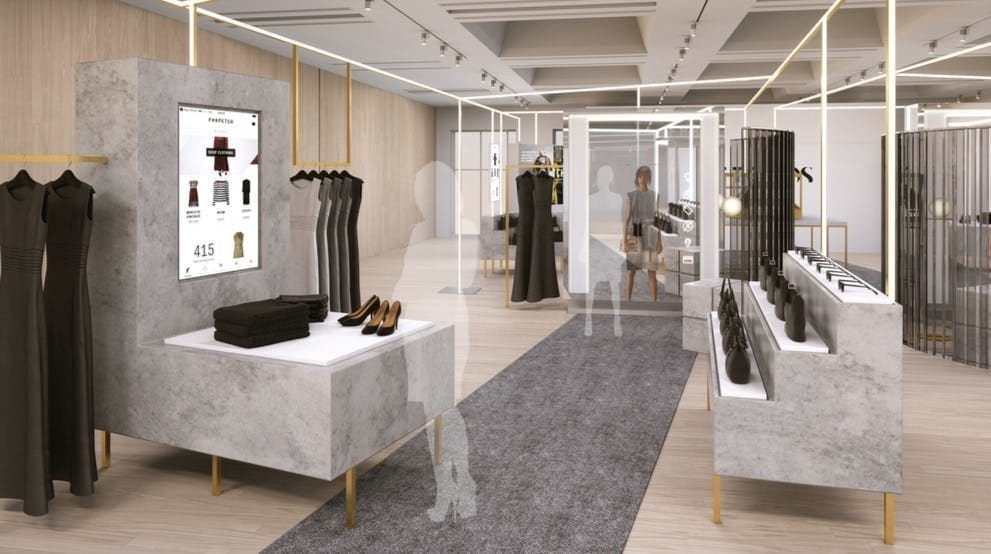
    Here, billion-dollar fashion “unicorn” Farfetch has been staging a test run of the tech-powered retail experience the company is set to unveil later today at the debut FarfetchOS conference at London’s new Design Museum in a move that further extends the platform into physical stores.

    The announcement comes at a critical time for Farfetch, which is reportedly preparing for an IPO. The company, which connects consumers with a curated network of boutiques and brands, is now the world’s top luxury e-commerce destination measured by traffic, outperforming competitors including Yoox Net-a Porter and Neiman Marcus, according to data from web analytics service Alexa.

    And though Farfetch is not yet profitable (market reports suggest it lost around $40 million last year), it surpassed gross sales of $800 million in 2016, up 60 percent from 2015, with estimated annual revenues in the region of $150 million. (Farfetch is said to take a 25 percent commission on net revenues from partners.)

    But Store of the Future could prove to be one of the company’s most important moves yet. While luxury e-commerce is growing fast, the portion of personal luxury goods purchases that happen online — now about 7 percent of total — is expected to plateau at about 20 percent by 2025. This means that, for the foreseeable future, the vast majority of sales will still take place in physical stores, which have yet to really benefit from the digital revolution.

    From fitting rooms equipped with photo booths to mannequins with screens on their foreheads, most in-store technology has been gimmicky stuff that’s more likely to drive short-term PR than actual sales. By contrast, Farfetch’s Store of the Future aims to dramatically improve retail productivity by capturing invaluable customer data and enhancing human interactions between shoppers and sales associates.

    The concept is also modular, meaning brand and boutique partners can pick and choose the components that make most sense for their businesses. And while Farfetch has developed the core operating system on which Store of the Future runs, the initiative is conceived as a platform, meaning the majority of innovation will ultimately come from third-parties, who build new services on top of it.

    For the time being, Farfetch has developed a few key applications to demonstrate the power of the platform: a universal login that recognises a customer as she checks into the store; an RFID-enabled clothing rack that detects which products she is browsing and auto-populates her wishlist; a digital mirror that allows her to view her wishlist and summon items in different sizes and colours; a mobile payment experience similar to what exists in Apple Stores; and, of course, the underlying data layer that connects these services with each other and the Farfetch platform.

    Store of the Future is still in beta. But the concept will launch this autumn with London-based boutique Browns, which Farfetch acquired in 2015, and Thom Browne, which will join the Farfetch platform and deploy the technology in its New York flagship. A full commercial roll out is planned for 2018, although the business model has yet to be tightly defined.

    Ahead of its official unveiling, Farfetch founder and CEO José Neves explained to BoF more about the vision and business logic behind Store of the Future.

    Neves talked about the beginning of this journey and says: “We started roughly two years ago and we were really thinking about: five years out, 10 years out, how are people going to shop for fashion? Today, over 90 percent of transactions take place in brick-and-mortar stores. By 2025, it will be around 80 percent, which is still eight out of 10 sales. Although digital is already influencing most consumption behaviour — and that’s where the eyeballs are; it’s the new TV, it’s the new print, it’s the new everything — when it comes to actually purchasing fashion, there will be a plateau in online sales. Fashion is not downloadable, which makes it very different from movies or music”.

    Three were the key facts presented by Neves: number one, digital is completely influencing consumer behaviour and the creation of desire; number two, online is growing much faster than offline; but three, offline is still — and will be — where the vast majority of transactions take place.

    Neves explained that the project is really about creating the luxury experience of the future. We’ve been omnichannel from day one. From the very start, we essentially connected physical inventory to a digital platform. The first step is a single view of inventory. Then we launched more omnichannel propositions, like same-day delivery in 10 cities, click and collect in store. The Store of the Future is the next step, using the physical store as a service point. It’s post-omnichannel, or what we call “augmented retail.”

    The physical store is going to survive and is going to remain the centre-stage of shopping, but it is not going to be a physical store as it exists today. This has been a shared comment among different stakeholders in the retail industry.

    “The disconnected store — as opposed to the connected store — won’t be around. Period. And the biggest evidence of this is actually Farfetch itself, because once we connect a boutique to the platform, we account for about 45 percent of sales. It is like an OpenTable for boutiques — they know every empty table, we know every shoe that is sitting on every shelf unsold. We know how much offline is moving and how much online is moving. And just by making your physical inventory available 24-7 to a global audience, you massively boost your economics”, Neves explained.

    The store of the future’s built on three principles.

    The first is human touch. If you go into a store today, the sales staff are doing things machines should do: they’re checking if they have your pair of shoes in the backroom; or they are asking your name and looking you up in the database. Is this empowering human touch? Not at all. The store of the future is fundamentally about releasing customers and shop assistants to focus on the human side of the interaction. It’s about empowering the staff in the shops to stop being inventory controllers and start being in-store influencers. Right now, they are inventory controllers.

    The second principle is being modular. Neves says: “We absolutely do not believe there is one store of the future. There will be 1,000 stores of the future. Think about the way a brand commissions an interior designer and differentiates the space, the smell, the experience, the merchandising. What we do not want is cookie-cutter experiences. So some components will be suitable for some brands and not for others”.

    And the third is open architecture. Neves unveils: “We don’t want to come up with all the innovation ourselves. The idea is to create a “Store of the Future” platform and then invite start-ups and brands themselves to come and build on top of it”.

    Data is the common denominator. What’s built on top of this can be built by Farfetch, by a cool startup or by a brand. Farfetch is working with RFID companies, and with hologram companies.

    One essential component is  the “Shop Floor” app. That’s the app that shop assistants will have. With this one, we will tend to do everything in-house, because it is what handles all the data from all the various points.

    On the customer side, there is Farfetch app, which works with Store of the Future. But in the future, there will also be white-label apps for brands or just provide the API, so they can integrate this into their own apps themselves.

    It is all a very millennial-style negotiation: I will give you my data if you give me something in return. That is what we do every time we open Instagram, every time we open Facebook. We know those guys are gathering all this data, but the exchange makes sense. Data is currency and I expect something back. This needs to be absolute practice for the “Store of the Future.”

    But once you get a consumer to [share her data], it is gold dust… You have asked permission from the customer to drop a cookie. It is a brick-and-mortar cookie. And you will be able to know everything: how long the consumer was in the store, which products were picked up, what did she try, what were the sizes that fit and the sizes that did not fit, what are her preferred payment methods, does she have it delivered to her house, her hotel… and that cookie will be linked to the online cookie as well. So then you have a real single view of a customer.

    What you can do with that data is offer a super-personalized experience, both online and offline, it also makes your company much more efficient. Take marketing; imagine targeting a customer on Instagram because you know that five hours earlier they have been to your shop and they’ve picked up a certain bag. And let’s remember, this is currently where 90 percent of the action is happening.

    The commercial model is not defined yet. The philosophy of Farfetch has always been win-win. Our platform is a pure revenue share model. There is no minimums, no set-up fee. Black & White is mostly a revenue share model as well. Store of the Future obviously involves physical hardware, which involves set-up costs and stuff like that. But we will never be a hardware company; we will never be a software licensing business. We are in the business of revolutionizing retail and being a positive force for the industry. If we do that, there will be money to be made for everyone. And then how we split it needs to be win-win for both sides.
  • Farfetch yearly sales surge 74%, 2016 losses widen on investments

    Farfetch yearly sales surge 74%, 2016 losses widen on investments

    British online fashion retailer Farfetch said global revenue grew at a record speed in 2016, while losses widened for the year, on the back of increased investment in technology, customer acquisition and hiring.

    For the twelve months ending December 31, 2016, Farfetch said after-tax losses widened to 34 million pounds from 28.7 million pounds, while operating losses grew to 33.5 million pounds from 26.5 million pounds.

    The losses come despite Farfetch.com revenues growing 74 percent to 151.3 million pounds.

    In a statement to Companies House in London, the company reported “strong growth in both demand for, and supply of, products through the Farfetch platform. The company is confident in its future outlook, and well placed to manage its business risks successfully despite the current uncertain economic outlook.”

    Addressing the press post-earnings, founder and chief executive officer Jose Neves called Farfetch “a fast-growing company at an exciting stage in its journey, with over 21 million visits to our websites every month and relationships with over 500 partner boutiques and 200 brands.”

    He added, “the trajectory of rapid growth and substantial investment continued in 2016, and we are pleased to have seen 81 percent growth in gross merchandise value, as well as strong growth of 74 percent, in revenues.”

    Farfetch Group owns Farfetch.com and Browns. The aforementioned results pertain to Farfetch.com, the sales platform for luxury boutiques worldwide.

    Moreover, Browns saw its revenue more than double to 36.9 million pounds, while losses widened to 6.4 million pounds from 369,330 pounds in the 17 months to December 31, 2016.

    Looking ahead the group’s CEO was upbeat about the London-based retailer’s position moving forward.

    “We have very strong foundations in place and will continue to invest and grow our business as we build the definitive technology platform for the luxury industry,” Neves said.

  • Saint Laurent China signs up with Farfetch

    Saint Laurent China signs up with Farfetch

    Saint Laurent China is forming an e-commerce partnership with online fashion retailer Farfetch.

    The French fashion house’s merchandise will be sold on a new online platform set up by Farfetch in a JV with JD.com, says Saint Laurent CEO Francesca Bellettini.

    Farfetch’s partnership with JD.com has helped ease concerns about knockoffs, says Belletiini. “Protecting the brand from counterfeiting is fundamental for Saint Laurent.”

    She says Saint Laurent’s sales to Chinese consumers have surged in recent years despite a slowdown in the global luxury market.

    Kering, which owns Saint Laurent as well as other brands including Gucci, last week reported a sharp rise in sales across Asia, particularly in Mainland China. Saint Laurent has 18 stores in China, mainly in Beijing and Shanghai. Bellettini says the online sales push will help the brand reach customers in smaller cities without the risk of overexpansion.

    Saint Laurent is pledging same-day delivery in Beijing and Shanghai as well as Hong Kong. From October, the brand aims to offer delivery within 90 minutes in those three cities.

    In New York City in 2015, Kering sued Alibaba, claiming the firm was conspiring with Chinese manufacturers to produce and sell counterfeit versions of its brands. Alibaba has denied the accusations, and a judge dismissed part of the complaint 12 months ago.

  • JD.com buys into Farfetch fashion site

    JD.com buys into Farfetch fashion site

    Chinese e-commerce giant JD.com has made its largest overseas investment ever, in online Farfetch fashion marketplace.

    JD.com has bought a US$397 million stake in Farfetch, solidifying a partnership that will see its CEO Richard Liu take a place on the UK company’s board. It will also make JD.com one of Farfetch’s largest shareholders.

    This comes amid a push by the luxury-oriented Farfetch to expand in Asia, having raised $110 million in 2014 to support China growth. The new partnership will allow Farfetch to make use of JD.com’s logistics network and marketing systems, alongside online payment technology and social-media resources like its partnership with WeChat.

    An added bonus for the UK fashion marketplace is an increased ability to tackle counterfeit luxury products produced in the region.

    JD.com will also benefit from the partnership, pushing into the luxury market and setting itself apart from rival Alibaba.

    “China is the world’s second-largest luxury market, and we are delighted to have such a respected partner, known for its strict protection of IP, with whom to address Chinese luxury consumers,” says Farfetch founder/CEO Jose Neves.

    Just this month, JD.com launched its high-end delivery service JD Luxury Express, with staff in suits and white gloves delivering packages via electric vehicles directly to customers’ homes.

    Farfetch, which counts France’s Eurazeo, Singapore sovereign wealth fund Temasek and China’s IDG Capital among its investors, was valued at around $1.5 billion in a fundraising last year.

  • Younger buyers seen as key for luxury industry

    Younger buyers seen as key for luxury industry

    The younger generation will be key for the luxury industry in the next decade as it enters a “new normal” characterised by lower growth, new research shows.

    To find success, brands will need to refocus on their customers to better anticipate and cater to their needs, according to US global consulting company Bain & Company, which ran the research for luxury fashion e-commerce group Farfetch.

    The research estimates that millennials will represent 40 per cent of the global personal luxury goods market by 2025, and the characteristics of millennial behaviour are already seeping through to older generations, which accounted for 73 per cent of luxury purchases last year.

    The resultant “millennial state of mind” is characterised by three main traits:

    • Uneasiness. Digital interaction with peers is rising when it comes to choosing a product.
    • Urgency. “I want it fast, and I want it now.” The time to make a purchase is shrinking, with younger customers taking a third less time than older customers to make decisions.
    • Uniqueness. Consumers now expect brands to align with their personal values and passions.

    Online interactions are now influencing 70 per cent of luxury purchases, which means at least one digital interaction has taken place with the brand or the product before those purchases.

    For consumers between 18 and 24 years old, 14 per cent make their first luxury purchase online, and digital traffic to websites of luxury brands is double the number of store visits.

    By 2025, says the research, online and monobrand stores will become the two largest channels for luxury sales, each accounting for 25 per cent.

    Bain & Company believes that stores will continue to play a critical role in the luxury market, accounting for 75 per cent of purchases by 2025.

    Asian consumers will continue to account for more than half of the luxury market, with generation Y (millennials) and generation Z accounting for 45 per cent.

    Headquartered in Boston, Bain & Company has 55 offices in 36 countries.

    Farfetch partners with luxury boutiques and brands and was founded in 2008 by Portuguese entrepreneur José Neves. Its online platform is in nine languages, the company has offices in 11 cities globally and it express ships items to more than 190 countries.