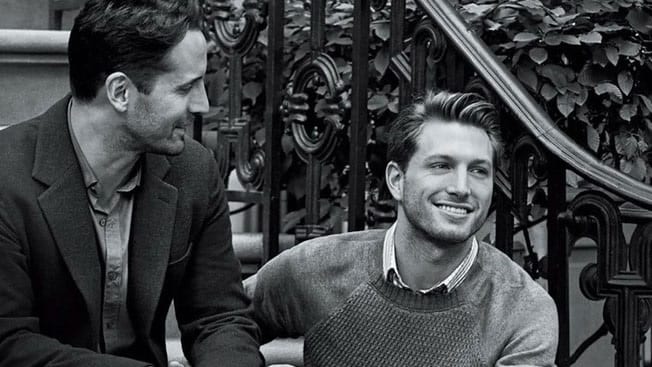
American jeweler Tiffany & Co makes its first foray into featuring same-sex couples in its advertising with its new engagement campaign for 2015. A rep for the jeweler didn’t release the guys’ names because despite being extremely attractive, they are not professional models.
Tag: Fashion
-
COACH to acquire Stuart Weitzman for USD574m
COACH will pay Sycamore Partners a hefty USD574 million for Stuart Weitzman — their women’s footwear brand — in a move that is no doubt designed to diversify their sales portfolio considering 55 percent of their USD4.8 million in sales last year came from women’s handbags with only 9 percent coming from auxiliary items like jewelry, accessories, footwear and the likes.
-

Olivia Wilde is the face of H&M’s Conscious Exclusive campaign
Known for her commitment to sustainability and her engagement for environmental causes, actress Olivia Wilde, will be the face of H&M’s Conscious Exclusive campaign, set to be unveiled in around 200 H&M stores worldwide and online on 16 April.
“Sustainability is one of my biggest passions. I’m proud to be the face of H&M Conscious Exclusive, a collection which shows the stylishness of sustainability,” she said in a statement posted in the H&M website.
H&M said this year’s Conscious Exclusive collection draws inspiration from African, Asian and Indian cultures in both cut and detail. Dresses are a focus, along with hand-drawn prints created especially for the collection.
“The pieces are full of character with the most beautiful prints, all made from more sustainable materials,” said Ann-Sofie Johansson, H&M’s head of design for new development.
-
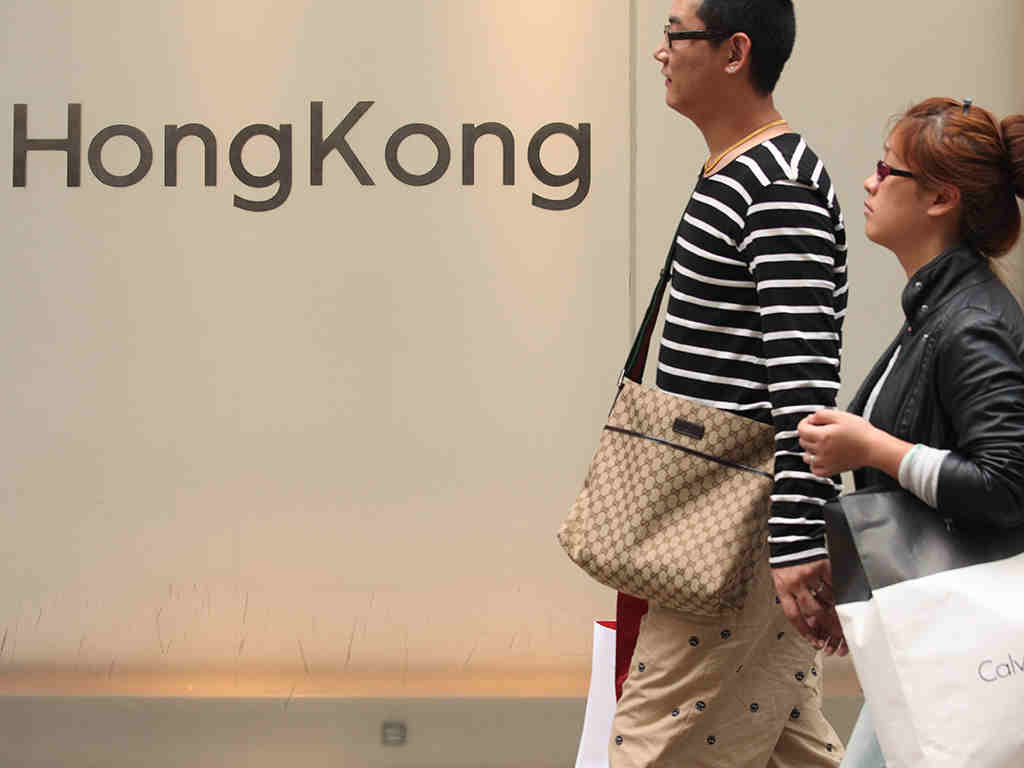
HK still world’s most expensive retail market
Hong Kong ranks as the world’s most expensive high-street retail destination, surpassing New York, Paris, London and Tokyo by a substantial margin, according to the latest research from CBRE.
CBRE’s regular quarterly ranking of the world’s prime global retail markets saw little change in the third quarter of 2014, with global and hot-growth markets continuing to lead the rankings.
It said this is the third consecutive year that Hong Kong has ranked top of the global list.
According to CBRE, Hong Kong (USD4,327 per sq. ft. per annum) maintained a wide lead over the number-two market, New York (USD3,570 per sq. ft. per annum) where prime rents along Fifth Avenue are at record levels.
“The Occupy Central protest, which began late in Q3, has not yet materially impacted retail rents in Hong Kong as most prime retail shops are located beyond protest areas,” said Joe Lin, Executive Director, Retail Services, CBRE Hong Kong.
While the top four cities continue to hold their leading positions, there was some movement lower in the top ten rankings. Rents rose in Tokyo (USD1,076 per sq. ft. per annum), and fell in Zurich (USD895 per sq. ft. per annum) and Sydney (USD730 per sq. ft. per annum), resulting in the cities changing positions this quarter.
In Q3 2014, Tokyo continued to lead rental growth in Asia-Pacific, with the continued lack of space in major high-street retail locations pushing up retail rents 7.7 percent quarter-over-quarter.
Strong rental growth was also recorded in a number of emerging markets in the region, particularly in India and Vietnam, reflecting the recent resumption of structural economic reforms following the general lack of progress over the past few years. Highlights included a strong 5.9% quarter-over-quarter rental growth in Ho Chi Minh City and a 4 percent quarter-over-quarter rental growth in Mumbai.
-

Luxury brands’ missed opportunity: YouTube
Luxury fashion brands sashayed their way to substantially more YouTube views in 2014. But they still have a lot of runway ahead for growth on the social media platform.
According to a new report by think tank L2, conducted in partnership with YouTube ad buying platform Pixability, fashion brands increased views on the video site by 204 percent as of October, as compared to the prior year’s total. The 90 brands examined also boosted their subscriber base by 87 percent, with Chanel, Dior and Burberry leading the way.
Despite this improvement, the report noted fashion brands “consistently fail to optimize their YouTube presence,” in part because the majority of their content fails to appear in the top slot of search results for their respective brands.
-
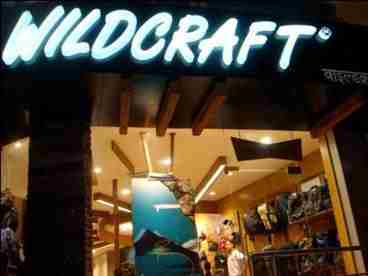
Wildcraft to add 50-60 stores in India by 2016, eyes overseas markets
Even as global active lifestyle brands are rushing into India, home-grown outdoor gear brand Wildcraft has said it is eyeing opportunities to take its brand to West Asian and South Asian markets.
“We have designed our products keeping in view the local climatic conditions. West Asian and South Asian markets can well do with our kind of products. We are planning to venture into those countries with the distribution model,” Gaurav Dublish, co-Founder, Wildcraft, toldBusinessLine.
In India, Wildcraft has 120 retail outlets, largely company-owned and operated. “We plan to add 50-60 stores by 2016,” said Dublish, adding the investment outlay is expected to be about INR18 crore (INR180 million, USD2.8m). Wildcraft stores are typically 500-600 square feet.
-
Adidos and Hotwind? In China, brands get names to show foreign flair
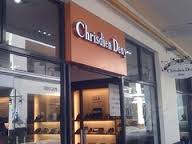
Chrisdien Deny, a retail chain with more than 500 locations across China, sells belts, shoes and clothing with an “Italian style” – and a logo with the same font as Christian Dior’s.
Helen Keller, named for the deaf-blind American humanitarian, offers trendy sunglasses and classic spectacles at over 80 stores, with the motto “you see the world, the world sees you.”
Frognie Zila, a clothing brand sold in 120 stores in China, boasts that its “international” selection is “one of the first choices of successful politicians and businessmen” and features pictures on its website of the Leaning Tower of Pisa and Venetian canals.
Eager to glaze their products with the sheen of international sophistication, many homegrown retail brands have hit upon a similar formula: Choose a non-Chinese name that gives the impression of being foreign.
-
Puma eyes top spot in India through store expansion, new brands
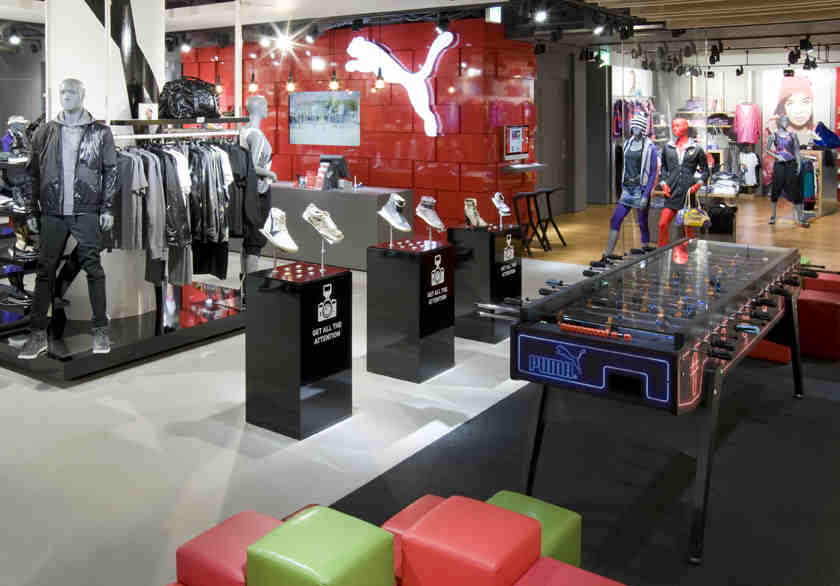
Puma, the global brand known for its lifestyle sports apparel and shoes, is looking to strengthen its position in India. It is eyeing the top slot in the segment via a nationwide network expansion as well as the launch of its global brands pitched at the Indian sports enthusiast. Abhishek Ganguly, the new managing director of PUMA India, is looking to reposition the brand in the country. Puma is currently in the second spot behind Adidas in India’s INR5000-crore (INR50 billion, USD785.3 million) sportswear market, followed by Nike.
“We are in process of creating a strong brand awareness through various marketing and product launch initiative,” Ganguly said. “We are bullish on India and we have seen a major shift to high end products by Indian consumers. Hence, we want to bring our global sports assets to India shortly.”
From its global kitty, Puma has already launched two leading shoe brands, Mobium and Faas, in India. The Mobium Ride, priced at about INR9,000, is built for the more traditional heel striker looking for an everyday running shoe. The company also launched the Nightcat Powered edition under Mobium brand. The Faas 600 S is priced in the INR8,000 range in India.
-
Fashion SMEs in Thailand to get boost
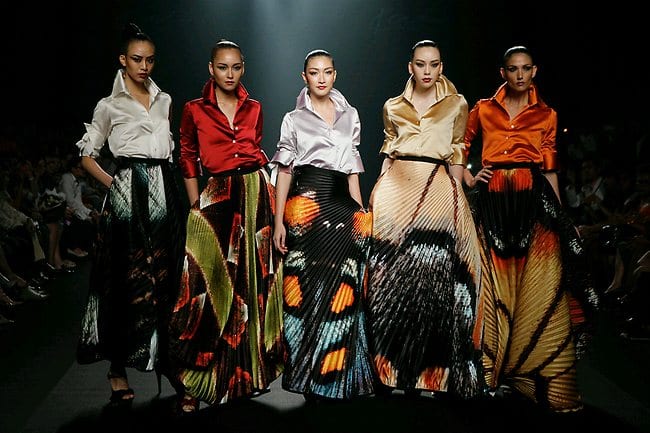
The Industry Ministry of Thailand has earmarked THB120 million to support small and medium-sized fashion enterprises wanting to explore opportunities in neighbouring countries next year.
Thailand’s fashion cluster, covering apparel, jewellery and leather products, has the potential to compete with Cambodia, Laos, Myanmar and Vietnam, says Arthit Wuthikaro, director-general of the Industrial Development Department.
“SMEs in other industry clusters will obtain the same support for expanding business abroad, notably in ASEAN, if they have strong business potential,” he said.
-
Gucci to check Chinese suppliers after TV exploitation charges
Italian fashion house Gucci said on Monday it would strengthen controls on its suppliers after a television program showed Chinese employees working more than three times their official hours to assemble its handbags.
The head of a Gucci subcontractor told an investigative program broadcast by RAI state television on Sunday that Gucci was aware it irregularly employed Chinese workers.
Aroldo Guidotti of subcontractor Mondo Libero (Free World) said the employees toiled away for as long as 14 hours a day, while they were supposed to work only for four hours, to assemble handbags that he sold to Gucci for EUR24 (USD29).
-
Chinese shopping “agents” cash in on ruble slide
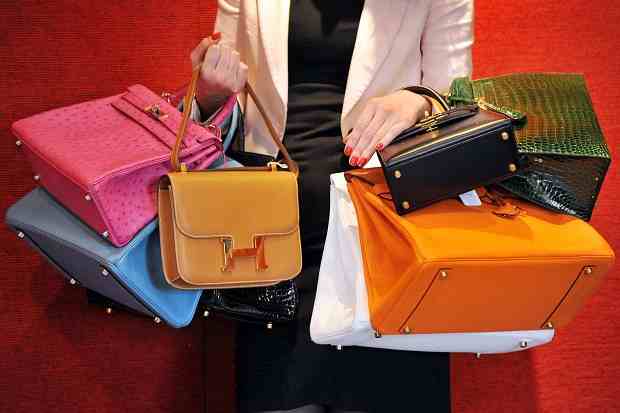
Chinese workers and overseas students in Russia have been snapping up goods at low prices caused by the steep fall in Russian ruble rates before brands can adjust them.
These shopping “agents”, knows as “daigou”, stockpile the products before selling them at a profit to buyers back home.
These shopping agents are not new for Chinese shoppers, who often look abroad to buy luxury items to bypass steep import taxes at home.
-
Emporium reopens USD91m makeover
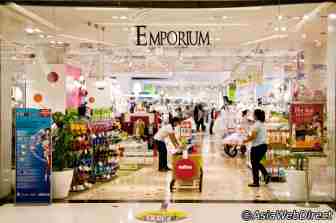
The Emporium shopping complex in Bangkok will fully open in March after a major renovation.
Voralak Tulaphorn, senior vice-president for merchandising of The Mall Group, operator of the upscale shopping venue, said 95 percent of total space at the shopping centre had been reopened to customers since last Monday. Only the cinema zone remains closed.
The company spent THB3 billion (USD91.3 million) to make over The Emporium over the past seven to eight months in anticipation of fiercer retail competition in the Pathumwan, Ratchaprasong and Sukhumvit areas next year.