Tag: Fashion

  • Emart’s No Brand to open first overseas store

    Emart’s No Brand to open first overseas store

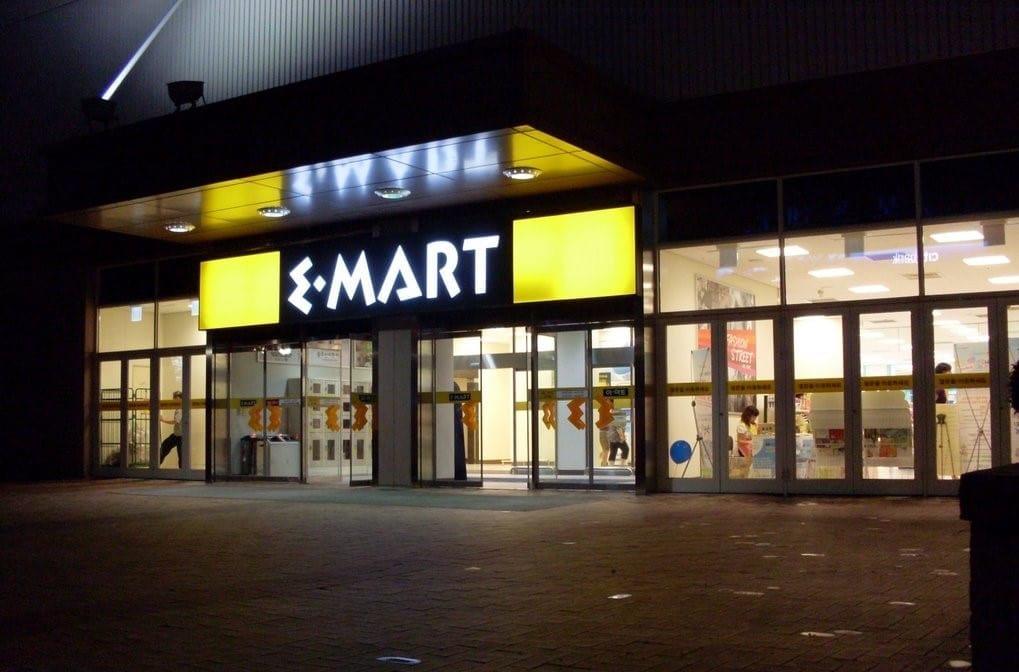
    Emart is taking its No Brand line to the Philippines, the first overseas expansion for the label. The chain announced Monday that it signed a franchise agreement with Robinsons Retail, the No. 2 retail company in the Philippines, to roll out No Brand and Scentence in the country. Both are Emart in-house lines.

    “Under the deal, 50 No Brand and 50 Scentence stores will be established in main shopping malls and department stores at the Philippines by 2020,” Emart said in a statement.

    Robinsons will be in charge of store operations, while Emart will be paid a licensing fee and profit from the export of products to the stores.

    No Brand is an Emart label that sells daily necessities and some food items. Around 70 percent of No Brand goods are manufactured by local small enterprises. Although it was started as an in-house line, No Brand has been so successful that stand-alone stores have been opened.

    Emart has established stores overseas, but this is the first time No Brand has been taken abroad. With partner Robinsons, the local retailer plans to co-develop No Brand products for the Philippine market and possibly export them for sale at Emart stores in Vietnam and Mongolia.

    For Scentence, Emart’s in-house beauty brand, the Philippine project is the brand’s second overseas move. It opened in Saudi Arabia in July. Emart says it plans to develop Scentence beauty products that fit well with the climate of the Philippines.

    No Brand and Scentence are both part of Shinsegae Vice President Chung Yong-jin’s strategy to develop “specialized stores” that focus on a particular product category instead of selling a little of everything as is done in discount chains.

    The discount chain market is saturated in Korea and is facing mounting regulations.

    “The deal to launch No Brand and Scentence in the Philippines is meaningful to us in that it diversifies our global portfolio for specialized stores,” said Lee Joo-ho, who heads Emart’s global business.

  • Crocs opens its 100th store in India at VR Mall Chennai

    Crocs opens its 100th store in India at VR Mall Chennai

    The new store, which spreads across 625 sq. ft., is Crocs’ third store in the city and 5th in the state of Tamil Nadu. Boasting a premium location at VR Mall, the hub for luxury and international brands in Chennai, the store promises to strengthen the reach of the iconic brand in the state capital.

    Since the opening of its first store in India in 2008, Crocs has successfully carved a distinct positioning for the brand amongst the Indian consumers akin to its global positioning and is growing at a robust pace with presence across 50 cities in India.

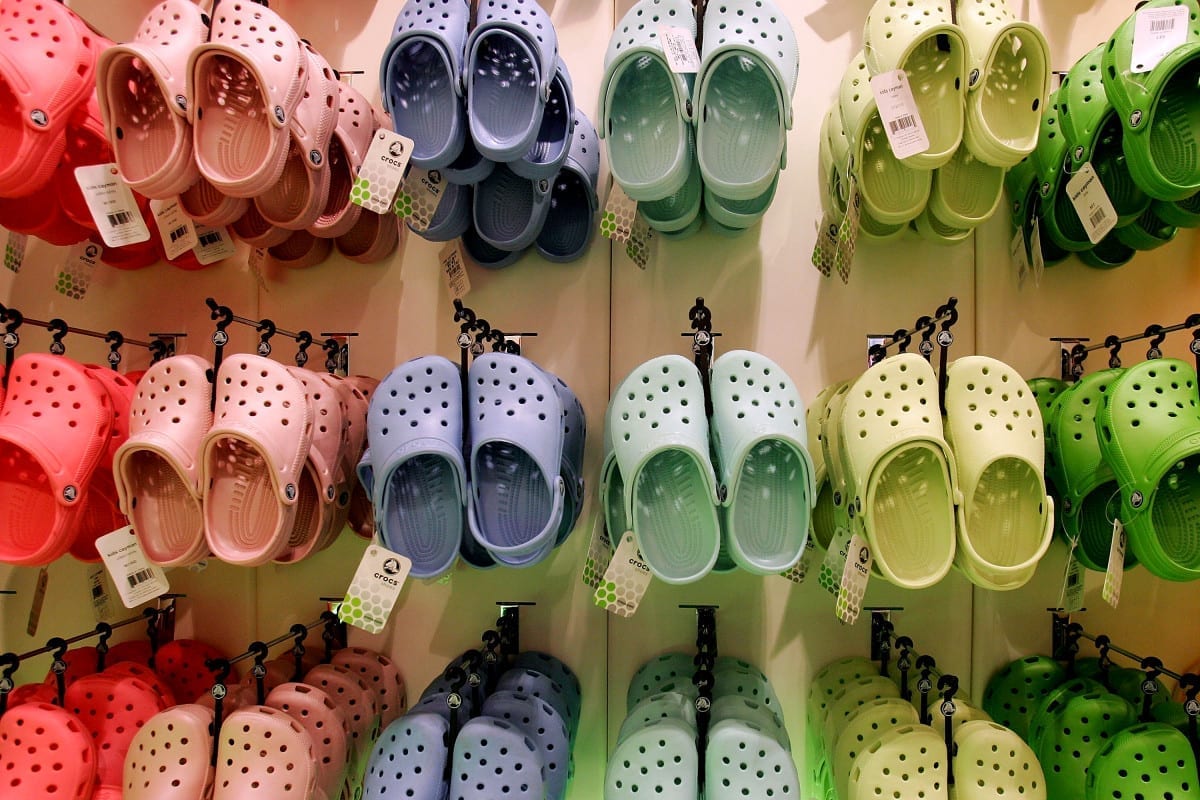
    Crocs, which is known globally for its iconic Clogs, is turning towards India to fuel its next phase of growth. India is currently the 6th biggest market for Crocs globally with a high double-digit growth year on year.

    Metro Shoes, the national franchise partner of Crocs India, will be operating this 100th store located in Chennai. The partnership with Metro Shoes began in 2014 which has helped the iconic footwear brand in expanding its reach to over 50 cities through its EBO operations.

    Speaking on occasion, Deepak Chhabra, CEO & MD, Crocs India, said, “We are excited on reaching the century mark in India. India is one of the rare markets where even after opening 100 stores we still feel under-penetrated. Our absolute focus for the next phase of geographical expansion will continue to be on top 6 metro cities across the country along with state capitals. Exclusive brand stores are a very significant part of our growth strategy. In addition to aggressively growing our EBOs, we will be strengthening our presence in Tier-II cities via MBOs and Kiosks. Further, e-commerce will remain an integral part of our distribution strategy and help us reach out to consumers where our brick and mortar presence is limited. Region-wise South India, due to its demographics and very high brand recall, contributes the highest amongst all regions in the country and will remain an integral part of our India growth strategy.”

    Commenting on the occasion, Rafique Abdul Malik, Chairman & MD, Metro Shoes, said, “We would like to congratulate Crocs India on the launch of their 100th store and are confident that this is just one of many more milestones to follow. Metro Shoes is glad to partner with a brand which despite being just 16 years old has an iconic status with probably the highest brand-recall across the globe. India as a nation has a high affinity for open shoes and sandals owing to the climatic conditions, making Crocs highly relevant in this market.”

    With its unique brand awareness and break-through product innovations, Crocs is progressing towards becoming India’s top non-athletic casual footwear brand. Other than its EBOs, Crocs asserts its strong presence in MBO channels through which its overall offline reach extends to more than 150 cities via 1,500 + points-of-sale. Additionally, it caters to 20,000+ pin codes translating to 400 cities via its e-commerce presence.

    Over the past 16 years, Crocs has sold more than 350 million pairs of shoes worldwide. Crocs as a brand will continue to focus on clogs and sandals, along with new product innovations and extensions of the current product line. This year, Crocs India launched LiteRide™, Drew Barrymore ♥ Crocs Collection, Crocband™ Platform Collection, and Luxe Lined Collection. Last year internationally, the brand has associated with designers like Balenciaga and Christopher Kane bringing in some exciting trends to the runway which further elevated the appeal of the iconic clog in fashion space.

  • Shilla Travel Retail Hong Kong appoints new MD

    Shilla Travel Retail Hong Kong appoints new MD

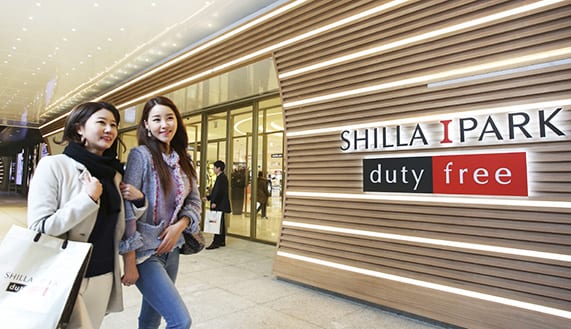
    The Shilla Duty Free has appointed a new MD of its Hong Kong operations. Changha Shin takes over the helm of Shilla Travel Retail Hong Kong this week after the surprise departure of Alice Woo. Woo built the business up after becoming its first employee last year when the Korean-owned travel retail company secured major duty-free concessions at Hong Kong International Airport.

    Prior to working with Shilla, Woo spent 22 years in travel retail in Asia, Hawaii and North America, with companies including DFS Group and Nuance Watson.

    Her replacement Shin was previously the merchandising director of Shilla Travel Retail Hong Kong. In a short statement, Shilla said Shin has a wealth of knowledge across various product categories with 14 years of experience. He started in HR with Shilla Group and has “deep knowledge” of Shilla Group and its partners.

    “The Shilla Duty Free is proud to promote from within and support the development of its staff.”

    Woo will leave her position this week with the change referred to being due to “internal circumstances”. It is unclear if she will remain with the company in another role.

  • Duty-free sales may hit all-time record this year

    Duty-free sales may hit all-time record this year

    Korea’s duty-free sales are likely to set a new annual record this year despite Chinese group tour traffic not having fully recovered.  According to the Korea Duty Free Shops Association, duty-free store operators made $1.44 billion in October, a 28.6 percent increase year on year. This takes Korea’s total duty-free revenue between January and October to $14.3 billion, surpassing 2017’s full-year revenue of $12.8 billion.

    “The local duty-free market was 14 trillion won [$12.4 billion] in size last year – some forecast this year will reach a new all-time record of 18 trillion won,” said a source at one of Korea’s largest duty-free store operators.

    The growth is meaningful considering that Chinese group tours are not fully back in the market.

    Industry watchers and analysts attribute the increase in duty-free sales this year to “daigongs,” or individual Chinese merchants that purchase Korean goods and resell them at home.

    Before Chinese group tours were banned in March 2017 after Korea’s deployment of the U.S. Terminal High-Altitude Area Defense antimissile system, they were a major source of revenue for local duty-free stores. As traveling to Korea for Chinese became more difficult, the reselling business began to grow.

    “Revenues are going up this year but we’re still waiting for group tours to come back,” said another source at one of top three duty-free companies.

    Sales increases are generally good news, but industry watchers warn that operating profits will not grow as fast as revenues. Attracting daigongs entails high marketing costs. New duty-free outlets opened in Seoul this year, which means competition to pull in daigongs may become more intense.

    Signs suggest restrictions on group tours from China are easing. Some online tour agencies have started marketing group tour packages to Korea on their websites. Last week, China’s largest online tour agency Ctrip posted Korean tour products on its website, but erased them the same day.

  • Korean cosmetics firms suffer losses in Q3

    Korean cosmetics firms suffer losses in Q3

    Korea’s mid-sized cosmetics companies suffered losses in the third quarter of this year as they struggled to reorganize their business structures in the face of tough competition at home, industry sources said Sunday. Able C&C, which operates budget cosmetics brand Missha, swung into the red in the July-September period, posting a net loss of 9.4 billion won ($8.3 million), it said.

    Its sales dropped 12.1 percent to 73.1 billion won and operating income swung to a loss of 13.2 billion won. The company said fierce competition in the country’s cosmetics industry, combined with its heavy investment in research and development of new products, led to the poor earnings results.

    Tonymoly reported a net loss of 3.5 billion won, with 800 million won in operating losses on a consolidated basis during the cited period, according to the company.

    Korea’s mid-sized beauty firms’ profitability deteriorated following a diplomatic row between Seoul and Beijing last year, which led to a sharp drop in the number of tourists coming to Korea. Industry watchers said the expansion of online and duty-free channels has hurt the mid-sized companies, which rely heavily on offline stores. Last month, Skinfood was placed under a Seoul court’s receivership after the company said that it is having temporary difficulty securing liquidity due to excessive debt.

    “We are making efforts to improve our profitability and strengthen our online business,” an official from Nature Republic said.

    Nature Republic reduced the number of its stores to 680 by the first half of this year from 770 in 2015. The company reported 58.8 billion won in sales and 300 million won in operating income in the third quarter of this year.

  • L Brands loss revealed, Victoria’s Secret faces challenge

    L Brands loss revealed, Victoria’s Secret faces challenge

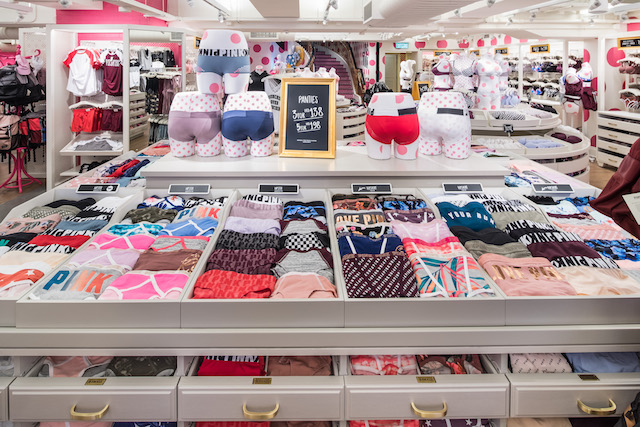
    Lingerie brand Victoria’s Secret needs to reinvent itself, says retail analyst Neil Saunders, commenting in the wake of a US$42.8 million loss by its parent L Brands. “The brand is simply not connecting and resonating with consumers in the way that it once did. Its overt sexuality, its focus on airbrushed glamour, and its dark-and-moody stores are completely out of step with the mood of most modern consumers,” said Saunders, MD of GlobalData Retail.

    “However, this is not a new phenomenon, Victoria’s Secret has been out of kilter for a long period of time – and has seemingly done very little to bring itself back into line.”

    Sales at Victoria’s Secret have fallen in seven out of the last eight quarters, mainly due to its weak diffusion brand Pink, launched in 2002 and aimed at college-aged women.

    “In Pink, fashion errors in loungewear have driven a recent deceleration in performance,” the company admitted in its earnings statement.

    L Brands’ third-quarter results showed an increase in same-store sales of 4 per cent across the group, to $2.77 billion, but Victoria’s Secret store sales fell by 2 per cent.

    The top line was boosted by L Brands’ Bath & Body Works brand. But one-off costs from the closure of Henri Bendel, impairments at Victoria’s Secret and ongoing losses in the La Senza business drove the net loss.

    Saunders described the Victoria’s Secret performance as disappointing, “not only with the sales numbers but by the inertia within the business”.

    He said much of the brand’s failure to change came down to embedded attitudes within management.

    “The recent insensitive comments about transsexuals from chief marketing officer, Ed Razek, in a Vogue interview characterise the problems. Not only are such remarks bad for the brand’s image, but it also earned a sharp public rebuke from the CEO of more incisive rival ThirdLove which has been stealing share from Victoria’s Secret for some time.

    “In theory, the departure of Jan Singer as CEO should help herald in changes someone coming in will have fresh ideas about reviving the fortunes of Victoria’s Secret.”

    L Brands has appointed John Mehas from lifestyle brand Tory Burch as the new CEO of Victoria’s Secret. He will take up the role early next year.

    Pink CEO Denise Landman retired after the release of the L Brands half-year results and she was replaced on October 1 by former Bath & Body Works president for merchandising and product development, Amy Hauk.

    “Our new leaders are coming in with a fresh perspective and looking at everything … our marketing, brand positioning, internal talent, real estate portfolio and cost structure,” said CEO Leslie Wexner.

    Saunders said Bath & Body Works was a stark contrast to the core brand.

    “The company’s wholesome brand image and its focus on small indulgences are paying real dividends – especially in a consumer economy where shoppers have more money to treat themselves. Its strong range development which means assortments are constantly changing encourages regular visits to online and stores. It also means that the company is good at jumping on trends like aromatherapy-based scents and the ongoing popularity of candles. Second, good marketing and promotions help to drive volumes through the business,” said Saunders.

    “Both of these things stem from the fact that the BBW team is much more attuned to the market and consumer trends than is the case at Victoria’s Secret. Indeed, the cultures at the two divisions could not be more different, and we believe that Victoria’s Secret should take a leaf out of its sister brand’s playbook as it looks to reinvent itself.”

  • Promising market for luxury rental services raises

    Promising market for luxury rental services raises

    A growing community of Korean women primarily in their 20s to 40s prefer renting high-end goods from subscription services such as Series Eight, The Closet and Reebonz Korea. Asked why they chooses to rent their wardrobe, they said the introduction of luxury goods rental services helped her prioritize living expenses and limit unnecessary spending on personal shopping.

    By paying a monthly subscription fee of 79,000 won (US$70), Reebonz customers, for example, can rent up to two bags a month. Customers opting for pricier premium plans are given the option to rent a bag from the most expensive or popular brands for up to 10 days for prices ranging from 9,800 won to 19,800 won.

    “Subscription-based business models have not seen much success in the local market compared to other countries. But, because luxury goods’ prices are so high compared to the low purchasing power of Koreans in their 20s and 30s, the (subscription) services are expected to see substantial growth in South Korea,” said Choi Kang-sik, a professor of economics at Yonsei University.

    Choi said that with more women wanting to rent luxury goods, rental companies must better communicate with luxury brands in order to bring better products to the table.

    “The power of luxury brands will always see an upward trend. The difference, now, will be that consumer groups won’t be women visiting department stores. It will be the luxury rental companies who will be supplying the bags to the original customer base,” he said.

    Even though popular American designer rental services such as Bag Borrow or Steal and Rent the Runway launched a decade earlier, designer subscription services garnered attention from local consumers starting in 2016, according to Series Eight CEO Kim Tae-hyun.

    Kim, who co-founded Reebonz Korea with current chief Ha Dong-gu, left Reebonz to launch the startup Series Eight under the Value Art Architect Group last year.

    On the surface, the two companies share similar concepts with regards to lending customers a hand in renting high-end products.

    If Reebonz sticks to a subscription model, Series Eight and its six-member team envisions a shopping platform beyond just a rental service where women can rent high-end bags whenever and for however long they please.

    “We essentially did not want to give the idea of pressuring women to pick a bag every month just because they are paying a certain amount. The pressure in itself ruins the shopping experience,” Kim said.

    In order for a business to be successful on a subscription-based model, it needs to provide convenience, value for the money and personalized experiences. Consumers will cancel services that do not deliver unique, excellent personalized experiences, according to Choi.

    Park Sun-young, juggling being a mom and public relations director at an ad agency in Seoul, appreciates such unique value from subscription services. Unlike her younger colleagues who seem to have time to go shopping, Park would rather save money and time by renting her wardrobe online.

    “I think young women may feel it’s weird to rent designer clothing and carry handbags that are ultimately not theirs. But, look inside your closet. How many bags are just sitting on the shelf collecting dust?” Park posed.

    “Being a mom and having a job, the rental services make my shopping experience something I look forward to at the end of the night before I go to bed. Just scroll down, look through the catalogue and click order.”

  • Palace skate wear to make debut in Tokyo

    Palace skate wear to make debut in Tokyo

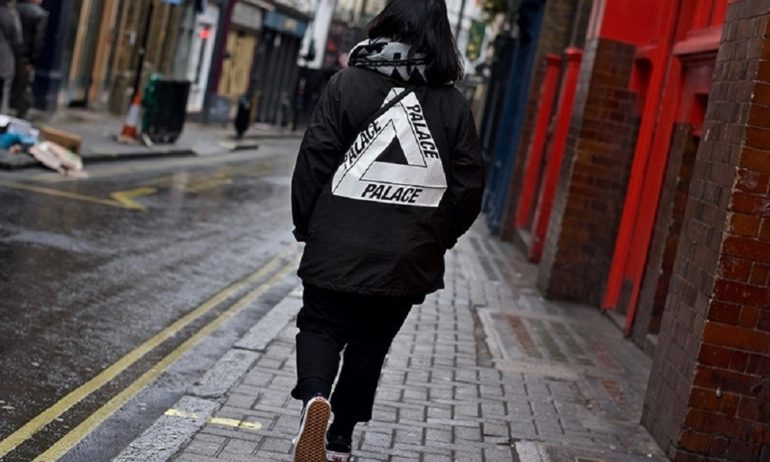
    Cult-classic skate brand Palace opened its first store in Tokyo, opting for the Japanese capital to debut its logo-ed fashion and apparel in the archipelago Asian nation.nThe British street label first announced the Tokyo location via Instagram, in a short teaser film featuring actor and comedian Jonah Hill, which was a similar store reveal stint used by Palace to unveil its New York store.

    Marking the new Shibuya district store, which took place November 3, the London brand has released a series of fashion items exclusively for the new location.

    The Tokyo capsule features pieces referencing Japan, including a Mount Fuji graphic hoodie.

    In the mix is also a limited-edition “P.A.L.A.C.E” branded leather card holder, luggage tag and passport cover, as well as “Made in Scotland, Designed in London” rainbow knitwear, in collaboration with fellow Briton Pringle of Scotland.

    Founded in London in 2009 by Levent Tanju and Gareth Skewis, Palace has in the last nine years garnered a cult-style following among skaters by toying with industry conventions.

    It is known for flipping 90s skate videos upside, promoting the kitschy side of the era’s VHS tapes, as well as its now globally recognised Palace logo, which features on oversized hoodies, sweaters and other streetwear pieces.

    It has been in collaboration with Adidas since 2015 and has also previously collaborated with Reebok and Oakley. Most recently, it has teased an upcoming collaboration with Ralph Lauren in Japan.

    Palace currently operates locations in London and, since spring 2017, New York’s SoHo neighbourhood.

    Palace Tokyo’s official address is 2F & 3F, 5-9-20 Jingumae, Shibuya-ku in Tokyo, Japan.

  • Global luxury goods sales drop: Bain

    Global luxury goods sales drop: Bain

    New data from Bain & Company shows global luxury goods sales will struggle to maintain growth, as the US-Sino trade war and other geopolitical events impact on consumer confidence.

    In June, Bain said the personal luxury goods market was “on a tear” this year and would grow by between 6 per cent and 8 per cent at constant exchange rates to reach €276-281 billion. It said the market could reach €390 billion globally in sales by 2025.

    But now, Bain has released a more tepid projection of €260 billion and a growth rate of 5 per cent this year.

    It has pared back its 2025 projection of personal luxury goods sales to €320-365 billion, slashing €35 to €70 billion off its forecast in just five months.

    And it cautioned that even this figure may be under threat saying “socio-political issues, commercial policies, and potential short-term soft recessions could make this road to growth a bumpy one in the short term”.

    The Bain & Company Luxury Study was released in Milan in collaboration with Fondazione Altagamma, the Italian luxury goods manufacturers’ industry foundation.

    In June, Bain said Mainland China is expected to account for the lion’s share of growth this year. “We forecast this market to grow by 20-22 per cent … Brands are learning how to cater to local consumers, often young and heavily influenced by social media.”

    China kept close to its projections, rising 20 per cent, albeit with the year still not over.

    “Chinese consumers are leading the positive growth trend around the world. Between 2015 and this year, their purchases in Mainland China contributed twice as much growth as their spending abroad. Their share of global spending has continued to rise (now estimated at 33 per cent of global luxury spend, up from 32 per cent in last year), while the share of Mainland China has also risen to 9 per cent (up from 8 per cent in last year). In Mainland China, luxury sales grew 18 per cent at current exchange rates to €23 billion (20 per cent at constant exchange rates), driven by rising demand rather than by price increases,” the report said.

    Claudia D’Arpizio, a Bain partner and lead author of the study, said luxury purchases in Japan softened slightly this year, pushing brands to find new solutions to bring consumers back to stores. However, retail sales still grew at 3 per cent at current exchange rates to €22 billion. “Increased consumption from tourists in Japan is prompting brands to rethink their distribution models.”

    Across the rest of Asia retail sales grew 7 per cent at current exchange rates to €39 billion, due to dynamic growth in South Korea, driven by strong local consumption. Brisk growth in other Asian countries – Singapore, Thailand and Taiwan – also contributed while Hong Kong and Macau benefitted from Chinese purchases.

    Europe lagged in 2018 due to a strong Euro that impacted tourists’ purchasing power. Local consumption was positive overall, despite mixed country performance, helping to boost retail sales 1 per cent at current exchange rates to €84 billion.

    The Americas grew 5 per cent at current exchange rates to €80 billion. “A positive US economy boosted disposable income and overall luxury spending from locals, even as brands remained wary of continued economic prosperity,” the report said. “However, the strong dollar impacted tourists’ spending from Asia and Latin America. Canada and Mexico were strong players in the region, while political uncertainties derailed Brazil’s performance.”

    In other areas, there was nil growth, holding at €12 billion, mainly due to stagnation in Middle East brought on by a recent government spending restriction.

    Luxury online

    The retail channel grew 4 per cent this year, with three-quarters coming from like-for-like sales growth. Wholesale channels grew at only 1 per cent, brought down by high-end department stores still trying to recover, and a slow-down among specialty stores facing tough competition from online.

    Luxury shopping online continued to accelerate this year compared with physical channels, growing 22 per cent versus 2017 to €27 billion.  The US market made up close to half of online sales – 44 per cent– but Asia is emerging as the new growth engine for luxury online, slightly ahead of Europe. Accessories remained the top category sold online, ahead of apparel; beauty and hard luxury (jewellery and watches) were both on the rise.

    Brands are catching up to other online players, comprising 31 per cent of sales, compared to e-tailers (39 per cent) and retailers (30 per cent).

    “New technologies are at once enriching the online and mobile shopping experiences, while potentially putting role of physical channels at risk,” said Federica Levato, a Bain partner and co-author of the study.

    “The luxury store-opening path is slowing down, leading to channel consolidation in the future. Brands must therefore rethink their physical channels and evolve their role from point-of-sale to point-of-touch, and use new technology to enhance customers’ in-store experiences.”

    Luxury consumers getting younger

    The report concluded that younger generations are becoming increasingly more important luxury brands. This year, Generations Y and Z contributed 100 per cent of the total luxury market growth, compared with 85 per cent last year. Bain predicts Generation Z, which today comprises just 2 per cent of the market will account for 10 per cent of it in 2025.

  • Korean lifestyle brand Mumuso enters Indian market

    Korean lifestyle brand Mumuso enters Indian market

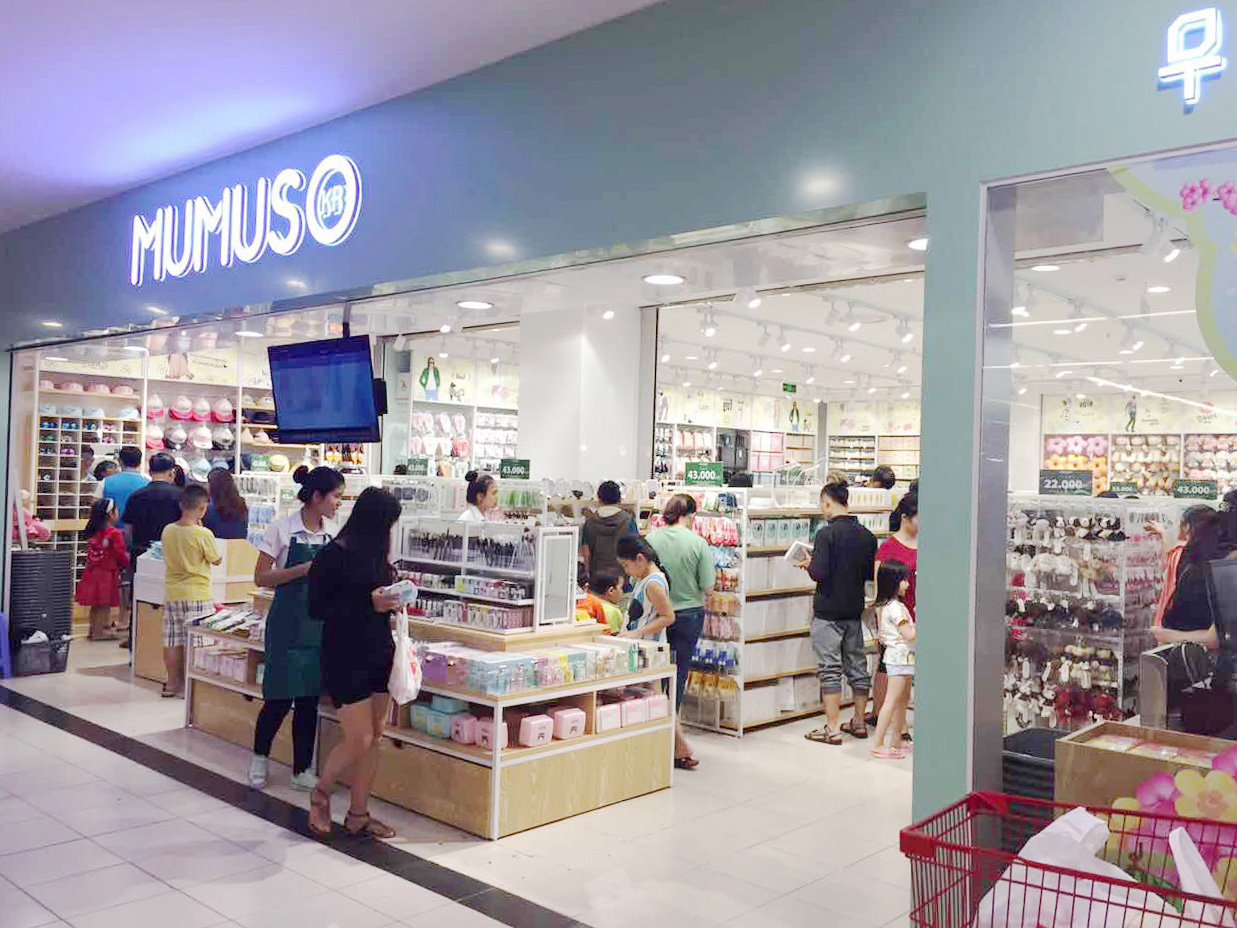
    East Asia’s affordable lifestyle brand Mumuso has announced its expansion plans in Kolkata while opening its first store. Mumuso is eyeing the Indian market aggressively with new stores in different parts of the country, a senior executive said.

    With a strong presence in over 30 countries across the world, the Korean lifestyle brand Mumuso has entered into the Indian Market and plans to open around 300+ stores by 2022 with an average investment of Rs 80 lakh to Rs 1.2 crore which will be spent towards setting up these company-owned and franchise stores. The brand is planning to open outlets pan India with its market reach in cities likes Kolkata, Hyderabad, Siliguri, Bangalore, Delhi, Mumbai, Surat, Durgapur, Chennai and so on.

    Mumuso India — the Indian entity of Mumuso —whose offerings include accessories, stationery, small electronics and lifestyle items, sources these mostly from South Asian nations such as Malaysia, Singapore, China, Indonesia and Korea.

    India has seen a sharp rise in the demand for lifestyle products in the recent years. Mumuso has product categories from Health and Beauty, Fashion Home Accessories to Apparel, Accessories, Digital Products and more. The products offered by the brand are not only beautiful, functional, high-quality and affordable but also provides relaxing and pleasant shopping experience to the customer.

    Speaking on the occasion, Raunak Agarwal, Managing Director, Mumuso India said, “Our expansion strategy is to set up 300+ outlets all over India along with entering the e-commerce market as online shopping has seen a big boost in India in recent years. We are also looking to source from Indian companies specially apparels and small leather products. The company will look to have 300-odd stores by mid-2022. India, being a fast emerging market for retail industry, we are expecting an escalated growth in a short span of time. Indian market has a big potential, where we believe our creative range of products will enhance the rich experience of customers since it’s an international brand with high quality and valued pricing.”

    He added, “There has been a high demand for the trendy and affordable products as far as lifestyle is concerned. People not only look forward to quality and style but also affordability. With Mumuso coming into the picture, people won’t have to travel to different stores for their needs, but just walk into our showroom and get their products. Mumuso brand always adheres to the principle of selling products with reliable quality and affordable price, strictly observes to the borderline of high quality, strives to improve the upper limit of taste and price ratio and provides well-designed products, continuously optimizes the supply chain service system to reduce the cost, creating relaxing and light-hearted shopping experiences for consumers.”

  • Why you should adopt more diverse influencers?

    Why you should adopt more diverse influencers?

    Diversity, or lack thereof, is at the forefront of fashion industry discussions, with runways and advertising campaigns constantly—and rightly—scrutinised. Less has been said about diversity among prominent influencers, the new drivers of sales who are celebrated for their authenticity and ability to connect with customers.

    Thin, light-skinned women aren’t the only clothing shoppers, so why are so many of them the go-to for brands as they put together campaigns?

    Now several influencers, and a handful of talent agencies that represent them, are leading the charge to shake up the staid and stale landscape.

    They’re creating their own campaigns to highlight opportunities and content possibilities—along with #YouBelongNow, there are the hashtags #SupersizeTheLook and #ChicAtAnyAge — putting together initiatives to encourage and celebrate new voices in a greater range of ethnicities, sizes, and ages.

    The problem, many say, stems from the fact that the people organising the campaigns are not thinking about diversity when it comes to casting. It’s a continuation of the narrow view of beauty historically depicted in advertising, contends Jennifer Jean-Pierre Maull, a Haitian-American blogger and photographer from Washington, D.C with almost 16,000 followers on Instagram. “We need to change what we consider beautiful, we need to change what we consider marketable,” she said.

    Consider trendy online retailer Revolve: known for its influencer trips to far-flung corners of the globe, documented glamorously and exhaustively for its 2.6 million Instagram followers.

    Last January, as its squad took to the beach in Thailand, the attention turned from glowing to heated over the lack of diversity in its ranks. A shot of more than a dozen light-skinned swimsuit-clad slender women garnered more than 700 comments. A commenter tagged the picture #RevolveSoWhite.
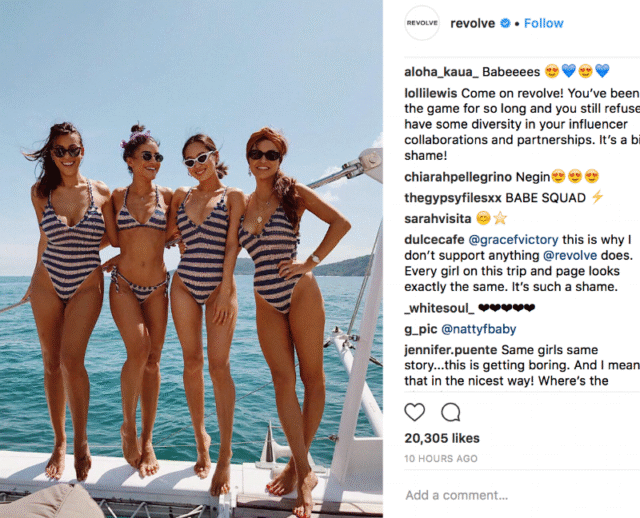
    Revolve, which recently filed for an IPO and generated sales of $400 million last year, has never been a brand to highlight diversity, but whether or not that has had an effect on its sales is unclear.

    Revolve’s earned media value (EMV) dropped during the controversy to the brand’s lowest for the year, at $83.8 million. That cannot be solely attributed to the controversy, however, but “to the natural ebb and flow of events and campaigns.” And the dip was temporary: Revolve’s EMV bounced back to more than $140 million in each of the subsequent two quarters.

    In the firestorm, Valerie Eguavoen saw an opportunity.

    As the moment drew headlines, the North Carolina-based blogger and social justice advocate seized the chance to launch a new Instagram handle, @YouBelongNow, designed to celebrate people of all ethnicities, religions, sexualities and clothing sizes.

    “There are so many women who I could have seen on that trip, who belong in this space,” she said. “We have to get rid of this narrative that we don’t exist or it’s hard to find us.”

    Jean-Pierre Maull has kept tabs on what talent agencies she booked gigs with and which ones she hasn’t. In the latter camp was Fohr, based in New York and co-founded by James Nord. Over the summer, Nord addressed the Revolve controversy in a YouTube video, calling the retailer out for its practices while also suggesting it could be intimidating for brands to reach out to new influencers. Jean-Pierre Maull penned her response in a lengthy blog post. “Our POC (people of colour) community is not an alien force,” she wrote. “It is not hard to send a POC blogger the same pitch email that you send to others.”

    She emailed Nord, requesting to talk with him, one of many ongoing discussions Nord has had in recent months. “I leaned on this group of amazing women who did call me out,” he said.

    “Sometimes we just need to open up the conversation instead of just being angry,” Jean-Pierre Maull said. “Those in power must be self aware enough to see where they may be lacking or not doing enough.”

    One result of the chats Nord has had is a new mentoring program, called Freshman Class, to promote underrepresented influencers. More than 1,600 influencers applied, and 85 finalists were chosen. The ten winners include Alysse Dalessandro, queer plus-size fashion blogger; Ali Hemsley, a fashion influencer with a focus on chronic illness and mental health; and Destin Grayson, a menswear blogger. The winners will be flown to New York for three days of educational and networking opportunities.

    Nord hopes to help newer and lesser-known influencers build a network that can serve as sounding board, to discuss opportunities and pay rates.

    Jean-Pierre Maull said she was worried the initiative would seem like “someone need to swoop in and save” POC bloggers.

    The result, she says, has been anything but; it’s helping establish even more of a sense of community.

    “There is no lack of diversity in influencers, there is a lack of diversity in influencer campaigns,” Nord said.

    Relatability is a crucial part of influencer effectiveness, which is all the more reason why influencer campaigns should feature a more diverse range.

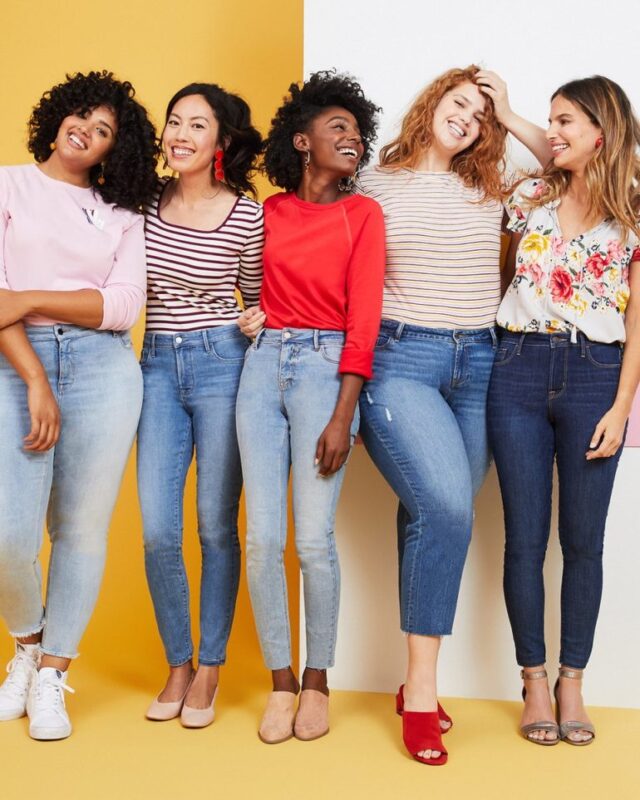
    Old Navy, a division of Gap Inc., looks for a range of sizes and family compositions in its influencer casting, then features them as models in its social feeds and digital marketing.

    “We’re looking for someone who people can see themselves in,” said Liat Weingarten, Old Navy’s vice president of brand communications.

    So far this year, Old Navy’s top two performing social posts featuring people (not just product), based on number of likes, comments and shares, are diverse group shots of influencers.

    One, highlighting dresses from its #SizeYES campaign, received more than 11,000 likes and more than a hundred comments. “My first thought when I saw this was: love this beautiful, diverse group of models!” wrote one commenter. “More of this, please!”
    And then there’s Revolve competitor Fashion Nova, which uses its Instagram account to highlight women of all ethnicities and sizes in its barely-there clothing.

    Its influencer hashtag, #NovaBabe, drove $54.1 million in earned media value from the second half of last year through the first half of this year.

    Mentions for @fashionnovacurve, the account for its plus-size line, generated $61.5 million in EMV.

    Followers are watching what brands are doing closely, too, said Scout the City blogger Sai De Silva.

    “When I go to events, I feel like there’s no one like me,” said Silva, whose followers have asked why she was the only woman of colour or woman with curly hair at a party “I live in New York City, how could there not be one other Puerto Rican [influencer]?”

    Influencers are finding that being proactive is the only way to move the conversation forward.

    Max Stein, founder and chief executive of agency Brigade Talent, said some of his clients will ask who else is participating before agreeing to a campaign, in the context of making sure a brand or company aligns on values—not just aesthetic. “It’s important to them that [diversity] is a value of the brand that they choose to partner with,” he said.

    However, not all brands are responsive in the way an influencer might want them to be.

    “There is sometimes a lack of cultural awareness and cultural sensitivities,” said Jaia Thomas, co-founder of The Presley Group, a management agency promoting diversity within the influencer space.

    Thomas, an entertainment lawyer, pointed to the time one of her African American clients was asked to do a post about watermelon. “There’s a long history of racial tropes and stereotypes associated with African-Americans, an affinity for watermelon being one of them,” Thomas said. “It’s important for there to be African-Americans in the room when creating social media campaigns so they can quickly and easily identify these stereotypes and ensure companies steer clear of them.”

    So, when will brands wise up? The enthusiasm that comes with a highly-engaged, targeted follower base is a big selling point in today’s noisy marketing field.

    “I don’t have a million followers,” said Katie Sturino, the force behind the handle and site The 12-ish Style. “What I do have is an audience that believes in what I’m saying and believe that if I’m showing them something, I like it.”

    Sturino’s best-performing content comes from two popular hashtags on her own account, both calling attention to sizing deficits within the industry. She recreates stars’ ensembles in #SupersizetheLook, with photographs of herself in similar outfits, performing 77 percent better than her average posts.

    Sturino also started the #MakeMySize hashtag, pairing pictures of herself in garments that are too small with captions asking brands to make a broader range of sizes, performing 65 percent better than her average posts.

    Sturino wishes more brands would take the time to find new personalities, and involve those newcomers earlier in the product-development process. “You pay them to wear the clothes, why don’t you pay them for their opinions, too?” she said.
  • Xtep Sports opens sportswear store in India

    Xtep Sports opens sportswear store in India

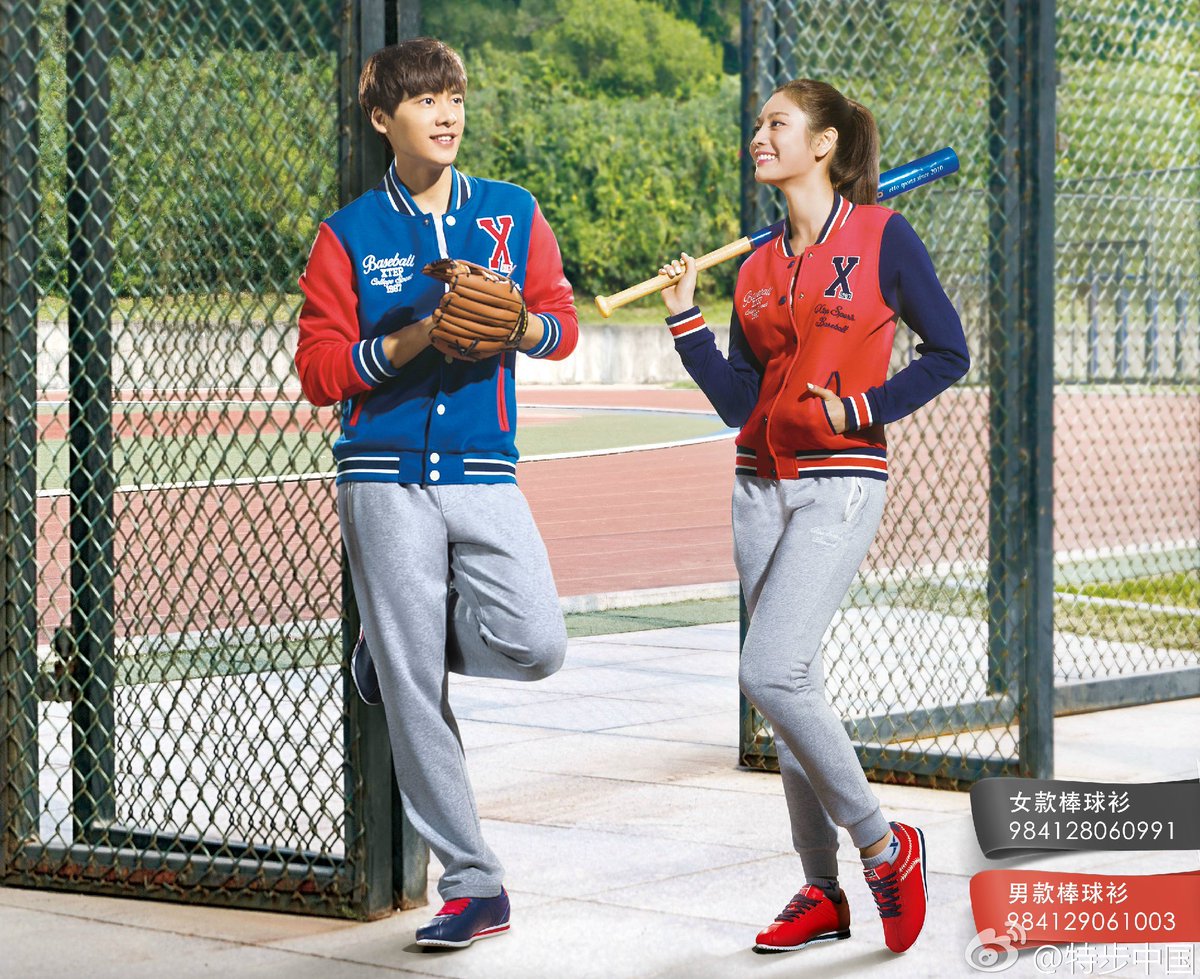
    Hong Kong-headquartered Xtep Sports has opened its first Indian flagship store, in Bengaluru. The Xtep group, which specialises in footwear and sportswear, currently has 6035 stores in 31 Mainland China provinces as well as in Vietnam, Nepal, Saudi Arabia and Spain. The company was founded by Ding Shui Po, now its CEO, in 1999 as an original equipment manufacturers for global sports brands. It launched its own label in 2002.

    The company is reportedly planning to open five stores in India by the end of this year and will also sell through local online marketplaces.

  • Matching mom-and-daughter outfit is a new trend

    Matching mom-and-daughter outfit is a new trend

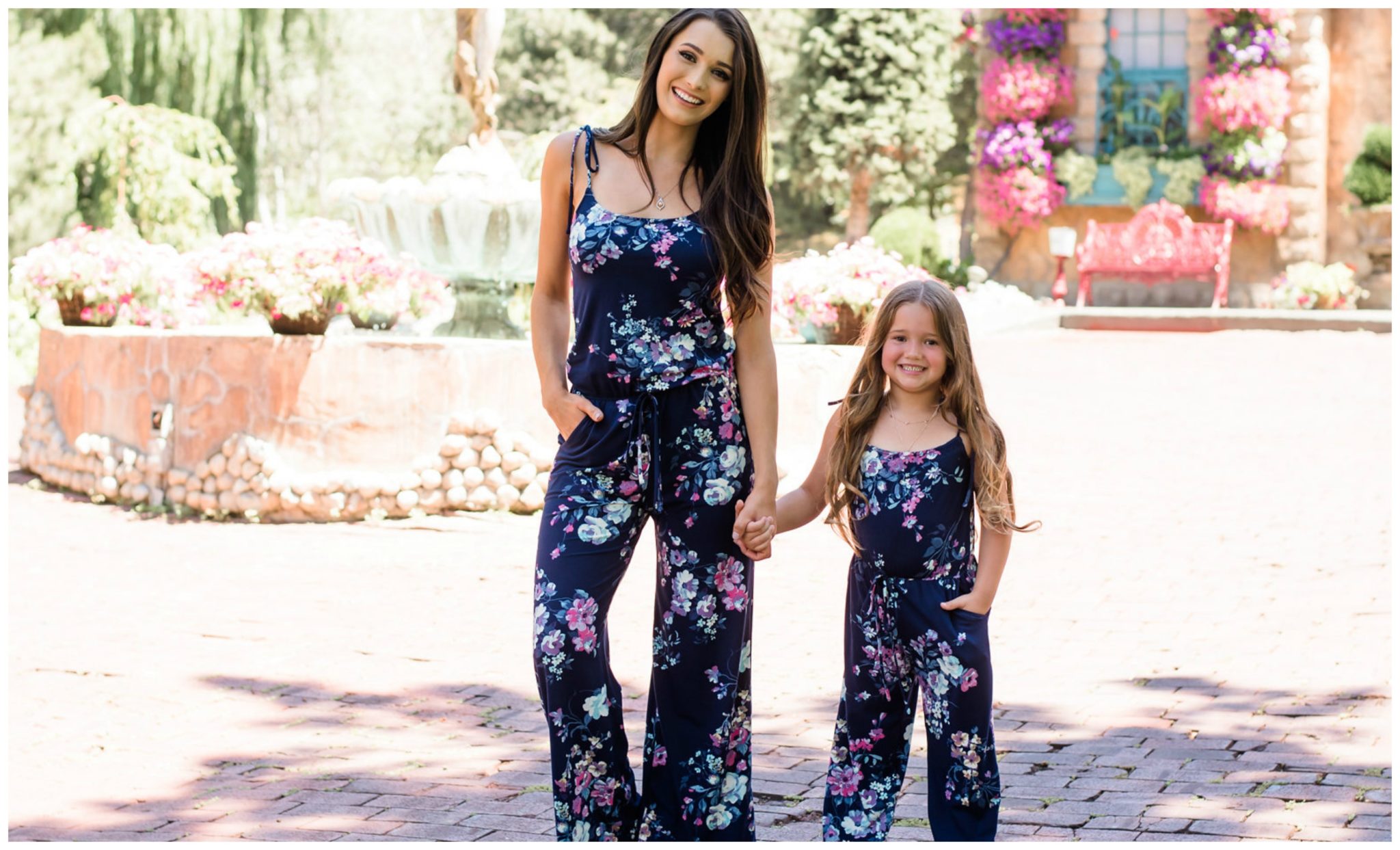
    The luxury childrenswear market is forecast to reach $6.6 billion in 2018, up by 3.8 percent year-on-year, presenting ample growth opportunities as spending power increases and parents dish out upwards of $500 for a pair of miniature Gucci loafers to match their own.

    Brands from Gucci and Balenciaga through to Burberry have their own multi-million dollar childrenswear lines (the latter made £117 million in revenue in 2017, about $153 million) which largely shrink runway looks from ready-to-wear collections to fit young children rather than designing them from scratch, hoping to bank on a mother’s desire to wear matching pieces with her daughter.

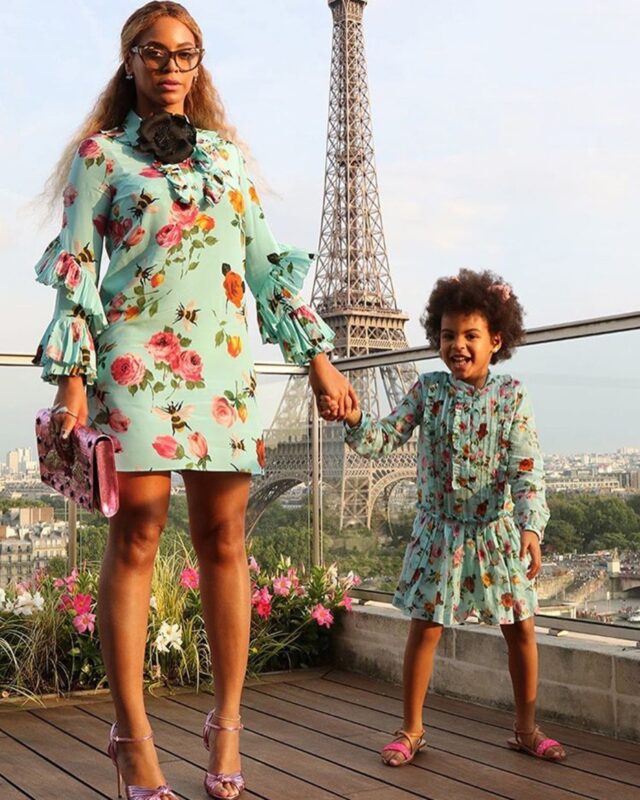
    But putting celebrity power to one side, as Kim Kardashian West signaled that mini-me dressing is once again big business by stepping out in a matching outfit with her daughter, what else is driving this phenomenon that seems to reappear every few years?

    “Childrenswear is increasingly trend-oriented,” says Nathalie Christen-Genty, the founder of Paris-based Melijoe, the luxury e-commerce site dubbed “the Net-a-Porter for childrenswear.” “A few years ago, childrenswear was dictated by just a few kids-only brands and parents’ motivation to buy was first and foremost driven by practicality,” meaning pieces for children were designed specifically for them with a timeless and classic design in mind.

    In the recent past, matchy-matchy ensembles were considered passé, reminiscent of bygone eras like the 1960s when women would make garments for themselves and their children from the same piece of fabric.

    When luxury brands began launching childrenswear lines in the 2000s, “they didn’t think it would be big business,” says Giuliana Parabiago, a consultant at Pitti Bimbo, a key international childrenswear trade show where the latest trends are often discovered. They would use past-season styles that would be delayed by six months or a year, she says, but now childrenswear and ready-to-wear runs at the same speed. “This new generation wants to be young — and matching.”

    Chloé launched its children’s line in 2010 with licensee Children Worldwide Fashion (CFW), which also makes lines for Givenchy, DKNY and Little Marc Jacobs.

    For the current season, stand-out pieces include a velvet bomber jacket with horse embroidery and a pair of suede ankle boots — mini-versions of products creative director Natacha Ramsay-Levi sent down the runway.

    “The pieces which are obviously Chloé, [for instance] the horse pattern, tend to perform better,” says Geoffroy de la Bourdonnaye, the brand’s chief executive who credits the success of mini-sized versions to the fact that some “mothers take pride in seeing their daughters look like themselves” and that others want “to share the brand’s DNA of being ‘free’ with their children.”

    “The [childrenswear] business has consistently grown for the last eight years,” he adds. “The countries that spend a lot of money to dress their kids tend to be Russia and the Middle East, along with China. Countries in Latin America also invest in their kids.”

    While Chloé’s relationship with its licensee means there is constant contact with the ready-to-wear design studio and the capacity for CWF to select the runway pieces it wants to adapt for children, Dolce & Gabbana’s approach was to take its line in-house allowing it to have complete control like Ralph Lauren, Burberry and Dior Baby who also go it alone.

    However, such arrangements are still unusual; most luxury brands sign with a handful of specialist licensees. Simonetta produces childrenswear for Balmain and Fendi Kids; Kidiliz Group has the license for Kenzo Kids, Paul Smith and Levi’s Kids; and Brava Kid takes care of the brands under the OTB umbrella which include Diesel, Marni and Trussardi Junior.

    The reason that the license route is so popular is that childrenswear requires an expert hand since it is not as simple as it may seem to scale down a garment pattern to fit the body shape of a child. The specialist experience on offer by the licensed manufacturers means they also understand intuitively how to make an outfit appropriate for children.

    The movement has also helped drive childrenswear into the same trend cycle as womenswear as brands respond to demand by bringing out more novelty.

    “Children’s lines [now] have their long-awaited collections as much as the ready-to-wear for the parents,” says Emi Ozmen, the mother of one of the child vloggers behind Silver and Lux.

    Source: @beyonce

    Dolce & Gabbana launched a four-week kids pop-up at Net-a-Porter, including a £1,100 tiered fil-coupé silk-blend dress for ages two to six, a £775 satin-trimmed brocade suit for ages two to five and an array of handbags and footwear.

    “When [the mini-me trend] is executed well, it’s incredibly fun and expressive,” says the site’s global buying director Elizabeth von der Goltz. “It’s performed particularly well in the Middle East.” Having launched Gucci and Dolce & Gabbana capsules, Net-a-Porter’s next collaboration is with Moncler for miniature-sized puffer jackets.

    However, not everyone sees the trend as a harmless way for kids to bond with their parents; some find it incredibly uncomfortable and question the subtle messages it seems to underscore.

    “Two troubling phenomena converge in this mommy-and-me thing,” said Natalia Mehlman Petrzela, an associate professor at the New School in Manhattan. “There’s the infantilisation of women to look like little girls and, on the flip side, [the pressure] for young girls to always look older— to wear bikinis and crop tops.”

    Some mini-me dressing is criticised as a gimmick; there is a fine line between matchy-matchy dressing and ill-fitting clothing to be worn once and thrown away.

    “It’s clever marketing and appeals to emotional values,” says Jane Lewis, the founder of womenswear line Goat.

    In August, the brand launched a mini-me line of dresses for girls with the design remaining unmodified bar reducing the size — the crepe dresses have a timeless feel to them. “Again, it depends — I’m not going [to do] a pink bomber jacket. There’s going to be a distinction between viable mini-me childrenswear and the theatrical element.”

    Foraying into theatre is something SemSem founder Abeer Al Otaiba is also weary of.

    The Emirati entrepreneur launched the brand after seeing a gap in the market — there was an absence of stylish yet understated occasionwear for mothers and daughters. “It’s more of a lifestyle, and mothers in [markets like Russia and the Middle East] enjoy elegant pieces for themselves and their daughters all within one brand. It’s unique to find a brand that caters to both,” she says.

    SemSem’s Spring/Summer 2019 collection features matching lamé mother-daughter dresses and shirt dresses made from the same cotton fabric. Rather than shrinking women’s dresses to children’s size, Al Otaiba prefers to play around with fabrics and silhouettes.

    A far cry from Kardashian’s more literal matchy-matchy approach.

    Yet, social media and Instagram influencers continue to be the main driver of mini-me mother-daughter dressing.

    While the trend has long been popular in the Middle East and Russia, it has rapidly expanded to the US thanks, in part, to celebrities like Beyoncé, whose Instagram in matching Gucci with her daughter Von der Goltz cites as an example of celebrity culture popularising mini-me.

    Indeed, mommy-and-me looks drive likes and engagement, becoming good reasons for multi-brand retailers such as The Tot, a Dallas-based childrenswear store founded by Nasiba Adilova, to approach companies and ask for small-sized pieces of womenswear best-sellers.

    “The era when childrenswear was entirely functional is over,” says Christen-Genty. “It’s now firmly in the territory of fashion.”

  • Who is Hong Kong’s new luxury shopper?

    Who is Hong Kong’s new luxury shopper?

    As one of Asia’s leading retail hubs, Hong Kong has long been a mecca for luxury shoppers. Despite being home to APAC’s most expensive retail real estate (second globally to New York City’s 5th Avenue), there’s a reason why large, sprawling luxury shopping malls continue to dominate in a crowded city.

    Hong Kongers will be glad to know, though, that it holds its own when it comes to homegrown luxury spending, which recently overtook foreign consumption at 55% of total purchases.

    This figure is staggering when considering the total population of Hong Kong is roughly 7.3 million people, less than a quarter of the 60 million visitors it hosts each year.

    For these locally based consumers, luxury isn’t a one-off, aspirational purchase — it’s an innate part of their lifestyle, which explains why 93% of shoppers intend to maintain or increase spending in luxury goods in the next five years.

    This holds true especially for the younger millennial shoppers who will be driving the majority of the growth going forward.

    Source: Think with Google

    The evolving nature of consumers is a common challenge for many marketers, and the luxury industry is no exception.

    The task at hand for brands in Hong Kong is to understand this distinct group of younger customers and the behaviors that shape their expectations when it comes making high-value purchases.

    A curious and demanding bunch

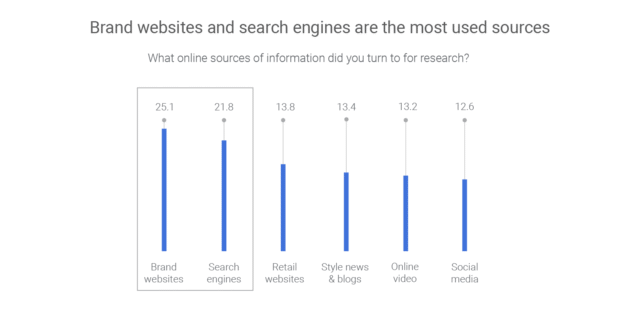
    Reportedly, 90% of luxury shoppers conduct research online before making a purchase, and brand websites and search engines are the two most popular sources people turn to. In fact, they’ve become the digital storefront for this generation of digital natives.

    Source: Think with Google

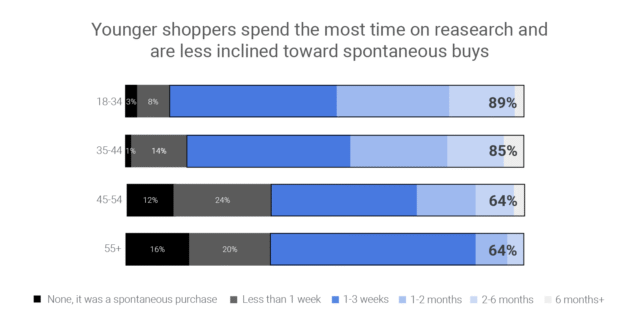
    Having grown up with readily available information online, millennial and Gen Z consumers spend more time on research than ever before.

    In fact, 89% of shoppers aged 18-34 spend up to three weeks researching a luxury purchase. And they’re not alone: 64% of consumers over 45 will spend the same amount of time on research leading up to a purchase.

    Source: Think with Google

    Retailers may have once treated online as a separate channel to physical stores, but this notion is quickly becoming outdated.

    Whether customers are online or offline is a distinction made by businesses, not consumers.

    Online and offline consumer behaviors are increasingly blurring, and the respective experiences need to follow suit, particularly when it comes to the inspiration and research phases.

    In short, consistency across the two worlds is key.

    It’s hard to imagine a luxury label leaving a customer linger unattended to in its boutique, so, by the same token, a customer should never be left unanswered or ignored on Google, YouTube, or social.

    More is more

    With a more exploratory consumer mindset, brand loyalty may be more elusive for brands targeting younger shoppers.

    Engaging potential millennial and Gen Z luxury shoppers constantly by trying to stay top of mind and being always on will be crucial to gaining consideration.

    In today’s environment of fast fashion and overnight style sensations — while couture brands used to produce two collections per year, they now produce five to six — one of every three consumers surveyed said they make luxury purchases to keep up with trends.

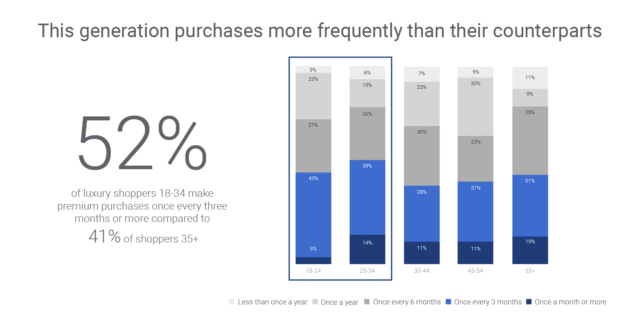
    The tendency to shop more often is evidenced among shoppers aged 18-34, of whom 52% reported making premium purchases once every three months, compared to just 41% of shoppers 35+ who did the same.

    Source: Think with Google

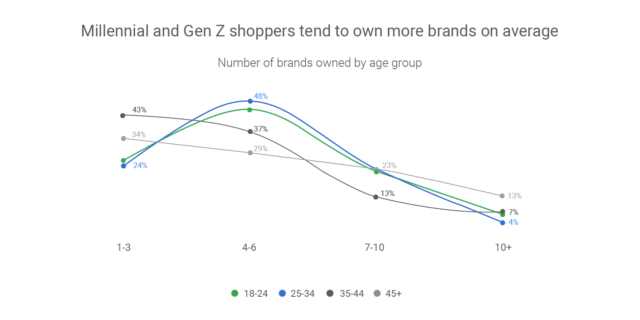
    In addition to a higher frequency of purchase, our research also shows that millennial and Gen Z shoppers are likely to consider a wider breadth of brands. On average, this group owned products from a repertoire of four to six brands; compared to more brand-loyal 35+ shoppers, who owned between one and three brands.

    Source: Think with Google

    Inspiring online with offline

    When it comes to in-store shopping, the aspects that customers value most are: 1) guaranteed authenticity, 2) the ability to touch and feel the product, and 3) personalized customer service.

    How might these values translate online? With 63% of people expecting the same high-touch brand experience online and offline, the challenge is to emulate these qualities and provide satisfying digital experiences.

    Offering free shipping on returns, for example, gives peace of mind to customers wary of counterfeit goods. Similarly, detailed product videos on the brand site or as a pillar of content on YouTube can help shoppers inspect items for quality while engaging them in a rich experience.

    Leveraging customer data, such as previous purchases, to create individualized interactions and recommendations is no longer a nice-to-have, but a must. Just as consumers expect personalized customer service in store, personalization is fundamental for designing a top-notch digital brand experience.

    Source: Think with Google
    The shopping experience begins online for Hong Kong’s luxury consumers.
    Search and brand sites are key because 90% of purchases are digitally influenced.

    Millennial and Gen Z consumers spend the most time on research, so it pays to provide as much information as possible to this group. They also purchase more frequently, and they consider more brands when they do so.

    To stay top of mind, brands should ensure that they are present at as many touch points as possible and that their media strategies are always on.

    Expectations for online shopping are growing higher by the day, and this is especially true for premium brands.

  • J.Crew’s CEO Jim Brett is leaving the firm

    J.Crew’s CEO Jim Brett is leaving the firm

    J.Crew chief executive Jim Brett is exiting the company, the retailer said, and a committee of four executives will step in to manage operations until a replacement is found. The statement said the decision had been mutual between Brett and the board of directors.

    “Returning J.Crew to its iconic status required reinventing the brand to reflect the America of today with a more expansive, more inclusive fashion concept,” said Brett. “However, despite the recent brand relaunch already showing positive results, the board and I were unable to bridge our beliefs on how to continue to evolve all aspects of the company.”

    Brett will be replaced by four executives: chief operating officer Michael Nicholson, chief experience officer Adam Brotman, chief administrative officer Lynda Markoe and Libby Wadle, president of the Madewell brand.

    Brett joined the specialty retailer in July 2017, at a time when the company was struggling with looming debt payments and declining consumer sentiment toward the brand. Over the next year and a half, he overhauled the executive team, bringing in former colleagues from West Elm — where he was CEO — and URBN — where he worked at both Anthropologie and Urban Outfitters — to revamp the brand identity and restructure the business. In 2017, the company was able to bide a bit more time to implement a turnaround, negotiating with creditors to push back the maturity of $566.5 million in debt from 2019 to 2021.

    He lowered prices, launched new brands and tried to reposition J.Crew as an inclusivity-driven, one-for-all label not so tied down by its preppy heritage, especially as it had most recently been interpreted by agenda-setting designer Jenna Lyons.

    In a sharply worded email sent to senior staffers in July 2018, he dismissed Lyons’ work, which turned polarising near the end of her tenure, while laying out his own priorities.

    “PRETTY always sells. A glen plaid jacket with a graphic tee and camouflage pants is anything BUT pretty,” he said. “The new feminist fashion movement is enjoying the POWER of femininity (see latest Dior shows) vs. the last feminist movement which was about women finding power in dressing like men. Femininity is critical — pretty is critical — femininity is powerful. These things are in starch [sic] contrast to Jenna’s masculine, sexual and overtly aggressive J. Crew.”

    While Lyons’ vision had stopped resonating with consumers, Brett’s fix was viewed by some analysts as a watering down of the product. There were too many changes at once — from the introduction of a bare-bones loyalty programme to changes in fabric suppliers to the implementation of a marketplace — all with varying impact. He also continued to discount heavily, something many of J.Crew’s competitors are trying to move away from. Talk of a decline in morale also permeated Brett’s run, with multiple corporate-level employees leaving, including one of Brett’s own hires, chief marketing officer Vanessa Holden, who recently announced her departure.

    In the second quarter of 2018, the group — which also includes Madewell — reported that same-store sales rose 1 percent from a year earlier after 15 straight quarters of decline. Star performer Madewell, which drives about a fifth of sales, saw comps jump 28 percent. Total sales at the company were $588 million, up 3 percent from the same quarter in 2017. The company still experienced a net loss of $6 million, compared to a $19 million loss during the same period last year.

    Whether the company has managed to keep up the momentum will be revealed imminently, as third-quarter earnings are expected to be released this month. The period was marked by J.Crew’s official September relaunch, including the rollout of its #meetmycrew marketing campaign. Just this past week, J. Crew launched another brand, Nevereven, which is also being sold at multi-brand retailers such as Fred Segal in Los Angeles.

    But talk of the company giving up more of its corporate office space to Facebook and Instagram — which occupies the same building — and news of a “for rent” sign in the window its popular men’s concept shop, the Liquor Store, indicates that the J.Crew is still in cost-cutting mode.