Tag: fast fashion

  • Lovisa Lifts Full-Year Profit 10.7 per Cent as Network Reaches 1,136 Stores

    Lovisa Lifts Full-Year Profit 10.7 per Cent as Network Reaches 1,136 Stores

    Australian fast-fashion jewellery retailer Lovisa increased net profit after tax by 10.7 per cent to $95.6 million for the 2026 financial year.

    Total revenue rose 17.6 per cent to $938.8 million, supported by 160 store openings and a 2 per cent rise in global comparable store sales. Gross margin widened by 60 basis points to 82.6 per cent, helped by lower sourcing costs and tighter promotional spending, while earnings before interest, tax, depreciation and amortisation grew 20.9 per cent.

    Offshore sales outpace domestic trade

    Western markets delivered the bulk of the growth. Sales in the Americas rose 29.6 per cent, while European revenue increased 29.5 per cent over the twelve-month period.

    The company accelerated its physical expansion by launching 160 locations and shuttering 43 underperforming sites. That netted 117 additions and lifted the total footprint to 1,136 stores across more than 50 markets. Lovisa relies on small-format stores with low fitout costs to enter new territories quickly, a model that allows it to exit unprofitable leases without heavy capital losses.

    Early momentum in the new financial year

    Trading in early fiscal 2027 maintained that pace. Total sales climbed 16.4 per cent over the first eight weeks of the new financial year, with comparable store sales up 3 per cent and momentum accelerating through August.

    Management plans to add further physical and digital stores across both established and new territories. Investors will track whether store opening targets hold as the group rolls into additional franchise and company-owned markets in the first half.

  • Shein Heads to Hong Kong Listing as Dual-Class Shares Draw Scrutiny

    Shein Heads to Hong Kong Listing as Dual-Class Shares Draw Scrutiny

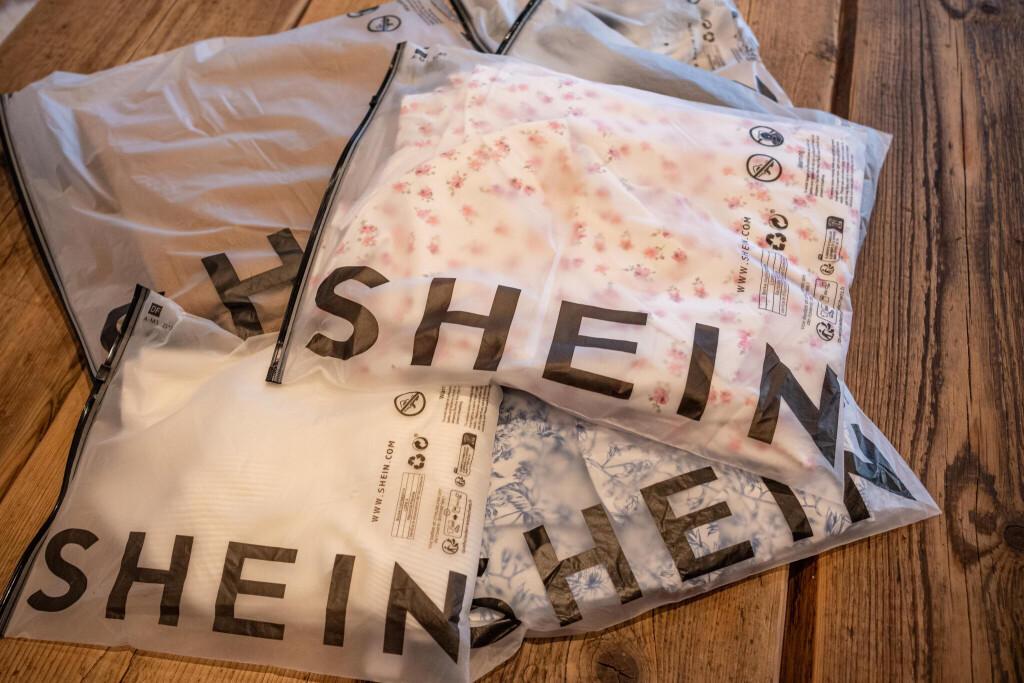
    Shein is preparing to list its shares in Hong Kong next month, five years after beginning its initial public offering push across Western exchanges.

    The online fast-fashion giant generated $41.8 billion in annual sales last year, but its listing filing shows four co-founders will retain 90 per cent of voting power through a dual-class share structure.

    Under that arrangement, class A shares carry 10 votes each compared to a single vote for class B shares. The founders hold 59.6 per cent of total equity without a fixed expiry on their voting control. Shein also combines the positions of chief executive and chairman, with its four founders occupying board seats while only three of seven directors are independent.

    Emissions and Supply Chain Audits

    Regulators in Europe and the United States continue active investigations into the retailer. The European Commission and the US Federal Trade Commission are examining its operations following prior penalties in France over discount pricing and in Italy over environmental marketing claims.

    Shein expanded its annual sustainability report to 118 pages last year, up from 28 pages in 2021, and formed an external advisory board to address oversight concerns. Audits graded 53 per cent of its suppliers in the top tier in 2025, an increase from 47 per cent in 2024.

    Environmental data filed by the company showed greenhouse gas emissions roughly double those of Zara parent Inditex in 2025. Inditex posted revenue of €39.9 billion ($46.54 billion) during the same period, while Shein churned out 4,700 new styles per day across a catalogue topping 2 million garments.

    Cross-Border Scrutiny Mounts

    Cross-border e-commerce platforms operating out of Asia face stiffening enforcement in Western markets. The European Commission recently levied fines of €550 million on Alibaba unit AliExpress and €200 million on PDD Holdings unit Temu over product compliance.

    For retailers across the region, Shein’s listing marks a shift away from New York and London toward Asian capital markets after political pushback. Yet the heavy concentration of founder control tests how institutional investors value ultra-fast supply chains against governance standards.

    The retailer now heads into investor roadshows ahead of the Hong Kong trading debut scheduled for next month.

  • Fast-fashion Giant Shein Eyes Hong Kong IPO Amid Revenue Challenges, Targeting $30-$40 Billion Valuation

    Fast-fashion Giant Shein Eyes Hong Kong IPO Amid Revenue Challenges, Targeting $30-$40 Billion Valuation

    Fast-fashion online retailer Shein is preparing to debut its Initial Public Offering (IPO) in Hong Kong as early as next Wednesday, according to individuals privy to the matter.

    The Singapore-based enterprise has engaged in marketing its share offering to potential investors this week, per a source who is familiar with these marketing strategies. When approached for a comment, Shein chose not to respond immediately.

    In its projected IPO, Shein is aiming for a valuation within the range of US$30 billion to $40 billion.

    Facing Market Challenges

    The much-anticipated IPO comes amidst a backdrop of toughening market conditions, including decelerating revenue growth and weaker core earnings, both of which are impacting Shein’s business operations. There are also concerns that its swift expansion may be hitting obstacles due to rising trade costs, increased regulatory scrutiny, and growing competition in the global e-commerce sector.

    Renowned for selling affordable clothing items such as $5 dresses and $10 jeans to customers in approximately 160 nations, Shein reported a quarterly loss of $99 million after the US retracted an import duty exemption on small parcels, in addition to a $328 million fair-value charge on convertible redeemable preferred shares due to an accounting change.

    Discrepancy in Valuation

    The valuation target set by the company for the IPO marks a significant shift from preceding private fundraising rounds which pegged Shein at $98.2 billion in 2022. However, this value declined to $64 billion in 2023 and April 2024.

    Questions & Answers

    What is Shein’s targeted valuation for its IPO?
    Shein is aiming for a valuation between US$30 billion and $40 billion for its IPO.

    What factors have led to concerns about Shein’s rapid expansion?
    Rising trade costs, increased regulatory scrutiny, and growing competition in the global e-commerce sector have raised concerns about Shein’s quick growth.

    What changes in Shein’s valuation have been observed in recent years?
    Shein was valued at $98.2 billion in 2022 in private fundraising rounds, but this figure fell to $64 billion in 2023 and April 2024.

  • Fast-Fashion Leader Shein Secures Approval for High-Profile Hong Kong IPO after Setbacks

    Fast-Fashion Leader Shein Secures Approval for High-Profile Hong Kong IPO after Setbacks

    Fast-fashion retail giant Shein has received authorization for its much-anticipated Initial Public Offering (IPO) process in Hong Kong, bringing it one step closer to a listing after unsuccessful runs in both New York and London. This news came from the China Securities Regulatory Commission (CSRC) on Friday, offering Shein the endorsement it has been seeking for over a year.

    Shein’s journey to the IPO stage has been hindered by a variety of factors, including weak investor sentiment and conservative spending habits among lower to middle-income consumers. The retailer’s journey to the stock market is therefore noteworthy, with many other consumer brands opting to postpone their IPOs in the current financial climate.

    Shein’s Journey to the IPO

    Shein was established by Sky Xu, a Chinese-born entrepreneur, in 2012. The IPO approval was contingent upon approval from the highest echelons of the ruling Communist Party in China, due to various controversies surrounding the brand. The controversies included a scandal involving a sex doll in France and allegations of poor labor standards in its supplier factories in China.

    Despite these scandals, Shein has shown resilience. The IPO’s confidential nature and the company’s decision not to make the filing documents public suggests that the retail giant is embracing its Chinese origins, rather than distancing itself. This is contrary to the strategies of many Western fashion companies, which have sought to reduce their Chinese exposure.

    Shein’s Current Financial Status

    Shein was valued at a staggering US$100 billion in 2022. However, as the online shopping boom brought on by the pandemic began to wane and a customs duty loophole for e-commerce parcels in the US was closed, the brand’s value decreased. In the latest fundraising round in May 2023, Shein was valued at just $66 billion.

    Shein’s IPO goal is speculated to be between $40 billion to $50 billion. The company plans to sell up to 8 percent of its shares, but the final stake sold is expected to be lower, thus generating low single-digit billions of dollars.

    Shein’s unsuccessful attempts to list in New York and London indicate the challenges faced by Chinese-linked companies due to geopolitical tensions. Despite moving its headquarters to Singapore in 2022, Shein is still subject to Chinese IPO rules as its products are largely manufactured by third-party suppliers in China.

    Questions & Answers

    What controversies has Shein faced?
    Shein has been involved in several controversies, including a scandal involving a sex doll in France and allegations of substandard labor practices in its supplier factories in China.

    What is the projected worth of Shein’s IPO?
    Shein is targeting an IPO valuation of between $40 billion and $50 billion.

    Why has Shein’s valuation decreased since 2022?
    Shein’s valuation has decreased due to the diminishing online shopping boom brought on by the pandemic and the closure of a customs duty loophole for e-commerce parcels in the US.

  • Fast-Fashion Titan Shein Acquires Everlane in $100M Deal: A New Dawn in US Apparel Retail

    Fast-Fashion Titan Shein Acquires Everlane in $100M Deal: A New Dawn in US Apparel Retail

    Fast-fashion digital platform, Shein, is set to acquire Everlane from its predominant owner, L Catterton, in a transaction that estimates the US-based clothing retailer at roughly US$100 million. As part of the agreement, those possessing common stock in Everlane will not receive a payout, with no details disclosed regarding whether preferred shareholders will be compensated with cash or Shein shares.

    Disrupting the Retail Landscape

    Companies such as Shein and Temu have significantly disturbed the local retail sector, employing aggressive pricing, strategic marketing, and capitalising on tax loopholes. These tactics originally provided them with a substantial advantage over their local competitors.

    Reports surfaced in March that private equity firm L Catterton, along with Everlane CEO Alfred Chang, were on the lookout for an investor to alleviate their approximately $90 million debt. The private equity company expressed a willingness to contribute further funds if a co-investor was found. However, they also remained open to the possibility of a sale.

    Questions & Answers

    What is the estimated worth of the US-based retailer Everlane in the proposed acquisition by Shein?
    The acquisition by Shein values Everlane at about US$100 million.

    What impact have brands like Shein and Temu had on the local retail landscape?
    Shein and Temu have significantly disrupted the local retail industry through aggressive pricing, strategic marketing, and exploiting tax loopholes.

    What was the financial situation of Everlane and L Catterton prior to the acquisition?
    Before the acquisition, L Catterton and Everlane’s CEO Alfred Chang were seeking an investor to manage their approximately $90 million debt.

  • Fast-Fashion Rivals Shein and Temu Ignite Global Legal Showdown Over Massive Copyright Infringement Allegations

    Fast-Fashion Rivals Shein and Temu Ignite Global Legal Showdown Over Massive Copyright Infringement Allegations

    The fast-fashion online market is currently in the spotlight as a significant legal tussle unfolds between two rapidly growing competitors, Shein and Temu. The case, presently in motion at London’s High Court, erupted after Shein accused Temu of large-scale copyright infringement. In response, Temu alleges that Shein is employing litigation tactics to cripple the competition.

    This legal conflict has global implications, potentially affecting e-commerce platform practices, supplier relationships, and the enforcement of intellectual property rights within the industry.

    Allegations and Counterclaims

    Shein asserts that Temu has exploited thousands of their original photographs to promote replicas of Shein’s proprietary clothing line on its platform. Shein’s legal representative, Benet Brandreth, characterized this move as an attempt to illicitly gain an upper hand by taking advantage of an established competitor. Temu, however, refuses to accept the allegations.

    Brandreth informed the court that Temu has retracted its defense against Shein’s copyright claims involving roughly 2300 photographs taken by Shein employees. He likened this to a defendant waiting to see if the witnesses appear in court, only to later confess to the allegations.

    Meanwhile, Temu, a subsidiary of PDD Holdings, has lodged a counterclaim seeking damages. This move came after Shein obtained an injunction, which resulted in Temu having to delist thousands of products. Temu has also accused Shein of violating competition laws by compelling fast-fashion suppliers into exclusive contracts. This portion of the lawsuit is scheduled for trial in the coming year.

    According to Temu’s legal team, Shein’s lawsuit is not a genuine effort to prevent copyright infringement. Instead, they contend that it is a strategic move aimed at securing a competitive edge.

    Impact and Implications

    The London trial is only the latest episode in the ongoing legal feud between Shein and Temu, which has seen lawsuits filed in the United States as well. Amidst escalating regulatory scrutiny, this feud throws light on the intensified competition in the fast-fashion industry.

    Both Shein and Temu have seen rapid expansion in international markets due to their affordable clothing, accessories, and gadgets. However, the growth of both companies could be hindered by policy changes, such as the revocation of a US customs exemption on low-value e-commerce parcels last year, and the European Union’s plan to implement a similar measure in July.

    Questions & Answers

    What are the allegations made by Shein against Temu?
    Shein accused Temu of copyright infringement, alleging that Temu used thousands of Shein’s own-brand clothing photographs to advertise copies on its platform.

    What is Temu’s response to Shein’s allegations?
    Temu denies the allegations and counters by claiming that Shein is using litigation to stifle competition. Temu also accuses Shein of breaking competition law by tying fast-fashion suppliers to exclusive agreements.

    What could be the implications of this legal battle for the fast-fashion industry?
    The legal dispute has potential global implications and could impact platform practices, supplier relationships, and the enforcement of intellectual property rights across the e-commerce industry.
  • Why We Need To Say Goodbye To Fast Fashion?

    Why We Need To Say Goodbye To Fast Fashion?

    The fashion industry is all about glamour, and being fashionable. Most of the time, it comes at the expense of the environment, especially when it is all about fast fashion. Fast fashion borrows the name from the fast food industry that is all about cheap, in-season and fast-moving products. Fast fashion is trendy, but it is not long lasting. Therefore, it is essential to take care of fast fashion. 

    Fashion is cheap and disposable, which is why it is a part of modern life, especially amongst the young people who can purchase such items. However, investing in fast fashion is similar to investing in Lottery Sambad and recklessly spending the winning amount after winning the Dhankesari ticket. It might give temporary benefits, but in the long run, it is harmful in several ways.

    The Impact Of Fast Fashion 

    Most fast fashion clothing is designed to last for a short period. Therefore, most of these clothes are thrown away after a short interval of time. Such garments end up in landfill and create nuisances for the environment. Not only does it pollute the land, but it also emits greenhouse gasses. The fashion industry is the second biggest consumer of water. Further, it is responsible for about 9% of global carbon emissions. To give you an idea, this is the carbon emission produced by combined international flights and maritime shipping. 

    Also, the process involving the creation of fast fashion products results in water pollution and further dries up the water sources. According to the UN Framework Convention on Climate Change report, textile emissions will increase by 60% in 2030. Therefore, now is the right time to say goodbye to fast fashion to avoid this damage. 

    It is common for fast fashion to use synthetic fibres like acrylic, nylon and polyester to create clothes. These fibres generate microplastics that often end up in the ocean. Microplastics are non-biodegradable plastic that can tragically harm the marine ecosystem. 

    Not only the impact of fast fashion is high on the environment, but also, it has many societal problems. Most fast fashion production occurs in developing countries where there has been evidence of forced and child labour. Now that we know the impact of fast fashion, here are a few ways to engage in a responsible fashion. 

    Invest In High-Quality Key Pieces Of Clothing 

    The sure shot way of eliminating fast fashion from life is by investing in high-quality key pieces of clothing. Not only will it last long but also, it ensures that it stays fashionable. The consumer can identify the key pieces of clothing that they wear the most and invest in it to stay fashionable. 

    Further, one can work out different permutations and combinations to create a wide variety of designs from the key pieces alone. Buy less and always invest in high-quality products. 


  • Owndays launches premium concept store in Singapore

    Owndays launches premium concept store in Singapore

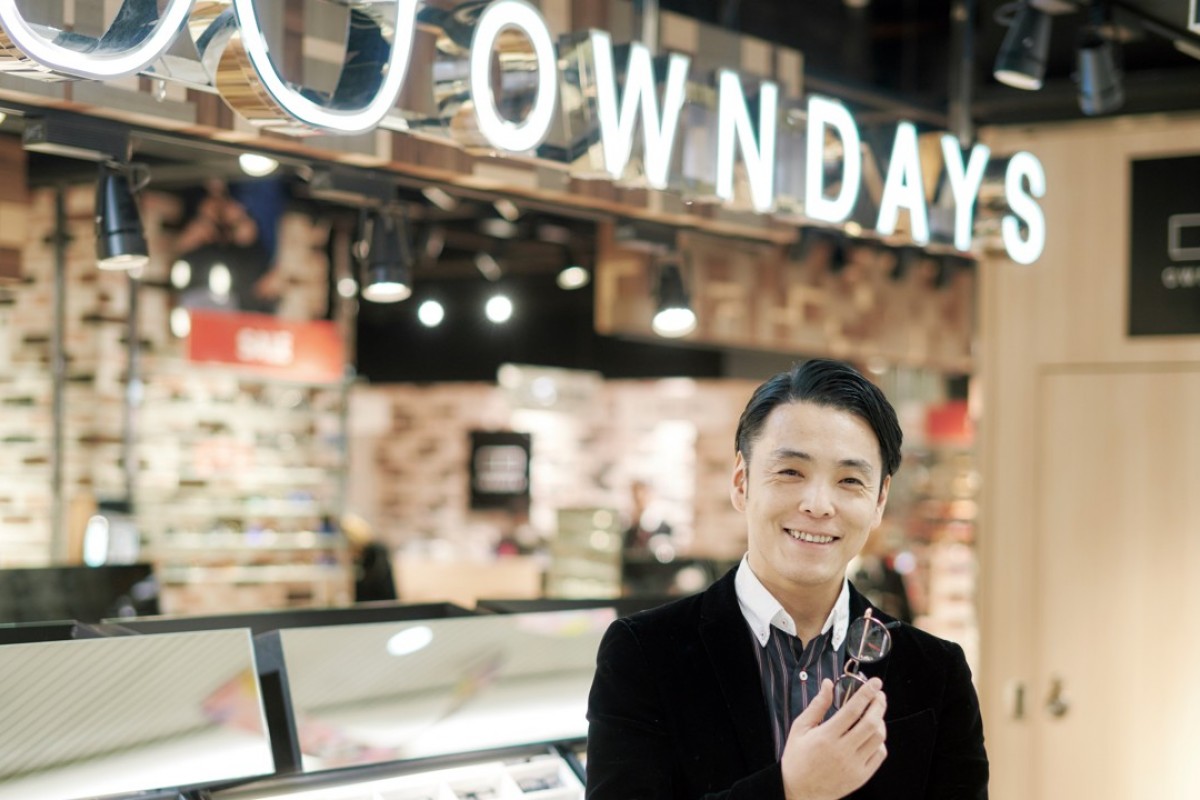
    Japanese fast fashion eyewear brand, OWNDAYS, is pleased to announce the opening of a new store at Takashimaya S.C., Ngee Ann City. This will be the brand’s second premium concept store in the world and its 33rd store in Singapore. The new store will open to public on 20 May 2022 and will house a collection of made-in-Japan eyewear and premium ophthalmic lenses curated exclusively for its premium concept stores.

    The Takashimaya S.C. store mirrors the concept of “Japanese Luxury” originally introduced at its first premium concept store at Marina Bay Sands, offering a premium eyewear shopping experience topped with Japanese hospitality and an extended product offering. Drawing inspiration from Ryoanji Temple, an UNESCO World Heritage Site and a popular attraction in Kyoto, Japan known for its famous rock garden, the new store features a distinct Japanese-styled aesthetics that pays homage to the origins of the brand while incorporating a touch of luxury.

    The main retail floor is flanked by a dry landscape complete with rock arrangements, gravel, moss and shrubs to achieve the Zen Garden interior. Beige wood elements are also heavily featured in the store interior to emphasise a sense of traditional Japanese-ness.

    Také Umiyama, Managing Director/COO of OWNDAYS INC. said, “The Takashimaya S.C. store reflects the core value of OWNDAYS, which is to constantly evolve and innovate in order to deliver quality eyewear to consumers at the best value. With a store that is located right in the heart of Orchard Road, it allows us to make well-designed, good quality eyewear more accessible to our customers. Besides, the new store is a space where we hope local consumers could enjoy a complete Japanese experience without having to physically travel to Japan. We welcome customers to visit the store even when they are not looking to purchase any spectacles and just to feel transported to Japan.”


  • Italian fast fashion brand set for Vietnam debut

    Italian fast fashion brand set for Vietnam debut

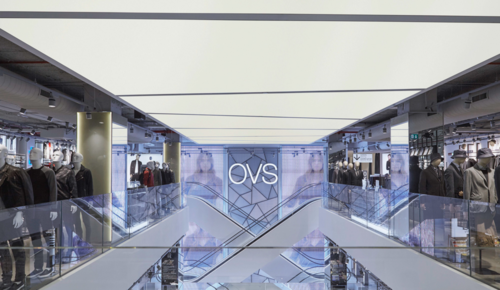
    Italy’s OVS midrange fashion brand will open its first outlet in Ho Chi Minh City this weekend. ACFC, distributor of IPP Group, a major Vietnamese fashion retailer, has confirmed that they are introducing the OVS brand in Vietnam. OVS is a popular fashion brand in Europe. In Italy, the brand has 15 percent of the market share in the country’s children aged 0-14 segment.

    The company’s products range is geared towards consumers of all ages. Its collection stretches from bold, urban looks, to elegant, formal office attire. At the same time, the OVS price tag targets the mass consumer segment.

    An increasing middle-class population has made Vietnam a magnet for international fast fashion brands, industry insiders have noted.

    The middle and affluent class, categorized as those earning $714 a month or more, would double to 33 million, about a third of the population, between 2014 and 2020, it is reported recently, citing a study by the Boston Consulting Group.

    Market research firm Nielsen estimates the number of middle and affluent class Vietnamese will reach 44 million by 2020 and 95 million by 2030.

    By late 2017, there were some 200 international fashion brands, including Zara, H&M, Stradivarius, Pull & Bear and Massimo Dutti, in Vietnam, accounting for more than 60 percent of the market share.

    A survey released in October last year by market research firm Q&Me showed fashion items topping online purchases in Vietnam, followed by IT products, cosmetics, food and beverage, and books and stationery.

    According to Statista, a database portal of statistics, consumer survey results and industry studies, the apparel market will be worth $2.74 billion this year and is set to grow at 7.7 percent annually until 2021.

  • Zara parent company boosted profit and sales

    Zara parent company boosted profit and sales

    Spanish clothes retailer Inditex, has reported its net profit for the first fiscal quarter of 2016 rose 6 per cent, after global sales lifted by 12 per cent.

    Inditex said profit for February through April was 554 million euros ($A843.61 million), up from 521 million euros for the same period last year.

    The company’s shares were up 2.7 per cent at 28.74 euros in Wednesday morning trading in Madrid.

    The company said sales reached 4.88 billion euros, a 12 per cent increase on the same period in 2015.

    Inditex says it opened 72 new stores in the period for a total of 7085 and added 11,900 jobs in the process. During the first quarter, the retailer expanded its reach to 90 markets, having opened inaugural stores in Aruba and Nicaragua. At the end of the first-quarter, the Group reported 7085 physical stores.

    Founded in 1975 by Amancio Ortega, Inditex operates eight store brands including Massimo Dutti, Bershka and Oysho.

  • Grim outlook for Singapore retailers

    Grim outlook for Singapore retailers

    Singapore retailers are facing “dark days”, including store closures, according to Singapore real estate company CBRE.

    With falling domestic demand and soaring costs, there will be more store consolidations and closures, it says in a new report.

    It predicts the retail market to undergo further restructuring following a muted performance last year, with weak brands being elbowed out, reports the Singapore Business Review.

    “This year will be marked by challenging conditions that could push weaker-performing brands to close or downsize.”

    There will also become harder to hire staff, with the report warning it is “highly unlikely” the government will lift restrictions on hiring foreigners. However, the costs and time associated with innovation and revamp are likely to keep a lid on expansion plans.

    CBRE says the fast-fashion segment will be particularly hit hard by manpower constraints and lack of suitable retail space. It says cheaper running costs in neighbouring countries have helped pull fast-fashion retailers’ attention away from Singapore.