Retail News CRM

Tag: f&b

  • 37 European F&B companies in Singapore to promote their quality products

    37 European F&B companies in Singapore to promote their quality products

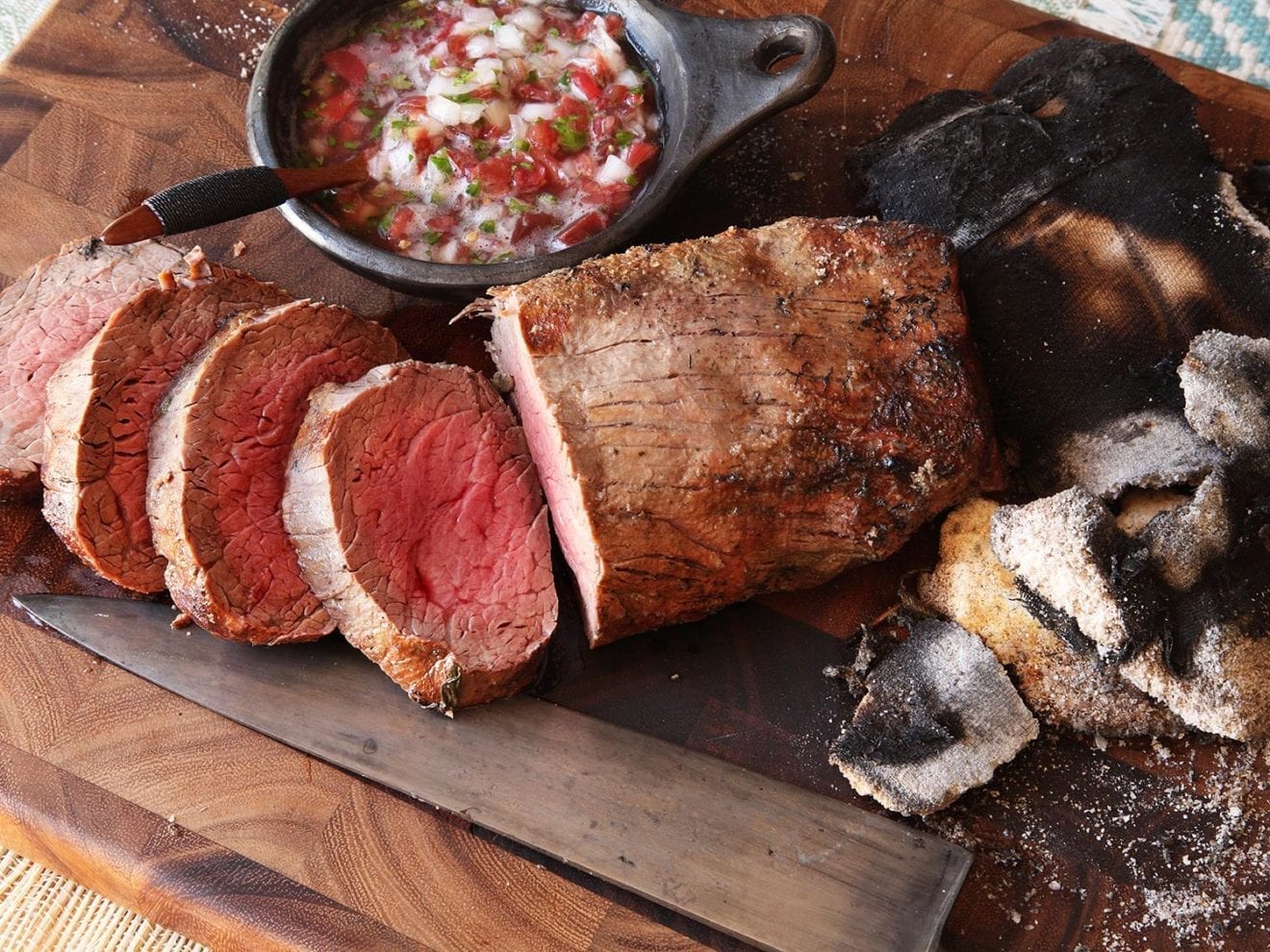
    Romanian angus beef, fresh milk from Poland and organic apples from Italy. Singaporeans, known for their love for good food, may soon find these together with other quality European food and beverage products at a store near them.

    Discussions on ways to make this happen in Singapore will feature prominently from November 5 to 7. That’s when a high-level visit from the European Union (EU) food and beverage sector arrives in the city-state.  The visit is part of a key regional promotion to four South-east Asian cities to explore market opportunities. Apart from Singapore, other stops include: Hanoi, Ho Chi Minh City, and Jakarta. 

    The delegation to Singapore includes 45 top business representatives from 37 EU F&B companies and aims to promote safe, quality and nutritious European food and beverage (F&B) products to buyers and importers in Singapore.  

    F&B companies and associations on this visit are from various EU Member States including Belgium, Bulgaria, Denmark, Finland, France, Germany, Greece, Hungary, Ireland, Italy, Netherlands, Poland, Portugal, Romania, Spain and the UK.  They will be promoting a wide variety of agricultural and F&B products from fruits and vegetables to fresh meat, poultry, processed foods, dairy products and wine & spirits.

    The delegation will visit several local retail stores  such as NTUC FairPrice, la Petite Boutique, Le Quartier, Giant, Pasarbella, and Sheng Siong to gain insights into Singapore’s F&B industry. 

    To further understand the local market, the delegation will also participate in a business seminar, which focuses on market access, local rules and regulations. In addition, there will be a food tasting session highlighting the sheer diversity and range of European food and beverage products. Delegates, ambassadors, trade or agri counsellors of EU Member States’ in Singapore, local buyers and other stakeholders will also get to interact and network during a lunch session.  

    Another highlight of the high-level mission will be a B2B matchmaking event where EU producers will get to meet Singaporean importers, distributors and retailers to discuss opportunities for future collaboration. 

    Dr Michael Pulch, the EU Ambassador to Singapore calls this “a step forward,” in deepening EU-Singapore cooperation in the booming food and beverage sector. “Singapore serves as an important hub for European food and beverage exports to the broader South-east Asian region.”

    Singapore is already the EU’s 17th largest global trading partner (in terms of goods) and the largest among ASEAN countries.  In 2015, total EU-Singapore trade in goods grew by 7.7% in 2015 reaching 48.6 billion Euro while trade in services grew by 15.4% amounting to 36.1 billion Euro. Singapore is also a major destination for European investments in Asia, as well as Asia’s second largest investor in the EU. In 2014, the EU was ASEAN’s largest investor with 184 billion Euro in FDI stocks held in the region at year-end, with Singapore accounting for 56% of EU FDI.

    Additionally, more than 10,000 EU companies are established in Singapore and use the country as a hub to serve the Pacific Rim.

    ” Our strong performance has enabled the EU to confirm its position as one of Singapore’s most important trade partners and the city-state’s foremost investor,” says Dr Pulch.
  • Here’s why Singapore can depend on F&B industry for economic growth

    Here’s why Singapore can depend on F&B industry for economic growth

    It contributes $14.4b to the city-state’s GDP.

    The food industry has done more than relieving hunger as it has also made huge impact in the overall economic growth of Singapore, contributing a bulk to the city-state’s GDP.

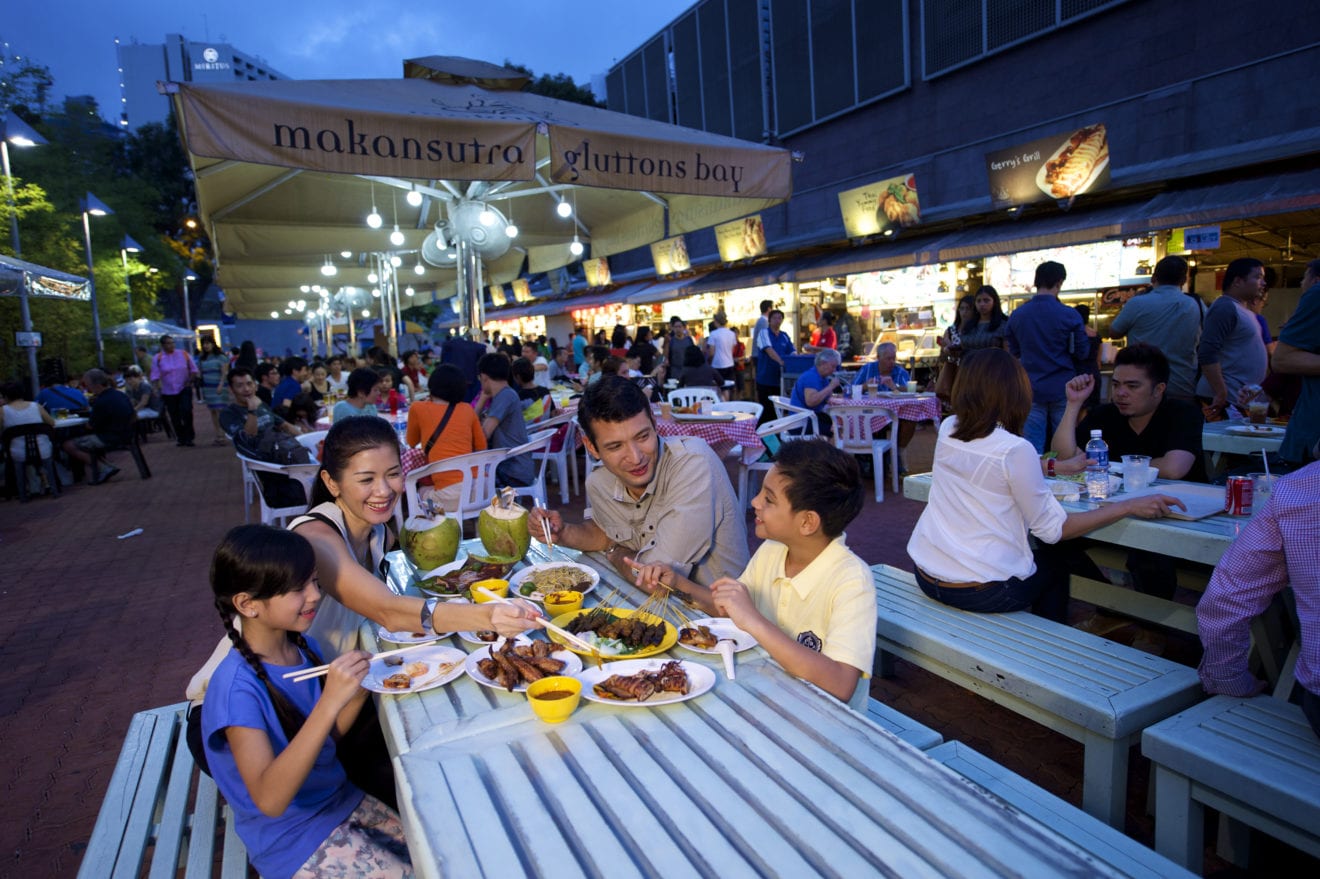
    According to the Food Industry Asia report by the Oxford Economics, F&B industry contributes an estimated $14.4 billion to GDP and employs nearly 300,000 people.

    The study revealed that overall impact of the food industry is dominated by food distribution.

    “The wholesale and retail of food, along with activities linked to Singapore’s 6,700 food service locations (which include restaurants, coffee shops and street hawker stands) account for two-thirds of the food industry’s GDP contribution, and four-fifths of the employment it supports,” the study said.

    Meanwhile, the food manufacturing industry has also made a huge impact on Singapore’s GDP, with its direct support for 38,800 jobs.

    In 2014, the food manufacturing industry earned S$9.8 billion from sales in Singapore.

    More so, food manufacturers’ supply chain spending within Singapore supported $1.6 billion of domestic procurement, $610 million of GDP, 6,100 jobs, $31 million in tax revenues, and S$37 million in Central Provident Fund contributions in the same year.

    “Based on the report’s findings, the food manufacturing industry is equivalent in size to Singapore’s aerospace industry, and larger than industries such as speciality chemicals, petrochemicals, medical technology and land transport engineering,” the study noted.
     

  • Singapore F&B sector ‘running out of manpower’

    Singapore F&B sector ‘running out of manpower’

    The Singapore F&B sector is set for a radical transformation under the government’s Industry Transformation Maps, aimed at getting industry “future-ready”.

    Tharman Shanmugaratnam, deputy PM and coordinating minister for economic and social policies, revealed some insights in a speech at the opening of Select Group’s new corporate headquarters on Thursday.

    He said with 160,000 people working in the F&B industry, it was a significant employer in the city state, 205,000 if hawkers’ centres were included, more than 5 per cent of the nation’s workforce.

    “But that is also the industry’s biggest challenge. We are running out of manpower in the industry. Our strategies for the future have to address this squarely.

    “We must develop a food services industry that is highly efficient, with no loss in quality of food offerings, and with high quality jobs. It has to be a major makeover.”

    The Food Services Industry Transformation Map (ITM) would involve “intensive collaboration” between Spring Singapore, the Restaurant Association of Singapore (RAS), enterprises themselves and trade unions such as the Food, Drinks & Allied Workers Union.

    The Food Services ITM will aim to push ahead with more ‘manpower-lean formats’ in the industry and upgrade jobs and job satisfaction, while maintaining the quality and range of Singaporeans’ dining options.

    There are four main thrusts of the Food Services ITM:

    * Developing innovative formats like Ready-to-Eat meals.

    * Promoting mass adoption of technologies even within established business formats.

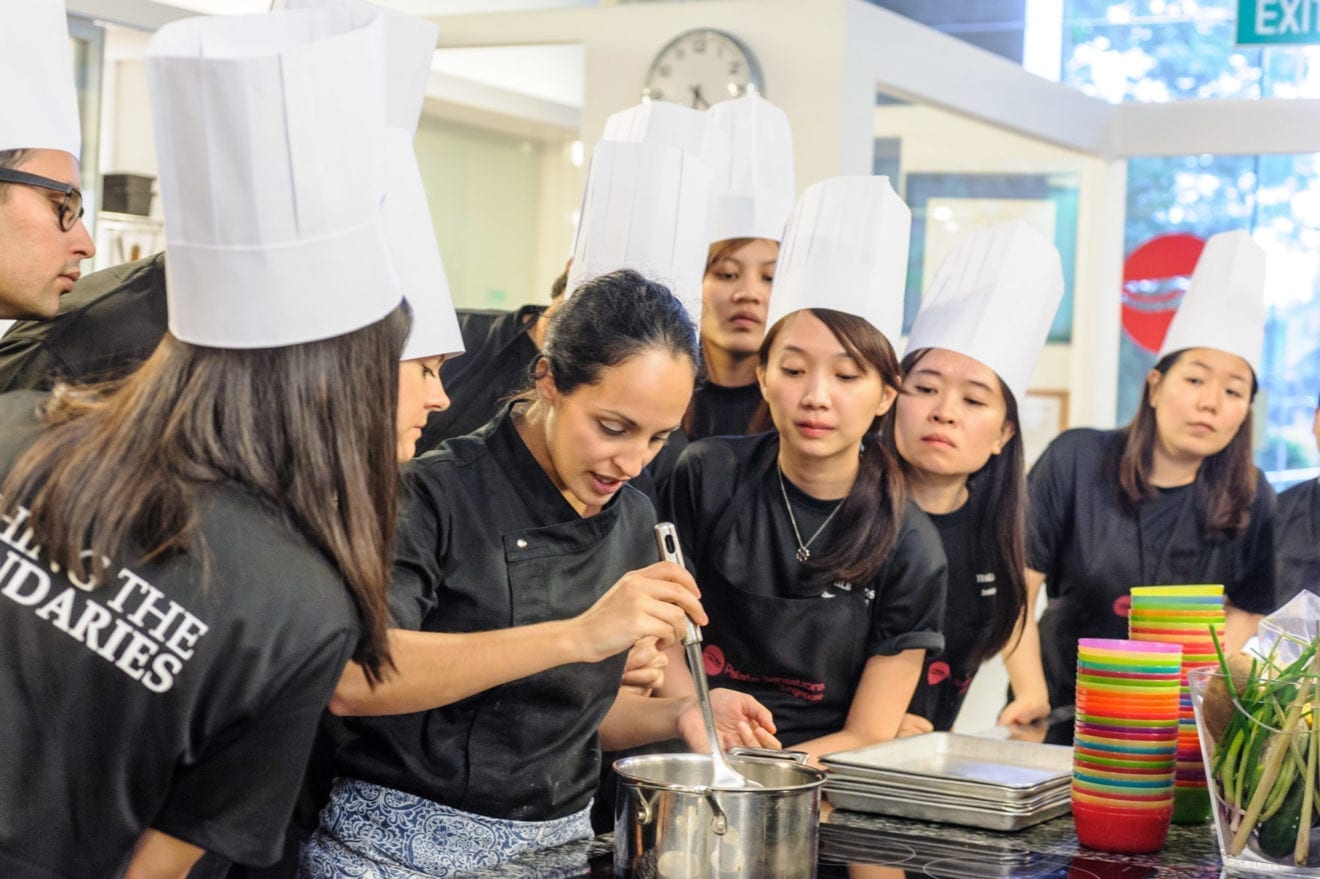
    * Raising employees’ skills and versatility, and making the industry more attractive through job redesign and clear progression pathways.

    * Expanding the footprint of Singapore F&B in overseas markets.

    “Spring estimates that by 2025 three out of eight dining experiences in Singapore will involve new formats such as grab-and-go and vending machines, as opposed to traditional dine-in options. It will be more efficient, and will also meet changing consumer demands.

    “Ready-to-eat (RTE) meals, for instance, are a viable alternative for consumers looking for convenience. The new generation of RTE meals is much more than just “microwavable food”. Utilising “cook-chill technologies” as well as innovations in packaging material, the taste, quality and nutritional content of foods can be retained well in RTE meals,” he said.

    “Last month, we launched VendCafé in Anchorvale. The response has been encouraging, with an average of 400 meals served per day in the first month. Residents have given feedback that they welcome the additional amenities. However, some have expressed concerns about the noise patrons generate, sometimes late at night.”

    Coffee shops are not immune to new systems, he said.

    “Spring and the HDB have reviewed the tender requirements for new coffee shops. The requirements will now include productivity proposals, in addition to a good variety of affordable food. I urge operators to make use of this opportunity to rethink how existing coffee shop models can be redesigned. For a start, the new system will be piloted at two sites, in Tampines and Choa Chu Kang. The tender will open from mid-September onwards.”

    Manpower challenge

    The minister said employers have to work on the basis that there will be no further manpower growth in the Singapore F&B industry.

    “The heavy reliance on low-skilled workers also cannot continue. New entrepreneurs have to come into the business knowing how tough it is to find workers. The industry sees a high churn of enterprises. On average, 28 per cent of food establishments are replaced yearly. Some churn in the industry is not a bad thing – it adds vibrancy and reflects Singaporeans wanting to do their own thing as entrepreneurs. But every new enterprise has to be aware of the realities of the labour market before they get started.”

    One of the ways forward is to embrace digital service, including electronic payments.

    “In Sweden, cash transactions represent less than 2 per cent of the value of all payments made. From retailers to street level vegetable and fruits traders, Swedish businesses have embraced the use of electronic payments via credit cards or mobile apps. This enables companies to increase productivity through payments integrated with business processes. We will be promoting this very actively.

    “We must transform the food services industry so that it achieves. Spring together with its partners plans to have at least 50 per cent of the industry having adopting technology-enabled operations by 2020. They estimate that it will make possible productivity growth in Food Services of 2 per cent per year on average from now until 2020.”

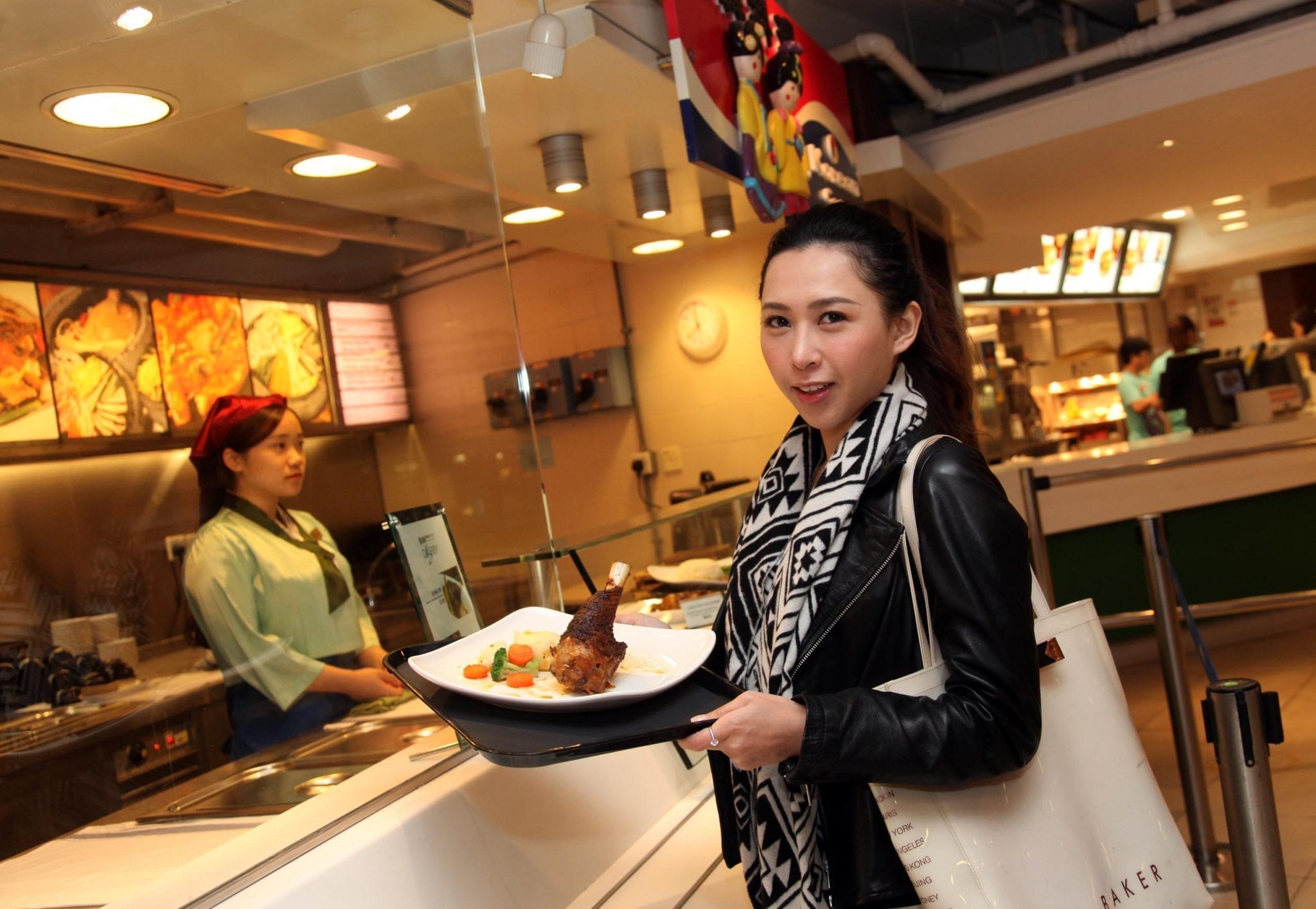
  • Hong Kong streets and malls see character change as F&B outlets move in with cheaper rents

    Hong Kong streets and malls see character change as F&B outlets move in with cheaper rents

    The character of Hong Kong streets and shopping malls is changing as more overseas food and beverage operators and retailers catering to local consumers move to the city to take advantage of sharp falls in rent, says Tom Gaffney, CBRE’s managing director for Hong Kong, Macau and Taiwan.

    He expects retail rents would hit bottom in 2017 after a further 15 per cent decline this year. In 2015, overall retail rents fell by 20 per cent.

    “The retail market is not completely dying, but rather undergoing a structural transformation from one that is highly driven by luxury consumption goods to one that is more relying on mid-market brands and products,” he said.

    Besides mid-market brands in fast fashion, cosmetics and banking services, food and beverage operators have become more active, said Gaffney, who brought Jamie’s Italian restaurant chain to Hong Kong before he joined CBRE early this year.

    Last year, about 37 food and beverage brands established in Hong Kong, while about 10 new brands have set up in the city so far this year, he said.

    F&B contributed 40 per cent of revenue to CBRE’s Hong Kong retail business last year, up from 15 per cent in 2014.

    One of CBRE’s leasing transactions was negotiating for Seafood Room, which is Bulldozer Group’s first restaurant in Asia, to secure the top floor of Tower 535 in Causeway Bay. Bulldozer is one of the biggest restaurant groups in Eastern Europe and the UAE.

    CBRE is talking with some Korean cuisine operators that want to find new retail space in the city, Gaffney said.

    To tap the growing demand, CBRE plans to form an F&B business team to work with its offices in the US and London to bring new restaurants to Hong Kong. The new team is expected to start operating in September.

    “We have seen the [F&B] trend expanding into Hong Kong in the last six months,” he said.

    Most of the F&B operators specialise in European cuisine such as Italian and French, while some are Russian. Others include Asian restaurants serving Korean, Japanese and Thai dishes, Gaffney said.

    Given weaker spending on luxury items, Hong Kong shopping malls have been restructuring their trade mix to accommodate more restaurants and cafes as a way to retain shoppers.

    Sales of jewellery, watches and other luxury items – usually popular with mainland visitors – plunged by 16.6 per cent in April from a year ago, according to data released by the Census and Statistics Department. But sales of food, alcoholic drinks and tobacco saw a year on year growth of 5 per cent in April.

    The city’s total retail sales decline eased to 7.5 per cent, improved from a 9.8 per cent decline in March, to an estimated HK$35.2 billion, according to government data.

    During the retail boom in 2012 and 2013, Gaffney said F&B outlets only accounted for 10 per cent of space in shopping malls, but this has increased to 20 per cent and in some cases even 30 per cent.

    However, the rent payment ability of restaurants was just about a quarter or less than what a normal retailer could pay in terms of square foot. For example, a F&B tenant can afford HK$100 per square foot, while other retailers such as fashion could afford HK$400 per square foot with some even able to spend HK$1,000 per square foot, Gaffney said.

    “More F&B outlets will come to Hong Kong which will be overseas retailers’ first choice of expansion destination,” he said.

    In C-Suite on P3, Tom Gaffney shares his views on Hong Kong property market