Retail News CRM

Tag: Fiat

  • Crypto.com Bolsters Fiat Payment Capabilities in Singapore through Enhanced Partnership with DBS Bank

    Crypto.com Bolsters Fiat Payment Capabilities in Singapore through Enhanced Partnership with DBS Bank

    Crypto.com, a leading cryptocurrency platform, has further established its presence in Singapore’s highly regulated digital asset market with an enhanced partnership with DBS Bank, the largest bank in Southeast Asia in terms of assets. This latest development amplifies Crypto.com’s access to Singapore Dollar (SGD) and US Dollar (USD) deposits and withdrawals. It also underscores the platform’s commitment to integrating cryptocurrency services with solid, bank-grade infrastructure within the Monetary Authority of Singapore (MAS) regulatory framework.

    Implications for Advanced Investors

    For the astute investor, smooth entry and exit points are as crucial as market access. Crypto.com’s addition of DBS to its list of banking partners, alongside its existing affiliation with Standard Chartered, lowers the risk of dealing with a single counterparty. In doing so, it also enhances the redundancy, speed, and reliability of fiat transactions. This multi-layered banking strategy offers a level of resilience that appeals to both serious retail and professional investors.

    Virtual Accounts and Swift Transfers

    A significant improvement brought about by this enhanced partnership with DBS is Crypto.com’s ability to set up unique virtual accounts for its customers. These accounts facilitate quicker and simpler SGD and USD transfers into and out of the Crypto.com App. This new development streamlines the management of funds for active traders and long-term investors who need dependable settlement and efficient liquidity flows.

    Positioning within Singapore’s Regulatory Ambit

    The extended fiat capabilities highlight Crypto.com’s focus on operating within clearly defined regulatory guidelines. Collaboration with leading domestic and international banks signals that it aligns with Singapore’s regulatory expectations surrounding transparency, security, and consumer protection. This is a key factor for investors assessing counterparty and jurisdictional risk.

    Leadership Insights on Expansion and Adoption

    Karl Mohan, EVP Financial Services and General Manager International at Crypto.com, emphasized the company’s commitment to providing secure and regulated fiat payment solutions. He stated that the expanded capabilities in Singapore enhance user experience and promote wider cryptocurrency adoption across the region.

    Chin Tah Ang, General Manager Singapore at Crypto.com, stressed the strategic significance of the Singapore market. As a hub for both Crypto.com’s headquarters and growth, he underscored the importance of their collaboration with DBS in offering seamless SGD and USD transfers for users.

    A Broader View of Crypto Infrastructure

    The quality of a platform’s infrastructure is becoming a defining factor for digital asset platforms as they mature, rather than simply the breadth of their product offerings. Crypto.com’s increased partnership with DBS signifies an industry trend towards models that prioritize integration with banks and regulatory compliance. This development is likely to resonate with investors who value stability, compliance, and operational efficiency in their cryptocurrency market exposure.

    Questions & Answers

    What does Crypto.com’s enhanced partnership with DBS Bank entail?
    The partnership signifies increased access to SGD and USD deposits and withdrawals, along with the ability for Crypto.com to set up unique virtual accounts for customers.

    How does this partnership benefit investors?
    This partnership offers a multi-layered banking strategy that reduces the risk of dealing with a single counterparty, enhances the speed and reliability of fiat transactions, and offers smooth entry and exit points.

    What does the partnership suggest about the broader industry trends?
    The expanded partnership aligns with the industry trend towards bank-integrated, regulation-first models, likely appealing to investors who value stability, compliance, and operational efficiency in their cryptocurrency market engagement.

  • Fiat To Electrify 60 Percent Of Its Cars By 2021

    Fiat To Electrify 60 Percent Of Its Cars By 2021

    The automobile industry is changing dramatically for the first time in a century. Volkswagen has already announced that it is stopping all motorsports activities to focus on electrification efforts before this Honda also announced in September that it was going to be focusing on electrification and sustainability which perpetuated its exit from F1. Now, Fiat has joined the bandwagon and its head for EMEA has said that 60 percent of its vehicles will be electrified by the end of 2021. This includes the Fiat, Lancia and Abarth brands.

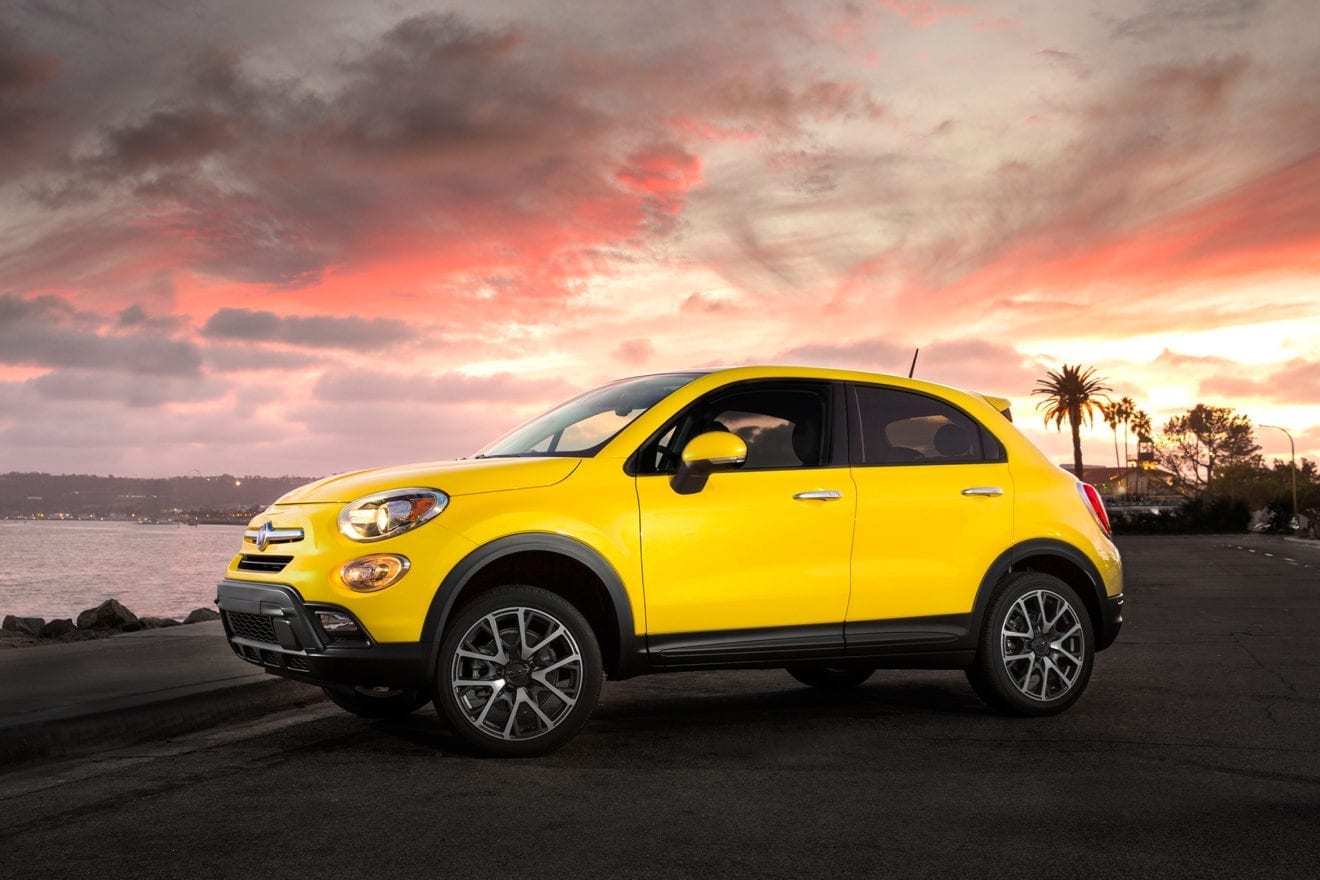
    Fiat’s approach is a different one, however. Its electrification efforts amount to multiple new hybrid models, unlike the traditional plug-in electric models. It already makes a hybrid version of 500, the Panda and the Lancia Y. It also has a couple of cars incoming — 500X and Tipo, apart from this, there is also a new Fiat 500 electric and Fiat E-Ducato coming in.

    Fiat feels that adding more hybrids and plug-in cars are a necessity for it in Europe. It has also been forced to make this move as it has been lagging behind in its electrification efforts and also been forced by the European Union’s Emission requirements to buy emission credits.

    For this, it has partnered with the big daddy of all-electric cars – Tesla – the world’s highest-valued automotive company for complying with the CO2 emission for the EU. It is also highly dependent on Tesla’s ability to scale up its operations and production in the EU.

  • Fiat Chrysler, PSA Merger To Include Investor Loyalty Scheme

    Fiat Chrysler, PSA Merger To Include Investor Loyalty Scheme

    Fiat Chrysler’s merger with Peugeot maker PSA will include a loyalty scheme to reward long-term investors and help prevent future takeover attempts, the prospectus for the planned tie-up shows. Italian-American carmaker Fiat Chrysler (FCA) and France’s PSA agreed to combine in a $38 billion all-share deal in December, uniting brands such as Fiat, Jeep, Dodge, Ram and Maserati with the likes of Peugeot, Opel, Citroen and DS.

    Holders of shares in Stellantis – as the merged group will be known – for an uninterrupted period of at least three years may receive a special voting share in addition to each common share, the companies said in the prospectus.

    Such a move could make management changes and takeover attempts of Stellantis more difficult, they added. The tax consequences of the loyalty scheme are uncertain, the companies said.

    Stellantis will have a Dutch-domiciled parent company and its shares will be listed in Paris, Milan and New York.

    Loyalty schemes are common for companies in the Netherlands and have already been used by Exor, the holding company of Italy’s Agnelli family and FCA’s controlling shareholder, not least during the spin-off of Ferrari, boosting Exor’s grip on the luxury sports car maker.

    PSA CEO Carlos Tavares will run Stellantis and will receive a 1.7 million euro ($2.02 million) bonus upon completion of the merger.

    FCA CEO Mike Manley will receive “a recognition award with a value equivalent to approximately five times his annual base salary” and a cash retention after the merger if certain conditions are met.

    The two companies said they have agreed to review the potential distribution of 1 billion euros to shareholders, either through a dividend evenly before the merger, or to be distributed afterwards by Stellantis.

    PSA and FCA have filed the merger plan with antitrust authorities in 21 countries and the European Union. To date, they have obtained approval from 15 countries and a preliminary okay from Brazil which becomes final next week. The EU is also expected to authorise the merger, sources have said.

  • Fiat Chrysler Automobiles And Groupe PSA Amend Merger Terms To Conserve Cash

    Fiat Chrysler Automobiles And Groupe PSA Amend Merger Terms To Conserve Cash

    Peugeot maker PSA and Fiat Chrysler (FCA) have restructured the terms of their planned merger to conserve cash, and also stepped up the promised levels of cost-cutting during the pandemic. The two companies, which are set to merge into Stellantis, the world’s fourth-largest carmaker, said in a joint statement late on Monday that FCA would cut to 2.9 billion euros ($3.4 billion) the cash portion of a 5.5 billion euro special dividend its shareholders will receive under the terms of the accord they signed last year.

    France’s PSA, whose brand portfolio also includes Citroen and Opel, will in turn postpone the planned spinoff of its 46% stake in parts maker Faurecia until after the merger’s closing and extend it to all shareholders of the new group. Faurecia’s market capitalization is around 5.9 billion euros. “Amendments preserve the balance of original combination agreement,” the two groups said, adding that ownership of Stellantis would still be split 50/50 between current PSA and FCA shareholders.

    A source said on Monday that the aim of those changes was to reinforce the balance sheet structure of both companies after the COVID-19 crisis and ensure that the merger plan is concluded as soon as possible.

    Analysts had argued that such a large cash payout to FCA shareholders, led by controlling investor EXOR , the holding company of Italy’s Agnelli family, could weaken the new carmaker’s finances, as the auto industry is paying a high price for the coronavirus outbreak.

    Confirming last week that the deal was on track, FCA Chief Executive Mike Manley said both he and PSA CEO Carlos Tavares were aware of the need for the two firms to get to the merger with the strongest balance sheets possible as well as for shareholders to get what they expected.

    FCA and PSA said annual estimated synergies from their merger were now seen at more than 5 billion euros, compared with an initial estimate of over 3.7 billion.

    The two carmakers confirmed that they expect to complete the tie-up process by the end of the first quarter of 2021.

    Both earlier this year scrapped dividend payments on 2019 results, each worth 1.1 billion euros.

  • Italy Approves Guarantees For $7.1 Billion Loan To Fiat Chrysler

    Italy Approves Guarantees For $7.1 Billion Loan To Fiat Chrysler

    Italy has approved a decree offering state guarantees for a 6.3-billion euro ($7.1 billion) loan to Fiat Chrysler’s (FCA) Italian unit, the Treasury said on Wednesday, paving the way for the largest crisis loan to a European carmaker.

    The formal announcement follows an endorsement by the country’s audit court and brings to an end a lengthy approval procedure for the loan, which has drawn criticism in Italy.

    By providing state support, Rome “aims to preserve and strengthen the Italian automotive supply chain,” Economy Minister Roberto Gualtieri said in a statement.

    The request for state support sparked controversy because FCA is working to merge with French rival PSA

    FCA’s Italian division has tapped Rome’s COVID-19 emergency financing schemes to secure a state-backed, three-year facility to help it weather the crisis triggered by the coronavirus pandemic. The aid will also help Italy’s broader car sector, in which about 10,000 businesses operate.

    The loan will be disbursed by Italy’s biggest retail bank Intesa Sanpaolo, which has already authorized it pending the approval of guarantees the government will provide on 80% of the sum through export credit agency SACE.

    The request for state support sparked controversy because FCA is working to merge with French rival PSA and the holding company for the Italian-American carmaker is registered in the Netherlands. FCA’s global brands include Fiat, Jeep, Dodge and Maserati.

    Italy could soon announce a $7 billion loan for Fiat Chrysler, in what would be the biggest such deal for any European carmaker.

    Gualtieri said FCA would have to meet commitments on investments and jobs, but declined to say whether the Treasury had imposed conditions affecting FCA’s planned 5.5 billion euro extraordinary dividend, a key element in the merger with PSA.

    Italian politicians have called the dividend into question, although it should be compatible with the terms of the financing because it is not due until 2021 and would be paid by FCA Italy’s Dutch parent company, Fiat Chrysler Automobiles NV.

    FCA, whose stock fell 4.4% to 8.665 euros on the Milan bourse, had no immediate comment.

  • Fiat Chrysler Plans To Resume Panda Production On June 16

    Fiat Chrysler Plans To Resume Panda Production On June 16

    Fiat Chrysler (FCA) plans to resume production of its Panda small car at its plant in Pomigliano, near Naples in southern Italy, on June 16, a union representative said on Wednesday.

    The restart, initially scheduled for June 8, had been postponed this month because of weak demand in the face of the coronavirus crisis.

    The company has informed unions that production would restart at pre-crisis levels, said Gianluca Ficco of the UILM union.

    “FCA told us it aimed to give continuity of production and jobs, even if that will also depend on demand, which is still very weak,” Ficco said. “So we can’t rule out further stops if demand proves too weak”.

    Reuters sources say EU competition watchdogs may demand concessions before clearing Fiat-Chrysler’s proposed merger with Peugeot-maker PSA.

    A spokesman for the Italian-American carmaker confirmed plans to restart Panda production on June 16.

    FCA has already resumed regular production of vans and of Jeep’s Renegade and Compass models in Italy, as well as preparatory work for the new electric Fiat 500 small car.

    Ficco said he hoped that the new hybrid version of the Panda would help to support volumes and that the government would agree measures to support demand and production in the Italian automotive industry.

    Italy is considering incentives of up to 4,000 euros ($4,550) to buy the latest generation of petrol and diesel cars, joining France and Germany in offering support to an industry that has been hit hard by the coronavirus crisis

  • Fiat India Brings In Special Finance Schemes To Attract Customers

    Fiat India Brings In Special Finance Schemes To Attract Customers

    Automakers across the board are coming up with unique finance schemes to attract more consumers during these difficult times. If you’re one of those who looking at own any of the SUVs from the Jeep brand then Fiat Chrysler Automobiles (FCA) India has also announced a slew of financial packages that will make it slightly easier for you to finalize the deal. The ‘Jeep for All’ aims to reduce EMIs for corporate salaried customers, offer lowest loan interest rates on loans and give 100 percent on-road price funding albeit only for women.

    The schemes also promise coverage in the event of a job loss, critical illness or an accident. In such cases an arrangement assures customers of low EMI in the first 24 months of the loan tenure. Dr. Partha Datta, President, and Managing Director, FCA India said, “We are pleased to announce ‘Jeep for All’ which will offer customers a means to own a Jeep, comfortably within reach. ‘Jeep for All’ adds on to our booking-to-purchase digital retail module with an added sense of reassurance and peace of mind for our customers.”

    Under the scheme salaried customers can opt for a vehicle loan of up to seven years at attractive interest rates. This will offer them a three-month low EMI repayment option every year throughout the tenure of the loan. Customers can choose which months they want to pay lesser EMIs. The company is also promising 90 percent funding of the on-road price of the vehicle which goes up to 100 percent for women buyers. Lastly there’s also an option of availing a step-up loan for a tenure of up to seven years which allows the customers to pay the lowest EMIs for the first 2 years.

  • Fiat Chrysler, Peugeot Decide To Withhold 2019 Dividend Payout

    Fiat Chrysler, Peugeot Decide To Withhold 2019 Dividend Payout

    The boards of automakers Fiat Chrysler Automobiles N.V. and Peugeot S.A said on Wednesday it would not pay an ordinary dividend for 2019 this year due to a collapse in consumer demand resulting from the COVID-19 pandemic.

    The health crisis has thrown the global auto industry into the worst tailspin since the 2008-09 financial crisis. Consumer demand for vehicles has plummeted as governments across Europe and the United States have enforced lockdowns.

    Fiat has already finalized a plan in overnight talks with Renault, and the deal would be discussed at a meeting of Renault’s board on Monday.

    The two companies also confirmed that preparations for their merger are advancing with respect to antitrust and other regulatory filings.

  • Fiat Chrysler Plunges To Loss

    Fiat Chrysler Plunges To Loss

    Fiat Chrysler Automobiles (FCA) plunged to a first-quarter loss of $1.8 billion and warned of a “significant” loss this quarter, even as it prepares to reopen its most profitable North American truck plants on May 18 as coronavirus lockdowns ease.

    The Italian-American company, which has struck a binding merger deal with France’s PSA Group to create the world’s fourth-largest carmaker, said on Tuesday that work on the tie-up was “progressing incredibly well.”

    On a conference call, Chief Executive Michael Manley said “the terms of the deal have not changed” and FCA remained “committed to completing the transaction by the end of this year or early 2021.”

    Car sales across the world have slumped as measures to contain the coronavirus pandemic forced production lines to shut and showrooms to close, leaving manufacturers scrambling to try to conserve cash.

    Manley said a planned 1.1 billion euro ($1.2 billion) dividend was under review, as part of FCA’s efforts. The company also scrapped its full-year earnings forecast.

    FCA has begun reopening plants in China and Europe, and said most of its North American ones were expected to reopen on May 18.

    In the United States, UAW president Rory Gamble responded to the planned restart by saying automakers must “implement and follow the guidelines” for worker safety that the union had worked out with them. The union had objected to automakers’ original plans to reopen in early May.

    Peugeot-maker PSA is braced for a slump in demand but says it has the funds to cope without government help.

    Much of FCA’s revenue and profit come from North America, where quarterly sales of its Ram truck brand were up 7% from the previous year and its share of the full-size pickup market rose to 24%.

    Capital expenditure (capex) was up in the quarter, driven by spending on the new Jeep Wagoneer and Grand Wagoneer, and redesigned Jeep Grand Cherokee models. But executives said full-year capex estimates would be trimmed by 1 billion euros as key program launches had been delayed by an average three months.

    FCA said it made a net loss from continuing operations of 1.69 billion euros ($1.83 billion) in the quarter. That compared with a 508 million euro net profit a year earlier.

    “The pandemic has had, and continues to have, a significant impact on our operations,” the company said in a statement.

    However, FCA still made an operating profit, albeit 95% lower than a year earlier. Adjusted earnings before interest and tax (EBIT) amounted to 52 million euros.

    FCA’s Milan-listed shares extended their gains after the results were released and were up 2.2% at 1355 GMT.

    The automaker said that due to the continued uncertainty related to the pandemic, it had withdrawn its full-year guidance and would update it when it had better visibility of the overall impact of the crisis.

    In February, the group guided for an increase in adjusted EBIT to more than 7 billion euros this year and industrial free cash flow of over 2 billion euros.

    In the first quarter, industrial free cash flow was around minus 5 billion euros. But FCA said it had available liquidity of 18.6 billion euros as of March 31, including a 6.25 billion revolving credit facility which was fully drawn down in April.

    Liquidity was further strengthened last month with a new 3.5 billion euro incremental bridge credit facility, which remains fully undrawn.

    “We continue to assess all funding options,” FCA said.

  • Honda, Fiat Chrysler Aim To Restart production in  U.S.

    Honda, Fiat Chrysler Aim To Restart production in U.S.

    Honda Motor Co and Fiat Chrysler Automobiles NV said on Monday they hope to restart U.S. and Canadian auto production in May amid the ongoing coronavirus pandemic.

    The Japanese automaker halted production on March 23 and said it will extend the halt through May 1.

    Fiat Chrysler said Monday it “intends to progressively restart its U.S. and Canadian manufacturing facilities beginning May 4.”

    U.S. President Donald Trump last week extended the guidelines aimed at slowing the spread of the coronavirus to April 30.

    US auto industry executives say it will be nearly impossible for companies to resume production before the end of the month

    Several U.S. auto industry executives told Reuters on Monday it will be nearly impossible for companies to resume production before the end of the month — and there is no assurance automakers will be able to resume production in early May. Other automakers plan to extend current production halts later this week, automakers told Reuters.

    It will also take auto suppliers time to resume production. In an internal estimate, Ford Motor Co said last week it believed 600,000 U.S. industry auto sales may have been lost in March because of the coronavirus outbreak.

    The threat from the coronavirus crisis closed in on the global auto industry on Thursday, as Fiat Chrysler Automobiles NV warned that a European plant could shut down within two to four weeks if Chinese parts suppliers cannot get back to work.

    Honda noted many consumers are unable to purchase vehicles and said it “must continue to suspend production in order to align product supply with a lack of market demand.” Some states have barred car dealers from selling new cars while “stay at home” order are in place.

    Last week, Nissan Motor Co said it would extend its U.S. production halt into late April. Toyota Motor Corp has halted U.S. and Canadian production through April 17.

    Ford said last week it was postponing its plan to restart production at its North America. Ford had been aiming to resume production at several key U.S. plants on April 14, but then said it would now do so at dates to be announced later. Ford said Monday it is “continuing to assess public health conditions, government guidelines and supplier readiness to determine when the time is right to resume production in our North American plants.”

    General Motors Co has shuttered its plants indefinitely and has not provided a date for vehicle production to restart.

    Automakers are working on additional employee protections to add when they restart, including new personal protective gear, staggering shift starts, more frequent cleanings and new social distancing rules.

    Fiat Chrysler said it will redesign “work stations to maintain proper social distancing and expanding the already extensive cleaning protocols at all locations.”

  • Fiat Chrysler Starts Ventilator Component Output In Italy

    Fiat Chrysler Starts Ventilator Component Output In Italy

    Fiat Chrysler Automobiles (FCA) has begun producing ventilator parts to help Italy’s Siare Engineering boost its output of the medical equipment needed to treat patients during the coronavirus crisis, the carmaker said on Friday.

    Carmakers around the world are ramping up the production of critical healthcare products and machines to respond to the enormous demand during the pandemic.

    Italy, the epicenter of the virus outbreak in Europe, had asked Siare to triple its normal monthly production as a part of government efforts to increase the number of intensive care beds.

    FCA said that with the support of luxury group Ferrari and holding company Exor, which controls both carmakers, it had produced the first electro valves, a key part in ventilators, at its plant in Cento, in northern Italy.

    The Cento plant is usually used to produces high-performance car engines for the global market. It had been closed because of the coronavirus but has partially reopened for this project.

    “With the additional supply of electro valves from Cento, Siare estimates that it will be able to reduce total production time for ventilators by as much as 30-50%”, the statement said.

    In addition to the production of the electro valves, a team of specialists from FCA is also working alongside Siare staff at their production facility near the city of Bologna.

    “The objective is to help increase Siare’s total production, with a gradual scaling up of daily output beginning from the first week of April”, FCA said.

  • Fiat Chrysler Automobile To Produce Face Masks In Asia

    Fiat Chrysler Automobile To Produce Face Masks In Asia

    Fiat Chrysler Chief Executive Mike Manley told employees that the carmaker would help with the production of masks during the coronavirus emergency, a union representative said on Monday.

    Mask production would add to an ongoing effort by Fiat Chrysler (FCA) and rival carmaker Ferrari to find ways to help Italy boost the production of healthcare equipment such as ventilators.

    Manley said one of the group’s plants in Asia would be converted to produce face masks for healthcare workers and would reach a target of one million masks per month in coming weeks, UILM union representative Gianluca Ficco said, quoting a letter sent by the CEO to employees.

    Fiat Chrysler was not immediately available for comments.

    The threat from the coronavirus crisis closed in on the global auto industry on Thursday, as Fiat Chrysler Automobiles NV warned that a European plant could shut down within two to four weeks if Chinese parts suppliers cannot get back to work.

    FCA and Ferrari, both controlled by Exor, the investment firm of Italy’s Agnelli family, are in talks with Siare Engineering, Italy’s biggest ventilator manufacturer, to help it double production of the life-saving machines which are urgently needed in the coronavirus crisis, company officials said last week.

    FCA has temporarily halted most of its plants worldwide in response to the virus spread and a consequent plunge in global auto demand.

    Ferrari has also suspended operations at its two facilities, both located in Italy.

    “We need to use the current plants’ stoppage to equip ourselves with the necessary resources to face the emergency,” Ficco said, adding he hoped that other large companies might follow FCA’s example.

  • Fiat Chrysler And Peugeot Sign $50 Billion Merger Deal

    Fiat Chrysler And Peugeot Sign $50 Billion Merger Deal

    Fiat Chrysler Automobiles and Peugeot S.A. have today signed a binding Combination Agreement providing for a 50/50 merger of their businesses. This merger creates the 4th largest global automotive OEM by volume and 3rd largest by revenue. The proposed combination will be an industry leader with the management, capabilities, resources and scale to successfully capitalize on the opportunities presented by the new era in sustainable mobility.

    The combined company will have annual unit sales of 8.7 million vehicles, with revenues of nearly 170 billion Euros, recurring operating profit of over 11 billion Euros and an operating profit margin of 6.6 percent, all on a simple aggregated basis of 2018 results.

    The combined entity will have a balanced and profitable global presence with a highly complementary and iconic brand portfolio covering all key vehicle segments from luxury, premium, and mainstream passenger cars through to SUVs and trucks & light commercial vehicles. This will be underpinned by FCA’s strength in North America and Latin America and Groupe PSA’s solid position in Europe. The new Group will have a much greater geographic balance with 46 percent of revenues derived from Europe and 43% from North America, based on aggregated 2018 figures of each company. The combination will bring the opportunity for the new company to reshape the strategy in other regions.

    The efficiencies that will be gained from optimizing investments in-vehicle platforms, engine families and new technologies while leveraging increased scale will enable the business to enhance its purchasing performance and create additional value for stakeholders. More than two-thirds of run rate volumes will be concentrated on 2 platforms, with approximately 3 million cars per year on each of the small platform and the compact/mid-size platform.

    Carlos Tavares, Chairman of the Managing Board of Groupe PSA, said: “Our merger is a huge opportunity to take a stronger position in the auto industry as we seek to master the transition to a world of clean, safe and sustainable mobility and to provide our customers with world-class products, technology and services. I have every confidence that with their immense talent and their collaborative mindset, our teams will succeed in delivering maximized performance with vigor and enthusiasm.”

    This technology, product and platform-related savings are expected to account for approximately 40% of the total 3.7 billion Euros in annual run-rate synergies while purchasing – benefiting principally from scale and best price alignment – will represent a further estimated 40% of the synergies. Other areas, including marketing, IT, G&A and logistics, will account for the remaining 20%. These synergy estimates are not based on any plant closures resulting from the transaction. It is projected that the estimated synergies will be net cash flow positive from year 1 and that approximately 80% of the synergies will be achieved by year 4. The total one-time cost of achieving the synergies is estimated at 2.8 billion Euros.

    Mike Manley, Chief Executive Officer of FCA said, “This is a union of two companies with incredible brands and a skilled and dedicated workforce. Both have faced the toughest of times and have emerged as agile, smart, formidable competitors. Our people share a common trait – they see challenges as opportunities to be embraced and the path to making us better at what we do.”

  • Fiat Chrysler Says Peugeot Talks Progressing Despite GM Lawsuit

    Fiat Chrysler Says Peugeot Talks Progressing Despite GM Lawsuit

    Fiat Chrysler (FCA) said on Thursday talks with Peugeot owner PSA Group to create a $50 billion carmaking group were going well, despite FCA being sued for “substantial damages” by General Motors late on Wednesday. General Motors (GM) filed the lawsuit in the United States, alleging FCA had bribed United Auto Workers (UAW) union officials over many years to corrupt the bargaining process and gain advantages, costing GM billions of dollars.

    “Talks are progressing smoothly,” an FCA spokesman said on Thursday about discussions with PSA to create the world’s fourth-biggest automaker. Shares in FCA were down 3.4 percent, while PSA shares were 1.4 per cent lower. Asked whether the lawsuit might lead to a review of the two companies’ valuations in the proposed merger deal, a source close to FCA replied: “No.”

    In a letter to employees, FCA Chief Executive Mike Manley said: “We are astonished by this filing, both it is content and its timing. We can only assume it was intended to disrupt our proposed merger with PSA.”

    FCA will vigorously defend itself against this “meritless” lawsuit, the letter, which was seen by Reuters, said. “We will not be slowed down by this act,” Manley said, adding: “Let’s keep the performance up as it has clearly got some of our competitors worried.”

    PSA declined to comment on the GM lawsuit and its potential impact on the merger talks.

  • European Factories At Risk In Peugeot-Fiat Merger

    European Factories At Risk In Peugeot-Fiat Merger

    Fiat Chrysler and Peugeot owner PSA’s pledge not to close factories if they merge is likely to come under heavy strain as the combined group would have spare production capacity of almost six million vehicles in a slowing autos market. The companies last week unveiled plans to create a $50 billion group that would leapfrog Hyundai, General Motors, Ford and Honda to become the world’s No.4 automaker, based on their combined 8.7 million vehicles sold last year.

    The new car and truck making giant would have a potential manufacturing capacity of 14 million vehicles, forecasters LMC Automotive told Reuters. But the industry has entered a downturn and the European small car market in particular – where both PSA and Fiat Chrysler (FCA) are heavily exposed – is under pressure.

    “The utilization rate would be low at 58%, which would leave the group with almost six million units of spare capacity worldwide,” LMC Automotive said. “Europe is likely to bear the brunt of any potential plant closures.”

    Labour unions and politicians have already voiced concerns about job losses, and both France-based PSA and Italian-American FCA have ruled out factory closures in an attempt to quell fears. But a deadline to meet 2021 and 2025 emissions goals in Europe adds pressure on FCA to adopt PSA’s more efficient engines, calling into question some of FCA’s engine plants in Europe – mainly in Italy, as well as in Poland – in particular.

    “The focus will be Europe, where sub-scale product lines, powertrains and future EV (electric vehicle) investments could be combined,” Bernstein Research analyst Max Warburton, said in a recent note.

    A combined PSA-FCA would have a market share of 22% in Europe, September registration data from auto industry association ACEA shows, leapfrogging Volkswagen which, with a market share of 20%, has been the largest carmaker in Europe.

    PSA has already helped Opel, bought from General Motors in 2017, to make progress with emissions targets by rolling out the group’s small car platform and engines to the Opel factory in Zaragossa, Spain, where it builds the Opel Corsa.

    The CMP platform is now used in factories in Poissy, France, Trnava, Slovakia, and Kenitra, Morocco to build Peugeot, Citroen and DS branded vehicles and could be extended to fit FCA’s Lancia, Alfa Romeo and Fiat models to boost economies of scale.

    The market for small cars is under pressure because emissions rules are forcing entry-level cars to add complex catalytic converters, making them less affordable.

    “Under the new CO2 targets these cars will need to get several updates that will be expensive. This will force some players to drop some of these models as the level of investment is very high,” according to Felipe Munoz, global analyst at JATO Dynamics, a forecasting firm.

    PSA has already axed the Opel Adam and Karl models because it became uneconomical to make these entry-level vehicles emissions compliant. Meanwhile, Ford has dropped its Ka model, which shared a platform with FCA’s Fiat 500.

    Overall, the market share of cars in the so-called A and B small car segments is expected to shrink to 38% in Europe by 2021, down from 40% last year, whereas demand for sports utility vehicles is expected to hold up well, LMC’s Sammy Chan said.

    As a result, low volume manufacturing plants in Europe are increasingly vulnerable, such as Fiat’s Kragujevac factory in Serbia and PSA’s Vauxhall plants in Ellesmere Port and Luton in Britain, LMC said.

    In terms of engine plants, PSA has major operations in Tremery and Douvrin in France, and has also retooled the former General Motors Szentgotthard factory in Hungary.

    FCA’s Fiat, Lancia and Alfa Romeo brands currently source their engines from plants in Termoli and Pratola Serra in Italy, as well as the Bielsko-Biala plant in Poland.

    “In terms of engine plants, it is likely that in the long term, one or two FCA plants in Europe would no longer be needed,” LMC said.