Retail News CRM

Tag: Fiat

  • Peugeot, Fiat Chrysler Move Step Closer To Possible Merger

    Fiat Chrysler and Groupe PSA, the maker of Peugeot and Citroen cars, moved a step closer Wednesday to create a new global auto giant as the industry battles ever fiercer competition and the costly shift from traditional to electric cars.

    A source familiar with the matter told AFP that the board of PSA had approved the proposed multi-billion tie-up with its Italian-US Fiat Chrysler Automobiles (FCA) in a move that could create the world’s fourth-largest automaker.

    The deal still needs to be given the green light by FCA’s board, but the two sides could formally announce that they are in exclusive talks on Thursday, the source said.

    Earlier, both sides had said “there are ongoing discussions aimed at creating one of the world’s leading mobility groups”, but neither had offered any additional details.

    A person with knowledge of the matter told AFP on Tuesday that a merger — which is not guaranteed — would create a firm valued at about $50 billion (45 billion euros).

    The merger plans come on the heels of a failed attempt earlier this year to combine Fiat Chrysler with Renault.

    A combined FCA-PSA would produce the scale needed in an industry facing slowing demand, with 8.7 million vehicles sold per year and 184 billion euros in annual sales.

    The board of the combined group would consist of six PSA members and five FCA members, a source close to the talks said.

    Auto manufacturing globally — which accounts for 5.7 percent of global GDP and eight percent of goods trade — shrank by 1.7 percent last year by volume of vehicles produced, according to the IMF.

    If the deal goes through, PSA could gain access to the lucrative US market while fulfilling the long-held goal of late ex-FCA head Sergio Marchionne for a merger to survive escalating costs and competition.

    The tie-up would make the new automaker the fourth largest in terms of sales behind Volkswagen, Renault-Nissan-Mitsubishi, and Toyota, and would combine a host of well-known brands from Alfa Romeo, Jeep and Dodge to Citroen, Opel and Peugeot.

    Investors cheered the news. FCA shares in Milan closed up nine percent on Wednesday while PSA shares added four percent in Paris.

    “We’re in a period where grey skies are gathering over the auto industry. When business is harder, competition is stronger and margins get thinner,” said Flavien Neuvy, director of the Cetelem Observatory, a research unit of BNP Paribas.

    To offset the billions required to invest in advanced technologies, size is critical, Neuvy added.

    Talks to merge FCA with Renault broke down in June, scuppered in part by resistance from the French government, which owns a stake in Renault — as it does PSA.

    Analyst Michael Hewson at CMC Markets UK cautioned that political pressure could again be an obstacle, given France’s approximately 12 percent stake in PSA.

    “It is hard not to see that this attempt by Fiat might well go the same way as the failed Renault attempt earlier this year,” Hewson said in a note. “Business and government always make uncomfortable bedfellows.”

    France’s economy ministry said in a statement that the state would be “particularly vigilant” about jobs, corporate governance and preserving the industrial footprint when assessing any merger.

    Italian vice economy minister, Antonio Misiani, said it was “vital to preserve (existing) sites in Italy.”

    Under a merger, Carlos Tavares, the chief executive of Peugeot’s parent, Groupe PSA, would lead the company as CEO while John Elkann, FCA’s chairman, would be chairman, one source said.

    A new company would bring under one roof Alfa Romeo, Chrysler, Citroen, Dodge, DS, Jeep, Lancia, Maserati, Opel, Peugeot and Vauxhall.

    FCA is weaker in Europe than PSA, with its French and German mass-market brands. The company also lags in bringing electric cars to market and investing in new forms of mobility.

    PSA meanwhile is absent from the massive US market, where FCA sells the Chrysler, Jeep, Dodge and Ram brands.

    China’s Dongfeng holds a 14 percent stake in PSA, which could be an asset as a larger PSA-FCA tries to take a share in the world’s largest single car market.

    “Both FCA and PSA need an alliance,” Marco Bentivogli, head of the Italian trade union Fim-Cisl, said late on Tuesday when reports of the merger talks first began to circulate.

    Patrick Michel, head of the FO trade union at PSA, expressed skepticism but said the deal could give PSA “greater heft vis-a-vis giants such as Toyota or Volkswagen,” plus access to advanced technologies lacking at Fiat.

    PSA posted revenues of 74 billion euros ($82 billion) in 2018 compared to FCA’s 110 billion euros.

  • Fiat Chrysler Open To Re-Start Merger Negotiations With Renault

    Fiat Chrysler Open To Re-Start Merger Negotiations With Renault

    Fiat Chrysler Automobiles Chief Executive has a message for Renault SA and other would-be partners: We are happy to talk, but we can go it alone.

    “Strategically, we have a solid future and clear plans that are being invested in and are underway now,” Mike Manley said during a session with reporters the day after the company released better than expected second-quarter results.

    “That isn’t to say if there is a better future through an alliance or partnership or merger we wouldn’t be open and interested to it.”

    Fiat Chrysler is open to re-starting merger negotiations with French automaker Renault, Manley said, but added the French carmaker is not the only potential partner to gain scale or plug gaps in Fiat Chrysler’s technology or vehicle lineup.

    “To say are they the only opportunity, the answer to that question would be a definitive ‘No,’” Manley said.

    Fiat Chrysler in June withdrew a $35 billion merger proposal with Renault after French government officials intervened in the talks and sought to delay a decision on the deal.

    The Wall Street Journal reported on Friday that Renault and Nissan are trying again to reshape their alliance and resolve disagreements that helped to derail the merger talks with Fiat Chrysler.

    Fiat Chrysler has a commercial vehicle partnership with French rival Peugeot SA, and the two companies discussed a broader combination before Fiat Chrysler made its offer to Renault, people familiar with the situation have said.

    Manley said automakers are not the only potential partners.

    “There are cooperations that can help in specific technologies. There are cooperations as we think about the consumer-car interface,” he said. “You could see collaborations that never would be there in the past.”

    Fiat Chrysler’s North American business is strong thanks to Ram trucks and Jeep SUVs, but in other markets, the automaker faces continued challenges.

    The company is overhauling its mass-market business in Europe, which is anchored by the Fiat brand. Fiat Chrysler’s Europe, Middle East and Africa operations were marginally profitable in the second quarter and achieved 1.8% profit margin in 2018. Manley has set a goal of 3% operating margins, well short of the 10% margins the company forecast for North America.

    Fiat Chrysler can improve profitability in Europe by expanding the Jeep sport utility vehicle lineup, launching a redesigned Fiat 500 line, including electric and hybrid models, and adding larger vehicles to the Fiat brand, Manley said.

    “We have the oldest fleet in Europe,” in the Fiat brand, Manley said.

    Increasing the number of cars produced per worker in Italy and reducing the ranks of Italian hourly workers, Manley said. But in the short term, Manley said he is prepared to sacrifice sales volume to increase margins.

    “Margins in Europe are absolutely critical as we go through the next three to five years,” he said.

    A deal to pool emissions credits with Silicon Valley electric-car maker Tesla Inc (TSLA.O) gives Fiat Chrysler strategic options for managing rising emissions compliance costs, Manley said.

    In China, Manley said the restructuring of Fiat Chrysler’s alliance with joint venture partner GAC Group is reducing costs. The venture needs to add more Jeep models, he said. “We only have three vehicles localized,” Manley said.

    The third challenge for Fiat Chrysler is reviving the Maserati premium brand, which lost money through the first half of 2019, in part because of writedowns related to underperforming leases. The company has said it plans to sell down inventories of Maseratis during the remainder of this year.

    An overhaul of Maserati’s product line will begin with the debut of a new model at the 2020 Geneva auto show, Manley said.

  • Fiat Chrysler Confirms Merger Talks With Renault

    Fiat Chrysler Confirms Merger Talks With Renault

    Fiat Chrysler has made a “transformative merger” proposal to French peer Renault, the Italian carmaker said on Monday, in a deal which would create a world leader and help address some of the weaknesses in both Renault and Fiat.

    Fiat said the combined business would be 50 percent owned by FCA shareholders and 50 percent owned by those of Renault.

    Pressure for consolidation among carmakers has grown with the challenges posed by electrification, tightening emissions regulations and expensive new technologies being developed for connected and autonomous vehicles.

  • Fiat Chrysler Auto Expands India Footprint

    Fiat Chrysler Auto Expands India Footprint

    Fiat Chrysler Auto is in the process of expanding its India business and it recently opened its 82nd point of sale in India. At present, FCA has its presence in 70 cities and town in India which include all-brand showrooms that sell Jeep, Fiat and Abarth vehicles along with Jeep Connect showrooms, which are premium retail outlets that cater to potential customers in satellite cities and towns. The company recently inaugurated two all-brand showrooms in Bengaluru along with a new all-brand showroom in Panjim, Goa along with two new Jeep Connect showrooms in Ajmer, Rajasthan and Patiala, Punjab. Along with sales points, Jeep is also increasing its after sales touch points in India. At present, the company has 84 Mopar (mobility and parts) workshops.

    Kevin Flynn, President and Managing Director, FCA India said, “Our vision was to have a growing retail and after-sales network which could strategically complement our growing volumes in the market. With 82 retail outlets in 70 towns and cities we are covering a significant amount of landmass and customer base. We have grown over 50 per cent in our retail network since the Jeep Compass launch in August 2017. Our effort has been to maintain consistency in our network expansion and ensure excellence in customer experience along with improved service coverage.”

    The company’s last launch was the Jeep Compass Sport Plus Variant, which is priced at ₹ 15.99 lakh and is positioned above the base Sport variant, getting more features. Jeep has two new products coming up in India which are the Trailhawk variant of the Jeep Compass and the new-generation Wrangler Unlimited.

  • Fiat Chrysler To Cut 1,500 Jobs At Canadian Minivan Plant

    Fiat Chrysler To Cut 1,500 Jobs At Canadian Minivan Plant

    Fiat Chrysler Automobiles NV said on Thursday it will eliminate one shift at its Windsor, Ontario, assembly plant where it builds minivans, resulting in the loss of 1,500 jobs.

    The Italian-American automaker said in a statement the elimination of a shift, which will take effect on Sept. 30, was to address slowing global demand. The company said it would offer retirement packages to eligible employees and attempt to place indefinitely laid off hourly employees in open full-time positions. Earlier this week, Canadian media outlets reported Fiat Chrysler would idle the plant for two weeks in April, the third time this year the plant has been temporarily closed.

  • Fiat Chrysler Sells Magneti Marelli For $7.1 Billion

    Fiat Chrysler Sells Magneti Marelli For $7.1 Billion

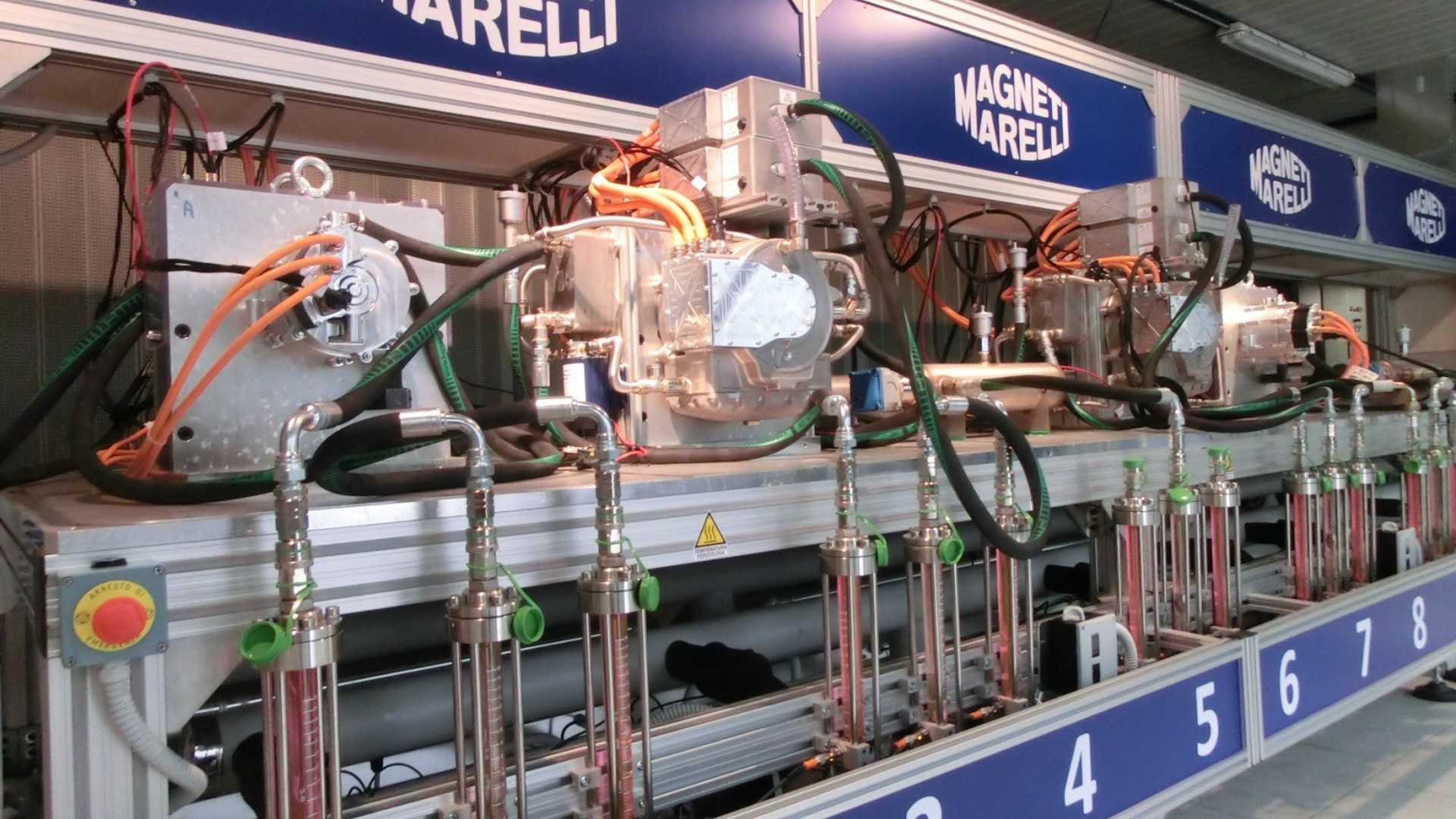
    Fiat Chrysler Automobiles has announced that it has entered into a definitive agreement to sell its automotive components business Magneti Marelli S.p.A. to CK Holdings Co., Ltd, a holding company of Calsonic Kansei Corporation. Following the closing of the Transaction, CK Holdings will be renamed as Magneti Marelli CK Holdings. The combined businesses of Calsonic Kansei and Magneti Marelli will create the world’s 7th largest global independent automotive components supplier based on total revenues.

    The agreement represents a transaction value of 6.2 billion Euros ($7.1 billion). The Transaction is expected to close in the first half of 2019 and is subject to regulatory approvals and other customary closing conditions. The new entity will operate out of nearly 200 facilities and R&D centres across Europe, Japan, the Americas, and Asia Pacific.

    FCA has also agreed to a multi-year supply agreement that will further strengthen a mutually beneficial relationship for both Magneti Marelli and FCA’s expanding model range and which will sustain Magneti Marelli’s Italian business operations, positioning it strongly for continued growth and success in the future. The combined company will be led by Beda Bolzenius, currently CEO of Calsonic Kansei, based in Japan. Ermanno Ferrari, CEO of Magneti Marelli, will join the Magneti Marelli CK Holdings board.

    Mike Manley, CEO of FCA, said: “Having carefully examined a range of options to enable Magneti Marelli to express its full potential in the next phase of its development, this combination with Calsonic Kansei has emerged as an ideal opportunity to accelerate Magneti Marelli’s future growth for the benefit of its customers and its outstanding people. The combined business will continue to be among FCA’s most important business partners and we would like to see that relationship grow even further in the future. The transaction also recognises the full strategic value of Magneti Marelli and is another important step in our relentless focus on value creation.”

  • Ford says no plans to hike China prices despite new tariffs

    Ford says no plans to hike China prices despite new tariffs

    Ford Motor Co said on Thursday that for now, it will not hike prices of imported Ford and higher-margin luxury Lincoln models in China, thus absorbing the additional cost of tariffs on U.S.-made vehicles due to be applied starting on Friday.

    The U.S. carmaker, which has faced sluggish sales in the world’s largest auto market, said in a statement that “it has no current plans to increase the manufacturer’s suggested retail price (MSRP) on its import line-up in China.”

    Ford’s move, which would reduce the profit margins on its cars imported to China, makes it the first foreign automaker to address pricing issues ahead of the new tariffs that will affect around $34 billion of U.S. imports, from soybeans and cars to lobsters.

    German automaker Daimler AG said last month that its 2018 pre-tax profits would fall versus last year because new import tariffs on cars exported from the United States to China would hurt sales of high-margin Mercedes-Benz sports utility vehicles.

    Ford has much to lose if rising trade tensions between China and Republican U.S. President Donald Trump escalate into a full-blown tariff war. Last year, it shipped about 80,000 vehicles to China from North America, more than half of them its upper-end Lincolns – including the Lincoln Continental sedan and the Lincoln MKX crossover SUV.

    China, which just days ago cut tariffs on all imported automobiles, plans to slap an additional 25 percent levy on 545 American products, including U.S.-made cars, should Trump’s administration proceed with plans to implement tariffs on $34 billion of Chinese imports beginning on Friday.

    Ford encouraged the United States and China to resolve their dispute, and said it would “monitor the situation as it evolves.”

    Most of the vehicles Ford sells in China are made locally with its joint venture partners.

    All Lincoln vehicles that Ford sells in China are imported from North America. The brand last year sold 54,124 vehicles in China, up 66 percent from 2016. It is unclear how long it will take for any impact on profit margins at Ford, as the automaker will likely have a couple of months’ supply of imported vehicles already on the ground in China.

    Ford and Lincoln both cut prices on imported models in May after China announced steep tariff cuts for automobiles and car parts that took effect on July 1.

    Trade-related issues are cropping up for Ford at a time when it is suffering from a big sales slump in China caused by a lack of new models in its line-up. Last year, its sales fell 6 percent even as overall vehicle sales in China rose 3 percent.

    Other firms that export U.S.-made cars to China include BMW, Daimler’s Mercedes and Tesla. Those automakers did not immediately respond to requests for comment.

    China is General Motors’s largest market. A GM spokesman said that aside from a very small number of Chevrolet Camaro cars, virtually all of its vehicles and parts sold in China are made there. The automaker is still assessing what to do about that small number of imported vehicles, the spokesman said.

    Fiat Chrysler Automobiles NV (FCA) produces the bulk of the vehicles it sells in China locally, but exports the Jeep Wrangler, Jeep Grand Cherokee and Chrysler Pacifica minivan to China.


  • GM sees flat 2018 earnings, with pickups picking up in 2019

    GM sees flat 2018 earnings, with pickups picking up in 2019

    General Motors Co shares rose on Tuesday after the company said 2018 earnings will be largely flat compared with 2017 and forecast higher profits in 2019 when its revamped line of high-margin pickup trucks hits the U.S. market.

    The 2018 earnings outlook was above market expectations, sending GM shares up about 2 percent in midday trading.

    GM forecast 2017 earnings per share at the high end of its previously forecast range of $6 to $6.50. The company expects earnings for 2018 to be roughly the same as in 2017. Analysts have predicted full-year 2017 earnings per share of $6.30, and $5.98 a share in 2018.

    “If the guidance is as positive as we interpret it, this could be the positive catalyst that we expected, and sets up a solid ’18,” Barclays analyst Brian Johnson wrote in a client note.

    The company and its Detroit rivals, Ford Motor Co and Fiat Chrysler Automobiles NV, are bringing on new trucks at a time when overall U.S. new vehicle sales have been falling, but truck sales continue to grow as consumers abandon passenger cars in favor of pickups, SUVs and crossovers.

    President Dan Ammann said GM’s new line of pickups should generate improved profit from increased production of higher-priced, four-door crew cab trucks, and expanded sales of luxury truck models.

    GM said in a presentation on Tuesday its Denali line of luxury pickups has average transaction prices of about $55,600, higher than the average for Daimler AG’s (DAIGn.DE) Mercedes-Benz brand, or GM’s own Cadillac luxury brand.

    Chief Executive Mary Barra said during a meeting with reporters the automaker will boost investment in electric vehicles, but declined to say by how much. Rival automakers have used the Detroit auto show to tout multi-billion dollar investments in electrification.

    GM said it expects capital expenditure in 2018 of around $8.5 billion, about $1 billion of which will go toward self-driving car technology. In future years, Chief Financial Officer Chuck Stevens said total capital spending should decrease.

    Last week, the company said it was seeking U.S. government approval for a fully autonomous car – one without a steering wheel, brake pedal or accelerator pedal – to join GM’s first commercial ride-sharing fleet in 2019.

    Barra also said GM will not follow other companies that have given employees special bonuses tied to tax cuts by the administration of U.S. President Donald Trump, which slashed the top U.S. corporate tax rate.

    Instead, Barra said if GM has higher profits because of lower U.S. taxes, GM employees, including union-represented U.S. factory workers, should see larger bonuses or profit-sharing checks based on existing pay formulas.

    In a client note, Buckingham Research Group analyst Joseph Amaturo wrote that GM’s 2018 earnings outlook includes a “lower statutory corporate tax rate, so on an apples-to-apples basis, this appears to be an effective EPS guide down.”

    “We believe the stock will fade after investors understand that the implied EPS guide is for a year-on-year decline, as we and consensus are forecasting,” Amaturo wrote.

    GM faces challenges in 2018 from the costs of launching the new large pickup trucks, rising interest rates in the United States and a likely decline in overall U.S. vehicle sales, Stevens said.

    However, Stevens said wage growth could offset the impact of higher interest rates for consumers buying vehicles.

    Barra, Ammann and Stevens declined to say when investments in self-driving vehicle services and electrification will return profits. They pointed to the potential for new trucks and SUVs, a new, low-cost car for international markets, and the Cadillac luxury brand, to improve future earnings.

    Cadillac profits should double from current levels by 2021, GM said, riding growing sales in China and new products planned for the United States to replace a current crop of slow-selling sedans. Stevens did not disclose current profit figures for Cadillac.

    GM said on Tuesday that while it retools a factory in Ft. Wayne, Indiana, to make the new pickup trucks, it will shift some production to an Oshawa, Ontario, plant in order to build up to 60,000 vehicles and avoid missing sales.

    The No. 1 U.S. automaker said it will record a $7 billion non-cash charge for its fourth-quarter 2017 earnings related to deferred tax assets that will lose their value because of the lower U.S. corporate tax rate.

    GM shares rose 2.2 percent to $45.04 in noon trading.reu

  • BMW expects jump in electric car sales in 2018

    BMW expects jump in electric car sales in 2018

    BMW expects its sales of electric and hybrid vehicles to jump next year, its research and development chief said as the premium carmaker races to catch up with rivals such as U.S. electric car pioneer Tesla.

    Sales in 2018 will exceed a 2017 sales target of 100,000 vehicles by a medium double-digit percentage, Klaus Froehlich said at an event, without being more specific.

    In the first 10 months of 2017, BMW sold 78,100 electric cars and plug-in hybrids.

    BMW, which launched the i3 electric car in 2013, is gearing up to mass produce electric cars by 2020 and aims to have 12 different models by 2025.

    Chief Executive Harald Krueger said BMW aimed to keep its return on sales around 8 to 10 percent even with the added costs of developing electric cars.

    Carmakers are trying to lower the cost of electric vehicles by investing in the development of affordable but powerful batteries and through modular production systems.

    BMW’s Froehlich said he expected such modular systems to benefit the development of autonomous cars as well.

    BMW earlier this year teamed up with U.S. chipmaker Intel and Israel-based camera specialist Mobileye to develop autonomous driving technologies.

    Frohlich said another carmaker was to join them by the end of the year. He said the aim was to have partners from Europe, North America and Asia.

    So far, U.S.-based Fiat Chrysler and auto parts makers Delphi and Magna have joined the partnership, along with Germany’s Continental.

  • Fiat Chrysler to recall 1,200 SUVs in India for airbag replacement

    Fiat Chrysler to recall 1,200 SUVs in India for airbag replacement

    Italian-American carmaker Fiat Chrysler Automobiles NV will recall 1,200 Jeep Compass sports utility vehicles (SUVs) sold in India, for “replacement of the front passenger air bag,” FCA India said in a statement on Thursday.

    The recalls are part of a bigger recall by the company. The carmaker on Wednesday recalled 7,000 U.S.-market SUVs and 1,000 vehicles sold in Canada and Mexico for the same reason.

    During the airbag module assembly process, “loose fasteners may have inadvertently found their way undetected into a small number of modules,” Fiat said in an emailed statement.

    No injuries, accidents, warranty claims or complaints have been reported, the company said.

  • Fiat Chrysler shares fall as it plans to curb production

    Fiat Chrysler shares fall as it plans to curb production

    Shares in Fiat Chrysler fell more than 5 percent on Thursday amid worries that problems in China were undercutting sales of flagship models such as the Maserati and Alfa Romeo sport utility vehicles.

    The shares fell after a trade publication, “Automotive News”, reported on Wednesday that FCA would temporarily cut production of the Maserati Levante SUV and the Alfa Romeo Stelvio SUV and Giulia sedan at plants in Italy, because new import rules in China were hurting sales.

    Fiat shares closed down 6 percent in Milan at 13.99 euros. The stock was also hit by weakness in the auto industry overall, after Nissan announced that it was suspending all car production in Japan.

    “The whole auto sector is under pressure today, but the market also seems to be digesting the impact the production shutdowns could have on FCA,” a trader said.

    Manufacturing of the Levante, which is essential to reviving sales at Maserati, was suspended for two weeks during October and November, unions said. The Mirafiori plant produces around 130 Levantes per day, they said.

    “This is the first time we have a shutdown at the Levante line since it came into production, so this is quite worrying,” said Federico Bellono, general secretary for the FIOM union in Fiat’s home town of Turin.

    FCA also reduced production of the Stelvio and the Giulia models, which were designed to revamp the Alfa Romeo brand, by making fewer vehicles per shift this month and halting lines on four Fridays. FCA declined to comment on the cuts.

    Deliveries of the Levante to Chinese dealerships dropped to 310 in July and just under 400 in August, compared with 1,064 in June, data from market researcher JATO Dynamics show.

    Stelvio deliveries were around 1,006 in June and 2,666 in July but fell to 227 in August. Sister model Giulia saw a similar crash in deliveries over the summer.

    The sales drop will make it difficult for FCA to reach its global goal of selling 60,000 Maseratis and 170,000 Alfas this year, said Felipe Munoz, an automotive analyst at JATO.

    Adding to the pressure were a slow sales start for Alfa Romeo in the United States, from which it had been absent for years, and growing competition for both brands in the popular premium segment.

    “The Stelvio SUV has done good so far, but it arrives ten years after the segment took off,” Munoz said.

    Levante, which helped Maserati increase sales by 90 percent in the first six months, “is perhaps the most beautiful of its segment, but it soon lagged behind its rivals in terms of technology when they were updated … The new Porsche Cayenne could be its biggest headache”, Munoz said.

    The analyst forecasts global sales this year of 130,000 to 140,000 for Alfa and 40,000 for Maserati.

  • Fiat Chrysler recalls 1.33 million vehicles over fire, air bag risks

    Fiat Chrysler recalls 1.33 million vehicles over fire, air bag risks

    Fiat Chrysler said on Friday it is recalling 1.33 million vehicles worldwide in two separate campaigns for potential fire risks and inadvertent airbag deployments.

    The Italian-American automaker said it is recalling about 770,000 sport utility vehicles because of a wiring issue that may lead to inadvertent deployment of the driver-side air bag and is linked to reports of five related minor injuries, but no crashes.

    The company said wiring could chafe against pieces of steering-wheel trim, potentially causing a short-circuit and ultimately leading to an inadvertent air bag deployment. The issue could also cause unintended windshield wiper operation or inoperable switches.

    The recall covers 538,000 2011-2015 Dodge Journey vehicles in North America and 233,000 2011-2015 Fiat Freemont crossovers sold elsewhere. Dealers will inspect and replace the wiring, as needed and equip it with additional protective covering.

    The automaker is also recalling 565,000 vehicles to replace their alternators because of fire risks. The company said hot ambient temperatures could lead to premature diode wear, may result in a burning odor or smoke, could impact the anti-lock braking system or lead to engine stalls.

    The company said it is aware of two potentially related accidents but no injuries.

    The recall covers 2011-2014 model year Chrysler 300, Dodge Charger and Dodge Challenger cars and Dodge Durango SUVs and 2012-2014 Jeep Grand Cherokee SUVs.

    In October, Fiat Chrysler recalled about 86,000 Ram 2500 and 3500 pickup trucks, 3500, 4500 and 5500 chassis cabs from the 2007-2013 model years and 2011-2014 Dodge Charger Pursuit sedans for the same alternator issue. Fiat Chrysler said at the time one minor injury was related to the recall.

    Dealers will replace the alternators.

  • Fiat Chrysler recalling 297,000 vehicles for inadvertent air bag deployments

    Fiat Chrysler recalling 297,000 vehicles for inadvertent air bag deployments

    Fiat Chrysler Automobiles NV is recalling 297,000 older minivans because of a wiring problem that can lead to inadvertent air bag deployments, the company said on Thursday.

    The recall of 2011-2012 model year Dodge Grand Caravan minivans is linked to eight minor injuries, the automaker said, after initially reporting 13 injuries. Wiring may short-circuit, resulting in the driver-side air bag deploying without warning.

    The recall will begin in late July and includes 209,000 vehicles in the United States and nearly 88,000 vehicles in Canada. Dealers will replace the wiring if needed and add protective covering.

    Fiat Chrysler share fell nearly 2 percent to $10.69 on the New York Stock Exchange.

    Automakers have been recalling tens of millions of vehicles in recent years for a series of air bag problems, mainly tied to Takata inflators.

    More than a dozen automakers have called back 46 million Takata air bag inflators in 29 million U.S. vehicles that can rupture and emit deadly metal fragments. By 2019, automakers will recall 64 million to 69 million U.S. inflators in 42 million vehicles, U.S. regulators said in December.

    The new Fiat Chrysler recall is not linked to Takata, the company said.

  • Fiat Automobiles to roll out Jeep Compass on June 1

    Fiat Automobiles to roll out Jeep Compass on June 1

    Fiat India Automobiles has confirmed that it will roll out its first ever, ‘Made-in- India’ Jeep Compass production vehicle from the assembly line in Ranjangaon near Pune on June 1.

    Maharashtra Chief Minister Devendra Fadnavis will roll out the first ever ‘Made in India’ Jeep Compass production vehicle from the assembly line at Ranjangaon on Thursday, a company statement said.

    This development comes 23 months after Fadnavis, along with a high level delegation met senior Fiat Chrysler Automobiles (FCA) officials in June, 2015 at the company’s headquarters in Auburn Hills, Michigan in the Unites States.

    The delegation discussed FCA’s investment strategy in Maharashtra and reaffirmed the state government’s interest in strengthening ties with FCA, besides offering full support to the company’s manufacturing, said the statement.

    FCA has invested USD 280 million towards localisation of the Jeep Compass and has enhanced the facility to world standard. The Ranjangaon facility has become a significant manufacturing and export hub for FCA joining Brazil, Mexico and China on the global production map.

    FIAPL will be FCA’s sole manufacturing facility that will supply Jeep Compass SUVs to all international right-hand drive markets, it said.

  • Fiat Chrysler may add more self-driving supplier partners

    Fiat Chrysler may add more self-driving supplier partners

    Fiat Chrysler Automobiles may seek more supplier partners to help it develop and build self-driving vehicles, Chief Executive Officer Sergio Marchionne said on Wednesday.

    The Jeep and Ram brands are strong enough to exist as standalone entities outside FCA, Marchionne also said on a conference call with analysts after the company reported record first-quarter results. But he did not elaborate on whether there were any plans for a spin-off of either, like with Ferrari.

    The automaker reported an 11 percent jump in first-quarter operating profit, boosted by strong sales in North America, its most profitable market. Shares jumped about 10 percent on the news.

    FCA currently has a partnership with Alphabet Waymo self-driving unit. Marchionne said Waymo has an “unbeatable solution” to help build self-driving vehicles, including versions of the Chrysler Pacifica hybrid minivan, but that FCA is looking at additional partners.

    “Between now and the next three years, we need to provide viable solutions to take people around,” Marchionne said, citing Waymo’s new test program in Phoenix offering ride sharing in self-driving Pacificas.

    But FCA is considering more partners “because banking all of our solutions on one possible outcome is going to be disastrous,” Marchionne said. FCA continues to work with Waymo “in a very intense way,” he said, but “we need to look at optionality in more than one dimension” to build self-driving cars.

    FCA is retooling several U.S. plants to produce redesigned versions of the popular Jeep Wrangler and Ram 1500 pickup later this year and early next. Marchionne said the company would continue to produce several versions of the current models for several months in 2018 after the new versions begin production.

    New models from premium brands Maserati and Alfa Romeo should help boost FCA’s gross margins. Marchionne said Alfa, long a cash drain on the company, could be profitable in the fourth quarter, while Maserati has returned double-digit margins over the past three quarters. Both brands have launched new luxury utility vehicles in the United States.

    Marchionne said FCA hopes to resolve emissions certification issues “in a few weeks” with the U.S. Environmental Protection Agency and the California Air Resources Board.

    In the meantime, he said FCA will try to meet future emissions regulations without relying so heavily on diesel engines, but with a combination of gasoline engines and electric motors.