Tag: Finance

  • UBS Gaming Out Different Scenarios for Credit Suisse

    UBS Gaming Out Different Scenarios for Credit Suisse

    All options appear to be on the table. Switzerland’s largest institution could keep the rescued bank’s investment banking business. Or it might spin off its domestic retail franchise in an IPO.

    UBS continues considering various options for Credit Suisse, citing people familiar with the matter.

    In March, the Swiss government prodded Switzerland’s largest bank to rescue its competitor, which is the country’s second-largest institution.

    The news agency indicated that a number of scenarios are being envisaged. They include keeping Credit Suisse’s troubled investment banking business while selling the remainder rumps of the failed franchise.

    As part of that, UBS also appears to be studying plans to potentially list the Swiss business in an initial public offering once it assumes control of the rescued bank.

    The news agency said the sources queried spoke on condition they remained anonymous. It added that all considerations remain preliminary as attention is currently focused on completing the takeover. Any decision to proceed with an IPO could take months after its successful conclusion.


  • Techcombank sells headquarters building for $72M

    Techcombank sells headquarters building for $72M

    Techcombank has sold its building in Hanoi for VND1.7 trillion (US$72.49 million), making a profit of over VND730 billion.

    It had bought the building on 191 Ba Trieu Street in Hai Ba Trung District 10 years ago from conglomerate Vingroup, changed its name to Techcombank Tower and made it its headquarters.

    Earlier this year Vietnam’s biggest private bank moved to its headquarters to 6 Quang Trung Street in Hoan Kiem District.

    Techcombank reported pre-tax profits of VND5.6 trillion for the first quarter, down 17% year-on-year.

    Its credit growth for the period was 10.6%.

  • In February UBS Deemed Credit Suisse Takeover Undesirable

    In February UBS Deemed Credit Suisse Takeover Undesirable

    UBS was preparing a Credit Suisse takeover scenario months before it happened in March. A document filed with the US Securities and Exchange Commission (SEC) provides insight into the process.

    Just weeks before the takeover of Credit Suisse, the UBS board of directors deemed a takeover of its rival undesirable, according to the latest documents the Swiss bank recently filed with the US Securities and Exchange Commission (SEC). An Edgar filing provides insight into the processes leading up to the merger of the two credit institutions.

    Between October 2022 and February 2023, a UBS board of directors strategy committee reviewed developments at Credit Suisse. In early December, management, on behalf of the Strategy Committee, made a preliminary assessment of the impact of a transaction with Credit Suisse if UBS were asked to take an active role in the rescue of its competitor. An initial evaluation was presented to the Strategy Committee on December 19.

    Subsequently, the Strategy Committee, at its meeting on February 20, and the Board of Directors, at its meeting on February 22, concluded that a takeover of Credit Suisse was not desirable for UBS. Still, further analysis was necessary to prepare for a scenario in which the competitor ran into serious financial difficulties.

    In doing so, the Strategy Committee and the Board considered the uncertainty of a reliable valuation of Credit Suisse, its recent business performance and risks, other potential liabilities, and the overall uncertainty of the transaction.

    The Board instructed management to monitor ongoing developments at Credit Suisse and to consider measures that could address UBS’s concerns if UBS had to consider an acquisition of Credit Suisse.

    From January through mid-March 2023, teams of UBS employees, outside legal counsel, and Morgan Stanley, which was asked to assist with the theoretical analysis, conducted financial analyses, according to the SEC filings.

    They evaluated potential legal structures and measures that could address UBS’s concerns in a scenario where the Swiss government actively supported UBS’s acquisition of Credit Suisse. UBS also reviewed the potential negative impact on its bank if Credit Suisse were to be wound down.

  • Gold price goes up

    Gold price goes up

    SJC gold price rose 0.15% to VND67.25 million ($2,868.10) per tael Thursday morning.

    Gold ring price surged 0.53% to VND57.25 million per tael. A tael equals 37.5 grams or 1.2 ounces.

    Globally gold prices traded near record-high levels on Thursday, as U.S. yields and the dollar dipped after the U.S. Federal Reserve hinted it may pause its rate-hike cycle.

    Spot gold was up 0.1% at $2,040.46 per ounce. Earlier in the session, prices rose to $2,072.19 per ounce and hovered close to an all-time high of $2,072.49 scaled in 2020.

    Gold is helped by “lower yields and a weaker dollar in the aftermath of the recent Fed meet and changes in the policy statement language providing the conviction that the central bank will likely shift towards a rate pause,” said Yeap Jun Rong, market analyst at IG.

    The dollar index was down 0.2%, making greenback-priced gold more affordable for overseas buyers. Benchmark U.S. Treasury yields also dropped.

  • Gold prices gain

    Gold prices gain

    SJC gold price gained 0.07% to VND67.2 million ($2,863.23) per tael Thursday morning.

    Gold ring price went up 0.09% to VND56.9 million per tael. A tael equals 37.5 grams or 1.2 ounces.

    Globally gold prices rose on a softer dollar, while investors braced for a host of U.S. economic data ahead of a crucial Federal Reserve’s policy meeting next week.

    Spot gold rose 0.4% to $1,996.50 per ounce while U.S. gold futures climbed 0.5% to $2,005.20.

    Making bullion less expensive for other currencies holders, the dollar index eased 0.1% on the day.

    Gold is treading waters right now, as investors keep an eye on U.S. debt ceiling talks, and the Fed meeting next, that could offer some ideas on what to expect for the rest of the year, said Edward Meir, a metals analyst at Marex.

  • Stock dives to 5-week low

    Stock dives to 5-week low

    Vietnam’s benchmark VN-Index dropped 0.63 percent to 1034.85 points Tuesday, lowest in five weeks.

    The index closed 6.51 points lower after losing 1.55 points on Monday.

    Trading on the Ho Chi Minh Stock Exchange (HoSE) increased by 3% to VND9.42 trillion ($401.14 milllion).

    The VN-30 basket, comprising the 30 largest capped stocks, saw 27 tickers lose.

    MSN of conglomerate Masan Group fell 2.7%, followed by HDB of HDBank and NVL of property developer Novaland Group, both with a 2.1% drop.

    STB of Ho Chi Minh City-based lender Sacombank lost 2%, and PDR of Phat Dat Real Estate Development closed 1.9% lower.

    Only two blue chips gained. HPG of steelmaker Hoa Phat Group rose 1.9% and VCB of state-owned lender Vietcombank went up 0.5%.

    Foreign investors were net sellers to the tune of VND139.72 billion, mainly selling VIC of private conglomerate Vingroup and STB of Ho Chi Minh City-based lender Sacombank.

    The HNX-Index at the Hanoi Stock Exchange, where mid and small caps list, was down 1.00% while the UPCoM-Index at the Unlisted Public Companies Market was up by 0.12%.

  • Clients Flooded UBS With New Money in Late March

    Clients Flooded UBS With New Money in Late March

    The merger of UBS and Credit Suisse is expected to result in a behemoth wealth and asset manager, drawing all eyes to the institutions’ first quarter results at the start of the week.

    During the first quarter we saw strong net new fee-generating asset and net new money inflows in global wealth management and asset management, UBS CEO Sergio Ermotti said in a statement accompanying first quarter results.

    The global wealth management (GWM) business attracted $28 billion of net new money during the first quarter, of which $7 billion «came in the last ten days of March, after the announcement of our acquisition of Credit Suisse,» UBS said. Those results should ease some of the concerns that assets being taken out of Credit Suisse are headed to other firms.

    Moreover, UBS brought in $20 billion in new fee-generating assets in its GWM unit and $14 billion in asset management (AM).

    In the Americas region, vital to the Group’s growth plans, the GWM business brought in $8 billion of new money and $4 billion of new fee-generating assets. In Switzerland, new money inflows were $10 billion, while $8 billion in new fee-generating assets were reported along with $2 billion in new loans in GWM and P&C, according to the report.

    EMEA reported new money inflows of $4 billion and generated $3 billion in new assets. Net interest income increased almost 60 percent on the back of higher euro rates. Asia was also a bright star for UBS, bringing in $6 billion of net new money and $5 billion in new fee-generating assets, which marks a 17 percent growth rate over the past twelve months.

    Overall invested assets for GWM were $3 trillion at the end of the first quarter, down from $3.1 trillion in the first quarter of last year.

    UBS said it is focused on completing its acquisition of Credit Suisse in the second quarter of this year, which «will advance our strategy, particularly in global wealth management and Switzerland.» UBS reported that net profit attributable to shareholders was $1.029 billion in the first quarter, about half of the $2.136 billion in the same quarter a year ago. Its Group CET1 ratio was 13.9 in the first quarter, down from 14.2 in the fourth quarter of last year.

    It was a different story on Monday at Credit Suisse, where clients moved 47.1 billion francs of their wealth elsewhere.

  • MB launches banking app in Laos

    MB launches banking app in Laos

    Military Commercial Joint Stock Bank Laos branch (MB Laos) released a new banking application for individual customers in Vientiane, Laos, on Monday.

    Several Laotian government officials and representatives of the State Bank of Laos and MB attended the app launch ceremony.

    MB Laos app will increase customers’ convenience and optimize their banking experience on digital channels with advanced technology.

    The app helps customers manage their finances by providing online savings services, loans application, as well as local and foreign currency account management. Other features include bill payment, scanning Laos QR codes for payment, phone recharging, and money transfers from payment accounts to Umoney E-Wallet.

    It also provides users with a safe, secure and fast online money transfer and saving services.

    “With the new digital banking product, MB Laos is expected to bring the best experience to existing customers, while also attracting new ones,” an MB Laos representative said.

    The MB Laos app is available to download on the App Store and Google Play.

    Customers will have the opportunity to receive 20,000 Lak when opening a new account in the app.

    Find more information on this website.

    Email: ebanking.lao@mbbank.com.vn.

    Hotline: 021 752 777

    Address: MB Building, No 10 Kaysone Phomvihane Avenue, Phonexay Village, Saysettha District, Vientiane Capital, Laos PDR, Vientiane, Laos.

  • Apple Card Savings Account is here: Impressive 4.15% Interest Rate

    Apple Card Savings Account is here: Impressive 4.15% Interest Rate

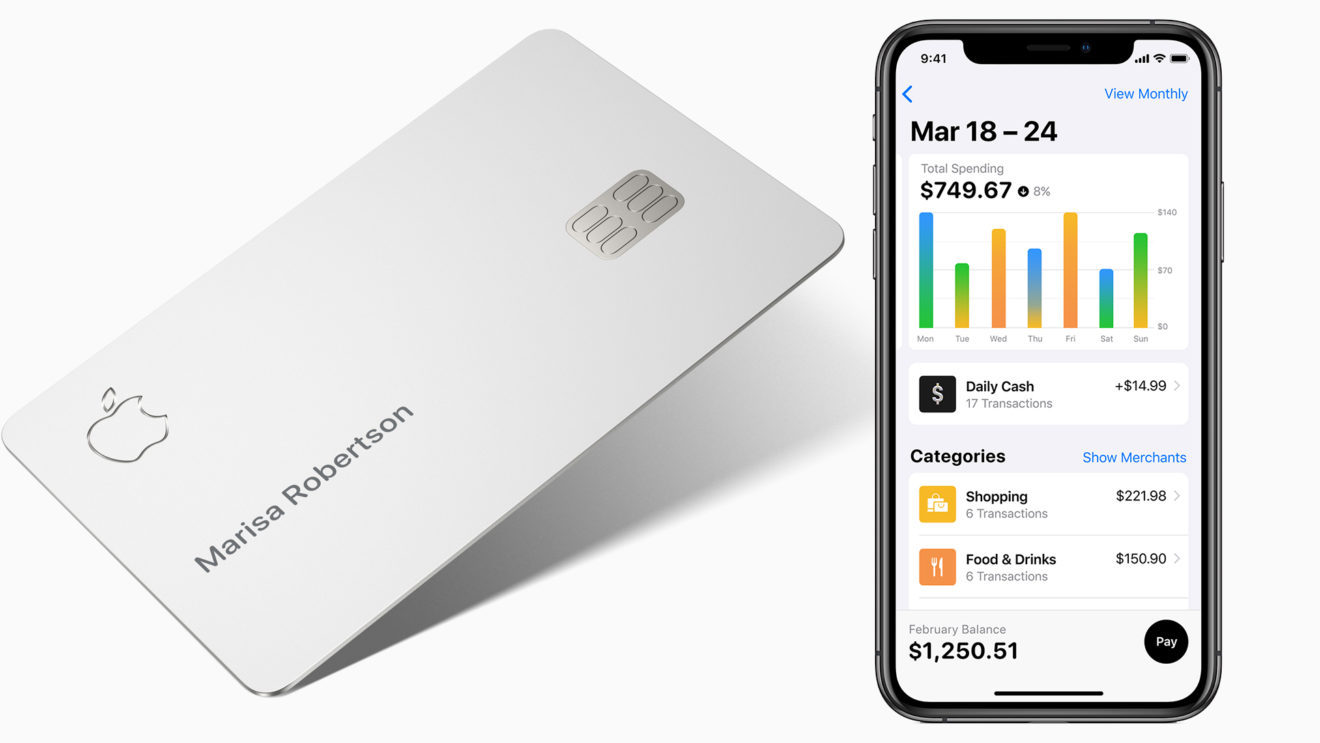
    Starting today, you can open an Apple Card Savings account with an annual percentage yield (APY) of 4.15%.

    We have been hearing rumors about this Apple Card Savings account recently, but now it’s finally official in a blog post on the Apple Newsroom.

    The main benefit of this account is the high APY. At 4.15%, Apple says this rate is 10 times the national average. The account operates in partnership with Golden Sachs.

    It’s also good to know that the Apple Card Savings account comes with no fess, minimum deposits, or minimum balance requirements.

    Apple Card holders can get between 2% and 3% cash back on purchases made via Apple Pay, and 1% cash back on transactions made with the physical card. So these Daily Cash balances will immediately go into the Savings account, so you can start earning interest.
    Users also gets a neat dashboard right in the Wallet app, where they can track account balance and interest earned over time.
    Here is how you open a savings account in the Apple Wallet app:
    • Tap on the Apple Card
    • Tap on the circle with three dots at the top of the screen
    • Tap Daily Cash
    • Select Set Up Savings.
  • Bitcoin pushes past $30,000 as investors eye end of rate rises

    Bitcoin pushes past $30,000 as investors eye end of rate rises

    Major cryptocurrency bitcoin breached the key $30,000 level for the first time in 10 months on Tuesday, adding to its steady gains as investors raised bets that the U.S. Federal Reserve will soon end its aggressive monetary tightening campaign.

    Bitcoin peaked at $30,438 in Asian trade and was last 2% higher at $30,262. It has gained about 6% since the start of the month, after rising 23% in March.

    The token’s surge follows Friday’s closely-watched U.S. nonfarm payrolls report that showed employers maintained a strong pace of hiring in March, pointing to a still-resilient economy.

    However, banking sector turmoil sparked by last month’s collapse of Silicon Valley Bank has raised market expectations that the Fed is unlikely to lift interest rates much higher for longer as it looks to ease the stress on the sector.

    “The reason behind the broad-based rally in crypto is traders’ optimism toward central banks’ monetary policy,” said Tina Teng, markets analyst at CMC Markets.

    “Bets for a sooner Fed pivot on rate hikes have been dramatically strengthened following the bank turmoil in early March.”

    Ether , the second largest cryptocurrency, stood near last week’s roughly eight-month peak of $1,942.50. It was last 0.75% higher at $1,925.80.

    Crypto investors are eagerly anticipating a major revamp to the Ethereum blockchain this week to allow them to access more than $33 billion of ether currency.

    Dubbed Shapella, the software upgrade will let market players redeem their “staked ether” – coins they have deposited and locked up on the network over the past three years in return for interest.

  • Insurance sales at banks boom

    Insurance sales at banks boom

    More than a dozen lenders achieved bancassurance revenues of over VND1 trillion ($42,633 million) from new customers last year, according to Vietcombank Securities.

    Bancassurance refers to insurance products sold through banks.

    Premium income from new customers increased by 45% during the year, and overall premiums at by 16%.

    Military Bank led with more than VND2.1 trillion from new customers. It was followed by VIB, Sacombank, Vietcombank, Techcombank, VPBank, HDBank, and VietinBank, who all achieved premiums of more than VND1 trillion.

    Banks have an advantage over conventional insurance agents thanks to their existing customer base and financial know-how.

    Bancassurance contributed 40% of the insurance industry’s revenues from new customers last year, and this is expected to increase to 50% in the next two years.

  • VPBank eyes $1B profit

    VPBank eyes $1B profit

    VPBank expects a pre-tax profit of VND24 trillion ($1.02 billion) this year, exceeding the $1 billion milestone for the first time since its establishment.

    The news comes after the bank announced the sale of a 15% stake to a Japanese financial giant.

    The target, announced in a document sent to shareholders before the upcoming general meeting, will nudge the private lender into the ranks of the billion-dollar profit club in the banking sector, in which only Vietcombank and Techcombank are members.

    VPBank earlier this week completed a 15% stake sale to Japanese lender SMBC for $1.5 billion in the biggest acquisition ever recorded in Vietnam’s banking industry.

    The lender expects an asset growth of 39% to VND880 trillion this year, while capital mobilization and lending growth are expected to hit 41% and 33%, respectively.

    VPBank also wants its shareholders to approve a plan to increase its charter capital to VND79 trillion, the biggest in the industry, by issuing more shares.

    The banks plans to sell 30 million shares to its employees at the price of VND10,000 per share. These shares will come from the bank’s treasury shares and will be for a limited trading period of three years.

    Last year, VPBank recorded a pre-tax profit of VND21.22 trillion, up nearly 48% from 2021.

  • Vietnam blockchain development center launched in Hanoi

    Vietnam blockchain development center launched in Hanoi

    DTS Group and GMO have established a blockchain technology application and development center with the goal of promoting blockchain technology in Vietnam.

    The Mira Blockchain Center in Hanoi aims to bring blockchain technology to life through integrated technology-based physical products and high technology projects.

    The unit will research, apply, deploy, and transfer blockchain technology in artificial intelligence-related technology and other sectors.

    Through research, Mira will create and utilize blockchain technology for ground-breaking technological solutions. The hands-on human resources training center will provide consultation services and technology deployment training for both local and international businesses.

    The Mira Blockchain Center’s services include blockchain application services for asset management, finance, and supply chains, technology consulting services for businesses or organizations, and blockchain testing services for testing and evaluating blockchain performance in businesses.

    At first, Mira will focus on supporting Vietnamese businesses by carrying out technology research and development activities, increasing technology capacity of enterprises.

    The center will later develop blockchain solutions and applications for international markets.

    Leon Truong (Truong Gia Bao), Chairman of DTS Group, said: “Mira will execute continuous testing to perfect our technical process for new projects, providing in-depth knowledge about blockchain.”

    Ngo Van Tau, General Director of GMO, said the center will provide well-trained, practical engineers for domestic and foreign enterprises.

    “I believe the center will help improve Vietnam’s position on the world technology map,” Van Tau said.

    DTS Group, founded by Truong Gia Bao, is a private corporation operating in the fields of media, finance and technology investment. DTS Group has collaborated with associates in its network to promote technology innovation, particularly in the blockchain sector.

    GMO is as a software manufacturer, providing IT solutions and services in Japan, Vietnam, and several English-speaking markets.

    Mira blockchain center

    Address: 6th floor, Ocean Park Building, No. 1 Dao Duy Anh, Dong Da, Hanoi

    258 Ton Dan, Ward 8 District 4, Ho Chi Minh City

  • UBS to take over Credit Suisse, assume up to 5B Swiss francs in losses

    UBS to take over Credit Suisse, assume up to 5B Swiss francs in losses

    UBS agreed to buy rival Swiss bank Credit Suisse for 3 billion Swiss francs ($3.23 billion) in stock and agreed to assume up to 5 billion francs ($5.4 billion) in losses, in a shotgun merger engineered by Swiss authorities to avoid more market-shaking turmoil in global banking.

    The deal includes 100 billion Swiss francs ($108 billion) in liquidity assistance for UBS and Credit Suisse from the Swiss central bank.

    The government said that to enable UBS to take over Credit Suisse, the federal government is providing a loss guarantee of a maximum of 9 billion Swiss francs for a clearly defined part of the portfolio.

    This will be activated if losses are actually incurred on this portfolio. In that eventuality, UBS would assume the first 5 billion francs, the federal government the next 9 billion francs, and UBS would assume any further losses, the government said.

    Switzerland’s regulator FINMA said that there was a risk that Credit Suisse could have become “illiquid, even if it remained solvent, and the authorities needed to take action”.

    Credit Suisse Additional Tier 1 shares with a nominal value of around 16 billion francs ($17.2 billion) will be written down completely after the Swiss government provided support for UBS’ takeover of Credit Suisse, FINMA said.

    The 167-year-old Credit Suisse has been the biggest name ensnared in market turmoil unleashed by the recent collapse of U.S. lenders Silicon Valley Bank and Signature Bank, forcing it to tap $54 billion in central bank funding last week.

    “With the takeover of Credit Suisse by UBS, a solution has been found to secure financial stability and protect the Swiss economy in this exceptional situation,” the Swiss central bank said.

    Authorities had been scrambling to rescue Credit Suisse, among the world’s largest wealth managers, before financial markets reopened on Monday.

    UBS and Credit Suisse are both in a group of the 30 global systemically important banks watched closely by regulators, and Credit Suisse’s failure would ripple throughout the entire financial system.

    The announcement came in a make-or-break weekend after some rivals grew cautious in their dealings with the struggling Swiss lender, and its regulators urged it to pursue a deal with UBS.

    FINMA, which said it had approved the takeover, said recent measures to stabilize itself were “not enough to restore confidence in the bank, however, and more far-reaching options were also examined.”

    The two banks’ fortunes have diverged sharply over the past year. UBS earned $7.6 billion in profit in 2022, while Credit Suisse lost $7.9 billion. Credit Suisse’s shares are down 74% from a year ago, while UBS’s are relatively flat.

    The Swiss government said that it was also giving UBS a guarantee of 9 billion Swiss francs “assume potential losses” from assets as part of the transaction.

    UBS’s chief executive officer Ralph Hamers and Chairman Colm Kelleher will remain at the helm of the combined bank.

    “The transaction reinforces UBS’s position as the leading universal bank in Switzerland,” UBS said.

    Executives foreshadowed structural changes in the offing.

    Kelleher said it would wrap up running Credit Suisse’s investment bank, but added that it was too early to say anything about potential job cuts.

    Kelleher also said they would keep Credit Suisse’s domestic business, despite speculation that it could be spun off amid competition concerns.

    Credit Suisse’s Chairman Axel Lehmann called the merger the “best available outcome”.

  • ECB Has to Show its Colors Amidst US Bank Crash

    ECB Has to Show its Colors Amidst US Bank Crash

    Price stability or financial stability. The European Central Bank has been in a dilemma since the US banking crisis last week in the US and will need to send a clear signal Thursday.

    Until the banking crash in the US late last week, it was a foregone conclusion the European Central Bank (ECB) would raise key rates another half percentage point at its meeting on Thursday. It would mark the sixth consecutive hike since it began raising rates in July of last year.

    Despite the banking sector turmoil, it remains plausible the half-percentage point increase in the deposit rate to three percent telegraphed by the ECB at its February meeting won’t shake financial markets. ECB President Christine Lagarde stressed at the time that only extreme developments could still upset the roadmap to another March rate hike.

    For observers, however, Thursday’s rate hike is not the most imcrucialessage. Instead, they will keenly be looking for signals about the upcoming meeting in May. In light of recent events, the odds have changed.

    Traders scaled back their bets at the beginning of the week. According to a report, tha hike of 25 basis points in May is re likely than a 50 basis point move.

    The deciding factor for the further pace of key rate hikes will be how quickly the ECB expects inflation to fall toward its two percent target. So far, the prevailing view among analysts is the deposit rate will peak at four percent in July.

    However, the banking crisis emanating from the US and the possible contagion risks to other regions could change that assessment. To be sure, further monetary tightening is still urgently needed to curb high inflation, but at the same time, they threaten to further jeopardize financial stability, which has been battered above all in the US.

    Central banks are faced with a classic dilemma. According to Klaus Wellershoff of the Zurich-based wealth advisor Zwei Wealth, the monetary guardians have to choose between more future inflation or exacerbating the banking crisis. He said this balancing act is fundamentally different from the financial crisis of 2007 to 2009.

    Then, central banks were able to achieve both financial and price stability at the same time because of the threat of inflation that was too low, Wellershoff said.

    Because inflation rates are currently above central bank targets by a wide margin, their options depend on how the US banking crisis plays out in the coming days. Wellershoff expects that central banks won’t be able to ignore financial stability and will put on the brakes. The past few days’ events make higher inflation likely in the future.

    How badly financial stability suffers from California’s Silicon Valley Bank (SVB) collapse is currently the big question, even for central bankers.

    For the optimists, the events surrounding SVB do not pose a systematic risk because it was primarily active in a relatively small group of large depositors from startups in the technology and life sciences sectors.

    That’s why contagion would be limited and mainly confined to private equity and venture capital, says Rohan Reddy, research analyst at US asset manager Global X ETF, for example.

    SVB is not on the Financial Stability Board’s list of systematically important banks, explained in part by SVB’s $175 billion in customer deposits, whereas US GDP in 2021 was $23 trillion.

    Those $175 billion won’t vanish entirely into thin air, and depositors would likely get back a substantial portion of their deposits.

    What speaks against the US crisis spreading to Europe is the ECB has been slower to raise interest rates than the Fed, leaving banks still have plenty of cheap funding.

    In addition, European banks are required to hold more liquid assets than would flow out in a 30-day stress scenario. In the U.S., these rules apply only to the largest banks – and not, for example, to SVB, as is pointed out at Citigroup.