Tag: Finance

  • Dollar weakens against dong

    Dollar weakens against dong

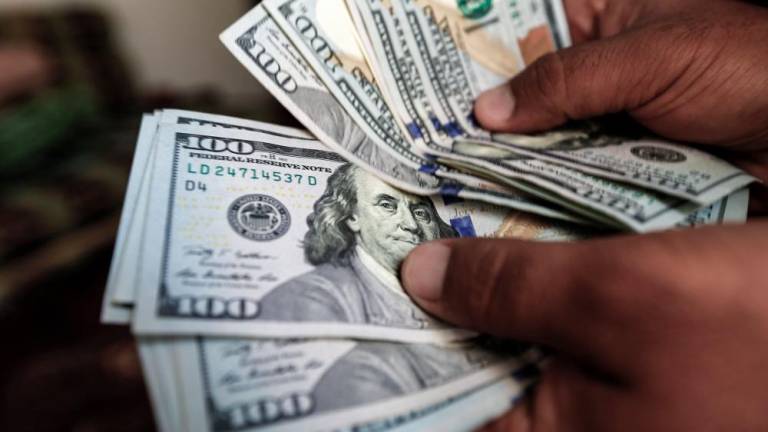
    The U.S. dollar continued to depreciate against the dong on the black market Monday.

    It plunged 0.86% to VND24,220 at unofficial exchange points.

    The greenback fell 0.19% to VND23,825 at TPBank, and dropped 0.32% to VND23,713 at Vietinbank.

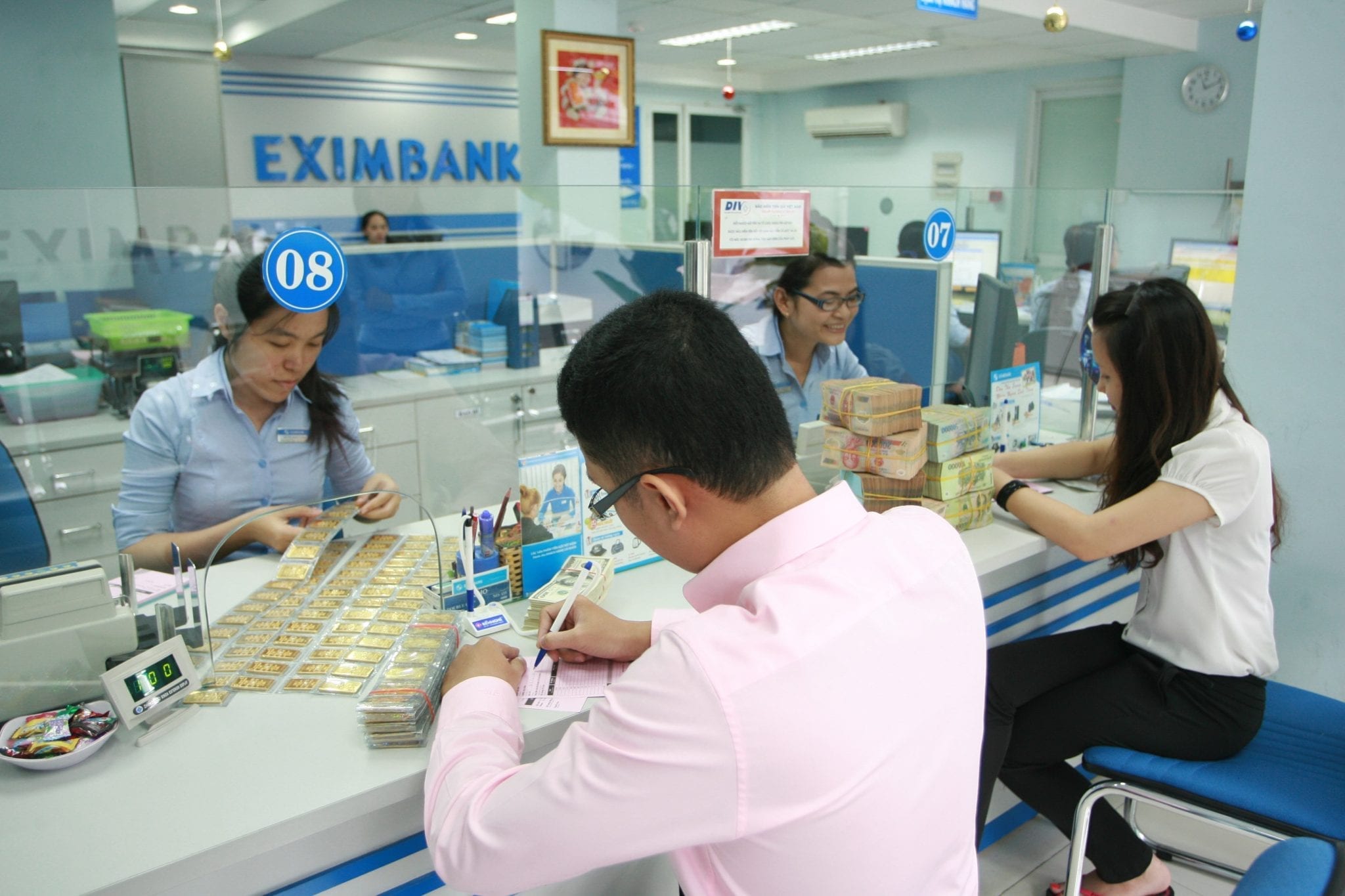
    Eximbank sold the dollar at VND23,740, up 0.17%.

    The rate at Techcombank was VND23,750, up 0.04%. It stayed unchanged at Vietcombank.

    The State Bank of Vietnam (SBV)’s set the reference rate is at VND23,655, down 0.01%.

    The dollar has gained 3.40% against the dong since the beginning of the year.

    The U.S. Dollar Index, which measures the greenback’s strength against major currencies, hovered around a three-month low of 105 points.

  • Dollar plunges at banks

    Dollar plunges at banks

    The U.S. dollar plunges at commercial banks Monday morning, with Techcombank selling it at VND24,135 ($0.99), down 0.64% from the previous weekend.

    Vietcombank sold the greenback 0.41% lower at VND24,140. Eximbank let the dollar slide 0.33% to VND24,250.

    The State Bank of Vietnam (SBV) set its exchange rate at VND23,658, down 0.008%.

    The greenback was sold VND24,615 on the black market, the same as the previous weekend.

    The dollar struggled to gain a foothold on Monday and was languishing at five-month lows as traders looked past stronger than anticipated U.S. jobs data, while growing hopes of China reopening boosted risk sentiment.

    The dollar index, which measures the currency against six major peers, including the yen and euro, was down 0.18% at 104.28, its lowest since June 28. The index fell 1.4% last week.

  • Eximbank profits triple in Q3

    Eximbank profits triple in Q3

    Lender Eximbank has tripled profits year-on-year for the third quarter to over VND1.278 ($51.5 million).

    Its net interest income doubled, and non-interest income from services and foreign exchange businesses grew in double digits.

    Its profits for the first nine months topped VND3.18 trillion, an increase of 3.3 times and well above the target of VND2.5 trillion.

    The bank estimates its pre-tax profits for the full year at VND3.5 trillion and targets VND5 trillion next year.

    It also eyes total assets of VND210 trillion for next year, up 14%, and an on-balance sheet bad debt ratio of 1.6% or less, down from 1.7% or less estimated for this year.

  • Bank deposit interest rates surpass 10%

    Bank deposit interest rates surpass 10%

    Some banks have hiked deposit interest rates to 10-10.35% amid low liquidity in the system. NCB is paying the highest interest rate of 10.35% for 12-month deposits of VND1 billion (US$40,300) downwards made online. For six-month deposits, it is offering 10%. Over the past month, lenders have increased deposit interest rates frequently, even weekly in some cases.

    At least ten banks are now offering more than 9% deposit interest rates. Most have also launched promotions offering higher rates than officially listed to attract depositors. MSB is offering 9.9% to new clients if they place a deposit of at least VND1 million.

    Many, including Kienlongbank, GPBank, BaoVietBank, PGBank, OCB, VPBank, VietBank, Sacombank, and SeABank, are paying over 9% for 12-month deposits. Public banks are offering around 8% for 12 months.

    For periods of below six months most banks are paying around 6%. Banks lack liquidity and so have had to sharply hike the rates to meet the needs of business borrowers, Nguyen Quoc Hung, general secretary of the Vietnam Banks Association, said.

    The director of a large bank said the tightened bond and property markets mean some lenders have to increase deposit interest rates to ensure liquidity steeply.

    In the last two months, interest rates on deposits of six months or more have increased by 1.5-2.5 percentage points, leading to higher lending interest rates. Floating interest rates are predicted to soon surge to 15% yearly for individual borrowers and 11-12% for businesses.

    Now they are around 13% and 9%.

  • Hong Kong Dollar Peg Tests Another Round of Doubters

    Hong Kong Dollar Peg Tests Another Round of Doubters

    US-China decoupling, weak growth, and shrinking reserves have led to fresh doubts about the sustainability of the Hong Kong dollar peg. Will the city’s linked exchange rate system survive this round of doubters?

    Last week, Pershing Square Capital Management founder Bill Ackman announced that he was betting against the Hong Kong dollar and its US dollar peg, citing worsening US-China decoupling as a driver.

    We have a prominent notional short position against the Hong Kong dollar through the ownership of put options. The peg no longer makes sense for Hong Kong and it is only a matter of time before it breaks, Ackman said in a social media post.

    In light of the recent US/China decoupling of recent years, we find it surprising, almost embarrassing, for China to continue to peg the HK dollar to the US dollar, he added in another post that has since been deleted.

    Ackman is not alone in his doubts about the Hong Kong dollar peg. In one of his social media posts, who details concerns about Hong Kong’s shrinking foreign reserve as a reason for the peg to become untenable.

    Call me old fashioned but a government clearly in need of cash and a chunk of assets whose value has probably further fallen make it rather likely that the Exchange Fund’s assets have further to shrink — and that the reasons for that will put still further pressure on the peg, said Cookson.

    However unlikely de-peg may be, the payoff of upwards of 200:1 is comparable to CDS payoffs for the default of co’s like IBM over the same [6-month] horizon, tweeted hedge fund manager and Saba Capital Management founder Boaz Weinstein in support of Ackman’s trade, calling it a smart lottery ticket. Nothing is impossible, but only one of these is at all plausible.

    Since 1983, the Hong Kong dollar has been pegged to the greenback and successfully defended against multiple rounds of attacks. Notable investors against the peg include George Soros in 1998 and Hayman Capital Management founder Kyle Bass in 2020 during the height of political unrest in Hong Kong, in a strategy with 200 times leverage.

    Even for Ackman, this is not his first time wagering against the peg after betting in 2011 that the Hong Kong dollar would appreciate due to being materially undervalued.

    It’s nice to finally have others agreeing with our thesis. Rigid currency pairs harnessed to asynchronous economies are destined to fail, Bass said in report in response to Ackman’s latest bet. One bad day of deposit/currency outflows will likely bring unimaginable stress to the situation.

    Still, banks remain positive that the Hong Kong dollar peg will remain in the foreseeable future.

    Although maintaining a peg could at times bring short-term headwinds to growth, we believe it remains the optimal arrangement for Hong Kong in the longer term, according to a Morgan Stanley research note authored by economists Helen Lai, Jenny Zheng and Robin Xing, highlighting that the yuan was not yet fully convertible.

    Conditions are not favorable for selling Hong Kong dollar which will suffer negative carry, added DBS strategist Carie Li. The Hong Kong government also shows no intention to change the system.

    And as usual, local authorities continue to vehemently defend the exchange rate policy.

    If you bet against the Hong Kong dollar, you are bound to lose, said financial secretary Paul Chan in a speech at the city’s global banking summit earlier this month. You can verify my advice with certain hedge fund managers in the US who have been wrong about Hong Kong dollar time and again.

    Up until moments before a currency peg is lifted, the sovereign always asserts that they will never lift their peg. Peg defense 101, Ackman added.

  • Sole bond issuance recorded in October

    Sole bond issuance recorded in October

    Only one private bond issuance was recorded in October, indicating that companies remain reluctant to mobilize cash using this channel after recent arrests of alleged fraudsters.

    Nui Phao Mining Company under the Masan Group was the only corporate bond issuer last month with a batch of VND210 billion ($8.45 million) with a five-year maturity.

    This is very unusual as banks and property developers have been the biggest bond issuers in Vietnam for several years now.

    Financial data provider FiinRatings said in a report that the rising interest rates, tightened bond regulations and recent violations in the market have restrained companies from mobilizing cash through bonds.

    The alleged violations of An Dong Investment Group and other companies like property developer Tan Hoang Minh, as well as the arrests of their leaders, have raised red flags for businesses.

    They are now buying back the bonds they have issued. Last month, VND5.8 trillion worth of bonds was bought back.

    Banks accounted for 53% of the buyback value, followed by property developers at nearly 22%.

    The buyback has helped ease payment pressure on companies this year as they only have VND21.85 trillion worth of bonds set to mature after November 15.

    But next year, the value of bonds set to mature will be high, at VND119.05 trillion, and in 2024 it will be VND111.81 trillion.

    FiinRatings analysts expect more debt restructuring moves to be carried out soon. Some of the methods being used are an extension of debt payment with new coupon rates, converting the bonds to long-term loan contracts with new interest rates, or converting them into property units.

    “This is a positive signal for the current liquidity issues on the market as it helps reduce the payment burden in the short term for bond issuers,” they say.

    With mobilizing capital domestically proving very difficult, companies are seeking international loans.

    Ten major loans have been recorded recently with a total value of $1.92 billion, including that of the Masan Group ($600 million), VPBank ($500 million) and SeABank ($200 million).

  • UBS Launches New Tool for Wealthy US Clients

    UBS Launches New Tool for Wealthy US Clients

    UBS launches a new tool providing ultra-high-net-worth clients in the US with a consolidated real-time overview of their entire portfolio.

    A new wealth analysis and reporting platform in collaboration with IT companies Addepar and Mirador is the latest fintech offering from UBS. The new tool provides a streamlined, real-time summary of clients’ entire portfolios of various asset classes, Switzerland’s largest bank said in a statement.

    The tool also gives UBS financial advisors access to analytics enabling them to efficiently monitor their clients’ investment results, cash flows, and value. An added benefit is they will also be able to examine the outlook and risks in their client’s portfolios.

    In announcing the new offering John Mathews, head of private wealth management at UBS, said we recognize that our advisors need an intuitive, visual, and modern offering that will provide a complete picture of their clients’ full portfolio – from stocks and bonds to alternative investments and their private art collections.

    As part of Addepar’s partner ecosystem, Mirador’s financial data technology experts will support UBS’s advisors with data management, custom visualization, and tailored reporting, as well as operations and system maintenance.

    In October, UBS launched a new digital wealth management service platform to tap into the Chinese wealth management sector. The mobile app, WE.UBS offers financial planning built on Big Data and views from the bank’s chief investment office.

    In the US, however, the big bank backed out of buying digital wealth manager Wealthfront last September. Following the collapse of the deal, UBS said it would pursue an organic approach to bringing the next generation of wealth management clients into the UBS fold.

    We are back to our organic plans,» UBS Group chief financial officer (CFO) Sarah M Youngwood told an audience at the Barclays Global Financial Services Conference, according to a report on the advisorhub portal.

  • Dollar drops on black market

    Dollar drops on black market

    The U.S. dollar plunged on the black market Wednesday after data shows a decline of the greenback’s value globally as U.S. inflation seems to be cooling down.

    The dollar fell 0.48% from Monday to VND25,000 at unofficial exchange points. It has dropped 1.96% since the peak of VND25,500 last month.

    Vietcombank, Eximbank and several other lenders kept the exchange rate unchanged from Tuesday at VND24,860. The State Bank of Vietnam (SBV) also maintained its reference rate at VND23,677.

    The USD Index, which measures the greenback’s strength against major currencies, has fallen 5.3% since its peak in early September.

    Data last week had shown that U.S. inflation cooled more than expected in October, raising bets that the Fed could temper its tightening cycle after delivering four consecutive 75 basis point hike this year.

    Goldman Sachs said it expects a “significant” decline in U.S. inflation next year due to easing in supply chain constraints, a peak in shelter inflation and slower wage growth.

  • UBP Reshuffles Asia Leadership

    UBP Reshuffles Asia Leadership

    UBP has reshuffled its top leadership in the region with new appointments to lead the North and South Asia business.

    UBP appoints Ivan Wong as its new regional head of North Asia and Hong Kong branch chief executive, according to an internal memo, effective November 14 and subject to regulatory approval.

    Wong is a 35-year wealth management veteran and most recently worked at HSBC Private Banking as its co-head of North Asia.

    Wong will replace the current North Asia head Eric Morin who will relocate to Singapore to become the bank’s regional head of Southeast Asia and the branch CEO for the city-state, subject to regulatory approval.

    Morin succeeds Ranjit Khanna who will step down after more than six years in the role. According to the memo, Khanna will assist with transitioning his responsibilities and UBP will also «work with him to explore new opportunities for him within the bank’s wider network».

    When contacted, a spokesperson for the bank confirmed the contents of the memo.

  • SCB holds meeting with An Dong bond buyers

    SCB holds meeting with An Dong bond buyers

    The Saigon Commercial Bank has held a meeting with investors who bought bonds from An Dong Investment Group, a company it endorsed but which has allegedly committed fraud.

    The meeting in Ho Chi Minh City Monday came on city authorities’ instructions. Many investors said at the meeting that SCB employees had persuaded them to buy the An Dong bonds with a lack of honesty.Some of them had withdrawn money at the bank when employees exhorted them to invest it in a “new type of product.”

    They never saw any papers that indicated they were buying bonds, and were merely told to sign a payment order. They received the bonds 10 days later.

    Hoang Minh Hoan, deputy standing director of SCB, said the bank never told its employees to be “dishonest” with customers. But the bank is concerned and would cooperate with Tan Viet Securities, the bond issuer, and government agencies to assist the customers, he said.

    Around 40,000 people bought An Dong bonds through SCB, according to Tan Viet Securities.

  • UBS Names New Member to Executive Board

    UBS Names New Member to Executive Board

    UBS names Damian Vogel to its executive board and becomes chief risk officer, replacing the current CRO who is stepping down to focus on academia and photography.

    Damian Vogel succeeds Christian Bluhm as chief risk officer at UBS and will join the executive board effective the beginning of May, according to a statement from UBS Tuesday. The two will work closely together to ensure a smooth transition, UBS went on to say.

    Vogel currently serves as chief risk officer for the global wealth management (GWM) business and joined UBS in 2010, having services in several risk-related leadership roles in GWM, personal and corporate banking, and the Swiss business.

    Generally, when such announcements of executive changes are made, there tends to be a comment about «spending more time with family» or something equally banal. In the case of Bluhm, he is stepping down to focus (no pun intended) on his photography business. In addition, he is looking into opportunities in academia.

    Bluhm was the Group’s CFO since 2016 and pushed the department to embrace advanced analytics, digitalization, and AI.

    The re-making of the twelve-member group executive board under CEO Ralph Hamers continues to progress. Sarah Youngwood was appointed chief financial officer in May and Barbara Levi chief legal officer last November.

    Appointed under Hamers’ predecessor Sergio Ermotti are investment bank chief Robert Karofsky, asset management head Suni Harford, GWM chief Iqbal Khan, compliance officer Markus Ronner and Asia Pacific head, Edmund Koh.

  • Why cryptocurrency is gaining popularity and how to get involved

    Why cryptocurrency is gaining popularity and how to get involved

    Cryptocurrency is a digital or virtual asset designed to work as a medium of exchange. It uses cryptography to secure and verify transactions as well as control the creation of new units of a particular cryptocurrency. Essentially, cryptocurrencies are limited entries in a database that no one can change unless specific conditions are fulfilled. 

    Cryptocurrencies are decentralized – they are not subject to the control of government or financial institutions. Bitcoin, the first and most well-known cryptocurrency, was created in 2009 by an anonymous person or group known as Satoshi Nakamoto.

    Since then, numerous other cryptocurrencies have been created. These are frequently called altcoins, as a contraction of bitcoin alternatives. Altcoins include Litecoin, Bitcoin Cash, Ethereum and hundreds more. To get a crypto coin, you have to buy them from a broker. For example, if you want to buy cardano, you must first locate a good broker that is trusted then open an account with them. From there, you can easily get your coins using the payment method that fits you. 

    Cryptocurrency is stored in a digital wallet and can be used to purchase goods and services. Some people invest in cryptocurrency with the hope that it will appreciate in value (like investing in stocks, gold, real estate). But most people trade it like currency – buying low and selling high within a short timeframe, often within hours or even minutes.

    Cryptocurrency and its potential to take over traditional fiat currency

    Cryptocurrency has the potential to take over traditional fiat currency for a number of reasons. First, cryptocurrency is not subject to inflationary pressures like the fiat currency is. This means that cryptocurrency can maintain its purchasing power over time, whereas fiat currency will gradually lose value as more and more units are produced.

    Second, cryptocurrency is much more efficient to use than fiat currency. Transactions can be processed very quickly and at a very low cost using cryptocurrency. This is in contrast to fiat currency, which can take days or even weeks to process a transaction, and which often incurs high fees.

    Third, cryptocurrency is much more secure than fiat currency. Cryptocurrency transactions are verified and recorded on a public blockchain, which makes it very difficult for anyone to fraudulently alter or reverse a transaction. In contrast, fiat currency transactions are often processed through centralized intermediaries (such as banks) which are vulnerable to hacking and fraud.

    Fourth, cryptocurrency offers greater privacy than fiat currency. When you make a transaction with cryptocurrency, your personal information is not attached to the transaction like it would be with a credit card or bank transfer. This makes it much harder for someone to track your financial activity or steal your identity.

    For these reasons, cryptocurrency has the potential to eventually replace traditional fiat currency as the preferred medium of exchange worldwide.

    How cryptocurrency is becoming more mainstream

    Cryptocurrency is becoming more mainstream as a means of payment and investment. As a payment method, it offers a number of advantages over traditional methods such as credit cards or cash. For one, transactions made with cryptocurrency are generally faster and more efficient than those made with traditional methods. In addition, cryptocurrency is often less expensive to use than traditional methods, making it a more attractive option for businesses and individuals alike.

    As an investment, cryptocurrency offers a number of potential benefits. For one, the value of many cryptocurrencies has seen tremendous growth in recent years, meaning that investors who get in on the ground floor could see significant returns. 

    Additionally, cryptocurrency is often seen as a more volatile investment than traditional options such as stocks or bonds, meaning that there is the potential for greater short-term gains. Finally, because cryptocurrency is still relatively new and largely unregulated, there is a great deal of potential for future growth and development in the space.

    How to get started in investing in cryptocurrency

    There are a few things to keep in mind before investing in cryptocurrency. First, do your research and make sure you understand the risks involved. Cryptocurrency is a volatile, and prices can fluctuate wildly.

    Second, only invest what you can afford to lose. Cryptocurrency is a risky investment, and you should never invest more than you can afford to lose.

    Third, diversify your portfolio. Don’t put all your eggs in one basket, and don’t put all your money into one coin. Diversifying will help mitigate some of the risk involved in investing in cryptocurrency.

    Fourth, be patient. The cryptocurrency market can be very volatile, and it takes time to see real returns on your investment. Don’t expect to get rich quick with cryptocurrency; it’s a long-term investment.

    Finally, don’t forget to report any gains or losses on your taxes. Cryptocurrency is subject to capital gains tax, so make sure you keep track of your profits and losses so you can properly report them come tax time.

    What should I consider before investing in cryptocurrency?

    There are a few things you should consider before investing in cryptocurrency, such as:

    – How volatile the market is.

    – What is the potential for growth?

    – What are the risks?

    – How easy is it to buy and sell?

    – What fees are involved?
     

  • UBS Issues World’s First Publicly Traded Digital Bond

    UBS Issues World’s First Publicly Traded Digital Bond

    UBS launches the world’s first digital bond that can be traded on both blockchain-based and traditional exchanges. UBS is issuing a digital bond for the first time. With a volume of more than 375 million Swiss francs ($371 million), the security can be traded on both traditional exchanges and as a digital bond on the blockchain exchange SDX, the Swiss bank announced Thursday.

    The digital bond has the same structure, legal status, and rating as a traditional UBS unsubordinated unsecured bond, according to the statement. However, it is the first digital bond from a banking institution in the world to be listed, traded, and settled on a regulated digital exchange.

    Investors can invest in a digital bond regardless of whether they have blockchain infrastructure themselves, removing a hurdle on the way to introducing new disruptive technologies that can make bond issuance faster, more efficient, and easier, UBS said.

    SIX Group’s digital exchange SDX (SIX Digital Exchange) launched in the fall of last year after years of preliminary work. Its first product was a digital bond issued by SIX Group itself

    Since SDX digital investment products are traded and held via the house bank, investors hardly feel any difference compared to conventional products. Officials say the immediate advantage of SDX is primarily in the post-trade area, where trade settlement is instantaneous and without counterparty risk, thanks to so-called atomic swaps.

    With conventional exchanges such as SIX, it takes an average of two days before a trading transaction is settled with the transfer of the securities and the transfer of the purchase amount.

    Announcing the new security, Beatriz Martin, UBS Group Treasurer, said We are proud to leverage distributed ledger technology to launch the inaugural UBS digital bond. This shows our commitment to supporting the development of new financial market infrastructure. UBS is committed to using technology not just as an enabler, but to making it a true differentiator for UBS.

  • At UBS A Machine Knows What Clients Want

    At UBS A Machine Knows What Clients Want

    UBS is launching one online service after another in Switzerland, with a system discreetly analyzing customer behavior in the background. Now, its digital efforts are themselves under scrutiny.

    New digital offerings every quarter is what Sabine Magri, chief operating officer (COO) of UBS’s Swiss business, promised in May when UBS launched its purely digital product line Key4. Since then, it has been rolling out new offerings in its home country. After pension and corporate client product launches, an investment solution went live this month.

    With UBS expanding its digital offerings to clients, their behavior is registered on the new channels as inputs for a system working behind the scenes. This approach analyzes customer behavior and turns it into recommendations. Advisors receive tailored suggestions as to which products they can offer their customers.

    Next Best Action» has been operating in UBS Switzerland’s wealth management business for about a year and is now being used in the retail business with private clients. In many cases, the tool is based on classic data analyses following simple rules not requiring a complex model. Nevertheless, it makes use of machine learning. The longer the system runs and the more data it can tap and make tailored recommendations.

    These opportunities are then brought to client advisors through the bank’s internal interface. For now, this is a thought exercise, which the bankers can use if they think it appropriate. Notably, recommendations do not appear on the customer’s smartphone app but take a detour via the advisors.

    In an environment where bank customers are generally reluctant to make transactions, the machine’s suggestions could soon gain influence. This means walking a tightrope not only for UBS but also for all other Swiss banks that specifically evaluate customer engagement.

    This is not only because the huge amounts of data have only just begun to be made usable for business. Unlike search engines and social media platforms, which use highly sophisticated algorithms to spy on user behavior and send out targeted advertising, banks are subject to special rules, both from a regulatory perspective and because of the special relationship of trust.

    Former UBS Chairman Axel Weber, warned in 2017 that customers should not feel like they are being spied on. Otherwise, there would be a rapid loss of trust.

    His successor Colm Kelleher is now having his say on the digital strategy. It was rumored he was the one who pushed for pulling the plug on the acquisition of American robo-advisor Wealthfront in September. Through Wealthfront, UBS CEO Ralph Hamers wanted to reach the mass of wealthy customers in the United States.

    That makes Switzerland all the more important as a test bench for the group’s digital transformation. Over the past nine months, UBS spent over 1.7 billion francs on operations, the lion’s share going toward upgrading technology. The bank cut back staff and real estate after closing 44 branches over the last year, another measure of the success of the digital transformation.

    It seems to be working. Over 74 percent of UBS clients in Switzerland were active on the bank’s digital channels at the end of September, with nearly 58 percent using smartphones. It is no coincidence the bank highlights these figures every quarter. The bank’s progress with digitalization plays a key role in its stock market valuation. Having a machine that knows what customers want could be decisive.

  • Central Bank Buying Boosts Gold Demand

    Central Bank Buying Boosts Gold Demand

    Central Bank buying and increased consumer demand lifted gold demand to pre-Covid levels.

    With inflation rising sharply, it comes as no surprise that gold demand in the third quarter was 28 percent higher than a year ago. A year-to-date comparison shows an 18 percent increase, returning demand to pre-pandemic levels, according to the latest report from the World Gold Council on Tuesday.

    Overall demand for gold was 1,181 tons in the third quarter, with central banks accumulating an estimated 400 tons, which is a record. The Swiss National Bank (SNB) was not among the central banks adding to its gold hoard. While it said it had a valuation loss of 1.1 billion Swiss francs on its gold holdings in the third quarter, the volume was unchanged.

    The total supply of gold increased by 1,215 tons, up a marginal 1 percent. Although mining output increased for a sixth consecutive quarter, growth in the current quarter was partly tempered by lower levels of recycling for the period.

    There were countervailing forces for investors as retail investors purchased gold as an inflation hedge, while ETF investors reduced holdings on rising interest rates. Overall investment demand was 47 percent lower in the third quarter than a year ago. While retail investors increased bar and coin investment by 36 percent, ETFs unloaded 227 tons, according to the report.

    Despite a slowing global economy, jewelry consumption rose 10 percent to 523 tons. On the flip side, demand for electronics fell, leading to an 8 percent drop in the need for gold in the technology sector.

    India was behind much of the demand for jewelry, as «urban consumers were the engine of Indian demand,» with economic activity returning to pre-COVID levels. In China, retail demand firmed as lockdown restrictions were eased in major cities.