
Tag: financial results

  • Kogan Group Gross Sales Pass $1 Billion as Core E-Commerce Offsets Mighty Ape Loss

    Kogan Group Gross Sales Pass $1 Billion as Core E-Commerce Offsets Mighty Ape Loss

    Kogan Group lifted annual gross sales past $1 billion in the year ended June 30, driven by double-digit expansion across its core Australian e-commerce platform.

    Group revenue rose 5 per cent to $510 million, while statutory net profit after tax reached $11.2 million. The result masked a sharp divergence between the company’s flagship Australian portal and its struggling New Zealand subsidiary.

    The main Kogan.com business expanded gross sales and revenue by 16 per cent during the period, delivering $16.3 million in net profit. Management credited internal automation and AI-driven processes with lowering operational expenses, freeing cash to reinvest in customer marketing while defending profit margins.

    Restructuring the New Zealand Arm

    Mighty Ape remained a drag on bottom-line earnings, posting a $5.1 million net loss. Gross sales at the Auckland-headquartered online retailer fell 14 per cent, while annual revenue dropped 30 per cent as the group dismantled unprofitable operations.

    To stem the losses, management halved inventory from $21 million to $10 million and shuttered its Christchurch fulfillment center. Those reductions lowered quarterly fixed operating costs from $4.9 million to $3.4 million, pushing Mighty Ape into positive adjusted EBITDA in the fourth quarter.

    Higher-margin digital services cushioned the hardware contraction. Paid subscriptions via Primate, marketplace commissions, and the Mighty Mobile telecommunications service all expanded their share of the subsidiary’s total top line.

    Marketplace Shift Across Australasia

    The split performance mirrors a broader transformation across Australasian e-commerce, where pure-play retailers have moved away from holding heavy direct inventory to rely on third-party marketplace commissions and automated logistics. RetailNews Asia has tracked similar inventory purges at competing digital platforms seeking to protect gross margins against stubborn freight and handling costs.

    Group management confirmed it will maintain strict capital discipline across both divisions entering fiscal 2027, with full-year performance hinging on whether Mighty Ape can convert its fourth-quarter operating stability into sustained annual profit.

  • Pop Mart First-Half Revenue Rises 23.8% to RMB 17.17 Billion

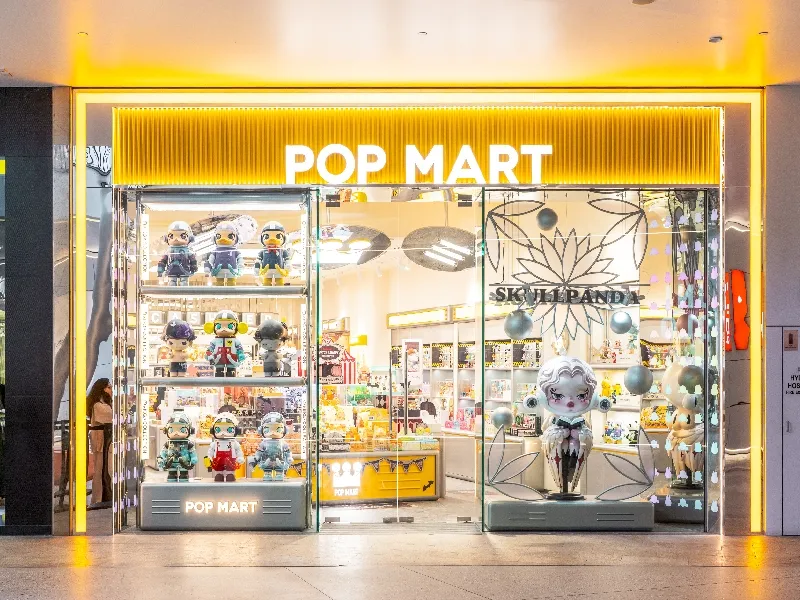
    Pop Mart First-Half Revenue Rises 23.8% to RMB 17.17 Billion

    Pop Mart grew first-half revenue by 23.8 per cent to RMB 17.17 billion (US$2.4 billion) in Beijing as newer character lines diversified earnings beyond Labubu. Gross margin reached 69.7 per cent for the six-month period.

    The Monsters franchise, which includes Labubu, generated RMB 4.45 billion to remain the company’s largest intellectual property. Its share of total corporate revenue dropped to 26 per cent from 34.7 per cent a year earlier, reflecting faster gains in secondary product lines.

    Twinkle Twinkle Gains on The Monsters

    Twinkle Twinkle surged 580.6 per cent year on year to RMB 2.65 billion, making it the fastest-expanding property in the catalogue. Four other lines, Crybaby, Dimoo, SkullPanda and Hirono, each generated more than RMB 1 billion during the half.

    Product formats showed similar diversification away from standard vinyl blind boxes. Revenue from plush items climbed 60 per cent to RMB 9.82 billion as shoppers bought bag charms, soft figures and related lifestyle goods.

    Collectibles makers across Asia face rapid fad cycles once single characters peak on social media. By shifting production capacity toward plush accessories and scaling multiple character rosters simultaneously, Pop Mart is attempting to build a multi-franchise licensing business modeled on Sanrio rather than a single-hit novelty toy brand.

    Global Store Count Reaches 676 Locations

    Physical distribution expanded by 46 net new stores and 190 roboshops in the first six months of the year. That brought the global brick-and-mortar network to 676 physical outlets and 2,827 automated vending units.

    The Americas led store additions with 22 net openings to reach 86 sites. Asia-Pacific locations outside Greater China grew by five to 90, while Europe and other regions added nine stores to stand at 45.

    Food and beverage formats are also rolling out internationally. Following trial pop-ups across mainland China and a permanent venue in Aranya, the group opened its first overseas Pop Bakery site on Sentosa Island in Singapore, setting up the brand’s next wave of lifestyle retail openings.

  • Adore Beauty Hits Record Sales of $207 Million as Store Costs Cut Profit

    Adore Beauty Hits Record Sales of $207 Million as Store Costs Cut Profit

    Adore Beauty lifted full-year revenue 4.3 per cent to a record $207.3 million for the 12 months ended June 30, but heavy physical expansion cut underlying earnings by more than half.

    Underlying EBITDA fell to $3.8 million from $8.1 million a year earlier. Physical stores contributed $18.6 million to total revenue, while gross margin declined 52 basis points to 34.8 per cent.

    The Cost of Opening 13 Stores

    The Australian retailer added 13 locations during the financial year, comprising 11 Adore Beauty outlets and two Ikou shops. That took its national footprint to 20 doors after years of operating as a pure-play digital platform. New customer numbers climbed 14 per cent over the period.

    Alongside lease and fitout costs for an immature store network, the company funded a new national distribution centre, an enterprise resource planning software overhaul, and broader technology upgrades. Weak consumer sentiment in the fourth quarter added further pressure on margins.

    Adore Beauty expects store drag to ease as locations mature over an 18 to 24 month cycle. Pure-play e-commerce operators across the Asia-Pacific region have faced similar margin friction when transitioning into physical storefronts, trading immediate cash flow against long-term customer acquisition.

    Targets for the New Fiscal Year

    Chief executive Sacha Laing said the group has completed its core infrastructure overhaul on budget and on schedule, positioning the business for operational use.

    “The foundations to support our scaling omnichannel operations are now in place,” Laing said.

    Management has set an underlying EBITDA target of $9 million to $13 million for FY27, predicated on top-line revenue expanding by at least 10 per cent.

  • SM Retail’s First-Half Profit Rises Amid Strong Consumer Demand and Store Expansion

    SM Retail’s First-Half Profit Rises Amid Strong Consumer Demand and Store Expansion

    SM Retail achieved a 5% rise in net income during the first half of 2026, reaching US$143.8 million (PHP8.9 billion). The Philippine retail giant attributed this performance to sustained consumer demand for daily necessities and the ongoing expansion of its physical store footprint.

    Operating income saw an even stronger increase, climbing 12% to US$226.2 million (PHP14.0 billion). This indicates the company’s effective management of operational costs, even in a period of higher inflation. SM Investments Corporation President and CEO, Frederic DyBuncio, highlighted the resilience of the Filipino consumer despite recent economic challenges, noting the robust performance of their consumer-led businesses and the contributions from a diversified portfolio.

    Diverse Growth Across Segments

    The company’s food retail sector demonstrated consistent sales growth across its supermarket and minimart chains. Specialty retail also saw higher sales, particularly in the Home, Other Fashion, and Kids categories. The Home category’s growth was fueled by continued demand for alternative power sources, while the Other Fashion segment was boosted by brands like Kultura and Crocs. The Kids category benefited from increased spending on toys, pet supplies, and stationery.

    SM Retail’s strong showing contributed significantly to SM Investments’ overall consolidated net income, which reached US$741.7 million (PHP45.9 billion) for the first half, an 8% increase from the previous year. Retail accounted for 15% of SM Investments’ net income, following banking (47%) and property (27%). The group’s mall business also reported an 8% revenue increase to US$675.5 million (PHP41.8 billion), a result of higher occupancy rates, stronger tenant sales, and improved operational efficiency.

    Strategic Outlook for Continued Expansion

    Looking ahead, SM Investments CEO Frederic DyBuncio expressed optimism for the second half of the year, while acknowledging potential macroeconomic uncertainties. He stressed that the company’s diversified portfolio, prudent balance sheet, and disciplined approach to capital allocation position it well to continue investing in the Philippines. This strategy aims to create long-term value for customers, communities, and shareholders.

    The emphasis on physical store expansion and diversified retail formats aligns with broader trends in Southeast Asia, where companies often combine digital strategies with a strong brick-and-mortar presence to capture varying consumer preferences and reach underserved areas. Retailers across the region are increasingly focusing on everyday essentials and adapting their offerings to meet shifting consumer priorities, especially after periods of economic fluctuation.