Tag: FINE

  • Vivienne Westwood Debuts Spectacular Four-Storey Flagship With Fine Dining and Bridal Salon in Beijing

    Vivienne Westwood Debuts Spectacular Four-Storey Flagship With Fine Dining and Bridal Salon in Beijing

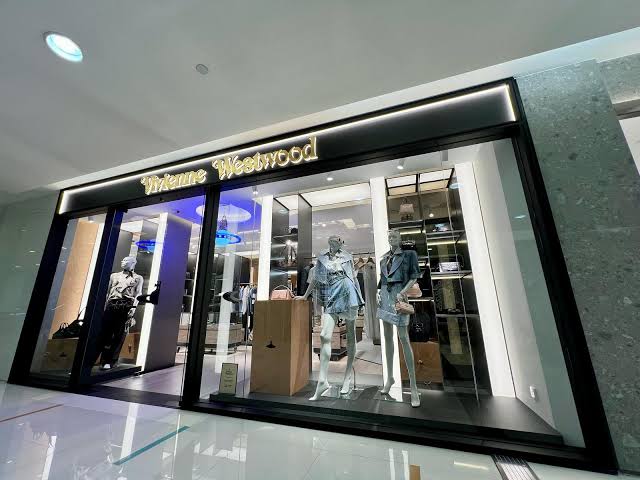
    British luxury fashion brand, Vivienne Westwood, recently opened the doors of its first flagship store in mainland China. Located in Beijing’s Huamao district, the multi-story establishment effortlessly combines facets of fashion, hospitality, and dining in one comprehensive setting.

    Design and Offerings

    Situated across four floors, the boutique harmoniously blends raw industrial elements with eco-friendly materials, creating a modern space that embodies the distinctive aesthetic of the renowned fashion house.

    The store features an extensive selection of the brand’s offerings, ranging from womenswear, menswear, and accessories to a diverse array of classic and seasonal jewellery.

    On the third floor, customers can find the Vivienne Westwood Club. This 54-seat restaurant is built around an elegant marble bar featuring a unique gold-veined finish. The setting is further accentuated by dark timber interiors, comfortable banquette seating, and an exclusive chef’s table that can accommodate up to eight guests.

    Patrons of the restaurant can enjoy a diverse menu that blends European-inspired cuisine with Chinese touches. Among the culinary delights on offer are the Grilled Avocado Shrimp Salad and the Burrata ‘Clouds of Summer’. The restaurant also serves an array of cocktails, delectable desserts, and an assortment of bar snacks.

    Moving to the lower ground floor, there is a minimalist bridal salon that displays the exclusive Bridal 2026 collection. This collection includes 14 intricately designed gowns, separates, and accessories, all meticulously handcrafted in England and Italy.

    Additionally, the street-level floor hosts a Vivienne Westwood Cafe that offers a variety of takeaway beverages and light snacks for the convenience of shoppers on-the-go.

    Andreas Kronthaler, the creative director of Vivienne Westwood, expressed his enthusiasm about the new location, stating that Beijing’s rich cultural heritage made it a fitting location for the brand’s first flagship store in mainland China. He described it as a significant moment for the company to have a presence in Beijing and to offer the full spectrum of the Vivienne Westwood world to customers.

    Questions & Answers

    Where is Vivienne Westwood’s first flagship store in mainland China located?
    The store is located in Beijing’s Huamao district.

    What does the new Vivienne Westwood flagship store offer?
    The store offers a wide range of products including womenswear, menswear, accessories, classic and seasonal jewellery, as well as a bridal salon and a 54-seat restaurant.

    What cuisine does the restaurant in Vivienne Westwood’s flagship store serve?
    The restaurant serves European-inspired cuisine with Chinese influences. Key dishes include the Grilled Avocado Shrimp Salad and the Burrata ‘Clouds of Summer’.


  • EU Slaps AliExpress with Record $629 Million Fine Over Counterfeit Goods Crackdown Failure

    EU Slaps AliExpress with Record $629 Million Fine Over Counterfeit Goods Crackdown Failure

    On Monday, AliExpress, Alibaba’s subsidiary, was slapped with a record-breaking €550 million (US$629 million) fine by the European Union for its failure to address sales of illegal, dangerous and counterfeit items on its platform. This penalty is considered to be the largest to date, issued by the European Commission in line with the EU’s Digital Services Act, a prominent law that mandates online platforms of substantial size to augment their efforts in combating harmful and illicit content.

    This penalty is the third of its kind issued by the European Commission, following charges placed on AliExpress in June of the previous year for non-compliance with a Digital Services Act stipulation. This regulation requires platforms to evaluate and reduce the risk of distributing illegal products. AliExpress was given until October 20 to suggest corrective actions. Should the regulatory body determine in December that the company has failed to meet the requirements of the Digital Services Act, further sanctions may be levied.

    The EU’s tech chief, Henna Virkkunen, expressed concern over this issue, describing it as highly risky for consumers and unfair to companies that abide by the rules. She highlighted the vast user base of AliExpress in Europe, standing at 193 million last year, compared to Shein’s 156 million and Temu’s 130 million. Temu has also been subject to fines under the Digital Services Act, and Shein is currently under investigation.

    AliExpress has voiced its intention to contest the fine, deeming it as excessive. “Today’s decision and disproportionate fine disregards our robust risk management structure and the substantial, proactive improvements we’ve implemented,” AliExpress stated via email. The company also indicated its active collaboration with the Commission to satisfy its evolving expectations.

    Assessment and Criticism of AliExpress’s Risk Management Practices

    The Commission criticized AliExpress for not adequately assessing whether it had sufficient personnel to manage risks and for overestimating the efficacy of its system in identifying and removing illicit products. Furthermore, the Commission took issue with the company’s ineffective penalty policy, which allowed penalized businesses to continue selling illegal products on its platform.

    The regulator also noted that AliExpress’s “brand authorisation” system, designed to deter counterfeit sales, was insufficient and easily bypassed by traders selling fraudulent items. There was also criticism of the company’s advertising and recommender systems for contributing to the spread of illicit products and relying on one quantitative indicator to assess the moderation system’s effectiveness in preventing the appearance or re-emergence of illegal products in similar forms.

    However, the regulator did consider the novelty of the Digital Services Act as a mitigating factor when determining the fine, which could have been even larger. This penalty far surpasses the €120 million fine imposed on Elon Musk’s social media platform X and the €200 million fine on Temu, both for Digital Services Act violations.

    Questions & Answers

    What is the significance of the fine imposed on AliExpress by the European Union?

    This penalty, amounting to €550 million (US$629 million), is a record-breaking fine issued by the European Commission under the EU’s Digital Services Act. It highlights the EU’s stance on ensuring large online platforms take more responsibility in preventing the distribution of illegal and harmful content.

    How has AliExpress responded to the fine?

    AliExpress has expressed its intention to appeal the fine, deeming it as excessive. The company asserts that this penalty neglects the robust risk management framework they have established and the proactive enhancements they’ve implemented in their operations.

    What criticisms has the European Commission voiced regarding AliExpress’s operations?

    The Commission has criticized AliExpress for inadequately assessing risks and overestimating its system’s effectiveness in identifying and removing illicit products. Other criticisms include the company’s ineffective penalty policy, its “brand authorisation” system’s shortcomings, and its advertising and recommender systems’ role in spreading illegal products.

  • South Korea Slaps Coupang with Record $409M Fine Over Unprecedented Data Breach

    South Korea Slaps Coupang with Record $409M Fine Over Unprecedented Data Breach

    South Korea has handed down a massive fine of 625 billion won (US$409.30 million) to e-commerce behemoth, Coupang. This follows an extensive breach of customer information and illicit collection of personal data, marking the country’s most substantial data violation penalty ever levied on a corporation.

    The nation’s Personal Information Protection Commission revealed that the New York-listed company had leaked the personal data of over 33 million customers. Notably, the company failed to identify and address the leak within the legally mandated 72-hour window.

    The fine represents approximately 1.4 per cent of Coupang’s revenue of 45 trillion won in 2025. The commission’s chairperson, Song Kyung-hee, pointed out during a Thursday briefing that the data breach happened due to Coupang’s inadequate safety measures and systems – not because of advanced hacking techniques.

    Acknowledgement and Apology

    In response to the announcement of the fine, Coupang expressed regret and offered an apology for the public distress and concern caused to its customers. Although, the company expressed disappointment that their proactive efforts to mitigate the aftermath of last year’s data leak were not fully recognized by the regulatory body’s decision.

    Coupang, headquartered in Seattle, generates the majority of its earnings in South Korea by offering speedy delivery of groceries, food, and other goods. The penalty comes on the heels of a government-led investigation earlier this year, attributing the data breach to a managerial failure.

    Investigation Findings and Implications

    The science ministry in South Korea reported that a former employee, a Chinese national, had unlawfully procured a security key, allowing unauthorized access to customer accounts. Song noted that Coupang’s flawed security system allowed a hacker to undeterredly access the personal information of all customers, even after the alleged culprit had left the company.

    In addition to the breach, the firm did not notice an abnormal increase in traffic to its customer data until alerted by a customer inquiry. Moreover, the regulator discovered that Coupang’s marketing program had illicitly collected information on the online activities of around 11 million customers without obtaining their consent.

    Song remarked that Coupang had significantly expanded its e-commerce service based on extensive customer data. However, despite its business scale, the company lacked a system to protect and manage customer information.

    Questions & Answers

    Why was Coupang fined 625 billion won by South Korea?
    Coupang was fined for a substantial breach of customer data and illegal collection of personal information, marking the largest data violation penalty ever issued by South Korea.

    What are the details of the data breach?
    The company leaked the personal data of over 33 million customers and failed to identify and address the breach within the legally mandated 72-hour window. A former employee was found to have unlawfully accessed customer accounts.

    What was Coupang’s response to the fine?
    Coupang apologized for the concern caused to the public and its customers. However, the company expressed disappointment that their proactive efforts to prevent further harm from the data leak were not fully acknowledged by the regulatory authority.

  • EU Slaps Chinese Retailer Temu with $232M Fine for Failing to Halt Sale of Illegal Products

    EU Slaps Chinese Retailer Temu with $232M Fine for Failing to Halt Sale of Illegal Products

    Temu, a prominent Chinese online retailer, has been penalized with a €200 million (US$232 million) fine by European Union (EU) tech regulators for their apparent laxity in addressing the sale of prohibited products on its platform. The judgement came as part of an extensive investigation’s initial phase, conducted under the guidelines of the Digital Services Act. This legal standard necessitates major online companies to exert more effort to suppress unlawful and harmful content on their platforms.

    The ongoing probe began almost two years ago and could result in additional sanctions in the coming months. Temu came under the regulators’ lens after BEUC, a pan-European consumers’ organization, and 17 of its national members lodged complaints against them.

    EU Commission’s Allegations Against Temu

    The EU executive, the European Commission, criticized Temu for its perceived failure to systematically identify, scrutinize, and gauge the ramifications of illegal products marketed on its site, which consequently posed a threat to consumers within the EU. The commission also reproached Temu for its apparent lack of assessment in how its recommendation systems and product marketing strategies, led by affiliated influencers, could escalate the risk of illegal product sales.

    Despite the regulatory judgement, Temu maintained its disagreement with the European Commission’s decision, deeming the imposed fine to be excessive. In their official statement, Temu acknowledged the objectives of the Digital Services Act and the necessity for solid, uniform regulations throughout the digital industry. However, the company argued that the decision was based on their initial DSA evaluation in 2024 and does not exhibit the current state of their systems.

    Temu confirmed that they have been actively engaged with the Commission throughout the process and have since amplified their efforts to bolster risk assessment, platform governance, and user protection initiatives. They also expressed their intent to maintain engagement with regulators and are contemplating all potential responses to the matter.

    Commission Awaits Temu’s Action Plan

    The Commission has given Temu until August 28 to submit a comprehensive action plan for regulator appraisal, and a decision regarding the company’s compliance with the DSA is anticipated in two months. EU tech chief Henna Virkkunen emphasized the importance of risk management under the DSA and noted that the decision sends a powerful message to Temu.

    She also confirmed that regulators will persist in investigating whether Temu’s service design is excessively addictive and if it continues to sell prohibited products. The access of Temu’s recommenders and researchers to data is also under scrutiny. Non-compliance with DSA rules may result in penalties amounting to as high as 6% of the company’s global annual turnover.

    Temu’s penalty is the second instance of DSA violation, following a €120 million fine imposed on Elon Musk’s social media network, X, last December.

    Questions & Answers

    What is the reason behind Temu’s €200 million fine?
    The European Union tech regulators have fined Temu for their perceived failure in preventing the sale of illegal products on their platform, as per the guidelines of the Digital Services Act.

    What are the potential implications for Temu if they do not comply with the DSA?
    If Temu fails to comply with the DSA, they could face further penalties, including fines amounting to as much as 6% of their global annual turnover.

    What further steps has the Commission required of Temu?
    The Commission has given Temu until August 28 to deliver an action plan for regulator assessment, which will determine whether the company has adequately complied with the Digital Services Act.

  • Crackdown in Da Nang: Seven Retailers Face Hefty Fines for Peddling Counterfeit Luxury Brands

    Crackdown in Da Nang: Seven Retailers Face Hefty Fines for Peddling Counterfeit Luxury Brands

    The Market Surveillance Department has issued fines totaling VND215 million (US$8,163.74) to seven retail stores in Da Nang, Vietnam for selling fake merchandise from brands such as Gucci and Nike. The shops, located in popular tourist areas Son Tra and Hoi An, have been instructed to dispose of all counterfeit items.

    Counterfeit Items Seized in April Raid

    The fines come as a result of an early April raid, during which authorities seized 295 handbags from brands such as Gucci, Chanel, Hermes, and Fendi, along with 27 pairs of Nike sneakers. All of these items were suspected to be counterfeit.

    The raided establishments were unable to provide proper documents or invoices for these goods, which are estimated to have a value of nearly VND178 million if they were authentically produced.

    Raids Part of Broader Campaign

    These raids are part of a larger initiative leading up to the Da Nang International Fireworks Festival, an annual event that draws large crowds of both local and international tourists.

    The Market Surveillance Department has indicated that they will continue to conduct inspections in shopping and tourist areas. They warned that repeat or serious offenders may be referred to investigative authorities if there is evidence of criminal activity.

    In an effort to further prevent the sale of counterfeit and low-quality goods, authorities are also ramping up public awareness campaigns. These initiatives aim to educate businesses on legal compliance and help consumers identify counterfeit products.

    Questions & Answers

    Why were these retail stores in Da Nang fined?
    They were fined for selling counterfeit merchandise from brands including Gucci and Nike.

    What action was taken after the counterfeit items were discovered?
    The shops were levied with fines and ordered to dispose of all counterfeit goods.

    What measures are authorities taking to prevent the sale of counterfeit goods?
    Authorities are conducting regular inspections, particularly in tourist and shopping areas. They are also running public awareness campaigns to educate businesses about legal compliance and help consumers detect counterfeit and low-quality goods.

  • Singtel Slapped with $774K Fine after Major Service Disruption Impacts Half a Million Customers

    Singtel Slapped with $774K Fine after Major Service Disruption Impacts Half a Million Customers

    The Singaporean telecommunications giant, Singtel, has been hit with a hefty fine of SGD1 million, equivalent to US$774,000, by local authorities over a significant voice service disruption in 2024 that negatively impacted roughly 500,000 customers.

    Impact of the Service Disruption

    The communications interruption also affected the public’s ability to reach customer service departments for numerous government bodies, healthcare entities, banks, corporations, and critical emergency call services, according to the Infocomm and Media Development Authority (IMDA).

    Ng Tian Chong, Singtel Singapore’s CEO, has openly accepted the ruling and monetary punishment from IMDA. He admitted the severity of the interruption to the fixed voice service in the previous October, reiterating his apology for the inconvenience and disruption experienced by the affected populace.

    Justification of the Fine

    The IMDA explained that the scale and the impact of the outage, coupled with the duration to restore the services to normal, were the critical elements taken into consideration while imposing the penalty. The regulatory body categorized the incident’s impact as “significant” and highlighted that the potential ramifications concerning public safety and security could have been very serious.

    The IMDA’s examination found deficiencies in Singtel’s monitoring systems, which lacked “adequate filters” to protect the hardware from high-intensity traffic on October 8, 2024. This inadequacy caused the voice system’s firewall to malfunction and operate intermittently. Consequently, calls were dropped intermittently as traffic alternated between the malfunctioning and functioning voice systems.

    Prior Incidents

    Before this event, Singtel experienced another setback in September when an emergency service outage from its subsidiary, Optus, led to three fatalities in Australia. This event was succeeded by a smaller mobile outage from Singtel on November 18, where more than 1,600 disruption reports were logged.

    Singtel, the largest mobile network operator in Southeast Asia, serves a massive customer base of 800 million customers worldwide.

    Questions & Answers

    What was the reason behind the fine imposed on Singtel?
    The fine was levied due to a significant voice service disruption in 2024, impacting approximately 500,000 customers.

    What was the magnitude of the fine imposed on Singtel?
    Singtel was fined SGD1 million, equivalent to US$774,000, by the Infocomm and Media Development Authority (IMDA).

    What was the major fault found in Singtel’s systems that led to the service disruption?
    The IMDA’s investigation discovered that Singtel’s monitoring systems lacked “adequate filters” to protect the hardware from high-intensity traffic, resulting in the malfunction of the voice systems’ firewall.

  • Optus Faces Hefty $826K Fine Over Coles Mobile Scam Breach: A Deep Dive into Australia’s Telco Scandal

    Optus Faces Hefty $826K Fine Over Coles Mobile Scam Breach: A Deep Dive into Australia’s Telco Scandal

    Optus Mobile, a renowned telecommunications firm, has been hit with another hefty fine of $826,320 for breaching anti-scam regulations. This recent violation pertains to its business operations under the Coles Mobile brand.

    Investigation and Breaches

    The Australian Communications and Media Authority (ACMA) served the penalty after a thorough investigation into the infractions committed by Optus. The probe revealed that the company had infringed anti-scam provisions on 44 separate instances during September and October of the previous year. These infractions were carried out through Coles Mobile, a collaborative venture enabling consumers to register for a mobile contract via the Coles supermarket chain.

    Investigators unveiled that scammers had managed to exploit a security loophole in a third-party identity verification system employed by Optus. This loophole permitted the fraudsters to sidestep certain parts of the obligatory verification procedure. As a result, these unscrupulous individuals managed to seize control of a minimum of four client mobile services and infiltrate their bank accounts. The reported losses from these scam activities totalled $39,000.

    Implications and Responses

    Samantha Yorke, a member of the ACMA, conveyed the severity of such fraudulent activities. She highlighted the resultant monetary losses and lingering trauma emanating from the task of reclaiming digital identities. Yorke stated that although this was a solitary issue that was promptly addressed, the lack of a sturdy customer ID verification system is unacceptable. This holds particularly true for a prominent provider in the industry such as Optus, which is currently Australia’s second largest.

    Yorke also pointed out that the imposed fine is the maximum monetary penalty that the ACMA has the jurisdiction to enforce in this case. The severity of the fine reflects the seriousness of the breaches committed by Optus.

    The recent penalty adds to the already considerable financial repercussions that Optus has faced this year due to regulatory contraventions. Earlier in September, the firm was directed by the Federal Court to pay a staggering $100 million for engaging in unfair sales practices. These unethical practices affected over 400 customers and were carried out at 16 Optus outlets between August 2019 and July 2023.

    Questions & Answers

    What led to the recent $826,320 fine imposed on Optus Mobile?
    Optus Mobile was fined for breaching anti-scam regulations, specifically in relation to its business operations under the Coles Mobile brand.

    How were scammers able to exploit Optus’s systems?
    Scammers exploited a security loophole in a third-party identity verification system used by Optus, which allowed them to bypass parts of the obligatory verification process and gain control of several consumer mobile services.

    What were the consequences of the scam activities?
    The fraudulent activities resulted in reported losses of $39,000 and caused distress to consumers who had to recover their digital identities.

  • Deloitte Under Scrutiny: Ai-generated Inaccuracies Found In Aud 440,000 Australian Welfare Report

    Deloitte Under Scrutiny: Ai-generated Inaccuracies Found In Aud 440,000 Australian Welfare Report

    A report commissioned by Australia’s Department of Employment and Workplace Relations, which was paid AUD 440,000 (around 231,200 Swiss francs), looked into an IT system intended to automate sanctions in the country’s welfare framework. The original report was published in July and was quietly updated on the ministry’s website last week. The updated version featured over a dozen deletions of non-existent references and footnotes, a refreshed reference list, and various typographical corrections.

    Report Inaccuracies

    Christopher Rudge, a researcher at the University of Sydney, discovered several inaccuracies in the report. He hypothesized that these inaccuracies could be due to instances of AI hallucinations, which occur when generative models fabricate information that appears to be factual.

    Findings Deemed Unreliable

    While the report now includes a disclaimer that generative AI was utilized to address “gaps in traceability and documentation”, the trust in the report’s findings has been undermined as a result of the reported inaccuracies. “The firm acknowledged the use of generative AI for a significant analytical task but did not initially disclose it,” said Rudge. He expressed concern that the recommendations made in the report could not be fully trusted.

    Nonetheless, the ministry maintained that “the essence of the independent review remains unchanged and there will be no alterations to the recommendations”. There are also reports that Deloitte forfeited the final payment for the report, although the amount was not specified.

    Impact on Deloitte

    This incident does more than just create a financial dent; it also represents a significant blow to Deloitte’s reputation. The firm, which advises corporations, governments, and institutions worldwide on the proper utilization of AI, is now facing scrutiny for the responsible use of these technologies.

    Questions & Answers

    What inaccuracies were found in the report?
    Christopher Rudge from the University of Sydney found several inaccuracies in the report, suggesting they could be the result of AI hallucinations – when generative models create information that appears factual.

    What was the initial reaction to these inaccuracies?
    While Deloitte admitted to using generative AI and added a disclaimer in the updated version of the report, there has been a decline in trust regarding the report’s findings. The ministry, however, maintained that the core of the review and its recommendations remain unaltered.

    What impact has this had on Deloitte?
    Beyond the financial implications, this incident represents a significant reputational setback for Deloitte, a firm that advises on the responsible use of AI worldwide.

  • Qantas Airways Hit with Historic $58M Fine Over Controversial Pandemic Layoffs

    Qantas Airways Hit with Historic $58M Fine Over Controversial Pandemic Layoffs

    In a landmark ruling, Australia’s Federal Court has imposed a staggering penalty on Qantas Airways, marking the largest fine ever levied on a company under the nation’s labor laws. Judge Michael Lee expressed his discontent with the airline’s litigation tactics and questioned whether its recent expressions of remorse were sincere or merely strategic maneuvers to mitigate damage.

    Qantas’ Controversial Layoffs Under Scrutiny

    While Qantas has made changes to its leadership team in light of the judgment, Judge Lee remarked that the company’s apologies appeared more focused on its own reputation rather than the genuine hurt caused to its workforce. “I accept Qantas is sorry, but I am unconvinced that this measure of regret is not, at least in significant measure … the wrong kind of sorry,” he stated.

    A Record-Breaking Fine

    The fine, which amounts to 75% of the maximum the court could enforce, aims to ensure it is seen not as a mere cost of doing business. A total of A$50 million will be directed to the Transport Workers’ Union (TWU), which spearheaded the case against the airline. TWU’s national secretary, Michael Kaine, provided a triumphant reflection post-verdict: “Against all the odds, we took on a behemoth … that had shown itself to be ruthless, and we won.”

    Compensation and Layoff Fallout

    This judicial decision follows a December agreement that set up a A$120 million compensation fund for the airline’s dismissed employees. The controversy began during the pandemic in 2020, when Qantas management opted to lay off 1,820 ground staff in favor of outsourcing their roles to contractors. Although the airline presented the layoffs as a commercial strategy, the court determined they represented “adverse action,” infringing on workers’ rights under Australia’s Fair Work Act.

    Cultural Critique and Legal Defenses

    Judge Lee highlighted concerns regarding Qantas’ corporate culture and its approach to public relations and litigation, labeling its strategy as reactive and dismissive. The judge referred to the airline’s swift announcement of its intent to appeal the 2021 ruling without allowing sufficient time to digest the 431-paragraph judgment.

    When its initial appeal failed, Qantas’ response was seen as an attempt to spin the narrative, neglecting the court findings that highlighted unlawful conduct. Lee also chastised the airline for its choice to keep its CEO, Vanessa Hudson, from taking the stand. “It is one thing for the ‘Qantas News Room’ to issue press releases by a CEO saying sorry; it is quite another for written assertions of contrition, recognition of wrong and cultural change to be tested in a courtroom,” he remarked.

    Implications for Labor Practices

    The penalty is not only a personal setback for the airline but also serves as a stark reminder to employers about the legal ramifications of disregarding labor rights. “This record-breaking penalty reflects the monumental scale of Qantas’ wrongdoing,” noted Josh Bornstein, a principal at Maurice Blackburn Lawyers, the firm representing TWU. Labor law expert Shae McCrystal from the University of Sydney added that such adverse action cases send a crucial message to employers that unlawful practices will not go unnoticed.

    In response to the court’s ruling, Qantas has stated its commitment to paying the fine as ordered and expressed remorse for the situation. “We sincerely apologize to each and every one of the 1,820 ground handling employees and to their families,” Chief Executive Vanessa Hudson conveyed in her statement. As markets reacted, Qantas shares dipped 0.4% to A$11.58 in early trading, a slice of the turbulence that now surrounds the airline’s future.

    Questions & Answers

    What was the ruling against Qantas about?
    The Federal Court ruled against Qantas for laying off 1,820 ground staff and outsourcing their work, determining it constituted “adverse action” against workers’ rights under Australia’s Fair Work Act.

    How much is the penalty imposed on Qantas?
    The penalty is A$50 million paid to the Transport Workers’ Union, marking the largest fine in Australia’s labor law history, which Judge Lee stated is significant enough to deter similar future violations.

    What steps has Qantas taken following the ruling?
    In the wake of the decision, Qantas has made changes to its management and reiterated its commitment to pay the imposed fine, while expressing apologies to the affected employees and their families.

  • Bruno Fine Foods Expands Portfolio With Exclusive San Marzano Tomatoes Through Casa Marrazzo Alliance

    Bruno Fine Foods Expands Portfolio With Exclusive San Marzano Tomatoes Through Casa Marrazzo Alliance

    Bruno Fine Foods, a leading gourmet food provider, has expanded its premium product line through an alliance with Italian producer Casa Marrazzo, introducing San Marzano tomatoes to its portfolio.

    Certified Quality

    The newly added San Marzano tomatoes hold the prestigious DOP (Denominazione d’ Origine Protetta) certification, signifying their origin from a specific region and adherence to meticulous quality standards. These particular tomatoes are exclusively cultivated in a 3-square kilometer stretch in the Agro Nocerino-Sarnese region. Their limited production area elevates their exclusivity, making them a premium, albeit costly, product.

    Shared Vision

    The alliance between Bruno Fine Foods and Casa Marrazzo took shape following a meeting in 2023, where the teams discovered their shared commitment to high quality and sustainable land use. The two brands recognized a mutual vision for excellence that goes hand in hand with their respect for the environment.

    Australian Launch

    As part of its launch strategy, Bruno Fine Foods intends to introduce Casa Marrazo to the Australian market with a creative campaign that incorporates warehouse altars and field-side installations. This approach aims to encapsulate the essence of Casa Marrazzo’s tradition and creativity, bridging the gap between the old and the new.

    As of now, Casa Marrazzo’s hand-picked produce is readily accessible to Australian retailers, chefs, and hospitality venues, bolstering the local gastronomy scene.

    Questions & Answers

    What does the DOP certification signify?
    The DOP (Denominazione d’ Origine Protetta) certification is an Italian agricultural designation indicating that a product is grown and produced in a specific geographical region and adheres to strict quality standards.

    What makes the San Marzano tomatoes rare and expensive?
    San Marzano tomatoes are exclusively grown in a 3-square kilometer region in Agro Nocerino-Sarnese, Italy. The limited cultivation area, along with the stringent quality standards they adhere to, contribute to their rarity and higher price point.

    Where can Casa Marrazzo’s hand-picked produce be purchased in Australia?
    Casa Marrazzo’s hand-picked produce, introduced by Bruno Fine Foods, is now available to Australian retailers, chefs, and hospitality venues.

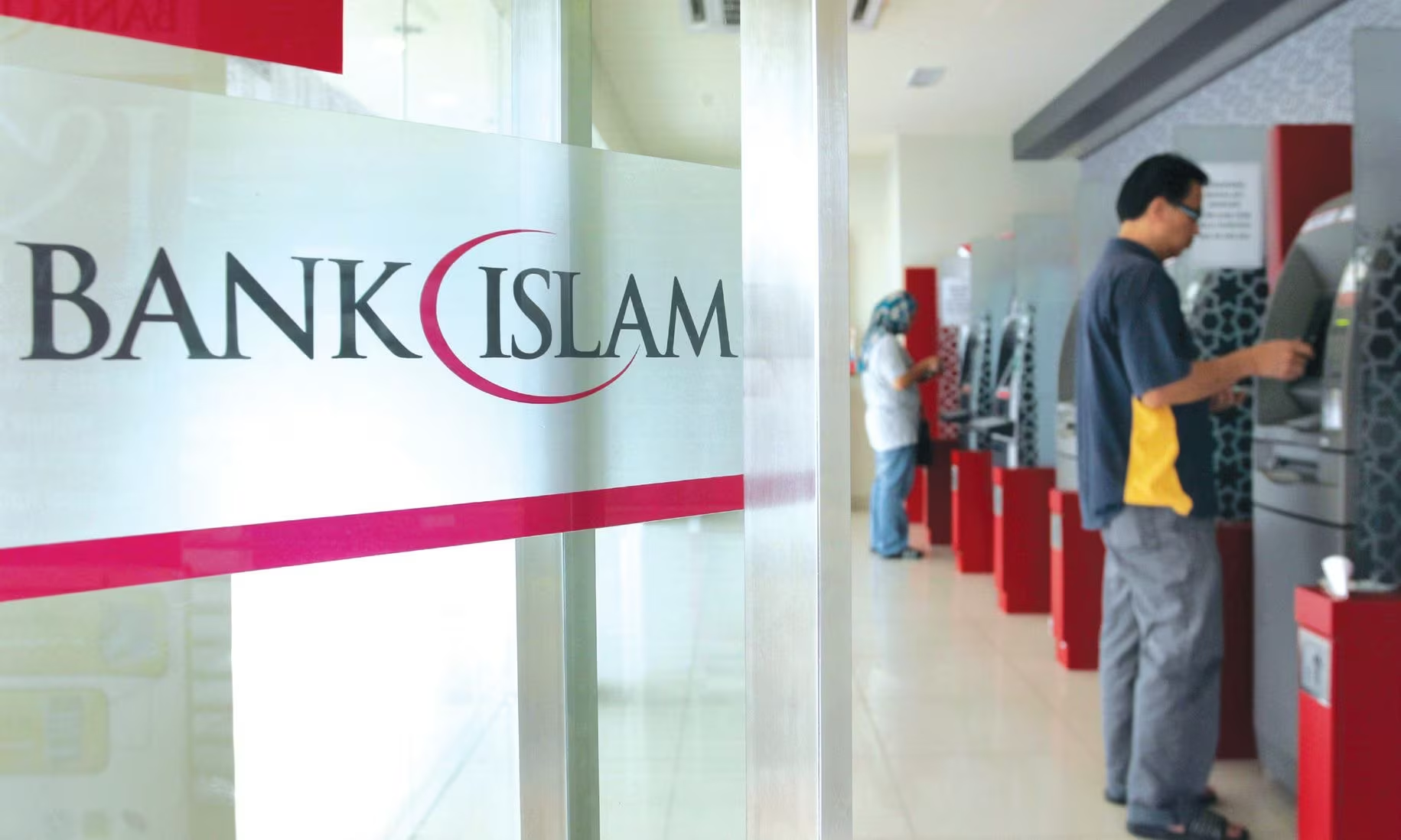
  • Malaysia Imposes MYR3.44 Million Fine on Bank Islam for Service Disruptions and Compliance Failures

    Malaysia Imposes MYR3.44 Million Fine on Bank Islam for Service Disruptions and Compliance Failures

    Amidst evolving regulatory landscapes, Bank Islam Malaysia Berhad (BIMB) finds itself in hot water as Malaysia’s central bank, Bank Negara Malaysia (BNM), imposes a financial penalty due to service disruptions and compliance failures. The bank has been penalized a total of MYR3.44 million for a series of unfortunate events that impacted its banking services and risk management practices.

    Unplanned Downtimes Shake Customer Trust

    BIMB drew the central bank’s ire with a fine of MYR1.74 million after experiencing multiple unplanned downtimes between June 1, 2023, and December 31, 2024. These outages severely affected its e-banking channels, debit card services, and online payment transactions. BNM disclosed that these disruptions resulted from BIMB’s delayed response and lack of a robust recovery process, ultimately causing turmoil for customers relying on essential banking services.

    Compliance Breaches Compound Troubles

    In addition to service lapses, BIMB faced a separate penalty of MYR1.7 million for failing to comply with anti-money laundering and combating the financing of terrorism (AML/CFT) regulations. According to BNM, an on-site examination revealed alarmingly inadequate sanctions screening processes within BIMB’s systems.

    The bank’s noncompliance was further exacerbated by its failure to timely screen its entire customer database against the Domestic List following updates published in the Federal Gazette in 2022 and 2023. This oversight delayed the identification of matches for three specified entities, raising significant concerns regarding the bank’s anti-financial crime measures.

    A Wake-Up Call for Financial Institutions

    The penalties imposed on BIMB highlight the critical need for financial institutions to maintain rigorous compliance protocols and ensure their systems are equipped to handle unexpected challenges. While BIMB may have caught a few unfortunate breaks, the overarching lesson remains: in the fast-paced world of banking, a blip in service can ripple out to many unsuspecting customers, making swift mitigation a must. Warning bells ringing, BIMB now has a stern reminder that effective risk management is as essential as delivering seamless service.

    Questions & Answers

    What prompted Bank Negara Malaysia to impose penalties on BIMB?
    The penalties stemmed from a series of unplanned downtimes affecting services and shortcomings in compliance with AML/CFT regulations.

    How much total financial penalty was levied against BIMB?
    BIMB faced a total penalty of MYR3.44 million, which includes MYR1.74 million for service disruptions and MYR1.7 million for compliance failures.

    What were some specific compliance failures identified by Bank Negara Malaysia?
    BIMB failed to conduct timely sanctions screening for its customer database, which led to delays in identifying matches for three specified entities.

  • Charlie’s Fine Food Expands Reach: Choc Chip Cookie Dough Hits Aldi Australia Shelves

    Charlie’s Fine Food Expands Reach: Choc Chip Cookie Dough Hits Aldi Australia Shelves

    The renowned Melbourne-based bakery, Charlie’s Fine Food, has recently made a significant splash with its products appearing on Aldi Australia’s shelves for the first time in over 20 years of operation.

    Expanding Product Reach

    The ready-to-bake Choc Chip Cookie Dough, which is the first product to be launched by the bakery in partnership with the supermarket chain, is now available in Aldi’s chilled dessert section across the nation. Priced at $6.49, the cookie dough is the result of 12 dedicated months of development. This launch is a significant achievement for the family-owned bakery.

    Jacky Magid, the director of sales and marketing, expressed her excitement about this fresh partnership with Aldi. “This is the first time we have collaborated with Aldi and the experience has been exceptional. We anticipate that this will be the first of many Charlie’s products we develop for Aldi’s shoppers to enjoy,” said Magid.

    Foundational History

    Charlie’s Fine Food was established in 2004 by Magid and her husband, Ken Mahlab. Over the years, the bakery has expanded its reach, with its products now being sold in major retailers such as Woolworths, Coles, Walmart, and Bunnings.

    In 2022, the bakery’s reputation grew even further with the popular launch of its Mini Melting Moments range in Woolworths Metro stores across the country.

    Questions & Answers

    What is the first product Charlie’s Fine Food has launched in Aldi?
    The first product from Charlie’s Fine Food to be launched in Aldi is their ready-to-bake Choc Chip Cookie Dough.

    Who are the founders of Charlie’s Fine Food?
    Charlie’s Fine Food was founded by Jacky Magid and her husband, Ken Mahlab.

    What is the significant product launch by Charlie’s Fine Food in 2022?
    Charlie’s Fine Food launched its Mini Melting Moments range in Woolworths Metro stores across the country in 2022.

  • Thailand quadruples fine for not wearing helmets

    Thailand quadruples fine for not wearing helmets

    As part of a nationwide initiative to enhance road safety, Thailand has recently increased the penalty for riding motorcycles without helmets to 2,000 baht (US$60). This four-fold increase from the previous fine of 500 baht takes effect from June 1st. The move is part of a broader strategy to enforce law compliance and reduce fatalities, particularly in high-traffic areas, accident-prone zones, and locations in close proximity to schools.

    Increased Fines for Non-Compliance

    The Royal Thai Police (RTP) is spearheading this road safety campaign. Pol Lt Gen Nithithorn Chintakanon, who serves as the Commander of the Traffic Police Bureau as well as the Head of the RTP’s Traffic Police Image Enhancement Taskforce, has warned motorcycle riders and passengers about the severe consequences of non-compliance. If both the rider and passenger are discovered without helmets, the fine could potentially be doubled.

    Nithithorn emphasized the mandatory nature of wearing helmets under the Land Traffic Act. The stipulation applies to both riders and passengers alike, with the aim of significantly reducing the risk of injury during accidents.

    Road Safety in a Nation of Motorcycles

    Thailand, a nation with 21.6 million registered motorcycles, faces a considerable challenge in ensuring road safety. With a population that exceeded 71.6 million as of May 2025, ensuring compliance with traffic safety regulations, including the use of helmets, is critical in protecting the lives of the country’s millions of motorcyclists.

    Questions & Answers

    What is the new fine for riding motorcycles without helmets in Thailand?
    The new fine for riding motorcycles without helmets in Thailand is 2,000 baht (US$60).

    What could lead to a doubling of the fine?
    If both the rider and passenger are found riding without helmets, the fine could be doubled.

    Why is the policy of mandatory helmet wearing enforced?
    The policy of mandatory helmet wearing is enforced to reduce the risk of injury to both riders and passengers, thereby improving overall road safety.

  • Apple attempts to escape EU fine by offering to open its NFC technology for rivals

    Apple attempts to escape EU fine by offering to open its NFC technology for rivals

    In an attempt to avoid a hefty fine and ongoing legal battle with the European Union, Apple is reportedly proposing to open up its near-field communication (NFC) technology, used for tap-and-go payments, to its rivals.

    This move comes after the European Commission launched an antitrust investigation into Apple’s practices surrounding Apple Pay, suspecting that the company was unfairly restricting access to key technology to maintain its dominance in the mobile payment market.

    Despite not holding the majority share of smartphone sales or being the dominant mobile payment service in the EU, Apple Pay has gained significant traction, with over 2,500 banks and more than 250 fintech and challenger banks across Europe using the service.

    Apple’s efforts to address the EU’s concerns come amidst a broader crackdown on the company’s business practices. The EU recently labeled Apple as a “gatekeeper” under the Digital Markets Act (DMA), which empowers the Commission to regulate big tech firms that hold dominant positions in the digital market.

    Earlier this year, Apple acknowledged the possibility of third-party app stores on iPhones but later challenged the EU’s ruling mandating rival app stores. Additionally, it has appealed the inclusion of iMessage in the DMA’s gatekeeper designation, arguing that iMessage’s market share in Europe is too small to warrant regulatory scrutiny, which actually might turn out to be true.

    As Apple navigates these regulatory challenges, it’s clear that the company is facing increasing pressure to address concerns about its competitive practices in the EU. The proposed NFC access could be a step in the right direction. However, it remains to be seen whether it will be enough to appease the Commission and avoid further regulatory scrutiny.

  • France fines Microsoft $64M over advertising cookies

    France fines Microsoft $64M over advertising cookies

    France’s privacy watchdog said Thursday it has fined US tech giant Microsoft 60 million euros ($64 million) for foisting advertising cookies on users.

    In the largest fine imposed in 2022, the National Commission for Technology and Freedoms (CNIL) said Microsoft’s search engine Bing had not set up a system allowing users to refuse cookies as simply as accepting them.

    The French regulator said that after investigations it found that “when users visited this site, cookies were deposited on their terminal without their consent, while these cookies were used, among others, for advertising purposes.”

    It also “observed that there was no button allowing to refuse the deposit of cookies as easily as accepting it.”

    The CNIL said the fine was justified in part because of the profits the company made from advertising profits indirectly generated from the data collected via cookies — tiny data files that track online browsing.

    Bing offered a button for the user to immediately accept all cookies, but two clicks were need to refuse them, it said.

    The company has been given three months to rectify the issue, with a potential further penalty of 60,000 euros per day overdue.

    The fine was issued to Microsoft Ireland, where the company has its European base.

    In a statement Microsoft said that it had “introduced key changes to our cookie practices even before this investigation started.”

    “We continue to respectfully be concerned with the CNIL’s position on advertising fraud,” it said, adding that it believes the French watchdog’s “position will harm French individuals and businesses.”

    Cookie control

    Cookies are installed on a user’s computer when they visit a website, allowing web browsers to save information about their session.

    They are hugely valuable for tech platforms as ways to personalise advertising — the primary source of revenue for the likes of Facebook and Google.

    But privacy advocates have long pushed back.

    Since the European Union passed a 2018 law on personal data, internet companies have faced stricter rules that oblige them to seek consent from users before installing cookies.

    Last year, the CNIL said it would carry out a year of checks against sites not following the rules on using web cookies.

    Google and Facebook were sanctioned by the French regulator with fines of 150 million and 60 million euros respectively for similar breaches around their use of cookies.

    The two firms also face scrutiny over their practice of sending the personal data of EU residents to servers in the United States.

    And tech giants continue to face a slew of cases across Europe.

    Earlier this month, Europe’s data watchdog imposed binding decisions concerning the treatment of personal data by Meta, the owner of Facebook, Instagram and WhatsApp.

    The European Data Protection Supervisor said in a statement that the rulings concerned Meta’s use of data for targeted advertising, but did not give details of its ruling or recommended fines.

    The latest case follows complaints by privacy campaigning group Noyb that Meta’s three apps fail to meet Europe’s strict rules on data protection.