Tag: FINE

  • Vietnam prosecutors support Grab appeal against Vinasun

    Vietnam prosecutors support Grab appeal against Vinasun

    Prosecutors in Ho Chi Minh City have appealed a verdict ordering Grab to pay compensation to domestic taxi firm Vinasun. They want the appeal court to quash the order requiring the Singapore ride-hailing firm to pay VND4.8 billion ($206,000) in compensation for alleged losses and reject all of Vinasun’s demands. Grab violated a pilot transport ministry scheme and government decree for ride-hailing services, according to the verdict.

    But the prosecutors argue this is groundless since Grab is a passenger transport firm licensed by competent authorities under the pilot scheme and its activities did not violate the law.

    They also dismiss the contention that Grab had caused Vinasun losses of nearly VND42 billion ($1.81 million) as one-sided with no practical or legal basis since it was based solely on an assessment by the court-appointed Cuu Long Inspection Company.

    “In reality, Vinasun’s decline in revenue involves many factors such as the corporate governance capability and the government’s policies and laws.”

    “Therefore, Vinasun’s demand for compensation from Grab is completely groundless.”

    They say Grab’s business activities are legal and Vinasun’s decline in revenues and profits have been partially due to consumers switching to Grab as they found the ride-hailing firm’s services to be superior to those provided by Vinasun and other traditional taxi firms.

    “Grab did not violate the law, there is no causal link between Grab’s allegedly illegal activities and Vinasun’s losses, Grab is not at fault.”

    Vinasun filed the suit against Grab at the HCMC People’s Court in June 2017, accusing it of abusing the Ministry of Transport’s pilot scheme and committing violations.

    The trial began last February, but was adjourned several times before the court last December accepted parts of Vinasun’s demands and ordered Grab to pay the compensation. Grab has appealed.

  • Google was fined for $57 million under the GDPR

    Google was fined for $57 million under the GDPR

    The CNIL, the French data protection watchdog, has issued its first GDPR fine of $57 million (€50 million). The regulatory body claims that Google has failed to comply with the General Data Protection Regulation (GDPR) when new Android users set up a new phone and follow Android’s onboarding process. Two nonprofit organizations called ‘None Of Your Business’ (noyb) and La Quadrature du Net had originally filed a complaint back in May 2018 — noyb originally filed a complaint against Google and Facebook, so let’s see what happens to Facebook next. Under the GDPR, complaints are transferred to local data protection watchdogs.

    While Google’s European HQ is in Dublin, the CNIL first concluded that the team in Dublin doesn’t have the final say when it comes to data processing for new Android users — that decision probably happens in Mountain View. That’s why the investigation continued in Paris.

    The CNIL then concluded that Google fails to comply with the GDPR when it comes to transparency and consent.

    Let’s start with the alleged lack of transparency. “Essential information, such as the data processing purposes, the data storage periods or the categories of personal data used for the ads personalization, are excessively disseminated across several documents, with buttons and links on which it is required to click to access complementary information,” the regulator writes.

    For instance, if a user wants to know how their data is processed to personalize ads, it takes 5 or 6 taps. The CNIL also says that it’s often too hard to understand how your data is being used — Google’s wording is broad and obscure on purpose.

    Second, Google’s consent flow doesn’t comply with the GDPR according to the CNIL. By default, Google really pushes you to sign in or sign up to a Google account. The company tells you that your experience will be worse if you don’t have a Google account. According to the CNIL, Google should separate the action of creating an account from the action of setting up a device — consent bundling is illegal under the GDPR.

    If you choose to sign up to an account, when the company asks you to tick or untick some settings, Google doesn’t explain what it means. For instance, when Google asks you if you want personalized ads, the company doesn’t tell you that it is talking about many different services, from YouTube to Google Maps and Google Photos — this isn’t just about your Android phone.

    In addition to that, Google doesn’t ask for specific and unambiguous consent when you create an account — the option to opt out of personalized ads is hidden behind a “More options” link. That option is pre-ticked by default (it shouldn’t).

    Finally, by default, Google ticks a box that says “I agree to the processing of my information as described above and further explained in the Privacy Policy” when you create your account. Broad consent like this is also forbidden under the GDPR.

    The CNIL also reminds Google that nothing has changed since its investigation in September 2018.

  • Nissan Korea fined 900 million won for inflating mileage figures

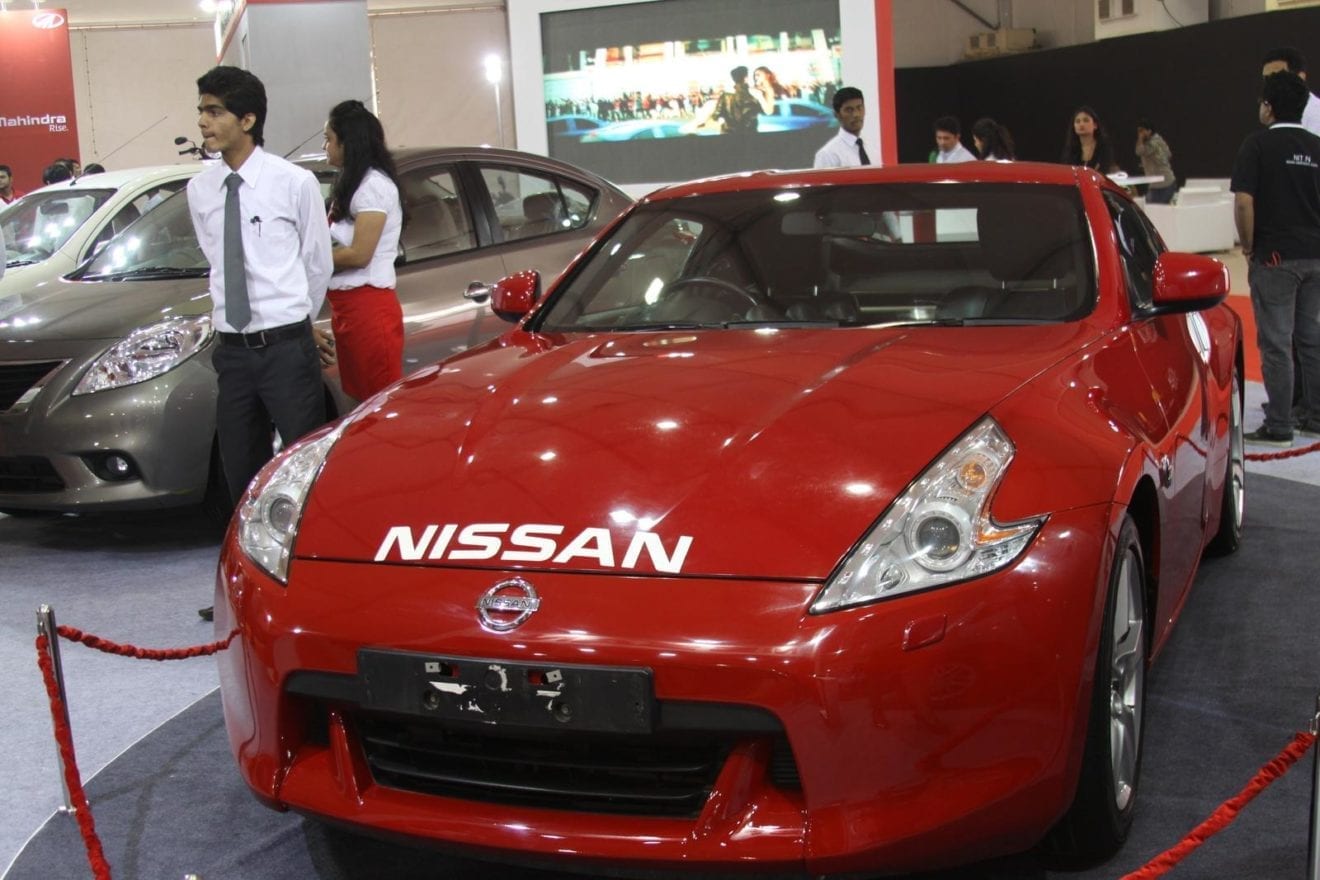
    Nissan Korea fined 900 million won for inflating mileage figures

    Korea’s antitrust watchdog said Wednesday that it has fined Nissan Korea 900 million won ($802,100) for inflating gas mileage figures for its Infiniti Q50 2.2d sedans. The Japanese car’s fuel efficiency reaches 14.6 kilometers per liter (34.3 miles per gallon), but the local unit of the Japanese carmaker overstated the fuel efficiency as 15.1 kilometers per liter in its stickers, catalogues and magazines between February and November 2014, according to the Fair Trade Commission.

    Nissan Korea sold 2,040 Infiniti Q50 2.2d sedans valued at 68.68 billion won during the cited period.

    “There are concerns that Nissan Korea’s advertising could hurt fair trade by distorting consumers’ reasonable choice, considering that fuel efficiency is a priority factor when they buy vehicles,” the commission said.

    Repeated calls to Nissan Korea seeking comment went unanswered.

  • Toyota fined W817 million for false advertising

    Toyota fined W817 million for false advertising

    Korea’s antitrust watchdog said Tuesday that it has fined Toyota Motor Korea 817 million won ($729,000) for deceptive advertising of its RAV4 sport utility vehicle (SUV). Toyota Motor Korea advertised that its RAV4 obtained a top safety pick in five test categories, including the driver’s side small overlap front and roof strength, from the U.S. Insurance Institute for Highway Safety (IIHS) in 2015.

    In 2016, the RAV4 earned the Top Safety Pick Plus rating from the independent nonprofit organization that aims to reduce deaths, injuries and property damage from motor vehicle crashes, according to the Fair Trade Commission.

    The commission said that RAV4 models sold in the United States in 2015 and 2016 were equipped with a bracket, or shock absorber, that allowed it to get the top rating.

    The same SUV model sold in Korea during the same period was not equipped with the bracket, but Toyota Motor Korea advertised the RAV4’s earning the Top Safety Pick rating from the IIHS.

    “Toyota Motor Korea concealed and omitted that there was a difference between RAV4 models sold in the United States and Korea,” the commission said.

    It said the advertisement could mislead Korean consumers into believing that RAV4 models sold in Korea had all the safety features covered by the Top Safety Pick rating.

    Toyota Motor Korea said it cannot give an immediate comment on the issue and that it is reviewing the commission’s decision.

    Toyota is the second foreign automaker to be fined this year. BMW Korea was fined 14.5 billion won last week for manipulating documents on emissions.

  • BMW Korea fined $13M over emissions

    BMW Korea fined $13M over emissions

    A Seoul court fined BMW Korea 14.5 billion won ($12.9 million) for manipulating documents on emissions to sell some 29,000 vehicles in Korea. The Seoul Central District Court announced Thursday that the local unit of BMW is guilty of violating customs law. The automaker was found guilty of forging emissions test papers from 2011 to obtain certification from the National Institute of Environmental Research under the Environment Ministry that its cars meet local emissions standards. Roughly 29,000 cars were certified this way, according to the court.

    “The automaker has undermined government efforts to improve air quality in Korea,” the court said in a statement. “This also damaged local customers’ trust in BMW.”

    The court also added that BMW Korea took substantial profits over the years due to the manipulation, showing no effort to abide by local laws.

    “The reason for making [carmakers go through] a stringent certification process is because car emissions have substantial impact on air quality,” the court said.

    The Seoul court also found six former and current executives of the automaker involved in the case guilty. Three executives were sentenced to eight to 10 months in jail, with three others given a four to six month suspended sentence with probation.

    On Thursday’s ruling, BMW Korea said in its official statement that the company “will respond following an appropriate legal process after thoroughly reviewing the case,” adding that it cannot give a “detailed answer yet.”

    Last month, the Korean unit of rival German automaker Mercedes-Benz was also found guilty of violating the emissions certification process. The court gave Mercedes a 2.81 billion won fine and handed down an eight-month jail sentence to the executive in charge of emissions certifications. The carmaker was charged for failing to get new certifications after changing some emissions-related parts. Mercedes said it will appeal the ruling.

    In its official statement last month, Mercedes said it was an administrative mistake, adding that it was unintentional.

  • Vietnam court orders Grab to pay Vinasun $208,000

    Vietnam court orders Grab to pay Vinasun $208,000

    Grab should pay Vinasun VND4.8 billion ($208,000) for damage it has caused the top taxi firm, a court ruled Friday.

    The People’s Court of Ho Chi Minh City said in its verdict that Grab had committed many mistakes in its operations in Vietnam, tantamount to unfair competition, which damaged Vinasun’s business.

    Before 2016, Grab had registered almost 300 contract cars in Ho Chi Minh City, which increased to 23,000 by the end of last year. This led to a decrease in the number of active Vinasun cars, causing damage worth VND4.8 billion, the court found.

    By June 2017, Vinasun had provided 1.1 million trips to its customers, while Grab had over 2 million. This shows that the number of Grab cars has continuously increased causing many Vinasun cars to stay unused in parking lots, the court said.

    Grab’s entrance into the Vietnamese market has also lowered Vinasun’s market share, a damage of VND81 billion ($3.49 million).

    Although its entrance has negatively affected Vinasun, the taxi firm could not prove that Grab was the only company to cause this damage, the court said.

    For this reason, the court only required Grab to pay Vinasun the sum of VND4.8 billion for unused cars.

    Change Grab’s status

    The court also proposed that Vietnamese authorities start defining Grab as a transport business.

    Grab has said in many documents to Vietnamese authorities that it is only a technology company and not a transport company. It has also said it only provides electronic transactions and free technology for customers via electronic receipts, which has been approved by the Ministry of Transport.

    But the electronic contracts that Grab mentioned did not confirm to definitions under Vietnam’s Law of Electronic Transactions, the court said.

    It noted that Grab’s contracts did not say who the parties to them were and there were no dispute resolution terms.

    “Grab claims to be a company which provides technology and does not conduct a taxi business nor manage the drivers. But in fact, Grab does manage the drivers and charges transport fees,” the verdict said.

    “When customers order a ride, they transfer their money to Grab or pay via the driver a sum from which Grab takes a percentage. Grab also determines the bonus and punishment for drivers,” it added.

    Furthermore, Grab’s business activities do not follow the law, which requires an automobile transportation business to ensure the number of vehicles and service quality, the court said. The law also requires the business to provide employees with labor contracts, traffic safety training and social security.

    Grab does not follow these regulations and does not pay the taxes it should as a transport business, the court said.

    Since 2016, the Inspectorate of the HCMC Department of Transportation has listed 29 violations committed by Grab concerning not having a business registration certificate, list of transport contracts, and taxi signs, the court said.

    Grab has also ignored twice the Ministry of Transport’s documents asking the company to stop its service with contracted vehicles, it said.

    The ride hailing firm has also violated the law in how it gives out promotions and increase and decrease transport fees multiple times a day, the court added.

    Vinasun had filed the suit against Grab in June last year. It said Grab’s illegal activities were responsible for nearly VND42 billion ($1.8 million) of the VND76 billion ($3.25 million) in losses it had suffered in 2016 and the first half of 2017.

    The trial began in February, but was adjourned a month later to allow for more evidence to be gathered. Grab had protested the valuation of Vinasun’s losses.

    Last October, prosecutors asked the court to accept Vinasun’s petition for compensation of nearly VND42 billion, rejecting Grab’s claim it was a tech firm and not a taxi company.

    Grab responded by writing to Prime Minister Nguyen Xuan Phuc, saying that identifying it as a taxi firm would be “a step backward from Industry 4.0.”

    The latest draft of a Ministry of Transport decree requires firms offering taxi services to register as taxi firms before they can apply ride-hailing technology.

    This means that Grab and other ride-hailing firms have to register afresh as taxi businesses and comply with legal requirements related to operating licenses, drivers’ profiles and taxes.
  • Sears to be fined US$443 million

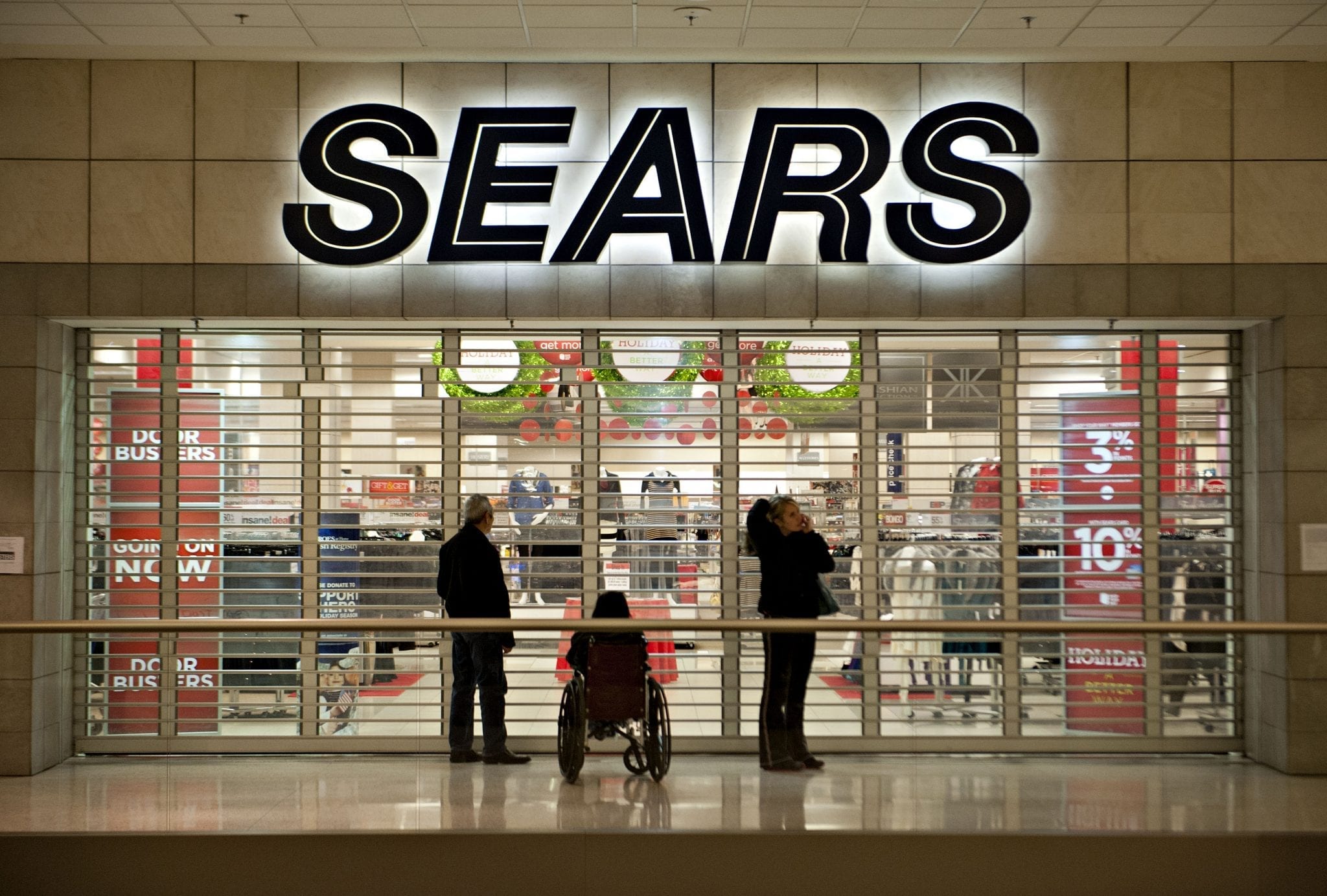
    Sears to be fined US$443 million

    Bankrupt U.S. retailer Sears has been hit with a charge of approximately US$443 million due to store closures. The charges relate to markdowns, severance costs and lease termination costs related to the business’ Chapter 11 bankruptcy, filed due to its inability to hit a debt payment deadline in October.

    The company said some of the charges, revealed in a regulatory filing, have already been incurred, with the remaining charges to be booked in the fourth quarter.

    At the time, Sears chairman Edward Lampert told investors that while the business had made progress, its plan had not delivered the desired results.

    “Addressing the Company’s immediate liquidity needs has impacted our efforts to become a profitable and more competitive retailer,” Lampert said.

    GlobalData Retail managing director Neil Saunders noted there was no clear path to success for the retailer.

    “The group has tried to shrink its way to profitability for years to no avail, so it is hard to see why pursuing the same strategy under the auspice of Chapter 11 would result in a different outcome,” Saunders said.

    Saunders said that several reasons have contributed to this outcome, but foremost among them is Sears management’s failure to evolve the store offering as retail modernised.

    “Ultimately, Sears needs not just to fix its financial problems. It also needs to repair the deficiencies in terms of retail strategy… only a complete change of management will bring this about.”

  • Audi To Pay 800 Million Euros Fine Over Dieselgate Scandal

    Audi To Pay 800 Million Euros Fine Over Dieselgate Scandal

    Volkswagen said on Tuesday that its subsidiary Audi would not contest an 800-million-euro (USD 927 million) fine issued by German prosecutors over “deviations from regulatory requirements” in diesel engines.
    “Audi AG has accepted the fine” investigators levied for “deviations from regulatory requirements in certain V6 and V8 diesel aggregates and diesel vehicles”, the group said in a statement, adding that “the fine will directly affectVolkswagen AG’s financial earnings” for 2018
  • Flight Centre recently slapped with $12.5 million fine

    Flight Centre recently slapped with $12.5 million fine

    Flight Centre has been slapped with a $12.5 million dollar fine for attempting to fix pricing with international airlines between 2005 and 2009.

    The Full Federal Court of Australia handed down the penalty on Wednesday morning, following a successful high court appeal by the ACCC against an earlier court decision in 2016.

    The decision is the latest turning point in a six-year between the competition watchdog and Flight Centre, which has the travel agent lose an initial court case before winning an appeal and then subsequently losing another ACCC appeal to the High Court.

    The ACCC alleged that Flight Centre sought to enter into price fixing arrangements with three airlines where they would agree not to offer airfares on their own website that were cheaper than those offered by Flight Centre.

    Flight Centre is now considering whether there are legal grounds to seek leave for another appeal against today’s judgement.

    “This was a complex test case as evidenced by the contrasting judgements during the past six years,” Flight Centre managing director Graham Turner said in an ASX release on Wednesday.

    “Flight Centre at all relevant times believed that it was acting lawfully and that its conduct did not contravene the Trade Practices Act, given that its interactions took place within the context of commercial negotiations as to agency arrangements with its principals.”

    Flight Centre said the fine would not impact its FY18 market guidance of an underlying profit before tax of between $360 million and $385 million.

    Flight Centre was initially fined $11 million but after it won its initial appeal a refund was issued.

    Today’s $12.5 million fine was higher than the original penalty, which ACCC chairman Rod Sims said reflected the size of Flight Centre.

    “The ACCC appealed from the initial $11m penalty orders because it considered that this level of penalty was inadequate to achieve a strong deterrence message for Flight Centre and other businesses,” Rod Sims said in a statement on Wednesday.

    “We will continue to argue for stronger penalties which we consider better reflect the size of the company, as well as the economic impact and seriousness of the conduct. Significant, large penalties act also as a general deterrent to other businesses that may be considering such conduct themselves.”

  • Google set to face record EU antitrust fine as soon as Tuesday

    Google set to face record EU antitrust fine as soon as Tuesday

    EU antitrust regulators are likely to impose a record fine on Alphabet unit Google over its shopping service as soon as Tuesday, two people familiar with the matter said on Monday, concluding one of three cases against the company.

    The European Commission’s case was triggered by scores of complaints from both U.S. and European rivals, leading to a seven-year-long investigation into the world’s most popular internet search engine.

    The EU competition authority charged Google in April 2015 with distorting internet search results to favor its shopping service, harming both rivals and consumers.

    The Commission declined to comment.

    Google said: “We continue to engage constructively with the European Commission and we believe strongly that our innovations in online shopping have been good for shoppers, retailers and competition.”

    The company has said regulators ignored competition from online retailers Amazon and eBay Inc.

    Reuters exclusively reported on June 1 that the EU competition enforcer aimed to sanction the company before the summer break in August.

    Companies found guilty of infringing EU antitrust rules can be fined as much as 10 percent of their global turnover, which in Google’s case could be about $9 billion of its 2016 turnover but it is not expected to reach this level.

    A 1.06 billion euro fine handed down to U.S. chipmaker Intel in 2009 is the highest to date.

    Apart from the fine, the Commission will tell Google to stop its alleged anti-competitive practices but it is not clear what measures it will order the company to adopt to ensure that rivals get equal treatment in internet shopping results.

    The Commission’s tough line is in sharp contrast with the U.S. Federal Trade Commission which settled its own web search case with the company in 2013 by requiring Google to stop “scraping” reviews and other data from rival websites for its own products.

  • FINE jewellery launches into travel retail in China

    FINE jewellery launches into travel retail in China

    The 130-piece Treasure Collection includes silver pendants and earrings with cubic zirconia, diamonds and pearls, with each piece presented in a transparent sealed box. Prices range from US$49 to US$499.

    F.I.N.E Managing Director Ari Johansson said: “Jewellery is the most profitable category per cubic centimetre in retail, and we’ve developed a unique brand and a range of jewellery that inspires the wearer.

    “We also created a product that travel retailers can stock and manage more efficiently. Our extensive experience in manufacturing, logistics and training is reflective in the way we innovate in this space, be it in the box, on the box or out of the box.”

    Johansson will address the conference and trade fair on ‘Three ways to improve jewellery sales in duty free’.