Retail News CRM

Tag: flying

  • Garuda tickets available at Indomaret

    Garuda tickets available at Indomaret

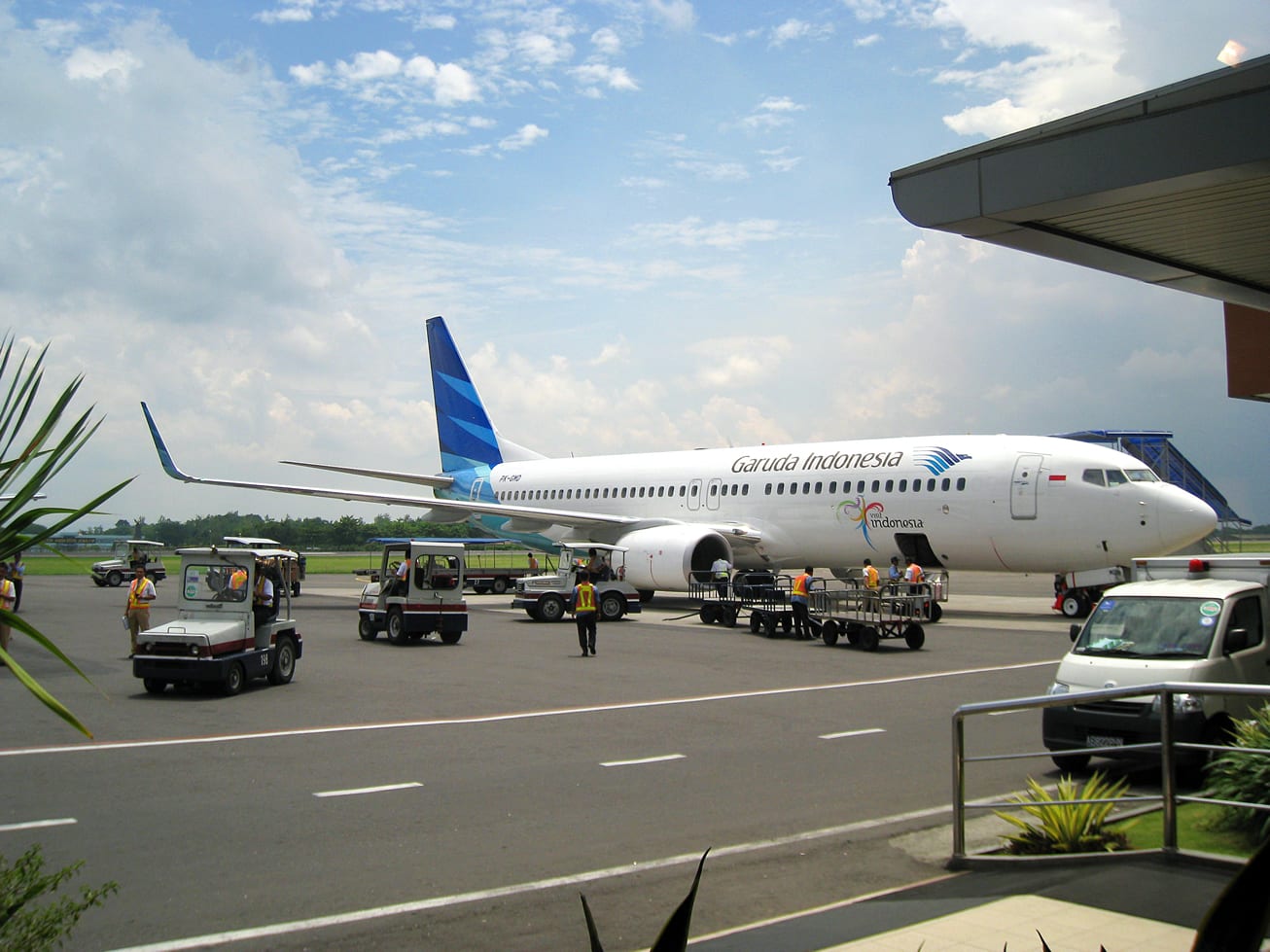
    National flag carrier Garuda Indonesia is teaming up with minimarket chain Indomaret to allow air passengers to buy tickets from the chain’s outlets across the country in a bid to boost the airline’s sales.

    For payments, Garuda works with electronic payment provider Finnet, a subsidiary of state telecommunications company PT Telekomunikasi Indonesia (Telkom).

    Garuda Indonesia commercial director Handayani said the company expected passengers would buy tickets from at least 20 percent of Indomaret’s 11,400 outlets.

    In ticket sales, the company expects the partnership to account for 830,000 transactions a year, or around 1.6 million tickets assuming that each buyer buys two tickets.

    “With their strategic sites, Indomaret outlets will open up consumer access to our services, including in places with little access to the Internet and ATMs,” Handayani said in a statement on Wednesday.

    She added that Indomaret ticketing services would be focused on domestic flights for individual customers.

    “People who go to Indomaret will tend to buy small numbers of tickets for domestic flights. The average ticket price will be between Rp 400,000 and Rp 500,000,” she said.

    Garuda’s low-cost subsidiary carrier Citilink has cooperated with Indomaret since January 2014.

    Indomaret records around 150 million transactions with 37.5 million customers monthly, according to Wiwiek Yusuf, the marketing director of PT Indomarco Prismatama, which runs the chain.

    “Of that figure, 15 million transactions, or 10 percent, are virtual,” he said, adding that Garuda would add to the list of the chain’s virtual payments, which currently includes electricity bills, phone credit and concert tickets.

    Online ticket purchasing makes up 28 percent of Garuda’s total transactions, with the remainder carried out through traditional channels such as travel agents.

    The airline’s partnership with Indomaret adds to its current relationship with Telkom, which runs Garuda’s call center. However, Garuda customers who book tickets through the call center can only pay with credit cards or through the ATMs of 18 banks.

    Telkom enterprise and business service director Muhammad Awa-luddin said the cooperation would mark the first non-bank channel for Garuda.

    “Finnet has hundreds of dealers and is connected to 77 banks, so we envision no problems,” he said.

    The cooperation is part of Garuda’s efforts to meet a target of carrying 25 million passengers this year.

    The airline carried 11.55 million passengers in the first half of the year, up 15.3 percent from last year, of which 9.4 million were domestic passengers.

    “With this cooperation, we should reach more than 20 million,” Handayani said.

    She added that she would rely on the growth of Indomaret outlets for expanding consumer access, with the firm looking to reach 12,000 outlets this year.

    Other than the domestic market, Garuda is also eyeing increased inbound flights after Coordinating Maritime Affairs Minister Rizal Ramli announced on Tuesday the waiving of visas for citizens of 47 more countries, adding to 30 countries granted visa exemptions in June.

    “We will engage with foreign tourist boards and travel agents. We have to be aggressive in introducing Indonesia to those countries, beyond Bali and Jakarta,” Handayani said.

    The company booked US$27.7 million in net income in the January-June period, a sharp increase from its net loss of $203 million in the same period last year, on the back of lower operating expenses and strong passenger growth.
  • Garuda Indonesia Surabaya-Jakarta flight takes off despite false bomb threat

    Garuda Indonesia Surabaya-Jakarta flight takes off despite false bomb threat

    Garuda Indonesia flight GA 311 from Surabaya to Jakarta received a bomb threat this morning. Authorities said the plane flew in spite of the terrorist threat because it did not reach the pilot before he took off.The PT Angkasa Pura I and Garuda ticketing offices in Surabaya received the bomb threat via text message at 10 am. It read:“This is a warning that the Garuda flight from Surabaya-Jakarta will blow up in the air tonight, that is all the information from us, please check every passenger’s luggage and cargo for the passengers’ safety.”

    The message was signed off by someone who claims to be Erwin.

    When the two offices received the bomb threat, 147 passengers were already on board the plane, which was preparing for take off at Surabaya’s Juanda International Airport. The flight went ahead because takeoff preparations have already begun and the bomb threat did not reach the pilot before take off.

    Luckily, the flight went off without a hitch and the plane made a safe landing at Soekarno-Hatta Airport at 11:35 am. No bomb was found on the plane.

    “After thorough checks on Surabaya-Jakarta flight GA 311 PK GFN, which landed at 11:35 am, [it was concluded that] there were no dangerous items on board,” said Garuda Indonesia Spokesman Ikhsan Rosan.

    Ikhsan said authorities have already apprehended a suspect.

    “The mobile phone number was traced, the suspect was confronted but they denied ever sending the terrorizing message,” he said.

    Ikhsan added that Garuda Indonesia is tightening security measures in the light of this incident.


  • Garuda Indonesia partners with China’s CFM International over the airline’s 737 MAX Fleet

    Garuda Indonesia partners with China’s CFM International over the airline’s 737 MAX Fleet

    State-run flag-carrier PT Garuda Indonesia Tbk (GIAA) and China’s CFM International have announced the expansion of their long-term partnership, under which, CFM will provide support for the airline’s future fleet revitalization program.

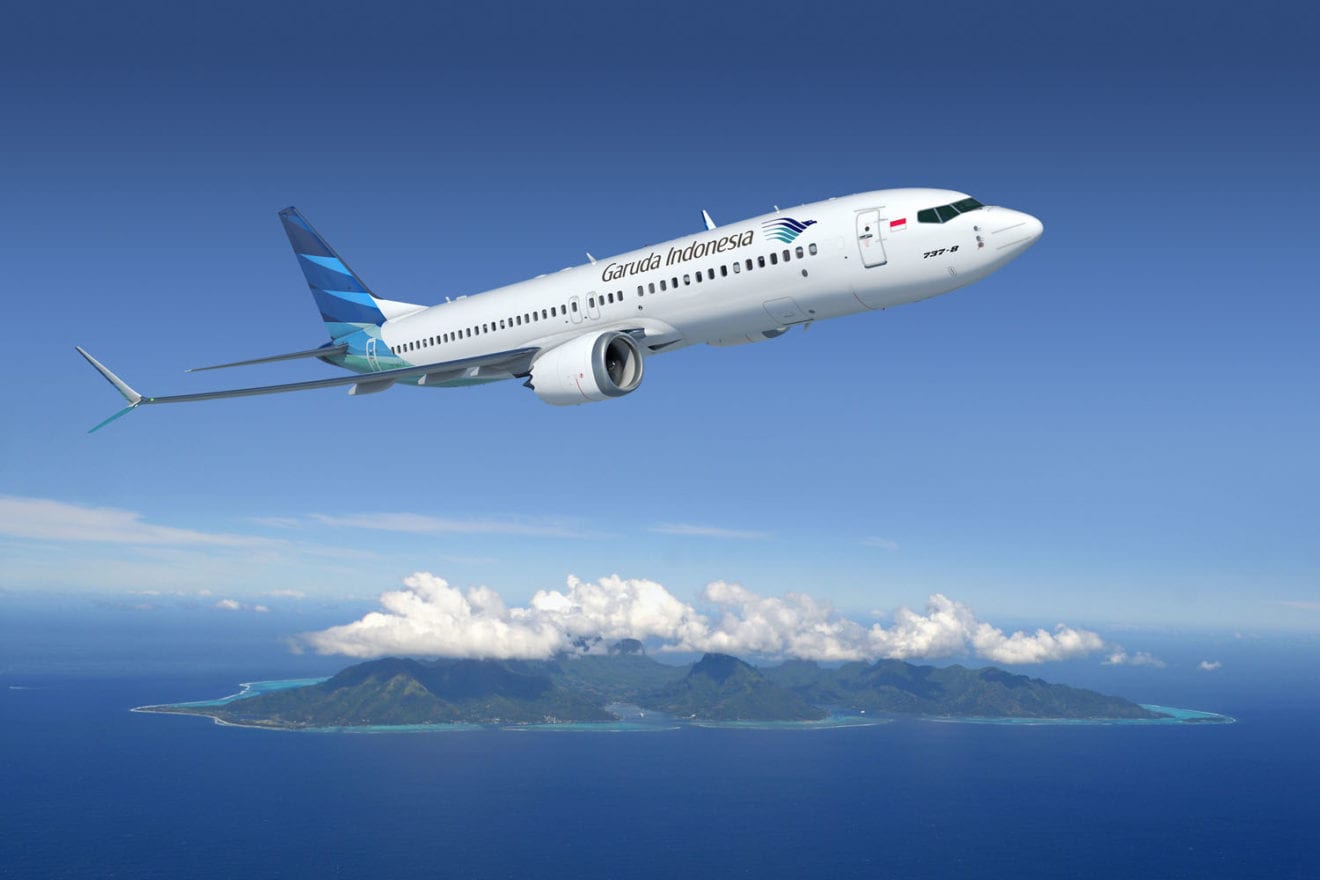
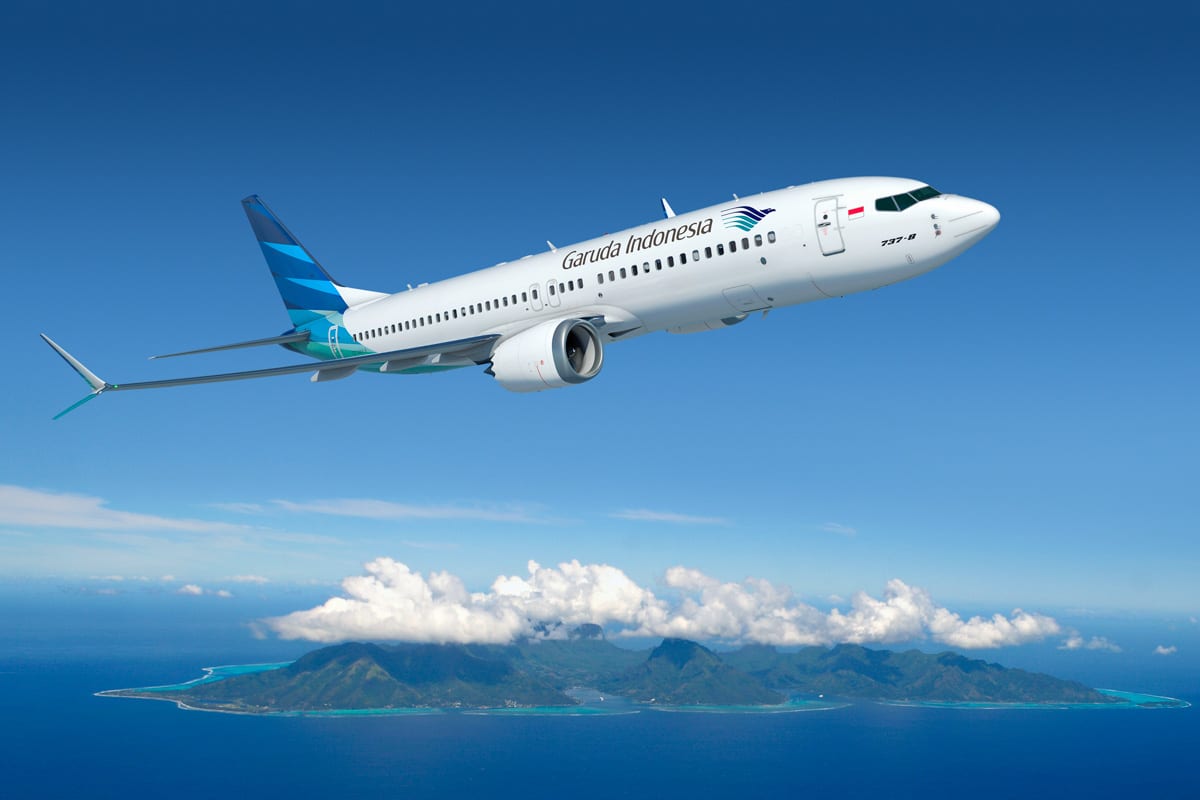
    Under the arrangement, Garuda is committed to purchase 50 Boeing 737 MAX 8 aircraft, which will be powered by CFM LEAP-1B engines.

    “The Next-Generation 737 with CFM56-7B engines is the backbone of our current fleet and this order for the 737 MAX shows our continued commitment to providing our passengers with the most modern, fuel efficient aircraft/engine combination available today,” said Arif Wibowo, President Director and Chief Executive Officer of Garuda Indonesia.

    Garuda Indonesia is a long-time CFM customer and began operating the CFM56-3-powered Boeing 737-300 in the late 1990s. Today, the airline’s fleet includes approximately 80 CFM-powered 737 aircraft in service or on order.

    “We are pleased that Garuda Indonesia has continued to place its trust in CFM,” said Max York, Regional General Manager of Sales for CFM International.

    The LEAP engine is to be the most advanced, reliable, fuel-efficient powerplant for the new generation of single-aisle aircraft.

    Garuda said the lower weight and higher durability these components provide will result in a 15 percent improvement in fuel efficiency, with an equivalent reduction in CO2 emissions; a 50 per cent margin to new emissions regulations; a dramatically lower noise signature; CFM’s industry-leading reliability and low overall operating costs.

    Garuda announced in October 2014 the airline’s intent to purchase 50 737 MAX 8 aircraft. The agreement is part of the airliner’s revitalization program in order to provide its passengers with the best possible experience with the youngest fleet in the sky and to support the airline’s future plan to further expand its network globally.

    The airliner currently operates more than 90 Boeing airplanes, including Next-Generation versions of the 737, 777-300ERs and 747-400s.

  • Reprieve for AirAsia

    Reprieve for AirAsia

    No further risk to IAA’s licence but bigger re-rating depends on ability to become sustainably profitable

    IT has been a topsy-turvy time for AirAsia Group Bhd’s share price.

    After investor sentiment was rocked by a damaging report by GMT Research report on June 10 that questioned the financials of the low-cost airline, AirAsia’s share price came under pressure when Indonesia threatened to pull back its licence in its 49% owned unit, Indonesia AirAsia (IAA), if its finances and that of 12 other airlines are not improved by July 31.

    Indonesia’s Transport Ministry wants the 13 airlines to shore up their shareholders’ equity to 500 billion rupiah if they operated 70 seater planes by July 31 or face being stripped of their licence.

    That punitive measures were later softened with the ministry changing its mind.

    On Thursday, the ministry issued a statement saying it would “assist and support” the 13 airlines with negative shareholders’ equity to improve their equity positions if they were unable to meet the July 31 deadline.

    “The wording suggests that the ministry has performed a gentle face-saving U-turn and the airlines’ licences will not be at risk after all. With no further risk to IAA’s licence, the recent share price sell-off may partially reverse, although a bigger re-rating depends on IAA’s ability to become sustainably profitable,’’ says CIMB Research senior analyst Raymond Yap.

    AirAsia share price has thus far rebounded and closed on Friday at RM1.34, marginally up from Wednesday’s close of RM1.30, which was the recent low.

    From the beginning of this year, it has lost RM4.11bil in market capitalisation and both the GMT report and the Indonesian directive were much of the culprits for the drop.

    Maybank Investment Bank senior analyst Mohshin Aziz described the ruling as “unexpected surprise.’’

    “About half of the airlines globally have negative equity and anyone in the airline industry knows that safety is not about negative equity. It is about discipline, cashflow and enforcement,’’ he adds.

    An airline executive felt that the ruling was not enforceable, adding that “do you honestly think Indonesia will close an airline which hires 2,000 people and brings in most tourists?’’

    According to World Bank data, international tourism receipts totalled US$10bil for Indonesia for the 2010-2014 period.

    But Shukor Yusof, the founder of Endau Analytics, felt that the Indonesian Transport Minister is making a concerted effort to overhaul and clean up the domestic aviation.

    “A good number of Indonesian carriers can barely stay solvent, with the exception of the major ones like Lion Air group and Garuda. But it is unlikely they will shut them (the 13 players) down though.’’

    Apart from IAA and Rusdi Kirana’s Batik Air (a unit of Lion Air Group), the others affected by the new ruling are Cardig Air, Trans Wisata Prima Aviation, Istindo Services, Survei Udara Penas, Air Pasifik Utama, John Lin Air Transport, Asialink Cargo Airline, Ersa Eastern Aviation, Tri MG Intra, Nusantara Buana and Manunggal Air.

    Indonesia is the world’s fourth most populous nation with demand for air travel growing every quarter. From 2010 to 2014, about 95 million passengers took to the skies. There are 65 domestic airlines in the country.

    AirAsia has a 49% stake in IAA and its share of the Indonesian market is below 10%, though IAA has the largest market share in international air travel segment in Indonesia. The market is controlled by Garuda and Rusdi Kirana’s Lion Air group.

    Despite the threat of suspension, AirAsia boss Tan Sri Tony Fernandes says the airline is not pulling out of Indonesia.

    This can be explained as the market potential is huge and an initial public offering (IPO) is being planned for IAA, which operates with 29 planes in Indonesia.

    According the International Air Transport Association (IATA), by 2034, Indonesia is expected to be the sixth largest market for air travel. By then, some 270 million passengers are expected to fly to, from and within the country. That’s three times the size of today’s market.

    Short-term reprieve

    Though IAA got a reprieve, affected airlines in Indonesia will still have to improve their balance sheet if they want new routes. New routes are important for low-cost carriers as growth in traffic comes with more destinations.

    All the 13 players also need to submit their business plan by month end.

    Fernandes was reported to have said that “We were going to comply anyway. We have already set that process in motion.”

    As at end March this year, IAA had a negative equity position of 3 trillion rupiah (RM860mil) and paid-up capital of 180 billion rupiah. Hong Leong Research estimates that IAA needs at least RM1bil injection and this includes the additional paid-up capital of 320 billion rupiah or RM90mil.

    Yap of CIMB points out that the fundamental issue of IAA’s long-term future will still weigh heavily on investors minds.

    “At the moment, IAA is still some distance away from securing the subscribers for its proposed US$100mil-US$150mil convertible bonds.”

    Even if those are secured, most likely with a guarantee issued by AirAsia, it would only buy AirAsia two years of time. IAA will need to be reasonably and sustainably profitable before AirAsia’s share price can recover convincingly.

    But Fernandes told that “we have resolved and have no worries about our licences and we are confident of a profitable airline in Indonesia.’’

  • Garuda Indonesia orders up to 30 Airbus jets

    Garuda Indonesia orders up to 30 Airbus jets

    Garuda Indonesia airline is on a buying spree at the Paris Air Show.

    Airbus announced Monday that the Indonesian flagship carrier signed a letter of intent for 30 wide-body A350 jets, which could serve routes from Jakarta or Bali to Europe. If confirmed, the order would be worth up to $9 billion at list prices, though airlines usually negotiate discounts.

    Earlier Monday, Boeing announced a tentative order by Garuda Indonesia for up to 60 jets.

    Asian carriers are expected to dominate global aircraft demand over the next two decades, with Boeing estimating that roughly two out of every five new planes will head to Asia.