Retail News CRM

Tag: fmcg

  • Reimagining Australian Manufacturing: Navigating Challenges And Seizing New Opportunities

    Reimagining Australian Manufacturing: Navigating Challenges And Seizing New Opportunities

    The manufacturing sector in Australia is at a critical juncture, contributing approximately 5.9% to the national GDP and employing over 850,000 people this year. Despite rebounding from disruptions caused by the pandemic, the sector is grappling with new challenges. More than 60% of manufacturers are dealing with delays in receiving essential materials, and escalating energy costs and skill shortages are exacerbating operational hurdles.

    Opportunities Amidst Challenges

    However, this uncertain environment is presenting unexpected opportunities for Fast-Moving Consumer Goods (FMCG) manufacturers who are open to reimagining their sourcing tactics. The government’s $15 billion National Reconstruction Fund demonstrates a revitalized commitment to strengthening local manufacturing capabilities. Consequently, the question FMCG firms are grappling with is no longer whether to manufacture domestically or abroad, but rather how to devise intelligent hybrid models that leverage the benefits of both methods.

    The Relevance of Local Production

    It’s time to reconsider the long-standing belief about Australian customers’ allegiance to locally made products. In low-engagement, processed categories like confectionery and chocolate, the origin of the products usually takes a backseat to taste, brand, and value. In contrast, for fresh foods, the origin continues to be a significant factor influencing purchases. Retail buyers prioritize margin, volume, inventory performance, and innovation.

    Nonetheless, this doesn’t mean the end of local manufacturing. The Australian Government’s Modern Manufacturing Strategy is supporting businesses in repatriating operations and diversifying suppliers, thereby creating fresh opportunities for strategic local production.

    Local Manufacturing Advantages

    The vulnerabilities of supply chains exposed during recent global disruptions have fundamentally shifted the risk-reward equation of sourcing from overseas. What were once clear cost savings now include hidden expenses such as inventory buffers, expedited shipping, and lost sales from stockouts. Local manufacturing presents attractive benefits in this context. Shorter lead times enable quicker responsiveness to demand fluctuations and seasonal changes.

    Environmental Considerations

    When it comes to the environmental impact of local versus offshore manufacturing, the situation is more complex than it often appears. Manufactured inputs often account for 40-70% of a company’s carbon footprint, far outweighing transport. While local production may seem like a sustainability benefit, the impact largely depends on the energy mix.

    A Portfolio Approach to Manufacturing

    The most resilient FMCG firms are moving beyond the binary choice between local and offshore production. Instead, they are devising portfolio-based sourcing strategies, optimizing each product line based on specific needs and market dynamics.

    Future of Australian FMCG Manufacturing

    The progress of Australian FMCG manufacturing reflects larger shifts in how businesses compete in today’s world. It isn’t just about cost anymore. Speed, trust, sustainability, and adaptability have all emerged as critical competitive factors. The companies that will succeed are not those that choose between local or global production, but those that understand when, how, and why to utilize each method.

    Questions & Answers

    What challenges are the Australian manufacturing sector facing?
    The Australian manufacturing sector is experiencing delays in obtaining essential materials. Rising energy prices and a shortage of skilled labor are further compounding these operational challenges.

    What opportunities are emerging for FMCG manufacturers?
    The turbulent landscape is creating unexpected opportunities for FMCG manufacturers who are willing to rethink their sourcing strategies and develop intelligent hybrid models that combine the benefits of both local and offshore manufacturing.

    How is the future of Australian FMCG manufacturing being shaped?
    The future of Australian FMCG manufacturing is being shaped by a range of factors including speed, trust, sustainability, and adaptability. Government initiatives are also playing a significant role, with measures such as the National Reconstruction Fund helping to rebuild manufacturing capability.


  • Von Dutch Diversifies: Fashion Brand Ventures Into Food, Beverage, And Hospitality Sectors

    Von Dutch Diversifies: Fashion Brand Ventures Into Food, Beverage, And Hospitality Sectors

    Fashion label, Von Dutch, is broadening its horizons by venturing into sectors of food, beverage, and hospitality. The company has officially disclosed a worldwide food and beverage licensing agreement. As a result of this agreement, the brand will introduce a collection of drinks, snacks focussed on health and wellness, and a blend of cafe-lounges under the name of Von Dutch F&B. This initiative is under the leadership of CEO Joe Wallace, a seasoned executive known for securing millions in funding and pioneering a variety of products in food tech, consumer goods, and hospitality.

    As expressed by Wallace, the vision is to create an empire far beyond just a food brand. The brand’s philosophy will hinge on entertainment, authenticity, wellness, hospitality, and a fresh vitality.

    New Product Launches

    In partnership with beverage incubator Flavor House, Von Dutch F&B will launch an organic, plant-based line of sodas and mocktails. Other exciting ventures include a new alcohol line featuring vodka, tequila, beer, and hard seltzers. This move complements the brand’s existing product – Von Dutch Water, known as a high-quality hydration product that has gained popularity across various outlets from convenience stores to bars and music festivals.

    Von Dutch Cafes and Sub-Brand Launch

    Von Dutch plans on opening its brand-new cafes in New York and Los Angeles over the next year. These spaces will transition from being daytime hubs for coffee and snacks to after-hours hotspots featuring cocktails, mocktails, and live entertainment.

    The brand, which was taken over by the White Space Group (WSG) in 2024, also plans on launching an engaging sub-brand called ‘Von Dutch Loves.’ This sub-brand will highlight music, nightlife, and underground culture through exclusive releases, artist partnerships, festival collaborations, and community-centered events.

    WSG CEO Jack Cheika expressed his excitement about the partnership, stating that the goal is to create cultural relevance in every aspect of people’s lives, from how they dress to how they dine, drink, and socialize.

    Questions & Answers

    What is the new venture of Von Dutch?
    Von Dutch is expanding its brand into the food, beverage, and hospitality sectors under the name Von Dutch F&B.

    What products will Von Dutch F&B be launching?
    Von Dutch F&B plans to launch a range of organic, plant-based sodas and mocktails as well as a new alcohol line including vodka, tequila, beer, and hard seltzers.

    What is the aim of the ‘Von Dutch Loves’ sub-brand?
    The ‘Von Dutch Loves’ sub-brand is designed to highlight music, nightlife, and underground culture through exclusive releases, artist partnerships, festival collaborations, and community-centered events.

  • Asia’s FMCG Market Thrives Amid Global Economic Challenges: A 2025 Analysis

    Asia’s FMCG Market Thrives Amid Global Economic Challenges: A 2025 Analysis

    In the face of a tumultuous global economic landscape, Asia’s fast-moving consumer goods (FMCG) market demonstrated resilience in the first quarter of 2025, expanding by 2.8% year-on-year. The growth was primarily fueled by robust performances in the food, beverages, and home care sectors, while personal care registered modest gains and the dairy segment faced a downturn.

    Northern Dynamics: Strong Demand Reshapes China’s Market

    In North Asia, consumers lifted FMCG spending by 1.9%, buoyed by significant growth in food, beverages, and home care products. Particularly notable was China, which saw a surge in demand over the festive holidays. Lower-tier cities thrived, reporting a growth of 5.9%, with town-level markets skyrocketing by more than 10%. Home care products emerged as the primary growth driver, and personal care began to show promising signs of recovery.

    Korea enjoyed a 4.2% increase in FMCG value, largely thanks to larger shopping baskets, although the frequency of shopping visits tapered off. Taiwan shone brightly, achieving an impressive 8.8% growth in value, spurred by an 8% rise in food and an 11% uptick in non-food categories.

    Southeast Asia: Consumers Tread Lightly Amid Growth

    Southeast Asia proved to be a vibrant player, outpacing the regional average with a 4.1% increase in FMCG expenditures, though consumer behavior remained cautiously optimistic. Malaysia saw a modest market growth of 1.6%, characterized by fewer shopping trips, but with consumers opening their wallets wider during each visit, thanks to festive promotions coupled with lower average prices early in the year.

    In Indonesia, FMCG value leaped by 5.5%, but a notable decline in volume marks the first time consumers have opted for reduced quantities, highlighting economic pressures that have driven them toward seeking better value or switching to more affordable alternatives. Thailand’s market grew by 2.7%, though its expansion was dampened by previous government subsidies, which led to advanced purchasing behavior late last year, with no further stimulus anticipated in 2025.

    The Philippines reported similar growth to Indonesia at 5.5%, attributed to increased spending per shopping trip, albeit with less frequent visits. Meanwhile, Vietnam celebrated its strongest first quarter in five years, invigorated by rising consumer prices for essentials and the festive Tet holiday, signaling a moderate recovery in the in-home FMCG space.

    South Asia: India Leads the Charge

    South Asia’s leading powerhouse, India, achieved a commendable 7.1% value growth, including a 4.4% increase in volume, alongside a 2.5% hike in average prices. Despite these gains, both metrics lagged behind last year’s pace, reflecting a broader trend. With inflation receding slightly, higher-income households have begun diverting their spending towards travel, dining, and lifestyle choices, while lower-income consumers remain committed to essential goods.

    Middle East Momentum Amid Growth

    Across the Middle East, the UAE made significant strides in FMCG growth during Q1, propelled by vibrant Ramadan sales and a steadily growing population. A plethora of categories reported expansion, underscoring consumer optimism in the face of ongoing pressures. Saudi Arabia too saw a rebound in FMCG volumes, driven by frequent shopping trips, even as basket sizes tightened—a sign of enhanced affordability and alleviating inflationary concerns.

    Questions & Answers

    How has consumer behavior changed in Southeast Asia recently?
    Consumer behavior in Southeast Asia is increasingly cautious, as evidenced by slower shopping frequency, even amidst higher spending per trip. This trend reflects a desire to make every visit count.

    What led to China’s impressive growth in FMCG?
    China’s FMCG growth was largely driven by strong demand during festive holidays, particularly in lower-tier cities, which managed to outpace growth in urban centers.

    What trends are emerging among different income groups in India?
    In India, higher-income households are reallocating their spending towards non-essential categories like travel and dining, while lower-income consumers continue to focus on essential goods as inflation impacts their purchasing power.

  • Arnott’s buys Kiwi biscuit maker 180 Degrees

    Arnott’s buys Kiwi biscuit maker 180 Degrees

    Arnott’s has bought New Zealand artisan biscuit maker 180 Degrees to add to its stable of sweet and savory crackers.

    The FMCG company bought the business from private equity investor KKR, for an undisclosed sum.

    Founded in 2001 by Frank Lawton, his partner Jill Seton, and Nigel Cranston, 180 Degrees has steadily built a distribution network across New Zealand and into Australia, where its products are stocked by Coles.

    Seton told the National Business Review the business was founded on passion and grew into a premium business. She said Arnott’s shared the founders’ appreciation for legacy and would continue to build the brand.

    Seton and Lawton describe themselves as “massive foodies” who used to travel the world as a butler and chef duo.

    “After years of experiencing the best of international food we settled back into New Zealand life,” she explains on the company’s website. “Our passion for entertainment and good food inspired us to make a beautiful selection of crackers and biscuits to be enjoyed on all social occasions.”

  • FMCG brands will boost digital ad spend as consumers stick to online

    FMCG brands will boost digital ad spend as consumers stick to online

    Most Australians who started buying more of their groceries online as a result of the Covid-19 say they plan to continue to do so, even when the pandemic is over.

    A ZenPoll in early March found that 29 percent of the 1023 Australians polled started buying more groceries online as a result of the pandemic, and 21 percent of them said they would continue.

    However 74 percent still strongly prefer the in-store experience with only 24 percent preferring online.

    “As restrictions have been eased or removed, the convenience of the online experience is what has kept many new converts online, said Zenith Australia’s head of strategic insights, Kim Xavier. “So balancing the benefits of the in-store experience with the convenience of online will be a challenge for retailers.”

    The research was part of a broader international study assessing the importance of digital advertising spending by FMCG companies, resulting in Business Intelligence – FMCG Food and Drink report, published today. Zenith forecasts FMCG food and drink brands will increase their share of ad spend on digital channels by 7 percent annually through to 2023, nearly double the 4 percent increase in overall FMCG ad spend over the same period.

    “The online nature of these services is increasing supermarket retailers’ focus on digital media investment in what has otherwise been a softening market,” said Vikki Pearce, head of digital at Zenith Melbourne.

    “And FMCG brands are following suit – particularly over-indexing in their online video spend as they strive to keep top of mind and capture share of wallet not only in the growing e-commerce opportunity.”

    Globally, FMCG brands still rely heavily on traditional TV, which accounted for a 39-per-cent share of total advertising budgets last year, compared with 24 percent for brands overall.

    Zenith forecasts that FMCG digital ad spend will increase from US$12.3 billion worldwide last year to $14.9 billion in 2023, and that its market share will rise from 46 percent to 49 percent.

    “FMCG brands need a new comprehensive approach to reach-based planning,” said Ben Lukawski, global chief strategy officer at Zenith. “That means combining TV, paid advertising in online video, virtual placement in streaming video on demand platforms and perhaps even a presence in gaming, using first-party and second-party data to prevent duplication and optimize incremental reach.”

    Zenith’s report covered 12 international markets: Australia, Canada, China, France, Germany, India, Italy, Russia, Spain, Switzerland, the UK and the US, which between them account for 73 percent of global ad spend.

  • Online FMCG sales to soar in four years

    Online FMCG sales to soar in four years

    Online FMCG sales are forecast to grow 163 per cent by 2023 across major markets, according to a new report from research organisation IGD, in association with The Consumer Goods Forum.

    The report explores three digital retail models of the future and predictions for an increasingly digital food and consumer goods industry. It finds that Asia and North America will lead the way on the rate of growth, with Europe set to develop this channel at a comparatively slower pace. Major grocery e-commerce markets will continue to expand rapidly, growing at almost four times the rate of any other channel.

    Online FMCG sales in Asia-Pacific are set to triple over the five year period, with IGD forecasting that in 2023, e-commerce’s share of grocery in Asia (7.5 per cent) will be twice that of North America (3.4 per cent), and close to three times larger than Europe’s (2.5 per cent).

    Asia-Pacific’s online grocery market will grow by 196 per cent by 2023, adding US$198 billion to the industry.

    “We are living in exceptional times,” said IGD CEO Susan Barratt, “with an extraordinary burst of retail innovation, driven largely by digital developments. With this research we explore the global proliferation of retail innovation from three different directions: established players, online specialists and the new ecosystems. We believe that plenty of the new emerging models are set to grow and prosper, which means established retailers will need to work hard and swiftly, either to limit their impact or to emulate them.”

    “While of course growth remains challenging for all of the established players in the industry, many are nevertheless finding that the ongoing disruption presents exciting opportunities,” said The Consumer Goods Forum MD Peter Freedman.

    “This report presents several ideas for consumer goods and retail companies looking to secure their long-term future, and we’ll be discussing some of these themes at the Global Summit in Vancouver: how scale and agility can impact your business model, how digital technologies will permeate decisions and how new forms of collaboration will help drive the sustainable evolution of our industry.”

  • Philippines, Vietnam lead FMCG sales growth in Asia

    Philippines, Vietnam lead FMCG sales growth in Asia

    The Philippines and Vietnam led Southeast Asian FMCG sales growth last year, according to a report by market research company Nielsen.

    In What’s Next for Southeast Asia, Nielsen reported that Vietnam’s FMCG sales growth reached 5.2 per cent, second in Southeast Asia behind the Philippines’ 8.7 per cent.

    Global FMCG sales growth was only 3.4 per cent, but Asian markets benefited from buoyant economic factors and strong consumer confidence.

    In Vietnam, consumers are making more frequent shopping trips for everyday needs, with Nielsen’s data showing the average shopper visited a convenience store 4.5 times per month last year – that’s three times the frequency of 2010.

    “We’ve been seeing solid growth in the convenience and mini-market channels across Southeast Asia for some time now, but over the past year or so that growth has really hit fever pitch,” said Vaughan Ryan, Nielsen’s MD Southeast Asia.

    “Consumers throughout the region are living increasingly fast-paced lives, and this lifestyle shift is driving increasing demand for on-the-go offerings.”

    Vietnam’s local retailers are taking advantage of the trend. Vingroup has launched the first virtual store chain in the country, which allows users to shop by scanning QR codes on large banners in public areas as well as printed catalogues.

    Subsidiary VinCommerce, which owns the VinMart+ convenience store chain, recently acquired a rival c-store chain Shop&Go,which it plans to convert to its own banner. Vietnam retail is forecast to record double-digit growth from this year to 2024.

  • Nestle India plans up to 3-dozen product launches in 2019, eyes higher exports

    Nestle India plans up to 3-dozen product launches in 2019, eyes higher exports

    FMCG major Nestle India has lined up nearly two-three dozen products that it plans to launch in calender year 2019 across categories in the country to drive its aggressive growth plans, Chairman and Managing Director Suresh Narayanan said.

    According to a report, the company, whose 6 percent revenues come from exports, is now looking to tap more overseas markets by targeting countries with higher Indian diaspora such as SAARC and South East Asia.

    “In 2018, our core brands have performed well…We look forward for greater acceleration as we go forward….We have two-three dozen projects (products) in pipeline for launch in 2019. These products are across categories,” Narayanan said.

    Reiterating the company’s focus on the Indian market, he said, “As an organisation the one clarion call that we are working to is that we are in the business of growth to thrive and not to survive…It is not a survival mode that we look at the opportunity in India or the opportunity for growth..but a thriving mode.”

    While the domestic market has been driving its growth, Narayanan said Nestle India would now look at expanding its export basket.

    The company is looking at tapping overseas market with higher Indian diaspora such as SAARC and South East Asia to expand its exports, he added.

    Commenting on fake news on nutrition, Narayanan said it was affecting choices and lives of people.

    Therefore, Nestle India in partnership with Google, using a chatbot mechanism, will launch a personalised information dissemination website called ‘Ask Nestle’, he added.

    “Ask Nestle seeks to be a reliable and anchor platform for nutrition and lifestyle information for customers. India is the only market where this website is being launched,” he was further said.

    When asked if the company will in future also link Ask Nestle with its own e-commerce website for selling its products, he said it is a possibility.

    “…Going forward it could morph into something bigger in terms of linking up with our own e-commerce intentions, if at all it happens. But today it is only for information sharing, dissemination and helping,” he said.

    When asked if there has been any impact on sales of Maggi noodles after Supreme Court revived government’s case in the National Consumer Disputes Redressal Commission (NCDRC) against Nestle India seeking damages of Rs 640 crore for alleged unfair trade practices, false labelling and misleading advertisements, Narayanan said “No”.

    When asked if the company is looking for manufacturing capacity expansion, he said: “…This is a question that is coming up with active consultation. That exercise is on but I can not share more at this stage”.

    Typically, our approach is to augment (capacity) at our existing factories, but it does not rule out a new manufacturing facility, Narayanan said.

    Nestle India, at present, has eight factories across the country.

    The company also did not rule out evaluating inorganic growth in the country and said it may consider it if any opportunity arises.

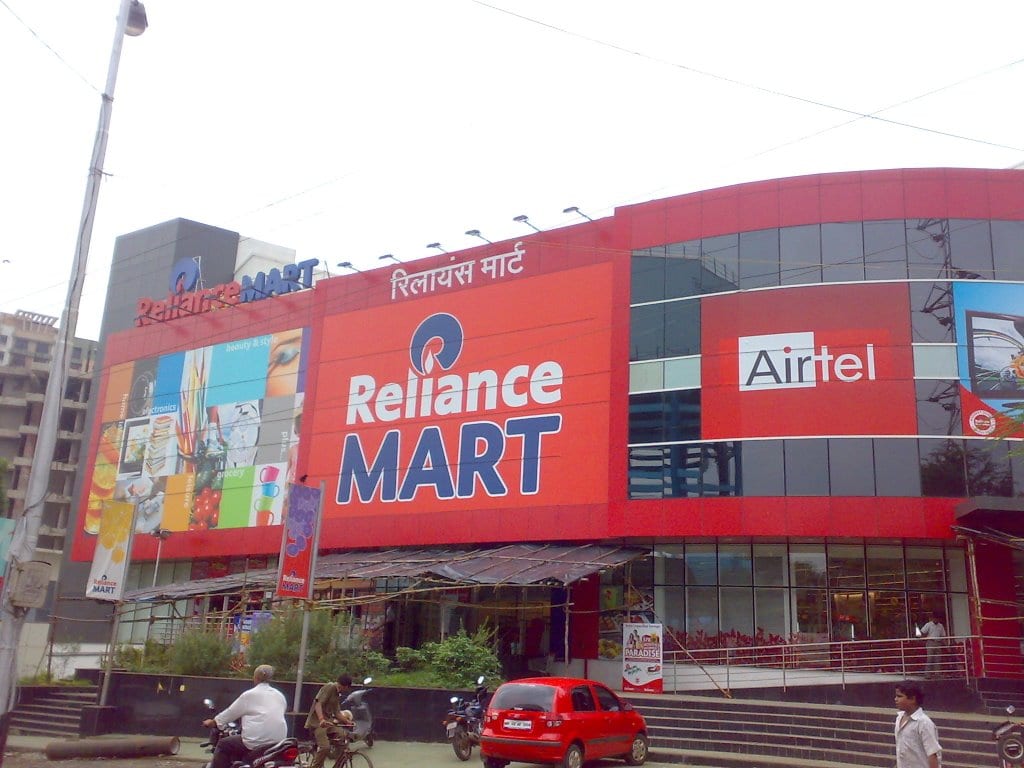
  • Reliance Retail is 94th on Deloitte’s top retailer list

    Reliance Retail is 94th on Deloitte’s top retailer list

    The global retailing industry saw a record growth in revenue in 2017 with the top 250 companies increasing their revenue by over 83 percent, according to a latest report by a professional services multinational that said Reliance Retail was the only Indian company in the list. The Deloitte’s ‘Global Powers of Retailing 2019’ said that with the fast moving consumer goods (FMCG) being the main growth drive for the top 250 global retailers, the retail revenue increased by over 83.2 percent generating aggregate revenue of US$ 4.53 trillion in fiscal 2017.

    “Despite the deceleration in the global economy, the consumer and investor sentiment continues to remain positive.

    “Our global reports highlight that of the top 10 companies on the top 250 list, eight were FMCG companies and that sector has been a strong reason for the India retail story,” Deloitte India Partner Anil Talreja said.

    According to the report, Europe had the highest number of top 250 retailers.

    Companies such as Amazon and Reliance doing exceptionally well by climbing 2 and 95 spots, respectively, on the back of exceptional retail growth.

    Reliance Retail as the only Indian company in the top 250 list came in at the 94th position and was also placed sixth among the 50 fastest growing retail companies.

    In fiscal 2017, the company doubled its annual revenue to $10,649 million over the previous year.

    Walmart retained its position as the world’s largest retailer with an improvement in retail revenue growth by three per cent in 2017. Its major growth drivers were the acquisition of e-commerce firms such as Jet.com, ModCloth, Shoes.com, Moosejaw, and Bonobos, besides greater investments in store remodelling and investment in store wages.

    Walmart has recently acquired Indian e-commerce major Flipkart.

    The Deloitte survey reported sluggish growth in Europe, China and Japan, but said retailers continued to grow as a result of increased merger and acquisition (M&A) activity, new store openings, and robust e-commerce activity.

    “The global economy is currently at a turning point. Until early 2018, the global economy displayed strong growth.

    “With inflation accelerating in major markets, governments making shifts in monetary and fiscal policies, and most of the emerging markets experiencing significant currency depreciation the global economy will slow down in the near future,” Deloitte Global Chief Economist Ira Kalishsaid in the report.

    “For retailers, this change will mean slower consumer spending growth, higher consumer prices, and disrupted global supply chains,” he added.

  • Nestlé launches Workplace by Facebook

    Nestlé launches Workplace by Facebook

    Nestlé has adopted Workplace by Facebook as its global internal communication tool, to connect its workforce and better serve consumers.  The announcement comes as the latest and largest wave of staff join the platform, part of a process that began only nine months ago. Today, around 210,000 of its employees worldwide use the platform to connect and collaborate. Nestlé has pledged to move quicker to turn good ideas into great products to meet fast-changing consumer demand. With the majority of its employees active on the platform, Workplace is already making a difference. Internal engagement is higher and responses faster. People are experimenting and collaborating more, as well as sharing information and ideas.

    Workplace offers familiar Facebook features such as News Feed, Groups, Chat, events and live streams, as well as seamless mobile integration.  Because Workplace is easy to use, it can connect everyone and reach employees where they are.

    The first wave of market adoption including Mexico, Brazil, the Middle East and South Africa saw 25 times higher engagement per post and very high rate of use on mobile devices. Amongst other advantages, managers can use Live video to connect directly with employees at different locations. Sales teams can also use Workplace for daily check-ins and to share information and best practice.

    Commenting on the move to Workplace, Nestlé Executive Vice President Chris Johnson, said: “Nestlé is a people-first environment. We really rely on our talented teams to manage more than 2,000 Nestlé brands worldwide. We help our employees develop and we give them the right tools, so Workplace is a perfect fit.”

    The move to Workplace is part of Nestlé’s commitment to empower people and sustain a high-performance culture. The company is moving more and more to offer open office configurations and more flexible working environments.

    Workplace is also a great example of Nestlé constantly embracing the best technology and systems. Filippo Catalano, Chief Information Officer at Nestlé: “Today, using Workplace by Facebook we are able to give our employees across the globe a platform to build connections, enabling faster and more engaging sharing of information.”

    Julien Codorniou, vice president of Workplace by Facebook said, “As the global work landscape continues to change and the demand for better collaboration, best-of-breed IT and mobile-first work increases, we are honored to partner with a company like Nestlé to help employees work together to allow for limitless innovation.”

    While a large majority of users has now joined the Workplace platform, the rollout will continue throughout 2019.

  • ‘E-commerce share in India’s FMCG retail sales triples in 2 years’

    ‘E-commerce share in India’s FMCG retail sales triples in 2 years’

    Growing consumer trust and confidence in online buying has helped e-commerce platforms expand their share in India’s total FMCG retail sales by as much as three times, according to market researcher Nielsen. This has led to online purchase of a broader range of categories, with a particularly interesting upswing seen in fresh and packaged groceries, Nielsen said in a report.

    It further stated that global online grocery purchasing is up 15 percent in the last two years, leading to an estimated US$ 70 billion additional sales in online FMCG.

    The 2018 Nielsen Connected Commerce Report said e-commerce categories — travel (69 percent), fashion (66 percent), and IT and Mobile (63 percent) continue to account for the largest proportion of online transactions in the country.

    Interestingly, categories posting the most significant growth in e-commerce channel included packaged grocery (where 40 per cent of respondents said they made a purchase), fresh groceries, and baby and children products.

    “From tracking the e-commerce evolution in pioneering countries like South Korea where online sales now account for a staggering 20 percent of the total FMCG sector, we know that consumers follow a certain pattern of online shopping behaviour,” Sameer Shukla, Executive Director (Retail Measurement Services), Nielsen South Asia said.

    Travel, fashion and IT/ Mobile products are typical categories for first-time online shoppers and as their familiarisation, comfort and trust levels increase, their category repertoire expands into areas like beauty, personal care and baby products, he added.

    “… and then moves even wider afield to packaged and fresh grocery categories, and this is evidenced in the significant jump we’ve seen in online purchasing within grocery and food delivery in recent years,” he said.

    The report also revealed that consumers are more open to purchase packaged and fresh groceries online when they are offered certain purchasing options and quality assurances.

    About 60 percent of consumers pointed towards the need to offer and improve hassle-free refund, replacement experience as well as free cost delivery, which if offered, would boost their confidence to buy online with higher frequency.

  • Unilever Vietnam owes over $25mln in back taxes: state audit

    Unilever Vietnam owes over $25mln in back taxes: state audit

    The state auditing agency says Unilever Vietnam should pay over $25 million in back taxes for the 2009- 2013 period. Speaking at a National Assembly session on the draft bill on Tax Administration, State Auditor General Ho Duc Phoc pointed to the Holland-backed personal care products maker Unilever Vietnam as an example of taxes overlooked by the authorities.

    Phoc submitted an audit report that says Unilever Vietnam had under-declared its tax dues. The company took the case to the Prime Minister and the National Assembly’s Budget and Finance Committee. After re-examination, the State Audit concluded that the company had under-declared its tax dues by VND584 billion ($25 million).

    The auditor general said the company had accepted this figure, but requested that it is not charged for late payment.

    “Whether the company is fined will be decided by the General Department of Taxation, not us,” Phoc said.

    However, tax department officials as well as Unilever Vietnam representatives said that the company had not accepted the above figure despite the parties having discussed the issue many times.

    “The determination of the amount of tax arrears arising from errors in calculating the preferential tax rate that applies to Unilever Vietnam for its expansion activities in 2009-2013 is not related to transfer pricing,” said a representative of the General Department of Taxation.

    Representatives of the HCMC Taxation Department also confirmed that the decision to collect this sum from Unilever Vietnam has been made, but has not been accepted by the company.

    Unilever Vietnam denies having under-declared any tax obligation. Tran Vu Hoai, the company’s vice president of Sustainable Development and Public Relations, said the outstanding tax issue in question is “due to the differences in the stipulations of the Investment Tax Law and the Corporate Income Tax Law for the period before 2014.”

    “Such differences in the stipulations of the relevant laws have led to different interpretations, causing difficulties for businesses and relevant agencies in the implementation of the laws,” Hoai said.

    The crux of this issue lies in the differences that existed in terms of investment incentives between “new projects” and “expanded investment projects” between 2009 and 2013.

    Then, “expanded investment projects” were only entitled to a three-year corporate income tax (CIT) exemption, and a 50 percent CIT reduction in the five following years. Meanwhile, “new projects” could enjoy a preferential CIT rate of 15 percent for 12 years, three-year tax exemption, and a 50 percent reduction over the next seven years.

    Tax men and companies are divided over the definition of “new project” and “expanded investment project” as they apply to tax incentives.

    Unilever Vietnam has petitioned the Government, the Ministry of Finance and State Audit to find a satisfactory solution in compliance with Vietnamese laws and international regulations.

    Unilever Vietnam is not the only company that’s faced this problem. Suntory Pepsico Vietnam Beverage, GE, Piaggio Vietnam and Yamaha Motors have reportedly fought similar battles.

    Hoai said the matter is being handled by the Ministry of Planning and Investment, in collaboration with the Ministry of Finance and other agencies.

    In September, Prime Minister Nguyen Xuan Phuc assigned the Ministry of Planning and Investment the task of coordinating and working with the Ministry of Finance to resolve such issues for enterprises, in the spirit of ensuring non-retroactivity of the law.

  • E-commerce to contribute 11 pc of FMCG sales by 2030: Nielsen

    E-commerce to contribute 11 pc of FMCG sales by 2030: Nielsen

    E-commerce’s contribution to the total FMCG sales is expected to be 11 percent by 2030, according to market research firm Nielsen. E-commerce contributed 0.4 percent to FMCG sales in 2016 and in 2018 it is expected to be around 1.3 percent of the branded packaged FMCG sales.

    “Over the next 12 years, we expect e-commerce itself to be 11 percent of FMCG sales, an 8X growth from its current size, Sameer Shukla, Executive Director – Retail Measurement Services, South Asia, Nielsen (India) said.

    E-commerce is around 10 percent of modern trade, while modern trade at present is 10 percent of FMCG sales.

    “E-commerce channel contribution to India FMCG sales now stands at over 1 percent and has grown at over 101 percent since last year. In specific product categories and markets the contribution is already touching double digits of total category value sales,” he said.

    He added that in categories like diaper there has been an upsurge in e-commerce from 4 percent to 9 percent since July 2016 to September 2018.

    Modern trade itself has seen a growth over the last few years from growing at one-third of traditional trade in 2015 to 2X at present.

    From the third quarter in 2016 to third quarter of 2018, traditional trade grew at 2 percent while modern trade at 23 per cent.

    The growth in modern trade has been classified as 18 percent from metros, 32 to percent from 5-10 lakh towns, 33 per cent from 1-5 lakh towns and 58 percent from less than 1 lakh towns.

    Nielsen also noted that salary weeks witness 15-20 percent higher sales compared to regular weeks in a given month and the tactical play adopted by modern trade retailers around big days or weeks (Republic Day, Independence Day, Diwali etc) is an essential ingredient for success in the fast growing modern trade channel.

    In the third quarter of calendar year 2018, FMCG had a growth of 16 percent largely led by volumes, with 81 per cent share or 13 percentage points and the remaining 3 percentage points from price changes.

    It also noted that north and east have contributed to the 16 percent growth in the third quarter. Rural consumption is growing at a faster pace than urban with an index of 1.4X.

    The market research firm also noted that the FMCG companies in the top 50 contributed 60 percent in value terms, however the smaller manufacturers are driving the growth.

    It noted that companies in the bracket of top 101 to 300 contributed 11 percent in terms of value however their growth was 12.8 percent and in terms of the tail-end companies beyond the top 300, the contribution was 21 percent while the growth was 18.5 percent.

    Regional players are growing at a faster clip at 27.7 percent compared to national players at 11.7 percent.

    The presence of regional players is predominantly in packaged food categories where they clocked 31 percent growth in September 2018 on year. This was nearly 3X times growth witnessed among national players.

    However for the last quarter of 2018, it expects the growth in FMCG to come down to 12-13 percent.

  • SEA gives struggle to Dairy Farm International

    SEA gives struggle to Dairy Farm International

    “Significant challenges” across the Southeast Asian supermarket business are continuing to test Hong Kong-listed multi-format retailer Dairy Farm International. In a management statement discussing the company’s third-quarter performance – which did not include any figures – Dairy Farm said its businesses produced “mixed results” with a strong performance in health and beauty and good results from home furnishings and restaurants divisions. However, the performance of the Hong Kong supermarkets business has softened.

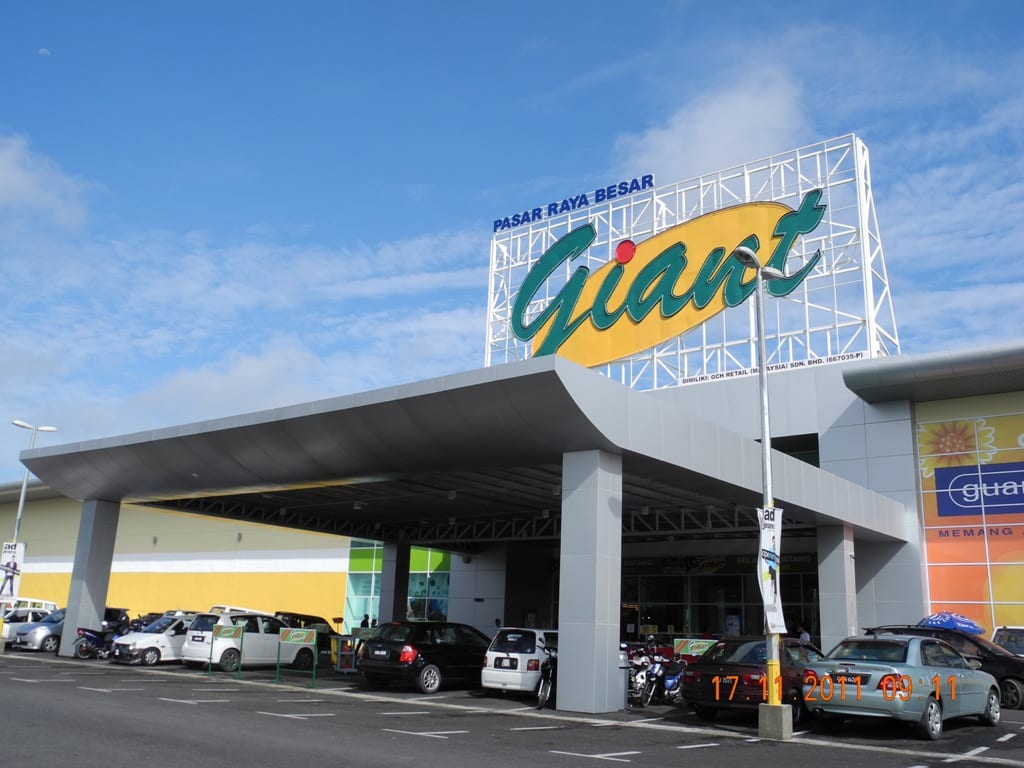
    The company said the Southeast Asian grocery store business – Cold Storage and Giant stores in Singapore and Malaysia – is expected to continue for the remainder of the year with the group’s full year results expected to be impacted by increasing costs from ongoing investment in technology, supply chain infrastructure, stores and people in order to improve the long-term performance of the business. Sales and profits fell in its supermarkets in both countries. Falling sales in Indonesia were mitigated by management action which resulted in reduced losses there.

    In North Asia, sales from the food businesses were slightly ahead of the same period last year, but profits were lower as a result of weakening margins and continued cost pressures, particularly from increased rents.

    However, the health and beauty businesses in Hong Kong and Macau (Guardian stores) delivered “strong sales and profit growth”.

    The Philippines food business showed good sales growth, benefitting from the opening of several new stores, but profit was slightly behind the prior year due to increased operating costs. There was continuing good sales and profit improvement in the group’s health and beauty businesses, notably in Malaysia and Indonesia.

    Ikea’s sales and profits were ahead of last year in Taiwan and Indonesia. In Hong Kong, sales were higher, supported by the new store which opened last year; however profits were lower as a result of higher operating costs.

    In Hong Kong, Maxim’s delivered another record-breaking mooncake sales performance during Mid-Autumn Festival, which was earlier than last year, and helped drive sales and profit higher during the period. Supermarket Yonghui reported strong sales growth in the quarter but profit was lower than the prior year due to investment in new formats and the additional costs of the new employee incentive scheme.

    Approval was received from the Philippines Competition Commission in August for the combination of Dairy Farm’s Food business in the Philippines with Robinsons Retail Holdings, with completion expected to take place within weeks.

    In early October Dairy Farm agreed to acquire the remaining 51 per cent interest in Rose Pharmacy in the Philippines, which is now subject to regulatory approvals.

    Dairy Farm, together with its associates and joint ventures, operate more than 7400 outlets, including supermarkets, hypermarkets, convenience stores, health and beauty stores, home furnishings stores and restaurants – employing more than 200,000 people. Total sales last year exceeded US$21 billion.

  • Pepsi India betting big on digitisation for growth; to connect 10 million retailers

    Pepsi India betting big on digitisation for growth; to connect 10 million retailers

    Food and beverages major PepsiCo India is betting on digitisation as a big growth opportunity and is looking at using technology in both backward and forward integration. According to a report: The maker of Lay’s, Kurkure and many a cola brand, including Pepsi, said it is working on a project to digitally connect about 10 million retailers along with about 600 million consumers, with the supplier.

    Ahmed El Sheikh, President and Chief Executive Officer, PepsiCo India, said that the company has just finalised a project which is digitising the total supply chain within PepsiCo India, end-to-end.

    “We are working on another project to digitise our connection with farmers. We are talking about thousands of farmers where we want to be connected with the crops in the field, getting certain parameters measured and taking corrective action against it through digital solutions.

    “We are using digital in backward integration of supply chain network,” he said.

    Sheikh said the company is making technology as the cornerstone and building the business around it.

    “We are looking at how technology is going to reshape India and I think this is one of the key enablers to unleash the potential of our business in the country,” he said.

    The company, which reported profit in 2017-18, after a gap of seven years, is bullish on the prospects in the country and is rolling out the first river shipment of its snack portfolio from Kolkata to Varanasi.

    “We are going to start the first river shipment this month, from Kolkata to Varanasi. This is based on GST, which we are leveraging. We are starting a pilot with the Government.

    “It is the first containerised movement on inland waterway on river Ganga,” he said.

    Sheikh, PepsiCo India’s first expat president, further said the company, which has been in the country since 1989, isseeing healthy growth coming out of India, which is well balanced between food and beverage, while the nutrition segment comprising Quaker Oats and Tropicana, is growing faster albeit on a lower base.

    “We need to be positive growth driver for PepsiCo, but that growth needs to be sustainable and responsible,” he said.

    He added that the water and juice segment outgrows the soft drink segment in India, and the company is counting on being glocal to succeed in the food segment.