Retail News CRM

Tag: fmcg

  • Profits down at Vietnam’s largest brewer

    Profits down at Vietnam’s largest brewer

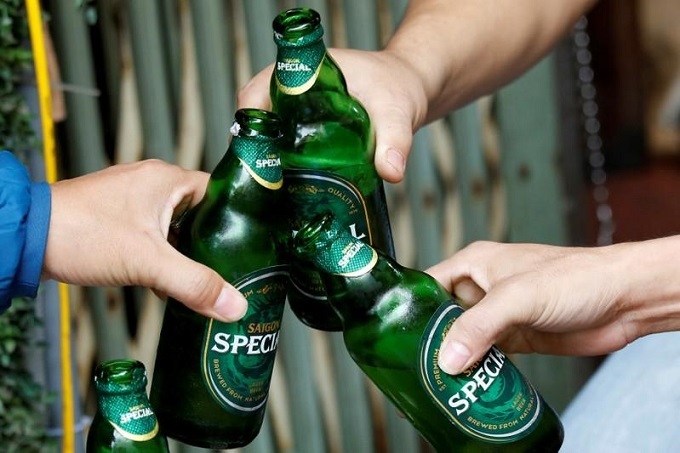
    Beer maker Sabeco has reported after tax profits of $149 million in Jan-Sept 2018, down 6 percent year-on-year. The company’s total revenue in the first nine months of the year was VND25.5 trillion ($1.1 billion), 70 percent of its annual target.

    According to the company’s third quarter financial report Sabeco, formally known as Saigon Beer Alcohol Beverage Corp, beer continued to dominate its revenue structure, netting over 85 percent of total income. The remaining revenue came from packaging, other beverages and spirits.

    Sabeco recently unveiled a restructuring plan to improve profit margins by 3-4 percentage points over the next few years.

    The company plans to adjust its business operations in five key segments: manufacturing, distribution, marketing, supply chain and storage. This plan involves the leading beer maker in Vietnam considering acquiring minority stakes in beer factories and distribution units.

    The company’s management board has also announced that one of its top priorities is to develop a better distribution system in major cities, especially in HCM City. Through this, Sabeco hopes to regain market share in urban areas currently dominated by Heineken.

    According to the Ho Chi Minh City Securities Corporation, Sabeco occupies approximately 42.8 percent of the domestic beer market. Due to increasing competition from multinational companies, this figure is down slightly from 43.6 percent in the previous year. As a result, consumption growth of Sabeco’s beer was less than the industry average, totalling 1.85 billion litres.

    The corporation estimates that by the end of 2019, Sabeco’s beer market share will increase slightly to 43 percent thanks to its marketing efforts and the launch of new products. Consumption of Sabeco-made beer is also expected to increase to 1.95 billion liters.

    Thai Beverage PCL (ThaiBev) is currently the dominant shareholder in Sabeco, which sells popular beer brands kike Saigon Beer and 333.

  • India’s FMCG sector may grow 12-13% over July-December

    India’s FMCG sector may grow 12-13% over July-December

    India’s fast-moving consumer goods industry is expected to grow at 12-13 percent in the July to December period, according to Nielsen India.

    The rationale behind a double-digit growth forecast is strength in the GDP, a boost in rural income, the uptrend in private consumption and an increase in consumer confidence.

    The research agency said the FMCG  industry grew at 11 percent in value terms in the April-June quarter on the back of better consumer off-take, rate cuts due to the implementation of GST (Goods and Services Tax) and also a low base. 

    According to Nielsen India, in volume terms, the industry grew at 8 percent.

    The research agency pointed out that during the April- June quarter retail stocks jumped to levels higher than the pre-demonetisation period.

    Also, modern trade channels have witnessed a bounce- back and the sector saw 10 percent of sale come from this channel. 

    This is the first time that modern trade contribution has entered into double-digits, Sameer Shukla, Executive Director at Nielsen India said. 

    The company witnessed stress in rural FMCG consumption around demonetisation and before the rollout of GST. As a result, growth in rural markets came down to be at par with urban growth in the months following demonetisation.

    In the personal care space, the natural trend continues to gain traction and is growing three times the pace compared to the non-natural segment. 

    However, the foods category witnessed growth higher than personal care and home care due to consumers opting for branded foods over unbranded. The main reason for it being that price gap between branded and unbranded has narrowed considerably post the implementation of GST.

    An analysis of the fastest growing FMCG manufacturers in India suggests that domestic companies performed better than the MNCs in recent years.

  • FMCG sales slightly up in urban Vietnam

    FMCG sales slightly up in urban Vietnam

    National sales of FMCG on traditional and modern trade channels in urban areas reached $14 billion in Q2, growing 0.7 percent, Nielsen reported.

    The fast-moving consumer goods growth year-on-year was driven by sales increases seen across six out of seven super categories: beverages (including beer), milk and dairy products, household care products, personal care products, baby care products, and cigarettes.

    Baby care witnessed the biggest jump to 12 percent while food showed a decline of 1.9 percent, according to the market research firm’s newly-released Market Pulse Quarter 2 report.

    “FMCG has yet to reflect an upturn in economic conditions while Vietnam’s GDP growth hit 7.1 percent in the first half of 2018,” Nguyen Anh Dung, executive director of Nielsen Vietnam’s retail measurement services division, said.

    But there were many growth pockets, with modern trade channels seeing double-digit growth, he noted.

    Semi-retail channels comprising stores with both wholesale and retail sales also saw strong growth.

    Overall, the modern distribution channel enjoyed growth of 11.9 percent while the traditional channel was sluggish. Sales through traditional channels in urban areas rose 1.2 percent while in rural areas there was a drop of 2.4 percent.

    Dung said seasonality could provide an opportunity for certain categories such as snacks, dairy, beverages, and confectionary to innovate and connect with consumers in novel ways.

    “FMCG products have become basic while other products provide more excitement with innovation and new customer experiences. Consumers are willing to loosen their purse strings as reflected in strong growth in entertainment, tourism, cellphone, and automotive sales.”

    It is time for manufacturers to bring excitement back to the FMCG industry, and the most important thing is to listen to consumers and put them at the center of all decisions they make, he said.

    They provide the key growth cues if manufacturers can satisfy their needs, he added.

  • Acquisition threat real for Vietnam FMCG brands

    Acquisition threat real for Vietnam FMCG brands

    The Sa Giang Import and Export Joint Stock Company has reported a net profit of VNĐ30.5 billion ($1.34 million) on a turnover of VNĐ290.7 billion (US$12.8 million) last year.

    They were almost 4 per cent and 11 per cent up respectively.

    For Sagrimexco, as the company is known, the biggest earner was bánh phồng tôm (shrimp crackers).

    The Sài Gòn Food Joint Stock Company (Sài Gòn Food) also achieved positive business results with domestic sales soaring by 30 per cent.

    Hotpot was its main product.

    Sagrimexco and Sài Gòn Food are among many domestic companies that are leading the Vietnamese fast moving consumer goods (FMCG) market.

    Reports released recently by market analysis firms also show that in the FMCG sector, Vietnamese brands hold the upper hand over their rivals from multinational corporations in both rural and urban markets.

    Kantar Worldpanel’s Asia Brand Power report released on January 15 said in rural areas, Vietnamese brands hold a 78 per cent market share. In large cities, the figure is 71 per cent.

    Kantar Worldpanel’s David Anjoubault said the strengths of Vietnamese brands lie in good understanding of local markets and distribution networks.

    The success is also attributed to their close co-operation with retailers.

    After analysing the four largest market segments — food, beverages, home care and personal care products — Nielsen came to the conclusion that Vietnamese manufacturers earned 42 per cent of the FMCG sector’s total revenues.

    In the food and beverage segments, Vietnamese enterprises have a market share of 69 per cent and 45 per cent respectively. In the home care and personal care segments, multinational brands have advantages, but their growth rates are lower than those of domestic ones.

    Analysts said Vietnamese brands’ domination is easy to understand since they possess many advantages.

    Their quality has improved recently and their prices have become more competitive while they have always had large distribution networks that take them to consumers in the remotest areas.

    More and more modern retail chains are also becoming distributors for local FCMG manufacturers, thus actively helping them expand their market share.
    Besides a good understanding of consumers’ customs and tastes, the local players also understand the importance of investing in technology and being flexible, all of which have helped them quickly capture the imagination of the fickle modern consumer.

    With the current low consumption level in the Vietnamese market, the FCMG sector still offers huge prospects to investors.
    Many analysts fear however that their impressive achievements have put many local FMCG enterprises on the radar of foreign investors, who could easily buy them lock, stock and barrel.

    For instance, in just the last seven months South Korean conglomerate CJ Corp acquired over 70 per cent shares of food processor Cầu Tre Foods and 100 per cent of kimchi distributor Ong Kim.

    In March last year it had shelled out $13.44 million to acquire a controlling interest in Minh Đạt Food.

    CJ also bought a 4 per cent stake in Việt Nam’s leading meat processor, Vissan, when the State giant held an IPO in March 2016.

    To help ward off predatory foreign investors while not violating the country’s World Trade Organsiation commitments, the analysts said the Government should have practical support policies.

    They also stressed the need to simplify administrative procedures to create a fair and healthy competitive environment and help enterprises cut down unnecessary costs.

    In the meantime, the Government should create conditions that enable local FMCG businesses to access loans with preferential interest rates.

    Bank loans remain out of agricultural businesses’ reach

    According to the State Bank of Việt Nam (SBV)’s credit department, as of June 2016 bank loans outstanding to the agricultural sector had been worth over VNĐ1.1 quadrillion (US$48.5 billion), accounting for nearly 20 per cent of the total loans outstanding.

    Loans from Agribank alone made up almost 50 per cent of the total, with the remaining banks accounting for only VNĐ500 trillion ($22.03 billion).

    But a study by the Ministry of Agriculture and Rural Development (MARD) found that 70.1 per cent of enterprises involved in agriculture have faced difficulties in getting bank loans, with 49.4 per cent unable to borrow at all.

    Why do companies in the farm sector find it difficult to get bank loans?

    According to some businesses, the process of borrowing capital from banks remains very complicated with many stringent requirements, one of which is that borrowers have to put up assets for collateral.

    An SBV official said many agricultural enterprises are unable to borrow because of this requirement since they do not have assets.

    Though the central bank has instructed banks to offer unsecured loans to agricultural businesses, they still make up of only 20 per cent of the outstanding loans to this sector, he said.

    Analysts said banks remain apprehensive about lending without collateral despite the Government’s many support policies.

    For instance, it issued Decision No.68/2013/QĐ-TTg on fully subsidising interest on loans for buying machinery and equipment to reduce agricultural losses.

    But a banker revealed that the central bank is tardy in paying the interest subsidies.

    Agricultural companies said the biggest problem for them in getting bank loans are the interest rates.

    Though the rates for loans to agricultural projects with high feasibility are only 6-6.5 per cent, even these are too high for them because the profitability of these projects is very modest, they said.

    Concurring with this, analysts suggested the Government should continue to slash interest rates and bring them down to 3.5-4 per cent.

    MARD has proposed some measures in a draft decree to be submitted to the Government for approval to resolve collateral-related problems for agricultural enterprises and improve their access to bank loans.

    The decree also includes interest rate support policies for them, one of which is that the rates should be 1.5-2.5 per cent lower than for other sectors.

    The Government would bridge the difference in interest rates.

    Analysts said it is imperative to lower interest rates for enterprises involved in agriculture and industry, thus attracting more investors to these sectors.

     

  • The five pitfalls that threaten FMCG brand growth in the SEA

    The five pitfalls that threaten FMCG brand growth in the SEA

    Asia’s developing markets are some of the most promising places on Earth to sell fast-moving consumer goods (FMCG).

    They can also be a place to fail fast: The rules of the game are changing at an ever-increasing pace, and many multinational and local brands are struggling to keep up.

    According to new analysis from Bain & Company, Turbocharging Consumer Products in Developing Asia, despite developing Asia’s massive opportunities, fewer than 20 percent of brands outgrow their categories in this region—roughly the same proportion as in low-growth developed markets. To successfully compete in these markets, brands need to push themselves more than ever to swiftly and continuously adapt to the new realities.

    Accelerating market changes, combined with a few basic challenges, serve as obstacles for brands aiming to achieve sustainable growth in developing Asia. Consumers in the region are increasingly willing to pay for convenience, and they are more digitally connected than ever.

    Each of these shifts has caused an accompanying change in retailing. For example, throughout developing Asia, consumers now make fewer trips to larger stores, instead flocking to convenience stores. Further, the steady rise in digital connectivity is fueling a boom in online sales and transforming the way brands talk to consumers to influence purchase decisions.

    Several fundamental factors have also made it tough for brands in developing Asia.

    Because the region’s distribution channels are highly fragmented, it is harder to gain household penetration, the most important contributor to brand growth. Another new complication for companies trying to plot a winning strategy is bifurcated demand. In the last 20 years, most value growth came from the “belly” of the market. Now the middle is shrinking, while a category’s premium and discount ends grow faster.

    “Fundamental consumer shifts in developing Asia have accelerated in the past few years, making it tougher for brands to survive and win in a region that remains critical for multinationals,” said Paolo Misurale, Partner and head of Bain & Company’s SEA consumer products practice. “All of this is altering the rules of the game for consumer products companies, requiring them to rethink their strategies from ‘where to play’ to ‘how to win’. Then they need to deliver the change, building new capabilities and forging alignment across stakeholders and functions. Those that fail to adapt – even large and establish brands – will be left gasping for air.”

    Amid these challenges, nimble local players manage to gain traction by revising their playbooks to new market realities. Developing Asia also offers huge opportunities for incumbents (whether local or multinational) that are able to adapt quickly and use their scale advantages to both capitalize on these emerging trends and further consolidate their competitive positions. Yet, even with the best plans, too many brands in the region get tripped up by predictable hazards.

    Through its extensive work with multinational, national and local brands across Asia’s developing markets, Bain has identified five common pitfalls and ways to overcome them.

    Pitfall 1: Sailing with outdated maps

    Bain finds that too many brands in developing Asia underinvest when it comes to learning the basics to support that big decision. They also fail to understand other essential elements of their category rules, such as whether the category is more repertoire or less repertoire. Successful companies know where they fit in, and then determine where and how to compete. They set growth initiatives that are consistent with category fundamentals and then translate those initiatives to operational metrics to track progress and capture value.

    Pitfall 2: Saying it wrong

    In developing Asia, it is easy to get brand messaging wrong. The goal is to anchor a brand (or a brand story) in consumers’ long-term memories. However, many brands have a relatively short history in these markets, and haven’t yet established and reinforced the kinds of memory structures that have worked so well for them in the developed world. Winning companies overcome this pitfall by understanding the guiding principles for building high-quality brand memorability.

    Pitfall 3: Succumbing to the lure of the new and different

    Traditional trade still abounds in developing Asia, and convenience stores are gaining in popularity. Both small formats offer limited shelf space. Yet, Bain finds that many brands are unwilling to reduce their product assortments (or tailor their ranges to unique channel needs) in order to focus on the proven and profitable hero SKUs with the highest velocity on the shelf, year after year. Winners invest to understand their heroes by brand and SKU, determining the value propositions they present over non-heroes. Then they look for the gaps in their current assortments, ultimately creating portfolio and investment strategies focused on the top sellers for target consumers and occasions.

    Pitfall 4: Losing at the first moment of truth

    Many brands, especially domestic brands selling in developing Asian markets, lack the abundance of data that allows for sophisticated account planning in developed markets. Without such data, FMCG players need to be as focused as they can on making their hero SKUs available and visible to fundamentally repertoire shoppers, while ensuring the retailer has incentives to push those SKUs. The most successful companies play by the real category rules: Solid consumer insights inform their priority in-store execution and activation moves. Winners are also clear about what matters most to increase sales on a channel-by-channel basis.

    Pitfall 5: Failing to build the right route to market

    In developing Asia’s fragmented retail environment, many brands fall short on their efforts to ensure that products get through the last mile and retain their ability to influence consumers’ decisions at the point of sale. The winners in this area are mostly “local champions” that use direct distribution (or a high-touch managed distribution model) in high-density areas, where modern trade is typically more established.

    At the same time, they build a multi-tiered distribution network and collaborate with hundreds of wholesalers in low-density rural areas, making the big trade-off between having influence over outlets and having penetration across outlets to maintain a sustainable cost to serve.

    “Brands can turbocharge their growth through a relentless focus on increasing penetration and consideration,” said Nader Stefano Elkhweet, Partner and head of Bain & Company’s Indonesian consumer products and retail practices. “This requires focusing on what shoppers actually do – as opposed to what they say they do in surveys – planning from the ‘shelf back’ to win the battle in stores, and relying heavily on advanced analytics tools to generate the insights that help brands make the smartest trade-off decisions.”

  • Vietnam’s fast moving consumer goods market ends 2016 on a high note

    Vietnam’s fast moving consumer goods market ends 2016 on a high note

    Fast moving consumer goods (FMCG) sales showed the best improvement in three years in the last quarter of 2016, with 7.3 percent growth against the same period last year, according to the latest Market Pulse quarterly report released by Nielsen on Thursday.

    “The build-up and positive sentiment towards the Tet period was one of the key drivers for FMCG growth,” said Nguyen Anh Dung, Nielsen Director of Retail Measurement Services.

    Beverages continued to be the key contributor to the total FMCG sales in the last quarter, accounting for 40 percent, followed by food and milk based products, which made up 15 percent each of the total.

    After being hit by a year of adverse weather conditions, growth in rural areas experienced a strong bounce-back from October-December with a 7 percent on-year jump, contributing 51 percent to total FMCG sales nationwide.

    “Rural areas are still the biggest consumer base and these consumers have increasing incomes that give them higher spending power,” Dung said.

    The Market Pulse Report is published quarterly based on the results of a Nielsen Retail Measurement study of FMCG in six cities across the country: Hanoi, Ho Chi Minh City, Hai Phong, Can Tho, Nha Trang and Da Nang.

    Fast-moving consumer goods refers to products that are sold quickly and at a relatively low cost.

  • ‘Astonishing growth’ for Chinese FMCG market

    ‘Astonishing growth’ for Chinese FMCG market

    The Chinese FMCG market online has shown “astonishing growth” according to a report by global consulting firm OC&C Strategy Consultants.

    In 2010, the market was worth just US$1.4 billion – today it has exceeded $25.3 billion according to data from Euromonitor. It has far surpassed any other country in the world and is about twice as big as the US.

    But while large, FMCG still has a relatively lower online penetration than other categories in China, providing ample opportunities going forward especially given favourable tailwinds, believes OC&C.

    The report Bits & Bytes: FMCG’s shift to eCommerce in China aims to help FMCG brands understand eCommerce trends in China and thus to derive the best strategy for their target segments in the market.

    “The post-80s and 90s generation in China, who grew up with the internet, are coming of age and entering the workforce, forming families and increasing their need for FMCG. It is unquestionable that they will become an important customer segment and driving overall growth of FMCG eCommerce,” comments the report.

    “Moreover, growth is not only coming from the younger generations. In fact, more people aged between 30 and 50 intend to devote more of their FMCG spending to online channels next six months (Figure 1), suggesting the universality of growth of FMCG eCommerce.

    Figure 1

    “Price and convenience related factors are consistently placed as the top reasons for buying FMCG online in China. Growing middle class want to save money on everyday consumables so they can use these savings towards a better lifestyle including for dining out or buying international fashion brands,” said Jack Chuang, Hong Kong-based partner, Greater China, OC&C Strategy Consultants.

    He says consumers’ need for convenience is fuelling the demand to buy FMCG online anywhere, anytime.

    “All these are favourably fulfilled in China given the rapid development in infrastructure and logistics across the country, with leaps and bounds in both intra-country movement of goods as well as last-mile delivery to consumers. These make online shopping of FMCG easy, inexpensive and fast,” said Chuang.

    When respondents were asked to rate various eCommerce platforms based on their experience, Alibaba’s platforms were neither the most highly rated, nor are they frequently ranked among the top five across selected FMCG categories.

    Figure 2

    However, interestingly, when the survey asked about brand awareness and actual purchases, Tmall and Taobao, under Alibaba, received highest brand awareness and shopper penetration across the major FMCG categories explaining Alibaba’s dominating market share.

    Figure 3

    A third of survey respondents ranked ‘familiarity’ as being the key reason on why they rely so much on a particular online platform. Beyond benefiting from being an early entrant, Alibaba is also able to provide competitive prices, a convenient one-stop shopping destination, as well as a ubiquitous payment system.

    Figure 4

    “Online platforms in China are always fighting for customer traffic and market share, yet consumers often perceive buying on Alibaba a bargain, thanks to its promotions,” added Chuang. “Selling online in China is rewarding yet not easy. Brands can benefit and achieve their online objective through partnering with strategically-aligned platforms and by customising their offerings to cater to various needs of different market segments. In addition, brands need to figure out the level of control and capability which an online store demands, so as to determine whether to establish in-house operations or to rely solely on platforms. Choosing the right model and strategy can definitely make it much more effective.”

    Though Alibaba’s dominance remains undeniable, the online FMCG market is relatively more fragmented than retail in general. Alibaba commands a 52 per cent share in FMCG as compared to 70 per cent of the overall online retail market.

    “Just as you would not depend entirely on one particular store format (e.g. hypermarkets or mom-and-pop stores) as you formulate your offline channel strategy, the same applies to online whereby brands should leverage each platform’s unique strengths, be it its large traffic flow, strong authenticity and quality, more personalised customer service, etc.,” commented, Chuang.

    “At the same time, companies should treat eCommerce not only as a sales channel but also as a platform to build their brand. For example, premium players can build brand awareness to a wide audience by opening a flagship store, while other companies who lacks physical presence in China, can use cross-border platforms to ‘test the water’ prior to their full market entrance. They should also integrate offline and online channels to create a win-win proposition, either through leveraging existing offline infrastructures, such as distributor networks, to facilitate online sales; they may also consider using e-commerce to facilitate offline strategies,” concluded Chuang.

    The study canvassed 4600 respondents from 16 cities across China, looking into 13 selected sub-categories across infant milk formula, packaged food and soft drinks, alcoholic beverages, and beauty and personal care, from August to September 2016.

  • South Korea is world’s top online FMCG market

    South Korea is world’s top online FMCG market

    South Korea was the world’s top market for online grocery sales for the 12 months preceding June 2016.

    This was the conclusion from the third annual Future of e-Commerce in FMCG (Fast Moving Consumer Goods) study by Kantor WorldPanel, a firm that tracks consumer buying behavior worldwide.

    The report noted that sales of groceries through e-commerce platforms reached $48 billion in the 12 months to June 2016.

    E-commerce now accounts for 4.4% of all FMCG sales. However, despite the growth of e-commerce, the growth of the entire FMCG market was flat performance during the same period, increasing just 1.6%.

    “FMCG growth is slowing, but our data shows that people are looking for more convenience, which can be met by shopping online. Grocery e-commerce, although currently small, with only one in four people shopping online, is growing fast,” said Stéphane Roger, the global shopper and retail director at Kantar Worldpanel.

    “We forecast it will grow to 9% of the market and be worth $150 billion by 2025. With new entrants such as Amazon expanding rapidly, the industry is facing a shake-up,” he said.

    E-commerce growth is also unequal, differing from country to country. Although connectivity plays a part, it is not clear whether it is the primary reason for the growth.

    For example, while South Korea is the world’s largest online FMCG market by value share (16.6%), US consumers only bought 1.4% of groceries online.

    Meanwhile, China’s netizens are catching up. The report noted that the country saw the biggest growth in the last 12 months, 47% – to a value share of 4.2%.

    Meanwhile, Europeans have a relatively low adoption of e-commerce in all countries except the UK with 6.9% of the market and France which has 5.3%.

    According to Kantar WorldPanel, France is a relatively unique e-commerce market with their success with the Drive model, where online purchases are collected from the store.

    Other conclusions:

    • Online buyers tend to continue to keep buying online after their first purchase.
    • Online buyers are less impulsive, based on comparative research across UK, France and China.
    • 50% of FMCG purchases in China is on beauty.
    • Online buyers splurge more on a single visit online.
    • 55% of online shoppers tend to use the same shopping list for the next purchase.
  • A Leading Malaysian FMCG Distributor Chooses ORION ERP Suite from 3i Infotech

    A Leading Malaysian FMCG Distributor Chooses ORION ERP Suite from 3i Infotech

    Malaysian based Teik Senn (M) Sdn Bhd (TSM), a leading FMCG distributor, recently upgraded to ORION ERP Suite from 3i Infotech. The company was seeking a technology upgrade to support its business consolidation, and wanted a Cloud enabled application with real-time reports for better decision-making.

    With their distribution network spread across Malaysia and Thailand, the company required better visibility among the end users. ORION offered real-time management dashboards, such as Report Designer and Enterprise Content Search to enable TSM to stay updated as well as track the status of various departments & its processes.

    They reported several key benefits after the upgrade. Our client, Ms Chong Sok Chee said, “TSM wanted to move from a Client server setup to a Cloud enabled application. We also wanted a reporting system that enabled an end-user personalisation and customisation of views, along with real-time data for better decision-making. ORION from 3i infotech gave us an overview of the entire business through KPI management as well as a 360-degree view of products, customers and suppliers, thus providing us with user defined scheduled reports with active report designers.”

    As ORION was able to meet all of TSM’s requirements, Suryanarayan Kasichainula, EVP and Business Head (ERP) from 3i Infotech said, “The upgrade empowered TSM’s end users with real-time data to ensure better decision-making. Through this deal, which is the first for Warehouse Management, ORION is expanding its product portfolio further in the logistics space.”

  • Chinese language FMCG manufacturers dominate in China

    Chinese language FMCG manufacturers dominate in China

    In its newest annual research of China’s most chosen FMCG manufacturers, Kantar Worldpanel has revealed that all the prime 10 manufacturers have Chinese language origins.

    Grasp Kong leads the best way as probably the most profitable Chinese language FMCG model.

    The 2015 Model Footprint rating reveals the manufacturers which are being purchased by the most individuals most frequently in 35 nations, throughout the meals, beverage, well being and wonder and homecare sectors. It makes use of a metric referred to as Shopper Attain Factors which measures what number of households around the globe are shopping for a model (its penetration) and the way typically (the variety of occasions buyers purchase the model). Kantar Worldpanel says the methodology offers a real illustration of customer selection.

    CHINA FMCG BRANDS TABLE 1

    Grasp Kong, which heads the league in China, has seen its merchandise purchased a mean of eight.eight occasions a yr by 90.2 per cent of city Chinese language households. The in depth protection of the manufacturers has helped Grasp Kong to safe the highest spot within the rating for the third yr in a row. The highest three gamers, Grasp Kong, Yili and Mengniu, have been chosen by Chinese language consumers greater than 1 billion occasions final yr. Among the many prime 10 manufacturers, Shuanghui, Vibrant and Haday have superior within the rating.

    Rising stars

    Danone’s Mizone is the rating’s prime riser, rising its CRP by greater than 20 per cent yr on yr, including 7.9 million new households to its shopper base. With constant communication in recent times on day by day restoration, along with geographic and vary enlargement, Mizone emerged as the highest riser in 2014. It joins Bluemoon, Julebao, Sanquan and Area 7, as China’s prime 5 quickest rising manufacturers by CRP in 2014.