Tag: Fonterra

  • Fonterra to retain Australia business, shares long-term strategies

    Fonterra to retain Australia business, shares long-term strategies

    New Zealand dairy giant Fonterra has decided to retain full ownership of its Australian business after a 12-month review, with chief executive Miles Hurrell saying the Australian consumer brands are important in the company’s strategy of moving higher up the value chain.

    Fonterra’s Australian business includes consumer brands Western Star butter, Perfect Italiano, and Mainland cheese. It also operates the Bega cheese brand under a long-standing license arrangement even though Bega Cheese is a rival dairy and food company.

    Mr Hurrell said in an investor briefing on Thursday that Fonterra did not get to the point of putting a value on its Australian business in the review after deciding that retaining full ownership was the best way of driving future growth and value creation.

    “We can do that on our own,” he said. “We looked at a raft of options.”

    Fonterra, a co-operative which is owned by 10,000 farmer shareholders, began the review a year ago. Among the options was a potential public float of the business or a sale of a partial stake. Analysts suggested the IPO could have been worth between $1 billion and $1.2 billion.

    It still intends to make a capital return to its shareholders by 2024, but it may not be as high as the previously foreshadowed return of about $NZ1 billion ($585 million).

    Fonterra is selling its Chilean business Soprole after an ill-timed expansion and has redirected its focus to being a big exporter from NZ.

    Mr Hurrell said the Australian operations were an important part of the group’s overall consumer brands strategy as it sought to move higher up the value chain.

    “The business is going well, and it will play a key role in helping us reach our 2030 strategic targets,” he said.

    Fonterra on Thursday reported its full-year results for the 12 months ended July 31, with normalized net profit up 1 percent to $NZ591 million. Total revenues were up 11 percent to $NZ23.4 billion.

    Mr Hurrell said inflationary pressures curbed profits. Fonterra paid out a record milk price to its farmers of $NZ9.30 per kilogram of milk solids. He said $NZ13.7 billion was injected into the NZ economy from milk price payments.

    The company has made a farmgate milk price forecast for 2022-23 of $NZ8.50 to $NZ10, with a mid-point of $NZ9.25. Mr Hurrell said milk prices appeared to have stabilised for now. “We’ve seen a little bit of stability,” he said

    In 2001, Fonterra Australia and Bega Cheese signed a 25-year exclusive trademark licensing agreement. Fonterra was able to use Bega’s name on natural and processed cheddar cheese, string cheese and butter products sold in Australia. In return, it paid Bega Cheese royalties based on retail sales of these products.

    The licence’s initial term ends in May 2026, but Fonterra has the right to renew as long as it sticks by the contractual rights, which include elements such as managing the Bega Cheese brand responsibly.

    Rich Lister and iron ore billionaire Andrew Forrest’s private family investment unit Tattarang in late July lifted its stake in Vegemite owner Bega Cheese to 11.5 per cent after buying an additional $15 million of shares.
  • Fonterra takes first step into non-dairy products

    Fonterra takes first step into non-dairy products

    Fonterra said it had worked with DSM, a global nutrition and bioscience company, since 2019 to speed up the making of proteins with dairy-like properties using precision fermentation. The partnership had already created intellectual property and filed patents, the statement said.

    Jonathan Boswell, program leader for complementary Nutrition at Fonterra said the patents were confidential because they were not in the public domain yet. Dairy nutrition would remain Fonterra’s core strength, the company said.

    But the food preferences of some consumers were changing to non-animal products. New technologies had a place alongside dairy, the company said. There would be a role for both dairy and other sources of nutrition to feed the world’s growing population, the company said.

    Food scientist Anna Benny, who researched how precision fermentation would disrupt the dairy market, said most milk produced in New Zealand was dried to make whole milk powder. This was sold as a commodity and acted as an ingredient in everything from yoghurt drinks to ingredients in the medicine.

    Benny said the million-dollar question was what would happen to the milk price and to farmers when whole milk powder could be replaced by products made by using precision fermentation.

    “People are still investing in farms and [farm-related businesses] that will not pay back in the next seven to 10 years. All the signals we are getting from industry players and the government is that milk is selling well and that dairy farmers are propping up the economy. It will be catastrophic for the economy if milk powder fails,” Benny said.

    New Zealand’s current reliance on whole milk powder meant it was overexposed to such risks. There were not enough signals from the government and the industry that the dairy industry was at risk, Benny said.

    Once companies were able to copy whole milk powder through precision fermentation, could make it on a large scale, and its price was similar or lower than whole milk powder from dairy, then there would be a tipping point, Benny said.

    She said Fonterra’s partnership was similar to companies overseas.

    In the United States, Perfect Day, which manufactured animal-free dairy alternatives, was working with ADM, she said.

    Waikato dairy farmer Pete Morgan said at its core Fonterra was a food company. If it looked decades into the future, it would see precision fermentation was part of the answer to feeding a growing world population.

    “The answer isn’t an us dairy and them other technologies, the answer will come from everybody. A company with a long-term focus would have to look at such technologies,” Morgan said.

    Morgan said it was widely known that if the world was to have enough food to meet its nutritional requirements by 2050, the amount of food being produced would have to double.

    Milk was important as a raw product, but Fonterra was not just about milk but had expertise in food manufacturing, intellectual property, supply chains and customers, Morgan said.

    There would be farmers who struggled to understand why Fonterra made this move, he said, but he believed Fonterra had a long-term view.

    There was disruption coming to the dairy market, and it was better to head into that disruption with knowledge, than to wake up one day and have fallen behind, Morgan said.

  • Fonterra sells stakes in two Chinese farms

    Fonterra sells stakes in two Chinese farms

    Fonterra Co-Operative Group said today it will sell its stakes in two joint-venture farms in China’s Shandong province to Singapore-based AustAsia Investment Holdings for NZ$88 million (US$62 million).

    The sale comes amid a retreat by the world’s largest dairy exporter since 2019 from an ill-fated overseas expansion that drew sharp criticism from its 10,000-plus farmer-shareholders.

    Fonterra, which owns 51 percent of the two farms, said the sale is not subject to any regulatory approvals and is unconditional.

    AustAsia, 75 percent owned by Singaporean agri-food company Japfa, will buy the farms outright for US$115.5 million, with the difference being paid to Fonterra’s joint venture partner, the New Zealand co-operative said.

    “Greater China continues to be one of our most important strategic markets. We remain committed to our China business,” CEO Miles Hurrell said in a statement.

    The dairy giant in April sold two fully-owned farms in China to Inner Mongolia Youran Dairy for NZ$552 million.

  • Greater China drives profit growth for Fonterra

    Greater China drives profit growth for Fonterra

    Dairy giant Fonterra says a 61-per-cent boost in normalized profit for the nine months to April shows its restructuring program is paying dividends.

    The New Zealand-headquartered company recorded a net profit after tax of NZ$603 million, up 2 percent – or $587 million ‘normalized’ after extraordinary items were factored in.

    CEO Miles Hurrell said the company achieved higher margins and reduced its operating expenditure, despite the challenges of the Covid-19 pandemic, which remains very much part of life for the co-op’s employees and customers around the world.

    “It’s too easy to forget this if you’re sitting here in New Zealand – but today’s results show that despite these challenges we’ve lifted our financial performance. Over the last three months, we have also committed to getting out of coal by 2037 and made some promising progress in a trial using seaweed in cows’ feed to reduce emissions,” said Hurrell.

    Fonterra’s results illustrate the importance of Greater China to the company’s overall fortunes, delivering year-to-date EBIT up 30 percent year on year to $106 million.

    Foodservice continued to be the big driver behind the result, contributing $93 million of that growth. The year-to-date margin in China increased from 21.5 percent to 28.6 percent.

    In Asia Pacific, normalized EBIT of $224 million was down 10 percent, or by $24 million. Consumer sales improved by 29 percent and foodservice by 89 percent, offset by falling sales in the ingredients segment.

    And Africa, Middle East, and North America sector saw EBIT fall by 11 percent, or $40 million, to $322 million, largely due to lower Ingredients sales. Consumer and food service sales in those regions continued to perform well.

    Hurrell said Fonterra’s operating expenses were down by 5 percent year-to-date but the company will incur some additional expenditure in the final quarter to support its brands and product initiatives for the next year.

    Looking ahead, Hurrell says the improving global economic environment and strong demand for dairy – relative to supply – should lead to an increase in the Farmgate Milk Price range to its $8 projected midpoint.

    “Global demand for dairy, especially New Zealand dairy, is continuing to grow. China is leading the charge as its economy continues to recover strongly. Prompted by Covid-19, people are seeking the health benefits of milk and customers are wanting to secure their supply of New Zealand dairy products and ingredients,” he said.

    “Growth in global milk supply seems muted and the global supply of whole milk powder is looking constrained.

    “Based on these supply and demand dynamics, along with where the New Zealand dollar is sitting relative to the US dollar, we’re expecting whole milk prices to remain at current levels for the near future.”

    However, Hurrell flagged “a number of risks” including the unpredictable nature of the Covid-19 pandemic, the impacts of governments winding back their economic stimulus packages, foreign-exchange volatility, changes in the supply and demand patterns that can enter dairy markets when prices are high, and – as always – potential impacts of any geopolitical issues around the world.

  • Fonterra India appoints Ishmeet Singh CEO

    Fonterra India appoints Ishmeet Singh CEO

    Fonterra Future Dairy Pvt Ltd, a new joint venture between global dairy nutrition company Fonterra Co-operative Group and new age FMCG company Future Consumer Limited, announced the appointment of Ishmeet Singh as its CEO, effective from January 7, 2019.

    Singh, a seasoned leader with a proven track record of profitable growth and business expansion, joins the business to deliver its ambition to bring high value and innovative dairy products to Indian consumers.

    Singh was a member, Western Region Committee (WRC) of the American Chamber of Commerce. He is a physics graduate, and has a Master’s in Management Studies from Mumbai’s Sydenham Institute.

    Singh says, “Over the next seven years dairy consumption is set to increase by 82 billion litres – seven times the forecasted growth for China. I feel extremely privileged to be able to lead this new opportunity as we look to bring an enhanced dairy experience to Indian consumers. I firmly believe through Fonterra Future Dairy we have a huge opportunity to challenge and change the market, combining Fonterra’s global dairy innovation, manufacturing and nutrition expertise with Future Group’s leadership in retail and distribution expertise and infrastructure.”

    Leading the growth and expansion of some of the world’s largest, trusted flagship brands in the Indian market, is familiar territory to Singh, having worked over the last 25 years at top multinational and FMCG companies such as Mattel, Vodafone, Hindustan Unilever, and Coca-Cola.

    Most recently, he led the business at Mattel, largest toy manufacturer in the world, as its Country Manager for India and the SAARC region. Previously, he held the role of Business Head at Vodafone India for over 5 years, leading remarkable revenue growth and retail expansion in many circles including Mumbai and Maharashtra.

    Managing Director Future Consumer Limited and Board Member of Fonterra Future Dairy, Ashni Biyani says, “We’re delighted to have someone of Ishmeet’s calibre to lead the business. As a sales and marketing professional at heart, we see him being instrumental in helping us build a brand that Indians love.”

    Fonterra’s Managing Director of Sri Lanka and the Indian Subcontinent, Chairman of Fonterra Future Dairy, Sunil Sethi said, “As our exciting growth phase picks up steam, it is critical that people with the right experience, values and drive are in place to steer the business forward. We are in the process of putting together a first-class team to build a fantastic legacy for the business. Through the ambition we have set, we believe the learning experience and possibilities here at Fonterra Future Dairy are limitless. Ishmeet is a proven and highly accomplished professional with a passion for leading teams to transformative success and growth. With his vision and deep personal commitment to society, we are confident that he will bring immense value in delivering on our ambition.”

  • Fonterra launches new milk product with Hema Fresh

    Fonterra launches new milk product with Hema Fresh

    Hema Fresh is Alibaba’s new retail concept, which combines traditional shopping with a digital experience.

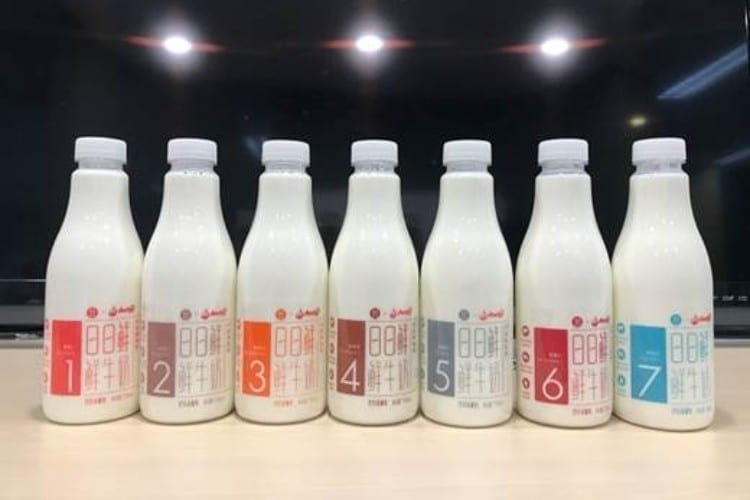
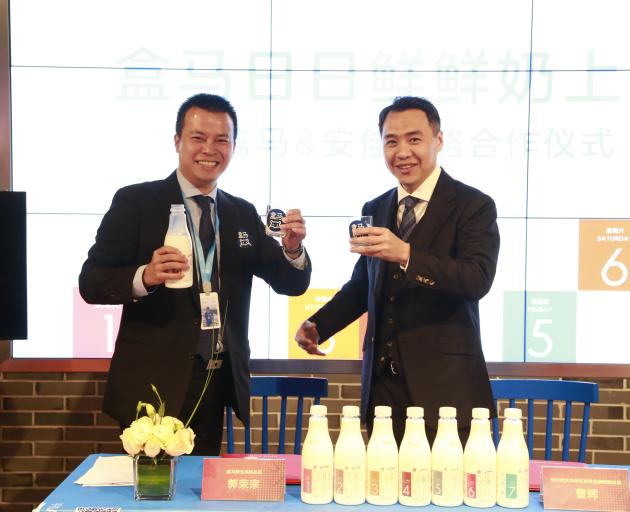
    The new ‘Daily Fresh’ milk range is now available in Hema’s 14 stores in Shanghai and Suzhou in 750ml bottles, sourced from Fonterra’s farm hub in Hebei province.

    The product has product labels to match each day of the week, which it says highlights and emphasizes freshness, with stock being replenished every night.

    Initial volumes are currently around three metric tonnes daily, with plans to scale-up over time and expand with the retailer as it grows its footprint of stores across China.

    Increased income

    President of Fonterra Greater China Christina Zhu said shoppers in China are becoming increasingly sophisticated in terms of their tastes and preferences, which are being driven by rising household incomes.

    “More than ever before, consumers are consciously seeking products that are fresh, nutritious and safe, and our new product for Hema caters to this,”​ Zhu said.

    According to figures from global management consulting company McKinsey, it is expected that more than 75% of China’s urban consumers will earn RMB 60,000 to 229,000 annually ($9,450 to $35,620) by 2022.

    This is up from just 4% in 2000, prompting a shift in consumer behavior and purchasing power.

    The Hema model

    Linked to this trend is the rise of Hema, which emerged in early 2016.

    The shopping experience at Hema is driven by a downloadable app, through which customers can scan barcodes to get information on the product.  Food can also be picked, cooked by staff, and eaten in store.

    The stores are also ‘fulfilment centers’ where customers can order online through the app, workers collect the items and they are delivered within 30 minutes within a 3km radius.

    Hema is also linked to payment options, and is a membership club: the app personalizes shopping for the consumer based on previous purchases.

    Other products

    In addition to the new fresh milk range, Anchor UHT milk products and the Anchor Dairy Foods range of butter, cream and cheese items are sold through Hema.

    The retailer is also a foodservice customer, using Fonterra’s Anchor Food Professionals products in its in-store bakery.

    Hema Fresh CEO and founder Hou Yi said the co-operation between the two companies is set to redefine the concept of fresh milk in the new retail era.

    Zhu says the new product highlights how Fonterra’s business in China is leveraging its local milk pool, spread across three farming hubs.

    “No other multinational dairy company in China has a local milk pool to draw from, so we are in an advantageous position,”​ said Zhu.

    “This milestone with Hema is a sign of things to come and indicates that our push to shift more of our local milk into higher-yielding consumer and foodservice products is well-and-truly under way.”​

    Reducing waste

    While replenishing stock on a daily basis has the potential to lead to waste as it is replaced daily, a Fonterra spokesperson told DairyReporter the volumes are initially quite small, and the whole model of Hema is that everything is fresh, so the company would rather run out than have stock left over.

    The spokesperson said, however, that sales have been going well, with the vast majority of bottles selling out each day.

    “For any that are left over, that’s where the uniqueness of the Hema model comes into play to keep waste at an absolute minimum​.

    “As well as being styled like a grocery store, Hema also has a range of bakderies and restaurants in-store which can utilize surplus product that doesn’t sell on the day.”​

  • Fonterra benefits from growing milk consumption

    Fonterra benefits from growing milk consumption

    Dairy giant Fonterra Brands Indonesia president director Achyut Kasireddy, New Zealand Prime Minister John Key and Trade Minister Todd McClay share a conversation during an event at Fonterra manufacturing plant in Cikarang, West Java, on Tuesday. Key will end on Wednesday his three-day visit to Indonesia, during which he has brought along dozens of executives from various New Zealand companies in an effort to strengthen economic ties and consolidate several investment opportunities.

    New Zealand dairy firm Fonterra Brands Indonesia has reaped benefits from Indonesia’s growing milk consumption, becoming New Zealand’s poster boy for success.

    The company, part of multinational dairy cooperative Fonterra, sees Indonesia as one of its priority markets, with huge promise amid dairy product demand growth.

    According to the Agriculture Ministry, annual household consumption of dairy products rose to 313 ounces per capita in 2014 from only 209 ounces in 2013.

    As demands grow, Fonterra Brands Indonesia president director Achyut Kasireddy said on Tuesday that it was focusing to fulfill the capacity of its plant to “cater to the demand of dairy products for the next three years”.

    It operates a Rp 340 billion (US$25.98 million)-worth plant in Cikarang, West Java. The plant commenced operations last September and is Fonterra’s biggest investment in Southeast Asia in the last decade.

    Utilization rate of the plant has hit 60 percent of its full potential to produce 16,000 tons of milk powder a year and up to 87,000 packages of dairy products a day. It markets several milk brands in Indonesia, including Anlene, Anchor Boneeto and Anmum.

    Kasireddy said Fonterra may expand its investment in the country should it utilize the plant well.

    It deems upcoming investment as important to accommodate changes in consumers’ taste and preference, resulting in different product types, such as powders, liquids and any other formats.

    “For the future, there may be other opportunities that we will seriously look at. There will be a new concept and they are all in the concept stage right now,” he said without going into details.

    He claimed that Fonterra Brands Indonesia had also substantially invested in training for farmers to boost their production. It imports around 75 percent of its ingredients for milk powder from New Zealand and hopes to leverage the farmers’ products in the future.

    “As we keep helping local dairy communities transform their farming and enhance their production, the country is going to have high quality milk produced locally that will be available for companies like us,” he said.

    New Zealand Prime Minister John Key said during his visit to the plant that the company could be at the forefront of the growing demand for dairy products in Asia.

    “These are markets where, inevitably, as the consumer base gets wealthier, demand grows not only for more protein but for more security and quality in its food. That’s where Fonterra fits in,” said Key in his speech.

    He said the plant was an example of how New Zealand and Indonesia could benefit from investment in the dairy industry.

    “This [Fonterra’s plant] is living proof of work by the New Zealand government to pave way for New Zealand companies to develop a footprint and grow New Zealand’s reach to the world,” Key said.

    Key was accompanied by New Zealand Trade Minister Todd McClay and a delegation of New Zealand businesspeople for the plant visit, which was part of his two-day visit to Indonesia. He met with President Joko “Jokowi” Widodo on Monday and discussed economic cooperation.