Tag: Forex

  • Factors to Consider When Choosing a Forex Cashback Affiliate Site

    Factors to Consider When Choosing a Forex Cashback Affiliate Site

    Forex cashback/rebate affiliate sites offer an opportunity for affiliates to earn recurring income by referring clients to the sites. But with dozens of platforms available, how do you pick the right one? This is because getting it right from the start is crucial, as it will ultimately determine your long-term success.

    FxCash is a leading Forex cashback affiliate site with a highly rewarding Forex trading affiliate program that most industry observers believe is among the best in Forex affiliate marketing. This is because FxCash has excelled in several areas, making it stand out.

    This article discusses some of these areas to help you know what to look at when choosing a Forex cashback affiliate site to work with.

    Reputation and Trust

    The credibility of a platform is a major factor that one has to take into consideration. To gauge whether a platform is reputable and trustworthy, look for independent user reviews in online trading forums, transparency on the platform’s background, and how long the company has been operational.

    Putting these into consideration will help you gauge how reliable a platform is.

    Broker Variety and Partnerships 

    A good platform will partner with a wide range of regulated and well-known Forex brokers. The more the brokers supported you, the more your earning potential as an affiliate. On broker variety, look for:

    • updated broker list with commission rates;
    • availability of tier-1 licensed brokers;
    • flexibility to work with different trading styles.

    FxCash works with a wide range of brokers, giving you more options to promote.

    Transparent Payout Structure 

    When choosing a Forex affiliate program, it’s important to work with a platform that’s transparent about how everything works. Look for one that clearly explains how commissions are split and how much goes to you as an affiliate and to the trader.

    Consistency and clarity are key when it comes to building long-term trust and income.

    User Interface and Trade Tracking 

    Opt for a platform that is user-friendly and with an easy-to-use dashboard where you can:

    • monitor your real-time commission earnings;
    • see the history of your transactions;
    • track sign-ups using your affiliate link.

    FxCash gives you access to real-time statistics and tracking tools to know how your campaigns are performing.

    Customer Support 

    Consider a platform with reliable customer support. Responsive customer support comes in handy to sort out issues satisfactorily whenever they arise. On the reliability of customer support, here’s what to look out for availability of several communication channels (live chat, email, or phone), being multilingual, and providing 24/7 availability.

    Reliable customer support can make a big difference in your experience, especially when dealing with payment issues, tracking referrals, or navigating the platform.

    Conclusion 

    Choosing the right Forex cashback affiliate site is more than just choosing one with the highest payout. You have to consider the platform’s reliability, broker variety, transparency, and customer support to gauge whether they will be the best fit for you. This is because getting the right affiliate site will make a huge difference in your income and long-term success.
  • VN-Index Opens Week on a Downturn Amid Market Uncertainties

    VN-Index Opens Week on a Downturn Amid Market Uncertainties

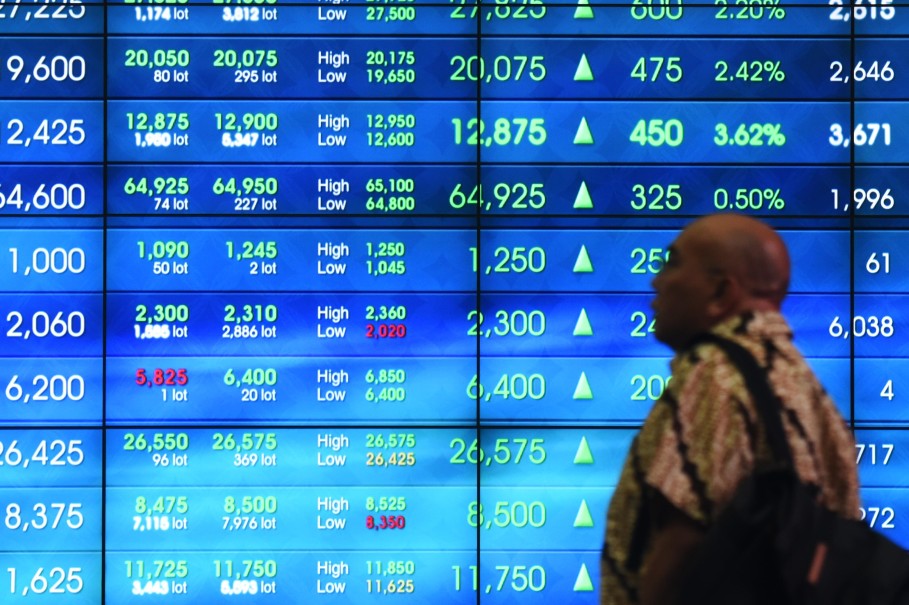
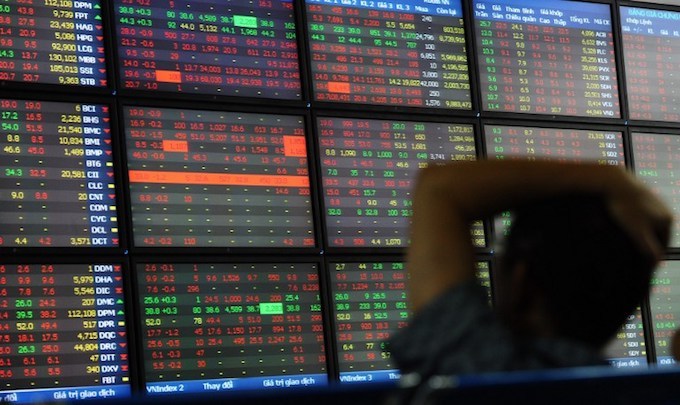
    Vietnam’s stock market kicked off the week on a down note, as the benchmark VN-Index dipped by 0.39%, closing at 1,296.29 points. This drop translates to a loss of 5.1 points, following a previous session where the index slipped 11.81 points.

    Trading Activity Picks Up

    Despite the decline in the index, trading on the Ho Chi Minh Stock Exchange surged by 8.16%, reaching a robust VND 22.39 trillion (approximately US$863.2 million). The VN-30 basket, which includes the 30 largest shares by market cap, presented a mixed bag—22 stocks experienced declines.

    Notably, shares of Fortune Vietnam Bank (LPB) fell by 3.8%, while FPT Corporation saw its stock price slip by 2.3%. Budget airline Vietjet (VJC) wasn’t spared either, closing down by 2.2%. On a brighter note, seven blue-chip stocks made gains, with Vingroup’s VIC reaching its ceiling price with a remarkable 7% increase. Other gainers included Vinhomes (VHM), which rose by 1.38%, and Vincom Retail (VRE), which inched up by 1.02%.

    Foreign Investor Trends

    In the realm of foreign investments, a net selling trend emerged, with foreign investors offloading shares worth VND 562 billion, primarily targeting VHM and Gelex Group’s GEX.

    Meanwhile, the Hanoi Stock Exchange’s HNX-Index, which covers mid and small-cap stocks, fell by 0.84%. In contrast, the UPCoM-Index, catering to Unlisted Public Companies, managed a slight uptick of 0.22%.

    As the market oscillates like a seesaw, it’s clear that volatility remains the name of the game!

    Questions & Answers

    What caused the VN-Index to decline on Monday?

    The VN-Index fell primarily due to losses in most of the large-cap stocks in the VN-30 basket, with significant declines from Fortune Vietnam Bank and FPT Corporation.

    How did trading volume change from the previous session?
    Trading activity ramped up by 8.16%, reaching VND 22.39 trillion, despite the overall decline in the VN-Index.

    What has been the trend among foreign investors?
    Foreign investors were net sellers, offloading VND 562 billion, mainly targeting the shares of VHM and GEX.

  • VN-Index starts week with a 0.4% drop

    VN-Index starts week with a 0.4% drop

    Vietnam’s benchmark VN-Index fell 0.40% to 1,274.77 points Monday.

    The index closed 5.14 points lower after dropping 21.60 points in the previous session.

    Trading on the Ho Chi Minh Stock Exchange decreased by 22% to VND22.990 trillion (US$903.2 million).

    The VN-30 basket, comprising the 30 largest capped stocks, saw 20 tickers fell.

    MSN of conglomerate Masan Group saw a 2.3% decline, BID of state-owned bank BIDV fell 2.1%, and VIB of private lender VIB closed 2.0% lower.

    Eight blue chips gained. SSB of lender SeABank went up 1.8%, followed by POW of electricity producer Petrovietnam Power Corporation with a 1.5% growth and HPG of steelmaker Hoa Phat Group, up 1.2%.

    Foreign investors were net seller to the tune of VND790 billion, mainly selling VHM of property giant Vinhomes and HPG of Hoa Phat Group.

    The HNX-Index for stocks on the Hanoi Stock Exchange, home to mid and small caps, fell 0.33%, while the UPCoM-Index for the Unlisted Public Companies Market went down 0.01%.

  • Malaysia’s Role in the Global Forex Market

    Malaysia’s Role in the Global Forex Market

    Discover how Malaysia is making vast changes in the currency market.

    Due to today’s technology, foreign exchange trading is now a global sensation available in almost every country.

    People worldwide participate in their local markets and shape the economy. One such example is Malaysia.

    But the Forex market is not only about currencies; people can trade in the price of oil, such as the XTIUSD pair, and much more.

    This article will cover how their action to, as Malaysians like to say it, convert matawang (currency) shapes the global market.

    How Does Malaysia’s Forex Market Look Like?

    All Forex markets have a regulatory system.

    Such is the case in Malaysia with their regulations. The regulatory system and a few other aspects mainly regulate the shape and growth of the market.

    Institutional Control

    Malaysia’s regulatory environment is primarily governed by Bank Negara Malaysia (BNM), the country’s central bank.

    BNM is critical in safeguarding the currency market’s stability and integrity. It creates regulations and standards and oversees the operations of Malaysian financial institutions and forex brokers.

    Regulatory Reforms that are Progressive

    In recent years, Malaysia has aggressively implemented regulatory changes to align its currency market with global norms.

    These changes include initiatives to increase transparency, risk management methods, and the efficiency of forex trading operations.

    Since its deregulation, retail traders and overseas investors have increased their engagement in Malaysia’s currency market.

    Currency Controls and Malaysian Ringgit Management

    The Malaysian Ringgit (MYR), the country’s currency, is closely monitored by Bank Negara Malaysia.

    It imposes currency restrictions and steps to manage Malaysian ringgit exchange rates, guaranteeing economic stability.

    The emphasis on MYR management impacts trading behavior in the forex market, making it critical for traders to monitor economic data and MYR-related policy moves regularly.

    Compliance with regulations and trader protection

    Malaysian regulations likewise promote trader protection. Forex brokers operating nationwide are subject to stringent compliance measures, such as capital adequacy and customer money segregation.

    These safeguards protect traders’ interests while lowering the possibility of fraudulent activity in the FX market.

    The Malaysian Ringgit in Forex

    As the foreign exchange market is mostly about currency, the Malaysian Ringgit is crucial to the functioning of the market.

    Let’s examine the key factors that make the MYR appealing to investors.

    MYR Exchange Rate Factors

    A complex interplay of economic, geopolitical, and market considerations impacts the exchange rate movements of the Malaysian Ringgit.

    Malaysia’s economic stability, trading links with neighboring nations, and volatility in global commodity prices impact MYR exchange rates.

    Furthermore, Malaysian political stability and more significant Southeast Asian economic trends might influence MYR performance in the FX market.

    To make sound judgments, traders interested in MYR currency pairings must be watchful and knowledgeable about these complex elements.

    MYR Trading Strategies

    Adopting appropriate trading methods is critical for traders hoping to capitalize on the MYR’s potential in their forex operations.

    The Malaysian Ringgit’s distinct qualities, response to specific economic indicators, and linkages with other currencies demand specialist methodologies.

    Some traders prefer MYR pairings because of their reduced volatility, while others take advantage of the currency’s sensitivity to commodities like palm oil and rubber.

    Understanding these subtleties and developing well-informed methods are critical for success when dealing with the Malaysian Ringgit in the volatile world of FX trading.

    Malaysian Forex Traders and Brokers

    The country’s impact on the world market is primarily due to its skilled forex traders and brokers.

    Although often underestimated, Malaysia’s FX market is quite developed and shines in the following aspects.

    Diverse Trading Community

    A diversified and active group of traders is at the core of Malaysia’s forex scene.

    Malaysian traders range from individual retail traders looking for opportunities in the foreign exchange market to institutional participants dealing with high quantities of currency trading.

    The variety has resulted in a thriving trading environment in which many methods, approaches, and tastes converge.

    Local and International Brokers

    Local brokers, often regulated by Malaysian authorities, provide traders with a thorough grasp of local market dynamics and MYR-related trading possibilities.

    On the other hand, international brokers provide a worldwide perspective by giving access to a broader selection of currency pairings, innovative trading platforms, and diversified financial instruments.

    Malaysian traders may choose from diverse brokerages, adapting their choices to their unique trading objectives and risk tolerances.

    Support and Education

    Brokers’ instructional offerings serve both newbie and seasoned Malaysian traders.

    These resources may include webinars, seminars, market research, and trading tools to help them improve their abilities and make better decisions.

    Many brokers also provide customer support in their native languages, offering accessibility and guidance for traders of various skill levels.

    Conclusion

    Malaysia’s impact on the global currency market is a testament to its evolution as a critical player in the ever-expanding world of forex trading.

    Through robust regulatory reforms, a focus on currency management, and a thriving community of traders and brokers, Malaysia has positioned itself as a noteworthy contributor to the global financial landscape.

    As the forex market continues to transcend, borders and technology facilitate broader participation, and Malaysia’s role underscores the interconnected nature of the financial world.

  • Ex-Credit Suisse Executive Joins Singapore Exchange

    Ex-Credit Suisse Executive Joins Singapore Exchange

    A former executive of Credit Suisse is said to be joining the Singapore Stock Exchange.

    William Gulya, Credit Suisse’s former head of Asia Pacific equity distribution, will join the Singapore Stock Exchange (SGX) Group to serve as the head of the Americas, according to a brief indication by him in a LinkedIn post on Wednesday.

    According to him, he left Credit Suisse on his own accord a couple of weeks ago and will join the exchange in mid-July. Gulya has also spent stints in senior positions at other banks, including executive director at JP Morgan and a director at Merill Lynch.

  • How To Become A Successful Trader And Make Money In The Forex Market

    How To Become A Successful Trader And Make Money In The Forex Market

    Forex trading is an exciting, interesting, and accessible way to earn money online, which opens a lot of opportunities for self-realization. But despite all the advantages, there is always a possibility to lose money. To help you avoid this, we wrote this article.

    Training

    Before you can become a professional trader, you need special training. Free courses will allow you to master the basic terminology, as well as get a general idea of how to become a trader in the stock market. You can also familiarize yourself with trading tutorials and expert advice from top market analysts. They are constantly improving their skills and communicating on various specialized forums, so they can provide you with useful information and market insights.

    The right daily routine is the key to successful trading

    The trader’s morning begins, unfortunately, not with coffee. For those focused on the U.S. market, trading is tied to North American Eastern Time (EST). Trade signals begin at 9:30 a.m. and traders need to get up at least an hour earlier in order to be up and running before trading begins.

    Preparation includes

    • Sketching out a daily trading plan
    • Checking your trading account balance to accurately assess the risks of each trade
    • Checking the economic calendar for daily analytics and market predictions
    • Make sure the trading platform is working without interruptions

    And so — the work begins

    Trading in the first hour after the official opening is very interesting for Forex traders due to the high volatility of the market. The market remains active until about noon (11:00-11:30 a.m. EST). From about that time onwards, volatility tends to decrease as lunchtime begins.

    As traders presumably begin to return from lunch and meetings, markets rise again and price movement comes to life. Traders take advantage of this second wave by looking for additional trading opportunities before the final close of the markets (4:00 p.m. EST).

    Fundamental and Technical Analysis

    The basis of successful trading in the Forex market is fundamental and technical analysis —  the first concerns the current situation assessment in the Forex market based on technical analysis, and the second – is the fundamental trends in the economy and world finance.

    • Fundamental analysis takes into account political attitudes in the behavior of states, the state of their economies in comparison with the economies of other countries, monetary policy, and the global conjuncture of world financial, stock, and commodity markets.
    • Technical analysis is based on the study of price index series, and supply and demand indicators for the past period and can be carried out on the basis of different methods: graphical and analytical.

    It is possible to find high-quality analytical reviews on the Forex market in a variety of places. However, you should refer to analytical articles only on time-tested resources, such as daily market analytics by FBS experts.

  • VN-Index gains with plunging trading value

    VN-Index gains with plunging trading value

    Vietnam’s benchmark VN-Index rose 0.93 percent to 1,353.77 points Wednesday but with trading value lowest in nine months as investors’ sentiment remain low after recent plunges. The index stayed in the red throughout the day but strong buying pressure in the last hour of trading pushed it up over 12 points.

    Together with the Tuesday session, VN-Index has risen nearly 43 points after losing 68 points on Monday in one of the worst trading sessions in Vietnam’s stock market history.

    Trading on the Ho Chi Minh Stock Exchange (HoSE), on which the index is based, fell nearly 31 percent to VND14.54 trillion ($633.09 million), lowest since the end of July.

    The VN30 basket, comprising the 30 largest capped stocks, saw 14 tickers gained, led by HPG of steelmaker Hoa Phat Group with a 3.2 percent rise.

    It was followed by STB of Ho Chi Minh City-based lender Sacombank, up 2.9 percent, and MSN of conglomerate Masan Group, up 2.6 percent.

    CTG of state-owned lender VietinBank rose 2.4 percent, and GVR of Vietnam Rubber Group gained 2.1 percent.

    Eleven blue chips fell, with VRE of retail real estate arm Vincom Retail falling 1.8 percent.

    FPT of IT giant FPT Corporation, VNM of dairy giant Vinamilk and VPB of private lender VPBank all fell 1.2 percent.

    Foreign investors were net sellers to the tune of VND261 billion, mainly selling VND of brokerage VNDirect and DXG of real estate developer Dat Xanh Group.

    The HNX-Index for stocks on the Hanoi Stock Exchange, home to mid and small caps, rose 3.45 percent while the UPCoM-Index for the Unlisted Public Companies Market gained 0.22 percent.

  • Market Optimism Driven Stock Prices to Recovery

    Market Optimism Driven Stock Prices to Recovery

    Forex trading plays a vital role in international trade and business as products and services purchased in diverse countries must be paid for in the same currency. The rate at which you exchange one currency for another is available in the foreign exchange rates between different currency pairs. As a result, the foreign currency market is one of the most heavily traded globally, with a daily average turnover of more than $5 trillion.

    Also, the FX market operates on a 24 hours schedule, from Sunday to Friday night, and can be influenced by the buy stop vs buy limit metrics. Individuals, firms, and organizations also regularly exchange a wide range of currencies to benefit from the rate swings and conduct international business.

    News retail highlights market optimism as another key stock driver and one largely leveraged by traders in analyzing and projecting possible market trends. Global financial markets are rising to new highs amid increasing optimism that Covid-19 vaccinations and stimulus measures will help the economy recover quickly from the pandemic’s second wave. The MSCI World Index, which tracks companies throughout the developed world, hit a new high of 639.33. This has been the case since the beginning of November, when various vaccination discoveries were first disclosed; the index has risen 16 percent, giving traders more hope for stabilized markets.

    Stocks in the Oil Industry are Falling, While Those in the Technology Industry are Rising.

    Investors have been keenly watching the geopolitical tension between Russia and Ukraine with bated breath. This is because stocks in the oil industry are falling while those in the technology industry are rising. Crude oil prices plummeted roughly 27% in a week after reaching 14-year highs boosted by the Russia-Ukraine conflict.

    The U.S. benchmark, West Texas Intermediate crude, concluded the day with a $96.44 per barrel on March 15, down 6.4 percent from the day before. Brent crude, the worldwide benchmark, finished the day at $99.91 a barrel, down 6.5 percent from the previous day. As a result, oil giants like Chevron Corp. CVX and Exxon Mobil Corp. XOM saw their stock prices plummet by 5.1 percent and 5.7 percent, respectively.

    As a result, technology stocks have recovered thanks to chipmakers’ assistance. The benchmark 10-year U.S. Treasury Note rate jumped 2.1 basis points to 2.16 percent, a 52-week high. Higher risk-free market interest rates are often harmful to growth stocks such as technology. Despite this, NVIDIA Corp. (NVDA) and Advanced Micro Devices Inc. (AMD) saw their stock prices rise by 7.7% and 6.9%, respectively.

    Importance of Technical Tools in Trade

    Traders need to understand technology tools that they can leverage for success leading to the obvious questions; what are the technical tools for traders’ success? What should it be? In addition to the technical tools, traders need to examine the positive relations between investor sentiment and stock market performance. For instance, investors analyzed the Federal Reserve’s latest monetary policy decision, which signaled the start of a series of interest rate hikes this year. In line with their projections, the central bank increased rates by 25 basis points, validating the positive relationship between traders’ optimism and the market rates.

    Take Profit and Stop Loss turns out to be one of the very important tools for traders who need to trade while focusing on other areas. It’s an optimal tool where you do not have the possibility of staying glued to their screens to appreciate the variations of the market. Trade Profit and Stop Loss have proved to be the tool for everyone, including newbies in the industry. This includes the new traders who don’t have the time to learn the forex nitty-gritty. The tool is also helping traders execute market orders with the best available market pricing. There are two common trips of orders that you at least need to understand as listed below:

    Market Order- Refers to the order by a trader to purchase or sell security instantly. The basis of a market order is to ensure that the order is executed but doesn’t cover the precise execution price. Its execution is close to the current bid, which can also be informed by the buyer’s offer price for a sell order and buy orders, respectively.

    Limit Order- Refers to a purchase or sale order for a specific price or better on security. A buying limit order is only filled if the price is below the limit, and a sell limit order is only filled if the price is above the limit. For instance, if an investor intends to buy shares of XYZ stock for no more than $20, then this amount could be specified in a limit order, which will only be executed if XYZ stock price is $20 or less.

    In the highly polarized international markets, it can be extremely risky for any trader to ignore the power of optimism. You, therefore, need to carefully study the markets leveraging the available technical tools while also observing what’s happening on the international front.


  • Another forex trading platform swindles hundreds of thousands of dollars

    Another forex trading platform swindles hundreds of thousands of dollars

    Yet another fraudulent foreign exchange trading platform that cheated people out of hundreds of thousands of dollars has been exposed in HCMC. Nga, a resident of HCMC’s District 7 spends most of her time these days reading updates about FXTradingMarkets in a Facebook group with 4,200 members.

    On June 25, the group received a screenshot of a notice believed to be from the Lion Group, which ran the platform, that it would cease to operate from the next day onwards. Nga has invested VND1.4 billion ($60,700) in the platform; and many others have also invested billions of dong. Now, they do not know how they can get back the money.

    A month earlier, the HCMC police had warned people not to trade on currency trading platforms, saying there was a high risk of losing their money. They had found that four people from the Lion Group were hosting forums in various places to talk about how to get rich quick.

    Since 2019, the group has been advertising FXTradingMarkets as a platform headquartered and licensed in the UK and linked to another platform called UKTrade.

    An investor had to deposit at least $1,000 and would get its equivalent in FXT, a cryptocurrency the platform uses to trade.

    Investors would bet on whether a currency would rise or fall within the next 30 seconds. If they were right, they got 95 percent of the bet as profit, but lose everything if they were wrong.

    However, the platform also advertised that everyone could earn one percent a day on their investment if they allowed “experts” to make the bet on their behalf.

    Investors also got a commission if they introduced new clients.

    At first, the investors could trade the FXT currency with their leader for cash, but starting at the end of February, the platform no longer allowed this trade, and investors had to trade in other cryptocurrency markets with a rate of 1 FXT equals $0.3, meaning a 70 percent loss.

    “When similar platforms crashed, we were concerned, but the managers told us not to worry,” Nga said.

    Many celebrities endorsed FXT and so investors continued to place their trust in it, she said.

    Earlier this month the platform posted a notice saying “upgrade ongoing” and did not allow investors to see their account balance. On June 25, when the leaders gave their final notice, 1 FXT was worth $0.0022.

    That means Nga’s investment of $60,000 was then worth only $133, or a 99.78 percent loss.

    The other platform UKTrade also crashed on June 26.

    Tam of Thu Duc District said he invested VND2.8 billion in UKTrade in April but “most of the money is now gone,” adding that thousands of investors lost 95 percent of their money on May 10.

    “Because of the pandemic, our experts were not able to analyze the market,” the leaders told investors, asking them to either pour more money in to recover the loss or be removed from the system.

    Tam and around 10 other investors joined together to report the platform to the police. Together, they have lost a total of VND6 billion.

    Vo Thi Dieu Hien in the central province of Binh Thuan in early May invested VND319 million, but in less than a week she saw all her cryptocurrency gone.

    The leaders asked her to submit another 30 percent of her capital to “save” her account and promised higher profits. She did not, and her account was locked right after.

    “That’s when I realized I was tricked, so I reported it so others won’t fall into the same trap.”

    HCMC and Binh Thuan police said they have received the reports and have done initial investigations. They found that FXTradingMarkets was registered and has servers in the U.S.

    There are signs that the administrators are setting up a new website with similar user interface and functions at sp500stock.com, the police said. The website was no longer available at the time of publishing.

    This is the latest of many of forex trading platform frauds that have been uncovered in Vietnam of late. Thousands of investors have been duped, even though authorities have repeatedly warned them that these platforms are illegal and highly risky.

  • UBS Pursued in Forex-Rigging

    UBS Pursued in Forex-Rigging

    The bank is part of a $1.24 billion lawsuit by investors who want damages back following a scandal over rigging currency exchange markets. It revives another scandal from UBS’ past.

    The Swiss-based bank is one of five major foreign exchange dealers hit by a 1 billion pounds ($1.24 billion) class-action lawsuit in London, according to Reuters. This revisits a $545 million fine UBS paid four years ago for its role in a global currency-rigging scheme.

    The lawsuit is an attempt to mimic U.S. class-action suits, where a group of people claiming damages are pooled into one legal process. It was filed against Goldman Sachs, HSBC, Barclays, J.P. Morgan, and the Swiss bank by an American law firm. A spokesman for UBS declined to comment.

    Last week, UBS flagged a potential class action in its quarterly report: Certain class members have excluded themselves from that [U.S. class action] settlement and have filed individual actions in US and English courts against UBS and other banks, alleging violations of U.S. and European competition laws and unjust enrichment, the bank said.

    UBS escaped relatively lightly in the U.S. settlement because it turned whistleblower and quickly cooperated with authorities and copped to a charge of wire fraud. The Swiss bank is still among the top-five dealers in global foreign exchange. The market is estimated at north of $5 trillion-a-day by the Bank for International Settlements.

  • BT connects world’s five top forex markets

    BT connects world’s five top forex markets

    BT is linking up the world’s five main foreign exchange locations to help boost the competitiveness of its global financial industry customers.

    The company is now offering BT Radianz FX express, which provides dedicated high-speed links between financial hubs in Singapore, Japan, Hong Kong, the UK and the US. The five hubs are involved in almost 77% of the world’s forex trading, according to the 2016 BIS Triennial Central Bank Survey.

    The new Radianz FX express service claims to offer low-latency and cost-effective, fully managed connectivity that will give traders faster access to market data across the five locations, while making it easier for them to execute trades.

    Radianz FX express links directly into the five key third-party global data centers in the forex trading world. These data centers were selected because each of the locations hosts the IT infrastructure of significant clusters of the forex trading community.

    “Foreign exchange is the largest asset class by value traded globally.  An average of US $5.1 trillion is traded on FX markets every day,” BT VP of global industry practices Hubertus von Roenne said.

    “We’ve created managed BT Radianz FX express routes to boost the competitiveness of our financial services customers. With dedicated links within and between the world’s five biggest FX trading locations, BT can help FX firms lower costs while creating opportunities for international growth.”

  • Nearly 70 million more shares listed on UpCoM

    Nearly 70 million more shares listed on UpCoM

    Unlisted Public Company Market (UPCoM) welcomed the listing of nearly 70 million shares of five companies on Monday, with share value registered for trading equal to VNĐ693.4 billion (US$31 million).

    The five companies are 36 Corporation (G36), Sài Gòn-Nghệ Tĩnh Bear Joint Stock Company (SB1), Hà Nội Water Manufacturing Joint Stock Company No 3 (NS3), Quảng Ngãi Water Supply Sewerage and Construction Joint Stock Company (QNW) and Bridge Joint Stock Company No 12-Cienco 1 (C12).

    Listings on UPCoM have witnessed a surge recently. On December 20, five companies were also listed on UPCoM, with total share value equal to VNĐ328.6 million.

    The market appeared to be more attractive to investors as many large companies had listed or planned to list on UPCoM, following the regulation that State-owned enterprises which were public companies must register for trading on UPCoM following equitisation, in case they did not meet requirements for listing on the official exchanges.

    UPCoM was founded in 2009 and currently more than 400 firms are listed on the market, with capitalisation value doubling the Hà Nội Stock Exchange.

    However, its trading value was modest at around one fourth of the northern bourse. More than 140 stocks did not see transactions conducted in the past one month, partly due to investors’ hesitancy over transparency.

  • Singapore’s retail forex market becomes overcrowded on back of many new entrants

    Singapore’s retail forex market becomes overcrowded on back of many new entrants

    The forex and contracts for difference (CFDs) market in Singapore is becoming increasingly overcrowded as a result of the inflow of new market participants in the recent past, citing a report by investment researcher Investment Trends. One in seven Singaporean forex traders placed in 2016  a trade through brokers that have only recently appeared to participate in the market, but most of these clients also operate accounts with local brokers as a risk mitigation measure.

    Despite the large number of new forex brokers, the market continues to be led by UK forex brokerages PhillipCapital, IG Group and CMC Markets. PhillipCapital is a strong market leader, while in the recent years the gap between IG Group, CMC Markets and Oanda has been shrinking.  In addition, Interactive Brokers also saw its market share growing in the past year.

    “The largest brokers are successfully maintaining their strong position in the market, and they are growing,” said Irene Guiamatsia, research director at Investment Trends, as cited by the media. “This is in line with the flight to quality that has been witnessed globally in the aftermath of the Swiss Franc crisis,” she added.

    The share of traders who switched from one forex/CFD broker to another halved to 7% from a year earlier. Oanda was ranked as the best broker based on clients’ overall satisfaction. CMC Markets was first in several categories – customer service, value for money, mobile platform, and education materials, while Saxo Capital Markets, part of Saxo Bank, was the broker with the highest customer rating in terms of offered platform features.

    “Increasing customer loyalty is the outcome of a combination of factors, and certainly a testament of high client satisfaction levels across the industry,” Guiamatsia said.

    The statistics shows that, since the witching activity in Singapore was very low, competition was predominantly for new traders. However, the total number of investors in Singapore who placed at least one trade in forex or CFDs in the past 12 months shrank to an estimated 22,300 from 24,500 in 2015.The decline comes from the CFD segment, since the forex segment managed to hold its own. One reason for the decline is the intense market volatility. Nearly half of the previously active traders did not place any trade over the course of the year, suggesting the level of volatility was too great for their appetite.

    Investment Trends’ report is based on the responses of more than 13,000 Singaporean investors from a survey conducted in August 2016.

    Singapore is one of the leading forex markets on a global scale. The country’s total turnover from forex and OTC derivatives trading jumped 35% on a tri-annual basis to $517 billion in April 2015, making it the third largest market after the UK and the US, according to data from the Bank for International Settlements (BIS).

  • IDX Suspends Bumi Citra Permai

    IDX Suspends Bumi Citra Permai

    The Indonesia Stock Exchange (IDX) has suspended the Bumi Citra Permai (BCIP) from trading because of significant, cumulative stock price declines.

    BCIP opened at Rp478 per share before plunging 46 bps (9.62%) to Rp432.

    “With regards to BCIP’s significant, cumulative price drops, the IDX deems it necessary to suspend the stock from being traded,” IDX head for transaction supervision Irvan Susandy said in an exposure on Friday, October 7.

    BCIP is not only suspended from trading in the regular market but also in the secondary market, starting today, October 7. The suspension is aimed at giving investors enough time to make thoughtful considerations in deciding what to do with their BCIP stocks.

    BCIP is an issuer engaged in the field of real estate, construction, trading, mining, services, transportation, publishing, and agriculture. The company’s main businesses are real-estate and water management, operated by subsidiary Milwater Pratama Mandiri.

    BCIP also has two real estate subsidiaries Millenium Power and Citra Permai Pesona.

  • Singtel full-year profit grows 2% despite forex hit

    Singtel full-year profit grows 2% despite forex hit

    Singtel has reported a 2% increase in net profit for the financial year ending in March to S$3.87 billion ($2.81 billion), despite negative foreign exchange movements.

    But operating revenue declined 1.5% to S$16.96 billion, the operator revealed. Excluding the impact of forex fluctuations, net profit would have grown 6% and operating revenue would have risen 4%.

    Earnings growth for the year was driven by a strong performance at Singtel’s regional mobile associates, particularly increased earnings from Indonesia’s Telkomsel. Pre-tax earnings contributions from these associates grew 5% to S$2.6 billion.

    For the fourth quarter, net profit was flat at S$946 million but would have grown 4% in constant currency terms. Regional associates’ pre-tax contribution grew 12%.

    “Mobile data was the bright spot. Our regional markets are now making their respective transitions from mobile telephony to mobile internet and harnessing the benefits of extensive investments in 3G and 4G networks and services,” Singtel Group CEO Chua Sock Koong commented.

    “We worked with our regional associates to navigate this shift from voice to data. In Singapore and Australia, our businesses were the first to launch innovative data add-on plans and zero-rated music services to meet customers’ increasing demands for OTT content services and data allowances, driving further data monetization.”

    Looking ahead to the current financial year, Singtel said that based on current economic forecasts, the operator expects to report a low single digit growth in consolidated revenue.