
Retail News CRM

Tag: freight

  • Is Amazon moving into the ocean freight business?

    Is Amazon moving into the ocean freight business?

    Amazon has garnered a lot of attention recently for its moves to muscle into nearly all miles of delivery, and this development shows it’s apparently willing to log nautical miles as well.

    An ocean freight forwarder organizes shipments from suppliers to far-flung receivers, which Flexport calls a $350 billion market. An entry into the ocean freight forwarding market could be significant because it could allow Chinese factories a more direct path to American consumers, Flexport CEO Ryan Petersen noted.

    In fact, while Amazon could smooth logistics or make them cheaper for its Marketplace sellers, those sellers aren’t likely to take Amazon up on that. That’s because they’re unlikely to be willing to give Amazon, a rival retailer, the kind of information that an ocean freight company would be privy to, Petersen said. And it’s likely that any full-blown development of Amazon’s ocean freight forwarding capabilities is still months, if not years, away.

    Still, the move could be a boon to Chinese sellers interested in reaching the American market as well as Amazon’s other markets globally, especially considering the expectation that Amazon would keep costs down.

    “I don’t think people realize how threatening this is for their U.S.-based merchants, who are making money selling goods from Chinese factories,” Petersen told Retail Dive. “It makes sense for Amazon, for a company so focused on driving down costs. But considering that 40% of their business comes from their Marketplace, it would have to be a graceful transition and managed really well.”

    The registration means that Amazon China can provide freight forwarding services to Chinese companies looking to move products directly into Fulfillment by Amazon warehouses, or “even cross-docking the goods for direct injection into Amazon’s courier network,” according to Petersen.

    While some may think that Amazon has Alibaba in its sights with such a move, Petersen believes it may, if anything, be an answer to Wish, a mobile e-commerce platform that has built much of its fortunes so far on bringing Chinese sellers to customers in the U.S. and elsewhere.

    “We think we’re going to be the second or third trillion-dollar-a-year marketplace,” Wish CEO Peter Szulczewsk. “We think Alibaba will be first and then it’s either us or potentially Amazon depending on how quickly, or if, they win in India.”

    Taking on the ocean freight market “to create a streamlined, vertically-integrated system for Chinese factories to sell directly through Amazon would be a classic Bezos response to Wish’s threat,” Petersen said, predicting that “Amazon’s ocean freight offering could be a huge hit for Chinese merchants.
  • Domestic airfreight industry hits turbulence

    Domestic airfreight industry hits turbulence

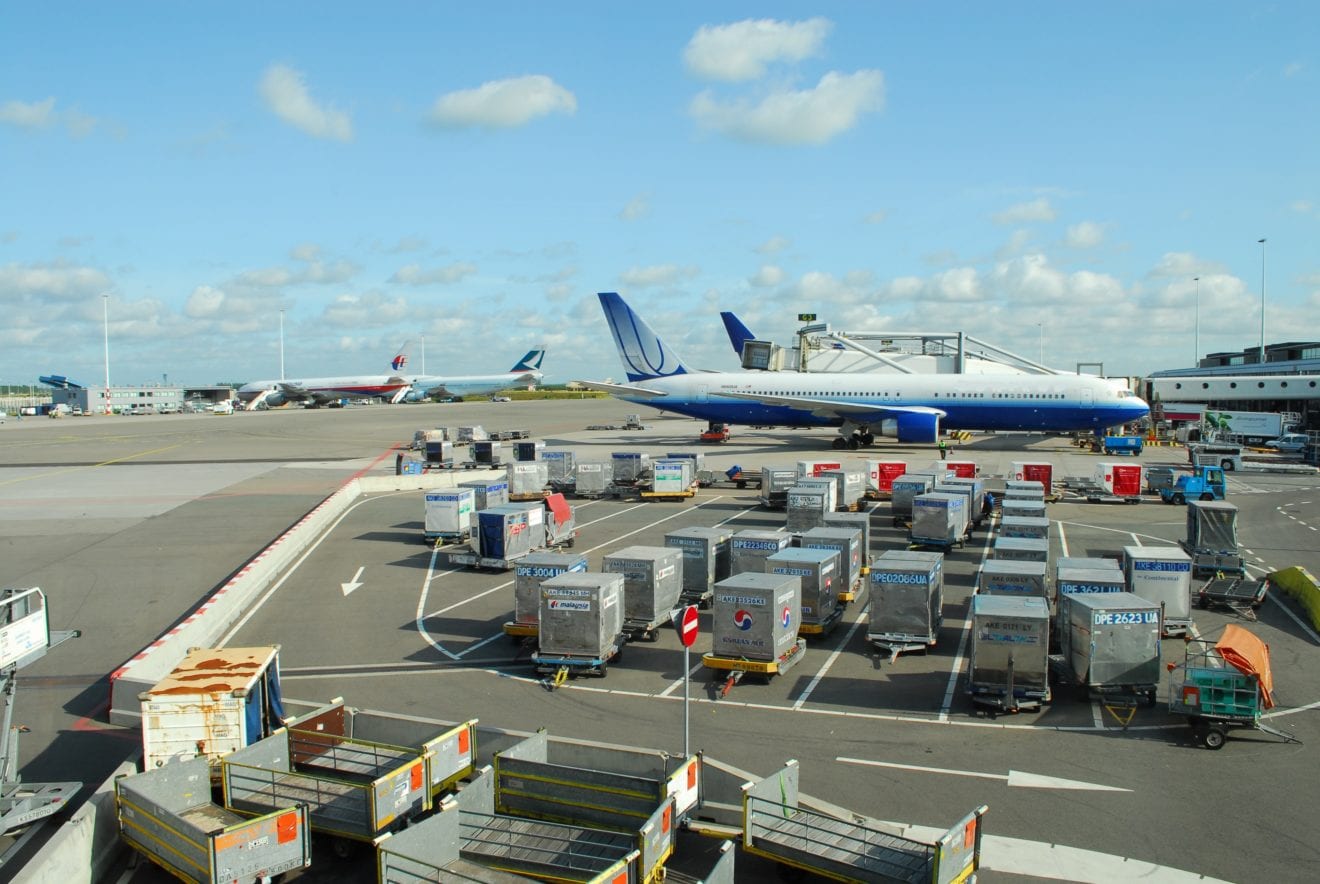
    The country’s airfreight services industry will likely flat line this year amid the domestic economic slowdown, which has affected exports and imports, an industry group has said.

    The International Air Transport Association (IATA) released data recently saying that the global airfreight market remains slow with respect to air cargo demand in June.

    “The mid-year report for air cargo is not encouraging. With growth of just 1.2 percent compared to June of last year, markets are basically stagnating. But overall it has been a disappointing first half of 2015, especially considering the strong finish to 2014,” IATA’s director general and CEO Tony Tyler said in a statement.

    “The remainder of the year holds mixed signals. The general expectation is for an acceleration of economic growth, but business confidence and export orders look weak. Air cargo and the global economy will all benefit if governments can successfully focus on stabilizing growth and stimulating trade by removing barriers,” he said.

    According to the report, Asia-Pacific carriers saw a drop in freight ton kilometers (FTKs), which measures actual freight traffic, of 0.3 percent in June from a year earlier. The region has experienced a notable slowdown in imports and exports over recent months, and the latest data shows trade in emerging Asian markets down 8 percent.

    In line with global and regional airfreight performance, during the first half of this year, national-flag carrier Garuda Indonesia’s cargo volume decreased to 176,000 tons from 193,500 tons in the same period last year, as stated in the company’s financial report.

    Garuda’s president director Arif Wibowo said that 60 percent of the cargo revenues were derived from the domestic market, while the remaining 40 percent came from the international market, mainly in China, South Korea and Japan.

    Garuda Indonesia Cargo currently operates around 70 cargo service centers across the archipelago, including in Medan, Jambi, Jakarta, Bandung, Yogyakarta, Surakarta, Semarang, Surabaya and Denpasar.

    The carrier’s acting vice president for communications Ikhsan Rosan said that it aimed at pushing for more cooperation with other air cargo operators and increasing international services to improve the performance in the second quarter.

    Meanwhile cargo airline Cardig Air CEO Boyke Soebroto said that he was pessimistic that the company would be able to reach the target cargo volume of up to 10,000 tons this year.

    “The government recently announced that economic growth in the first semester reached only 4.7 percent and they will push it to 5 percent in the second semester, I believe that the demand for air cargo will remain stagnate until the end of the year and it is highly unlikely to reach our target,” he said.

    The carrier transported a total of 6,000 tons of cargo with a value of around Rp 20 billion (US$1.5 million) last year, according to Boyke.

    Data from the Central Statistics Agency (BPS) shows that the country’s exports declined 11.86 percent to US$78.29 billion during the first six months of this year. From January to June, overall imports declined 17.81 percent to $73.94 billion.

    AirAsia Indonesia’s revenue and business head Rifai Taberi separately said that the carrier, which is the Indonesian affiliate of Malaysia’s AirAsia, also saw decreasing demand for air cargo with a 17 percent decrease in volume in the first semester of 2015 as compared to the same period in 2014.

    Without mentioning the volume, Rifai said that the steep decrease was seen in the domestic routes, particularly in Java.

    “Apart from the current economic slowdown, the improvement in land and railway transportation has highly affected the air cargo demand in Java as we see up to a 25 percent decrease in volume for the Jakarta-Surabaya route in the first semester,” Rifai

    Rifai said that the air cargo service could not outcompete the land and railway transportation in terms of costs, since air cargo require more cost components such as x-ray procedures and warehouses.