Tag: fx

  • Vietnam’s VN-Index Plunges: Longest Losing Streak in Seven Years Sparks Market Concern

    Vietnam’s VN-Index Plunges: Longest Losing Streak in Seven Years Sparks Market Concern

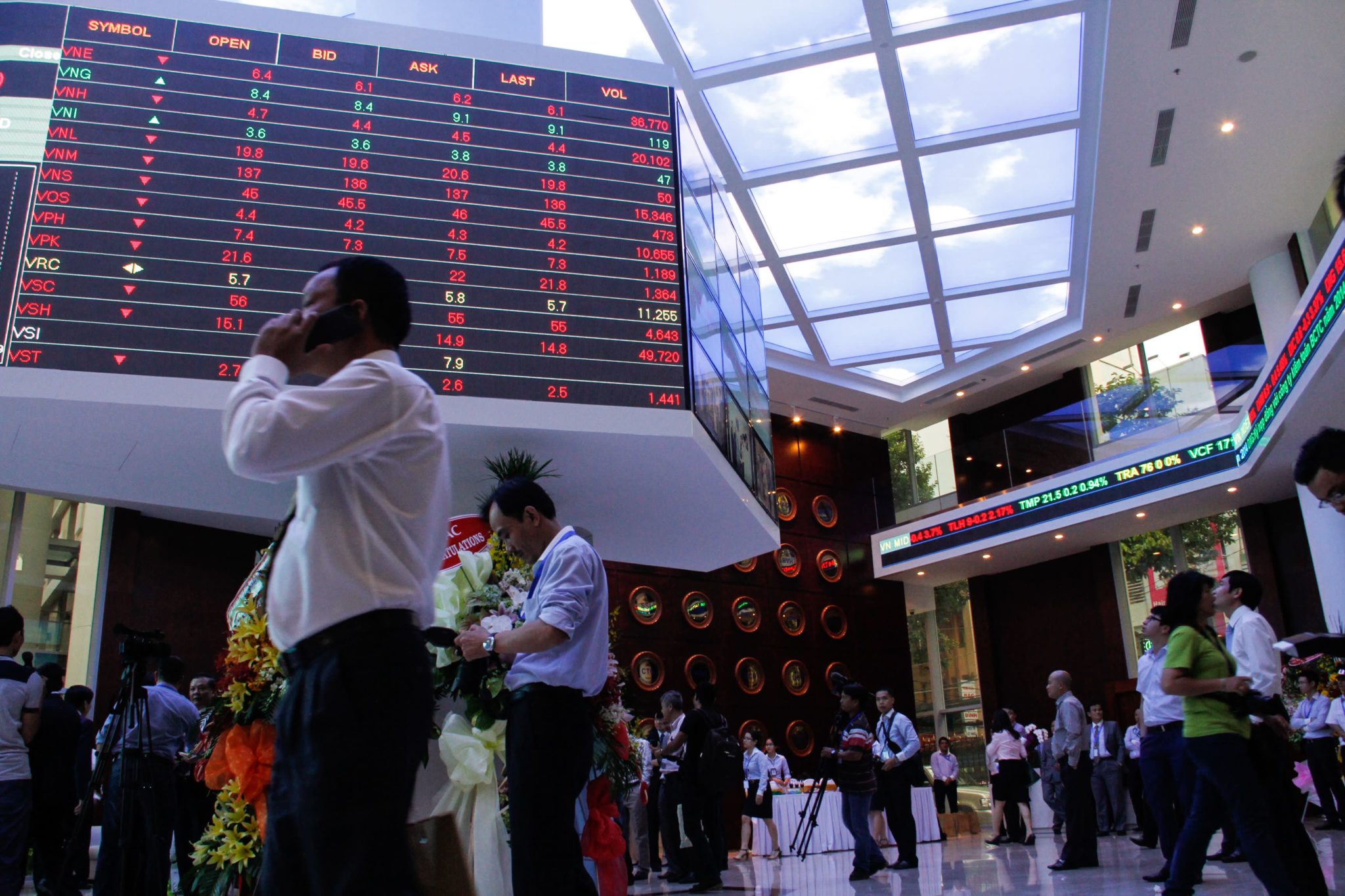
    The VN-Index of Vietnam, which is the country’s benchmark index, experienced a decline for the seventh consecutive session on Wednesday. This represents the most extended losing streak since 2018’s final quarter. The VN-Index wrapped up the session at 1,802.91, marking a decrease of 1.51% or 27.59 points. From the beginning of the previous week, the index underwent a loss of 100 points.

    Trade Volume Increase and Major Price Movements

    A significant increase of 34% was recorded in the trading volume on the Ho Chi Minh Stock Exchange, reaching VND33.7 trillion (equivalent to US$1.29 billion).

    The VN-30 basket, which is a compilation of the 30 most significant capped stocks, witnessed a fall in 16 tickers. The VIC ticker of the private conglomerate Vingroup reached its lowest price point.

    In the realm of retail real estate, Vincom Retail’s VRE experienced a decrease of 5.8%, while the VHM of property titan Vinhomes suffered a reduction of 5.7% in its closing price.

    On the more positive side, eleven blue-chip stocks recorded gains. Among them, MSN of the Masan Group conglomerate saw a rise of 3.7%, FPT of tech powerhouse FPT Corporation increased by 2.4%, and GAS of the state-owned Petrovietnam Gas experienced a boost of 2.3%.

    Foreign Investor Activity and Other Indexes

    Foreign investors ended up as net sellers, with a net selling volume reaching VND1.78 trillion. This selling activity mainly targeted HDB of HDBank and ACB of Asia Commercial Bank.

    Taking a look at other indexes, the HNX-Index, associated with stocks on the Hanoi Stock Exchange, which mainly includes mid and small cap stocks, recorded a fall of 0.15%. Meanwhile, the UPCoM-Index, representing the Unlisted Public Companies Market, saw an increase of 0.62%.

    Questions & Answers

    What is the VN-Index?
    The VN-Index is a benchmark index in Vietnam that represents the performance of the country’s stock market.

    Which stocks experienced a price decrease?
    The VIC of Vingroup, VRE of Vincom Retail, and VHM of Vinhomes were among the stocks that saw a decrease in price.

    Which stocks saw a price increase?
    Among the stocks that recorded a price increase were MSN of the Masan Group, FPT of FPT Corporation, and GAS of Petrovietnam Gas.

  • Vietnam Stocks Plunge to Three-Week Low: VN-Index Slips Amid Massive Selloff

    Vietnam Stocks Plunge to Three-Week Low: VN-Index Slips Amid Massive Selloff

    On Friday, Vietnam’s key VN-Index experienced a significant drop of 3.06%, settling at 1,656.89 points, the lowest it’s seen since November 19. This marked the fourth consecutive session that the index has ended in negative territory.

    Trade Volume Soars on Ho Chi Minh Stock Exchange

    Trading on the Ho Chi Minh Stock Exchange, which forms the basis for the VN-Index, saw a significant increase in activity. The volume of trades surged by 52%, amounting to a total of VND24.7 trillion (US$938 million).

    Most Large Cap Stocks Experience Decline

    In the VN30 group, which encompasses the 30 largest capped stocks, 29 saw a decrease. Notably, Vinhomes, a real estate heavyweight, and Vincom Retail, a retail real estate subsidiary, experienced a substantial decline of 6.9%.

    Other major companies also experienced losses, including private lender VPBank, which saw a drop of 5.7%, and Vietnam Rubber Group, which fell by 5.1%.

    In contrast, Becamex Investment and Industrial Development was the only blue-chip stock that managed to stay in positive territory, albeit with a slight gain of 0.2%.

    Foreign Investors Continue Selling Trend

    Foreign investors continued their selling streak for the sixth session in a row, leading to a net sale of VND571 billion. The most significant sales were from private conglomerate Vingroup and state-owned lender Vietcombank.

    Other Indices Also See Decrease

    Other indices also experienced a decrease. The HNX-Index, which lists stocks on the Hanoi Stock Exchange, primarily those of mid and small-cap companies, decreased by 2.26%. Meanwhile, the UPCoM-Index for Unlisted Public Companies Market fell slightly by 0.61%.

    Questions & Answers

    What is the VN-Index?
    The VN-Index is a capitalization-weighted index of all the companies listed on the Ho Chi Minh Stock Exchange.

    What was the significant trade on Friday?
    On Friday, trading on the Ho Chi Minh Stock Exchange surged by 52%, reaching a total of VND24.7 trillion (US$938 million).

    Which stock experienced the greatest loss on Friday?
    Real estate giant Vinhomes and retail real estate arm Vincom Retail saw the most significant losses, both dipping by 6.9%.

  • Stocks rise in first session of the year

    Stocks rise in first session of the year

    Vietnam’s benchmark VN-Index rose 0.23% to 1,269.71 points Thursday in the first session of 2025 while Asian shares began the year slightly lower.

    The index closed 2.93 points higher after dropping 5.24 points in the previous session.

    Trading on the Ho Chi Minh Stock Exchange decreased by 7% to VND10.752 trillion (US$422.4 million).

    The VN-30 basket, comprising the 30 largest capped stocks, saw 12 tickers gained.

    PLX of fuel distributor Petrolimex went up 1.7%, BID of state-owned lender BIDV rose 1.7%, and BVH of insurance company Bao Viet Holdings closed 1.6% higher.

    Eleven blue chips fell. HDB of lender HDBank slid 1.6%, TCB of private lender Techcombank went down 1.2%, and ACB of Asia Commercial Bank saw a 0.8% drop.

    Foreign investors were net seller to the tune of VND98 billion, mainly selling FPT of IT giant FPT Corporation and VCB of state-owned lender Vietcombank.

    The HNX-Index for stocks on the Hanoi Stock Exchange, home to mid and small caps, rose 0.11%, while the UPCoM-Index for the Unlisted Public Companies Market went down 0.04%.

    Globally, Asian stocks began the year on a dour note on Thursday as they struggled for traction after a jittery close to 2024, while the U.S. dollar held steady and investor sentiment stayed cautious ahead of Donald Trump’s return to the White House, Reuters reported.

    While global shares closed out 2024 with a strong yearly gain of nearly 16%, they had clocked a monthly loss of more than 2% in December.

    The same was the case for MSCI’s broadest index of Asia-Pacific shares outside Japan, which slid 1.2% in December though registered a gain of more than 7% for 2024.

    The index was last down 0.58% in the Asian session on Thursday, with volume thinned given a trading holiday in Japan.

    Chinese stocks were battered, with the CSI300 blue-chip index last down 2.65% while the Shanghai Composite Index lost 2.36%. Hong Kong’s Hang Seng Index slid 2.15%.

  • Stocks fail to sustain 2-month high

    Stocks fail to sustain 2-month high

    Vietnam’s benchmark VN-Index fell 0.09% to 1,272.87 points Thursday, after hitting a two-month peak in the previous session.

    The index closed 1.2 points lower after gaining 13.68 points in the previous session.

    Trading on the Ho Chi Minh Stock Exchange decreased dropped 27% to VND18.8 trillion (US$739 million).

    SSB of SeABank dropped 2%, followed by BVH of insurance company Bao Viet Holdings with a 1.9% decline.

    MWG of electronics retail chain Mobile World dropped 1.1% and VRE of retail real estate arm Vincom Retail closed 0.9% lower.

    Eleven blue chips gained, led by six banks.

    VIB of Vietnam International Commercial Bank posted the largest increase at 2.9%, followed by STB of Ho Chi Minh City-based lender Sacombank, up 2.3%.

    Foreign investors were net sellers to the tune of VND365 billion.

    They mainly net sold VCB of state-owned lender Vietcombank and FPT of IT giant FPT Corporation.

    The HNX-Index for stocks on the Hanoi Stock Exchange, home to mid and small caps, rose 0.04%, while the UPCoM-Index for the Unlisted Public Companies Market dropped 0.19%.

    Asia shares eased in holiday-thinned trade on Thursday, paring some of their gains from earlier in the week, while the dollar rose alongside U.S. Treasury yields.

    As the year-end approaches, trading volumes have begun thinning out and the main focus for investors remains that of the Federal Reserve’s rate outlook. Markets in Hong Kong, Australia and New Zealand were closed for a holiday on Thursday.

  • Vietnam stocks slip as Asian shares subdued

    Vietnam stocks slip as Asian shares subdued

    Vietnam’s benchmark VN-Index fell 0.59% to 1,268.21 points Thursday as other Asian markets were little changed.

    The index closed 7.59 points lower after dropping 8.07 points in the previous session.

    Trading on the Ho Chi Minh Stock Exchange increased by 6% to VND16.59 trillion (US$671 million).

    GVR of Vietnam Rubber Group plunged 2.3%, followed by PLX of fuel distributor Petrolimex, down 2%.

    FPT of IT giant FPT Corporation and MBB of lender MB both fell 1.8%.

    Three blue chips gained, led by VHM of property giant Vinhomes, up 2.9%, and VIC of private conglomerate Vingroup, up 2.4%.

    Foreign investors were net sellers to the tune of VND684 billion, mainly selling FPT and HPG of steelmaker Hoa Phat Group.

    The HNX-Index for stocks on the Hanoi Stock Exchange, home to mid and small caps, fell 0.50%, while the UPCoM-Index for the Unlisted Public Companies Market went down 0.30%.

    Asian shares were subdued on Thursday, with Japanese stocks sliding to their lowest in three weeks as investors sought safety, pushing the yen to a one-month high while U.S. economic worries boosted prospects for the Federal Reserve to cut rates.

    Amid the fragile sentiment, Japan’s benchmark Nikkei slid more than 1% to its lowest in three weeks, while stocks in tech-heavy Taiwan and South Korean stood slightly higher on the day, giving up earlier gains.

    The MSCI’s broadest index of Asia-Pacific shares outside Japan up 0.25%, subdued after having tumbled nearly 3% during a three-day losing streak. The index had risen more than 0.6% but gave up those gains.

  • How Can Malaysian Traders Boost their Trading Game

    How Can Malaysian Traders Boost their Trading Game

    For Malaysian traders looking to enhance their trading skills and performance, there are several strategies and techniques that can help boost their trading game. Adopting the right mindset, developing a solid trading plan, utilizing effective risk management strategies, and staying informed about market developments can increase the chances of success in forex trading Malaysia. This guide provides valuable insights and suggestions to help Malaysian traders elevate their trading game and achieve their goals.

    Developing a Trading Mindset

    Developing a strong trading mindset is crucial for Malaysian traders to succeed in the financial markets. Embracing discipline and patience allows traders to follow their trading plan consistently and avoid impulsive decisions driven by emotions. By managing emotions such as fear and greed, traders can make rational and objective trading choices.

    Cultivating a growth mindset is also important, as it encourages continuous learning, adaptability, and resilience. Malaysian traders should approach trading as a journey of improvement and view setbacks as opportunities for growth, enabling them to stay motivated and focused on refining their trading skills.


    Building a Robust Trading Plan

    A solid trading plan is a foundation for success in trading. Malaysian traders should define clear trading objectives and goals aligning with their financial aspirations. Identifying preferred trading strategies and styles helps traders focus on methods that suit their strengths and preferences.

    Setting risk tolerance and money management rules is essential for preserving capital and managing risk effectively. Establishing specific entry and exit criteria based on technical or fundamental analysis provides structure and consistency to trading decisions. A well-designed trading plan is a roadmap guiding market participants toward their trading goals.

    Mastering Technical Analysis

    Technical analysis is a key skill for Malaysian traders to make informed trading decisions. Understanding essential technical indicators and chart patterns helps identify potential trade setups and market trends. Analyzing support and resistance levels assists in determining optimal entry and exit points. Implementing trend-following and reversal strategies based on technical signals enhances trading accuracy.

    Additionally, incorporating multiple time frame analysis provides a broader perspective and improves trade timing. By mastering technical analysis, Malaysian investors can effectively analyze price charts and identify profitable trading opportunities.

    Utilizing Fundamental Analysis

    Fundamental analysis plays a vital role in trading, especially for Malaysian traders in the forex market. Staying informed about economic news and events, such as GDP reports, employment data, or central bank announcements, enables traders to assess the potential impact on currency pairs or assets.

    Monitoring central bank policies and interest rate decisions helps anticipate market reactions and adjust trading strategies accordingly. Incorporating geopolitical factors, such as trade tensions or political developments, into trading decisions provides a broader understanding of market dynamics.

    Implementing Effective Risk Management

    Effective risk management is essential for preserving capital and ensuring long-term trading success. Malaysian traders should set appropriate position sizing and leverage levels based on their risk tolerance and account size. Placing stop-loss orders and implementing trailing stops helps protect against significant losses and secure profits.

    Diversifying the trading portfolio across different currency pairs or asset classes reduces the impact of individual trades on overall performance. Regularly reviewing and adjusting risk management strategies in response to market conditions allows traders to adapt to changing environments and control risk exposure effectively.

    Utilizing Technology and Trading Tools

    Leveraging technology and trading tools enhances the trading experience for Malaysian traders. Exploring trading platforms with advanced features, such as customizable charts, technical indicators, and order types, enables traders to analyze markets and execute trades efficiently.

    Using technical analysis software and indicators streamlines the process of identifying trade setups and signals. Leveraging mobile trading apps provides flexibility and allows traders to monitor and execute trades on the go.

    Joining Trading Communities and Networking

    Joining online trading forums and communities provides an avenue for Malaysian traders to connect with fellow traders, exchange ideas, and gain insights. Engaging with other traders allows for valuable discussions, sharing of experiences, and learning from different perspectives.

    Attending trading seminars and workshops provides opportunities to learn from industry experts and expand knowledge in specific areas of trading. Seeking mentorship or guidance from experienced traders can offer valuable insights and personalized advice tailored to the needs of investors. By actively participating in trading communities and networking events, Malaysian traders can broaden their understanding of trading strategies, stay updated with market trends, and develop a supportive network that encourages growth and learning.

    Staying Updated with Market Developments

    Malaysian traders should stay informed about market developments to stay ahead in the financial markets. Following financial news and market analysis from reputable sources helps traders stay updated with economic events, policy decisions, and geopolitical developments that may impact the markets.

    Subscribing to market research sources provides access to expert analysis and insights on specific currency pairs or asset classes. Monitoring economic calendars and event schedules allows traders to anticipate high-impact news releases and adjust their trading strategies accordingly.

    Practicing Discipline and Consistency

    Practicing discipline and consistency is key to successful trading for Malaysian traders. Following the trading plan consistently, without deviating based on emotions or impulsive decisions, is crucial. Avoiding the temptation to chase market trends or make reckless trades helps maintain a disciplined approach.

    Learning from past mistakes and adjusting strategies based on performance analysis contributes to continuous improvement. Maintaining a trading journal to track progress, record trade details, and analyze trading patterns enables Malaysian traders to identify strengths, weaknesses, and areas for refinement.
  • Company fined $37,000 for not disclosing stock market transactions

    Company fined $37,000 for not disclosing stock market transactions

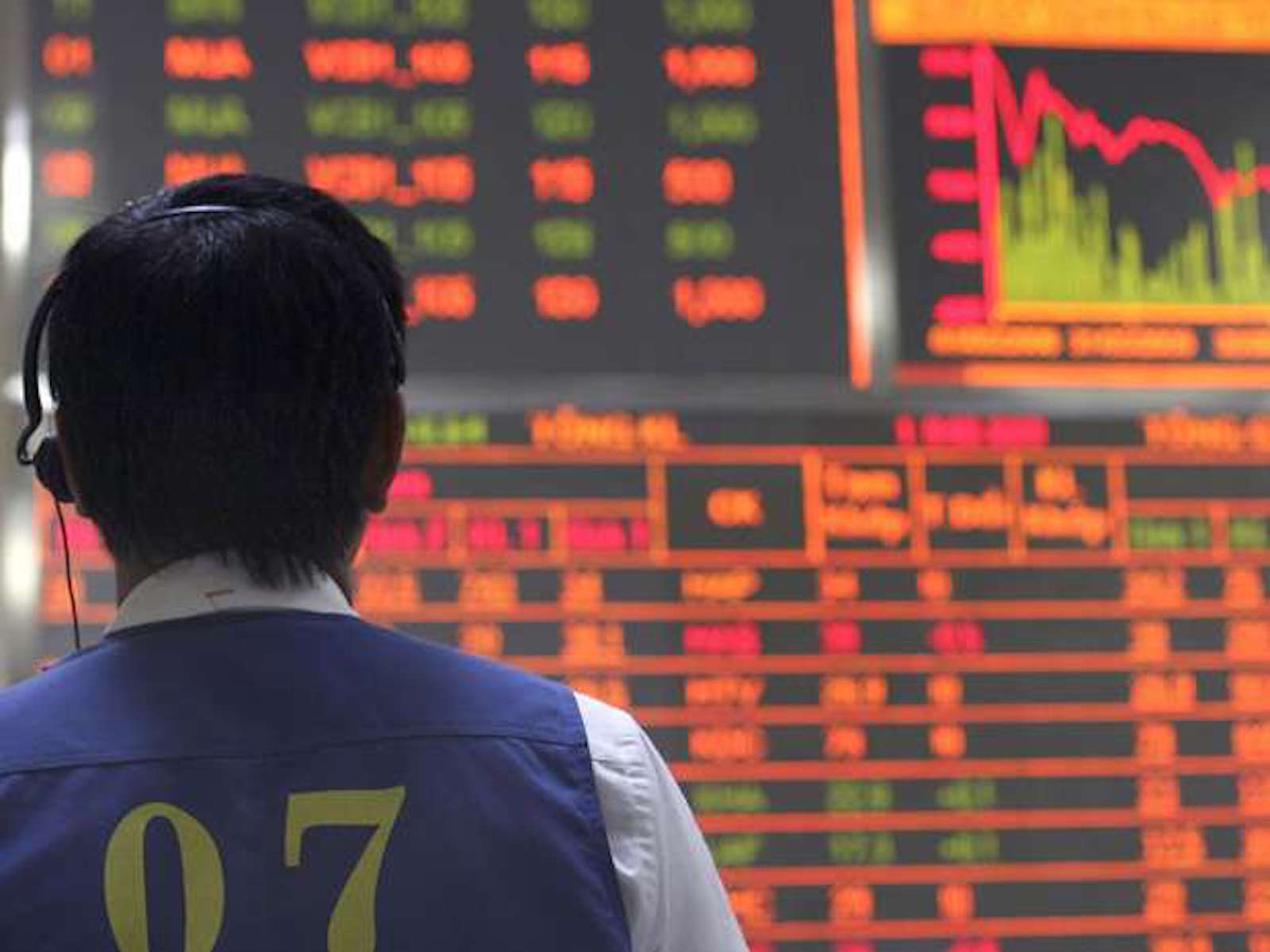
    Thai Son Investment Solutions Jsc has been fined VND870 million (US$37,100) for selling and buying back a stock in October last year without disclosing the information.

    The State Securities Commission of Vietnam announced the fine recently and prohibited the company from trading on the stock market for three months starting May 19.

    Thai Son surreptitiously sold 1.5 million shares of Electricity Investment Service Trade Jsc (EIN) on October 19, 2022, and bought 1.4 million shares three days later.

    The SSC recently placed Tan Viet Securities under restrictions for four months for publishing its unaudited financial statements.

    The company had been fined VND745 million in 2021 and 2022 for multiple stock market violations.

  • Stock market settlement to be speeded up by 4 hours

    Stock market settlement to be speeded up by 4 hours

    The stock settlement cycle is set to be shortened by four hours, enabling investors to receive their share or money on the second morning after a transaction.

    Thus, from August 29, they will get them at 11-11:30 a.m on the second day (T+2) instead of the current 3:30-4 p.m.

    Now they have to wait until the next morning to sell securities they buy since trading ends at 2:45 p.m.

    Depository participants must transfer money and stocks to customers before 1:00 p.m and report to the Vietnam Securities Depository before 4:30 p.m.

  • Rumors, manipulation plague Vietnam markets

    Rumors, manipulation plague Vietnam markets

    Vietnam’s stock and corporate bond markets are heavily affected by rumors and sophisticated manipulation, which pose the need for more transparent and thorough regulations, a minister has said.

    Many tickers have been pushed up to new peaks without improvement in business results, with many companies failing to submit their earnings in time, Minister of Finance Ho Duc Phoc informed the National Assembly in a recent report.

    “The stock market is still in an early stage of development and is therefore heavily affected by investor sentiment. Rumors, fears of cash flow and inflation pressure have caused the market to plunge recently.”

    Vietnam’s benchmark VN-Index hit this year’s bottom on May 16, the lowest in 11 months. The plunge came after VN-Index increased by nearly 36 percent last year as one of the best performers globally. The number of new stock accounts opened last year alone equaled that of the previous 10 years.

    But the market turned bearish in April and has struggled to recover since.

    Phoc is also concerned about risks faced by a speeding corporate bond market.

    Many amateurs who fail to meet government criteria have cheated to secure bonds, made possible by the violations of commercial banks and stock brokerages, he said.

    One typical example involves property developer Tan Hoang Minh, whose chairman Do Anh Dung was arrested in early April on suspicions of “fraudulent appropriation of assets,” he added.

    Governor of the State Bank of Vietnam Nguyen Thi Hong called for more thorough solutions to prevent future violations.

    In the long run, the government needs to make the corporate bond market a key capital mobilization channel for the economy, she added.

    Phoc said changes will be made to tighten regulations on bond issuances, listed on a dedicated market for corporate bonds.

  • Trading value jumps to six-session high

    Trading value jumps to six-session high

    Vietnam’s benchmark VN-Index fell 0.01 percent to 1,476.02 points Tuesday with trading value the highest in six sessions.

    The index closed 0.19 points lower after gaining nearly 13 points Tuesday.

    Trading value on the Ho Chi Minh Stock Exchange (HoSE), on which the index is based, rose 6.75 percent to VND27.65 trillion ($1.2 billion).

    The VN30 basket, comprising the 30 largest capped stocks, saw 19 tickers in the red, with PDR of Phat Dat Real Estate Development losing 5.9 percent to a near three-week low.

    The ticker has gone sideways for over two months.

    PNJ of Phu Nhuan Jewelry lost 2.3 percent, having fallen nearly 13 percent since its peak in mid-November.

    KDH of real estate firm Khang Dien House fell 2.2 percent, and STB of Ho Chi Minh City-based lender Sacombank, 1.9 percent.

    Nine blue chip tickers closed in the green, with HPG of steelmaker Hoa Phat Group and POW of electricity producer Petrovietnam Power Corporation gaining 2.5 percent each.

    Foreign investors were net sellers for the third straight session to the tune of VND879 billion, the highest in nine sessions.

    They focused on selling HPG of steelmaker Hoa Phat Group and VPB of private lender VPBank.

    The HNX-Index for stocks on the Hanoi Stock Exchange, home to mid and small caps, fell 0.63 percent while the UPCoM-Index for the Unlisted Public Companies Market dropped 0.19 percent.

  • VietinBank pioneers online foreign exchange services

    VietinBank pioneers online foreign exchange services

    VietinBank has launched FX Online 24/7, allowing customers to perform transactions at any time, anywhere on platforms VietinBank eFAST and VietinBank Ipay.

    VietinBank focuses on innovating its system to improve FX services. Just by taking some simple steps on a smartphone or a laptop with an internet connection, without having to go to the bank, customers can perform FX transactions online with VietinBank for different currencies.

    Corporate customers can buy and transfer foreign currency online within business hours.

    Corporate customers or individual customers can sell foreign currency online from foreign currency accounts and receive Vietnamese dong into their accounts anytime, including weekends and holidays.

    With a multi-level authorized matrix, VietinBank eFAST can meet the diversified demand of customers for authorization. The system provides security methods meeting the State Bank of Vietnam’s requirements including OTP verification and keypass token verification.

    VietinBank is offering a promotional campaign for corporate customers using the service “Customers sell foreign currency online 24/7” through VietinBank eFAST platform. Customers are offered 20 preferential points with USD/VND transactions; 50 preferential points with EUR/VND and 0.5 preferential point with JPY/VND. There are also special offers for other currency pairs.

  • Over 130,000 investors enter stock market

    Over 130,000 investors enter stock market

    More than 130,000 new investors opened stock trading accounts in October, including 129,750 local investors, according to the Vietnam Securities Depository.

    129,200 of the local investors were retail ones.

    At the end of October there were over 3.86 million accounts. The number increased for a third straight month amid news of government economic stimulus of around VND800 trillion ($34.78 billion).

    The benchmark VN-Index rose to a new peak of 1,456.51 points on Friday, led by energy stocks, though trading on the Ho Chi Minh Stock Exchange dipped slightly to VND26.14 trillion.

    The government targets having 3 percent of the population participating in equity markets by the end of this year and 5 percent by 2025 under its Scheme for Restructuring Securities and Insurance Markets, which it finalized in early 2019.

  • Online Brokerage Launches B2B Platform

    Online Brokerage Launches B2B Platform

    Xiaomi-backed Tiger Brokers is expanding its reach into the institutional segment with the launch of a business-to-business (B2B) platform.

    Tiger Brokers is partnering Singapore-based financial advisory firm PFPFA as it launches a B2B platform for institutional partners, the company announced on Friday.

    Under the partnership, PFPFA clients will have direct access to Tiger’s online brokerage and platform, which will include technological solutions such as advanced portfolio and risk management tools.

    Tiger Brokers said it hopes to build on the success of Tiger Trade, its Singapore consumer platform that currently has close to 300,000 users since launching 1.5 years ago. It plans to rapidly grow its B2B segment in the coming months by offering its services to more financial institutions, including robo-advisors, banks, neo-banks and fund managers, the announcement said.

  • StanChart Names Global Head of Transaction Banking FX

    StanChart Names Global Head of Transaction Banking FX

    Standard Chartered appoints its global head of transaction banking FX to further collaboration between transaction banking and markets.

    Jocelyn Tan has been named to the Singapore-based role, according to a report by efinancialcareers, which noted that she was an internal appointee though the role was advertised externally.

    Tan will be tasked with driving FX cross-selling by leveraging transaction banking flows across the corporate, commercial and institutional bank (CCIB).

    Tan has been with Standard Chartered since 2017 when she joined as an executive director for e-commerce sales. Previously, she spent over 10 years with Citi where she worked in Asian eFX sales.

  • Newbies continue to flock to stock market

    Newbies continue to flock to stock market

    The number of new stock trading accounts opened by retail investors in May topped 113,670, a new monthly record, according to the Vietnam Securities Depository.

    May was the third month in a row in which more than 100,000 accounts were opened. There were 3.2 million retail accounts and nearly 12,000 belonging to organizations.

    The invasion of the market by new investors took the total trading value on the Ho Chi Minh Stock Exchange (HoSE), Hanoi Stock Exchange, and Unlisted Public Companies Market to over VND531 trillion ($23 billion) in May.

    HoSE accounted for VND448.5 trillion, a 19 percent increase from the previous month.

    The boom has created pressure on the HoSE trading board, which had to shut down for the first time ever on Tuesday after the morning session as a surge in transactions threatened to overwhelm it.