Tag: fx

  • Vietnamese stocks slide as lack of information hits large-caps

    Vietnamese stocks slide as lack of information hits large-caps

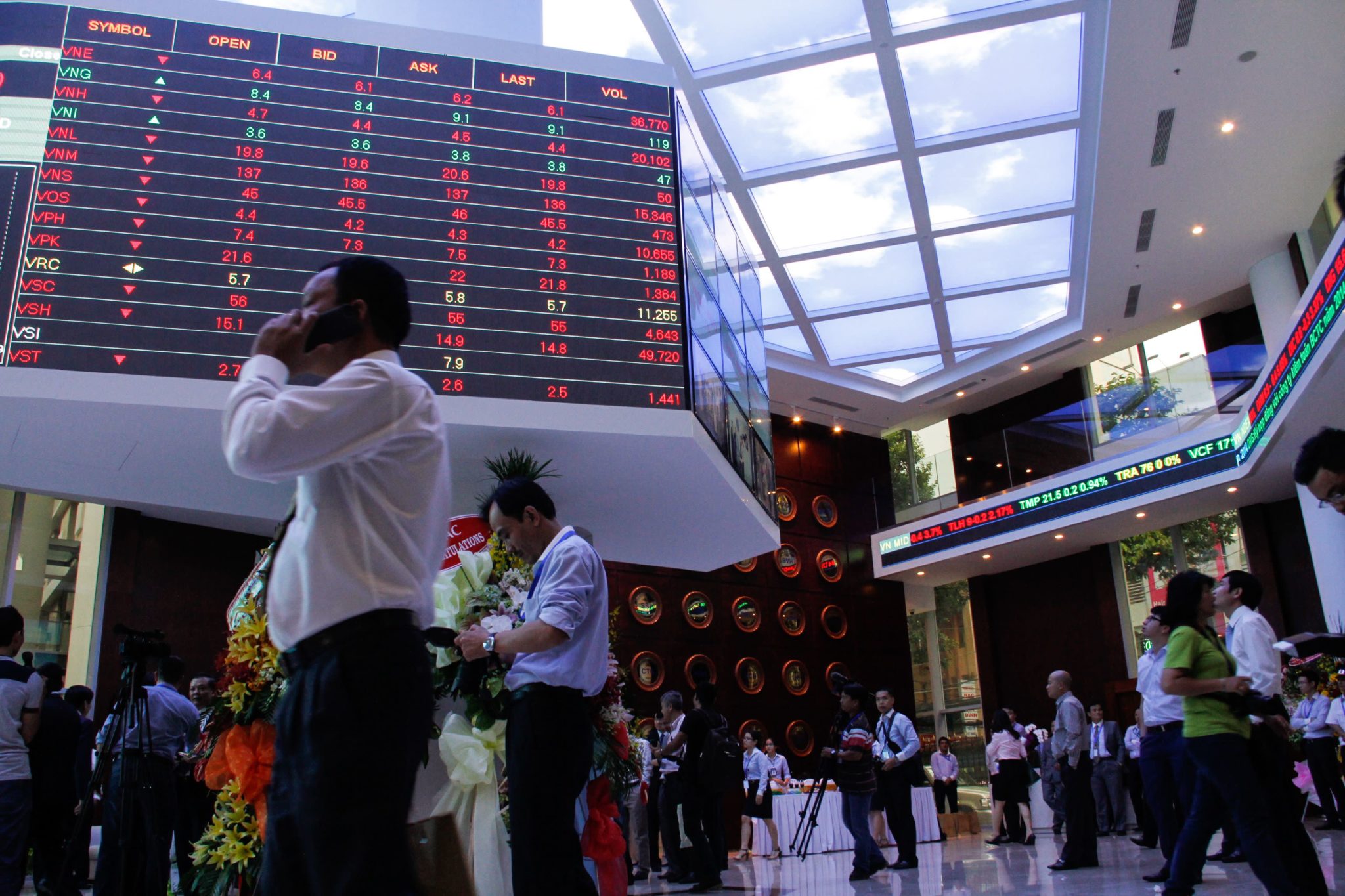
    Vietnamese shares slid yesterday as large-cap companies faced strong selling amidst a lack of supportive information while investors awaited discussions on the amended securities law. The benchmark VN-Index on the Hồ Chí Minh Stock Exchange fell 0.91 per cent to end at 988.48 points.

    The southern market index climbed 0.84 per cent on Monday.

    More than 165 million shares were traded on the southern bourse, worth VNĐ4.24 trillion (US$182 million).

    Market breadth was negative with 207 declining stocks, while 111 stocks advanced and 45 ended flat.

    Fifteen of the 20 sector indices ended Tuesday on a negative note, dragged by real estate, energy and petroleum, rubber and plastics and consumer staples.

    Those sector indices lost between 1.1 per cent and 3.1 per cent, data on vietstock.vn showed.

    The energy and petroleum sector was the worst-performing one on the stock market.

    Petro stocks such as PetroVietnam Gas (GAS) and PetroVietnam Drilling and Well Services (PVD) reversed after oil prices encountered volatility on Tuesday.

    GAS shed 1.9 per cent while PVD slipped 3 per cent.

    Real estate firms also dragged the market down, with the industry index falling 2 per cent.

    Among the worst-performing property developers were Vincom Retail (VRE), Vingroup (VIC) and Hòa Bình Construction Group (HBC).

    According to MB Securities Co (MBS), the VN-Index slid as leading stocks moved in different directions and pressured market sentiment.

    Foreign selling also caused negative movement for the stock market, which ended at a net VNĐ277.4 billion, MBS said in its daily report.

    In addition, gloomy earnings forecasts for 2019 for listed companies weighed on investors’ confidence ahead of the National Assembly Standing Committee meeting on April 10-18, in which the draft on amended Law of Securities will be discussed, MBS noted.

    “The stock market is clearly in its instability stage as large-cap stocks are still heavyweights. It is likely the VN-Index will fall whenever large-cap stocks are hit by strong selling,” Thành Công Securities Co (TCSC) said in a note.

    In addition, listed firms are experiencing a lack of supportive information, making investors unwilling to buy their stocks and reducing market liquidity, TCSC said.

    Therefore, the VN-Index may struggle at the current level of 990 points in the next trading days with focus shifted to companies with positive first quarter earnings, the company said.

    On the Ha Noi Stock Exchange, the HNX-Index slid 1.12 per cent to end at 107.71 points.

    The northern market index climbed nearly 1 per cent in the first trading day of the week.

    Nearly 48 million shares were traded on the northern bourse, worth VNĐ669 billion.

  • TradeGecko launches Founder Plan giving commerce startups the technology superpowers to build amazing businesses

    TradeGecko launches Founder Plan giving commerce startups the technology superpowers to build amazing businesses

    TradeGecko, a leading technology company that provides cloud-based inventory and order management solutions for small and medium-sized businesses (SMBs), today launched its Founder Plan, expanding access to its powerful technology platform to early-stage commerce businesses. 

    The plan enables founders to integrate TradeGecko’s leading inventory and order management solution from the get-go, so that they can build their commerce businesses to scale quickly. This limits cumbersome and complex manual processes that may inhibit future growth, empowering entrepreneurs with the ability to level the playing field with bigger competitors. 

    Recent research by TradeGecko has shown that operational challenges are among the biggest headaches for commerce entrepreneurs. 31 percent of businesses under US$1 million still rely on spreadsheets for their inventory management, with another 24% using pen and paper and 19% not using anything at all. On average, 90 hours a month are spent on backend functions such as order and inventory management as well as product sourcing.

    From as little as US$39 per month, subscribers of the Founder Plan can access a fully automated system that consolidates operations management functions into one central location. This ensures that inventory levels, sales channels and accounting systems are always up-to-date and accurate. It also gives commerce businesses the power to add new sales channels, integrates with other business-critical functions and provides analytics to support decision-making.

    “At TradeGecko, no founder gets left behind. Our mission is to give founders the technology superpowers to compete in the global market. The Founder Plan is an accessible launchpad that enables entrepreneurs to scale, while ensuring they have the time and information they need to do what they do best – build amazing businesses,” said Cameron Priest, Co-Founder and CEO of TradeGecko. 

    The Founder Plan allows users to manage their total inventory starting with one eCommerce channel, integrated with accounting, manage sales orders and purchase orders, shipping and email support. It also gives access to TradeGecko Payments, TradeGecko Mobile App and TradeGecko Intelligence sales and inventory reports.

  • Soft Start Predicted For Thai Stock Market

    Soft Start Predicted For Thai Stock Market

    The Thai stock market has moved lower in back-to-back trading days, sliding almost 10 points or 0.6 percent along the way. The Stock Exchange of Thailand remains just beneath the 1,750-point plateau and it’s tipped to open in the red again on Wednesday.

    The global forecast for the Asian markets is murky, with little movement expected ahead of the FOMC interest rate decision later today. The European markets were up and the U.S. bourses were mostly lower – and the Asian markets figure to split the difference.

    The SET finished slightly lower on Tuesday following mixed performances from the financial shares and the energy producers.

    For the day, the index dipped 1.43 points or 0.08 percent to finish at 1,747.99 after trading between 1,745.73 and 1,756.85. Volume was 12.141 billion shares worth 42.321 billion baht. There were 906 decliners and 441 gainers, with 531 stocks finishing unchanged.

    Among the actives, Advanced Info shed 0.25 percent, while Thailand Airport added 0.76 percent, Beauty Community lost 0.85 percent, Bangkok Expressway skidded 1.71 percent, Krung Thai Bank collected 0.50 percent, PTT Exploration and Production fell 0.65 percent, PTT Global Chemical jumped 1.57 percent, Siam Commercial Bank picked up 0.34 percent, Siam Concrete advanced 0.44 percent and PTT, Kasikornbank, Charoen Pokphand Foods, Banpu, Bangkok Bank and Bangkok Medical all were unchanged.

    The lead from Wall Street offers little guidance as stocks opened slightly higher on Tuesday before fading in afternoon trade – although the tech-heavy NASDAQ remained in the green.

    The Dow shed 69.84 points or 0.26 percent to finish at 26,492.21, while the NASDAQ added 14.22 points or 0.18 percent to 8,007.47 and the S&) fell 3.81 points or 0.13 percent to 2,915.56.

    The uncertainty on Wall Street comes as traders look ahead to the Fed’s monetary policy announcement. The Fed is widely expected to raise interest rates by a 25 basis points, although traders will pay attention to the accompanying statement for clues about the outlook for rates.

    Fed Chairman Jerome Powell’s subsequent press conference is also likely to attract attention, with the central bank expected to raise rates by at least once more this year.

    In economic news, the Conference Board noted an unexpected improvement in consumer confidence in September as its index hit an 18-year high.

    Crude oil prices climbed on Tuesday after OPEC declined to increase production after upcoming U.S. sanctions against Iran take hold. U.S. West Texas Intermediate futures for November delivery gained $0.20 or 0.3 percent to $72.28.

  • Stocks, Forex, cryptocurrency, futures&options – Fantastic show like nowhere!

    Stocks, Forex, cryptocurrency, futures&options – Fantastic show like nowhere!

    Traders Fair & Gala night – financial event for traders and investors, which is going to take place in Vietnam on the 24th of November 2018 (Windsor Plaza Hotel, Saigon). The best trading experts, companies, money brokers and banks from all over the world are going to share out their experience and to find out new up-to-date information about cryptocurrency, forex, stocks, futures and options markets. Also Traders Fair & Gala night is going to be full of educational programs and entertainment.  To register online now for free, you should visit https://vietnam.tradersfair.com

    Traders Fair & Gala night, Vietnam is attracting the world of traders to one place during one day.  This is the confluence of favorable conditions in one system, which brings profit to its participants. The leaders of the industry are going to come together in one place and to have an exchange of knowledge and experience. No doubt you need expertize and capital to work in the stocks, futures, options and forex markets as it will become the initial ticket to the world of big trade. Participants who have capital while entering the market become investors. And you may be a part of this fabulous event! Educational speeches from top speakers, entertainments, live shows, music and incredible prizes included in the agenda.

    Traders Fair & Gala night – Vietnam is organized by FINEXPO, which is the largest company organizing financial and trading events, fairs, expos and shows worldwide since 2002. List of its projects seems quite long. Here you can find Financial Expo, Traders Fair, Traders Awards, Forex & Money Expo, Forex Expo Awards, Money Fair, Investor Expo, Golf Expo, Banking Expo, Online Trading Expo, etc. Over 30000 traders, investors and financial advisors and more than 3 000 financial companies and brokers from Forex, stock, option, bond crypto money and forward markets from all around the world have been connected by FINEXPO. The positive feedback from participants is the best prove of effective and successful work done by FINEXPO.

    Traders Fair & Gala night is sponsored by leading brands such as Australian Forex Marketplace (Grand sponsor), FIBOGroup (Silver sponsor), RPNPay, OlympTrade. To say more the organizers of event offer you different variants of recommended accommodation, so you can focus on agenda and don’t lose you time, thinking about accommodation and everything.

    You are welcome to visit https://vietnam.tradersfair.com to find out more information about Traders Fair & Gala night.

    Telegram https://t.me/tradersfair

    Facebook https://www.facebook.com/TradersFair/

    #tradersfair  #tradersfair2018  #tradersfairvietnam


  • Vietnam stock market in Free Fall

    Vietnam stock market in Free Fall

    Vietnam’s stock market dropped 2.87 percent to more than 987 points on Monday, the second time this year that it has dropped below the 1,000-point level.

    The benchmark VN-Index on the Ho Chi Minh Stock Exchange (HOSE) fell from 1,000 points for the first time this year on May 23 and did not bounce back to that level until June 4.

    As supply surpassed demand, sellers were pushed to sell their stocks at all costs, leading to falling prices.

    The VN-Index hit 984.24 on the last trading day of 2017, the highest ever since 2007, before reaching 1,000 points early in January.

    Since then, it has stayed at more than 1,000 points until the drop on May 23.

  • Vietnamese government fines illegal Bitcoin trading site

    Vietnamese government fines illegal Bitcoin trading site

    The firm claimed to have a license to trade the cryptocurrency, but was hit by a $1,750 fine. Vietnam’s information ministry has fined a company that claimed to be the first website to be certified to exchange bitcoin in Vietnam for illegal social networking and setting up an illegal site.

    Bitcoin Vietnam, which is based in District 4, Ho Chi Minh City, received a VND40 million ($1,750) penalty from the Vietnam Radio, Television and Electronic Information Department under the Ministry of Information and Communications.

    Nguyen Tran Bao Phuong, the legal representative for Bitcoin Vietnam, said they were looking into the charges.

    The company is in a transition period, so its business registration code had been revoked before the decision was made, she said .

    “Bitcoin Vietnam is a cryptocurrency exchange. We do not yet have a license to offer intermediate services, but we are not operating illegally. The company is closely following any new regulations about Bitcoin, and is willing to comply with any new law,” Phuong said.

    The company opened in 2013 and is certified to buy and sell Bitcoin, according the company’s website.

    However, in a recent interview, a representative admitted that the company’s license is only for “financial advisory” purposes.

    Over the last four years, the company has launched a number of websites such as bitcoin.vn and vbtc.vn.

    The State Bank of Vietnam does not recognise virtual currencies as a legal form of payment, and distribution or use of digital currencies is not protected by law.

  • HSBC debuts mobile stock app

    HSBC debuts mobile stock app

    HSBC has introduced a new stock trading mobile app for both Android and iOS to help Hong Kong customers more easily trade Hong Kong, China A and US stocks.

    The HSBC HK Easy Invest standalone stock trading app includes new features including a one-screen quick buy function, interactive charts, a sector heat map and tailored news.

    Customers can access the app using their existing HSBC Personal Internet Banking Details or Touch ID fingerprint authentication for Apple users. The app also employs several industry-standard security measures for further protection.

    To promote the new app, HSBC is offering new users a HK$100 brokerage fee rebate on customers’ first trade using the system until November 30.

    “With changing customer behaviour and increasing demand for faster and more convenient banking services, we are expanding our digital capabilities to better meet customers’ needs,” HSBC head of retail banking and wealth management for Hong Kong Greg Hingston said.

    “HSBC HK Easy Invest is a smart and powerful tool that is easy to use, fast and secure, helping us support our customers as they manage their wealth.”

  • Goldman Sachs studying whether to trade bitcoins

    Goldman Sachs studying whether to trade bitcoins

    Large banks have until now avoided trading in bitcoin due to its reputation as a conduit for illicit activity.Goldman Sachs is exploring whether to launch a trading  venture in bitcoin in response to client demand, a person familiar with the matter said Monday.

    Goldman’s consideration of the digital currency could give bitcoin a boost at a time when it is under criticism in China and by some large banks.

    Goldman is looking at establishing a team that could trade bitcoin and other digital currencies, said a person familiar with the bank’s thinking.

    The venture might resemble other Goldman teams that trade euros or treasury bonds. Goldman has received interest from a variety of parties, including investment funds, insurers and corporate clients. The study is at an early stage and may not yield a decision to proceed with such a venture, the person said.

    “In response to client interest in digital currencies, we are exploring how best to serve them in the space,” said Goldman spokeswoman Tiffany Galvin.

    Large banks like Goldman Sachs have until now avoided trading in bitcoin due to its reputation as a conduit for illicit activity.

    At the same time, financial companies have been active in the development of “blockchain,” the underlying technology of bitcoin, which is seen as a potentially important technology.

    Bitcoin critics include JPMorgan Chase chief executive Jamie Dimon, who called the digital currency a “fraud” that will eventually “blow up.”

    But Morgan Stanley chief executive James Gorman offered measured praise for bitcoin last week, calling it “obviously highly speculative” but “not something that’s inherently bad.”

    Bitcoin has retreated since breaching the psychologically important $5,000 level on September 1. On Monday, it traded at $4,375.

  • Vietnam fastest growing stock market in region

    Vietnam fastest growing stock market in region

    The Vietnamese stock market has surpassed its counterparts in the Philippines, Indonesia and Thailand to become the fastest-growing market in the region in the first six months of the year.

    In late May, Thang, an investor in Hanoi, decided to re-activate his securities trading account after five years of closure.

    The crisis which broke out 10 years ago plunged the VN Index from 1,180 points to 200 points and swept away VND3 billion worth of Thang’s assets.

    But Thang decided to return to the stock market as it is now very promising.

    The VN Index has increased by 17 percent over the beginning of the year, nearly hitting the 780 point threshold, the highest peak since 2008.

    The index increase in the first six months was even higher than the increase for all of last year.

    In 2016, the average trading volume was reported at VND3 trillion per trading session and there were only a few of sessions with trading value of VND5 trillion. “The market is thriving not because of supporting information or any big deals and agreements, but because of strong cash flow into the market,” an expert said.

    Meanwhile, in the first six months of 2017, the sessions with trading value of VND5-5.5 trillion were of everyday occurrence. There were sessions with trading value of VND7.5 trillion.

    It was not by chance the cash flowed strongly to the stock market in the first months of 2017.

    The appearance of goods commodities has made the market more attractive. Vietnam Airlines (HVN), Vinatex (VGT), Masan Consumer (MCH), VIB and FPT Telecom (FOX) have appeared on UpCom right on the first days of the year.

    In February, Vietjet (VJC) made its debut, followed by Petrolimex (PLX), a petroleum distributor and Kido Food (KDF), the largest ice cream manufacturer.

    These are all well-known names in the Vietnamese market and all of them are leading in their business fields.

    Analysts believe that stocks are more attractive investment channels than gold and dollars. The VN Index has increased by 17 percent, while the prices of many shares have increased by tens of percent, or 3-5 times in the last several months.

    Securities companies have also made big contributions to the strong cash flow when providing capital to investors to buy on margin.

    The financial leverage helped investors loosen their purse strings. Securities companies prepared for the ‘game’ last year with hundreds of billions of dong worth of bonds issued.

    The 10 top securities companies alone can provide $2 billion in capital to investors to buy on margin.

  • IDX datafeed disruption has no effect on investor confidence

    IDX datafeed disruption has no effect on investor confidence

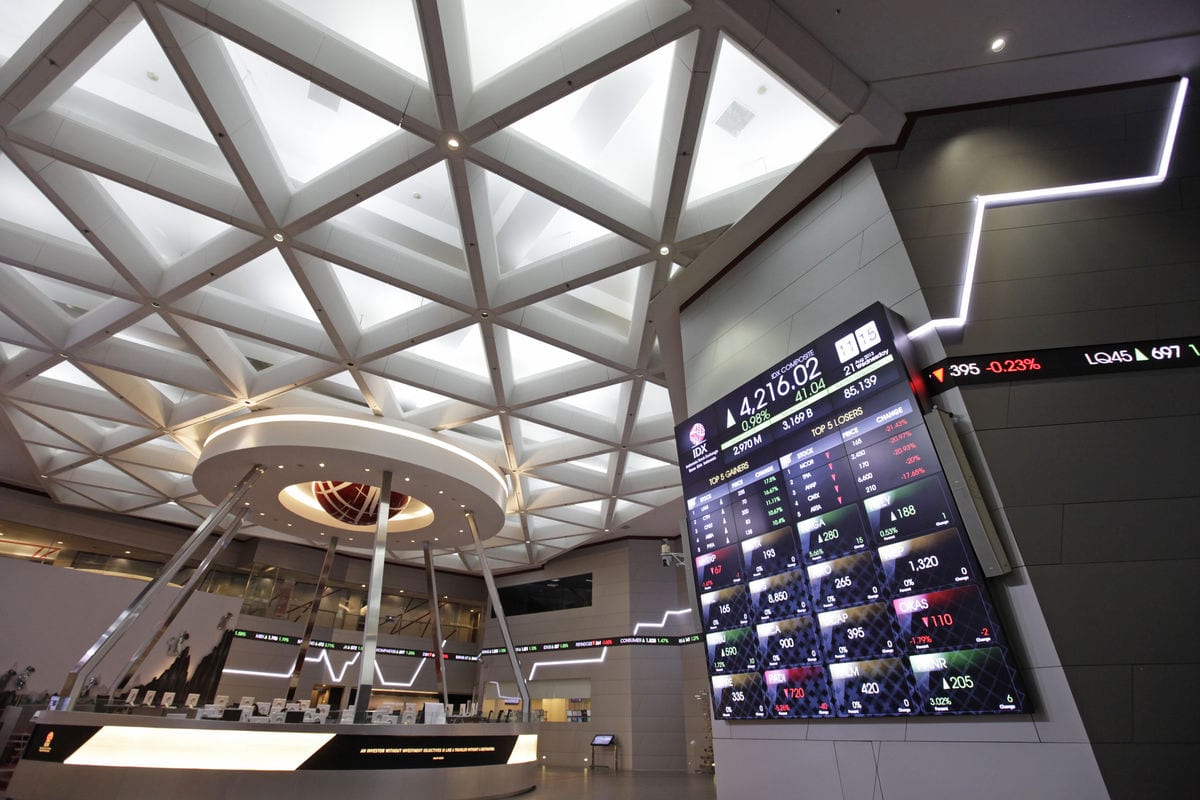
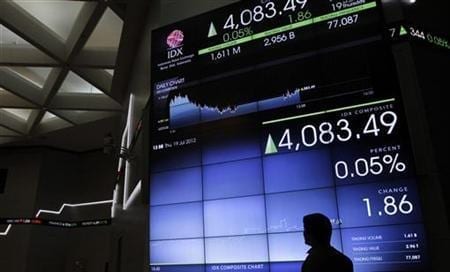
    The Indonesian Stock Exchange (IDX)s Datafeed disruption on Monday morning was claimed to have no effect on investors confidence.

    “We measured our Key Performance Indicator, and the result was still good,” IDX General Director Tito Sulistio stated here on Monday.

    To date, the disruption had been fixed, and IDXs information system has returned to normal; however, Sulistio added that IDX would continue to develop its information technology to upgrade their trade availability system in order to avoid and minimize disruption.

    He explained that the system had a maximum availability of 99.999 percent, and IDX already had 99.975 percent, which will be upgraded to 99.98 percent.

    “Every 0.05 percent hike may need US$20-25 million,” he remarked.

    At the same time, IDX is trying to upgrade its trade infrastructure system from Tier-2 to Tier-3.

    “Hopefully, we will be moving to the new Tier-3 system on August 30,” noted Sulistio.

    Separately interviewed, IDX Director of Information Technology and Risk Management Sulistyo Budi revealed that the disruption was caused by uneven distribution of information from Datafeed application.

    “During investors trading, information for public has to be provided. When it is not available, we have to suspend the trade in order to check the problem. Once it is resolved, activities return to normal,” he stated.

    Despite the IDXs claims, Indosurya Mandiri Securities analyst William Surya Wijaya explained that the bourse could anticipate more technical systems disruption that might affect investments plan from the stakeholders.

    “This could be a lesson for the stock market players, so that they should also anticipate systems disruption,” he explained.

    Wijaya was optimistic that the investors confidence in Indonesian market was still high as the domestic economy remained conducive, despite being overshadowed by some negative sentiment, especially current geopolitical situation.

  • More Filipinos adopt online trading at stock mart

    More Filipinos adopt online trading at stock mart

    Online accounts at the Philippine stock market grew 27.8 percent to 302,516 from 236,669 in 2015, according to the annual Philippine Stock Exchange (PSE) report.

    PSE reported also that the total number of stock market accounts, which include both online and traditional accounts, was at 8.5 percent, from 712,549 accounts in 2015 to 773,187 at the end of 2016.

    “Technology has played a big role in the growth of our investor base over the years. We are pleased to see that more Filipinos have continued to adopt online trading to invest in the stock market,” said PSE President and CEO Ramon S. Monzon.

    Investors with online accounts trade themselves, typing in their buy or sell orders on their online trading platform whereas investors with accounts in traditional stock brokerage firms have to call their broker to place their orders.

    The minimum required amount to open an account and the broker’s fee of online stock brokerage firms are usually lower compared with their traditional counterpart. Online investors are typically provided research materials by their online broker while investors of traditional firms also get research reports and they can discuss their investing options with their broker.

    The continued growth in online accounts also translated to higher trading activity. In 2016, 53.7 percent of total market transactions, measured in terms of number of trades, were accounted for by online accounts.

    This was the first year that online transactions were responsible for more than half of the market’s total transactions. Online trades registered a 41.4 percent growth in value turnover, which translated to a 9.3 percent share in the market’s total value turnover.

    Of the total stock market accounts, 98.2 percent, or 759,952, were held by local investors while the remaining 1.8 percent or 13,595 were accounts of foreign investors.

    The PSE’s 2016 Stock Market Investor Profile survey showed that among the retail investors using online and traditional brokering, 43.7 percent earn less than P500,000 annually. This was followed by investors earning above P1 million at 31.1 percent while investors with an annual income of Php 500,000 to Php 1 million made up 25.2 percent of the total retail investors.

    Meanwhile, close to 40 percent of investors were aged 30 to 44. The 45- to 59-year-old investors covered 26.4 percent of the total count and those who are 60 and above comprised 19.3 percent. The young millennials or those between 18 and 29 had accounted for 14.8 percent of investors.

    In terms of geographic location, a total of 96.1 percent of retail investors are based locally while the rest are based overseas.

    The concentration of retail investors continue to be in Metro Manila, which accounted for 70.6 percent of investors. Luzon cornered 16.4 percent of investors with Visayas and Mindanao making up for 6.2 percent and 2.9 percent, respectively. Overseas-based investors comprised 3.9 percent of retail accounts.

    “We are pleased with the continued growth of stock market investors in the market. Clearly, we have a long way to go and we at the PSE will continue our financial literacy programs to demystify stock market investing and make investing as understandable and accessible as bank or insurance products,”. Monzon said.

    In the past year, the PSE has intensified its market education efforts by doubling the number of its free seminars both in Metro Manila and in Cebu. To cater to the increasing number of tech-savvy Filipinos, PSE has been regularly conducting free webinars to discuss basic and intermediate topics. These webinars attract close to 500 participants per session.

    Online retail investors younger, more spread across the country

    The PSE survey results showed that close to three quarters of online retail investors are aged 18 to 44 years. Among online investors, 21.7 percent are in the 18 to 29 year old range, 52.9 percent are 30 to 44 years old, 18.4 percent are 44 to 60 years old, while the remaining 7.0 percent were 60 years and above.

    In terms of location, retail online investors are also less concentrated in Metro Manila compared to the geographical distribution of total stock market accounts. For online accounts, Metro Manila investors only accounted for 57.0 percent of the total online accounts, with Luzon, Visayas and Mindanao online investors making up a much bigger share of 26.0 percent, 6.8 percent and 4.2 percent, respectively. The share of overseas-based clients is also higher at 5.9 percent for online accounts.

    The survey also showed that online traders invest even with lesser incomes. Those earning P500,000 or less annually comprise 60.3 percent of the total online trading population. Meanwhile, 23.7 percent of online traders earn between P500,000 to P1 million per year and the remaining 16.0 percent have incomes of more than P1 million annually.

    “The numbers show that more investors are finding out that participating in the stock market is actually an affordable investment. We are also happy that our online brokers have been able to reach out to more Filipinos outside of Metro Manila towards making stock market investing more inclusive,” Monzon added.

  • 500 Startups funds Stockbit, a social network for stock trading

    500 Startups funds Stockbit, a social network for stock trading

    Indonesia’s Stockbit bills itself a “social network for stock traders.” Individual traders sign up for customizable stock market information and analytics. Basic features are free, while paying subscribers get more in-depth intelligence.

    The site’s been growing and adding features since 2012. The company just closed an investment from 500 Startups, it said in a release today. It’s a pre-series A round, and the sum is undisclosed.

    The new investment is supposed to fuel the launch of a new a feature that lets community members follow more experienced stock traders and copy their investment moves in an automated process.

    “Our proposition is simple. Just copy, let the best do the rest,” is how CEO Wellson Lo explains the feature. You can allocate a fixed amount, say US$5,000, and this amount will be invested by mirroring the person you are following. Trading “leaders,” as the people you can follow are called, also benefit. They get a share of the profits you make.

    It’s been in development since last year and will become available on Stockbit’s iOS and Android apps soon, though there’s no set launch date yet.

    Traders wanted

    Public participation in the stock market is extremely underrepresented in Indonesia, argues Wellson. Less than 0.3 percent of the adult population have a stock trading account. In Singapore, it’s 39 percent and more than 20 percent in China.

    Part of the reason is a knowledge gap, which Stockbit hopes to address by making it simple for novice traders to learn and reap benefits without risking too much.

    Back in 2015, after Stockbit last raised funds, including from local VC firm Ideosource, Wellson had told Retail News that the startup had 15,000 registered users, while paid subscribers were still only in the hundreds. The user base has about tripled since then, according to Stockbit.

    There’s an ongoing effort by the Indonesian Financial Services Authority to raise awareness about investment opportunities on Indonesia’s public markets, a development Stockbit hopes to be able to leverage for its growth.

    500 Startups partner Vishal Harnal says Stockbit is already the largest and most active community of stock traders in the country, which gives the startup an advantage over potential competition.

    Besides Stockbit, there are trading information sites like Idsaham or Infovesta, but those sites merely aggregate stock information and don’t yet offer analytics tools. Bareksa can be seen as a possible competitor, as it offers a variety of financial analytics tools and also aggregates information about the Indonesian Stock Exchange, among other functions.

    Algomerchant from Singapore has a similar solution, offering a mix of social networking and analytics. However, Algomerchant lets you subscribe to a set of trading algorithms, not individual people, explains Wellson. Stockbit’s social trading model is most comparable to Covestor in the US.

  • Asian shares rattled by Trump policy worries, dollar soft

    Asian shares rattled by Trump policy worries, dollar soft

    Asian shares slipped on Tuesday as stringent curbs on travel to the United States ordered by President Donald Trump brought home to investors that he is serious about carrying out his controversial campaign pledges.

    Global stocks posted their biggest loss in six weeks on Monday after Trump signed an executive order to bar Syrian refugees indefinitely and suspend travel to the United States from seven Muslim-majority countries, sparking widespread protests.

    European bourse are expected to remain fragile after big losses on Monday, with spread-betters seeing opening losses of as much as 0.1 per cent in major indexes, including Britain’s FTSE, Germany’s DAX and France’s CAC.

    “Investors are becoming worried as it appears as if he was setting fire to geopolitical risks that already exist,” said Yoshinori Shigemi, global market strategist at JPMorgan Asset Management.

    Trump’s move drew criticism from some US policymakers, and business leaders, with technology companies, which depend on talent from around the world, planning to discuss a legal challenge.

    “His stance is really inward-looking, making investors nervous about his ’moderateness’,” said Masahiro Ichikawa, senior strategist at Sumitomo Mitsui Asset Management.

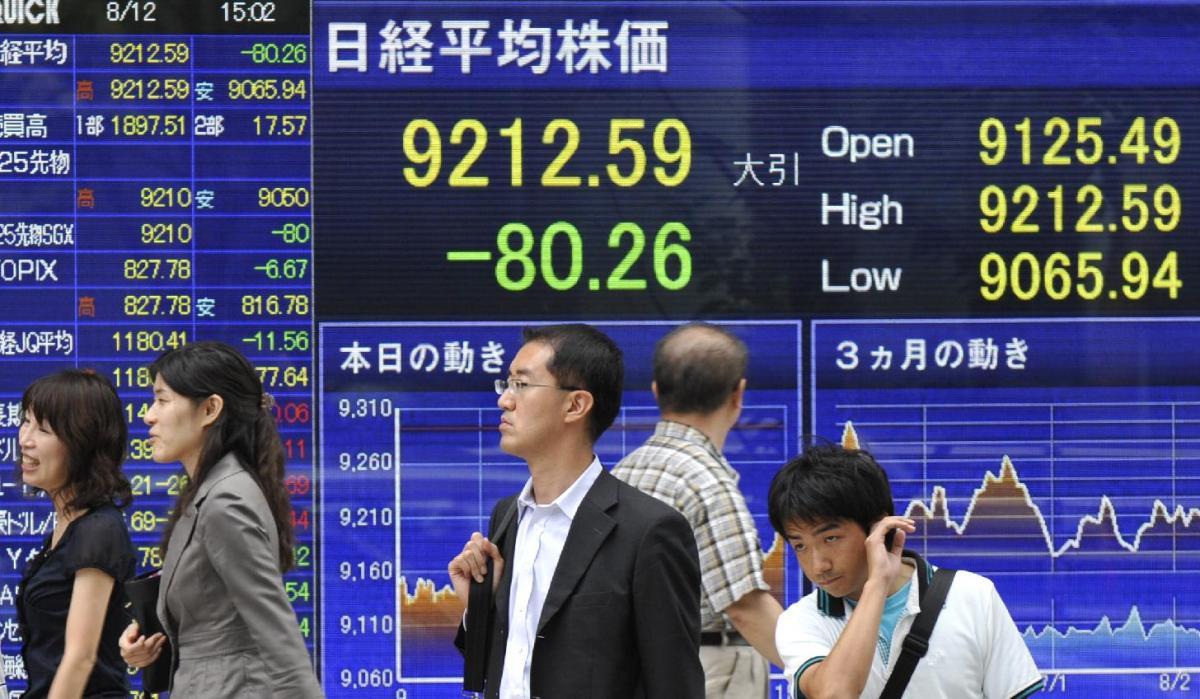
    MSCI’s broadest index of Asia-Pacific shares outside Japan fell 0.5 per cent while Japan’s Nikkei dropped 1.7 per cent, its biggest fall in almost three months.

    On Monday, the US S&P 500 Index fell 0.6 per cent, its biggest fall in a month, though it remained well above levels seen before the November 8 presidential election.

    MSCI’s gauge of the world’s 46 stock markets shed 0.6 per cent, its largest loss in a month and a half.

    The mood soured further when Trump fired the federal government’s top lawyer after she took the extraordinarily rare step of defying the White House.

    US stock futures ESc1 shed 0.3 per cent on Tuesday and the dollar extended losses against the yen.

    Still, most share prices were up on the month, supported by signs of accelerating momentum in the global economy and hopes of large fiscal stimulus from Trump.

    MSCI’s ex-Japan Asian shares index was up 5.7 per cent this month while its index of world markets was up 2.5 per cent. They were also higher than their levels before the US elections.

    In the currency market, the dollar was broadly weak and fell 0.3 per cent against the yen to 113.49 yen. It was down 3.1 per cent so far this month, after three straight months of sizable gains.

    The Japanese currency showed no reaction after the Bank of Japan kept its policy on hold, as expected. A string of recent data has suggested the economy is slowly regaining traction.

    The euro edged up to US$1.0710, consolidating after its rebound this month from its 14-year low of $1.0340 set on January 3.

    In a possible sign of increased anxiety among investors, the safe-haven Swiss franc strengthened to a seven-month high of 1.0637 franc per euro on Monday.

    Worries are also growing about a political shift to populist leaders in Europe.

    French bond yields rose to the highest level since September 2015, on rising uncertainty over the Presidential election later this year.

    Conservative leader Francois Fillon, seen as the front-runner, is now battling to contain a scandal over allegedly unlawful payments to his wife while the Socialists on Sunday picked a hard-left candidate, possibly helping popular far-right leader Marine Le Pen.

    Italian debt yields climbed to 1 1/2-year highs partly as early elections could be called following a ruling from the country’s constitutional court last week.

    Italian assets have also been hit by worries over its banking sector after UniCredit, the country’s biggest bank, revealed on Monday it expects to book a net loss of around 11.8 billion euros ($12.6 billion) for 2016 and fall short of European Central Bank capital requirements.

    By contrast, the yield on German debt fell on Monday even as data showed inflation in Germany hit a 3 1/2-year high in January.

    News that Germany posted a national inflation rate of 1.9 per cent stoked talk of an unwinding of monetary stimulus by the ECB, even though the inflation outcome was below expectations.

    Elevated uncertainty about Trump’s policies, including a lack of detail so far on his plans for tax cuts and fiscal spending, offset optimism on the US economy.

    Data on Monday showed US consumer spending accelerated in December while inflation showed some signs of picking up last month.

    The core PCE price index, the Federal Reserve’s preferred inflation measure, rose 1.7 per cent on a year-on-year basis after a similar gain in November.

    “We’ve seen a jump in US economic sentiment after Trump’s victory. But the improvement in hard economic data remains moderate,” said Haruka Kazama, senior economist at Mizuho Research Institute.

    “And if Trump takes more steps to limit permits for immigrants, that would surely boost inflation as the US is now near a full employment,” she added.

    The Federal Reserve, which will start its two-day policy meeting today, is widely expected to keep interest rates unchanged as it awaits greater clarity on Trump’s economic policies.

    Oil prices dipped as rising US drilling activity offset efforts by OPEC and other producers to cut output in a move to prop up the market.

    Brent crude futures LCOc1, the international benchmark for oil prices, were trading at $55.14 per barrel, down 0.2 per cent from Monday’s settlement price.
  • Nearly 70 million more shares listed on UpCoM

    Nearly 70 million more shares listed on UpCoM

    Unlisted Public Company Market (UPCoM) welcomed the listing of nearly 70 million shares of five companies on Monday, with share value registered for trading equal to VNĐ693.4 billion (US$31 million).

    The five companies are 36 Corporation (G36), Sài Gòn-Nghệ Tĩnh Bear Joint Stock Company (SB1), Hà Nội Water Manufacturing Joint Stock Company No 3 (NS3), Quảng Ngãi Water Supply Sewerage and Construction Joint Stock Company (QNW) and Bridge Joint Stock Company No 12-Cienco 1 (C12).

    Listings on UPCoM have witnessed a surge recently. On December 20, five companies were also listed on UPCoM, with total share value equal to VNĐ328.6 million.

    The market appeared to be more attractive to investors as many large companies had listed or planned to list on UPCoM, following the regulation that State-owned enterprises which were public companies must register for trading on UPCoM following equitisation, in case they did not meet requirements for listing on the official exchanges.

    UPCoM was founded in 2009 and currently more than 400 firms are listed on the market, with capitalisation value doubling the Hà Nội Stock Exchange.

    However, its trading value was modest at around one fourth of the northern bourse. More than 140 stocks did not see transactions conducted in the past one month, partly due to investors’ hesitancy over transparency.

  • Big appetite for online platform to trade funds

    Big appetite for online platform to trade funds

    Most local and mainland retail investors will trade funds on an online platform if the Hong Kong Exchanges and Clearing sets up and operates one, according to a Hong Kong Investment Funds Association survey.

    The poll showed that 81 percent of mainlanders would like to use such a scheme – where funds can be bought and sold like stocks – and 51 percent of Hongkongers would opt for it.

    HKIFA surveyed 950 mainland and local retail investors in October. Some 70 percent of respondents were Hongkongers.

    It said setting up such a trading platform will enable fund managers to offer diversified wealth-management services to investors, most of whom are currently investing only in stocks.

    At the moment, about 70 to 80 percent of investments in funds are done through banks, which determine the service fees and commissions for their services.

    HKIFA chief executive Sally Wong Chi-ming said introducing competition via a new channel for selling funds will help bring down service fees, benefiting retail investors.

    She noted that though foreign experience suggests that having a new sales channel will not necessarily wean fund investors from banks, it’s the new investors who may be lured to try out funds.

    Wong said HKIFA has been in talks in the past two years with HKEx and local brokerages for the establishment of a fund-trading platform. Many markets in the region – including Taiwan, Korea, Thailand and Australia – have set up such a platform.

    She said talks with HKEx are focused on operations, with the bourse operator looking at prospects of setting up one.

    HKEx needs to update its fund- trading system, which is more diversified than the one used in trading standardized equity products, said Wong.

    HKIFA will also work with the Securities and Futures Commission, the local securities regulator, to formulate related regulations to help set up the platform.

    The SFC has to clarify numerous issues, including the online fund transaction process, the boundary between recommendation and solicitation, and the circumstances that will trigger suitability testing, said Wong.

    The SFC will soon issue a circular relating to suitability.