Retail News CRM

Tag: game

  • Revolutionizing E-Commerce: Alibabas Qwen AI Changes the Game in Online Shopping Experience

    Revolutionizing E-Commerce: Alibabas Qwen AI Changes the Game in Online Shopping Experience

    Alibaba, the Chinese technology behemoth, is set to revolutionize the way consumers search for products online. The company plans to link its artificial intelligence (AI) system Qwen to Taobao and Tmall’s online catalogues, which together comprise over 4 billion products. The Qwen-powered shopping assistant will be directly integrated into the Taobao app, allowing users to ask comprehensive questions, receive personalized suggestions, compare different options, and execute transactions, without ever leaving the chat interface.

    Revolutionizing E-commerce Infrastructure

    The impact of Alibaba’s latest innovation is best understood by examining the scale of its implementation. Taobao and Tmall, the world’s largest e-commerce marketplaces in terms of gross merchandise value, handled an estimated combined total of US$1.4 trillion in transactions last year. This figure eclipses Amazon’s third-party marketplace by nearly three times.

    What sets Alibaba’s approach apart is that it is not simply adding an AI feature to an existing platform, like OpenAI’s third-party plug-ins or Amazon’s AI-powered recommendations. Instead, Qwen, which has been trained using over two decades of Alibaba’s proprietary transaction data, merchant operations, and consumer behaviour, is woven into the transaction layer of the company’s e-commerce platform.

    The integration of Qwen addresses the challenges faced by global AI platforms trying to enter the e-commerce space. While they have to start from scratch, building trust and personalization, Alibaba already holds the keys: owning the data, the catalogue, the payment infrastructure through Alipay, and the logistics network through Cainiao. Qwen is the final piece of the puzzle, the conversational interface that ties everything together.

    A New Shopping Experience

    Qwen’s integration offers consumers a novel shopping experience. It goes beyond providing keyword-based search results. For instance, if a user is unsure what to buy for a friend’s birthday, Qwen can suggest appropriate gifts based on the user’s budget and their friend’s preferences. Similarly, someone looking to redecorate a small apartment can describe their needs, to which Qwen responds with a curated bundle of products and styling suggestions.

    Moreover, Qwen can provide detailed product comparisons for specific queries, from children’s camping gear to electric toothbrushes for sensitive gums. With the help of Alibaba’s multimodal model, it can even simulate how a garment would look on a user’s photo. The company plans to extend this feature to include footwear and accessories.

    Qwen can also assist users financially. It can aggregate platform discounts during major shopping events, recommend the best coupon combinations at checkout, and track the price of a specific item over a 30-day period, automatically placing the order when the price reaches the user’s target.

    All these features cumulatively signal a fundamental shift in e-commerce: from a passive model that waits for the consumer to make a decision, to a proactive model that monitors conditions and acts on behalf of the consumer.

    Alibaba is not alone in pushing for this paradigm shift. Other Chinese tech companies, like ByteDance, Tencent, and JD.com, are also integrating AI more deeply into their consumer interfaces.

    Questions & Answers

    What is Alibaba’s new initiative in e-commerce?
    Alibaba is integrating its AI system, Qwen, into the Taobao app. This will allow users to ask detailed questions, get personalized recommendations, compare products, and make purchases, all within a chat interface.

    How does the Qwen integration differ from other AI implementations in e-commerce?
    Qwen has been trained on over two decades of Alibaba’s transaction data, merchant operations, and consumer behaviour. It is not merely an add-on to Alibaba’s platforms, but is deeply woven into the transaction layer, enabling a more seamless and personalized shopping experience.

    What are some of the features of the Qwen Shopping Assistant?
    Qwen offers detailed product comparisons, simulates how clothing would look on a user’s photo, aggregates discounts during major sale events, recommends optimal coupon combinations at checkout, and tracks product prices over a 30-day period, automatically placing the order when the price matches the user’s target.

  • Reliance Retail Ups Beauty Game with Acquisition of Priyanka Chopra Jonas’s Anomaly

    Reliance Retail Ups Beauty Game with Acquisition of Priyanka Chopra Jonas’s Anomaly

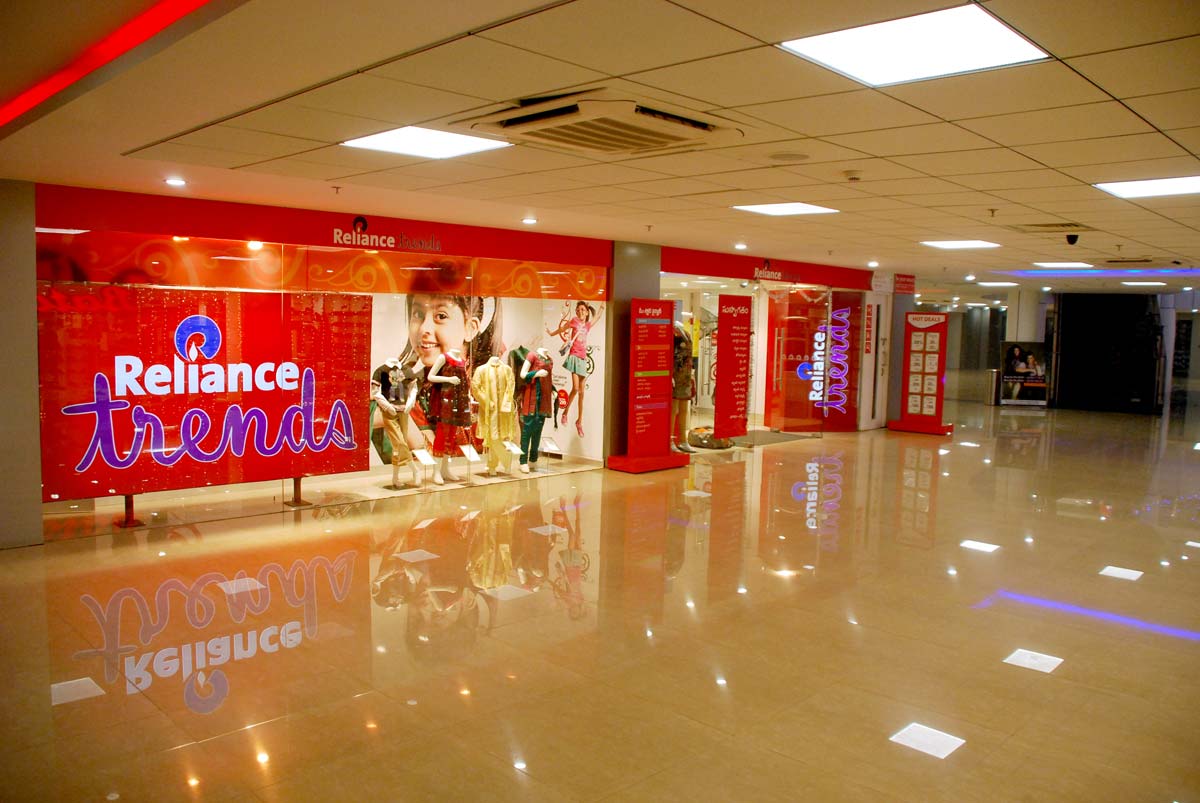
    Reliance Retail, the premier retailer in India, has recently added the Anomaly haircare brand, owned by globally renowned actor Priyanka Chopra Jonas, to its portfolio.

    Strategic Acquisition of Anomaly

    Anomaly was established by Chopra Jonas in 2021. It offers a range of affordable vegan haircare products that are sold globally. The brand was acquired from Maesa, a U.S.-based beauty company. The acquisition marks a strategic move for Reliance Retail as it continues to diversify its range of offerings with cutting-edge, fast-growing beauty brands.

    Isha Ambani, Executive Director at Reliance Retail Ventures, commented on the acquisition. She stated that Anomaly’s powerful global presence, commitment to clean formulation, and affordable pricing make it a valuable addition to the company’s ecosystem. Ambani sees substantial potential for growth in a collaborative effort with Chopra Jonas, aiming to expand Anomaly’s market in India by capitalizing on Reliance Retail’s omnichannel capabilities and deep consumer insight, while also increasing the brand’s international footprint.

    Plans for Expansion

    Reliance Retail intends to concentrate on expanding Anomaly’s presence in India. The company will also work towards increasing the brand’s market in North America, the United Kingdom, and the Middle East.

    Chopra Jonas expressed her excitement about the new journey Anomaly embarks on following the acquisition by Reliance Retail. She remarked that what started as a deeply personal endeavor has now evolved into a brand with a significant purpose and global ambitions.

    Questions & Answers

    What is Anomaly and who owns it?
    Anomaly is a vegan haircare brand that was founded in 2021 by the world-renowned actor Priyanka Chopra Jonas.

    Who acquired Anomaly?
    Anomaly was recently acquired by Reliance Retail, the largest retailer in India.

    What are Reliance Retail’s plans for Anomaly?
    Reliance Retail plans to expand Anomaly’s presence in India using its omnichannel capabilities and deep consumer insights. It also aims to increase the brand’s market in North America, the United Kingdom, and the Middle East.

  • Coca-Cola Unveils New Absolut Vodka & Sprite Fusion: A Game Changer in Australia’s Ready-to-Drink Market

    Coca-Cola Unveils New Absolut Vodka & Sprite Fusion: A Game Changer in Australia’s Ready-to-Drink Market

    Coca-Cola Australia has broadened its alcoholic ready-to-drink range with the introduction of mixed drinks featuring Absolut Vodka and Sprite.

    Varieties in the New Range

    The new product line includes two distinct variants: Absolut Vodka Mixed with Sprite and Absolut Vodka Mixed with Sprite Zero Sugar. Both the versions maintain a modest alcohol by volume (ABV) content of 5 per cent, offered in 330ml cans.

    Available Packaging Options

    Customers have the option to buy these beverages in 4-packs, 10-packs, or bulk 24-can cases. The range of packaging options caters to different customer needs, whether it’s for personal consumption or a social gathering.

    Developing a Premium, Refreshing RTD Option

    Matthias Blume, Vice President of ARTD at Coca-Cola Australia, spoke about the recent launch. He stated that the introduction of Absolut Vodka Mixed With Sprite is a fusion of two renowned brands, aiming to provide a high-quality, invigorating ready-to-drink option for consumers in Australia. He also emphasized that this product is a valuable addition to their expanding ARTD portfolio, as it mirrors the ongoing momentum of the category and responds to the increasing consumer demand.

    Notably, this isn’t Absolut Vodka’s first foray into creative flavor combinations. The brand had previously collaborated with Tabasco to introduce a spicy flavor variant to its range.

    Questions & Answers

    What are the two versions of the new product launched by Coca-Cola Australia?
    Absolut Vodka Mixed with Sprite and Absolut Vodka Mixed with Sprite Zero Sugar are the two versions introduced in the new range.

    What are the available packaging options for this new range?
    Consumers can purchase these beverages in 4-packs, 10-packs, or 24-can cases.

    What is the significance of this new product range according to Matthias Blume, VP ARTD at Coca-Cola Australia?
    Matthias Blume suggests that the introduction of Absolut Vodka Mixed With Sprite reflects not only the momentum of the category but also the increasing consumer demand. It is intended to provide a premium, refreshing ready-to-drink option for Australian consumers.

  • Casino Operators Battle Proposed Doubling of Monthly Entry Fees to $1,900: A Game Changer?

    Casino Operators Battle Proposed Doubling of Monthly Entry Fees to $1,900: A Game Changer?

    Casino operators are voicing their concerns over a proposed plan by regulatory bodies to increase the monthly casino entry fee to VND50 million ($1,900). Some operators suggest this amount should instead be set as the annual entry fee.

    Increased Entry Prices

    The Ministry of Finance is currently inviting feedback on an initiative to raise the entry fees for casinos. The proposal also includes an increase in the price of a one-day ticket by 2.5 times to VND2.5 million. At the moment, there is no option to purchase annual tickets.

    The Ho Tram Project Company, the entity operating the Ho Tram Casino in Ho Chi Minh City, has put forward a suggestion for the introduction of an annual ticket at a cost of VND50 million, with no changes to the existing rates. This initiative would equate to approximately VND4.2 million per month, or 16.8% of the present VND25 million. The company states that this pricing structure aligns with that of Singapore, where visitors pay VND3 million for a 24-hour pass and VND60 million for an annual pass.

    The Corona Casino, located on Phu Quoc Island, has proposed fixing the one-day ticket price at VND1.5 million, with a VND35 million monthly pass. These prices are 30-40% lower than the new proposed rates.

    Opposition to the Proposal

    The ministry, however, has dismissed both proposals, arguing that increased pricing is necessary to dissuade individuals with insufficient funds from engaging in gambling activities. The Ministry of Justice previously stated that using entry prices as a measure of a player’s finances is not an effective approach.

    At present, Vietnamese citizens are permitted to enter three casinos, the third being the Van Don Casino in Quang Ninh province near the Chinese border. Vietnam has six other casinos; however, these are exclusively open to foreign visitors, as the government continues to maintain strict control over the gambling industry.

    The Phu Quoc casino, which is operated by a subsidiary of Vingroup, was the pioneer in allowing local entry through a pilot program initiated in 2016. The venue houses 1,470 slot machines and 147 gaming tables. Over the past five years, Vietnamese patrons have made up 52% of the casino’s clientele and contributed to 88% of its revenue. However, these figures have seen a downward trend following the Covid-19 pandemic, with local patronage dwindling to a mere 12% last year.

    Questions & Answers

    Why have casino operators objected to the proposed increase in entry prices?
    Casino operators argue that the suggested price hikes could deter visitors, leading to a decrease in revenue. They propose that these increased fees should instead be applied to annual tickets.

    Why does the Ministry of Finance believe higher entry prices are necessary?
    The Ministry of Finance maintains that increased entry prices are a means to discourage individuals who may not have sufficient financial resources from indulging in gambling activities.

    Why have the numbers of Vietnamese patrons at the Phu Quoc casino decreased since the onset of the Covid-19 pandemic?
    The reduction in local patronage may be due to factors such as economic hardship caused by the pandemic, increased health concerns, and the implementation of social distancing measures.

  • VinFast Set to Revolutionize Transport with Hybrid Vehicles in 2023: A Game Changer in the EV Market?

    VinFast Set to Revolutionize Transport with Hybrid Vehicles in 2023: A Game Changer in the EV Market?

    VinFast, a Vietnamese automaker, is reportedly planning to tap into the hybrid vehicle market by next year. The company will reportedly add gasoline-powered generators to its existing electric vehicle models, easing the transition for consumers into the electric vehicle market.

    VinFast’s Hybrid Vehicle Plans

    Informed sources have revealed that VinFast is gearing up to roll out hybrid versions of its VF 8 and VF 9 models. However, the automaker has yet to officially confirm these plans. The recent buzz surrounding VinFast’s entry into the hybrid market was stoked when Sailun, a Chinese tire manufacturer with operations in Vietnam, used images of a car resembling a VinFast model in their promotional materials for an upcoming line of hybrid vehicle tires.

    According to insiders, the VinFast hybrid vehicles will likely fall under the extended-range electric vehicle (EREV) category. These vehicles are fully powered by an electric engine, but feature a gasoline-fueled generator to recharge the battery. This specific type of hybrid vehicle could broaden the customer base for electric vehicles by addressing common concerns about long-distance travel and the availability of charging stations.

    Global Shift Towards Hybrid Vehicles

    VinFast’s move towards hybrid vehicles mirrors a broader global trend among automakers. Several leading companies, including Honda, Mercedes, and Volvo, initially committed to exclusively manufacturing electric vehicles. However, they later modified or abandoned these plans, incorporating hybrid vehicles into their lineups. BYD, currently the top-selling new-energy vehicle brand worldwide, also heavily relies on hybrid vehicle sales.

    In recent years, hybrid vehicle sales in Vietnam have seen consistent growth, with a variety of options available from manufacturers like Toyota, Honda, Nissan, Suzuki, and Subaru. Chinese brands like BYD, Jaecoo, and Lynk & Co are further expanding the hybrid vehicle segment. Depending on the design, the interaction between the gasoline engine and the electric motor produces diverse hybrid formats.

    Extended-range electric vehicles are relatively rare in the Vietnamese market. The Nissan Kicks was the only model in this category, but it is no longer available for sale.

    Questions & Answers

    What are VinFast’s plans for entering the hybrid vehicle market?
    VinFast is reportedly planning to introduce hybrid versions of its VF 8 and VF 9 models by next year.

    What is an extended-range electric vehicle (EREV)?
    An EREV is a vehicle that is entirely powered by an electric engine but also has a gasoline-fueled generator to recharge the battery.

    How does VinFast’s shift towards hybrid vehicles fit into global automotive trends?
    VinFast’s move aligns with a broader international trend, with many automakers initially committing to electric vehicles but later incorporating hybrid vehicles into their lineups.

  • UBS Challenges Swiss Court Verdict on Credit Suisse’s AT1 Bond Valuation: A Game Changer in Bank Recovery?

    UBS Challenges Swiss Court Verdict on Credit Suisse’s AT1 Bond Valuation: A Game Changer in Bank Recovery?

    The Swiss Federal Administrative Court issued a partial ruling on October 13, 2025, which put up for debate the legality associated with deeming Credit Suisse’s Additional Tier 1 (AT1) bonds as worthless. The ruling came in response to an appeal lodged by Switzerland’s financial regulator, Finma. Now, UBS has declared its intention to lodge their appeal as well.

    UBS to Appeal Ruling

    In line with the release of its results for the third quarter of 2025, UBS announced its plan to challenge the partial ruling of the Federal Administrative Court relating to the AT1 litigation. The bank clarified that this step is being undertaken with the aim of ensuring that the court considers its perspective regarding the relevant facts associated with the acquisition of the AT1 bonds.

    UBS also emphasized that the appeal is essential in order to preserve the credibility of AT1 instruments, considering the integral role these play in the resolution and recovery process of banks.

    Key Component of the Bailout Package

    UBS highlighted that the devaluation of Credit Suisse’s AT1 instruments was an important part of the bailout package. The bank maintained that the devaluation was in line with the contractual terms of the AT1 instruments and the applicable legislation. It also asserted that the decision taken by Finma was lawful.

    UBS pointed to the conclusions reached by the Parliamentary Inquiry Commission, which determined that Credit Suisse would have faced insolvency without the bailout package and would not have been able to continue its operations after Monday, March 20, 2023.

    Challenging A Questionable Verdict

    In October, the Federal Administrative Court ruled that the legal foundation for Finma’s decision to deem Credit Suisse’s AT1 bonds as worthless was inadequate. Finma has already taken a step to challenge this decision at the Federal Supreme Court, and UBS has now announced its decision to do the same.

    UBS has also addressed several questions related to the AT1 issue on its FAQ page.

    Questions & Answers

    Why is UBS appealing the ruling?
    UBS is appealing the ruling to ensure the court considers their view regarding the acquisition of the AT1 bonds and to safeguard the credibility of AT1 instruments due to their key role in the resolution and recovery of banks.

    Why was the devaluation of Credit Suisse’s AT1 instruments a critical part of the bailout package?
    The devaluation was crucial as it was in line with the contractual terms of the AT1 instruments and the applicable law. Without the bailout package, Credit Suisse would have faced insolvency.

    What was Finma’s decision regarding Credit Suisse’s AT1 bonds?
    Finma decided to render Credit Suisse’s AT1 bonds worthless. However, the Federal Administrative Court ruled that the legal basis for this decision was insufficient. Finma and UBS have both decided to appeal this decision.

  • Puma’s Data-driven Approach Boosts Customer Loyalty In Southeast Asia

    Puma’s Data-driven Approach Boosts Customer Loyalty In Southeast Asia

    In the retail and branding sector, data reigns supreme. It provides valuable insights that can be employed to boost personalisation and foster customer loyalty. Sportswear retailer Puma provides a case study for this, as it navigates customer relationship management (CRM) and lifecycle marketing in Southeast Asia.

    Understanding the Data Challenge

    A one-size-fits-all CRM strategy won’t suffice, especially in Southeast Asia’s diverse market. The key to any successful CRM strategy is the development of a robust database. Ankit Madhogaria, Puma’s director of e-commerce Southeast Asia, emphasizes the importance of gathering accurate consumer data both online and in physical stores. This data can then be integrated into software platforms to provide a comprehensive view of all customer interactions, transactions, and touchpoints.

    However, Puma has experienced difficulty in procuring data from its offline customers, with Madhogaria noting that customers are less inclined to share information unless they are given a compelling reason to do so. The data required can be categorized into three types: communication data (like phone numbers or emails), personal data (such as birthdays or purchase anniversaries), and behavioral data, which includes the channels customers use to make purchases. Madhogaria suggests that capturing these data types can present robust opportunities for future campaign creation and customer engagement.

    The Power of Personalisation

    Puma has been redefining personalisation at scale with the assistance of SAP Emarsys’ customer engagement platform. The platform has enabled Puma to execute smart lifecycle strategies customized to suit each market within the region, resulting in impactful omnichannel engagement.

    Madhogaria believes that successful personalisation is achievable with the right tools and an effective data capturing strategy. Using these tools, Puma can generate product recommendations that can be integrated into emails, thus driving increased click-through and conversion rates.

    Successful Campaigns and Strategies

    Madhogaria highlighted several successful campaigns driven by their data-driven approach. Puma has implemented cross-sell promotions in transaction-related emails, which generally have a higher open rate. For instance, if a customer purchased running shoes, Puma recommended complementary items such as a t-shirt or shorts. This strategy resulted in a 3% increase in returning customers within a month, translating to a near 20% rise in efficiency and a substantial boost in revenue.

    Puma’s Birthday Bash campaign was another major success, particularly in Southeast Asia. The campaign, celebrating Puma’s birthday with significant discounts, resulted in a nearly 60% uplift in offline revenue and nearly triple the online revenue. Notably, almost 60% of the campaign’s revenue came from repeat customers.

    Building Loyalty in Southeast Asia

    Understanding the nuances of different markets and consumers’ preferred communication channels is crucial for building loyalty. For instance, Viber is significant in the Philippines, Line in Thailand, and Zalo in Vietnam.

    Madhogaria stresses the importance of continuous experimentation to understand what strategies work best in each market. Puma’s approach demonstrates that successful CRM in Southeast Asia involves more than just data collection; it requires testing, learning, and delivering campaigns that resonate with local consumers.

    Questions & Answers

    What are the three types of data Puma gathers from customers?
    Puma gathers three types of data: communication data (like phone numbers or emails), personal data (such as birthdays or purchase anniversaries), and behavioral data, which includes the channels customers use to make purchases.

    How has Puma personalized its marketing strategy?
    Puma uses SAP Emarsys’ customer engagement platform to implement personalized lifecycle strategies tailored to each market. The tool also generates product recommendations that can be integrated into emails to customers.

    What successful campaigns have Puma executed in their CRM journey?
    Puma has executed several successful campaigns, including the Birthday Bash campaign that resulted in a nearly 60% uplift in offline revenue and nearly triple the online revenue. Another strategy involved integrating cross-sell promotions into transaction-related emails, which led to a 3% increase in returning customers within a month.

  • Gap Inc. Expands Into Beauty Market: Pilot Launch In Old Navy Stores This Fall

    Gap Inc. Expands Into Beauty Market: Pilot Launch In Old Navy Stores This Fall

    As part of a strategic move intended to diversify its revenue, Gap Inc. is stepping outside its primary clothing retail focus to launch a pilot of beauty and personal care products in Old Navy stores this fall.

    Pilot Launch in Old Navy Stores

    Gap Inc. plans to introduce a specially chosen array of beauty and personal care items in 150 Old Navy brick-and-mortar outlets, with some of these locations featuring dedicated shop-in-shop areas managed by Beauty Associates. The product line will encompass a variety of skincare, makeup, haircare, and nail polish products, each designed to be accessible to a mass-market audience.

    Expansion Plans

    The company has plans to extend the beauty product offerings to its Gap-branded stores starting next year, initiating with the introduction of fragrances. Furthermore, there are plans to increase the accessories category across the entirety of its brands.

    Strategy behind the Expansion

    In its statement, Gap Inc. highlighted that the beauty and personal care market is among the fastest growing and most robust retail categories in the United States, with projections suggesting it will exceed $100 billion by 2025. The company has recognized a significant opportunity to branch out into this category and has plans for a phased launch.

    The decision to diversify comes as Gap Inc. continues to adapt to various macroeconomic challenges, including increased tariffs and subdued consumer spending. By reducing its reliance on apparel, the company hopes to appeal to a wider consumer base.

    Previous Growth

    Last month, Gap Inc. reported an increase in comparable sales for the second quarter, which was driven by improved results across its three core brands: Gap, Banana Republic, and Old Navy.

    Questions & Answers

    What is Gap Inc.’s new strategic move?
    Gap Inc. is diversifying its focus from clothing retail to include beauty and personal care products, starting with a pilot launch in Old Navy stores this fall.

    How does Gap Inc. plan to introduce this new category?
    Gap Inc. will introduce a curated range of beauty and personal care products in 150 Old Navy stores. Some of these stores will feature dedicated shop-in-shop areas managed by Beauty Associates.

    What factors have led Gap Inc. to diversify its offerings?
    Gap Inc. is facing several macroeconomic challenges, including increased tariffs and subdued consumer spending. By diversifying its offerings, the company aims to reduce its reliance on apparel and appeal to a wider consumer base.

  • Asia’s video game developers and publishers continue to thrive.

    Asia’s video game developers and publishers continue to thrive.

    From Japan and China to South Korea and India, some of Asia’s biggest video game developers and publishers are making giant strides in the gaming category of entertainment. A highly lucrative area, the games industry was worth a staggering $455 billion in 2024. In 2025, that figure is expected to rise further, with Asia’s presence in the market helping to drive additional sales and impact the industry for the better.

    Of course, competition is intense when assessing some of the most prominent players in this particular space. For example, when looking at the American market, alongside playing casino online games like blackjack and dabbling in the occasional puzzle release, gamers in that part of the world have many engaging releases from Electronic Arts and Activision Blizzard. These major players are facing intense competition from across the pond in Asia, though, with many familiar names now making their mark outside the continent.

    For the globe’s population of gamers, this increased competition among video game developers and publishers can only benefit their favorite pastime. As a result of Asia’s growth in this particular space, there are now even more innovative gaming products for gaming communities to invest in. With that in mind, we briefly highlight some Asian companies that continue to thrive in this fiercely competitive industry.

    Bandai Namco

    Starting with one of Japan’s most prominent companies in the games industry, Bandai Namco is behind iconic titles like Pac-Man and Tekken. Also impacting other entertainment areas with its theme parks and toys, Bandai Namco is always looking to make waves in various categories. However, gaming is its main area of interest. Alongside some of the aforementioned world-famous releases, this Japanese behemoth has also produced beloved series like Soulcalibur and the Tales. As a result of its selection of triumphs, Bandai Namco is known around the world.

    Tencent

    Thanks to smash-hit releases like League of Legends and PUBG, gamers everywhere are familiar with Tencent’s work. This massive Chinese conglomerate is a global leader in this area, known for its fantastic gaming releases over the years. Having also invested in some of the competition, such as Riot Games and Supercell, Tencent’s various strategic moves suggest the company will likely become an even larger player.

    Garena

    A Singapore-based company that has done some admirable work in the gaming space, Garena is a company that has produced one of the biggest games ever in Free Fire, a battle royale masterpiece. A hugely popular release in Asia, Garena’s smash-hit product has also enabled them to organize eSports events and host tournaments.

    NetEase

    While rivals like Tencent have managed to branch out and impact markets outside of Asia, NetEase’s dominance revolves around the domestic market. With a massive player base in China, NetEase’s variety of much-loved products is adored nationwide. Having a reputation for developing high-quality games, NetEase is a trusted name. To reach even more audiences and add another layer to the business, though, NetEase has also made notable investments in areas like e-commerce and music streaming.

    Nexon

    While Chinese and Japanese companies tend to dominate, the South Korean company Nexon has also made an impact thanks to a wide selection of intriguing mobile titles and PC games. For gamers seeking free-to-play opportunities, Nexon is an understandable preference, with success stories including MapleStory and Dungeon & Fighter. Also known for being the first company to implement a free-to-play model, many consider Nexon a pioneer.

  • Apple showcases Vietnamese game developers on App Store

    Apple showcases Vietnamese game developers on App Store

    Two Vietnamese developers behind the pixel-art game DreamChaser have been featured on Apple’s App Store along with other Southeast Asian talents.

    In a recent spotlight category called “Dare to Dream”, Apple hailed the duo Pham Duy Phuc and Tran Tuan Hiep for building their endless runner game which is rated 4.8 out of 5 by over 500 users.

    “My game development journey is quite rough,” said former IT major Phuc, who left university to pursue game development professionally, as cited by Apple. “I did not know how to draw, so I needed to find an artist. That was how I met Hiep.”

    Hiep took inspiration from Vietnam’s history and tradition to create the game’s colourful pixel-art which depicted the Nguyen dynasty, where the game’s protagonist runs from Hue Imperial Palace to a tranquil bamboo forest while dodging bouncing animals.

    The game became popular when Phuc discussed the experience of making it on YouTube videos. He now has more than 30,000 subscribers.

    “When I uploaded the video about DreamChaser to YouTube, a large number of users started playing it. That was also when I received a massive amount of bug reports from users,” he said. “Seeing players enjoy our game and create their own content based on our work is incredibly fulfilling.”

    Phuc now desires to open his own game studio, with around 10 staff. “I think there is still more room to grow, and that keeps me grinding.”

    Other developers featured in the category included Singapore’s Joan Low who created ThoughtFull Chat, a software which helps connect people who need mental health support.

    Indonesia siblings Andika Pradana and Anggia Lestari were praised for their chemist game Potion Permit.

    Tyme Suteesopon and Sirin (Nanny) Thamakaison from Thailand were mentioned for their creation of an app called WithU, which compiles motivating quotes and appealing artworks created by Thai artists.

  • Another Pokémon game for Android, iOS coming in 2024

    Another Pokémon game for Android, iOS coming in 2024

    Remember the Pokémon GO craze that got people all over the planet to go haywire? Well, another Pokémon game is coming to your mobile phone this year: the Pokémon Trading Game Card.

    Shares in Japan’s developer DeNA jumped 24% in Tokyo trading after the gaming company said it will launch a mobile version of the PTGC (Pokémon Trading Game Card). This 24% jump shows investors think the game will become a hit.

    Coming in 2024 to iOS and Android devices!

    There’s an official announcement on the Pokémon Trading Game Card Pocket site that reads:

    Experience the fun of collecting Pokémon Trading Card Game (TCG) cards with Pokémon Trading Card Game Pocket, an upcoming game for iOS and Android devices from Creatures Inc., the original developers of the Pokémon TCG, and DeNA Co., Ltd.In this game, you will be able to open two booster packs every day at no cost. You can collect digital cards featuring nostalgic artwork from the past and brand-new cards exclusive to Pokémon Trading Card Game Pocket.

    The Pokémon trading card game, itself based on the popular Nintendo video game franchise, launched in 1996 in Japan and later gained popularity in the United States, with more than 50 billion cards printed.

    The business model, pioneered by American designer Richard Garfield in the 1990s, sees players battle head-to-head with decks of character cards aided by buying sealed booster packs containing various designs and with degrees of rarity.

    In recent years, trading cards have gained greater attention, with rare cards in pristine condition attaining frothy valuations in the volatile market for alternative assets, the report reads and adds that digital collectible card games have also become well-established with popular titles including versions of “Magic”, “Yu-Gi-Oh!” and “Hearthstone”, which is based on the “Warcraft” franchise.

  • Netflix turns your iPhone into a game controller

    Netflix turns your iPhone into a game controller

    A couple of years back, in 2021, Netflix rolled out games on its mobile app. At first, the mobile games collection was kinda tiny, but over time, it got bigger and loaded with loads of free mobile games for Netflix subscribers. Netflix is also getting ready to toss games onto the TV scene too, and it looks like it is getting closer to the launch day by introducing its new Netflix Game Controller app.

    The new app will allow you to play games on TV by using your phone as a controller. You will have to pair your phone with the TV to play the games when they become available on Netflix. The company says it will happen soon. The app is only available for iOS in the App Store.

    Using your iPhone or iPad as a controller sounds like a pretty cool idea because you wouldn’t need to purchase an extra controller to play on your TV.

    There are dozens of games you can play on the Netflix mobile app. The streaming service is adding 40 new mobile games this year and stating that 70 titles are currently in development with its partners. Some of the most popular games on the platform are based on hit shows like Stranger Things and Queen’s Gambit.

    Lately, Netflix has stopped offering its Basic plan in the US and UK, pushing users to opt for pricier options to keep using the service. Meanwhile, Netflix hasn’t raised its plan prices for over a year, likely in an effort to retain more paying subscribers following its password-sharing crackdown.

    As games make their way onto TV screens, we’ll find out whether the prices will remain unchanged or if this new feature will bring about a price hike.

  • Vietnamese NFT game big in Japan

    Vietnamese NFT game big in Japan

    Titan Hunters, a non-fungible token game developed in Vietnam, is currently the 21st most downloaded adventure game on iOS in Japan. It has been downloaded over 100,000 times on Android devices.

    It has also gained social media attention and was among the top mentioned topics on Twitter at the end of last month and early this month. Popular Japanese gamer Lucian said it attracts players because of its ease of access. Titan Hunters was launched at the end of March.

    Unlike other NFT games, it is free, and those who want to play to earn need to link the game with their e-wallet. Japan has among the largest number of players and developers of electronic games globally. At 70 million players, the game has a quarter of the numbers Sony, Nintendo and Sega do.

    Titan Hunters CEO Vu Duy Tiep said Japan is a market with high competition and players there are “pretty picky.” The game has been downloaded 150,000 times across all platforms with around 50,000 active players daily, 75 percent of them in Japan, he said.

    “We aim to reach the European and U.S. markets next.”

    In Vietnam, some players have been complaining that the game has bugs and their gameplay experience is not “smooth.”

    Axie Infinity was the first NFT game developed in Vietnam to become internationally popular.

  • Are Bankers Ready To Become Gamers

    Are Bankers Ready To Become Gamers

    Play-to-Earn games where participants convert digital credits into real-world money are gaining in popularity and are the gaming industry’s next big thing. Blockchain-based technology is upending the gaming industry. Until recently, regular games didn’t offer monetary compensation to gamers. Instead, proceeds flowed to game platforms.

    These new types of play-to-earn games are an early iteration of what many see as the promise of Web3,» Alexander Braun, an executive director at Capco responsible for digital strategy and innovation.

    In the early web, referred to as web1, users consumed content in a way best described as read-only.

    Technological advances gave way to Web2, giving users read-write access, and enabling them to load content onto platforms such as YouTube and Facebook.  These platforms went on to monetize the shared content.

    Introducing non-fungible tokens (NFTs) allows players to earn and own digital assets, which they can convert into money and use outside the game. This decentralization of economic ownership is a key component of Web3.

    In this sense, these games have become virtual economies. The hype around NFTs and the metaverse are closely connected to this development, Braun says.

    The global video gaming market is estimated to reach $268 billion by 2025. This sum should be setting off alarm bells at banks.

    The NFTs earned in such games are manifold and include virtual characters, decorative items, and pieces of land, which players can earn and transfer into real-world money.

    Microsoft’s $70 billion planned acquisition of game developer Activision Blizzard last month, and Walmart’s filing of patents last year related to creating and selling virtual goods show the importance businesses are assigning to games and the metaverse.

    Some go as far as to say the paradigm shift in gaming could serve as a blueprint for the start of a new economy, based on a self-governing financial system. One in which the way people interact with traditional financial institutions and with governments will fundamentally change.

    This expectation is certainly the driving force behind the billions of dollars invested in blockchain-related projects, Braun says.

    Banks can enter the trend in different ways beyond the short-term gain of improving efficiencies and streamlining outdated processes. It is also a massive opportunity for them to generate new business, Braun says.

    Yet the discussion is currently dominated by the banks’ fear their role as an intermediary will be made redundant by blockchain technology, he adds.

    However, if banks learn the costly lessons from the software industry, which was afraid of being disintermediated by open-source-software in the late 1990’s, initially fighting it and almost going extinct in the process, only to later embrace it becoming all the more profitable as a result, they will have an important and very prosperous role to play in the future, Braun says.

    Or is the real question: will gamers become bankers before bankers become gamers?

  • Innocn portable monitors: easy second screen, DeX, gaming on the go

    Innocn portable monitors: easy second screen, DeX, gaming on the go

    We live in a time where users demand more and more portability. Smartphones have spoiled us this way — we are so used to having supercomputers in our pockets that, sometimes, it feels jarring that we can’t take our PlayStations with us.

    However, a new type of product is currently on the rise that will enhance a digital nomad’s life even more — portable monitors!

    Here we have the Innocn N1F-Pro — a display that is so thin and light that you might think it’s a prop. But it is, in fact, a very functional, convenient, energy-efficient, and portable device that can make your life much easier — whether you are on the go, or setting up a small work corner at home.

    The N1F-Pro is the value-priced offering from Innocn, but the company also offers portable screens that come with their own batteries and much sharper resolutions! Be sure to check them out below and use the codes Innocn kindly provided for some great discounts!