Tag: garment

  • Hoshima International Launches Smart Automation Revolutionizing Garment Manufacturing

    Hoshima International Launches Smart Automation Revolutionizing Garment Manufacturing

    Hoshima International, a leader in garment automation technology based in Singapore, is revolutionizing the manufacturing landscape with its innovative solutions. With over two decades of expertise, the company empowers garment producers in various countries, including Vietnam, Indonesia, and Turkey, by integrating smart technology into their production processes.

    Enhancing Operational Efficiency

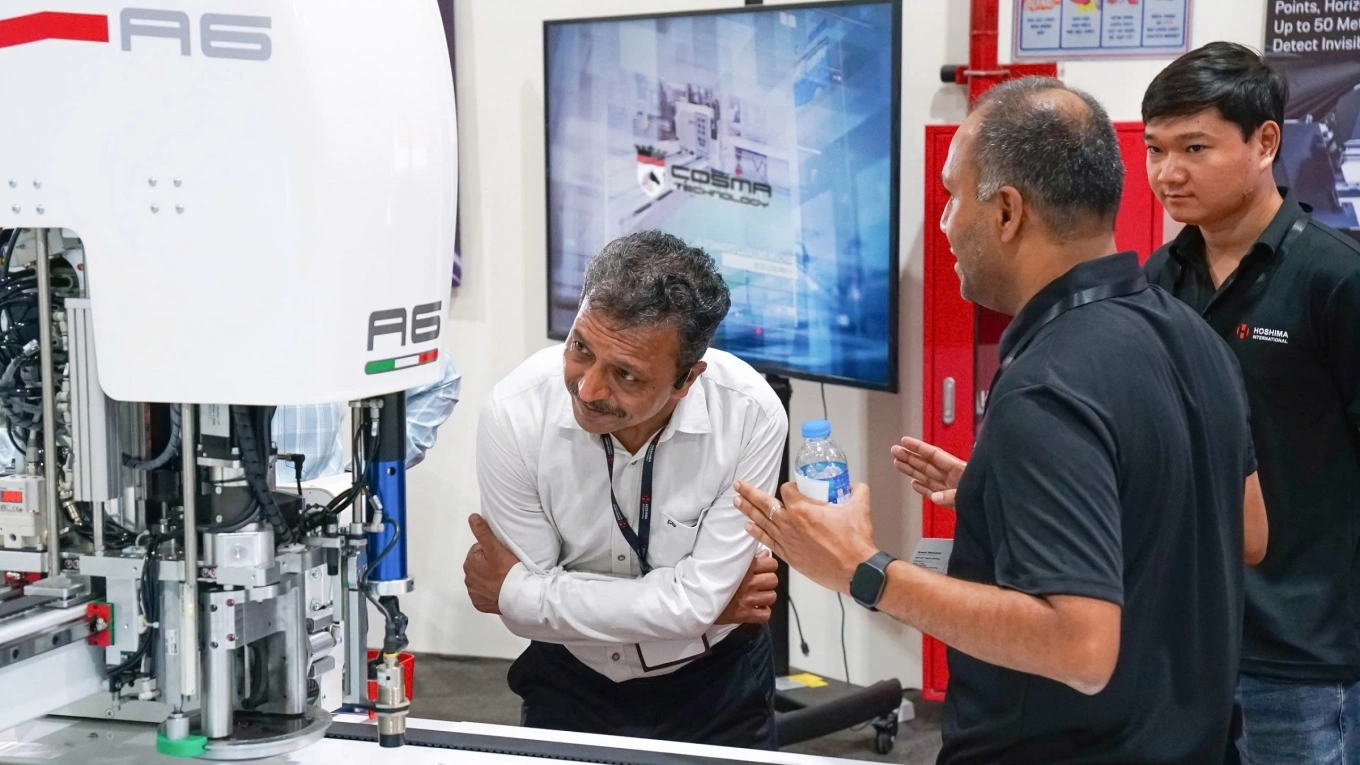
    Hoshima recently showcased its cutting-edge systems at the Hoshima Operation & Development Center, emphasizing its commitment to developing smart, connected garment factories.

    These advanced solutions address key challenges in the manufacturing sector, offering improved operational efficiency and sustainability. By seamlessly integrating hardware, robotics, and software, Hoshima’s suite of technologies elevates every stage of garment production—from material handling to final packaging.

    Smart Logistics and Warehousing

    State-of-the-art logistics and warehousing technologies are at the forefront of Hoshima’s offerings. By optimizing floor space and streamlining material handling, manufacturers can improve order accuracy and reduce inventory retrieval time.

    These innovations are particularly advantageous in high-mix, high-volume settings, where efficiency and rapid material movement are essential to maintaining a seamless production flow.

    Precision in Pre-Cutting and Cutting

    Automation technologies play a pivotal role early in the manufacturing process. Hoshima’s intelligent fabric relaxing and spreading systems ensure fabrics are uniformly prepared for cutting, significantly minimizing tension-related distortions.

    The integration of automated cutters enhances precision, reduces material waste, and accelerates preparation times, benefiting manufacturers with high-volume production needs.

    Innovations in Sewing

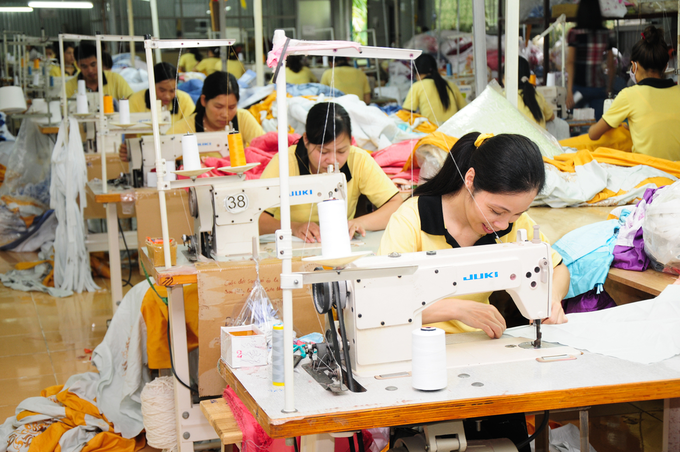
    In the sewing phase, Hoshima introduces advanced solutions like PPA Automation and AI Robotics. These innovations improve stitching accuracy, especially for intricate seams while automated quality control systems boost productivity by minimizing bottlenecks. Such enhancements allow operators to focus on higher-value tasks, positively impacting overall output quality.

    Streamlined Finishing Processes

    Hoshima’s finishing solutions simplify end-of-line operations, ensuring garments adhere to brand standards during folding and packing.

    Automation enhances presentation quality, reduces packing times, and lessens reliance on manual labor. The systems also incorporate dust and thread removal technologies, facilitating smoother delivery preparation to meet time-sensitive order demands.

    Robust Software Solutions

    Central to Hoshima’s automation framework is the Advanced Planning & Scheduling System, designed for comprehensive production management.

    This smart software enables real-time visibility, allowing businesses to efficiently monitor resources, leverage AI and Big Data, and quickly adapt to changing production requirements. The result is a harmonious integration of departments that minimizes downtime and supports informed decision-making.

    The Human Element in Technology

    According to Han Kiong Chong, Founder and Managing Director at Hoshima International, the success of these technologies depends on more than just machines: “Strong partnerships and shared commitment are essential. Our progress over 25 years stems from the trust within our network.”

    Hoshima’s investment in localized showrooms and training facilities further illustrates its dedication to supporting garment manufacturers on their automation journeys.

    Conclusion

    Hoshima International’s holistic approach—combining advanced automation technologies with extensive field support—positions the company as a key player in driving sustainable growth in the retail sector and meeting evolving consumer demands.

    Questions & Answers

    1. What is Hoshima International’s focus in garment manufacturing? Hoshima International specializes in providing advanced automation technology to enhance operational efficiency and sustainability in garment manufacturing.
    2. How does Hoshima improve the garment production process? Hoshima integrates hardware, robotics, and software solutions to streamline processes from material handling to packaging, addressing challenges like labor shortages and inconsistent output.
    3. Why is human support crucial in Hoshima’s strategy? Human expertise is essential for creating and maintaining effective automation systems. Partnerships and a commitment to training ensure successful technology adoption in the manufacturing sector.
  • Garment exports slump in Q1

    Garment exports slump in Q1

    The value of textile and garment exports in the first quarter of 2023 reached $7.1 billion, down 17% compared to the same period in 2022, due to the impact of global inflation, according to the General Statistics Office (GSO).

    This was the deepest decline in the first quarter since 2009, the GSO said.

    The global inflation made consumers tighten spending on non-essential products, causing textile and garment exports to major markets such as the U.S. and EU to drop sharply.

    Many forecasts are saying that the domestic textile and garment industry’s exports growth will slump this year.

    Since the fourth quarter of 2022, textile and garment enterprises have had a shortage of export orders, leading to a sharp drop in export turnover and factories operating at below capacity.

    Export orders in the second and third quarters are still shrinking, and workers are working reduced hours.

    Than Duc Viet, General Director of Garment 10 Corporation, said the reduced demand for textiles and garments this year was due to the impact of inflation, pandemic, and geopolitical tensions between Russia and Ukraine. In addition, concerns about financial market instability and a banking crisis have also affected demand.

    In the first quarter of this year, exports of May 10 were estimated to decrease by 10% compared to the same period last year.

    Product volume in the second quarter is estimated to decrease by 20-30%, and until now, May 10 has not received new orders for production in the third quarter, said Viet.

    Viet Thang Jean Co, Ltd (VitaJean), a large garment firm, has also reduced factory capacity, and temporarily closed a high-grade product production line because of a lack of orders.

    Pham Van Viet, VitaJean Chairman and Vice Chairman of the HCM City Garment, Embroidery and Knitting Association, said that purchasing power has not recovered in Japan, the US and EU, while it has reduced by about 20-30% in February in the domestic market.

    He said that the prospects of the textile and garment industry in the first half of 2023 are still bleak. From the third quarter of 2023, the market may gradually recover, as input materials prices decrease, reducing pressure on businesses.

    However, all forecasts lack clarity because Russia and Ukraine’s conflict has not yet cooled down.

    In this context, textile and garment enterprises have to implement many solutions such as restructuring enterprises, markets and products to maintain production and keep workers while waiting for the market to warm up.

    The VitaJean chairman said that besides traditional markets such as the US and EU, his company is trying to boost exports to Australia and Canada, and at the same time, increase domestic consumption to partly compensate for the decline in exports to the traditional markets.

    Meanwhile, Than Duc Viet said that May 10 has also restructured its businesses and sustainable development strategies. It also needs to review product position, market, management, technology, and production models to meet customer requirements.

    He also said for the domestic market, this business is looking for products to meet customers’ needs in the context of the economic downturn.

    For exports, May 10 is seeking new markets besides its traditional markets including the US, Europe and Japan.

    Vietnam’s 15 signed free trade agreements (FTAs) bring a lot of opportunities to expand to new export markets, so South Africa, Africa, the Middle East and China are likely to all be huge markets in the future, he said.

    The May 10 general director said now is also the time of sustainable development associated with green production.

    The world is encouraging green growth, and Vietnam committed to reduce carbon emissions at COP26. Therefore, May 10 is switching to using green materials and green energy. As it increases the proportion of green products, this business will have many opportunities to promote production and exports in the future.

    Vu Duc Giang, Chairman of the Vietnam Textile and Apparel Association (Vitas), said that the textile and garment industry last year still exported product worth more than 42.2 billion USD, up 8.5% over the same period the previous year.

    However, that result mainly came from export growth in the year’s first six months. From the third quarter of 2022, exports began to show signs of weakness due to China’s zero-COVID policy and the global recession.

    The textile and garment industry’s production continued to deteriorate in late 2022 and remained in that situation until the first quarter of 2023.

    In 2023, Giang forecasts that the textile and garment business will still have many challenges. The most significant is the trend of increased layoffs and moving the workforce away from big cities.

    Meanwhile, domestic enterprises have not been able to meet a number of complex orders.

    Foreign markets also have requirements for recycled products and transparency in operations. Those are issues that businesses cannot immediately respond to, tiny and medium-sized enterprises.

    According to Giang, the most important solution now is diversifying markets, products and brands produced in Vietnam.

    On the other hand, businesses should use more green and recycled products, and have infrastructure investment plans and in-depth strategies to meet the requirements of foreign markets.

    In addition, textile and garment enterprises need strategies to respond to the fast changes of the market, such as fast delivery times, competitive prices, stable quality, and product transparency.

    Businesses must also build connection channels to grasp the challenges and opportunities of the global textile industry, digital technology trends and new policies.

    Giang said that large-scale enterprises with production chains of yarn, weaving, dyeing and sewing will survive, while businesses specializing in processing will face great challenges.

  • Garment exports soar in early part of 2022

    Garment exports soar in early part of 2022

    Vietnamese garment and textile producers were overwhelmed with export orders in the first half of 2022, but things unraveled in spectacular fashion after mid-year as the global economy slumped.

    “2022 was an unprecedented year,” Le Tien Truong, chairman of the Vietnam National Textile and Garment Group (Vinatex), said, referring to the export market. “In the past 25 years I have never seen the market change so suddenly, in just one month.”

    Textile and garment exports were worth $22.3 billion in the first half of 2022, seeing a year-on-year rise of nearly 18% and a trade surplus for the industry of $8.9 billion, up 32%.

    After nearly two years of social distancing, consumers in many countries appeared to have an “overbuying” mentality, which resulted people buying more than usual.

    Fearing slow delivery due to supply chain bottlenecks during the Covid pandemic, distributors increased orders to meet the high demand in recovering economies.

    But the “overbuying” did not last long because of geopolitical instability, the conflict between Russia and Ukraine and other factors, such as surging inflation in many countries worldwide. People, especially in Vietnam’s export markets such as the U.S. and the European Union, spent less on non-essential products such as garments.

    By the end of June many garment firms’ inventories increased by 50% to reach levels not seen even during the pandemic. The market showed signs of slowing in August, and began to decline in September.

    The fourth quarter is usually the peak production season, but in 2022 the market plummeted as orders tumbled.

    The director of a garment company with 1,200 employees in HCMC’s Binh Chanh District said there were lots of orders in the first half of the year and workers had to work overtime, but the situation reversed in the second half.

    “We were forced to reduce seasonal workers, and stop some production lines because there were no orders,” he said.

    Workers were furloughed, he said. The gloomy market with few orders and lower prices resulted in a large amount of inventory. Instead of bulk orders like in the first half, buyers placed smaller orders with tight delivery schedules.

    To provide jobs for workers and avoid mass layoffs, garment and textile producers had to accept small orders, reduce selling prices and diversify export markets.

    Production slowed down in the last quarter, but due to the high growth in the previous three quarters, the textile and garment industry still reached the export target of $44 billion, up 10% against 2021.

    The U.S. was still the largest importer of Vietnamese garments and textiles for the year with orders of more than $18 billion, followed by South Korea with $4.2 billion, and Japan and China with around $4 billion each.

    The market situation changed suddenly in the middle of the year, but Vinatex managed to realize its consolidated profit target of VND1.090 trillion ($45.4 million) in 2022.

    However, there are difficulties ahead for the industry. “Demand for garments in 2023 will still be weak, at least the first quarter will not be positive,” Truong said.

    Vu Duc Giang, chairman of the Vietnam Textile and Apparel Association, said orders from the end of 2022 to the first quarter of 2023 decreased by 25-27% due to weakened global demand. Many businesses are currently receiving orders equivalent to 70-80% of their production capacity.

    Businesses could shift production to lower value items and accept smaller orders, he said. Nguyen Huu Tuan, human resources director of Thanh Cong Textile and Garment Co., said to safeguard the jobs of more than 5,000 workers and retain customers, it is accepting orders at low prices, sometimes even below breakeven.

    The garment and textile industry foresees one of two export scenarios in 2023: Exports could fetch $47-48 billion if the market recovers in the second half of the year, but otherwise it has to settle for $45-46 billion.

  • Garment export won’t decline next year

    Garment export won’t decline next year

    Vietnam’s garment and textile exports next year is set to remain the same as this year even in the worst-case scenario where the Covid-19 pandemic prolongs, an association forecasts.

    Vietnam Textile and Apparel Association (VITAS) anticipates export would reach $39 billion next year, the same as this year, if pandemic impacts are major and linger until the end of the year.

    In the more optimistic scenarios that the pandemic is controlled by the second quarter, export could reach $41 billion, and by the first quarter, $43.5 billion, it stated.

    The association made its forecast as export this year expanded 12 percent from last year and 0.3 percent from 2019, indicating a recovery to pre-pandemic level.

    “This could be considered a great effort of Vietnam’s garment industry amid signs of slower global economic growth,” VITAS chairman Vu Duc Giang told a recent meeting.

    Truong Van Cam, deputy chairman of the association, said one positive sign is that major markets like the U.S., E.U. and Japan have reopened.

    Another supporting factor is that Vietnam has changed its Covid-19 fight policy from “zero Covid-19” to living with it, he added.

    In order to achieve the mentioned figures, vaccination is key, Cam said.

    Two doses of a Covid-19 vaccine should be the minimum requirement for staff to return to work, while third dose vaccinations for workers should begin, he urged.

    Fiscal and monetary policies should be more accessible and be effective for two or three years, he added.

    “Garment and textile needs an overall strategy so Vietnamese companies can export products under their own brands,” he said, adding that a plan should be made for development until 2030.

    Vu Thanh Tu Anh, dean of Fulbright School of Public Policy and Management in Ho Chi Minh City, said digital transformation has now become a must for sector survival as the Covid-19 pandemic has forced global corporations to increase the flexibility of their supply chains.

  • Major garment producer says did not lose Nike orders due to Covid restrictions

    Major garment producer says did not lose Nike orders due to Covid restrictions

    Viettien Garment Corporation has not lost any of its Nike orders to other countries since the American company could not find suitable alternatives, its chairman said.

    “Until October, when we reopened, Nike has not moved any of its orders from Viettien to another country because it could not find an appropriate manufacturer in terms of delivery time and quality.”

    Giang, also chairman of the Vietnam Textile & Apparel Association, said during the restrictions in the third quarter, 13-14 percent of garment orders were moved from Vietnam to other countries.

    But there are signs that orders are coming back for next year, he said.

    “This is why we have set an export target of $43.5 billion.”

    Last year, exports had fallen by 9 percent to $35 billion.

    Giang said that foreign companies only move orders to other countries when the deadline is too close, and they continue to have confidence in Vietnam.

    Vietnam’s garment exports in the first 10 months of this year fell by 5 percent year-on-year to $24.74 billion.

  • Garment exports hit hard by labor shortage

    Garment exports hit hard by labor shortage

    Garment and textile firms face labor shortages and broken supply chains, and find it hard to fulfill their export orders, the Vietnam Textile & Apparel Association has said.

    The fourth and most intense wave of Covid-19, which caused many textile companies to close down or operate at partial capacity between July and September, remains a severe problem in many cities and provinces, especially in the south, and so migrant workers are making an exodus to their hometowns.

    Some one million workers in the sector, or one third the total number employed, have quit their jobs or are staying away from work with or without pay, VITAS estimated.

    Meanwhile, supply chains continue to be broken as a number of foreign clients shift their orders to other countries.

    Many companies in the south have adopted the stay-at-work and commute-to-work models, but managed to get only 10-30 percent of their employees, meaning they have found it hard to maintain production and ensure timely delivery of goods, VITAS said.

    Garment and textile exports fell 9 percent month-on-month in September to $3 billion. The figure for the year-to-date was $29 billion.

    VITAS has three different export scenarios depending on how the Covid situation pans out: it expects shipments of $33.5-34 billion this year if the pandemic continues until early December, $36-36.5 billion if until November and $37.5-38 billion if it is controlled by October.

    “It is very difficult for the sector to realize the export target of $39 billion set for this year,” Vitas vice chairman Truong Van Cam said.

  • Covid causes first monthly loss for garment giant Thanh Cong

    Covid causes first monthly loss for garment giant Thanh Cong

    Major garment company Thanh Cong has reported its first monthly loss this year in August as housing workers at its plants as a precaution against Covid-19 spread increased costs.

    The company, formally known as Thanh Cong Textile Garment Investment, also saw revenues plummet by 26 percent year-on-year to $10 million, and, together with the ballooning expenses, this caused a loss of $282,000 for the month.

    The company said production fell due to a shortage of workers amid the tightened social distancing requirements in HCMC despite having many of them stay on-site.

    Its monthly net profit has not dipped below $600,000 this year. Its year-to-date profit is $5.48 million, only 44 percent of the full-year target.

    Thanh Cong’s biggest export markets are the U.S., South Korea, Japan, and China.

    It is looking for new buyers in Europe and countries that have signed the Comprehensive and Progressive Agreement for Trans-Pacific Partnership.

    It is also pushing head with e-commerce sales after tying up with U.S. e-commerce giant Amazon last year.

  • Garment firms fear order plunge

    Garment firms fear order plunge

    Vietnam, the world’s second-biggest garment exporter, is facing the risk of losing orders to competitors amid the complicated Covid-19 situation in August.

    Gia Dinh Group JSC in the southern province of Binh Duong has secured orders till the end of December, but face higher material prices plus late shipments, along with higher logistics costs. The company’s management board said if the pandemic prolongs, it would fail to fulfill its orders.

    Over 80 percent of garment and textile enterprises in the southern region have had to either lower labor productivity or suspend operations to combat the disease.

    Vu Duc Giang, chairman of the Vietnam Textile and Apparel Association (VITAS), said production in August is “extremely difficult”, especially for firms in southern localities imposing social distancing. Up to 90 percent of production chains in the south have been broken.

    Meanwhile, only 70-80 percent of garment and textile companies in the northern region are still operating.

    Delivery pressure amid outbreaks is a big challenge for garment and textile enterprises now, he said, stating that if they fail to meet delivery deadlines, their customers would cancel orders, which will affect production both this year and the next.

    “If the Vietnamese market is not stable, partners will shift orders (to other countries). Garments are seasonal. Nobody wants to buy outdated clothes though they are on sale,” the VITAS chairman said.

    The Ministry of Industry and Trade also stated garment and textile enterprises in Vietnam are facing the risk of international clients postponing or canceling orders, and shifting their focus to other countries. “When the pandemic is controlled, it will be very difficult to resume business relations, and that will take time,” the ministry said.

    The VITAS chairman also mentioned the risk of labor shortages. Many workers have left Ho Chi Mih City for their hometowns to avoid being infected with the coronavirus, and only 60-65 percent may return to the city when the Covid-19 outbreak is pushed back, according to Giang. “There will be rather severe labor shortages in the coming time,” he predicted.

    Vietnam exported $18.6 billion worth of textile and garment products in the first seven months of this year, a year-on-year increase of 14.1 percent, according to the General Statistics Office.

  • Garment production may slow down over Covid-19

    Garment production may slow down over Covid-19

    The textiles and garment sector is likely to be impacted by the Covid-19 situation getting more complicated across Vietnam. Industry insiders say the pandemic situation in HCMC, in particular, will drag the sector down in the remaining months of the year.

    The pandemic has already penetrated some industrial parks in HCMC, so if the staff of garment and textile firms get infected, work would stop and fulfillment of orders would slow down, said Pham Xuan Hong, head of HCMC Association of Garment, Textile, Embroidery, and Knitting (AGTEK).

    Garment and textile firms are labor-intensive affairs with many workers concentrating in certain places, so the risk of Covid-19 breaking out in factories is very high, said Le Tien Truong, chairman of Vietnam National Textile and Garment Group (Vinatex), adding that the production chain is likely to be broken amid the outbreak.

    Vinatex has 150,000 workers nationwide, with most of its affiliates having an average workforce of 2,000 each.

    In the first three waves of Covid-19, no Vinatex affiliates reported any Covid-19 infection. In the ongoing fourth wave, some enterprises in the northern province of Bac Ninh and the central city of Da Nang have reported infected workers.

    “This is the first time in 18 months of Covid outbreaks that workers in Vinatex affiliates have been infected with the disease, forcing them to stop production and face considerable losses,” the Vinatex chairman said.

    If production comes to a halt due to Covid-19, goods delivery will be delayed, causing losses for producers and exporters, he said.

    Affected enterprises will have to shift to transporting goods by air, instead of by sea to ensure timely shipment. This would make the shipment prohibitively expensive, Truong noted.

    Vinatex and AGTEK have proposed the government prioritizes vaccination against Covid-19 for garment and textile workers. Most garment and textile firms have said they are willing to cover all vaccination costs.

    Vietnam’s textiles and garment export turnover reached $5.8 billion in the first five months, a year-on-year rise of 4.8 percent.

  • China to become major buyer of Vietnam’s garments

    China to become major buyer of Vietnam’s garments

    China is set to become a major export market for Vietnam’s textile and garment industry, making up for the lull in traditional markets like Japan and the EU.

    According to Vietnam National Textile and Garment Group (Vinatex), Covid-19 has rendered some of the main markets unstable. For example, the E.U. is facing the risk of a pandemic resurgence, while Japan’s economy is yet to revive. Therefore, Vietnam’s textile and garment exports to these two markets are not expected to rise this year.

    Meanwhile, China has indicated in its 14th five-year plan that it will not concentrate on textile and garment production in the 2021-2025 period.

    Vietnam’s textile and garment exports to China in Q1 experienced the highest growth among the five largest textile and garment export markets (the U.S., Japan, South Korea, E.U., and China), Vinatex reported. Textile and garment export value to China during the period was as high as that to the E.U. at $680 million.

    One challenge for Vinatex this year is the falling demand of office wear, which is one of the group’s main products. Amidst the pandemic, consumers prefer casual wear and sportswear. Another difficulty is that inflation is expected to rise this year, resulting in higher lending rates and increased financial expenses.

    Vinatex targets revenues of VND1.5 trillion ($66 million) this year, up 5 percent year-on-year, and pre-tax profit of VND201 billion, up 37 percent. The group said it will continue to divest from ineffective companies this year.

    Vietnam’s textile and garment exports in the first five months of 2021 hit $12.2 billion, up 15 percent year-on-year, according to the General Statistics Office.

  • Myanmar crisis sounds death knell for garment industry, jobs and hope

    Myanmar crisis sounds death knell for garment industry, jobs and hope

    Two years after opening his garment factory in Myanmar, Li Dongliang is on the verge of closing down and laying off his 800 remaining workers. The business had been struggling because of the Covid-19 pandemic, but after a February 1 coup that sparked mass protests and a deadly crackdown – during which his factory was set alight amid a surge of anti-Chinese sentiment – orders stopped.

    His story is emblematic of the perilous situation facing a sector critical to Myanmar’s economy, which accounts for a third of its exports and employs 700,000 low-income workers, according to UN data.

    “We would have no choice but to give up on Myanmar if there are no new orders in the next few months,” said Li, adding he has been operating at about 20 percent capacity, surviving only on orders placed before the coup, and had already shed 400 staff.

    Li said he and many of his peers were considering moving to other low-cost garment hubs like China, Cambodia or Vietnam, as big fashion brands like H&M and Primark have stopped trading with Myanmar due to the coup.

    Chinese nationals like Li fund nearly a third of Myanmar’s 600 garment factories, according to the Myanmar Garment Manufacturers Association, by far the largest investor group.

    At least two other Chinese-funded garment factories in Myanmar, employing a combined 3000 workers, had decided to close, said Khin May Htway, managing partner of MyanWei Consulting Group, which advises Chinese investors in Myanmar. She said the two firms were her clients but declined to identify them citing privacy.

    Foreign investment in garments surged in Myanmar over the past decade as economic reforms, an end to Western sanctions, and trade deals helped establish the sector as the greatest symbol of its nascent emergence as a manufacturing hub.

    Myanmar garment shipments rose from less than $1 billion in 2011, about 10 percent of exports, to more than $6.5 billion in 2019, about 30 percent of exports, according to UN Comtrade data. But the sector has been rocked by the pandemic which plunged the world into recession and choked consumer demand, resulting in tens of thousands of garment factory jobs lost in Myanmar and elsewhere in Asia. Then the coup happened.

    In the weeks that followed, many garment workers joined protests or couldn’t get to work as streets became battlegrounds. The turmoil also jammed the banking system and made it difficult to get goods in and out of the country, factory owners said.

    With international condemnation of the coup growing, European and US fashion brands last month issued a statement through their associations saying they would protect jobs and honor commitments in Myanmar.

    However, many have recently halted orders there including the world’s second-biggest fashion retailer, Sweden’s H&M, Britain’s Next and Primark, and Italy’s Benetton.

    Next said it would split its orders previously going to Myanmar between Bangladesh, Cambodia, and China, while Benetton said it would mainly move the business to China. H&M and Primark have not commented on how they will redistribute orders.

    Escape from poverty

    In Vietnam, garment factory owner Ravi Chunilal told Reuters he was starting to get more business from European buyers diverting from Myanmar.

    “They don’t want to abandon Myanmar … but it’s being forced upon them,” said Peter McAllister of Ethical Trade Initiative, a labor rights organization whose members include European high-street brands.

    McAllister said that it would be very difficult for Myanmar’s garment sector to recover if Chinese investors left.

    Anti-China sentiment has risen since the coup, with opponents of the takeover noting Beijing’s muted criticism compared with Western condemnation. It was against this backdrop that several Chinese-funded factories, including Li’s, were torched by unidentified assailants during a protest last month.

    Rights groups have repeatedly raised concerns about exploitation in Myanmar’s garment sector, where mostly women workers earn as little as 4800 kyat ($3.40) a day, the lowest rates in the region.

    But it has provided an escape from poverty for many, as workers have migrated from rural areas to the factories, mainly around the commercial hub of Yangon, and sent money back to their families.

    Khin Maung Aye, managing director of Lat War garments factory, which employs 3500 people, says the sector faces collapse if the military does not restore a democratically elected government.

    That would result in “terrible outcomes of poverty”, he said, adding that he was also staying afloat on orders placed before the coup but feared orders for next season, normally due later this month, will dry up.

    The US, which has imposed targeted sanctions on Myanmar’s military, late last month suspended trade talks with it and said it was reviewing its eligibility for its Generalized System of Preferences scheme, which reduces tariffs and provides other trade benefits for developing countries.

    That could “portend future disruption” for Myanmar’s garments sector, said Steve Lamar, president of the American Apparel & Footwear Association, which represents more than 1000 fashion brands.

    But some unions representing garment workers have called for the international community to impose tougher sanctions to press the military, even though it may further damage their industry.

    “I accept orders moving away,” Myo Myo Aye, founder of the Solidarity Trade Union of Myanmar, said through a translator. “Workers would face difficulties and hardship because there would be no jobs. On the other hand, we simply don’t accept the military regime.”

  • Securing Raw Materials Key to Competitiveness of Indonesia’s Textile Industry

    Securing Raw Materials Key to Competitiveness of Indonesia’s Textile Industry

    Indonesia is set to become one of the top five textile and textile product producers in the world by 2030, and the Ministry of Trade is forging ahead with its Making Indonesia 4.0 roadmap, which prioritizes the development of a number of industries, including the textile sector.

    Muhdori, the trade ministry’s director tasked with the textile, leather, footwear and various other industries, said the implementation of the roadmap would strengthen the textile sector’s global competitiveness, as it improves efficiencies and product quality.

    “Being highly integrated from upstream to downstream, this sector is competitive and is supported by a large amount of human resources for its production activities,” he said.

    The challenge for the textile industry was to become more efficient, while continuing to improve human resource competencies, in accordance with technological development, he said.

    “Being both an export-oriented and labor-intensive sector, the textile industry has thus far contributed significantly to Indonesia’s economic growth,” Muhdori said.

    According to the Ministry of Industry, textile and textile product exports have continued to increase in recent years. The textile and textile product sector’s contribution to Indonesia’s gross domestic product amounted to a record $10.46 billion last year, while exports were valued at $12.58 billion, up 6 percent from 2016.

    Increased Exports

    The Ministry of Industry pegged textile exports at $13.5 billion this year, along with the creation of 2.95 million new jobs in the industry, while exports are projected to increase further to $15 billion next year, with the creation of up to 3.11 million jobs. This will increase the sector’s share of Indonesia’s total exports to 1.6 percent.

    The ministry is optimistic that this year’s growth target of between 4 percent and 6 percent can be achieved. The textile industry grew 3.45 percent last year, having nearly doubled from 2016.

    However, this growth target also calls for an increased supply of raw materials, which currently consist of 51 percent synthetic fiber, such as polyester and nylon, 37 percent cotton fiber, and 12 percent rayon.

    But the industry still faces obstacles in reaching its full competitive potential, as nearly all cotton must be imported. In contrast, 80 percent of synthetic fiber and 85 percent of rayon are domestically produced, with these numbers expected to increase further.

    Rayon is a cellulose material extracted from soluble wood pulp. It offers better absorption and breathability than cotton. Rayon fiber has various uses, including in clothing, bedding, towels, baby wipes, masks and personal hygiene products.

    According to Redma Gita Wirawasta, secretary general of the Indonesian Synthetic Fiber Producers Association (APSyFI), rayon is most in demand in the fashion industry due to several advantages, such as comfort and disposability, which make it environmentally friendly.

    “Indonesia has the potential to become one of the largest rayon industry players in the world, supported by extensive land availability and a suitable climate. This makes Indonesia comparatively superior to other rayon-producing countries,” he said.

    Raw Materials

    Redma Gita said the growth of the rayon fiber industry requires sustainable raw material supply through industrial plantations.

    “Rayon plants supported by industrial plants not only strengthen the structure of the textile industry, but also reduce its dependence on imported raw materials, which has been an issue for national textile competitiveness,” he said.

    “This upstream industry could even generate foreign exchange as some of its production is exported,” he added.

    The Ministry of Industry noted that the production capacity of the rayon fiber industry has risen substantially over the past three years. Production is expected to increase to about 700,000 metric tons this year, compared with 565,000 tons last year and 470,000 tons in 2016.

    Production capacity growth is expected to continue until 2021, when it is expected to reach 1.2 million tons.

    However, the industry faces challenges from environmental activists. Redma Gita refuted allegations from Canopy, an international nonprofit focused on forest conservation, which stated that raw materials for rayon fiber comes from ancient and endangered forests in Sumatra and Kalimantan.

    “Those accusations are baseless. They have provided no proof of this whatsoever,” he said. He also highlighted the importance of the government in supporting the development of the national textile industry.

    Machmud Thohari, a forestry expert, meanwhile also questioned the Canopy report’s use of terms such as ‘ancient’ and ‘endangered’ to categorize forests.

    “As far as I know, the terms ‘ancient’ and ‘endangered’ aren’t commonly used in the scientific classification of forests,” he said.

    Thohari said the term ‘ancient forest’ may have been used to refer to an old-age forest or one that is many, many years (i.e.: centuries) old.

    On a similar note, Riau Governor Wan Thamrin Hasyim also condemned the Canopy allegations, as he sought to highlight the strategic industrial potential of the province.

    “The accusation must be clarified, as it can deter investors and [negatively impact] Riau’s economic growth,” he said.

  • Will Bangladesh’s garment industry survive?

    Will Bangladesh’s garment industry survive?

    Bangladesh is battling to keep its position as the world’s second-largest exporter of clothing after China, as it faces intensifying competition from Cambodia, Vietnam, Myanmar and now African countries like Ethiopia as global brands search for cheap labor.

    H&M, for instance, imports from an Ethiopian clothing factory it set up with Bangladeshi garment maker DBL.

    Japan’s Fast Retailing, operator of the Uniqlo casual clothing chain, is also eyeing a production base in the African country. Fast Retailing declined to comment for this story.

    The competitive pressure has sparked consolidation of what was once a mom-and-pop industry, reducing the number of factories 22% in the last five years to 4,560, according to the Bangladesh Garment Manufacturers & Exporters Association.

    Those who have survived gain market share, expand overseas and aim to go public.

    The industry is an engine behind the country’s more than 6% annual growth over the past decade.

    In the year ending in June, garment exports totaled $30.6 billion, up 8.8% and accounting for 83.5% of the country’s total exports, according to BGMEA.

    The country also increased its share of global clothes exports to 6.3% in 2016 from 4.0% in 2010, according to World Trade Organization data.

    But compared with China, which has a share of 34.5%, it is still a distant second along with countries like Vietnam, Italy and India.

    Labor in Bangladesh is still cheap.

    The average monthly wage is just $101, compared with $135 for Myanmar, $170 for Cambodia, $234 for Vietnam and $518 for China, according to surveys on select cities conducted by the Japan External Trade Organization between December 2017 and March 2018.

    But there are countries with even lower wages, such as Ethiopia with a monthly average wage of $50.

    Labor costs are rising across Asia, and Bangladesh is no exception.

    With general elections looming in December, the ruling Awami League has approved a 51% wage hike for garment workers, a decision that is weighing on the country’s garment industry.

    Companies operating in special economic zones, such as Universal Menswear, typically offer a 10% wage increase every year.

    But in election years, which come every five years, the government tends to promise more generous pay hikes.

    This has put the industry in a bind, as their Western customers, faced with online competition from Amazon and others, are demanding that prices be kept under control.

    Cost increases are not limited to labor.

    Garment makers in Bangladesh have been forced to make major investments in building safety, following a factory fire that killed 117 in November 2012 and the collapse of another known as Rana Plaza in April 2013, which left more than 1,100 dead. Since then, Western brands will not buy from Bangladeshi suppliers unless they are certified to be in compliance with stringent fire and building safety regulations.

    Factories in Bangladesh have grown in a haphazard fashion, some even operating on the upper floors of office or residential buildings.

    Western apparel makers feel more secure buying from countries like China and Vietnam, where manufacturing is better planned and organized.

    Today, most of the first-tier export-producing factories have been assessed for risk and have been improved or are in the process of being brought to a comfortable standard.

    A survey by McKinsey & Co. in 2013 found Bangladesh the No. 1 alternative to China as a manufacturing location.

    ILO’s Putiainen also says that Bangladesh could benefit as production leaves China due to cost and the U.S. trade dispute.

    But he added that global apparel brands will remain vigilant about the factory conditions in Bangladesh.

    Following the Rana Plaza accident, Ananta faced more price pressure from its customers, who demanded discounts in exchange for continuing to do business.

    That is one reason why Ananta, originally a jeans maker, is so keen to diversify into higher value-added items, such as men’s suits and lingerie.

    The strategy seems to be working. Annual sales have grown 20% to 30%. Sales in the current business year are projected at $300 million, up from $250 million in the previous year. Ananta aims for $1 billion dollars in sales within the next seven years.

    DBL, another Bangladeshi garment maker with an annual turnover of $450 million, is also branching out into sports wear and lingerie, according to company head M.A. Jabbar.

    DBL currently handles only cotton fabric, but “in the coming days, we are looking at man-made fiber,” Jabbar said.

    DBL is also adding upstream processes, such as spinning, dying, printing, fabric washing and embroidery production.

    Most garment makers in Bangladesh specialize in knitting operations, with fabrics and accessories imported mostly from China. With materials costs accounting for 65% to 70% of an item’s selling price, profit margin is razor-thin.

    “If Bangladesh focuses on the knitting business, it will eventually lose to even lower-cost producers like Ethiopia,” predicts Yoshiaki Kamiyama, senior researcher at the Japan Textiles Importers Association.

    “It has to innovate. It has to develop expertise other than just knitting.”

  • Vietnam garment exports surge on US-China trade war

    Vietnam garment exports surge on US-China trade war

    Vietnam’s garment exports are set to rise by 14.8 percent this year to $35 billion, an industry official said on Friday. The expected growth is attributed to the fact that U.S. retailers diversify their product sourcing to keep costs under control amid an escalating trade dispute with China.

    The U.S. has already imposed tariffs on $250 billion worth of Chinese goods, and China has responded with retaliatory duties on $110 billion worth of U.S. goods.

    Garments, Vietnam’s second largest export-earner after smartphones, are not yet subject to U.S. tariffs, although some manufacturers have sought to move at least some production to the Southeast Asian country, anticipating potential penalties.

    “We are seeing more and more orders coming in, especially from the United States,” Vu Duc Giang, chairman of Vietnam Textile & Apparel Association, told Reuters.

    Garment exports to the U.S. rose 12 percent in the January-October period to $10.5 billion, while exports to China surged 40 percent to $1.1 billion, according to a government statement released on Thursday.

    Ngo Quang Thoa, chairman of Swimax International Joint Stock Co, a contractor which produces swimwear and underwear products for U.S. companies such as Target and Express, said he had received a large increase in orders from the U.S. since January.

    “This is because of the trade war between the U.S. and China,” said Thoa, who added that he expected to see his exports to the U.S. increase by up to 20 percent by the end of the year.

    “Some U.S. clients are already making strategic adjustments to their business plans to diversify their supplies, even though Trump hasn’t targeted Chinese garments in the tariff war yet,” he said.

    Vietnam is home to over 6,000 textile and garment factories which employ around three million people, Thursday’s government statement said.

    Giang, chairman of Vietnam Textile & Apparel Association, told Reuters those figures were likely to grow, thanks to a plethora of Vietnamese free-trade agreements, and not just because of the U.S.-China trade spat.

    Vietnam has signed around a dozen free-trade agreements that will remove or reduce taxes on several imports and exports.

    Foreign investors poured in $2 billion in Vietnam’s garment and textile production in the first eight months of this year, Giang said.

    Most investors were from Japan, South Korea, Taiwan and China, he added.

    “They have been upping their investment in Vietnam for years,” said Giang.

  • Vietnam textile firm bets on eco-friendly products

    Vietnam textile firm bets on eco-friendly products

    For price conscious Vietnamese consumers, an organic product more expensive than its normal version is not an attractive option, but one firm has decided to be persistent.

    The Phong Phu Textile and Garment Company introduced its made-in-Vietnam eco-friendly towel brand last December, attracting media attention as one of the first firms in the country to produce an organic textile product.

    The Mollis Organic towels are made from 100 percent organic cotton. No genetically modified organism, chemical fertilizer or pesticides are used in the making of this product, the company asserts.

    The company would strive to bring organic products to its customers although their production costs are high and profits uncertain, Pham Xuan Trinh, CEO of the Phong Phu Textile and Garment Company said.

    The company prices its organic towels from VND60,000-250,000 ($2.62-$10.91) depending on the size, about 20 percent higher than conventional products, while made-in-China towels are sold for just VND15,000 ($0.65).

    Since awareness of the importance and advantages of organic products is relatively low among a majority of Vietnamese consumers, Phong Phu is struggling to sell its organic towels to local customers.

    “We’ll continue to invest in organic products despite low profits with the hope that one day Vietnamese customers will see the true value of organic products,” he said.

    The company spent VND4 billion ($174,600) last year on research and development for its organic products.

    As Vietnam’s conditions are not currently suitable for growing organic cotton, the company imports its material from Bangladesh, India and Israel. The processing and manufacturing processes happen in Vietnam.

    The company has so far exported its organic towels to Japan and South Korea, aiming at the high-income customers in these countries.

    Phong Phu recorded a profit of VND149 billion ($6.5 million) in the first half this year, a growth of 7 percent from the same time last year, but most of it came from conventional non-organic products, including towels and denim jeans.