Retail News CRM

Tag: germany

  • Australia, Germany replace Japan as Vietnamese’s labor hot spot

    Australia, Germany replace Japan as Vietnamese’s labor hot spot

    Tu worked in Japan for two years but left when the devaluing yen lowered the value of his savings, which he intended to use back home in Vietnam

    He eventually set his eyes on Germany.

    The reasons were quite simple: Germany was experiencing a lack of labor resources and was employing measures to attract more foreign workers, including more open visa policies and attractive salaries.

    As Germany’s labor minister Hubertus Heil said earlier this year, the country would lack around 7 million workers by 2035 “if we don’t do something.”

    So Tu was there ready to answer the call. “This time I want to challenge myself in Europe,” he said.

    The 30-year-old man was one of many Vietnamese workers who left Japan after finding their earnings there not attractive anymore. It was essentially a double consequence of the dropping value of the yen and rising inflation.

    Inflation in Japan hit a 40-year-high last October, and consequently, the price of everything from fuel to food rose, and many people could not afford essentials in their daily lives, reported Reuters.

    But rarely are workers who’ve returned home from Japan satisfied with their earnings in Vietnam either. Instead, they are now often opting to relocate to Europe or Australia, which are both taking bold government steps to compensate for their lack of workers

    Tu didn’t allow any delays in his plan. He started learning German as soon as he returned to Vietnam from Japan.

    He spent around eight hours a day studying the language and managed to acquire a German B1 certificate, then a German training visa, which allowed him to enroll in a three-year vocational training course in the country, as well as be eligible to stay for another two years after his course completion.

    He relocated and became one among about 1.25 million foreigners with such a visa in Germany, according to data provided by the German Federal Statistical Office.

    According to him, the agency he hired to assist him in his visa application procedure told him that they had assisted 100 Vietnamese people relocate to Germany this year, an increase from only around 20 last year.

    After working in Germany for a while, Tu said that it wasn’t only the financial earnings, but also the benefits offered to migrant workers that are more attractive in Germany compared to Japan.

    “I had to work between 11 and 12 hours a day when I was in Japan, compared to only eight hours a day, five days a week here,” he explained, adding that he could arrange his schedule and work in other restaurants during his days off to make extra money.

    Similar to Germany, Australia is a destination that many Vietnamese workers are interested in. Businesses in Australia are receiving hundreds of applications from Vietnam and other Asian countries a day.

    Duy Nam, a manager at a meat processing company in the Australian town of Broome, said he received hundreds of emails and text messages a day asking about the Australian visa application procedure. His own younger brother was contemplating immigrating to Australia as a migrant worker as well.

    He attributed the growing popularity of Australia among Vietnamese workers to the shortage of domestic workers, which was partly caused by the country’s lockdown during the peak of the pandemic.

    Now that the pandemic is under control, the Australian government is doing its best to attract foreign workers. It now grants the subclass 462 visa (also known as the Work and Holiday visa), which allows its holders to work during their stay in Australia, to up to 1,500 people a year. And the visa application procedure has shortened from a year to a couple of months or even weeks.

    Lightening immigration policies is not the only recent boon for migrant workers in Australia. Workers’ average hourly rate in Australia was A$27 (around $19) before the lockdown, but rose to A$55 during the peak of the pandemic. Because of that, earning an attractive income of as much as A$10,000 a month became possible for Vietnamese migrant workers.

    Compared to that, Vietnamese workers in Japan can only save “between VND12-16 million (around $507-$677) a month, compared to VND20-25 million before,” said Tien Thanh, 24, initially planned to migrate to Japan and work as an electrical appliances technician, but was discouraged by his friends.

    He then changed his mind and moved to Australia, which took him six months and four failed attempts to finally do.

    After reaching the country, he started looking for jobs with the help of social media, and was offered work on a farm in northern Australia a week after arriving in the country.

    “There are a total of around 200 people working in my farm, of which as many as 47 are Vietnamese.”

    Thanh is satisfied with his current monthly income in Australia. He earned the equivalent of VND24 million his first month, but after getting more familiar with the work, now he can earn more and save around VND70 million a month.

    Based on his calculations, he’ll be able to pay back the VND300 million his family borrowed to help send him to Australia, in half a year, and then save enough money to get his own house in Vietnam after three years.

    As attractive as the idea of working in Australia and European countries is, both Tu and Thanh warned those who are interested in it about the risk of being scammed.

    “I know this guy from Ha Tinh province who sold his house for $30,000 to pay an agent,” Thanh said. “Only after arriving here did he know he had only obtained a travel visa, and was not eligible to work.”

    Tu added that the German visa application procedure consists of many phases and requires a lot of documents, so applicants should be cautious if agencies they work with treat it lightly.

    “There are agencies that send people to remote areas without helping them find jobs, so you should be careful,” he said.

    Still, those who managed to leave Japan and come to countries that offer more competitive rewards seem optimistic about their future.

    “Even if I don’t get a permanent residence, I can still come back to Vietnam and work well with the experience and knowledge I gained here [in Germany],” Tu said.

  • Deutsche Bank Raided Over Alleged Greenwashing

    Deutsche Bank Raided Over Alleged Greenwashing

    German prosecutors raided the offices of asset manager DWS and its controlling shareholder Deutsche Bank over allegations of greenwashing, according to media reports.

    Deutsche Bank and its around 80 percent-owned asset manager DWS were raided over allegations DWS misled investors about how green the investments marketed as green or greener really were, the reports said.

    The move may send shivers down the spine of investors globally as green investments, or investments marketed as using environmental, social and governance (ESG), indicators have surged in popularity. In early 2021, global ESG assets were projected to top US$53 trillion by 2025, or more than a third of the projected total of assets under management of US$140.5 trillion in that timeframe.

    The German authorities said they were responding to news reports and a whistle-blower’s allegations about DWS’ marketing tactics greenwashing its offerings, adding sufficient factual evidence has emerged» about how little ESG factors were allegedly used to determine investments.

    In a statement, DWS said it has fully cooperated with authorities in the matter and will continue to do so. DWS has previously denied the allegations.

    We understand a variety of actions are required to ensure a thorough and complete investigative process. We remain committed to working with any authorized bodies to clarify any and all queries they may have, DWS said.

    Deutsche Bank has previously said they would cooperate with authorities. Deutsche Bank said the raid was directed at «unknown people» in connection with the DWS allegations.

    DWS has stopped using the label ESG integrated, in a move that came after DWS’ former sustainability head, Desiree Fixler, alleged the label didn’t result in meaningful moves by fund managers. Fixler was fired last year, and lost her unfair dismissal case in Frankfurt in January.

    Both U.S. and German regulators had begun investigations in 2021 into allegations from Fixler over potential greenwashing, noting both U.S. and EU regulators are working to create rules to define greenwashing.

  • Revolut Expands as a Bank

    Revolut Expands as a Bank

    Europe’s most valuable fintech has already amassed 18 million app users worldwide. Some of those are about to become bank customers.

    The London-headquartered neobank is launching as a bank in ten additional European markets, lifting the number of countries it operates in to 28, it said in a statement. The challenger bank can now protect client deposits up to 100,000 euros in Belgium, Denmark, Finland, Germany, Iceland, Lichtenstein, Luxembourg, Netherlands, Spain, and Sweden, using its European specialized banking license.

    In a few clicks clients from these countries will be able to upgrade to Revolut Bank from within the app, it said.

    Deposits will be secured by the Lithuanian State company deposit and investment insurance, it added.

    Over the past few years, Revolut’s rapid level of growth has added pressure on Swiss banks to boost their digital services. Since its inception in 2015 the company has attracted more than 18 million customers globally, it says on its website.

  • Pork imports nearly triple

    Pork imports nearly triple

    Frozen pork imports nearly tripled in the first 10 months of this year to 332,000 tons, according to the General Department of Vietnam Customs.

    Also imported were 350,000 pigs on the hoof from Thailand, a 50 percent increase year on year.

    Together they cost US$617 million. Its five biggest pork suppliers were Russia, Germany, Brazil, the Netherlands, and Canada.

    Vietnam also imported 50,000 tons of beef worth $220 million, half of it from Australia, the department added.

    Over 800 enterprises from 19 markets have been allowed to export pork to Vietnam, according to the Ministry of Agriculture and Rural Development.

  • German Decision On Tesla Subsidies Expected By End Of Year

    German Decision On Tesla Subsidies Expected By End Of Year

    Germany will probably decide by the end of the year how much state aid U.S. electric vehicle maker Tesla will receive for its planned battery cell factory near Berlin, an economy ministry spokesperson said on Sunday. The European Union in January approved a plan that includes giving state aid to Tesla, BMW and others to support the production of electric vehicle batteries and help the bloc to reduce imports from industry leader China.

    The EU’s approval of the 2.9 billion euro ($3.45 billion) European Battery Innovation project, which includes more than 40 companies, follows the launch in 2017 of the European Battery Alliance to support the industry during the shift away from fossil fuels.

    The European Union in January approved a plan that includes giving state aid to Tesla, BMW and others to support the production of electric vehicle batteries.

    Tesla plans to invest 5 billion euros in its battery cell factory at Gruenheide near Berlin to complement its nearly finished electric car factory at the same location, according to estimates from the German economy ministry.

    The unusually high investment volume means that the U.S. car manufacturer can count on German state subsidies of 1.14 billion euros, Tagesspiegel newspaper reported on Sunday.

    This chimes with a February report by Business Insider, which said Tesla stands to receive at least 1 billion euros in public funding from Germany for setting up its battery cell factory near Berlin.

    The economy ministry spokesperson said there was no final sum yet because talks with the carmaker and the European Commission are ongoing, adding that a final decision is likely before the end of the year.

    Tesla Chief Executive Elon Musk last month said he hoped the first cars at its planned gigafactory in Gruenheide could be built in October or soon afterward.

    Tesla CEO Elon Musk last month said he hoped the first cars at its planned gigafactory in Gruenheide could be built in October or soon afterward.

    Tesla has pushed back the expected opening of the gigafactory to late 2021, blaming German bureaucratic hurdles. The plant has also faced local resistance because of environmental concerns.

    Economy Minister Peter Altmaer last Thursday said that carmaker Opel will receive a 437 million euro government grant for its battery cell factory in Kaiserslautern as part of the wider European initiative to create a homegrown battery industry.

  • Germany’s Metro chain withdrawing from Japan

    Germany’s Metro chain withdrawing from Japan

    Metro aims to cease the operative business by the end of October 2021, whereby all 10 stores and the delivery business will be closed. The company has thoroughly analysed alternative options but sees no path to profitable growth and a leading wholesale position in the Japanese market. The exit of METRO Japan business will lead to one-off costs in Q4 2020/21 and one-time free cash flow gains through asset sales over the next 2 years. The recurring annual impact is positive on both P&L and cash flow. METRO Japan will make every effort to assist its employees through the transition in a fair manner and act fully in line with employer practice standards.

    “In each market it is operating in, METRO aims to achieve a leading market position as food wholesaler. METRO Japan has been under pressure for quite some time. We finally made the decision that we do not see the opportunity to achieve the necessary scale in Japan and thus to reach our profitability targets and sustainable growth in sales. Hence, we have concluded that METRO Japan is not a strategic fit for the company’s long-term objectives,” explains Dr Steffen Greubel, CEO of METRO AG. “On behalf of our Management Board I want to extend my sincere appreciation to our Japanese colleagues for their diligent work, enduring passion and commitment in serving our customer over the past 20 years.”

    With 10 wholesale stores all situated in the Greater Tokyo area, METRO Japan has been serving predominantly professional customers in the hospitality sector for the last 20 years. However, an unfavorable market position coupled with increasingly competitive landscape limited the company’s growth potential and weighted on profitability. METRO Japan has undertaken numerous attempts such as adjusting store formats, improving the assortment and expanding the delivery business to reposition the business. These attempts didn’t show reasonable results due to lack of scale and highly competitive market characteristics.

    METRO Japan will cease its business operations by October 2021, while the real estate portfolio in Japan will be sold. The portfolio includes 6 owned land plots with stores and 3 locations with long-term leases. As the result of this transaction, METRO expects a recurring uplift of approx. €15 million in FCF1 and up to €5 million in EBITDA. The company expects a negative one-off impact of between €30 million and €50 million on EBITDA in Q4 FY20/21. Overall, the proceeds from selling the real estate are expected to clearly surpass the one-off cash-outs for the wind-down, making the transaction cash-positive.

    The Japanese operations of Classic Fine Foods (CFF), the foodservice distribution specialist of METRO, are not affected by this decision, CFF will continue to operate in Japan.

  • Hugo Boss showcasts its first Japanese flagship store

    Hugo Boss showcasts its first Japanese flagship store

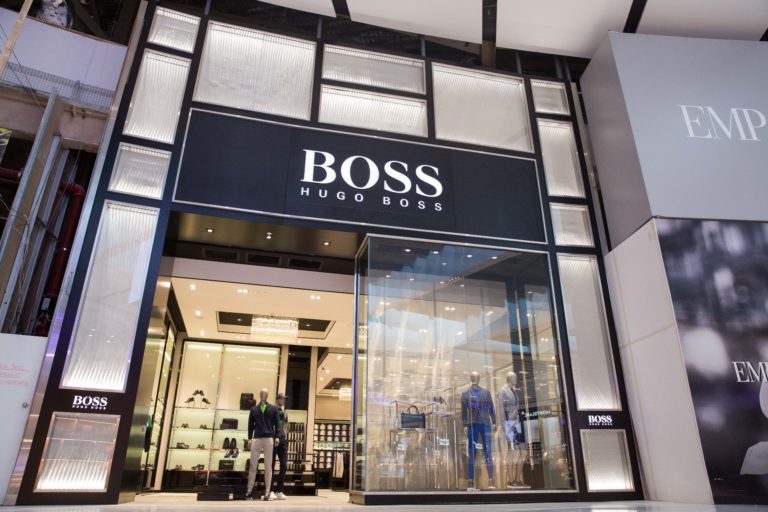
    German luxury fashion house Hugo Boss has launched its first Boss flagship store on Tokyo’s famous shopping street the Ginza.

    Spanning two stories, the Hugo Boss Japan flagship occupies 480sqm of the Tokyu Plaza Ginza shopping centre. The store features a giant glass facade where a digital wall is installed to showcase campaign videos and content.

    Meanwhile, the store interior design follows a white, black, and beige colour palette, using materials such as marble, wood and chrome. While the first floor houses men’s and women’s apparel, accessories, and fragrances, the second floor features a personalization space called ‘Made to Measure’, where customers can enjoy tailoring services.

    Marking the launch, the Hugo Boss Japan flagship store also houses a limited-edition capsule collection and a corner offering limited items with HB-Moji graphics, including hoodies, T-shirts, shorts, and caps.

  • Porsche To Build EV Battery Cells Factory In Germany

    Porsche To Build EV Battery Cells Factory In Germany

    In a bid to speed up its e-mobility drive, the German carmaker Porsche is reportedly planning to set up a factory to produce battery cells for electric vehicles. This plan was confirmed by the company’s CEO to a local German newspaper. The European carmakers are looking to ramp up production of the electric cars to meet stringent environmental rules in the European Union. Moreover, they are also aiming to reduce their dependence on battery suppliers in Asia.

    In an interview with a local newspaper, Oliver Blume said that “Battery cells are a key technology for Germany’s automobile industry which we must also have in our own country.” He also said the carmaker wants to play a pioneering role in this step.

    He also confirmed that the battery cell factory would be built in the Swabian town of Tuebingen, Germany. Moreover, the company will purchase EV batteries from its parent company, which plans to build half a dozen battery cell plants across Europe. Volkswagen also intends to expand infrastructure for charging electric vehicles across the globe.

    Blume further said, “But there will also be a segment for high-performance battery cells. It’s a Porsche domain. Just as we developed high-performance internal combustion engines, we now want to be at the forefront of high-performance batteries.”

  • BMW Warns Of Pandemic Risks As Third-Quarter Profit Rebounds

    BMW Warns Of Pandemic Risks As Third-Quarter Profit Rebounds

    BMW’s third-quarter profit rose almost 10% thanks to Chinese demand for luxury cars, but the German automaker warned a new wave of coronavirus infections sweeping Europe and the United States posed a “considerable” risk to its business. Sales of luxury models such as the 8 series and X7 helped the carmaker reach a new sales record in the quarter, but the cautious outlook sent BMW shares lower on Wednesday.

    “After a more stable phase in the economic environment in the third quarter, the pandemic is now clearly regaining momentum,” BMW said.

    “If the pandemic takes an even more serious course and the global economy experiences a perceptible downturn, the risk exposure could be considerable, particularly on the demand side.”

    The growing importance of China led BMW to abandon its strategy of seeking “balanced sales across all continents”. BMW shares were down 1% at 1112 GMT, underperforming Germany’s blue-chip DAX index. Like rival Mercedes, BMW’s pretax profit recovered in the third quarter, rising 9.6% to 2.46 billion euros ($2.87 billion), lifted by an 8.6% increase in deliveries.

    The automotive EBIT (earnings before interest and tax) margin rebounded to 6.7%, from minus 10.4% in the second quarter and 6.6% a year earlier.

    “BMW beat mostly on earnings quality with auto margin recovering to year-ago level,” Jefferies analyst Philippe Houchois said, pointing to prudent cost management, lower R&D spending and a rebound in demand from China.

    But after the pandemic-related hit in the spring, BMW still expects overall deliveries of high-end vehicles and group pretax profit this year to be significantly lower than last year.

    Deliveries of BMW and Mini-branded vehicles rose 8.6% in the third quarter, mainly thanks to a 31% spike in China, which helped offset a 15.7% drop in demand in the United States, where the pandemic has hit sales hard.

    The growing importance of China led BMW to abandon its strategy of seeking “balanced sales across all continents”.

    “We don’t like to refer to it as a dependency (on China). What is happening is a natural adjustment,” Chief Executive Oliver Zipse told reporters on a conference call.

    “If we speak about dependencies, we are dependent on our customers,” he said, noting China has a higher population than both Europe and the United States.

    China accounted for 34% of all BMW Group’s new car deliveries in the third quarter, followed by Germany on 13% and the United States on 12%. Zipse also said BMW would come to terms with whoever wins the U.S. presidential election. “Naturally it is in everybody’s interest that there is an unambiguous result,” he added.

    Expecting global demand for premium cars to drop by more than 10% this year, the Munich-based company is adjusting its production footprint. Manufacturing of the BMW X1 and Mini Countryman will be phased out at Dutch contract manufacturer VDL Nedcar, with production moved to BMW plants, Zipse said. The company is also preparing to introduce a new vehicle architecture in 2025, developed to build mainly electric and digitally connected vehicles, he added.

    BMW reiterated it expected to achieve an automotive EBIT margin of 0%-3% this year.

  • Brotzeit creates a virtual experience to promote new outlet during Covid-19 crisis

    Brotzeit creates a virtual experience to promote new outlet during Covid-19 crisis

    German-themed restaurant chain Brotzeit engaged a design firm to create a virtual walkthrough video of its new outlet to promote the venue during the coronavirus crisis.

    The 3D walkthrough video of Brotzeit’s new restaurant in Hong Kong was put together by 5 Star Plus Design, which says such technology helps brands strengthen their retail strategy.

    The video creates a virtual extension of the physical restaurant while also providing their guests with an immersive experience.

    Brotzeit engaged the design firm to enhance its existing interior design concept for its latest franchise unit in Hong Kong with modern touches, so as to make it more attractive to both younger guests as well as lunch and dinner customers.

    The videography is intended to align with Brotzeit’s brand strategy, enabling customers to observe the restaurant virtually.

    The Singapore-based German brand operates stores in seven countries across Asia Pacific.

  • Volkswagen Plans To Produce Batteries In Germany

    Volkswagen Plans To Produce Batteries In Germany

    Volkswagen will invest almost 1 billion euros ($1.1 billion) in battery cell production at a facility in western Germany and is seeking to simplify the group by spinning off or selling units, the automaker said on Monday. Volkswagen said in a statement after a supervisory board meeting it would set up the battery facility in Lower Saxony under a partnership and would also begin talks on a planned new multibrand plant in Europe. The statement confirms a Reuters report earlier on Monday, on the eve of the company’s annual general meeting.

    Battery cells are a key battleground in the automotive industry as it shifts to electric mobility. Currently the industry chiefly sources its requirements from Asian manufacturers. Volkswagen also said it was looking into options for its MAN Energy Solutions business, which makes large diesel engines for ships and power generators, as well as transmissions maker Renk, including joint ventures, partnerships, a full or partial sale.

    Reuters reported earlier this month that Volkswagen had approached several companies to gauge their interest in buying MAN Energy Solutions, which is expected to achieve a valuation of about 3 billion euros in a potential sale. The moves are part of Volkswagen Chief Executive Herbert Diess’s efforts to slim down and simplify the group which has 12 brands, trucks, buses, motorbikes, cars and electric bicycles as part of its business.

    “Given the ever greater complexity of our industry and the related challenges, it is essential to focus on our core business,” Supervisory Board Chairman Hans Dieter Poetsch said. Volkswagen also said it would resume preparations for an initial public offering (IPO) of its trucks unit Traton, which it put on hold in March due to volatile market conditions.

  • BMW To Buy Cobalt Directly from Australia

    BMW To Buy Cobalt Directly from Australia

    German carmaker BMW will buy cobalt, a key component for electric vehicle (EV) batteries, directly from mines in Australia and Morocco to ensure they are not produced by child labor, an executive said on Tuesday.The announcement came as the London Metal Exchange (LME) launched an initiative under which it could ban or delist brands that are not responsibly sourced by 2022 to help root out metal tainted by child labor or corruption.

    Andreas Wendt, BMW board member responsible for procurement, told a briefing in Paris that the new supply of cobalt would be used in the carmaker’s next generation of EVs in 2020.

    The world’s largest known reserves of cobalt are found in the Democratic Republic of Congo, where the raw ingredient is often mined by small, artisanal operations and supply chains are not strictly monitored.

    BMW said last year it was exploring ways to improve working conditions for mining cobalt in Congo through a pilot project.

  • German Motor Authority Probes More Mercedes Emissions Software

    German Motor Authority Probes More Mercedes Emissions Software

    Germany’s motor vehicle authority KBA is investigating Daimler on suspicion that 60,000 Mercedes cars were fitted with software aimed at tricking emissions tests, the Bild am Sonntag newspaper reported on Sunday. A spokesman for Daimler, owner of Mercedes-Benz, said the carmaker was reviewing the facts and fully cooperating with the KBA. Bild am Sonntag said the KBA was looking into suspicious software in Mercedes-Benz GLK 220 CDI cars produced between 2012 and 2015, after tests showed they only meet emissions limits when a certain function is activated.

    Since rival Volkswagen admitted in 2015 to cheating U.S. emissions tests, the scandal has spread to other carmakers. Daimler has ordered the recall of 3 million vehicles to fix excess emissions coming from their diesel engines.

    Bild am Sonntag said the KBA found that the function it had discovered had been removed during software updates carried out by Daimler.

    The Daimler spokesman said the company had complied with a process agreed upon with the KBA and German Transport Ministry when updating software for the 3 million recalled vehicles.

    “The allegation that we wanted to hide something with the voluntary service measure is incorrect,” he said.

    This month European Union antitrust regulators charged BMW, Daimler and Volkswagen with colluding to block the rollout of emissions-cleaning technology.

  • Roberto Cavalli opens first flagship store in Germany

    Roberto Cavalli opens first flagship store in Germany

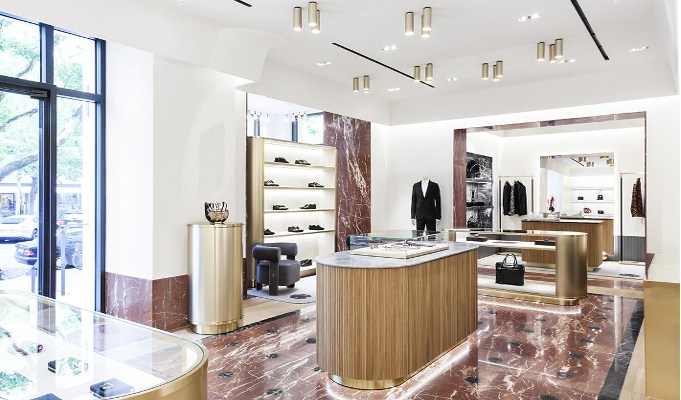
    Roberto Cavalli has opened a sleek and luxurious 2,475 sq ft flagship in Berlin’s Charlottenburg district, inspired by Florence’s Renaissance architecture and the rich tones of Tuscany.

    The concept of the store has been created by the luxury brand’s creative director, Paul Surridge. He worked with Milan-based interior firm Rodrigo Izquierdo Design Studio on the store concept.

    The airy chic flagship store is designed to welcome customers into a charming space where easily discover the brand’s full range of women’s and men’s collections, bags, shoes, fashion jewelry and accessories, eyewear, fragrances and watches next to a selection of home accessories.

    Surridge has combined precious marble floors and elegant vaulted ceilings, classic geometric shapes with brass, leather, marble and noble woods to echo the sumptuous atmosphere of a Florentine palazzo. The center of each room is highlighted by a group of three cylindrical gold pendant lamps.

  • Gloria Jeans to expand with 40 stores in Germany

    Gloria Jeans to expand with 40 stores in Germany

    A local scandal hasn’t dampened Retail Food Group’s international ambitions, with the franchise giant announcing that its troubled Gloria Jeans brand will expand into Germany.

    A 10-year master franchise agreement has been signed with a group of local businessmen who are slated to open 40 Gloria Jeans outlets in Germany over the next five years.

    The deal follows a slate Master Franchise Agreements signed by RFG across the Donut King and Crust Pizza Gourmet Pizza brands in recent months as it looks to diversify its operations outside of Australia.

    Gloria Jeans already has master franchise deals in the Czech Republic, Poland and Romania but Germany will considerably bolster its presence outside of eastern-Europe.

    The first German Gloria Jeans store will be in Cologne and will open by the middle of this year.

    Retail Food Group has been embarking on a modernization plan for the coffee brand recently, unveiling new store concepts to try and excite shoppers after sales from its beverages division struggled to gain traction last year.

    RFG’s chief executive of international Mike Gilbert said Europe was an important market for the business and that Gloria Jeans was positioned for success in Germany.

    “Germany has a growing speciality coffee market and Gloria Jean’s Coffees has an outstanding offering to meet that need. It’s an offering that is already very successful with close to 900 outlets throughout the world,” he said.

    “Retail Food Group is actively marketing our brands in Europe and see this region as a key part of our international growth strategy.”

    International has been one of the few bright spots for RFG in recent months as it navigates slowing trading and the fall-out from media reports that its business model is treating franchisees poorly.

    In March the business booked a $87.8 million half-year loss, flagging the closure of up to 200 stores of its thousand-plus stores.