Tag: ginza

  • Lotte Duty Free Ginza store opens

    Lotte Duty Free Ginza store opens

    Tokyo’s new Lotte Duty Free Ginza is the largest duty-free store in the Japanese capital.

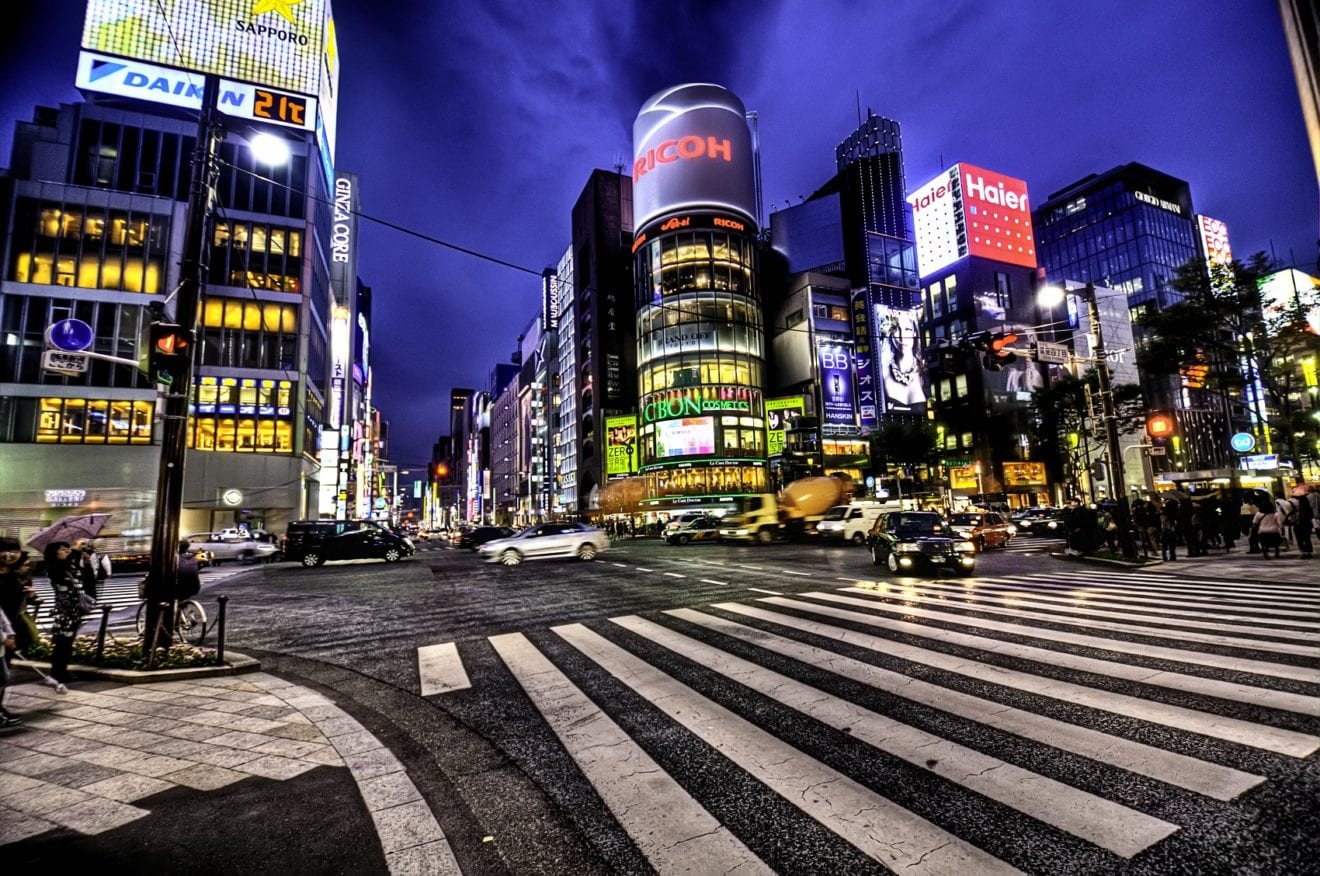
    Covering 4400 sqm, it occupies the entire eighth and ninth floors of the new Tokyu Plaza Ginza, at Sukiyabashi intersection, connecting the historic and cultural Hibiya district to Ginza, Japan’s most famous shopping street.

    With about 150 international brands, the store has luxury boutiques on the eighth floor, and international cosmetics on the other floor. Cosmetics include Estee Lauder, Lancome and Shiseido, fashion brands include Alexander McQueen, Coach, Gucci, Hugo Boss, Ralph Lauren, Zegna and South Korea’s MCM, while there will be watches from such brands as Blancpain and Omega.

    There is also a Japanese souvenirs section.

    Tokyu Plaza Ginza is an 11-storey retail, commercial and entertainment complex developed by theTokyu Land Corporation.

    Meanwhile, a two-level Lotte Duty Free store is also planned for Osaka, to open early next year.

  • Lotte declares $860m Japan target at Ginza launch

    Lotte declares $860m Japan target at Ginza launch

    Lotte Duty Free anticipates that sales at its spectacular new downtown duty free shop in Tokyo’s Ginza shopping district will reach KRW150bn/$129m in its first year. At the opening today, the retailer also announced plans to open four to five stores in other regions in Japan and expects total sales from its stores in the country to grow to one trillion won ($860m) within a decade.

    The Korean-style duty free shop in Tokyo, Japan marks Lotte Duty Free’s entry to the country’s downtown market. A source at the company told us: “We will create a new paradigm for duty free in Japan as we have done in South Korea.”

    ‘STEPPING STONE’

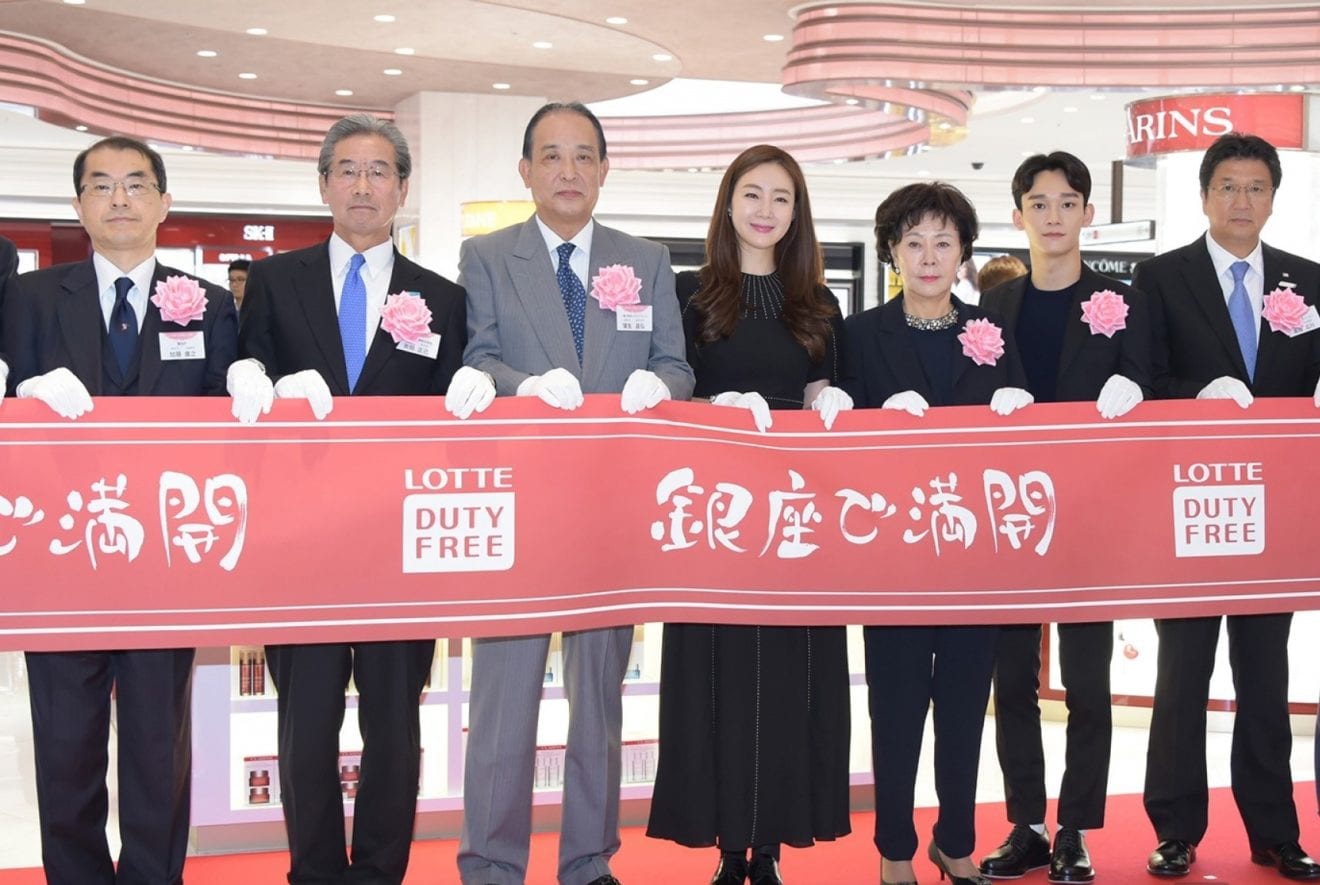
    Today, the South Korean duty free and travel retailer went further by outlining its goal to become the world’s number one duty free player. Sunwook Jang, President of Lotte Duty Free (pictured above in the centre), commented: “Japan is rising as the biggest rival country (to Korea) in inviting Chinese tourists. By using the Tokyo Ginza store as a stepping stone, we will strengthen the brand competitiveness and advance the date of becoming the global number one duty free shop.

    “We will keep expanding (our) overseas stores, publicise the competitiveness of Korean products and grow together with the SMEs in the overseas market.”

    In a statement, the company goes on to say: “Lotte Duty Free plans to continuously expand overseas stores in order to let the world know the superiority of the Korean-style duty free shop and strengthen the competitiveness of the duty free industry in Korea.”

    Currently, Lotte Duty Free has overseas retail operations at Jakarta Airport and Jakarta downtown in Indonesia), Kansai Airport in Japan and Guam airport, and it is accelerating the expansion of new overseas stores in Bangkok, Thailand and Osaka, Japan. The company first entered the Indonesian market in 2012.

    GINZA HIGHLIGHTS

    The shopping district of Ginza attracts 20 million visitors per year and Lotte Duty Free’s store is claimed to be the biggest duty free shop in Tokyo at 4,396sq m in total area.

    The shop offers shoppers 300 brands in categories such as watches, jewellery, cosmetics, perfumes, electronics and accessories. Popular Korean brands like MCM, Whoo, IOPE, Mediheal and competitive Korean SME brands are expected to spread the K-beauty and K-fashion message more widely across the Japanese market.

  • China’s ‘explosive shopping’ sprees bring chaos to Tokyo roads

    China’s ‘explosive shopping’ sprees bring chaos to Tokyo roads

    Tensions between Japan and China are not confined to remote islands and historical disputes it seems – now an unlikely activity is causing tension between the two Asian powerhouses. Shopping.

    Japanese police are reportedly receiving increasing numbers of complaints about the surge in buses carrying Chinese shoppers who are causing parking chaos in Tokyo’s retail districts.

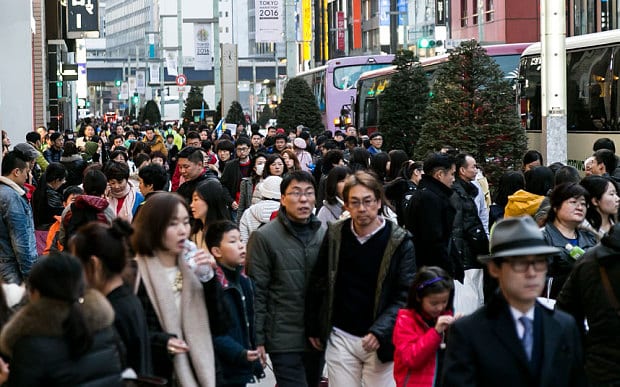
    The issue taps into the booming number of Chinese tourists indulging in intense shopping sprees in Tokyo, whose surge in prevalence has prompted the creation of the new Japanese buzzword “bakugai” (“explosive shopping”).

    Chinese tourists pack their shopping into a suitcase at a department store in Tokyo  Photo: Reuters

    From Ginza’s upmarket boulevards lined with department stores to the historic lanes of the old Asakusa area, large buses ferrying retail therapy-loving Chinese shoppers have apparently been causing parking chaos across the capital.

    On one recent occasion in the run up to Chinese New Year, a total of eight tour buses reportedly caused mayhem after blocking the left traffic lane on one of the main streets in Ginza, according to Kyodo News.

    Store security on the Ginza street also reportedly became involved in the retail chaos, asking Chinese shoppers laden down with bags outside the buses to step aside to allow other pedestrians to pass.

    One of the bus drivers said: “I usually stop here because there aren’t any other places. If we are lucky, we can leave here around 15 minutes behind schedule but a 30-minute delay is not unusual.”

    Japan’s economy received a welcome bolster from a surge in overseas visitors in 2015, with a record 19.73 million overseas tourists arriving in the country, many of whom were intent on shopping.

    Fuelled by a then-weakened yen, foreign tourists visiting Japan last year spent around 3.08 trillion yen – an increase of one trillion from the previous year, according to finance ministry figures.
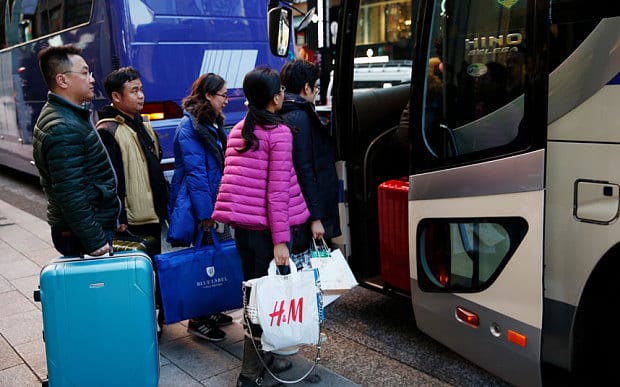
    Chinese tourists shopping during the Lunar New Year Holiday at Tokyo's Ginza shopping district in Japan

    However, the rise of shoppers – in particular groups of voraciously-consuming Chinese shoppers – has gone hand in hand with increasingly complex parking problems across the capital, according to Kyodo News.

    Japanese items coveted by Chinese shoppers range eclectically from swishy Japanese techno lavatories and rice cookers to designer handbags and green tea-flavoured KitKats.

    As the city braces itself for further increases in visitors in the run-up to the Olympics, retail associations are urging local authorities to help find long-term solutions to the problem.

    “The central and the Tokyo metropolitan governments need to take the initiative to provide more parking spaces if they are going to promote tourism,” one leader of a local business association for the Ginza shopping area told Kyodo.

    An official for the metropolitan police department added: “Instead of tightening regulations, we would like to unite with municipalities and stores to decide on appropriate rules to welcome tourists together.”