Tag: gold

  • Gold Prices Plunge to 6-Week Low Amid Rising Oil Prices and Anticipated Federal Rate Hikes

    Gold Prices Plunge to 6-Week Low Amid Rising Oil Prices and Anticipated Federal Rate Hikes

    Gold prices in Vietnam experienced a notable decline on Thursday, marking their lowest level since the 11th of June. The downturn continued from the morning into the afternoon session, reflecting a trending decrease in gold prices throughout the year.

    Trends in Gold Prices

    The Saigon Jewelry Company reported a drop of 1.41% in the price of their gold bars, bringing the price to VND140 million, or US$5,321.37, per tael. This decrease marks a total decline of 4.11% since Wednesday’s close. Additionally, the cost of a gold ring plummeted by 1.85%, settling at VND143.3 million per tael. Overall, gold prices in Vietnam have fallen by 8.4% this year.

    Internationally, the value of gold also fell on Thursday, drifting down from a two-week peak reached earlier. This worldwide decrease was caused by various factors, including a growing conflict in the Middle East, which has led to a surge in oil prices. Traders are also awaiting the outcomes of the Federal Reserve policy meeting next week for indications regarding the possible timing of interest rate hikes.

    Spot gold fell by 0.6%, bringing the price to $4,103.39 per ounce. This shift comes after spot gold reached its highest value since July 7th at $4,165.87 on Wednesday. Concurrently, August delivery for U.S. gold futures dropped by 1.1% to $4,106.40.

    Market Influences and Future Predictions

    These changes in the gold market can be attributed to various causes, as explained by Jigar Trivedi, a senior research analyst at IndusInd Securities. According to him, “Rising oil prices have contributed to escalating inflation and the anticipation of Fed rate hikes. Consequently, these factors have limited the positive momentum in the gold market as the dollar weakens.”

    Questions & Answers

    What factors are causing the drop in gold prices?
    A combination of escalating inflation, expected Fed rate hikes, and a weakening dollar have influenced the gold market negatively, resulting in a price drop.

    What is the current trend in Vietnam’s gold market?
    The gold market in Vietnam has been experiencing a downward trend, with an 8.4% decrease in prices so far this year.

    How has the conflict in the Middle East affected global gold prices?
    The escalating conflict in the Middle East has driven up oil prices. As a result, inflation has increased and gold prices have fallen globally.

  • Vietnam’s Gold Prices Tumble: Global Market Trends and Implications Explored

    Vietnam’s Gold Prices Tumble: Global Market Trends and Implications Explored

    Gold prices in Vietnam witnessed another slump on Monday afternoon, following an earlier decrease of 0.2% in the same session. Saigon Jewelry Company reported a fall in the price of gold bars by 0.82% from the morning rate, settling at VND146 million (US$5,552.39) per tael. This resulted in an overall loss of approximately 1% for the day.

    Additionally, the price of gold rings also declined by 1%, reaching VND145 million per tael. It should be noted that a tael is equivalent to 37.5 grams or 1.2 ounces.

    Global Gold Price Trend

    Internationally, gold prices remained stable on Monday. Investors worldwide were assessing the influence of the escalating tensions between the U.S. and Iran on oil prices. Concurrently, U.S. Federal Reserve policymakers hinted at potential interest rate hikes to alleviate inflationary pressure.

    The spot price of gold lingered at $4,018.75 per ounce. Meanwhile, U.S. gold futures for August delivery slightly advanced by 0.1%, reaching $4,023.20.

    UBS analyst Giovanni Staunovo noted the negative correlation between gold and oil prices. He stated that market players are vigilantly monitoring the developments in the Middle East. Staunovo predicted a weaker dollar would bolster gold prices in the next 6 to 12 months, with expectations of the precious metal surpassing the $5,000 per ounce mark.

    Questions & Answers

    How much did gold prices in Vietnam fall on Monday?
    Gold prices in Vietnam fell by approximately 1% on Monday.

    What is the recent global trend in gold prices?
    Globally, gold prices have remained steady. However, the impact of the U.S.-Iran conflict on oil prices and possible interest rate hikes by the U.S. Federal Reserve are being closely observed by investors.

    What are the predictions for gold prices in the future?
    According to Giovanni Staunovo, a UBS analyst, a weaker dollar is expected to support an increase in gold prices over the next 6 to 12 months, potentially moving above the $5,000 per ounce mark.

  • Vietnam Gold Prices Hit Two-Week Downtrend Amidst Global Market Shifts

    Vietnam Gold Prices Hit Two-Week Downtrend Amidst Global Market Shifts

    On Tuesday, Vietnam witnessed its lowest gold prices since the start of July, resulting from a decline in worldwide prices due to escalating tensions in the Middle East. The price of a gold bar from the Saigon Jewelry Company fell 0.88%, to VND147.1 million (equivalent to US$5,604.76) per tael. In Vietnam, a tael is a unit of weight equivalent to 37.5 grams or 1.2 ounces.

    Gold Market Trends

    The price of gold rings also saw a decrease, falling by 0.54% to VND146 million per tael. The drop in gold prices this year has amounted to a 3.7% decrease overall.

    On the worldwide stage, after experiencing a 3% drop on Monday, gold prices made a minor recovery. This was following an announcement by U.S. President Donald Trump that he was re-establishing a naval blockade on Iran. This action led to a rise in oil markets, renewed fears about inflation, and the potential for the longevity of higher U.S. interest rates. As a result, spot gold increased by 0.28% to $4,011.10 per ounce.

    Expert Insights

    Market analyst at Forex.com, Fawad Razaqzada, commented on the situation, explaining that the rally in oil prices was a result of the conflict in the Middle East and suggested policy tightening by the Federal Reserve. He also noted that these developments spelled bad news for assets like gold, which yield no interest.

    Razaqzada further speculated, “If oil prices continue to surge, gold prices might experience a downfall, potentially dropping to the $3,800 level initially. There is also a chance they could drop to $3,500 over time if the selling pressure intensifies.”

    Questions & Answers

    What caused the drop in Vietnam’s gold prices?
    The decrease was primarily due to a dip in global gold prices, spurred by increased tensions in the Middle East.

    How has the global gold market reacted to recent events?
    After a 3% plunge on Monday, global gold prices have slightly recovered following the US President’s decision to reinstate a naval blockade on Iran.

    What impact could rising oil prices have on the gold market?
    According to market analysts, if oil prices continue to surge, gold prices could potentially drop significantly, possibly down to $3,500 over time if the selling pressure increases.

  • Vietnam’s Gold Market Dips Amid Global Uncertainty: A Look into the Future of Precious Metal Prices

    Vietnam’s Gold Market Dips Amid Global Uncertainty: A Look into the Future of Precious Metal Prices

    Gold prices in Vietnam experienced a downward trend on Wednesday, continuing a 0.3% dip from earlier in the trading day. The Saigon Jewelry Company suffered a 0.67% price drop of their gold bars from the morning, bringing the total loss for the day to 1.1%. The new price for a tael of gold now stands at VND148.5 million (US$5,647.56). The price of gold rings also followed suit with a 1.1% decrease, rendering each tael to be VND148.2 million. For context, a tael is equivalent to 37.5 grams or 1.2 ounces.

    Global Gold Market and Geopolitical Factors

    On a global scale, gold prices remained relatively stable on Wednesday as investors awaited new indicators on the U.S. Federal Reserve’s interest rate projections. Renewed U.S. airstrikes on Iran raised fears that energy costs and inflation might experience an upsurge. Spot gold showed a slight increase of 0.4% to $4,123.55 per ounce after declining to its lowest since July 2 earlier in the trading day. U.S. gold futures for August delivery, however, fell by 0.5% to $4,135.

    Simultaneously, oil prices surged by over 3%, with U.S. Treasury yields rising and the dollar reaching its highest value in a week. Investors were keenly waiting for the minutes of the Federal Open Market Committee’s June 16-17 meeting, set to be released later that Wednesday, for hints on the Fed’s rate path under Chair Kevin Warsh.

    While gold is typically viewed as a safeguard against inflation and often sees gains during periods of geopolitical uncertainty, high interest rates usually put pressure on the non-yielding asset. Since the onset of the Iran conflict in late February, the precious metal’s value has dropped by more than a fifth.

    Views from Industry Experts

    Carsten Menke, Head of Next-Generation Research at Julius Baer Group Ltd., emphasized that the primary concern for gold and silver markets currently is whether the U.S. Federal Reserve will increase interest rates. He noted, “We do not expect the Fed to raise rates, as part of the inflationary pressure should turn out to be temporary.”

    Questions & Answers

    **What happened to gold prices in Vietnam on Wednesday?**
    Gold prices fell, with the Saigon Jewelry Company experiencing a 0.67% decrease in their gold bars from the morning, totalling a 1.1% loss for the day.

    **How has the recent geopolitical situation affected global gold prices?**
    The recent U.S. airstrikes on Iran have caused some anxiety in the market, contributing to a relatively stable gold price as investors wait for fresh signals on the U.S. Federal Reserve’s interest rate outlook.

    **What are experts saying about the U.S. Federal Reserve’s potential actions?**
    Industry experts, such as Carsten Menke of Julius Baer Group Ltd., do not expect the U.S. Federal Reserve to raise interest rates, believing that the current inflationary pressure could be temporary.

  • Vietnam’s Gold Prices Soar Amid Global Bullion Rally and Softened US Jobs Data

    Vietnam’s Gold Prices Soar Amid Global Bullion Rally and Softened US Jobs Data

    On Friday morning, gold prices in Vietnam saw a significant rise, in sync with the worldwide increase in gold rates, marking the first weekly gain in the past five weeks. The key driver behind this surge was the gold bar price offered by Saigon Jewelry Company, which saw a leap of 2.02%, equating to VND151.4 million (US$5,756.11) per tael. For context, a tael is equivalent to either 37.5 grams or 1.2 ounces.

    Over the course of the week, local gold rates have climbed by 1.9%, putting them roughly VND18 million per tael above global rates. This trend was mirrored by the price of gold rings, which increased by 2.02%, bringing it to VND151.3 million per tael on Friday.

    Global Gold Prices on the Rise

    On the global stage, Friday saw an increase of more than 1% in gold prices, setting the stage for the first weekly gain in the past five weeks. This shift has been attributed to a recalibration of investor expectations in light of less than anticipated U.S. employment figures, leading to a decrease in anticipations of Federal Reserve interest rate hikes.

    Spot gold saw an increase of 1.4%, taking it to $4,179.94 per ounce, its highest value since June 23. Additionally, U.S. gold futures for August delivery saw a rise of 1.6%, bringing it to $4,193.20.

    According to Kelvin Wong, a senior market analyst at OANDA, despite this uptick in gold prices, there has not been a complete revocation of rate hike pricing. He predicts that by the end of the year, there may still be another phase of potential gold weakness, with prices possibly reaching the $3,500/oz level.

    Central Banks Resume Gold Purchases

    The World Gold Council has reported that there has been a resumption of gold purchases by central banks. As per the most recent data, official gold reserves saw a net increase of 41 tons in May.

    Questions & Answers

    What factors led to the rise in gold prices in Vietnam?
    The rise in gold prices in Vietnam was driven by the gold bar price offered by the Saigon Jewelry Company and the increase in the global gold rate.

    What is the anticipated impact of the U.S. employment figures on gold rates?
    The less than expected U.S. employment figures have led to a reduction in expectations of Federal Reserve interest rate hikes, contributing to the rise in gold prices.

    What is the projected future trend for gold prices as per the senior market analyst at OANDA?
    Despite the recent increase in gold prices, Kelvin Wong predicts a potential phase of gold weakness towards the end of the year, with prices potentially reaching the $3,500/oz level.

  • Vietnam’s Gold Prices Soar Despite Global Market Decline: A Week of Ups and Downs

    Vietnam’s Gold Prices Soar Despite Global Market Decline: A Week of Ups and Downs

    Vietnam’s gold market saw a modest rise in prices on Saturday, ending the week on a slightly high note. The day observed a 0.34% increase in the prices of gold bars from Saigon Jewelry Company, which closed at VND147.2 million (US$5,594.85) per tael. This showed a 0.14% increase over the week.

    Similarly, the prices of gold rings also rose, marking a 0.4% increase to VND147.2 million per tael. For context, a tael is a traditional Asian unit of weight, which is equivalent to 37.5 grams or 1.2 ounces.

    Global Gold Prices

    In contrast to Vietnam, global gold prices experienced a downward trend on Friday. The decline marked the third consecutive weekly fall for the yellow metal. The decrease in prices was influenced by the strengthening of the U.S. dollar and a hawkish stance of the Federal Reserve.

    Spot gold decreased by 0.9%, settling at $4,169.44 per ounce. This was after hitting its lowest level since June 11 at $4,119.78. Also, U.S. gold futures contracted by 1.4% to $4,186.50.

    Senior market analyst at Jefferies-owned Tradu.com, Nikos Tzabouras, commented on the situation. He noted that gold is at risk of sinking further into bear market territory, potentially falling below the $4,000/oz mark. He attributed this to the challenging market environment and the unfavorable effects of prolonged higher Federal Reserve expectations on non-yielding assets, which, however, is beneficial to the dollar.

    With regards to gold price projections, Goldman Sachs revised its forecast, lowering its December prediction to $4,900 per ounce from its earlier estimate of $5,400. The firm reasoned that while its price outlook remains generally positive, it is exercising caution due to potential near-term downside risk and medium-term upside risk.

    Questions & Answers

    What caused the rise in Vietnam’s gold prices?
    The increase in Vietnam’s gold prices is not attributed to a specific cause in the article. However, gold prices can rise due to various factors such as fluctuations in currency values, inflation, and geopolitical instability.

    What is causing the downturn in global gold prices?
    The global decline in gold prices is attributed to the strengthening of the U.S. dollar and the hawkish stance of the Federal Reserve, which has increased expectations for higher interest rates.

    What is Goldman Sachs’ revised forecast for gold prices by December?
    Goldman Sachs has revised its forecast for gold prices by December to $4,900 per ounce, a decrease from its previous estimate of $5,400 per ounce.

  • Singapore Boosts Gold Market Role: Invites Foreign Central Banks for Secure Gold Storage Services

    Singapore Boosts Gold Market Role: Invites Foreign Central Banks for Secure Gold Storage Services

    Beginning in October, Singapore will permit foreign central banks and sovereign entities to store their gold reserves within its borders. This move is aimed at reinforcing Singapore’s standing as a regional hub for gold trading and storage. The city-state’s commercial vaulting capacity currently surpasses 2,000 tonnes. This capacity is utilized by a diverse array of market participants including bullion banks, institutional investors, and high-net-worth individuals, as expressed by Deputy Prime Minister Gan Kim Yong on a recent Monday forum.

    Strengthening the Gold Market

    In addition to providing secure storage, Singapore will cater to foreign central banks and sovereign entities desiring to actively manage their gold holdings. The Monetary Authority of Singapore plans to offer gold accounts to a select group of bullion banks based in Singapore. This initiative will enhance their capability to deliver gold-related services and liquidity to these entities.

    Deputy Prime Minister Yong believes that this move will enhance Singapore’s reputation as a safe and reliable jurisdiction where reserve assets can be securely held and actively managed. The city-state will also be able to connect these assets to wider market liquidity during Asian trading hours, further reinforcing its regional dominance.

    Gold Market Innovations

    Several innovative measures have also been announced to strengthen Singapore’s role in the global gold market. One significant measure includes the establishment of an over-the-counter gold clearing system by the Singapore Exchange by the end of 2026. Interbank trading is anticipated to grow from 2027 onwards.

    This revolutionary system aims to enhance trade processing, boost transparency, and support more efficient clearing and settlement. According to Yong, this will instill greater confidence in market participants to transact in Singapore. The new system will accommodate both large bars and kilobars, enabling standardized settlement during Asian trading hours.

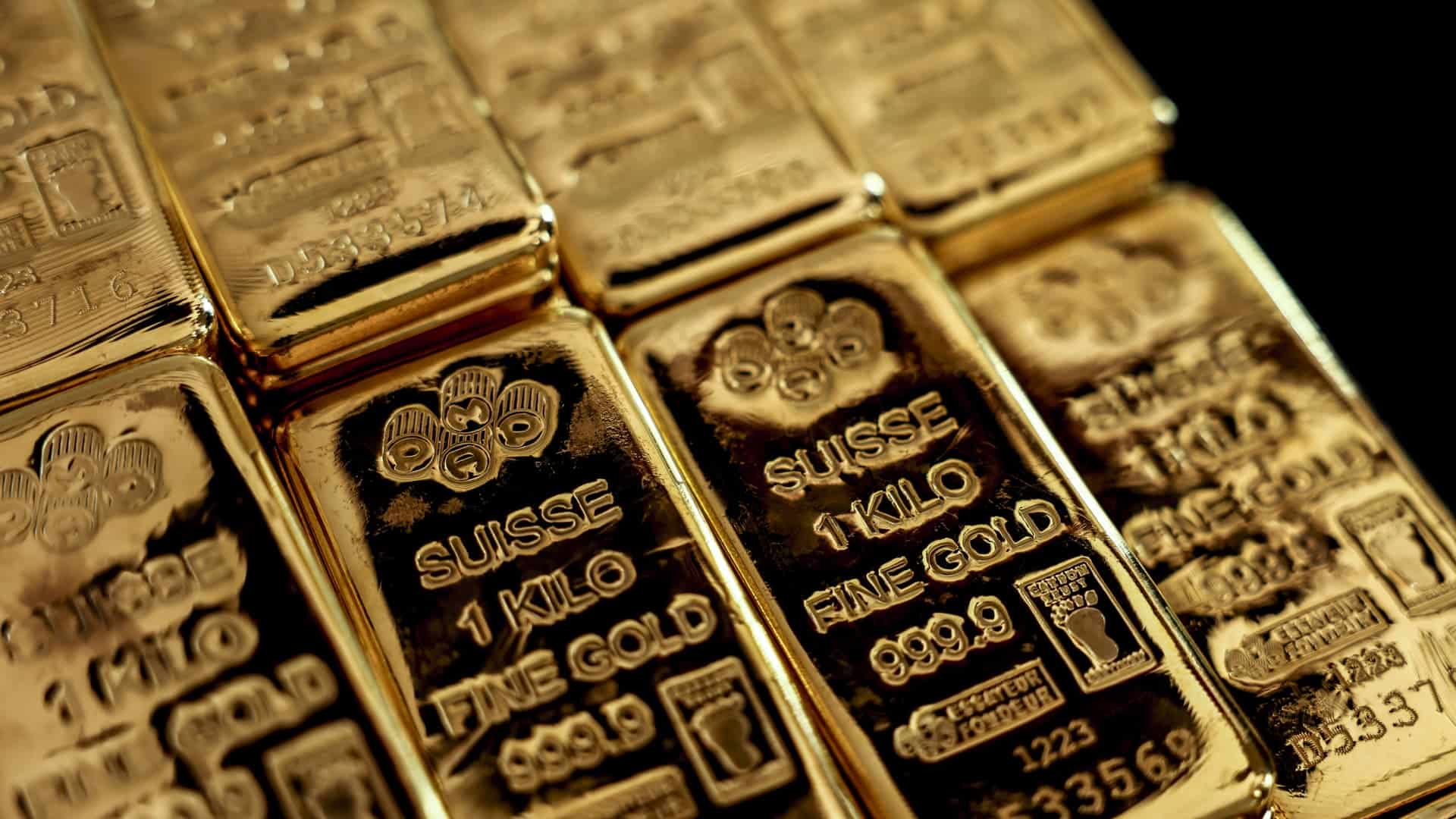
    Large bars refer to 400-troy-ounce gold bars or approximately 12.4 kilograms, which are standard for institutional trading and settlement in London. Kilobars, on the other hand, are 1-kilogram bars that are popular in Asian markets and are accepted for delivery in Comex gold futures contracts in the U.S.

    DBS, Deutsche Bank, ICBC Standard Bank, JPMorgan, OCBC, and UOB have been reported as the six banks that will join as clearing members and contribute to the development of Singapore’s gold market.

    Questions & Answers

    What will Singapore allow from October?
    Starting from October, Singapore will allow foreign central banks and sovereign entities to store their gold reserves in the country.

    What benefits will the proposed gold clearing system bring to Singapore’s gold market?
    The proposed over-the-counter gold clearing system will streamline trade processing, enhance transparency, and support more efficient clearing and settlement, thereby bolstering market participant confidence to transact in Singapore.

    Which banks will be joining as clearing members to develop Singapore’s gold market?
    DBS, Deutsche Bank, ICBC Standard Bank, JPMorgan, OCBC, and UOB are set to join as clearing members to help develop Singapore’s gold market.

  • DBS Unveils Singapores First Retail-Ready Tokenised Gold Offering: Buy, Trade, and Hold via One Digital Platform

    DBS Unveils Singapores First Retail-Ready Tokenised Gold Offering: Buy, Trade, and Hold via One Digital Platform

    DBS Bank is set to revolutionize the financial market in Singapore by launching tokenized physical gold for retail customers in the latter half of 2026. With this initiative, DBS Bank takes the lead as the first bank in the nation to empower its customers with the capability to purchase, possess, and transact in tokenized physical gold via a singular digital platform.

    Tokenizing Precious Metal

    The advanced DBS Physical Gold Tokens will be available through the DBS digibank app. With each token backed by an equivalent amount of physical gold that will be securely stored in a dedicated DBS vault located in Singapore. Each token will stand for one gram of gold, providing customers the opportunity to acquire fractional ownership of this valuable metal.

    DBS Bank assures that this offering will facilitate 24/7 trading, almost immediate settlement, and the choice to exchange tokens for physical gold. Moreover, the bank is looking into the possibility of having the tokens listed on the DBS Digital Exchange (DDEx) for accredited and institutional investors.

    This launch coincides with the escalating interest in gold and the tokenization of real-world assets. DBS Bank will oversee the entire procedure internally, including tokenization, custodial services, vaulting, and distribution.

    Li Zhen, Head of Foreign Exchange, Precious Metals, and Digital Assets at DBS, commented on the initiative, stating that the bank’s comprehensive digital asset capabilities will simplify access to and management of physical gold for clients.

    James Tan, Group Head of Investment Product and Advisory, also shared his views on the subject. He mentioned that tokenization would expand access to an asset class that has typically been accessible mainly to wealthy and institutional clients.

    Expanding Digital Asset Services

    The introduction of tokenized gold expands upon DBS Bank’s existing array of gold investment products. Moreover, it is part of the bank’s broader endeavor to delve into digital assets and blockchain-based financial services.

    Questions & Answers

    What is the DBS Physical Gold Tokens initiative?
    This initiative by DBS Bank allows customers to purchase, hold, and trade tokenized physical gold via a single digital platform.

    What features does the tokenized gold offering include?
    The offering will enable 24/7 trading, near-instant settlement and the option to redeem tokens for physical gold. The bank is also exploring a future listing of the tokens on the DBS Digital Exchange for accredited and institutional investors.

    How does this initiative fit into DBS Bank’s broader strategy?
    The tokenized gold offering expands DBS Bank’s existing range of gold investment products and is part of the bank’s broader push into digital assets and blockchain-based financial services.

  • Vietnam’s Gold Prices Tumble to 8-Month Low Amid Rising Dollar and US-Iran Tensions

    Vietnam’s Gold Prices Tumble to 8-Month Low Amid Rising Dollar and US-Iran Tensions

    Gold prices in Vietnam continued on a downward trend on Wednesday morning, reaching the lowest point since October 5. The Saigon Jewelry Company reported that gold bars fell by 2.64%, now valued at VND140 million (US$5,318.74) per tael. In Vietnam, a tael is equivalent to 37.5 grams or 1.2 ounces.

    The price of gold rings also experienced the same decline, priced at VND140 million per tael. So far this year, gold prices in Vietnam have decreased by 8%.

    Global Gold Market Trends

    On a global scale, gold fell by over 1% on Wednesday, plunging to an 11-week low. This drop in value could be attributed to the rising dollar and oil prices, amid renewed tensions between the United States and Iran. These factors fueled concerns about potential inflation and possible interest rate hikes.

    Spot gold suffered a 1.8% loss, falling to $4,187.59 per ounce, the lowest it has been since March 23. Meanwhile, U.S. gold futures for August delivery were down 1.7% at $4,213.40.

    The rise of the dollar has made bullion priced in the greenback more costly for holders of other currencies. Additionally, the 1% increase in oil prices stoked inflation worries, solidifying the expectation that interest rates would remain high for an extended period.

    Ilya Spivak, head of global macro at Tastylive, noted that the shift in Federal Reserve policy expectations, the rise in yields, and the increase in the dollar have all contributed to the decline in gold prices.

    Questions & Answers

    Why have gold prices in Vietnam decreased?
    The decline in gold prices in Vietnam is part of a global trend, influenced by factors such as the rising dollar and oil prices, as well as geopolitical tensions.

    What factors are influencing global gold prices?
    Global gold prices are being affected by policy expectations from the Federal Reserve, rising yields, and the strengthening of the dollar. Inflation worries and anticipated interest rate hikes also play a significant role.

    How is the rise in oil prices related to gold prices?
    The increase in oil prices can stoke inflation concerns. When inflation is expected to rise, interest rates typically follow suit. Higher interest rates can negatively impact gold prices because they increase the opportunity cost of holding non-yielding bullion.

  • OCBC Leverages Rising Gold Demand, Launches Physical Gold Trading in Singapore

    OCBC Leverages Rising Gold Demand, Launches Physical Gold Trading in Singapore

    The Oversea-Chinese Banking Corporation (OCBC) in Singapore is broadening its precious metals sector by introducing physical gold trading and storage services for institutional investors and private banking clients. OCBC perceives an increasing demand for safe-haven assets as geopolitical and economic uncertainty heightens.

    Initiating from June 10, OCBC’s institutional clients and affluent clients of its private banking division, the Bank of Singapore, will be granted the opportunity to purchase, trade, and store physical gold via OCBC, with the entire trading and custodial process based in Singapore.

    Enhancing the Gold Franchise

    This decision signifies a considerable amplification of the bank’s gold franchise beyond its current paper gold offerings. The move comes as investors’ hunger for physical bullion continues to grow. According to OCBC’s reference to data from the World Gold Council, the global demand for gold bars in the first quarter of 2026 experienced a 50% surge compared to the previous year. The Bank of Singapore disclosed that client holdings of physical gold have witnessed an increase of more than 40% since the conclusion of 2025.

    OCBC has stated that the new service will initially provide two forms of bullion: large bars weighing roughly 400 troy ounces (12.4 kilograms) and one-kilogram bars, both allocated to clients and individually identifiable through serial numbers.

    The bank has indicated that client demand has progressively gravitated towards local custody arrangements. Previously, Bank of Singapore clients conducted transactions in physical gold via a U.S.-based entity. With the new arrangement, clients can carry out transactions and store bullion entirely within Singapore.

    Expansion of Wealth Management Strategy

    This introduction mirrors wider efforts by Singapore’s financial industry to fortify its stance as a regional precious-metals hub. OCBC expressed intentions to explore the extension of physical gold products and related hedging solutions to additional client segments over time.

    The move also forms part of OCBC’s more extensive wealth management strategy. Over the past few years, the group has continuously expanded its gold-related offerings across its banking, asset management, and insurance industries.

    Kenneth Lai, Head of Global Markets at OCBC, expressed that the bank perceives physical gold as a natural extension of its existing precious-metal capabilities and is planning to widen access to the offering over time.

    Questions & Answers

    What new services is OCBC introducing?
    OCBC is introducing physical gold trading and storage services for institutional investors and private banking clients.

    What does this expansion mean for OCBC’s existing services?
    This expansion signifies a considerable amplification of OCBC’s gold franchise beyond its current paper gold offerings.

    What is the impact of this move on Singapore’s financial industry?
    This introduction mirrors wider efforts by Singapore’s financial industry to fortify its stance as a regional precious-metals hub.

  • Global Gold Rush Stumbles: Vietnam Witnesses Gold Price Drop Amid Rising Crude Oil Rates

    Global Gold Rush Stumbles: Vietnam Witnesses Gold Price Drop Amid Rising Crude Oil Rates

    In Vietnam, the price of gold took a hit on Wednesday morning, coinciding with a global decrease in bullion rates. Saigon Jewelry Company, a prominent gold dealer, experienced a 0.32% drop in the price of their gold bars. This translated to a new rate of VND157 million, equivalent to US$5,960.5 per tael.

    In a parallel development, the cost of gold rings also witnessed a similar decline, ending up at approximately VND156.8 million per tael. It should be noted that one tael is equivalent to 37.5 grams, or 1.2 ounces.

    Global Downturn in Gold Prices

    Internationally, the price of gold experienced a downturn on Wednesday. The renewed tension in the Middle East, which resulted in a surge in crude oil prices, sparked fears of prolonged high-interest rates. This fear was intended to curb inflation.

    Spot gold registered a 0.2% decline to stand at $4,476.50 per ounce. Meanwhile, U.S. gold futures set for August delivery also echoed the downward trend, falling 0.3% to land at $4,504.40.

    The Middle East saw renewed hostilities on Wednesday. The U.S. military reported thwarted or otherwise unsuccessful Iranian missile attacks on Bahrain, Kuwait, and other regional targets. The lack of diplomatic progress between Washington and Tehran seemed to contribute to the situation.

    As a result, oil prices marked an increase of more than 1% in early trading on Wednesday. This development deepened concerns about inflation and potential interest rate hikes, factors that tend to negatively impact non-yielding gold.

    Questions & Answers

    What was the percentage decrease in the price of gold in Vietnam?
    The price of gold in Vietnam fell by 0.32%.

    What were the global factors contributing to the decline in gold prices?
    Several global factors contributed to the decline in gold prices, including renewed tensions in the Middle East, a rise in crude oil prices, and fears of prolonged high interest rates intended to curb inflation.

    How did the situation in the Middle East affect oil prices?
    The renewed hostilities in the Middle East led to an increase in crude oil prices by more than 1% in early trade on Wednesday.

  • Vietnams Gold Prices Take a Hit, Nears January Low as Global Rates Tumble

    Vietnams Gold Prices Take a Hit, Nears January Low as Global Rates Tumble

    Gold prices in Vietnam witnessed a significant fall on Thursday, reflecting the global trend in the precious metal’s value. This drop extended the morning’s losses, with the gold bar from Saigon Jewelry Company registering a decline of 0.94% from its morning value, settling at VND157.5 million (US$5,982.68) per tael by 3:28 pm. For reference, a tael is equivalent to 37.5 grams or 1.2 ounces.

    Notable Changes in Gold Value

    This decrease marks a considerable plunge of 1.99% compared to the preceding day. Concurrently, the value of gold rings also dipped by 1.62% within the same 24-hour span. Despite the sharp fall on Thursday, gold prices in Vietnam have experienced an overall increase of 3% since the beginning of the year. However, the current values are hovering around the lowest since the onset of 2020.

    Global Gold Price Trends

    On a global scale, gold prices hit a two-month low on Thursday. This drop was attributed to several factors, including the strengthening of the U.S. dollar following recent attacks on Iran, and the resultant surge in oil prices. These developments sparked concerns about potential inflation, hence casting a shadow on the interest rate outlook.

    At one point, spot gold fell by 1.5%, reaching a value of $4,388.76 per ounce, representing its lowest value since late March. Similarly, U.S. gold futures for June delivery also saw a decline of 1.4%, settling at $4,386.

    Recent military strikes in Iran, carried out by the U.S. military, targeted a military site believed to pose a threat to U.S. forces and commercial shipping in the Strait of Hormuz. These actions took place just hours after President Donald Trump dismissed an Iranian report concerning a deal to restore traffic through the strategic waterway.

    Questions & Answers

    What impact did recent global events have on gold prices in Vietnam?
    Recent global events, including U.S. military strikes in Iran, led to a strengthening of the U.S. dollar and an increase in oil prices. These factors contributed to a significant drop in gold prices, both in Vietnam and globally.

    By how much did gold prices in Vietnam fall on Thursday?
    The value of gold in Vietnam decreased significantly on Thursday, with a notable drop of 1.99% from the previous day.

    What is the current trend in gold prices in Vietnam this year?
    Despite the recent dip, gold prices in Vietnam have seen a net increase of 3% since the start of the year. However, current prices are near the lowest recorded in early January.

  • Malaysia Rattles Bullion Trade with 10% Duty on Gold Bar Imports

    Malaysia Rattles Bullion Trade with 10% Duty on Gold Bar Imports

    In the latest regulatory development, Malaysia has imposed a 10% import duty on certain inbound shipments of gold bars. This unexpected decision has jolted the nation’s gold trade, with effects felt since early May, as per anonymous reports from traders and dealers. Consequently, some shipments have been detained at customs or rerouted due to the absence of a corresponding rise in local gold prices, which rendered the imports unprofitable.

    The Impact on Customers

    Bank Muamalat Malaysia, a local Islamic bank offering gold investment products, has stated that the imposition of a 10% import tax on bullion will inevitably be transferred to customers. This could lead to a considerable price hike for investors. For instance, purchasing a one-kilogram bar via a Malaysian bank after June 8 could cost approximately MYR45,000 (US$11,300) more than it would have a week before.

    A representative from the Royal Malaysian Customs Department has noted that the Ministry of Finance plans to discuss the issue of “minted gold products” imports with industry leaders.

    Increasing Interest in Gold

    The value of gold surged to a record high earlier this year, stoking investor interest in the precious metal, including in Asia. In response to this trend, several Malaysian banks have debuted gold investment products over the past year. Furthermore, bullion logistics firm, Loomis AB, has established a vault near the nation’s capital to cater to the growing demand.

    According to the country’s Department of Statistics, Malaysia imported around US$2.5 billion worth of non-monetary gold up until April this year.

    This move by the Malaysian government mirrors a similar abrupt shift in import policies in India, the world’s second-largest gold and silver market. This change has yielded a domino effect across its metals and currency markets.

    Questions & Answers

    How has Malaysia’s imposition of a 10% import duty on gold bars affected the bullion trade?
    This move has disrupted the bullion trade, with some shipments being held at customs or diverted due to the increased cost, which, without a corresponding rise in local gold prices, made the imports unprofitable.

    What is the likely impact of this decision on customers?
    Bank Muamalat Malaysia has indicated that the imposition of this import tax will eventually be passed on to the customers, leading to increased prices for investors.

    Has there been a change in the demand for gold?
    Yes, there has been a growing interest in gold, spurred by its record high value earlier this year. In response, several Malaysian banks have launched gold investment products, and bullion logistics company, Loomis AB, has opened a vault near the country’s capital.

  • Vietnams Gold Market Springs Back: Global Bullion Rates Trigger Significant Rise

    Vietnams Gold Market Springs Back: Global Bullion Rates Trigger Significant Rise

    Gold prices in Vietnam experienced a resurgence on Monday morning, reflecting a similar upsurge in worldwide bullion rates. The Saigon Jewelry Company increased their gold bar prices by 0.3%, reaching VND162 million (approximately US$6,145.44) per tael. This rise comes after a significant four-month dip that peaked last week.

    Global Gold Prices on the Rise

    In similar fashion, the price of gold rings in Vietnam elevated by 0.31%, equating to around VND161.5 million per tael. A tael, for those unfamiliar, is roughly equivalent to 37.5 grams or 1.2 ounces.

    On a global scale, gold prices experienced a noteworthy increase of more than 1% on Monday. This shift can be attributed to a combination of a weakening US dollar and decreasing oil prices. These economic fluctuations have led investors to ponder the possibility of a breakthrough in peace negotiations between the United States and Iran.

    Spot gold saw an increase of 1.1%, reaching $4,559.29 per ounce. Similarly, US gold futures for June delivery experienced a 0.8% increase, bringing the cost up to $4,560.30. The declining strength of the dollar means that gold priced in greenbacks is now more accessible to those dealing in other currencies.

    Looking at the larger picture, despite the recent price increase, bullion remains approximately 13% lower than it was prior to the onset of conflict in late February.

    Questions & Answers

    What prompted the rebound of gold prices in Vietnam?
    The resurgence can be primarily attributed to a similar increase in global bullion rates, coupled with economic factors including a weakening US dollar and decreasing oil prices.

    What has been the impact of the US-Iran peace negotiations on gold prices?
    The consideration of a possible breakthrough in US-Iran peace talks has led investors to lean towards gold, contributing to the recent rise in prices.

    How has the recent conflict affected the overall price of bullion?
    Despite the latest increase, bullion prices remain around 13% lower than before the conflict began in late February.

  • Vietnam’s Gold Market Stumbles: Price Plunge Amid Softening Global Bullion Rates

    Vietnam’s Gold Market Stumbles: Price Plunge Amid Softening Global Bullion Rates

    On Wednesday, gold prices in Vietnam witnessed a decline, following a similar downtrend in global bullion rates. The price of gold bars offered by Saigon Jewelry Company (SJC), a major Vietnamese gold retailer, fell by 0.92%, hitting VND162 million (US$6,144.5) per tael. In addition, the price of gold rings slid down by 1.1% to VND161.5 million per tael. It’s worth noting that a tael in Vietnam is equivalent to 37.5 grams or 1.2 ounces.

    Global Gold Market Trends

    Globally, gold prices also edged lower on Wednesday. This downward trend was primarily due to rising Treasury yields and a strong dollar, which eclipsed the optimism kindled by the prospect of a potential peace agreement between the U.S. and Iran. Spot gold fell by 0.3%, valued at $4,467.59 per ounce, after reaching its lowest point since March 30 in the preceding session. Meanwhile, U.S. gold futures for June delivery suffered a loss of 0.9%, priced at $4,471.10.

    Inflationary pressures stemming from the Iran conflict spurred a selloff in global bond markets. This sell-off drove 30-year U.S. Treasury yields to levels unseen since the precursor period to the 2007 global financial crisis. Concurrently, the dollar floated at a six-week high, making bullion priced in the greenback more expensive for individuals holding other currencies.

    Analysts speculate that gold’s current slump could be attributed to the rising yields and the dollar’s strength. Tim Waterer, the chief market analyst at KCM Trade, opines, “Gold is running out of puff somewhat against this backdrop of rising yields, and a dollar which has a spring in its step courtesy of the hawkish shift in the rates outlook.”

    Questions & Answers

    What triggered the decline in gold prices in Vietnam?
    The fall in gold prices in Vietnam was influenced by the global downtrend in bullion rates, with the price of gold bars and gold rings offered by Saigon Jewelry Company witnessing a significant decline.

    What factors influenced the global downtrend in gold prices?
    Rising Treasury yields and a firm U.S. dollar were the primary factors that attributed to the global decline in gold prices. The optimism surrounding the potential U.S.-Iran peace agreement was overshadowed by these factors.

    What impact did the Iran conflict have on the global gold market?
    The Iran conflict led to inflationary pressures that resulted in a selloff in global bond markets. This, in turn, significantly affected the global gold market, driving U.S. Treasury yields to levels unseen since the precursor period to the 2007 global financial crisis.