Tag: gold

  • Vietnams Gold Market Faces Steep Dive amid Global Bullion Rate Decline

    Vietnams Gold Market Faces Steep Dive amid Global Bullion Rate Decline

    Wednesday saw a dip in gold prices in Vietnam, tracking a global decline in bullion rates. Saigon Jewelry Company, a notable player in the market, reported a 0.92% decrease in gold bar prices, which dropped to VND162 million (US$6,144.5) per tael.

    Fluctuations Across Markets

    Simultaneously, the price of gold rings also experienced a dip, declining by 1.1% to VND161.5 million per tael. To put things into perspective, a tael is equivalent to 37.5 grams or around 1.2 ounces.

    On the global stage, gold prices edged lower on Wednesday. This downturn was propelled by factors such as rising Treasury yields and a strengthening dollar, which outweighed the optimism stirred by the prospect of a peace agreement between the U.S. and Iran.

    Spot gold saw a 0.3% decrease to $4,467.59 per ounce, hitting its lowest level since March 30 in the previous trading session. Concurrently, U.S. gold futures for June delivery registered a loss of 0.9%, dropping to $4,471.10.

    Contributing Factors

    Certain economic factors also influenced these price fluctuations. The ongoing conflict with Iran has escalated price pressures, triggering a sell-off in global bond markets. This has pushed the 30-year U.S. Treasury yields to levels unseen since the precursor period to the 2007 global financial crisis.

    In tandem with these events, the dollar maintained its position at a six-week high. This, in turn, made bullion priced in the greenback more costly for those holding other currencies.

    According to Tim Waterer, Chief Market Analyst at KCM Trade, the current backdrop of rising yields and a rejuvenated dollar, driven by a hawkish shift in rates outlook, is potentially reducing the appeal of gold as an investment.

    Questions & Answers

    What is the significance of the price of a tael in relation to gold prices?
    The price of a tael, equivalent to 37.5 grams or 1.2 ounces, is an important measure for gold prices, particularly in markets like Vietnam.

    How did the global economic climate affect gold prices?
    Rising Treasury yields and a strong dollar, coupled with the potential peace agreement between the U.S. and Iran, have led to a decrease in global gold prices.

    What factors are currently affecting the appeal of gold as an investment?
    Increasing yields and a revitalized dollar, prompted by a hawkish shift in rates outlook, are reducing the attractiveness of gold as an investment.

  • Vietnams Gold Market Slumps as Bullion Rates Plummet Globally

    Vietnams Gold Market Slumps as Bullion Rates Plummet Globally

    Gold prices in Vietnam fell on Friday morning, reflecting a global decline in bullion rates across the fourth consecutive trading session. This price drop was seen in the Saigon Jewelry Company’s gold bar, which reported a 0.6% decrease to VND164 million (approximately US$6,221.31) per tael. Despite this recent decrease, the local bullion rates have still seen an overall increase of 7.3% since the beginning of the year, even with a 2% decrease this week.

    Gold Ring Prices and Global Gold Rates

    Along with the decrease in gold bar prices, the cost of gold rings also fell by 0.6% to VND163.8 million per tael. In terms of weight, a tael is equivalent to 37.5 grams or 1.2 ounces.

    Internationally, gold prices were at a more than one-week low on Friday, resulting from higher energy prices driving inflation fears and the continuation of higher interest rates. The meeting between the U.S. President and the Chinese President was also a point of focus for investors. Spot gold saw losses for the fourth straight session and was down 0.8% at $4,613.19 per ounce, marking its lowest level since May 6. Bullion was down 2.1% for the week and U.S. gold futures for June delivery lost 1.4% to $4,619.

    Factors Impacting the Gold Market

    Analysts have attributed the drop in gold prices to several factors. Tim Waterer, chief market analyst at KCM Trade, remarked, “Gold is getting hit from all sides – rising oil has brought inflation back to the forefront, pushing yields higher and the dollar stronger, leaving the yellow metal as the unfortunate victim of the market’s renewed rate-cut skepticism.”

    Since the U.S.-Iran conflict began in late February, gold has fallen about 13%. This is largely due to increased energy prices, which have led to inflation concerns and higher U.S. interest rates. While gold is often viewed as a safe haven against inflation, high interest rates can negatively impact this non-yielding asset.

    Questions & Answers

    What caused the recent decline in Vietnam’s gold prices?
    The decline mirrors a global decrease in bullion rates. Factors such as higher energy prices, inflation fears and higher interest rates have contributed to this decrease.

    How has the U.S.-Iran conflict impacted gold prices?
    Since its onset in late February, the conflict has sparked an approximate 13% decrease in gold prices. This is due to increased energy prices, inflation concerns, and the potential for higher U.S. interest rates.

    How do interest rates affect gold prices?
    High interest rates typically lead to a decrease in gold prices. This is because gold, as a non-yielding asset, becomes less attractive to investors when interest rates are high.

  • Vietnams Gold Market Slumps as Global Tensions Stoke Inflation Fears

    Vietnams Gold Market Slumps as Global Tensions Stoke Inflation Fears

    On Monday afternoon, there was a further decline in the gold prices in Vietnam, following a nearly 1% decrease earlier in the day. The gold bar prices offered by Saigon Jewelry Company experienced a drop of an additional 0.42% from the morning’s price, settling at VND165.2 million (US$6,276.26) per tael, marking a total loss of 1.37% for the day.

    Local bullion prices currently stand at around VND17 million per tael higher than the global gold prices.

    Changes in Gold Ring Prices

    Similarly, the cost of gold rings experienced a decrease in price, dropping at roughly the same rate and settling at VND164.7 million per tael. In Vietnam, a tael is equivalent to 37.5 grams or 1.2 ounces.

    On a global scale, gold prices experienced a 1% decrease on Monday. This was triggered by President Donald Trump’s rejection of Iran’s recent peace proposal, aimed at ending the ongoing conflict in the Middle East. This rejection has led to a heightened fear of inflation and a prolonged period of high interest rates.

    Spot gold saw a decrease of 1% to $4,667.99 per ounce, following a rise of approximately 2% during the previous week. U.S. gold futures for June delivery experienced a loss of 1.1% to stand at $4,677.80.

    The Impact of the Middle East Conflict on Gold Prices

    The failure to reach an agreement to end the Middle East conflict has led to sustained inflation risks and expectations of high-interest rates. This in turn has put pressure on the non-yielding bullion, which has seen a drop of over 11% since the inception of the war in late February.

    According to Han Tan, chief market analyst at Bybit, there could be more downward pressure on gold prices if the U.S. Consumer Price Index (CPI) prints prove to be hotter than anticipated tomorrow. This could force the Federal Reserve to maintain high benchmark rates for an extended period.

    Questions & Answers

    **What is the current price of gold bars offered by Saigon Jewelry Company?**
    The current price per tael is VND165.2 million (US$6,276.26).

    **How much has the price of non-yielding bullion dropped since the start of the war in the Middle East?**
    The price of non-yielding bullion has dropped more than 11% since the war began in late February.

    **How might the U.S. Consumer Price Index impact the price of gold?**
    If the U.S. Consumer Price Index prints come in hotter than expected, it could result in more downward pressure on gold prices, with the Federal Reserve being forced to maintain high benchmark rates for a longer period.

  • Hong Kong Gears Up for Gold Futures Relaunch Amid Booming Demand and Chinas Support

    Hong Kong Gears Up for Gold Futures Relaunch Amid Booming Demand and Chinas Support

    The Hong Kong Exchanges and Clearing (HKEX) is advancing its plans to rejuvenate the trading of gold futures as the demand for the commodity keeps escalating across mainland China. This move comes amidst the city’s pursuit to introduce fresh gold products and facilities to leverage the expanding opportunities in the gold market.

    Reviving Gold Futures Trading

    It has been announced to legislators that there’s an intention to reintroduce gold futures in the months to come, with plans to solicit market feedback to enhance the products ahead of their launch. The forthcoming revival will be the city’s fourth attempt since the 1980s, with the most recent effort occurring in 2017 when the exchange presented gold futures denominated in U.S. dollars and Chinese yuan.

    Despite both contracts remaining listed, data from the exchange reveals that neither has seen any turnover in the preceding two years. However, optimism is high this time around, as the current endeavor involves not just the exchange, but also the Hong Kong government who is developing an ecosystem of clearing and storage. This is being supported by China, who aims to establish Hong Kong as a gold trading hub.

    Financial Secretary Chan has highlighted that Asia is responsible for approximately 60% of the total global gold demand every year. In an effort to better capture these opportunities, a central clearing system for gold is being constructed, with pilot operations set to commence within the year.

    Expansion of Gold Storage Capacity

    Simultaneously, the Hong Kong Airport Authority is rapidly increasing its gold storage capacity, aiming to exceed 2,000 tonnes within the next three years. Just last month, Hong Kong listed a new gold exchange-traded fund with physical redemption alternatives.

    This revival aligns with the People’s Bank of China’s ongoing effort to bolster its gold reserves. The holdings reached 74.64 million ounces at the close of April, marking 18 uninterrupted months of growth.

    Furthermore, activity in Hong Kong’s gold market has surged, partly due to tensions in the Middle East. The city has seen a significant surge in physical imports from the region since early April.

    This accumulation of reserves by China mirrors a broader trend among international central banks seeking to reduce reliance on U.S. dollar assets. As a matter of fact, last year foreign central banks officially held more gold than U.S. Treasuries for the first time since 1996.

    Questions & Answers

    What is the significance of reviving gold futures trading in Hong Kong?
    Reviving gold futures trading can help Hong Kong capture expanding opportunities in the gold market as demand for the precious metal rises across mainland China.

    Why is the Hong Kong Airport Authority expanding its gold storage capacity?
    The expansion of gold storage capacity is part of the city’s strategy to establish Hong Kong as a gold trading hub, aligning with increased demand and the introduction of new gold products.

    How does the revival of gold futures trading relate to global economic trends?
    The revival of gold futures trading in Hong Kong is congruent with a broader trend among central banks seeking to reduce reliance on U.S. dollar assets. This is reflected in China’s central bank continuing to build up its gold reserves.

  • Vietnams Gold Plunge Continues Amidst Rising Inflation Concerns and Middle East Tensions

    Vietnams Gold Plunge Continues Amidst Rising Inflation Concerns and Middle East Tensions

    The price of gold in Vietnam continued to decline on Monday, with reductions seen throughout the day following an initial drop of nearly 1% earlier in the day. Saigon Jewelry Company, a prominent gold retailer, noted a further 0.42% decrease in its gold bar price from the morning, ultimately tallying a total loss of 1.37% for the day. The quoted price of gold per tael (equivalent to 37.5 grams or 1.2 ounces) fell to VND165.2 million, equivalent to US$6,276.26.

    Local Rates Versus Global Prices

    In comparison, local gold prices in Vietnam exceed international gold rates by approximately VND17 million per tael. The price of a gold ring also saw a similar decrease, falling to VND164.7 million per tael.

    Internationally, gold prices fell by 1% on Monday in response to escalating geopolitical tensions. The refusal of President Donald Trump to accept Iran’s recent peace proposal to end ongoing conflicts in the Middle East has raised fears of inflation and a continued period of high interest rates. This sentiment has been reflected in the gold market, with spot gold falling to $4,667.99 per ounce following a 2% increase last week. Concurrently, U.S. gold futures for June delivery saw a drop of 1.1%, hitting $4,677.80.

    Market Reactions and Predictions

    Market observers note the significant impact of these geopolitical developments on inflation risks and market expectations. Bybit’s Chief Market Analyst, Han Tan, highlighted that the stalled peace negotiations have weighed heavily on the market’s psyche, maintaining high interest rate expectations and amplifying pressure on non-yielding gold. Since the conflict’s inception in late February, gold has seen a decline of more than 11%.

    Tan further suggested that gold could face additional downward pressure if the U.S. Consumer Price Index (CPI) forecast for the following day proves hotter than anticipated. This situation could necessitate the Federal Reserve maintaining elevated benchmark rates for an extended duration.

    Questions & Answers

    Why did Vietnam’s gold prices drop on Monday?
    The gold prices in Vietnam dropped due to international gold prices falling by 1% in response to increasing geopolitical tensions and the current conflict in the Middle East.

    What are the implications of high inflation and interest rates on the gold market?
    High inflation and interest rates put pressure on non-yielding bullion, causing its price to drop. The gold market has seen a decline of more than 11% since the conflict began in late February.

    What could cause further downward pressure on gold prices?
    If the U.S. Consumer Price Index forecast proves hotter than anticipated, the Federal Reserve may need to maintain elevated benchmark rates for a longer period. This scenario could exert additional downward pressure on gold prices.

  • Vietnams Gold Market Springs Back: A Resurgence Fueled by Global Bullion Rates and Weaker Dollar

    Vietnams Gold Market Springs Back: A Resurgence Fueled by Global Bullion Rates and Weaker Dollar

    In Vietnam, gold prices rebounded on Wednesday morning from a four-month low, invigorated by a surge in global bullion rates. Saigon Jewelry Company saw an increase of 1.52% in its gold bar price, climbing to VND167.5 million (US$6,365.32) per tael. This upturn comes after the price had hit its lowest point since January 19th on the previous Tuesday.

    Meanwhile, the price of gold rings followed a similar upward trend, rising to VND167 million per tael. For reference, a tael is equivalent to 37.5 grams or 1.2 ounces.

    Global Gold Prices and Influencing Factors

    Internationally, gold prices experienced an increase of over 1% on Wednesday. This was propelled by a weakening dollar and a decrease in oil prices, which alleviated concerns of inflation and protracted high interest rates. Another contributing factor was the burgeoning hope for peace between the United States and Iran.

    Spot gold experienced a rise of 1.7%, costing $4,633.31 per ounce, while U.S. gold futures for June delivery also jumped 1.7% to $4,643.20.

    The former U.S. President Donald Trump announced a temporary halt to an operation assisting ships through the Strait of Hormuz on Tuesday. This decision was influenced by advancements toward a comprehensive agreement with Iran. Following the announcement, the U.S. dollar and crude oil prices declined. This led to a situation where dollar-priced metals became cheaper for holders of other currencies.

    Kelvin Wong, a senior market analyst at OANDA, shared insights on the situation. He suggested that any resurfacing of tensions could lead to profit-taking in gold prices, or short-term speculators unwinding their near-term net long position in gold.

    Questions & Answers

    What is behind the recent rebound in Vietnam’s gold prices?
    The rebound in Vietnam’s gold prices is largely due to an increase in global bullion rates.

    What factors are contributing to the rise in global gold prices?
    Factors such as a weakening dollar, easing oil prices, and the prospect of a peace deal between the United States and Iran are contributing to the rise in global gold prices.

    How could a potential re-escalation of tension between the United States and Iran impact gold prices?
    If tensions were to surge again, there is a possibility that it could lead to profit-taking in gold prices or short-term speculators unwinding their near-term net long position in gold.

  • Global Gold Prices Hold Steady Amid Vietnam’s Market Dip: Awaiting Federal Impact

    Global Gold Prices Hold Steady Amid Vietnam’s Market Dip: Awaiting Federal Impact

    On Wednesday, gold prices in Vietnam experienced a slight downturn, while globally, gold rates maintained relative stability. Saigon Jewelry Company observed a 0.9% decrement in its gold bar prices, settling at VND166 million, or approximately US$6,298.97, per tael. Similarly, the cost per tael for gold rings decreased, dropping to VND165.5 million. To contextualize this, a tael of gold weighs either 37.5 grams or 1.2 ounces.

    Global Gold Market Movement

    Internationally, the gold market displayed a largely static trend during fluctuating trade on Wednesday. Investors keenly awaited comments from Jerome Powell, Chair of the U.S. Federal Reserve, to understand the potential economic impact of the ongoing conflict in Iran, especially given the current stalemate in peace negotiations.

    Spot gold experienced a minor increase of 0.1%, reaching $4,597.07 per ounce, despite hitting its lowest point since April 2 in the preceding trading session. Meanwhile, U.S. gold futures set for June delivery held steady at $4,610.20.

    Fuel Market Influences

    In the fuel market, Brent crude oil maintained a price point above $110 a barrel, following reports predicting the U.S. would continue its blockade of Iranian ports. This elevation in crude prices may contribute to inflationary pressures, thereby potentially leading to increased interest rates.

    Traditionally, gold is viewed as a safeguard against inflation. However, high interest rates can decrease its attractiveness as a non-yielding asset.

    Market Speculations

    Ilya Spivak, leader of global macro at Tastylive, stated that the gold market is currently stable as traders anticipate the upcoming Federal Open Market Committee (FOMC) meeting. He explained that the market’s resilience since the tariff-induced panic in April has relied largely on the belief that the Federal Reserve is prepared to intervene should conditions worsen. If the Fed indicates a high threshold for such action, gold prices could potentially drop further.

    Questions & Answers

    What caused the drop in gold prices in Vietnam?
    The article does not specify a reason, however, gold prices can fluctuate due to a variety of factors, including changes in supply and demand, market speculation, or shifts in currency values.

    How do crude oil prices affect gold rates?
    Higher crude prices can lead to inflationary pressures, making gold an attractive investment as a traditional hedge against inflation. However, if crude prices cause interest rates to rise, gold may lose its appeal as a non-yielding asset.

    What are the potential implications of the U.S. Federal Reserve’s actions on the gold market?
    If the Federal Reserve signals its readiness to intervene in worsening market conditions, this could bolster gold’s position. However, if the Fed indicates hesitancy to act, gold prices may see a downward trend.

  • Vietnam’s Gold Market Gleams: Prices Surge Amid Global Market Uncertainty

    Vietnam’s Gold Market Gleams: Prices Surge Amid Global Market Uncertainty

    As the week concluded, the price of gold in Vietnam exhibited an upward trend on Saturday morning, even though the precious metal ended the week with a 2% drop in value. The price of gold bars from Saigon Jewelry Company increased by 0.48%, reaching a new price of VND168.8 million, which is equivalent to US$6,403.65, for every tael. A tael, in weight measurement, is equal to 37.5 grams or 1.2 ounces.

    The Price of Gold Rings

    Similarly, the price of gold rings also witnessed a 0.48% price hike, reaching VND168.3 million per tael. This year has seen an impressive 10.5% surge in gold prices in Vietnam.

    Global Gold Prices

    Internationally, the price of gold showed a rise on Friday. However, it still seemed headed for its inaugural weekly loss in the past five weeks. The looming worries over inflation and the unclear condition of the U.S.-Iran conflict kept the markets in a state of unease.

    The price of spot gold saw an increase of 0.6% and stood at $4,721.15 per ounce. Despite having risen over 1% earlier during the session, it has witnessed a decline of more than 2% for this week.

    Giovanni Staunovo, a UBS analyst, explained that gold experienced a decrease this week due to the rise in oil prices. This led to an expectation of higher rates, which influenced the dollar and yields, all of which are interconnected.

    Questions & Answers

    What led to the price hike of gold in Vietnam?
    The price of gold in Vietnam increased due to various global factors, including concerns over inflation and geopolitical tension, among others.

    What has been the trend of gold prices in Vietnam this year?
    Gold prices in Vietnam have seen a notable rise, with a 10.5% increase reported so far this year.

    Why did gold prices experience a decrease globally this week?
    The global decrease in gold prices this week can be attributed to the rise in oil prices, which led to expectations of higher rates. This also influenced the dollar and yields, indicating a correlation among these factors.

  • Southeast Asia’s First Tokenized Gold Fund: OCBC Launches GOLDX Token on Ethereum and Solana Blockchains

    Southeast Asia’s First Tokenized Gold Fund: OCBC Launches GOLDX Token on Ethereum and Solana Blockchains

    OCBC, in collaboration with its asset management arm, Lion Global Investors, and digital asset exchange DigiFT, have recently introduced the OCBC-LionGlobal Physical Gold Fund Token (GOLDX token). Notably, this is Southeast Asia’s first tokenised physical gold fund that is accessible on a public blockchain. The GOLDX token is issued on two different blockchains – Ethereum and Solana.

    Investing in GOLDX Tokens

    The new DigiFT platform allows various institutional investors, such as banks, hedge funds, and asset managers, as well as accredited corporate investors, to subscribe to the GOLDX token. They can do this using either stablecoins or fiat currencies. As per the statement, these tokens will be directly delivered to the investors’ blockchain wallets. They can then be redeemed for either stablecoins or fiat currencies.

    Regulatory Framework and Assurance

    The issuance of the GOLDX token is regulated, and the process is anchored by three entities which are regulated by the Monetary Authority of Singapore (MAS), namely OCBC, Lion Global Investors, and DigiFT. Together, these entities provide strong governance, institutional-grade risk management controls, and transparent, verifiable asset backing. Thus, investors can be assured of the safety of their investment while still reaping the benefits of the efficiency and interoperability that are inherent to public-blockchain-based RWAs.

    Exposure to Gold Fund Performance

    The GOLDX token provides regulated, on-chain exposure to the LionGlobal Singapore Physical Gold Fund (Underlying Fund) that is managed by Lion Global Investors. Amid the ongoing geopolitical and economic uncertainties, the Underlying Fund has shown immense growth, with S$669.4 million (US$525.9 million) in assets under management as of 16 April 2026, only four months after its inception.

    OCBC’s Role in the GOLDX Token

    OCBC was the originator of the GOLDX token’s issuance and led its structuring, shaping the product architecture and commercial framework. The bank collaborated with DigiFT to facilitate the tokenisation and digital distribution of the token. Simultaneously, Lion Global Investors supplied the necessary investment framework and governance for the Underlying Fund.

    Prospective Demand

    The GOLDX token is anticipated to attract significant demand from participants within the Web3 ecosystem, including family offices and high-net-worth individuals operating within decentralized, blockchain-based environments. This group possesses considerable capital in stablecoins in Asia, much of which is currently unutilised.

    Questions & Answers

    What is the GOLDX token?
    The GOLDX token is Southeast Asia’s first tokenised physical gold fund available on a public blockchain. It is issued on both the Ethereum and Solana blockchains.

    Who can invest in the GOLDX token?
    The DigiFT platform allows various institutional investors, such as banks, hedge funds, asset managers, as well as accredited corporate investors to subscribe to the GOLDX token using either stablecoins or fiat currencies.

    How is the issuance of the GOLDX token regulated?
    The issuance of the GOLDX token is regulated by three entities which are governed by the Monetary Authority of Singapore (MAS): OCBC, Lion Global Investors, and DigiFT. This ensures strong governance and transparency, offering assurance to investors.

  • Vietnam Gold Rates Surge as Global Bullion Takes a Dip: U.S.-Iran Peace Talks Light Up Market Optimism

    Vietnam Gold Rates Surge as Global Bullion Takes a Dip: U.S.-Iran Peace Talks Light Up Market Optimism

    On Wednesday, there was an uptick in Vietnam’s gold prices as global bullion rates experienced a slight decrease. The gold bar price from Saigon Jewelry Company witnessed an increase of 0.87%, reaching VND174.5 million (US$6,626.79) per tael. This valuation was shared by other sellers in the market.

    Gold Ring Prices

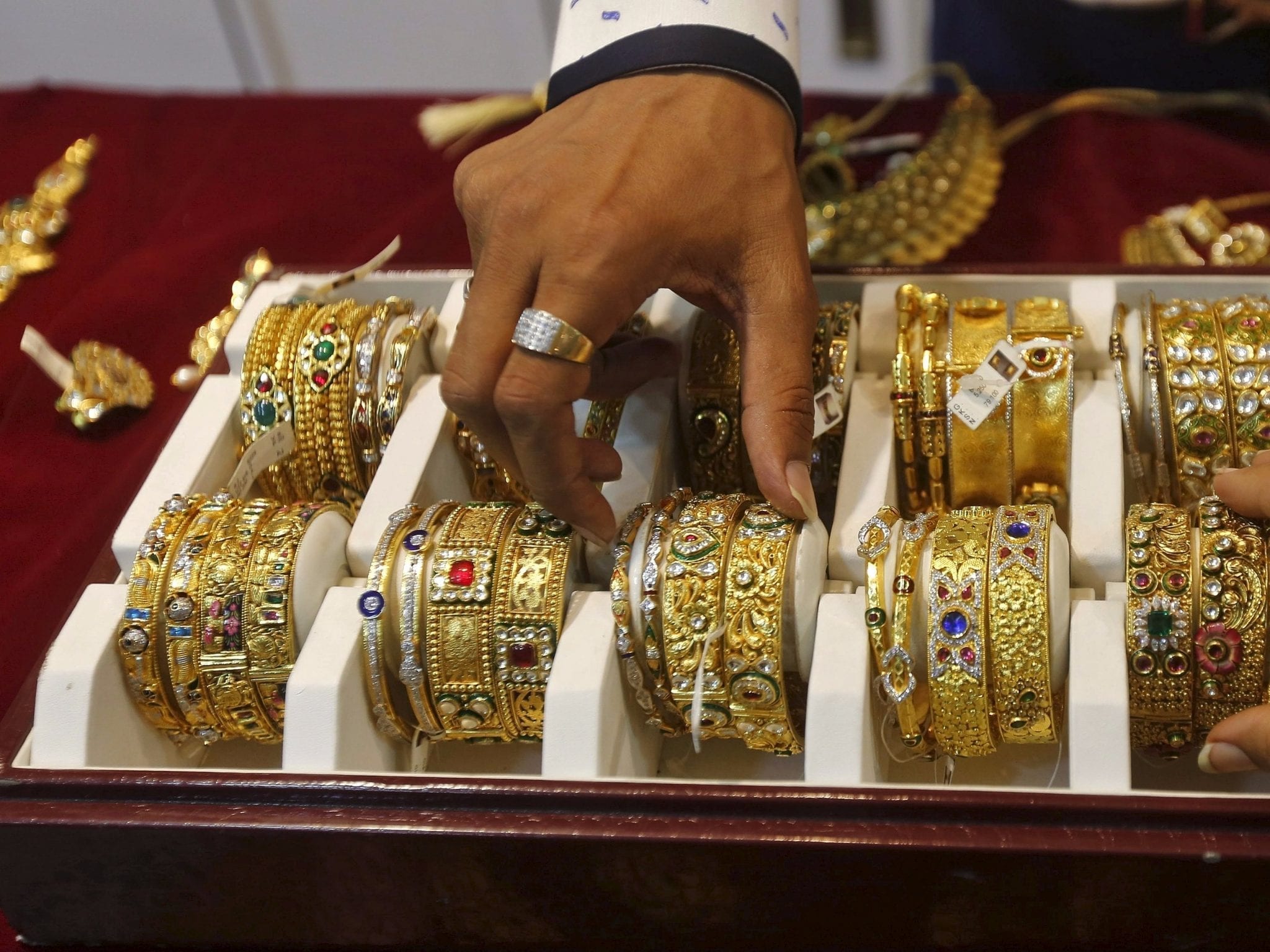
    The increase in gold prices was not limited to gold bars alone. Gold ring prices also saw an increase, valuing at VND174.2 million per tael. To clarify, a tael equals to 37.5 grams or 1.2 ounces.

    Global Gold Prices

    On the international front, gold prices experienced a slight decrease on Wednesday. This followed an earlier one-month high, as the US dollar began to regain its strength. The possibility of another round of peace dialogues between the United States and Iran also contributed to an increased risk appetite.

    Spot gold decreased by 0.3%, standing at $4,828.07 per ounce after hitting its highest peak since March 18th earlier in the day. Meanwhile, U.S. gold futures for June delivery, remained steady at $4,851.30.

    Effect of Middle East Headlines

    Gold prices have been fluctuating in response to recent events in the Middle East, with hopes that the United States and Iran will soon engage in peace talks.

    There are indications that discussions to end the ongoing conflict in Iran could recommence in Pakistan in the next two days. This follows the recent unsuccessful negotiations, leading to the imposition of a blockade on Iranian ports by Washington.

    Week’s Gold Price Performance

    Despite the minor drawdown, gold prices have increased by 1.6% this week on the back of renewed optimism regarding peace talks between the U.S. and Iran.

    Questions & Answers

    What caused the increase in Vietnam’s gold prices?
    The increase was due to a decrease in global bullion rates.

    What were the gold prices for Saigon Jewelry Company and gold rings respectively?
    The gold bar price from Saigon Jewelry Company reached VND174.5 million (US$6,626.79) per tael, while gold ring prices valued at VND174.2 million per tael.

    What has been the week’s overall performance for gold prices?
    Despite a slight pullback, gold prices have increased by 1.6% this week on the back of renewed optimism regarding peace talks between the U.S. and Iran.

  • Gold Prices in Vietnam Nudge Down After Early Rise: Exploring the Impact of Global Politics on Bullion Rates

    Gold Prices in Vietnam Nudge Down After Early Rise: Exploring the Impact of Global Politics on Bullion Rates

    After witnessing a 1.74% surge earlier in the session, the gold prices in Vietnam experienced a slight downturn on Wednesday afternoon. The price of the gold bar from the Saigon Jewelry Company decreased by 0.28% from its morning value, settling at VND175 million (US$6,646.04) per tael. Despite this dip, the daily gains were retained at 1.45%. Consequently, the difference between global and national gold rates diminished to VND22 million per tael.

    Gold Rings and Gold Bars

    Alongside the gold bars, gold ring prices also noted a slight reduction of 0.29%, closing at VND174.5 million per tael. However, this price still reflected a 1.45% increase from the previous day’s valuation. In Vietnam, a tael is a unit of weight measuring approximately 37.5 grams or 1.2 ounces.

    Global Gold Rates

    On an international scale, gold prices experienced an upturn on Monday due to the recent agreement between the U.S. President and Iran on a two-week truce. This ceasefire is geared towards concluding negotiations to end the prevalent war, which has caused significant disruption in global markets.

    As a result of this development, oil prices dipped below $100 a barrel, and the value of the dollar also declined. Such changes favor gold, which is priced in U.S. currency. Spot gold experienced a 2.5% increase, reaching $4,819.52 per ounce. During the session, the value of gold rose by over 3%, marking its highest level since March 19. Similarly, the U.S. gold futures for June delivery witnessed a 3.4% rise, reaching $4,845.30.

    The Appeal of Gold

    The announcement of the two-week truce disrupted expectations of escalation, which was a positive development for gold, according to Nicholas Frappell, Global Head of Institutional Markets at ABC Refinery. However, gold has seen an approximately 8% decrease since the conflict began in late February. This is because the allure of the non-yielding metal typically decreases in a high-interest-rate environment.

    Nonetheless, prices have shown signs of recovery in recent days. This rebound is backed by optimism surrounding the ceasefire and the anticipation that slower global economic growth could offset predictions of stable or higher borrowing costs.

    Questions & Answers

    What caused the dip in Vietnam’s gold prices?
    The gold prices in Vietnam dipped slightly due to a reduction in global gold prices.

    What effect did the announcement of the U.S.-Iran truce have on gold prices?
    The truce sparked optimism, causing gold prices to increase on a global scale as investors sought safe-haven assets.

    How does the interest rate environment affect the appeal of gold?
    In a high-interest-rate environment, the appeal of the non-yielding metal, such as gold, typically decreases as investors turn to assets with higher yields.

  • Vietnam Gold Prices Succumb to Global Decline Amid Strong Dollar and Stout Job Reports

    Vietnam Gold Prices Succumb to Global Decline Amid Strong Dollar and Stout Job Reports

    On Monday, the price of gold in Vietnam experienced a decline, mirroring a drop in global bullion rates. This downward trend was seen when the Saigon Jewelry Company lowered the price of its gold bars by 0.8%, or to VND173.1 million (US$6,571.64) per tael. This adjustment has prompted other sellers to revise their rates in alignment. Currently, local bullion prices are approximately VND25 million per tael higher than international rates.

    Decline in Gold Ring Prices

    The price of gold rings also decreased, sliding to VND172.9 million per tael. It should be noted that a tael is approximately 37.5 grams or 1.2 ounces.

    Global Gold Price Trends

    On a global scale, gold prices also fell on Monday. This decrease was influenced by a stronger dollar, the continued impact of the Iran war on oil prices, and stronger-than-expected U.S. jobs data. These factors lowered expectations for interest rate cuts by the Federal Reserve.

    Spot gold reduced by 0.9%, falling to $4,631.69 per ounce. Additionally, U.S. gold futures for April delivery saw a loss of 0.5%, dropping to $4,657.50 per ounce. This trading activity took place in thin liquidity conditions, with many markets in Asia and Europe closed for a holiday.

    “The latest robust NFP (nonfarm payrolls) print has reinforced hawkish central bank nerves. In addition, the ongoing fear of inflation driven by high oil prices continues to overshadow gold’s traditional role as a safe haven,” stated Tim Waterer, chief market analyst at KCM Trade.

    Historically, gold has been considered a protection against inflation. However, increased interest rates tend to reduce demand for this non-yielding asset.

    Questions & Answers

    What factors contributed to the fall in gold prices?
    The decline in gold prices was influenced by a stronger dollar, the ongoing Iran war’s effect on oil prices, and stronger-than-expected U.S. jobs data. These factors reduced expectations for interest rate cuts by the Federal Reserve.

    How did the price change affect the trading of gold?
    The decrease in gold prices led to a reduction in the trading of spot gold and U.S. gold futures for April delivery. Both saw declines in their respective rates.

    What is the traditional role of gold in the economy?
    Traditionally, gold is seen as a hedge against inflation. However, in situations of elevated interest rates, the demand for this non-yielding asset tends to decrease.

  • Vietnam Gold Prices Leap Amid Global Gold Slump: Largest Monthly Drop in Nearly Two Decades

    Vietnam Gold Prices Leap Amid Global Gold Slump: Largest Monthly Drop in Nearly Two Decades

    On Tuesday morning, gold prices in Vietnam experienced an increase, despite global bullion rates experiencing their sharpest monthly fall in nearly two decades. The Saigon Jewelry Company reflected this trend with its gold bar prices ascending 0.63% to VND174.9 million (US$6,640.34) per tael. This price adjustment was echoed by other sellers in the local market.

    Despite a 6.47% decrease this month, local bullion rates have still gained an impressive 14.5% since the beginning of the year.

    The price of gold rings also experienced a similar surge, reaching a price of VND174.7 million per tael. It’s important to note that a tael is equivalent to 37.5 grams or 1.2 ounces.

    Global Bullion Trends

    On the global stage, gold prices experienced an increase on Tuesday. This rise was fueled by the optimism of a de-escalation in the Middle East conflict. However, gold is also facing its worst month in over 17 years due to increased energy prices. These circumstances have diminished hopes for a U.S. interest rate cut within this year.

    Spot gold saw an increase of 1.5%, reaching $4,578.89 per ounce. Similarly, U.S. gold futures for April delivery experienced a 1.2% rise, leveling at $4,611.30.

    Despite these positive changes, bullion has experienced a 13% decrease this month. This puts it on track for its most significant drop since October 2008, largely due to a stronger dollar and dwindling expectations of a U.S. interest rate cut within this year. Despite these challenges, prices remain up by approximately 5% for the quarter.

    The dollar experienced a drop, making commodities priced in the greenback more affordable for holders of other currencies.

    A notable factor influencing gold prices was an announcement from the U.S. President, Donald Trump, stating his willingness to end the U.S. military campaign against Iran. This news triggered a positive response from the financial markets and saw gold prices bounce in the early Asia-Pacific trade, according to Ilya Spivak, the head of global macro at Tastylive.

    Questions & Answers

    What sparked the increase in gold prices in Vietnam?
    The rise in gold prices in Vietnam was primarily due to optimism about a de-escalation in the Middle East conflict and an announcement from the U.S. President about his willingness to end the military campaign against Iran.

    What factors have contributed to the global drop in bullion rates this month?
    The steep drop in global bullion rates has been largely due to a stronger dollar and diminished expectations of a U.S. interest rate cut within this year.

    How has the dollar’s decrease impacted the commodities market?
    As the dollar has fallen, commodities priced in the greenback have become more affordable for holders of other currencies, which can stimulate demand.

  • Asia’s War-Driven Price Surge: From Instant Noodles to Cosmetics, Consumers Brace for Impact

    Asia’s War-Driven Price Surge: From Instant Noodles to Cosmetics, Consumers Brace for Impact

    As the conflict in Iran intensifies, both consumers and businesses across Asia are bracing for a potential crisis. The war is causing a squeeze in oil and plastics supplies, leading to an increase in prices on a broad range of products, from ramen noodles to cosmetics.

    Impact on Plastic Industries

    Choi Gun-soo, manager of a 57-year-old South Korean factory producing plastic films, gives an insight into the harsh realities of the situation. The factory, which caters to farmers for crop coverage and television manufacturers, is dealing with a substantial hike in raw material prices and shortages. Some suppliers have escalated prices by as much as 50%, while others have completely run out of stock. The next couple of weeks are likely to be critical; if the shortage of raw materials continues, it will force a systematic shutdown of the machinery.

    While the company has previously managed to survive oil shocks and the Covid-19 pandemic, the current crisis due to the Iran war is unparalleled. Choi shares that they have reduced their production to merely 20-30% of the regular output, marking the first time they have been hit this severely.

    The Strait of Hormuz: A Key Factor

    A vital cog in the supply chain disruption is the Strait of Hormuz, a narrow water channel off Iran’s southern coast. Around one-fifth of the world’s oil and liquefied natural gas usually passes through this strait. Asia, which is heavily dependent on crude oil, gas, fuel, and fertilizer from the Middle East, is most susceptible to supply disruptions.

    Currently, the most critical shortages are in oil derivatives like naphtha, predominantly sourced from the Gulf and used in refineries across Asia to produce plastics and other petrochemicals. These materials are integral to almost every manufactured product.

    Soaring Prices

    Prices for essentials of modern life, including plastic and rubber, are reaching record highs. South Korea’s Samyang Foods, the manufacturer of the renowned spicy Buldak instant ramen noodles, warns of a potential shortage of packaging materials and increased costs due to the ongoing conflict.

    Rival ramen producer Nongshim is preparing for the possibility of prolonged warfare by maintaining two to three months’ worth of packaging material inventory.

    The Cosmetic Industry’s Struggle

    Yonwoo, a container producer for L’Oreal and K-beauty firms like Amorepacific, is scrambling to secure stocks of plastic resin, a key material in manufacturing pots used for skincare and cosmetics. The company fears little visibility on material supply beyond June.

    Global Impact

    The conflict has instigated fuel shortages worldwide, with businesses ranging from airlines to supermarkets and used car dealers struggling with challenges such as rising costs, weakening demand, and disrupted supply chains.

    In Japan, department store operator Takashimaya has expressed concern that if the crisis persists, it could lead to price increases and supply issues spreading to clothing and household appliances.

    China’s Struggle with Raw Material Shortages

    China, the world’s largest synthetic rubber producer, is also feeling the strain. Shortages of naphtha, essential for synthetic rubber production, are impacting the supply chain and forcing manufacturers of goods like tires and gloves to consider raising prices or shifting to natural rubber.

    Effect on the Toy Industry

    Liu Chaonan, who owns a toy company that supplies to major U.S. retailer Walmart, revealed the escalating raw materials costs are taking a toll on the toy industry.

    Panic Buying due to Supply Concerns

    The crisis has also led to panic buying among consumers, resulting in them hoarding goods like garbage bags. With supermarkets reporting shortages and limiting purchases, consumers like South Korean student Ryu June-ho are buying in bulk in anticipation of price hikes.

    Questions & Answers

    What factors are contributing to the increased prices of goods in Asia?
    Increased goods prices in Asia are primarily due to the ongoing conflict in Iran, which is causing disruptions in oil and plastic supplies.

    How is the conflict in Iran affecting industries in Asia?
    The conflict is causing a crisis in various industries, including food, cosmetics, and manufacturing, due to increased raw material costs and supply shortages.

    How are consumers reacting to the escalating prices and supply shortages?
    Consumers are reacting with panic, leading to hoarding of goods such as garbage bags and ramen noodles in anticipation of further price increases and shortages.

  • Gold Prices Tumble Worldwide Amid Oil-Inflated Inflation Fears: How Vietnam is Weathering the Precious Metal Dip

    Gold Prices Tumble Worldwide Amid Oil-Inflated Inflation Fears: How Vietnam is Weathering the Precious Metal Dip

    On Thursday afternoon, gold prices in Vietnam reflected a downward trend, triggered by a global market decline for the precious metal. This drop is linked to fears that escalating oil prices would cause a surge in inflation.

    Gold Bar and Ring Prices Drop

    The Saigon Jewelry Company reported a 1.15% decrease in the price of their gold bars, now valued at VND171.5 million, or US$6,508.79 per tael. To clarify, a tael is equivalent to 37.5 grams or 1.2 ounces.

    In addition, there was a similar 1.15% decrease in the price of gold rings, bringing the associated cost to VND171.3 million per tael. Despite these recent drops, gold prices have seen an overall increase of 12.2% since the start of the year.

    Global Gold Price Decline

    On the international stage, gold prices also fell on Thursday. There are heightened expectations of imminent U.S. Federal Reserve rate hikes this year, primarily sparked by rising oil prices causing concerns about inflation. Investors also awaited clarity on efforts to de-escalate situations in the Middle East.

    Spot gold, in particular, experienced a drop of 1.2%, reducing its price to $4,451.47 per ounce. Concurrently, U.S. gold futures for April delivery saw a decrease of 2.3%, to $4,448.

    According to Ilya Spivak, head of global macro at Tastylive, these changes can be attributed to an acceleration of the perception that inflation, potentially triggered by ongoing conflict, will prompt a response from central banks, leading to higher interest rates.

    Impact on Crude Oil Prices

    Furthermore, Brent crude futures have risen above $100 per barrel due to concerns that ongoing conflict in the Middle East may continue to disrupt energy flows.

    Questions & Answers

    What caused the recent decrease in gold prices in Vietnam?
    The reduction in gold prices can be attributed to concerns that escalating oil costs could lead to inflation, influencing global gold markets.

    How has the ongoing Middle Eastern conflict affected gold and oil prices?
    The ongoing conflict has elevated concerns about potential disruption in energy flows. As a result, Brent crude futures have increased, while anticipation of these disruptions has contributed to a fall in gold prices.

    What are the potential impacts of rising inflation on global gold markets?
    Rising inflation can lead to an increase in interest rates as a reactive measure from central banks, which can result in a decline in gold prices.