Retail News CRM

Tag: Government

  • Walmart, Amazon India seek extension of Jan 31 deadline on e-commerce compliance

    Walmart, Amazon India seek extension of Jan 31 deadline on e-commerce compliance

    There is trouble in paradise. The Government’s drastic intervention in e-commerce at the behest of vested domestic interests and the powerful traders lobby has created consternation in the bulge bracket world of e-commerce in India. With the big players having reached out to the Government to give them breathing space on the new compliance measures beyond the January 31 deadline, the Industry ministry has not responded, leading to panic attacks across the board.

    Powerful stakeholders led by Walmart and Amazon from the e-commerce eco system have sought a six-month extension since lakhs of sellers – small and medium-sized – in the market place need to be educated, IT-enabled and connected to meet the statutory audit requirements. Moreover, contracts have to be re-negotiated so that the compliance measures remain ongoing with time being of the essence.

    It is believed that the DIPP or Industry Secretary Ramesh Abhishek, who was earlier encouraging the major players to ramp up their investments in India, has not responded to their pleas and petitions.

    The situation has become precarious primarily because the clarification to press note 2 was even more confusing. On a granular level, the market place cannot have any equity in the seller.

    Hence, Amazon which has five percent equity in Shoppers Stop has to comply with the new standards. The new government directive does not allow private labels, nor does it allow big brands to have commercial tie-ups with the market place. Basically, the rules of engagement have been turned on their head.

    Bain Capital reckons that the heavy lifting e-com players have generated three lakh jobs in India. Over and above this, there are lakhs of vendors.

    Further, the eco system has multiple spin-offs like advertisements, courier companies, logistics companies, supports innumerable manufacturing operations and caters to large scale supply chains. Flipkart has 80,000 employees, 80 fulfilment centres (warehouses), nearly one lakh plus sellers and artisans of all hues across the land. Ditto for Amazon, which has similar numbers across its business spectrum.

    Walmart paid US$ 14 billion for Flipkart stock with a promise of an additional US$ 2 billion in physical structure investment. So, there is a lot riding on these heavy lifters for both know that this is the last frontier in terms of a consumption market, since India consumes 67 percent of its own US$ 2.6 trillion GDP. Interestingly, Walmart runs Flipkart as a stand-alone entity.

    For Walmart this is a priority market and it is keen that the January 31 compliance window deadline is extended. Its commitment to the Indian market can be gauged from the fact that it recently got 100 acres in Bengal for warehousing as a pivot to the northeast market. Hence the size of the commitment is seeing enlargement almost daily.

    It is on the verge of closing another 100 acre fulfilment centre in Telengana to service the southern market. Remarkably, the Indian retail market is estimated to be US$ 650 billion, of which 90 percent is the kirana stores while nearly eight per cent is made up of Indian retail players and only two percent is e-commerce. However, since the biggies in e-com are global behemoths, impediments are being placed in their path.

    At the kernel of the government notification and clarificatory statement is the targeting of e-commerce giants who are quick to retort that they helping small sellers with a channel that is tech-enabled to put their products on the marketplace.

    At the time same time, even as they try and get the government to listen to their litany of woes on immediate compliance, the process of evaluation of sellers will continue and remain ongoing so that they are effectively compliant every single day. The government’s intervention is perceived to be through a non-consultative process and the global giants want more time for compliance and enhanced level of dialogue.

    The audit requirement on the sellers by opening their books to the marketplace in such a short time is reminiscent of the haste in the launch of GST, which threw small businesses out of gear.

    Many of the sellers will now have design IT systems and the marketplace cannot be liable for this. In parallel, there is no clarification on how to conduct the private label business.

  • Indonesia to Regulate Ride-Hailing Rates Threatens Grab, Go-Jek Expansion

    Indonesia to Regulate Ride-Hailing Rates Threatens Grab, Go-Jek Expansion

    The government is preparing to launch regulations fixing the rates drivers and riders for ride-hailing services such as Grab and Go-Jek receive, two officials said this week, creating potential obstacles for the companies’ expansion. The regulations would meet drivers’ demands for more oversight and higher rates but there are concerns that the rising costs to the companies could stifle their development as they battle to dominate the ride-hailing market in Southeast Asia’s biggest economy.

    Singapore-based Grab and homegrown Go-Jek have been locked in price wars in Indonesia, part of a wider fight to bring banking, e-commerce, ride-hailing, food-delivery and other services to every corner of Southeast Asia.

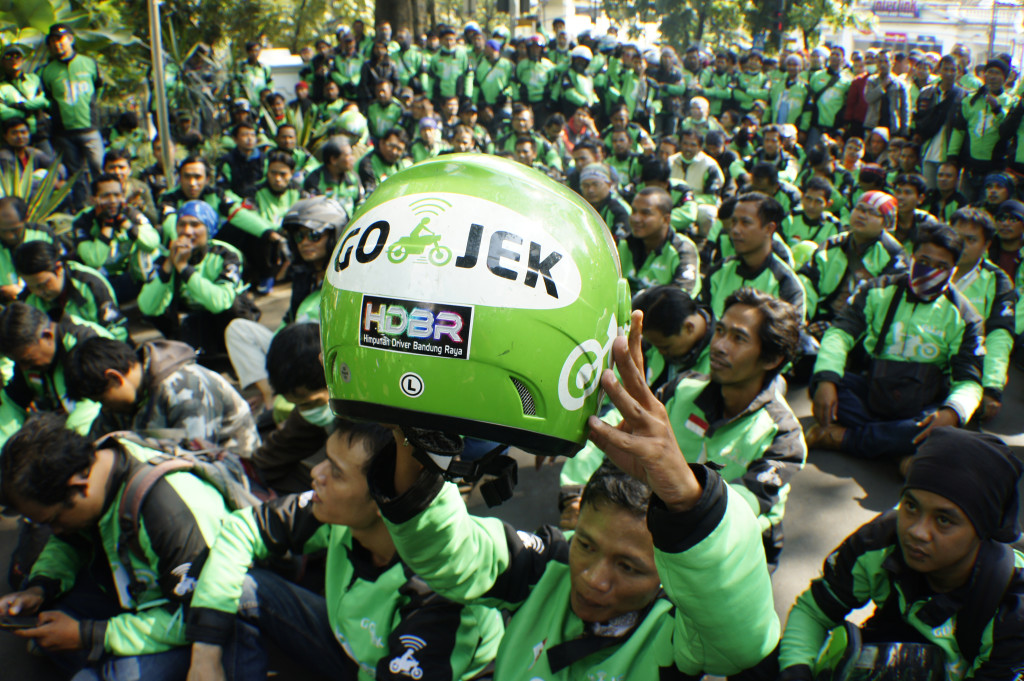
    However, since 2018, motorcycle taxi drivers working for Grab and Go-Jek in Jakarta have held protest rallies calling for higher fares and better conditions.

    The Ministry of Transportation plans to implement minimum and maximum tariffs for car and motorbike ride-hailing that will be “higher than Go-Jek and Grab’s current rates” and impose limits on promotional price cuts, said Budi Setyadi, director general of land transportation at the ministry.

    “This is for the safety and protection of drivers,” he said.

    Ahmad Yani, public transportation director at the ministry, said dependency on incentive-driven payments and low fixed rates per kilometer created a safety risk as it led to drivers overworking.

    He said Grab paid Rp 1,200 (8 US cents) per kilometer with a focus on bonuses, while Go-Jek’s rate was Rp 1,400 per kilometer.

    The officials said fixed fare ranges for motorbikes were still being finalized but would be implemented from March.

    Fixed rates for ride-hailing cars will start in June and be set at between Rp 3,500 and Rp 6,000 per kilometer on the islands of Java, Sumatra and Bali.

    The drivers were pushing for increases to a standard fare of Rp 3,000 to Rp 4,000 per kilometer.

    New Rules

    The firms said they welcomed the new rules, though they had not seen details of the motorbike regulations.”Grab believes the government will develop the best regulatory framework and hopes that all stakeholders will be included in the process,” said Tri Sukma Anreianno, the company’s head of public affairs .

    A Go-Jek spokesman said: “We support the government’s spirit to encourage our driver partners … and hope the regulation will have a positive impact on the sustainability of drivers’ income … and fair business competition.”

    However, both transportation officials said the companies are worried about the pending regulation since they have spent heavily on driver subsidies to slash their customer rates and build their businesses.

    “Grab and Go-Jek have told me they would prefer there was no regulation,” Ahmad said. “Due to the competition between them … they are scared what could happen if they don’t keep up with each other.”

    The Supreme Court blocked a previous attempt in 2017 by the transportation ministry to fix ride-hailing rates after drivers sued, saying the rules favored the taxi firms.

    Both ministry officials said the new regulations met anti-competition standards and followed extensive discussions with driver syndicates.

    Grab and Go-Jek drivers welcomed the prospect of standard fares.

    “I have been working for Grab since 2015. Before, I could earn Rp 300,000 to Rp 400,000 per day. Now, I can only get Rp 150,000,” said Hermansyah, a Grab motorcycle driver partner.

    Another driver, who had worked for both companies, said neither provided much protection, leading drivers to bear operational costs. He asked not to be identified since he had a role in organizing protests.

    The fixed rates will be a challenge to a business model that has depended on cheap passenger prices for growth and could undermine innovation.

    “Cheap fares has been the firms’ main way to attract customers,” said Yayat Suprityatna, urban and transportation observer at Trisakti University in Jakarta.

  • Limited share price upside seen for Malaysian property sector

    Limited share price upside seen for Malaysian property sector

    Rising interest rates, Malaysia’s slowing gross domestic product growth and unfavourable government policies will limit share price upside for Malaysian property development companies, said CGS-CIMB.Although it expects the property companies in its coverage universe to post positive earnings growth this year, CGS-CIMB said share price upside will be limited and the sector is unlikely to re-rate to peak levels last seen in 2014.

    “The property sector has garnered more interest lately due to its attractive valuations, but we believe the sector is cheap for a reason and this could be a false dawn. We believe developers could miss their new property sales targets for 2018, and are likely to set lower new sales targets for 2019. We think it’s a signal that the 2019 property market is likely to see lower new property sales and weaker buying sentiment,” it said in its report.

    According to its analysis, the medium 40% and bottom 40% (B40) households face difficulty in buying properties as the average house price is above both groups’ affordability range and despite government incentives and policies to address this issue, the oversupply in the property market has continued to rise since 2012.

    “Likewise, property stocks have fallen from their peak valuations in 2014, some to the trough levels in 2008, making them attractively priced at the moment, in our opinion,” it added.

    CGS-CIMB does not see much room for housing loan growth given the existing low interest rate environment, limited buyer’s affordability and possible interest rate hike.

    In addition, restrictive government policies are still in place and it does not see any incentive for consumers to purchase property given the weak rental market and subdued property market.

    Given the limited domestic affordability, higher real property gains tax and restrictive policies on foreigners, the property oversupply issue is expected to persist. Note that in 1H2018, properties priced below RM1 million accounted for 93% of total unsold residential property inventory.

    “We expect the housing market to remain challenging in the near term, unless there is a meaningful surge in household income, decline in house prices or more positive measures are introduced,” it said.

    Although lower property prices are possible, developers would be at the losing end if they were to lower prices at the expense of profit margins to spur new property sales demand or remove rebates/freebies to protect margins, which could result in weaker new sales.

    “Even if new house prices are cut by 20%, we think the prices would still be unaffordable for the B40 households. Instead of focusing on increasing affordable housing supply and ownership, we believe a better way to approach the housing glut is to increase Malaysians’ household income in a meaningful way,” it said.

    CGS-CIMB maintained its “neutral” call on the sector with an estimated dividend yield of 3% on average in 2019.

    Sime Darby Property Bhd remains its top pick as the company has shown continuous improvement in its property development division and new property sales since its demerger in November 2017.

    “We believe the group’s healthy balance sheet and massive land bank are advantages in addressing the change in future product demand,” it said.

  • Vietnam wants urban residents to pay bills without cash

    Vietnam wants urban residents to pay bills without cash

    The Vietnamese government wants cashless transactions made viable for all household bill payments by the end of this year. A recent government resolution on changing the business environment to improve competitiveness and labor productivity contains a push to accelerate use of cashless transactions. Provincial and municipal leaders have accordingly been tasked with instructing all schools and hospitals, as well as electricity, water, sanitation, telecommunications and postal companies in urban areas to coordinate with banks and intermediary payment service providers in collecting bills and fees via cashless transactions.

    The government has recommended that establishments prioritize mobile payments and payment via card readers, and requested that the task be completed before December this year.

    Vietnam Electricity, the national utility, has been asked to ensure power companies work with banks and intermediary payment service providers to collect electricity bills via cashless methods and promote the use of electronic and mobile payments. The target for the year is to double the number of customers using e-payments to pay their electricity bills.

    The State Bank of Vietnam has been asked to come up with solutions that would promote the use of electronic wallets, wherein users can deposit cash into their e-wallets without the need for a bank account. The central bank has also been asked to find ways to remove imitations on e-transactions before the third quarter of this year.

    The State Bank must also require commercial banks and intermediary payment service providers to implement the QR code standard, and work with the Ministry of Finance to come up with a list of types of transactions that have to be done through banks, as well as make amendments to existing regulations to promote cashless payments for real estate transactions.

    According to the World Bank’s statistics released last July, Vietnam was the country with the lowest percentage of cashless transactions in the region with only 4.9 percent, while this value for China and Thailand were 26.1 percent and 59.7 percent respectively.

    While Vietnam rolled out an e-payment system for taxes in 2014 with 95 percent of companies registered, currently only 70 percent of tax money is collected via this method and many businesses still prefer paying their tax directly with cash.

    Similarly, while Vietnam has had policies to encourage consumers to pay electricity bills through banks and intermediary payment service providers, currently only 4.5 million people, or 20 percent of electricity consumers, pay their bills through these channels.

    The government’s resolution does not include rural and remote areas as the majority of Vietnamese living in such areas still lack access to modern payment methods.

  • Korea to ban plastic bags in supermarkets

    Korea to ban plastic bags in supermarkets

    Large supermarkets are banned from giving or selling plastic shopping bags to customers. The Ministry of Environment announced Monday that it will completely prohibit grocery franchises and supermarkets over 165 square meters (1,776 square feet) from selling or giving away single-use plastic bags from New Year’s Day. While it discouraged stores from providing plastic bags before, the ministry enforced a total ban through a revision to the Act on the Promotion of Saving and Recycling of Resources in an effort to cut plastic waste.

    Some 13,000 supermarkets are affected. If they offer disposable plastic bags, they risk fines of up to 3 million won ($2,690). The only kind of one-use bags stores can sell are the disposal bags accepted by district waste collectors. Stores will be encouraged to sell or offer paper and other non-plastic grocery bags instead.

    Supermarkets can continue to offer customers small plastic bags for wrapping items like fish and meat.

    The revision to the law also prohibits some 18,000 bakeries from handing out plastic bags free of charge.

    The ministry said it will give a grace period of around three months to help stores adjust to the change and work with local government bodies to ensure that the regulations are followed.

    Earlier this year, seven of Korea’s largest grocery and bakery franchises, including E-mart and Lotte Mart, signed voluntary agreements with the ministry to reduce disposable waste.

    That initiative has produced notable results. Paris Baguette and Tous Les Jours, for example, used 74 percent fewer plastic bags in November last year compared to the same period 2017, according to the ministry.

    “It’s necessary to reduce use of disposable waste for the environment and future generations,” said a spokesman from the ministry. “We request the people’s active participation to promote a green consumer culture.”

  • Telenor Group CEO meets Prime Minister to discusses digitalisation and socioeconomic development

    Telenor Group CEO meets Prime Minister to discusses digitalisation and socioeconomic development

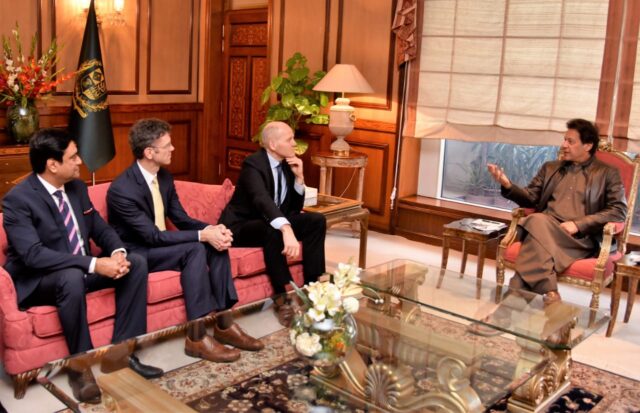
    SigveBrekke, President and CEO of Telenor Group, along with IrfanWahab Khan, CEO of Telenor Pakistan and Petter-Børre Furberg, Executive Vice President Telenor Group met the Honorable Prime Minister of Islamic Republic of Pakistan Imran Khan to discuss the growing and evolving digital ecosystem in the country and Telenor Group’s longstanding commitment to the country.

    During the meeting, Brekke shared Telenor Groups journey to becoming one of the largest telecom and digital services provider in Pakistan. SigveBrekke thanked the Government of Pakistan for its continued support for the telecom sector and for encouraging foreign direct investments into the country.In addition,theydiscussed possible collaborations to bringcontinued socioeconomic development and digitalisation for all. Brekke also highlighted Telenor’s commitment towards financial inclusion and informed the Prime Minister of incoming investment of USD 140mnas a result of the recently announcedpartnership with Ant Financial.

    The Prime Minister appreciated Telenor’s contribution in the telecom sector and said that the Government aims to develop a knowledge based economy in Pakistan and value Telenor as an important partner in developing the ecosystem that supports the Government’s development agenda.

    The Prime Minister reiterated that the Government is committed to transparency and facilitate investors and enable them take full advantage of huge potential existing in the growing economy of the country.

    “Pakistan is a key market for Telenor Group and we remain committed to empowering this nation by connecting our customers to what matters most,” said SigveBrekke, President & CEO Telenor Group, while sharing his thoughts. “We hope that the government will not only encouragebusiness-friendly policies, but will also introduce new reforms to enhance access to life-changing digital services and solutions for all.”

    “Through Telenor Pakistan’s industry-first initiatives in areas of digital products & services, financial inclusion, agriculture, health, and digital entrepreneurship, we are empowering Pakistan through robust ICT solutions,” said IrfanWahab Khan, CEO Telenor Pakistan. “We have 13 successful years to proudly look back to and aim to serve the people of Pakistan even better with all the learning we have gathered during this time. I thank Prime Minister Imran Khan for his time and am confident that his government will extend the needed support to help us materialise our shared vision of a digital Pakistan.”

    During his visit, SigveBrekke also called upon Mr. Asad Umar, Minister of Finance, Revenue and Economic Affairsand Mr. Shah Mahmood Qureshi, Foreign Minister and extended his appreciation to the Government for ensuring positive outlook and improving economic indicators that are instrumental towards attracting investment in the country. Brekke also discussed the role of telecom sector in socioeconomic uplift of the country by bringing widespread connectivity to the people of Pakistan.

    Telenor Group has been operating in Pakistan since 2005 and has made a significant impact on the socioeconomic uplift of the country. The Group has invested over USD 3.5bn, contributed over USD 2.5bn to the national exchequer since 2005 and created over 5,000 direct jobs, in addition tohundreds of thousands of indirect jobs.

  • Australia launches fourth Mobile Black Spot round

    Australia launches fourth Mobile Black Spot round

    The Australian government has opened applications for the fourth round of the national Mobile Black Spot program, designed to improve mobile coverage in regional and remote Australia. Mobile network and infrastructure providers have been given until December 10 to submit their applications for taking part in the program to install mobile base stations at designated locations. Construction is expected to commence early next year. The government has allocated A$25 million ($17.8 million) in funding for the latest round of the program, which is designed to subsidize the deployment of base stations in unprofitable areas.

    The program has a focus on public interest premises, including economic centers, emergency services, health and educational facilities, local government facilities, as well as community and non-profit organizations.

    Co-funding is provided by state and local governments, the market’s mobile operators Optus, Telstra and Vodafone, businesses and local communities.

    Locations for the deployment were nominated by local and state governments and federal politicians, but local communities can still seek funding for locations not on the database.

    Under the first three rounds of the A$220 million federal government program, 867 new base stations are being delivered at a total cost of A$680 million.

  • Thai farmers receive government loans to stabilize market prices

    Thai farmers receive government loans to stabilize market prices

    Thailand is the world’s second largest rice exporter, and it is confronted by a fall in prices that has mostly affected the rice farmers, with prices hitting a thirteen months low. Now the Thai Government has taken action and has proposed a set of measures with would help alleviate the pressure from the country’s rice farmers.

    According to Thailand’s Minister of Commerce Apiradee Tantraporn, rice farmers will receive 10,500 baht, or 299 US dollars, for every tonne of white paddy stored. The measure is aimed at all Thai farmers, with those who store Thai Pathum Thani fragrant rice to receive 11,300 baht, that is 322 US dollars, per tonne.

    “The overall budget is set at 18 billion baht ($514 million). This is to help relieve grievances farmers are facing while the main crop is being harvested,” Mrs. Apiradee Tantraporn told journalists.

    Last week, the government announced it would offer loans worth 1,3 billion US dollars to jasmine rice farmers, if they store the grain for at least six months to slow down market supply.

    Another measure the government has taken is easier access to open rice paddy markets. Mrs. Tantraporn said this is in order to boost competition among rice farmers and for their benefit, in the middle of this period’s price depression. According to state officials, in the province of Udon Thani’s retail centres and PTT gas stations, markets will be opened in the next weeks. Here the farmers will be allowed to sell their rice and negotiate the prices directly with the buyers, circumventing the need for intermediaries.

    Action is also taken in Lopburi and Sukhothai, where the government and other agencies have joined forces in order to promote and allow farmers to sell their rice directly. In Sukhothai, milled rice was on sale at up to 40% discount prices, while in Lopburi, the Si Sa Ket police was put together a market for farmers to sell the rice to their families and police staff.

    In total, there will be no less than  109 open markets organised in 44 provinces, all with the sole purpose to to help farmers sell rice paddy directly to consumers.

  • Government to take firm action against illegal textile imports

    Government to take firm action against illegal textile imports

    The government plans to take firm action against illegal imports of textile and textile products as these have been hindering business and impacting ind ustrial growth in the manufacturing sector.

    “We will take firm action against importers who have so far misused facilities to avoid official levies by the government,” Finance Minister Sri Mulyani said at a press conference here on Thursday.

    She stated that strengthening the textile industry and the textile products sector was very important as this sector has been asked to increase production to boost national exports.

    Smuggling of used clothes into several regions of the country to meet the increasing demand for cheap clothes has been disrupting growth of textile and textile products sector.

    Certain people were illegally importing products. These people held import licenses to transfer goods to other parties. Businessmen dealing in textile and textile products exploited these licensed importers.

    “We will enforce the law. We have invited police officers to a meeting attended by the chief of the crime investigation department to take a stronger and more consistent action against illegal imports,” she assured.

    Sri Mulyani informed that she would also invite other ministries to review regulations relating to textile and textile products imports. Some of these regulations overlap and run against the needs of the public, trade and industry.

    The TPT (textile and textile products) is a labor intensive industry that can absorb a lot of workers and even create new jobs in the distribution and trade sectors, she added.

    In 2016, Indonesias TPT exports contributed 9.61 percent to the total non-oil and gas exports, which is the second highest after palm oil exports, recorded at 10.3 percent.

    Based on national law enforcement data in 2015, 162 cases of smuggling were aborted by the Directorate of Customs and Excise of the Ministry of Finance. Until October this year, 151 cases of TPT smuggling cases had come to light.

    The Directorate of Customs and Excise would tighten coordination and supervision in cooperation with the Corruption Eradication Commission, the Indonesia Police, the Ministry of Trade as well as the Ministry of Industry to solve the TPT import problem.

    With improved TPT import policies and their implementation, the national manufacturing industry is expected to grow while domestic prices of TPT would be more stable and state revenues more optimal.

  • Marine Gold reaping benefits of 2013 losses as shrimp production rebounds

    Marine Gold reaping benefits of 2013 losses as shrimp production rebounds

    In 2013, Marine Gold Products, one of the largest shrimp exporters in Thailand, lost big money on meeting its export commitments.

    As early mortality syndrome (EMS) caused Thai production to dive, raw material prices rocketed. EMS caused production to dive under 200,000 metric tons, compared to the peak of over 600,000t.

    This left packers fighting for shrimp for orders.

    “I shipped every container in 2013, so we lost $10 million,” Choopong Luesukprasert, Marine Gold’s managing director, said.

    The aim of continuing to ship containers at a crisis time for the Thai shrimp sector, was about maintaining business contacts, he said, during the Thaifex: World of Food Asia show in Bangkok.

    “But, since, we have kept this business and gained more, as we reliable,” Choopong Luesukprasert, Marine Gold’s managing director said.

    For 2016, shrimp production in Thailand is rebounding and prices for raw material are competitive with other sources, such as Indonesia, India and Vietnam.

    Production in 2015 is said to have been around 240,000t, up from 210,000t in 2014.

    For 2016, forecasts range from 260,000t, up to 300,000t.

    The later is attainable, said Luesukprasert.

    “I think 300,000t is realistic. Production hasn’t started like we expected, as we have had such a long drought in Thailand. But, we think it will start picking up from now,” he said.

    Selling shrimp to the US is the main export market for Marine Gold, with the export target for 2016 at 45 million pounds, he said.

    Due to the forecasted increase in Thai raw material output in 2016, Luesukprasert hopes Marine Gold can expand its output by 20-25%. This is ahead of the forecasted increase in production.

    The company has also launched a ready-to-eat brand for the domestic market.

    Luesukprasert said he plans to export the product range in the future, however.

    The range is being sold in Thai retail under the brand “Yummy Tale”; featuring products such as shrimp pad Thai and shrimp green curry with jasmine rice.

  • Singapore government to spend $2b on ICT this fiscal

    Singapore government to spend $2b on ICT this fiscal

    Singapore’s soon-to-be-formed Government Technology Agency (GovTech) will continue to partner the ICT industry and invest in technologies such as data analytics, ICT infrastructure, and platform-as-a-service to develop citizen-centric services.

    GovTech, which will be established at the end of this year, will replace the Infocomm Development Agency of Singapore (IDA) and aim to lead technological transformation in government.

    The agency is expected to continue to partner the industry to co-create such digital solutions and will be calling for a projected S$2.82 billion ($2.04 billion) of ICT tenders across fiscal year 2016.

    These ICT tenders will comprise mainly infrastructure and ICT security bulk contracts due to some multi-year contracts ending in FY16, as well as contracts relating to agency-specific systems. Last year, SMEs accounted for more than half of the total contracted value of ICT tenders.

    One key focus for government procurement this year will be to enhance ICT infrastructure to better support the data and digital services needs of a Digital Government in a Smart Nation.

    For example, increased data center virtualization will allow the government to modernize its hosting of ICT applications and ensure faster time to production for new digital services.

    Wi-Fi will be extended to more areas within government schools to support smart learning. The government will also continue to invest in its cybersecurity efforts, with a bulk tender for IT security services to be called in this fiscal year.

    “We want to empower Singapore with possibilities through technology. To do that, investment in infrastructure is necessary so that innovative citizen-centric services can be built and enhanced on a strong foundation,” IDA managing director Jacqueline Poh said.

    “There will be opportunities abound for the government and industry to collaborate and build a smart nation together.”

  • China pledges to boost retail, health and travel sectors to lift consumption

    China pledges to boost retail, health and travel sectors to lift consumption

    China will promote the development of the retail, health, travel and sports sectors in a bid to boost domestic consumption, the cabinet said on Sunday.

    In a statement on its website, the State Council said it will encourage financial institutions to accept a broader range of collateral for extending loans to “lifestyle-related businesses”.

    Other sectors that the government highlighted are service ones related to families and the elderly, culture, law, accommodation and catering as well as education and training.

    The State Council said the government will also expand consumer credit, improve the system of Internet payments and study the management of credit card fees “to further reduce overall expenses” related to their use. No details were given.

    The government will crack down on price-gouging as well the sale of counterfeit goods, and prosecute monopolies and businesses engaged in unfair competition, according to the statement.

    Top leaders have flagged a “new normal” of slower growth as it tries to shift the world’s second-largest economy to sustainable, consumption-led development.

    China’s economy is on track this year to grow at its slowest pace in more than two decades. Chinese growth dipped to 6.9 percent in the third quarter, the weakest since the global financial crisis, hurt partly by cooling investment.

    Earlier this month, the government said it will increase financial, fiscal and tax policy support to drive consumption.

  • Government thanks retail stores for maintaining prices of goods

    Government thanks retail stores for maintaining prices of goods

    The Thai government has expressed its gratitude toward store owners for keeping prices of every item at an affordable level until November this year.

    Deputy Spokesperson to the Prime Minister’s Office, Major General Sansern Keawkamnerd has revealed that the Ministry of Commerce has received cooperation from 205 retail stores across Thailand in not raising the prices of household goods and fresh food before November.

    Many food vendors have also been asked to sell at least one ready to eat meal at a maximum price of 25 baht until September this year.

    The Deputy Spokesperson said this is to help shoulder the cost of living for Thai people. He also added that stable fuel prices at present would continue to help keep commodity prices at a reasonable level.

  • China to cut consumer good tariffs

    China to cut consumer good tariffs

    China’s government says it will cut tariffs on consumer goods in a bid to get local Chinese to spend more in the mainland.

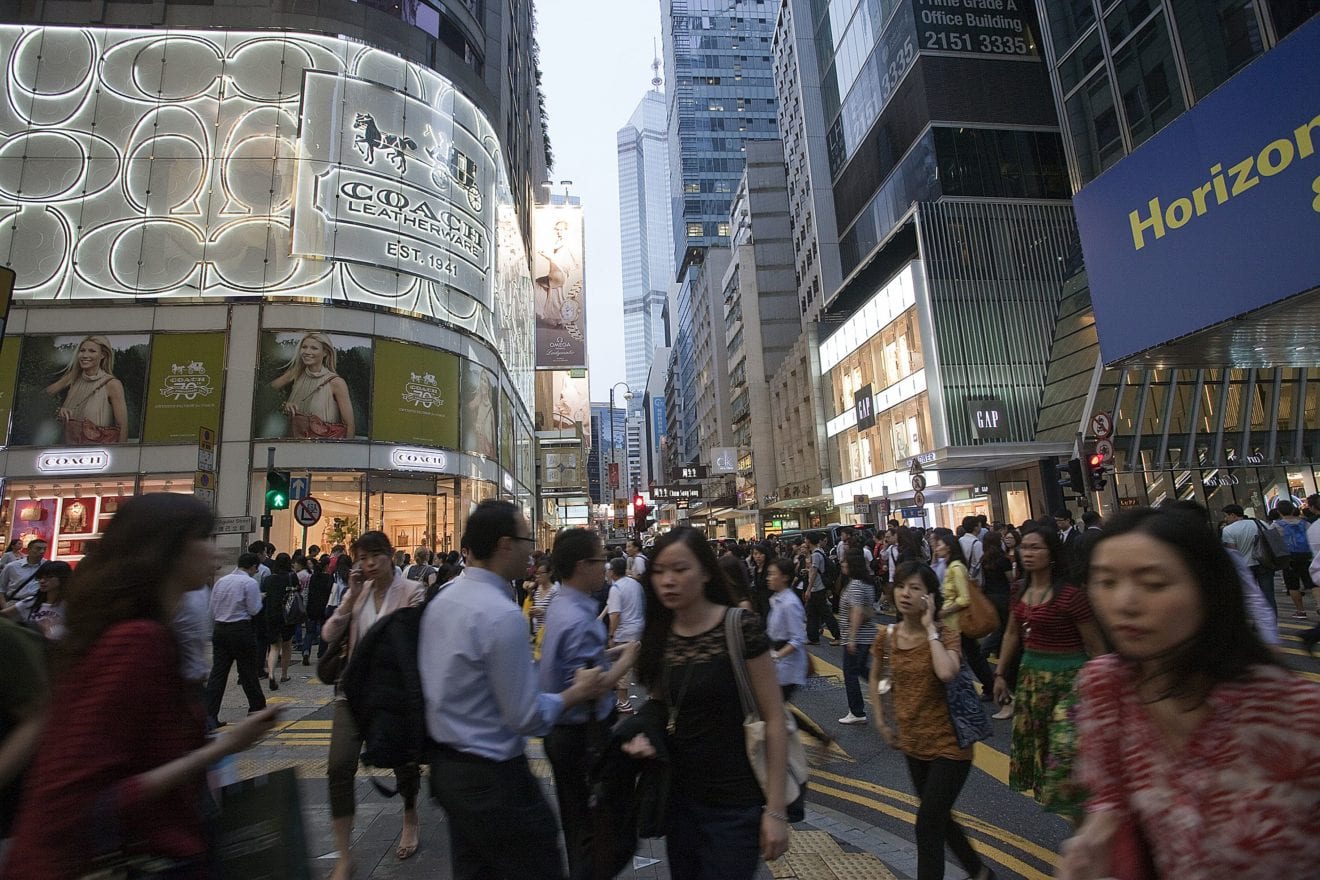
    The  move may well prove an additional blow to Hong Kong’s retail sector already reeling from reduced spending by mainland visitors.

    Reports from China’s mainland say tariffs on imported consumer goods will be cut “in parts of China” by the end of June. The move is aimed at increasing domestic consumption, shoring up economic growth and reducing the amount of money spent by mainlanders overseas.

    The decision was made last week at an executive meeting of the State Council, presided over by Premier Li Keqiang, who is concerned that mainlanders are now not only buying luxury goods overseas, but everyday items as well.

    The China Daily reports more duty-free stores will open at China’s borders and the individual allowances will be raised. The process of obtaining tax refunds will be eased – in tandem with a greater focus on catching smugglers.

    Chinese now account for an estimated 40 per cent of luxury good sales in France and for 35 per cent of luxury sales in Italy, according to data from the HSBC.

    Mainland retailers and travel specialists say it is difficult to predict the effect of the government’s move until a more detailed tariff schedule is released, along with duty free allowances and clarification on which product categories will be affected.

  • Consumers in Malaysia grappling with rising cost of living, GST

    Consumers in Malaysia grappling with rising cost of living, GST

    While most consumers grappled with the escalating cost of living, the Malaysian government’s subsidy rationalisation programme and the impending introduction of the goods and services tax (GST) also took centre stage.

    The government’s decision to reduce subsidies, effective 3 September 2013, was generally aimed at strengthening the nation’s economic position and ensuring that subsidies reached the target groups.

    In 2014, the government allocated about MYR40.5 billion (USD11.61b) for its various subsidy schemes. Out of that amount, MYR21 billion went towards subsidising RON95 petrol, diesel and cooking gas or liquefied petroleum gas.