Tag: Grocery

  • Indonesia-based HappyFresh announces Series B round, leaves Philippines and Taiwan

    Indonesia-based HappyFresh announces Series B round, leaves Philippines and Taiwan

    HappyFresh, the Jakarta-based grocery delivery platform, announced yesterday it has raised an undisclosed Series B round while also revealing it will be consolidating operations and pulling out of the Philippines and Taiwan.

    The round was led Dubai-based private equity firm Samena Capital, with HappyFresh CEO Markus Bihler said a major reason for the partnership was Samena’s status as a leading investment firm for logistics.

    “Number one, given that our business is, to a significant extent, a logistics business, we feel the support on logistics is very value-add,” said Bihler.

    “And number two, they are a classic large-cap private equity firm with significant ties to offline retail, which is the second arm of the HappyFresh business,” he said.

    Other participants in the round were Vertex Ventures, the venture-arm of Singapore’s Temasek Holdings, Sinar Mas Digital Ventures of Indonesia’s Sinarmas Group and Endeavor Catalyst, a New York-based venture arm of Endeavor Capital.

    The fundraising, which was larger than the US$12 million Series A the company raised in September 2015, remains undisclosed in large part because Bihler said it brought unnecessary attention to the number.

    In regards to the decision to pull out of the Philippines and Taiwan, Bihler said a crucial goal for HappyFresh is to focus on its core markets.

    “I believe that companies who are profitable and independently sustainable are companies that last, and therefore can continue to serve, in our case, the end customers and offline retail partners,” he said.

    The decision to consolidate the company to Indonesia, Thailand and Malaysia was a fast decision. It comes six months after the company entered the Philippines back in March and less than a year since it launched in Taiwan.

    “What we have decided is we will focus our effort on the three core markets that we have chosen to operate in, which is Indonesia, Malaysia and Thailand,” said Bihler.

    Because HappyFresh puts emphasis on the role of logistics in the decision to go with Samena Capital, e27 asked Bihler to provide some details as to how that looks on-the-ground.

    “I think if I go back and look at what HappyFresh is, we are a digital marketplace for offline retailers on the front end. And on the backend we are a digitally enabled fulfillment operation. So the largest efficiency gains that we have seen historically, and I am very sure that we will see in the future, is driven by technology,” said Bihler.

    This means intelligent use of routing, the increase of prediction software, and more efficient usage of resources (the time and availability of the shopper and drivers in the company).

    HappyFresh was founded in October 2014 and began operating in March of 2015.

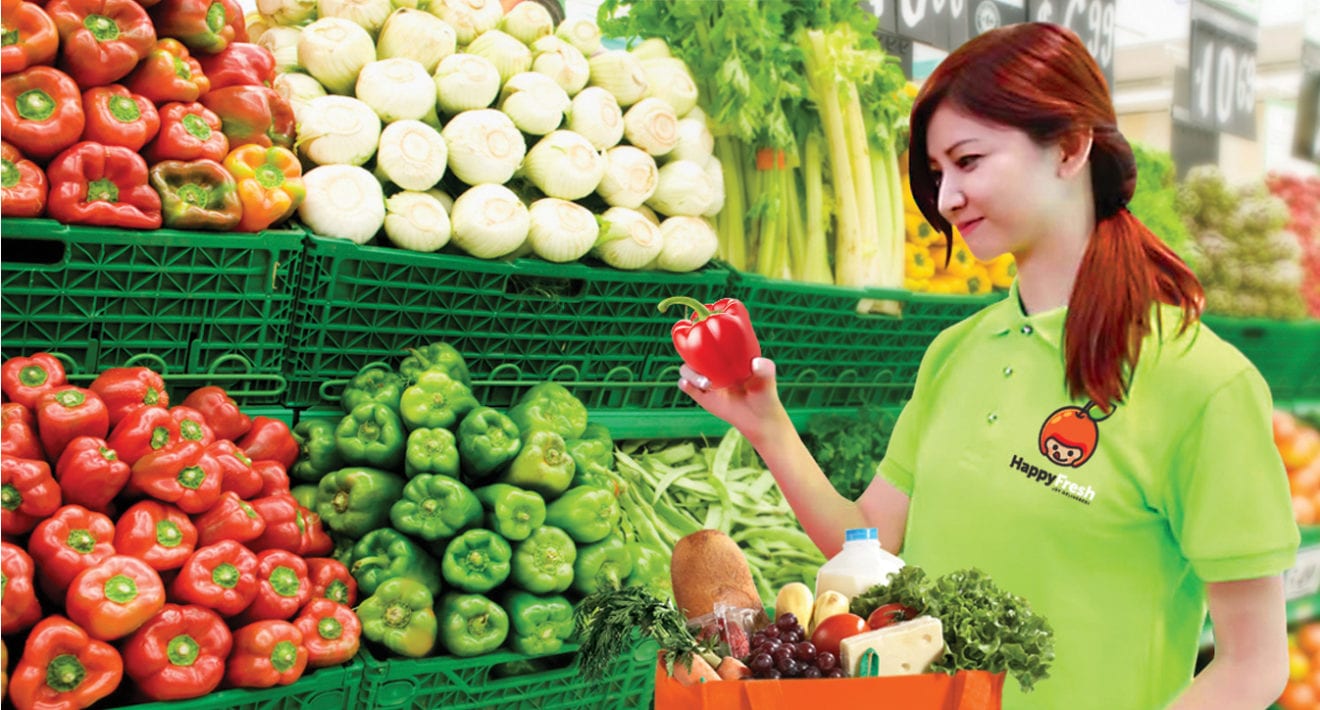
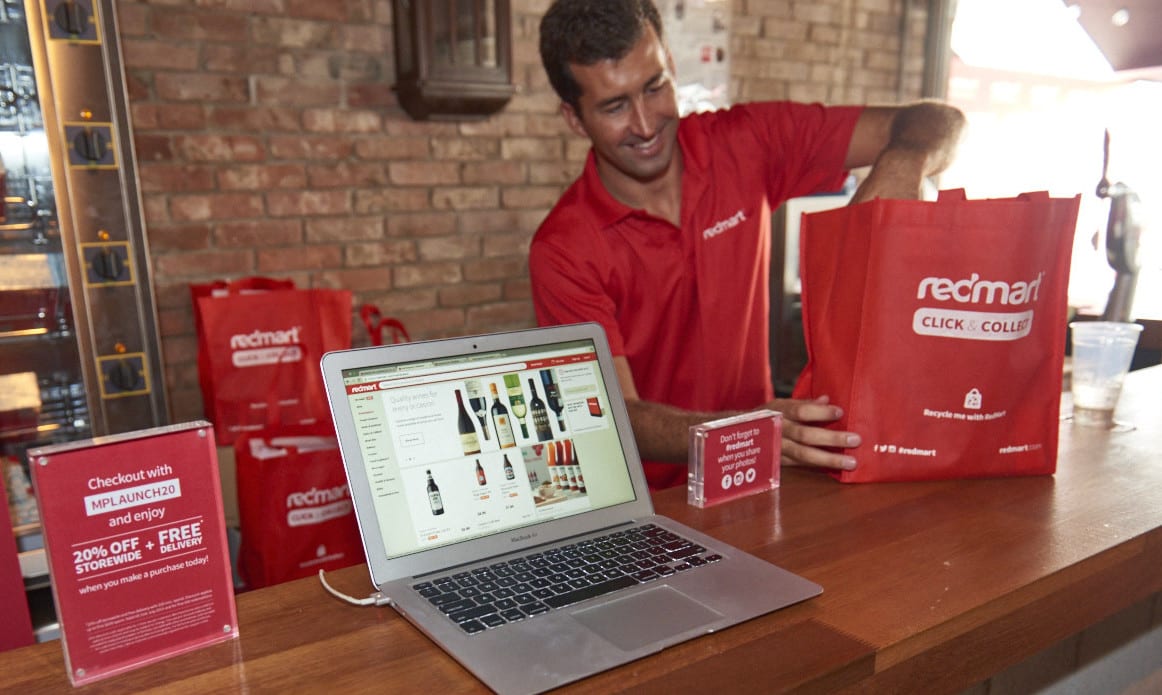
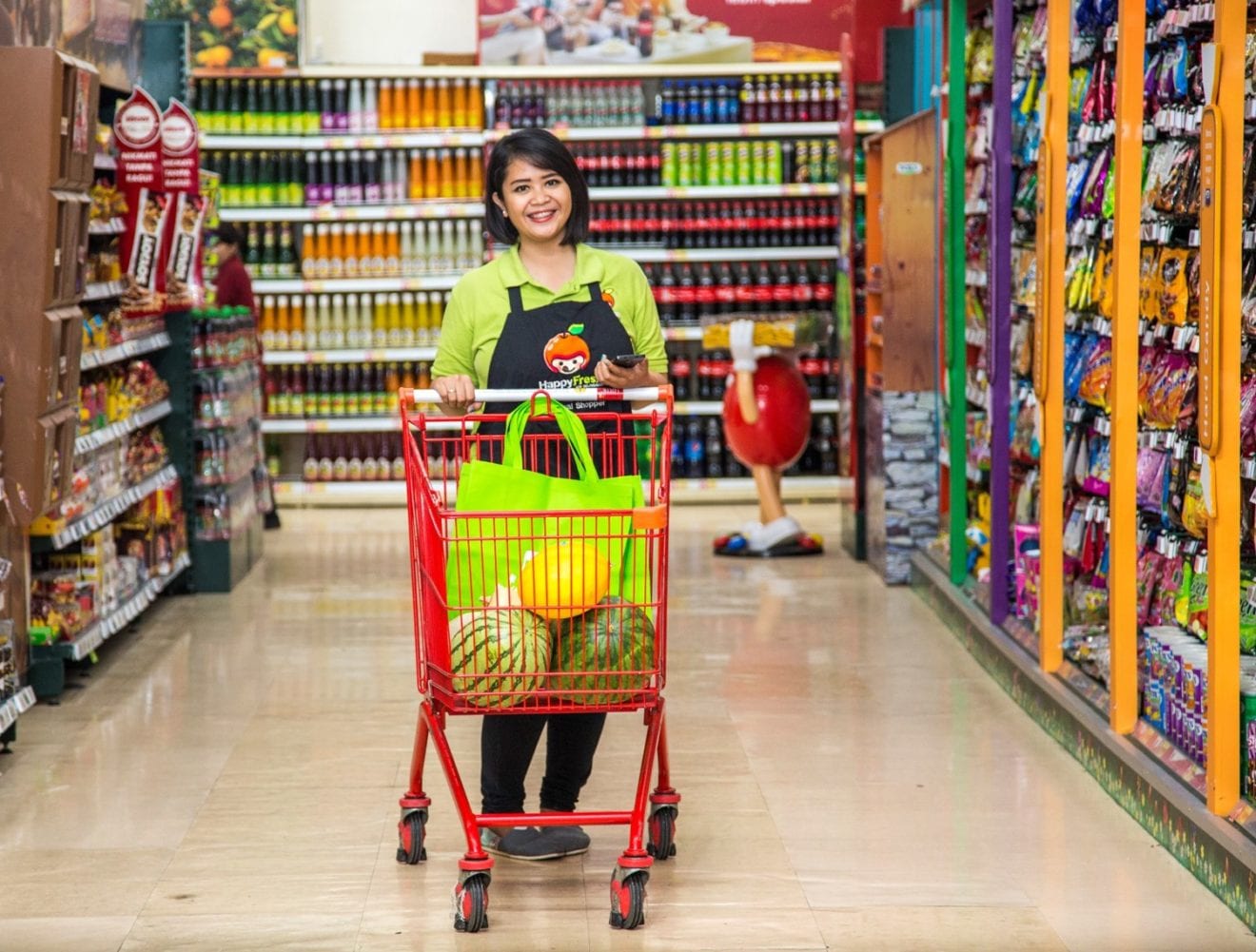
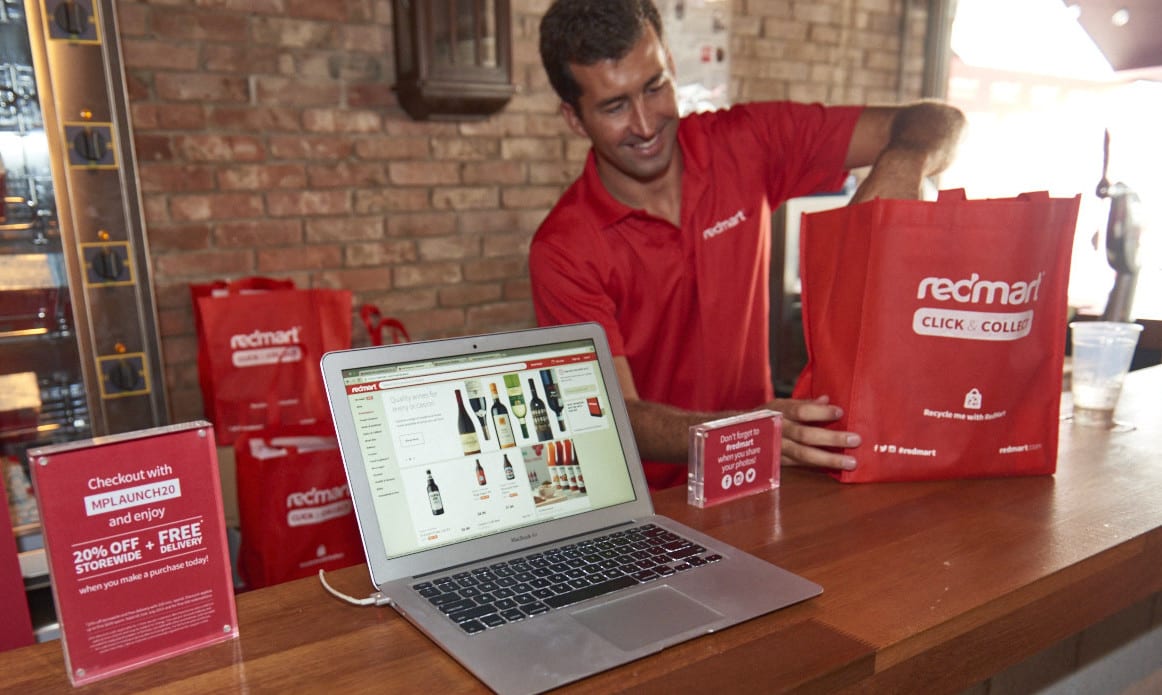
    Its operating model is similar to that of competitor honestbee — in which shoppers visit specific grocery stores and shop for the consumer before the food is delivered. As a comparison, another grocery delivery player, RedMart, has its own warehouses and thus does not ‘shop’ for customers.

  • Online grocer RedMart eyes at Asian market

    Online grocer RedMart eyes at Asian market

    Singapore-based online grocery organization RedMart is near raising a huge $100 million Series C round to grow its services crosswise over Asia. The new subsidizing is relied upon to shut in the following couple months. The organization was established in November 2011 to convey online and on-demand shopping to Singapore. To date, RedMart has raised over $50 million from investors such as Garena, SoftBank Ventures Korea, Visionnaire Ventures, and Facebook co­founder Eduardo Saverin, with its latest raise a $26.7 million bridge round last year.

    Given the absence of Series C stores in Southeast Asia, this new round might well incorporate institutional and vital investors, however none of the participants were not unveiled at this point. The new financing will go towards growing the organization’s services into new markets in Asia, with Hong Kong liable to be the primary port of call, conceivably took after by Jakarta, Indonesia.

    RedMart CEO Roger Egan has been open about the organization’s craving to expand abroad, yet he and his group are determined that the organization should first lockdown its plan of action in Singapore — a nation of only five million people, but with a grocery market expected to worth around $16 billion every year. RedMart’s technique is to work its own particular logistics and distribution centers, a model that it trusts gives it more control of the client service cycle and will empower it to rapidly wander into different verticals later on.

    While it was apparently the first to pioneer online grocery sales in Southeast Asia, the scene is more focused today with investment supported new companies HonestBee ($15 million) and HappyFresh ($12 million) among a emerging pack of opponents.

  • Vietnam’s Vingroup snaps up local grocery chain

    Vietnam’s Vingroup snaps up local grocery chain

    Vietnam’s largest retail group has snapped up local supermarket chain Maximark.

    Vingroup, whose assets already include 12 Vincom shopping centres with a raft of its own retail brands inside, and 125 VinMart grocery stores, will rebrand the nine Maximark hypermarkets under the VinMart+ name.

    “The acquisition aims at expanding Vingroup’s retail network reinforcing the status of Vietnamese brands to create a counterweight to international brands that are coming into Vietnam,” Vingroup said in a statement.

    The seller is Hanoi-based An Phong JSC which developed the chain from scratch.

    “The nationwide expansion will assist the spread of Vietnamese product brands and help retain their market share, contributing to building the competitiveness of local manufacturers amid an influx of global companies into Vietnam,” Vingroup’s vice chairman Le Khac Hiep said.

    Vingroup plans to operate 40 shopping centres across the nation by the end of 2016 and 100 by 2020.

    In June, Vingroup Retail received a US$100 million private equity capital investment led by Warburg Pincus, to help fund its ambitious retail expansion plans.

    Vingroup Joint Stock Company is Vietnam’s largest publicly-traded real estate operator and one of its largest companies by market capitalisation.

    The Vincom Retail malls are home to more than 700 domestic and international brands, with major tenants such as Robins Department Store, Marks & Spencer, CJ CGV, Mango, DKNY, French Connection, BCBGMaxazria, Karen Millen, GAP, Lacoste, Nike, Adidas, Emigo, VinMart, VinPro and Vinpearl Land.

  • Grofers shifts base to Singapore

    Grofers shifts base to Singapore

    PM Narendra Modi may have been the flag-bearer of `Make in India’, with his recent trip to the US being a highlight for `Digital India’. But another Indian startup has joined the growing list of new companies moving base out of India. Gurgaon-based Grofers decided to shift headquarters to Singapore from India.

    A hyperlocal grocery delivery firm, Grofers’ moving out is primarily due to a friendlier corporate regime in foreign countries.

    The shift has again highlighted a `brain drain’ of sorts with regards to Indian companies. Earlier, companies like Mobikon and AdNear had also moved out of India. In fact, Indian e-commerce’s poster boy Flipkart too shifted its base to Singapore, while some of the others like Fresh Desk and Druva chose USA.

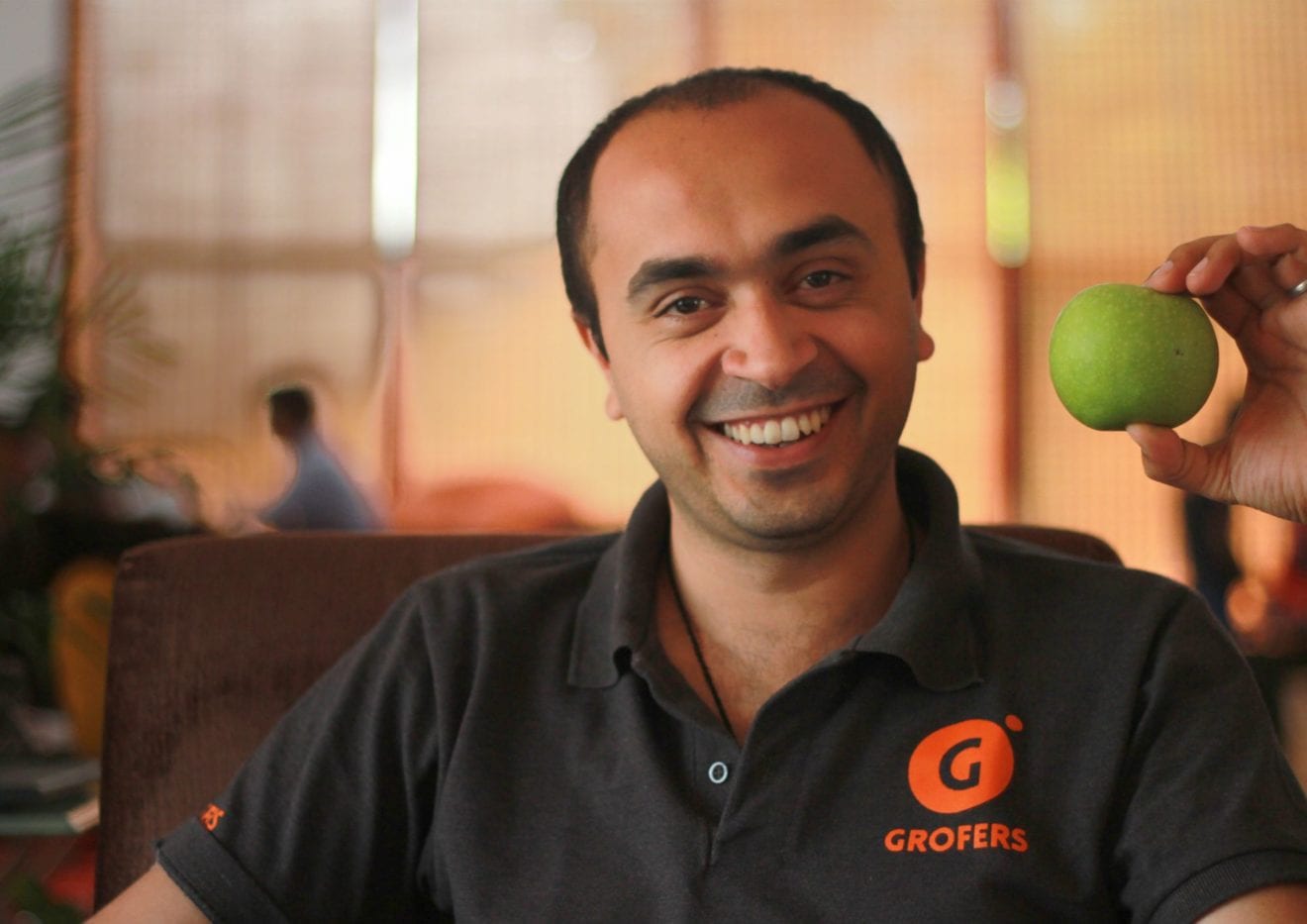
    Grofers co-founder Albinder Dhindsa said, “Our main reason for a Singapore holding company is owing to listing potential in the future. Our assets are still on the books of the Indian entity, so tax equation remains same for us.”

    India’s high corporate tax rates and compliance issues are the key reasons for companies to join the exodus, industry experts pointed out.

    In fact, investors too are more confident putting money into a startup when the company headquarters operates out of a tech-friendly foreign country .Corporate tax rate is 30% in India, while the same in Singapore is 17%. “India is a hot spot for startups now. But it is yet to catch up in terms of regulations and tax structures. In a tech-friendly market, which is mature enough to house them, getting relatively higher fundings and more valuation becomes easier,” said a domestic investor.

    Key stakeholders pointed out what also makes it even tougher for early stage or emerging companies in the new economy space is the fact that a fairly modestvalued company has to exercise same sort of compliances which an established conglomerate is expected to meet in India. “It is a strenuous task for even a middlesized company to match the corporate compliance standards of, say , a behemoth like ITC,” a corporate lawyer said.

    For Grofers’ next round of funding too, the Singapore entity might come in handy as its competitors like BigBasket and PepperTap have recently raised funds for expansion and acquired consumers in a sector which is the hottest in the ecommerce arena in India.What remains to be seen is whether the government can arrest the rising exodus and `Make In India’ becomes a reality.

  • Happy Fresh pilots next hour grocery delivery in Southeast Asia

    Happy Fresh pilots next hour grocery delivery in Southeast Asia

    Groceries delivered to customers’ doorstep in an hour by professional shoppers. This was the promise of online grocery delivery service Happy Fresh when it started last March in Kuala Lumpur and Jakarta.

    Today, the service is available as well in Bangkok and will soon open in Taipei.

    “Our plan is to become Southeast Asia’s leading food marketplace company, and we want to operate in all major, traffic-congested mega cities in the region,” said Markus Bihler, Group CEO and Co-founder of HappyFresh.

    Bihler is optimistic that online grocery delivery in the region is poised for take off.

    “The outlook for the retail industry in Southeast Asia has never been more promising. Opportunities abound in this region with its ever more sophisticated and food-loving consumers, growing populations and steady economies,” he said, adding that Kuala Lumpur and Jakarta, in particular, are very interesting markets.

    “Spending power and credit card penetration are higher in KL than in Jakarta, and in general people are more used to buying things online there. Jakarta, on the other hand, is interesting because we really feel we can solve a huge problem here. We all know about the infrastructure challenges this city faces, and the traffic problems this often leads to,” he explained.

    Happy Fresh believes that with online grocery shopping, it’s one fewer trip customers need to make, which often translates into several hours saved that they can now spend on other activities.

    “In Indonesia, Bihler he said middle and upper-income consumers will continue to drive the growth of modern, online retailers as customers are increasingly quality-conscious, demanding higher levels of service and quality,” Biller said.  “Demand for processed foods and dairy is growing, particularly in urban areas, driven by changing lifestyles as people work longer hours and seek greater convenience.

    Happy Fresh targets to bring the service to the capital cities of Southeast Asia one step at a time.

    Though it does not plan to set up a physical store, it partners with the most established offline grocery retailers in a locality. In-house trained professional shoppers who pick  the best fresh products for customers also provide an advantage.

    Delivery hours are based on the opening hours of its partner stores, which is usually between 10 a.m. and 10 p.m.

    “Our message to our partners is simple: Focus on what you are really good at, which is running grocery stores. Then let us help you bring your brand and your products to an incremental set of customer groups: those one mobile devices, those who would like to order from their home, office or wherever they happen to be, and those who value the convenience of next hour delivery,” he said.

    Happy Fresh also strive to help partners reach customers that are normally outside of their catchment area or would have otherwise ordered a pizza rather than next hour ingredients for home cooking.

    Bihler said they offer ready to use solution to its retail partners at no upfront cost, a  fleet of drivers, and customer service agents. “In short: we help supermarkets grow, reach new customers and move into digital,” he said.

    “The food industry is among those that will always remain a physical, haptic, very sensual core. Yet – as any other – it will see heavy disruption by mobile technologies, ever-changing supply chains and faster lifestyles,” he added.

  • China grocery boom accelerates

    China grocery boom accelerates

    The China grocery boom is accelerating – but India and the so-called MINT countries are chasing.

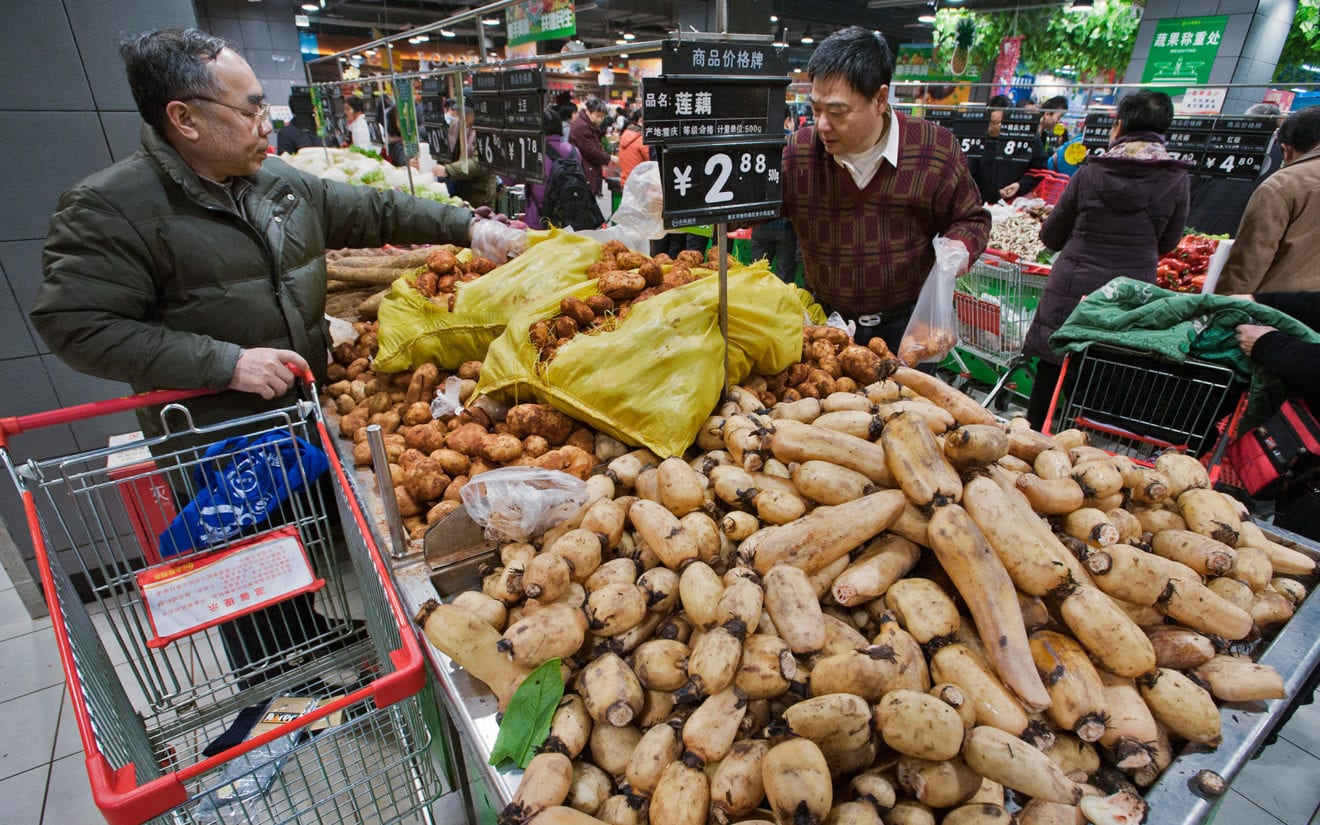
    Chinese grocery sales are set to grow by a third between now and 2020 and reach US$1.5 trillion per year, according to new forecasts from IGD. While China will comfortably retain its position as the largest grocery market in the foreseeable future, other markets will grow faster.

    IGD predicts:

    • The grocery sector in India will grow by nearly 80 per cent and be worth just over US$900 billion by 2020.
    • Nigeria’s grocery market will achieve the fastest growth of the largest markets, increasing in value by 85 per cent to hit just over US$300 billion by 2020.
    • The other ‘MINT’ countries will also experience rapid growth – grocery sales in Mexico, Indonesia and Turkey will increase by nearly 40 per cent, 63 per cent and 61 per cent respectively.
    • Indonesia’s grocery market will be worth almost as much as the UK’s (ranked seventh in the world) at US$351 billion by 2020.

    IGD CEO Joanne Denney-Finch says while grocery industry growth prospects appear limited in Europe at the moment, this is a time of tremendous opportunity for grocery companies further afield.

    “The vast majority of global grocery growth will come from Asia, Africa and the Middle East supported by increasing affluence, urbanisation, and rising population. With many European products and brands highly regarded in these regions, this will be a boom time for companies with export skills.”

    On China, she observed: “Although the Chinese growth rate is slowing, it’s still very impressive, particularly in ‘tier three and four cities’. These are regional, medium-income cities, undergoing rapid development. There are many more opportunities for retailers and Western brands. For example, online grocery will enjoy explosive growth in China, though from a modest base, tripling in size between now and 2020. This will be powered by more Chinese having access to the internet through smartphones and other devices.”

    Denney-Finch said in India, while traditional stores will continue to take the lion’s share of the grocery market, consumer spending per capita in real terms will grow faster in the subcontinent than in any of the top grocery markets.

    “Combined with an expanding working-age population this will support the growth of modern convenience and supermarket retailing. Retailers are also rapidly setting up online grocery services hoping to tap into the potential of India’s half a billion smartphone users. Despite restrictions on foreign direct investment (FDI), international retailers continue to see the potential of investing in India.

    “If the expected effects of inflation are stripped out, then India would be the fastest growing of the largest grocery markets while most of the MINT countries would also appear higher up the growth rankings,” she said.

  • RedMart Singapore raises $26.7m

    RedMart Singapore raises $26.7m

    Singapore online grocer RedMart has raised more capital and appointed a former Amazon executive to drive regional expansion.

    RedMart Singapore has previously indicated an interest in expanding into Vietnam, Thailand, Manila, Hong Kong, Indonesia, Malaysia and Taiwan – but it has not disclosed which markets it sees as a priority with its newly secured funds.

    RedMart has secured US$26.7 million in a round of funding tapping existing shareholders Garena, Softbank Ventures Korea, Visionnaire Ventures and Facebook co-founder Eduardo Saverin. It has also attracted a new investor – Far East Ventures, part of Singapore property developer Far East Organization which is diversifying its investment portfolio eyeing startups and tech ventures.

    The funds will be used to expand into regional markets outside Singapore, a move to be led by new recruit Colin Bryar, a former VP of US eCommerce giant Amazon.

    RedMart Singapore increased sales to US$9.43 million in 2014, but massive investment in infrastructure saw its losses balloon to $29.4 million – a not uncommon scenario of eCommerce startups.

    Bryan will oversee engineering, marketing and operations, taken over from co-founder Vikram Rupani, who takes on the title of President of RedMart.